Istanbul Layover Near the Galata Tower
Part of the full Istanbul Layover: Sultanahmet From IST
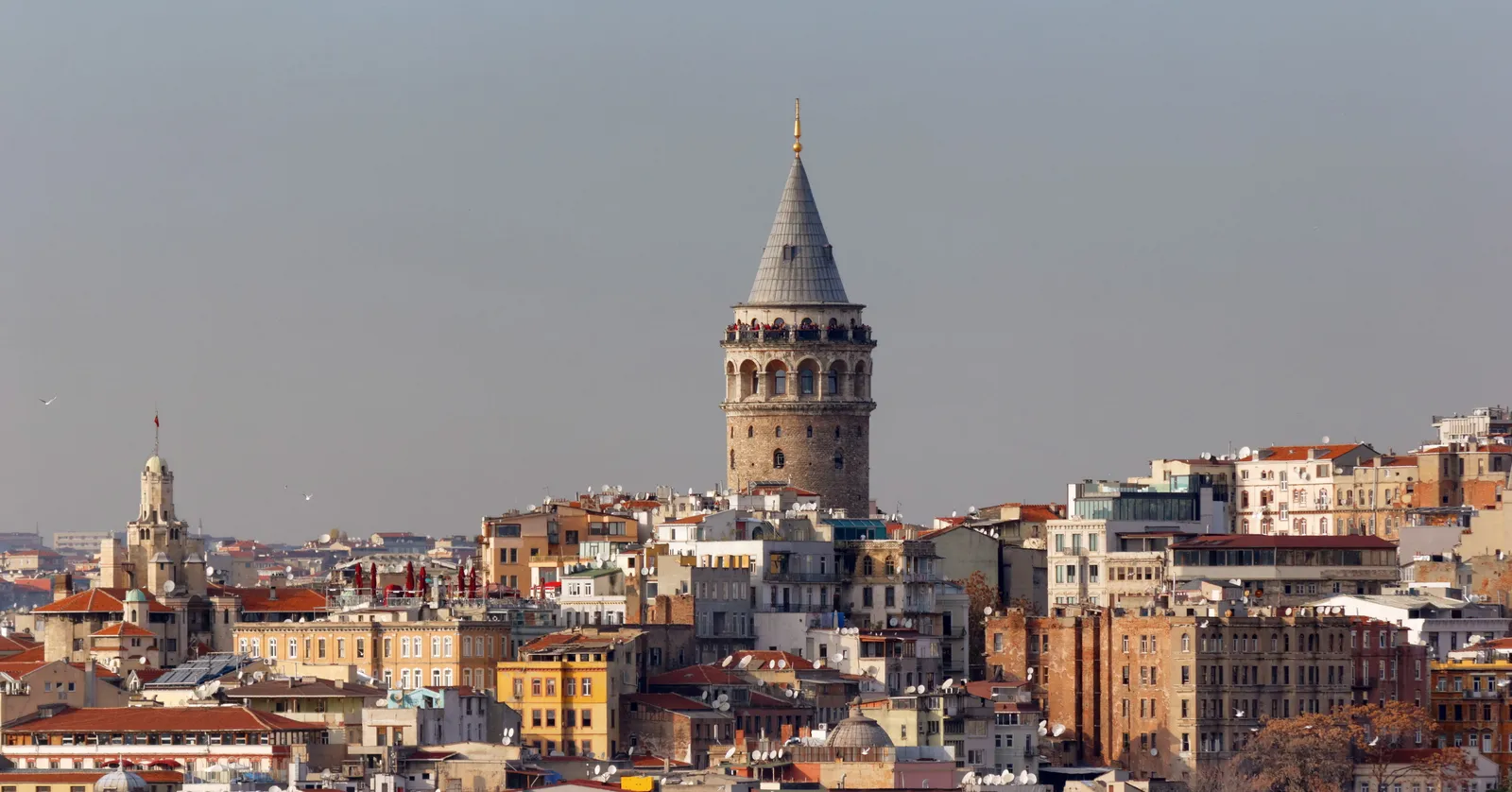
Istanbul’s Galata Tower stands on the hill above the north bank of the Golden Horn, and the few hundred metres of stepped street between it and the water hold the Camondo Stairs, the Genoese quarter’s old banking row and the fishing rail of the Galata Bridge.
The Genoese tower of 1348, and the hundred-an-hour cap
Genoese colonists built this as the Tower of Christ at the high point of their walled quarter, and it survived the walls coming down around it. It is 62 metres of stone with a conical roof, eleven floors counting the basement and mezzanine, and an observation balcony at about 52 metres that runs the whole way round.
The Ottomans used it as a fire watch from 1717, which is what kept it standing. The better story is from 1638, when Evliya Çelebi wrote that Hezârfen Ahmed Çelebi strapped on wings, jumped from the roof and glided across the Bosphorus to the Asian shore, a claim historians treat as unverified and Istanbul treats as settled.
Since it reopened in May 2024 after earthquake-resilience work, entry has been capped at 100 visitors an hour. That is good news on the balcony and bad news on the street below it, so a timed tower ticket is the difference between twenty minutes and an hour of your afternoon.
The Camondo Stairs on Bankalar Caddesi
Abraham Salomon Camondo, an Ottoman Jewish banker of Venetian descent, had these built between about 1870 and 1880 to get from his house on Kart Çınar Sokak down to his bank on Bankalar Caddesi without walking round the block. They split into two curving flights that fold back into each other, in a mix of neo-Baroque and early Art Nouveau that predates most of what is usually called Art Nouveau.
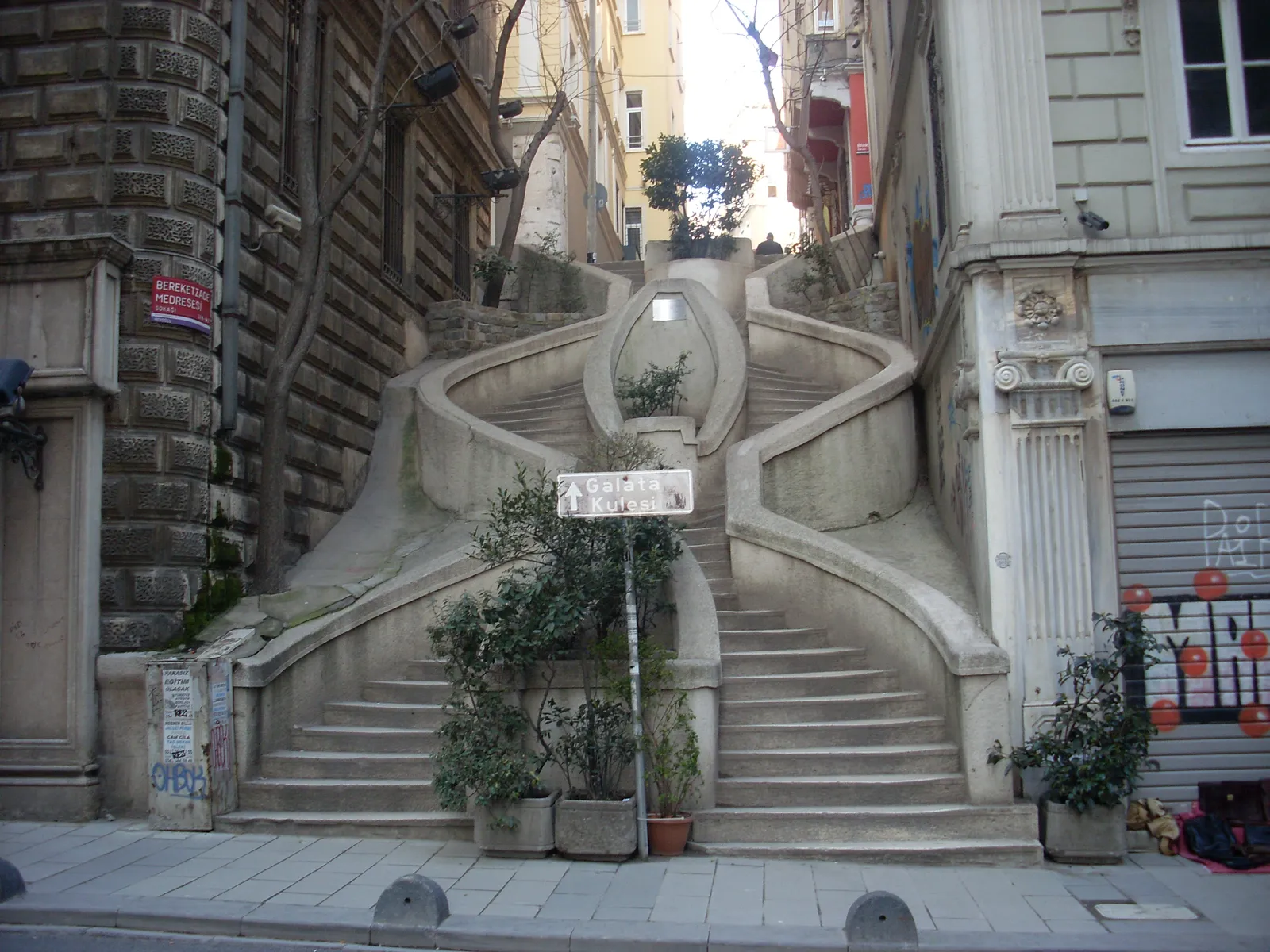
The hexagonal plan is usually explained as a safety measure: the curves mean a child who slips on one flight lands on the next rather than carrying on to the bottom. Whether Camondo actually said so is another matter, but the geometry does work that way. They cost nothing, they are open at every hour, and Bankalar Caddesi at the foot of them was the financial street of the late Ottoman city, which is why the buildings on it are the size they are.
Fishing rods along the Galata Bridge
The bridge carries traffic and a tram on its upper deck, restaurants on the deck below, and a line of men fishing over both rails for most of the day. It is a working scene rather than a staged one, and the view down the rods takes in the ferries crossing beneath and the domes of the New Mosque on the far bank.
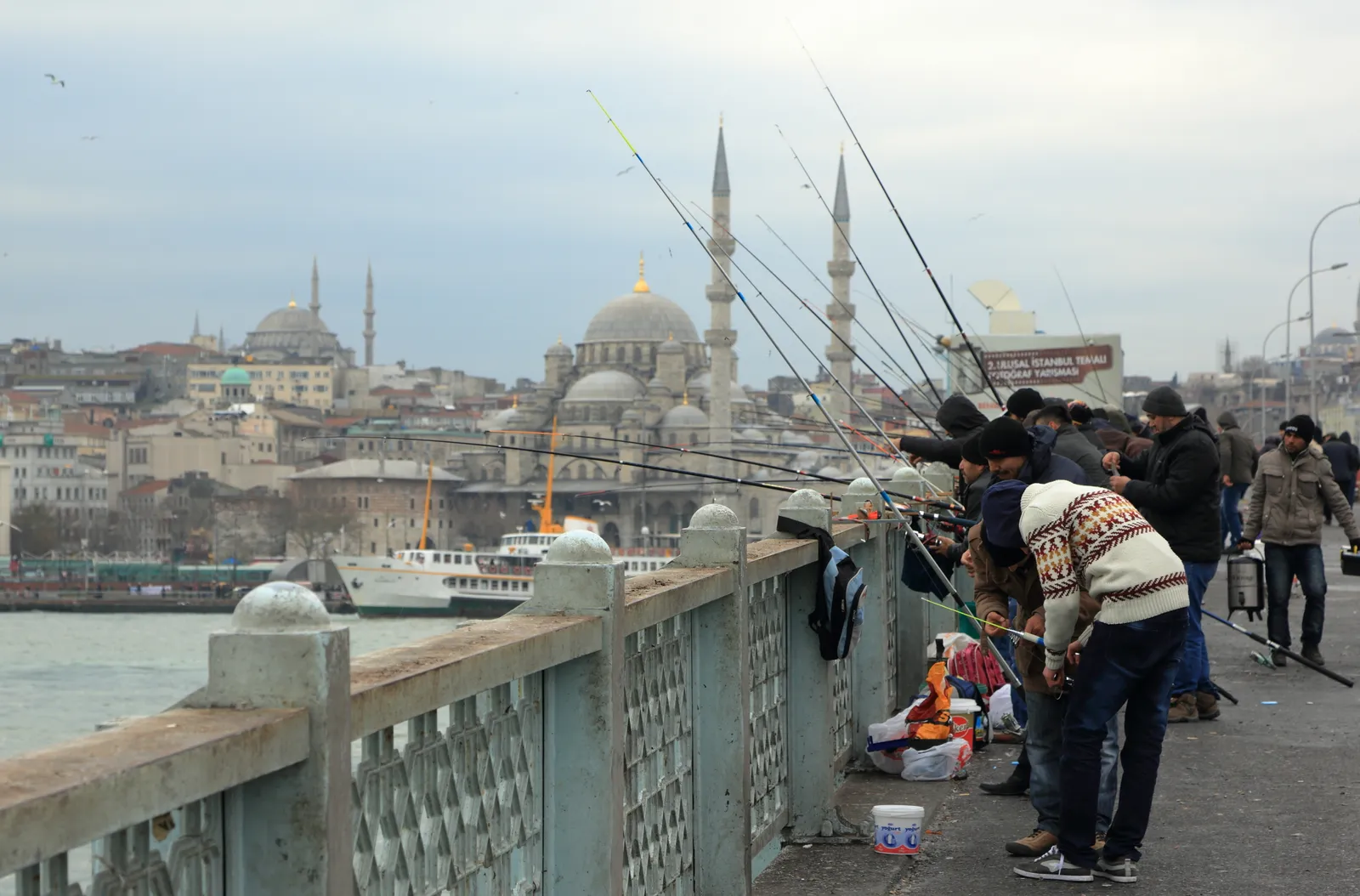
Walking it takes about ten minutes end to end and puts you at the foot of the old city on the far side, which is where the Sultanahmet monuments start. The lower deck is worth the detour on the way back: it is one long row of fish restaurants under the roadway, at eye level with the water.
The hill is the thing to plan around. Galata climbs from the waterfront to the tower in a few hundred metres and almost every direct route up is cobbled or stepped, so a wheeled suitcase turns a five-minute walk into a carry.
Two changes and about an hour to Istanbul Airport
The nearest metro station to the tower is Şişhane on the M2, a few minutes’ walk up from Galipdede Caddesi. From there the M2 runs north to Gayrettepe in around fifteen minutes, the interchange to the M11 airport line is close to ten minutes of walking between platforms, and the M11 takes about thirty more west to Istanbul Airport. Call it 65 to 80 minutes door to door.
The M11 starts about 06:00 and the last service back toward the airport leaves Gayrettepe after midnight, though published times differ. With the two to three hours a long-haul departure wants on top, a three-hour gap gets you the bridge and the stairs, and a five-hour one gets you the tower as well.
Frequently asked questions
How long is the queue for the Galata Tower?
Entry has been capped at 100 visitors an hour since the tower reopened in May 2024, after structural and earthquake-resilience work. That keeps the balcony usable but pushes the wait outside onto the street, so a timed ticket bought ahead is worth more here than the fee difference suggests. Late afternoon is the worst hour of the day for it.
How steep is the walk up to the Galata Tower?
Steep, and stepped in places. The hill climbs from the Karaköy waterfront to the tower in a few hundred metres, and most of the direct routes are either cobbled lanes or flights of stairs. The Tünel funicular from Karaköy takes the worst of it out, running two stops up to the bottom of İstiklal, from where the tower is a level five minutes.
Do I need to go up the tower to get the view?
No, and on a tight afternoon the answer is probably not. The Galata Bridge and the Karaköy waterfront look straight across the Golden Horn at the same skyline the balcony shows, from sea level and for nothing, and the tower itself is in that view rather than absent from it. What 52 metres of height buys you is the Bosphorus opening up to the north, which the ground-level version cannot give you.