Istanbul Layover Near Taksim Square
Part of the full Istanbul Layover: Sultanahmet From IST
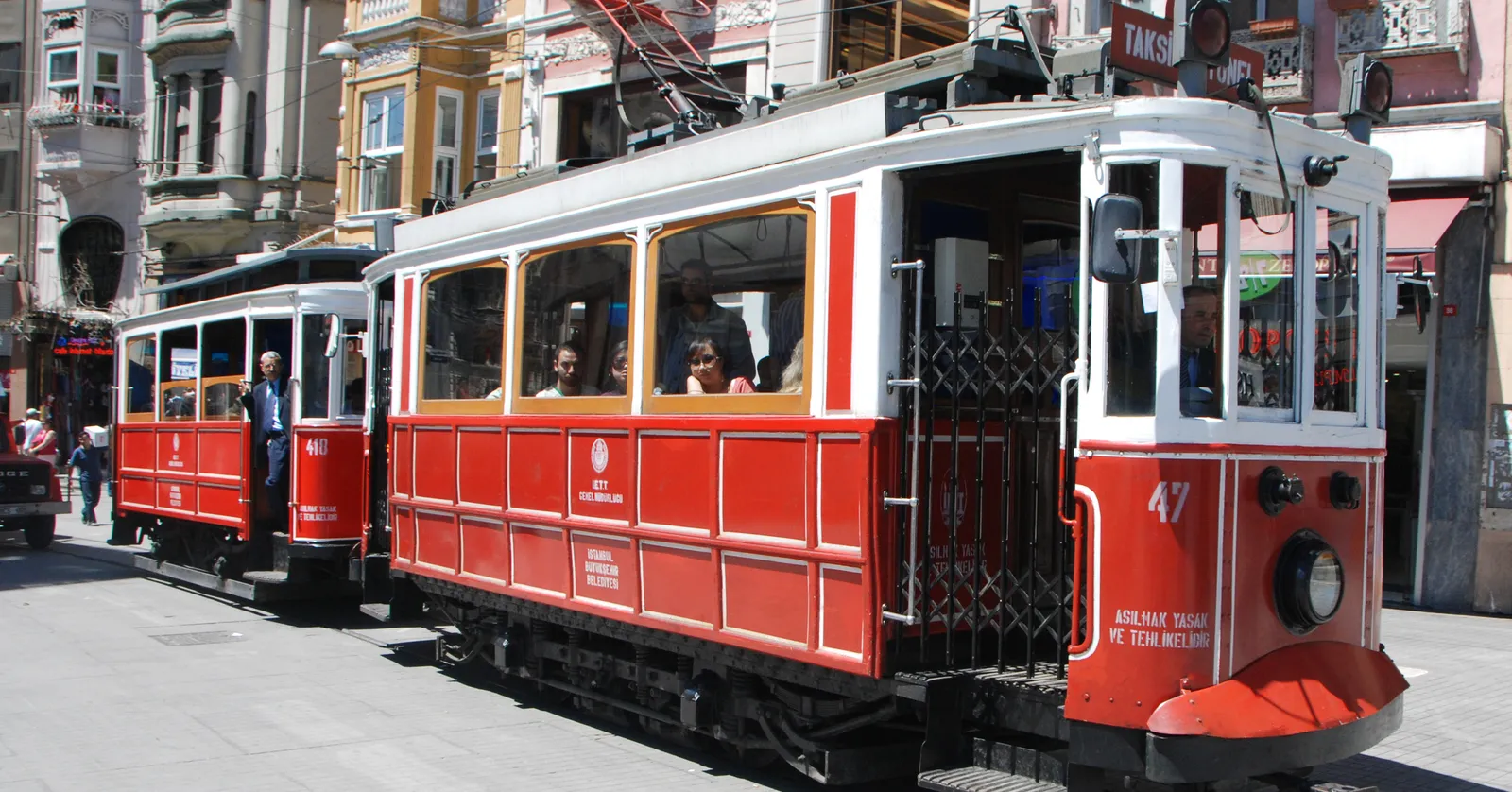
Istanbul’s Taksim Square sits at the top of İstiklal Avenue, 1.4 kilometres of pedestrian street running downhill to Tünel, with a restored red tram down the middle of it, the 1876 Flower Passage halfway along and a dervish lodge at the bottom.
İstiklal Avenue and the tram down the middle of it
The avenue was a boulevard of embassies, theatres and department stores through the late Ottoman period, went into a long decline, and was pedestrianised in the early 1990s. The tram line was put back in 1990 as part of the same revival: red single-deck cars running between Taksim and Tünel squares, on the only strip of road surface left, with people walking around them.
Galatasaray High School, the oldest secondary school in the country, marks the midpoint, and Sant’Antonio di Padova, the red-brick Catholic church by Giulio Mongeri, sits back off the street behind a courtyard about two thirds of the way down. Neither charges anything. The buildings are the reason to walk it: this is the one part of Istanbul where the 19th century looks European rather than Ottoman.
The Galata Mevlevi House on Galipdede Caddesi
A Mevlevi dervish lodge stood at the bottom of the Galata hill from the late 15th century, and what survives is now a museum: the octagonal timber semahane where the ceremony was danced, the lodge’s own graveyard of turbaned headstones, and a collection of instruments and manuscripts.
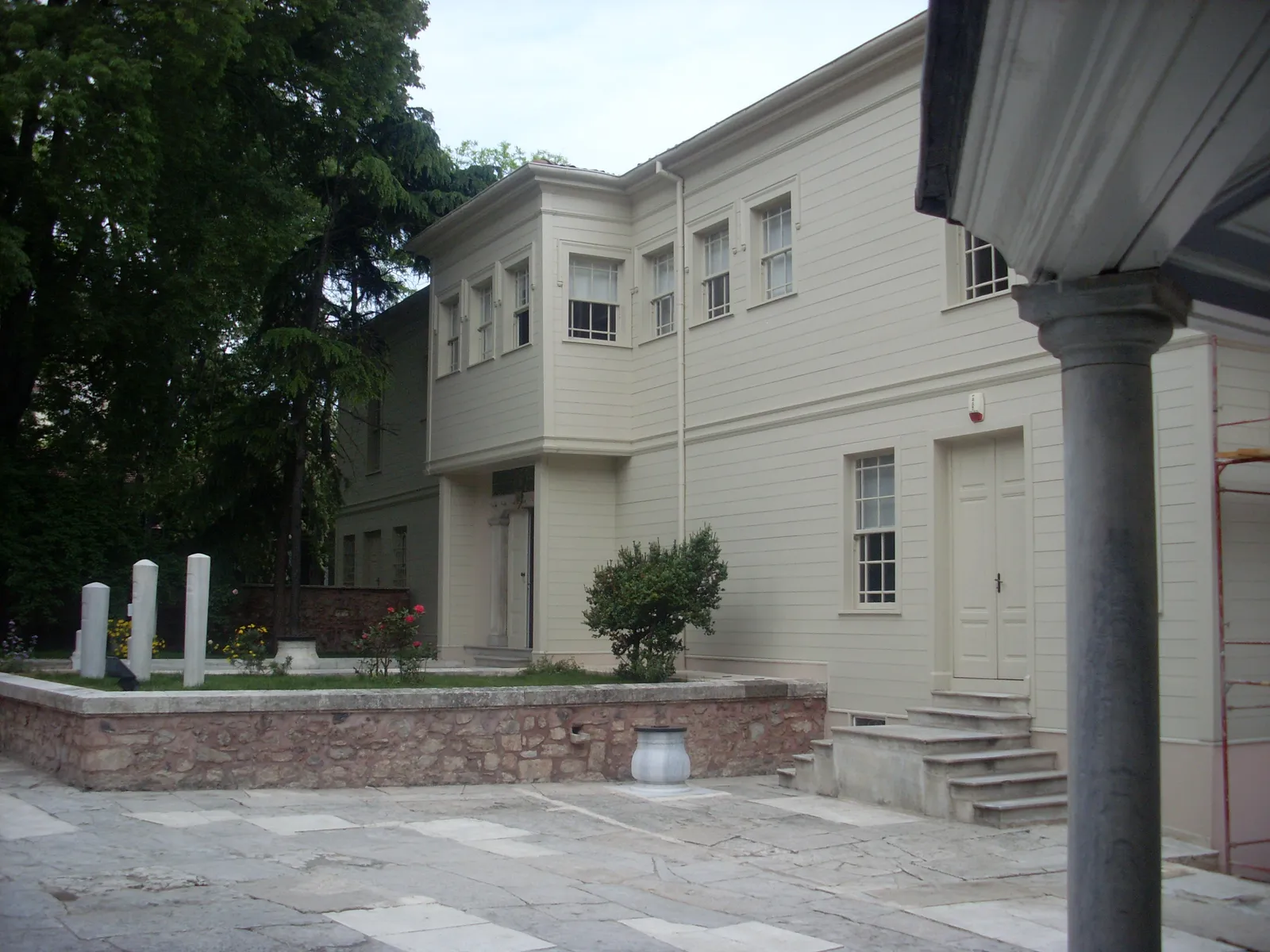
It opens Tuesday to Sunday, 09:00 to 18:30, closed Mondays, and entry is around 7 euros for foreign visitors. The sema itself is a separate ticket and only runs on Sunday evenings, so on any other day this is a museum visit rather than a performance.
Çiçek Pasajı, the Flower Passage on İstiklal
Hristaki Zoğrafos Efendi, an Ottoman Greek banker, bought the site after the Naum Theatre burned in the 1870 Pera fire and had Kleanthis Zannos build a glazed arcade on it in 1876. The carved name over the entrance is still the original one, Cité de Péra.
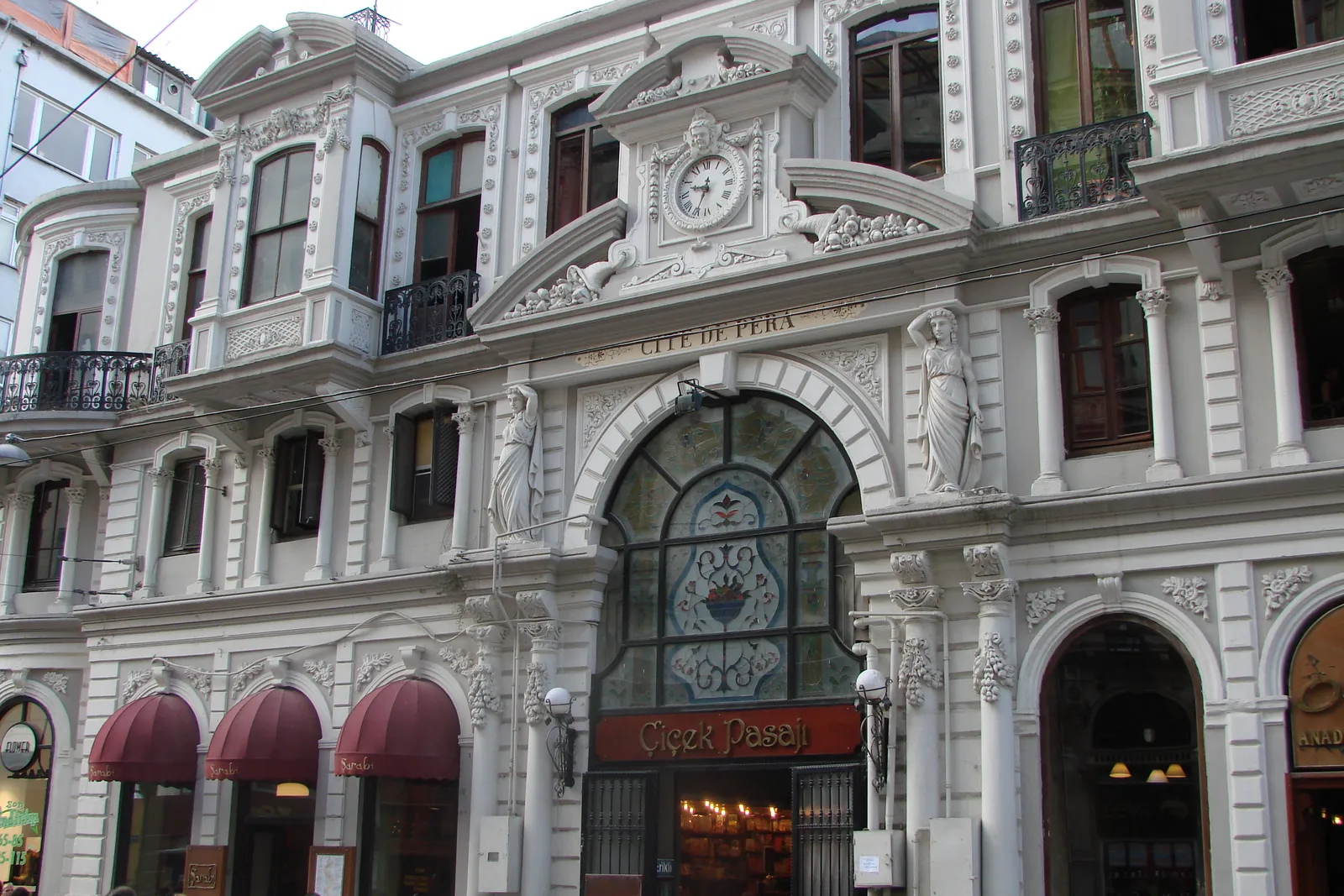
The flowers came later: Russian noblewomen who arrived with nothing after 1917 opened flower stalls inside, and by the 1940s the trade had taken over the building and given it the name it has now. It is restaurants and taverns today, and it has been renovated three times since 1988, so it is polished rather than atmospheric, but the ironwork and glass roof are worth the two minutes it takes to walk through. The side door opens into the Balık Pazarı fish market, which is not polished at all.
The avenue’s real cost is measured in shoulders. İstiklal carries a two-way crowd along its whole length at almost any hour, and the tram takes the middle, so there is no line through it that a wheeled suitcase does not obstruct.
The airport is two metro lines from Taksim, not one
Taksim sits on the M2 metro, which is the line that matters here: it runs north to Gayrettepe in about ten minutes, and the M11 airport line goes west from Gayrettepe to Istanbul Airport in about thirty more. The interchange between them is close to ten minutes of walking, so allow 60 to 75 minutes door to door, less than from the old city because you start further north.
The M11 begins running about 06:00 and the last train toward the airport leaves Gayrettepe after midnight, with times varying between sources. Add the two to three hours a long-haul departure wants and four hours around Taksim is a real afternoon rather than a rush.
Frequently asked questions
Where can I see a whirling dervish ceremony near Taksim?
The Galata Mevlevi House at the bottom of İstiklal holds a sema every Sunday at 17:00, capped at about 150 people, with tickets sold at the door from around midday on the Saturday rather than online, so it sells out. If your free afternoon is not a Sunday, commercial ceremonies run most evenings elsewhere in the city and a ceremony ticket can be booked ahead.
Is İstiklal Avenue walkable with luggage?
It is flat enough and paved, but it is 1.4 km of continuous two-way crowd with a tram running down the centre of the same lane, and the tram has right of way. The passages and the fish market off it are narrower again. It is a much better street without a suitcase.
What is the Tünel at the bottom of İstiklal?
An underground funicular between the top of the Galata hill and the waterfront at Karaköy, opened in 1875 and the second-oldest underground urban railway anywhere after London's. It runs two stops and takes about 90 seconds, and it saves a steep walk back up at the end of the day.
Is Taksim a good base for a short layover?
For a four to six hour gap, yes, because everything here is one walkable street rather than a set of separate monuments with their own queues and closing times. For a longer day, the historic peninsula route has more to see, but it costs more in tickets and in queueing.