Seoul Layover: Gyeongbokgung and Namsan, ICN
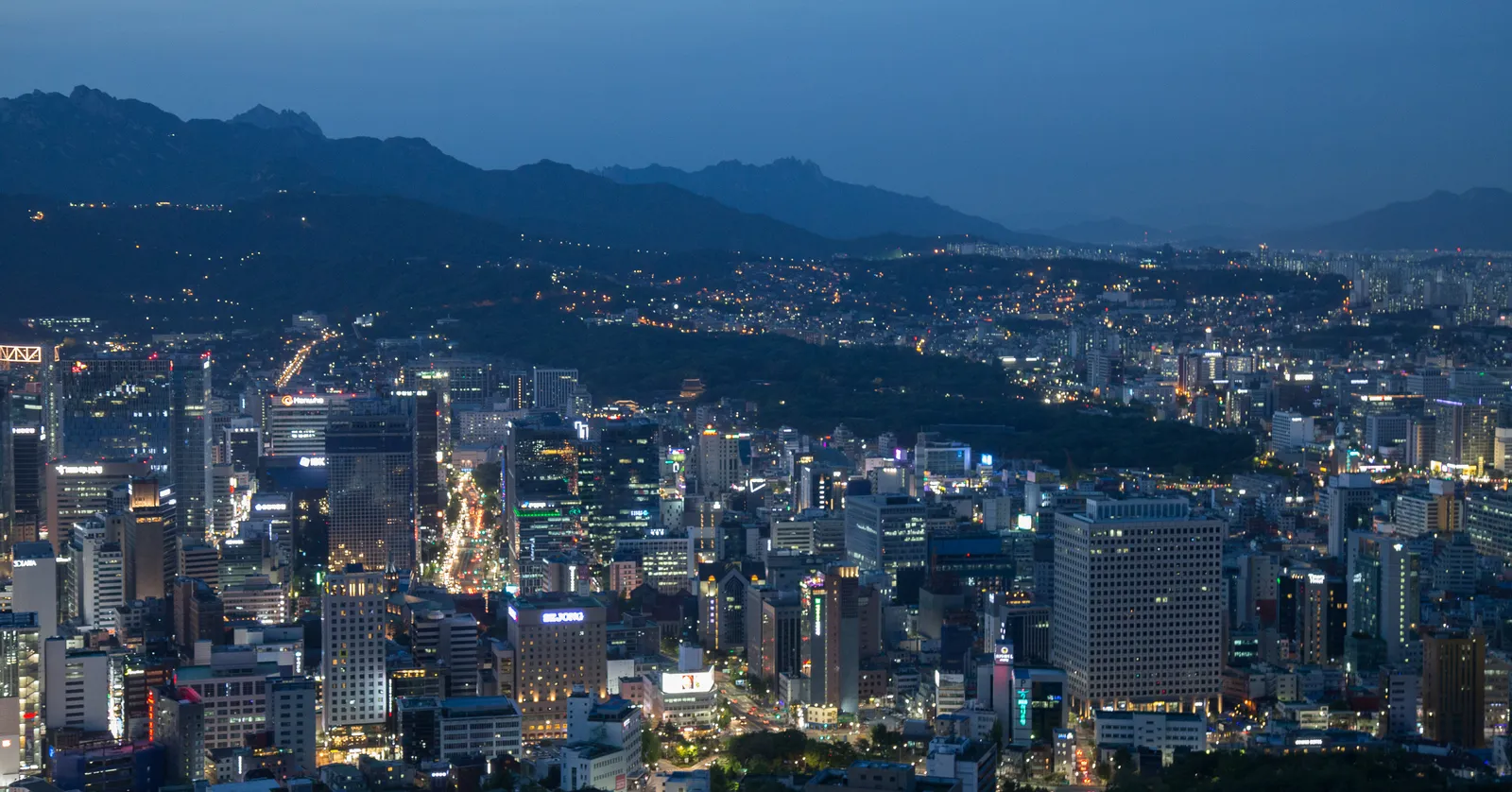
In Seoul, the guard change outside Gyeongbokgung Palace’s front gate is free to watch, the hanok lanes of Bukchon climb the slope beside it, and N Seoul Tower looks down on both from the top of Namsan, all a short metro ride from Seoul Station.
The guard change at Gyeongbokgung Palace’s front gate
Gyeongbokgung is the palace at the north end of Sejong-daero, Seoul’s main ceremonial avenue, and its front gate, Gwanghwamun, is where the day starts. At 10am and 2pm, every day except Tuesday, gatekeepers in Joseon-era costume march out with flags and drums and hand over the watch in a ceremony that lasts about twenty minutes, and watching it from the square costs nothing.
Inside, the palace is mostly a reconstruction, and the reasons are part of what you’re looking at. It was built in 1395 as the first royal palace of the Joseon dynasty, burned in 1592 during the Japanese invasions, and lay in ruins for around 270 years until it was rebuilt in the 1860s. Under Japanese colonial rule almost all of its roughly 500 buildings were sold off or removed, only about 40 were left by 1945, and the colonial Government-General Building stood directly in front of the throne hall from 1926 until it was demolished in 1995 and 1996. What stands today is the result of decades of rebuilding since.
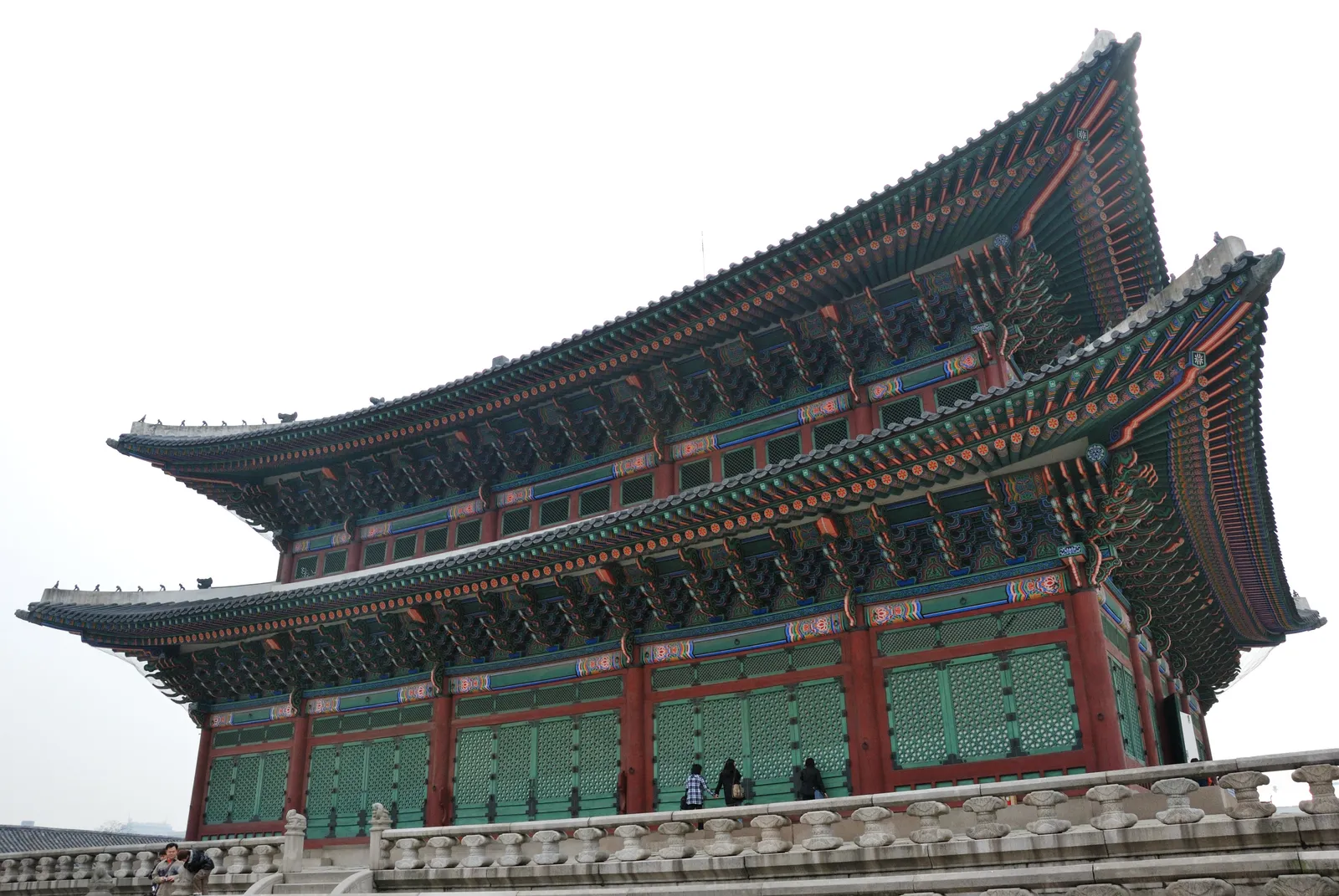
Geunjeongjeon, the two-tiered throne hall, is the building most people photograph. Further in, Gyeonghoeru is a banquet pavilion raised on 48 stone pillars on an artificial island in its own pond, first built in 1412 and rebuilt in 1867. Entry is 3,000 won through the end of 2026; the Korea Heritage Service plans to raise palace admission from 1 January 2027, with the new rates due to be announced in November 2026. Anyone wearing hanbok, Korean traditional dress, gets in free, which is why so many visitors on the grounds are in it, and the rental shops around Gyeongbokgung station make it easy to rent a hanbok for a few hours before you go in. The gates open at 9am and close at 5pm from November to February, 6pm in spring and autumn, and 6:30pm in summer, with the last entry an hour earlier.
N Seoul Tower on the summit of Namsan
Namsan is the forested hill in the middle of Seoul, and the tower on top of it, 236 metres of concrete finished in 1975, was closed to the public for security reasons until October 1980. It took its current name after a renovation in 2005. The Namsan cable car that runs up the hillside is older than the tower: it opened in 1962 as South Korea’s first aerial tramway, and the ride takes about three minutes.
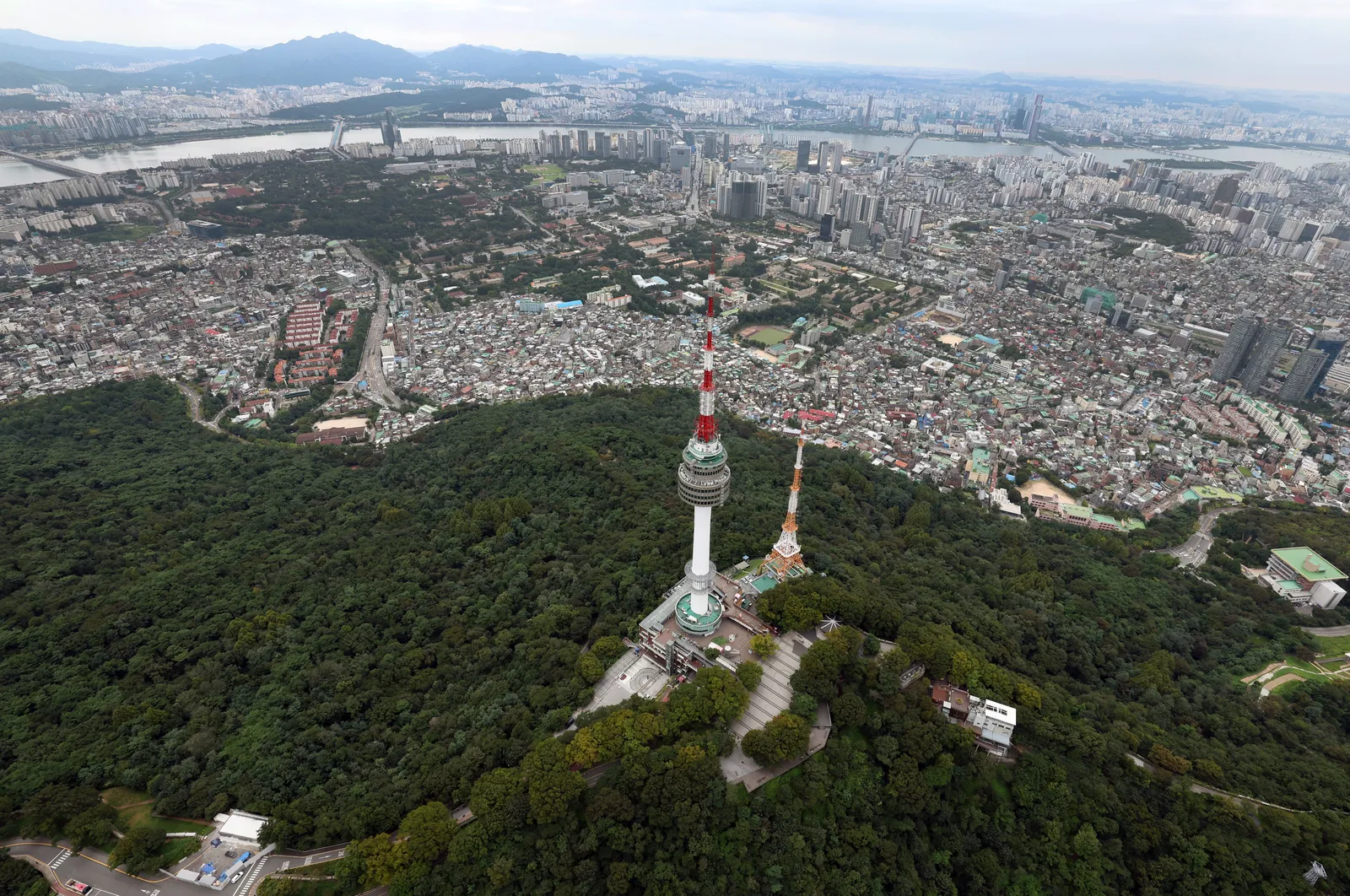
The terrace at the foot of the tower is free, and its railings disappear under padlocks: couples started leaving them in 2006, and by 2018 the locks weighed an estimated 82 tonnes. Next to them stand the reconstructed beacon-fire mounds of the Joseon signal network, rebuilt in 1993. The observatory itself is the paid part, open every day from 10am until late evening, and observatory tickets bought in advance skip the ticket desk at the base. On a clear day it shows the whole bowl of the city, from the Han River to the granite ridges north of the palaces.
Mung bean pancakes at Gwangjang Market
Gwangjang Market, on Changgyeonggung-ro near Jongno 5-ga, opened on 5 July 1905 and was the first permanent market in the city to trade every day of the week. It still sells fabric, bedding and hanbok on its upper floors, but the reason to come is the food alleys at its centre. The dish to order is bindaetteok, a thick pancake of ground mung beans fried in oil until the edges crisp; several stalls grind the beans on stone mills in full view of the counter. Mayak gimbap, small rice rolls served with a mustard dipping sauce, is the other thing everyone orders.
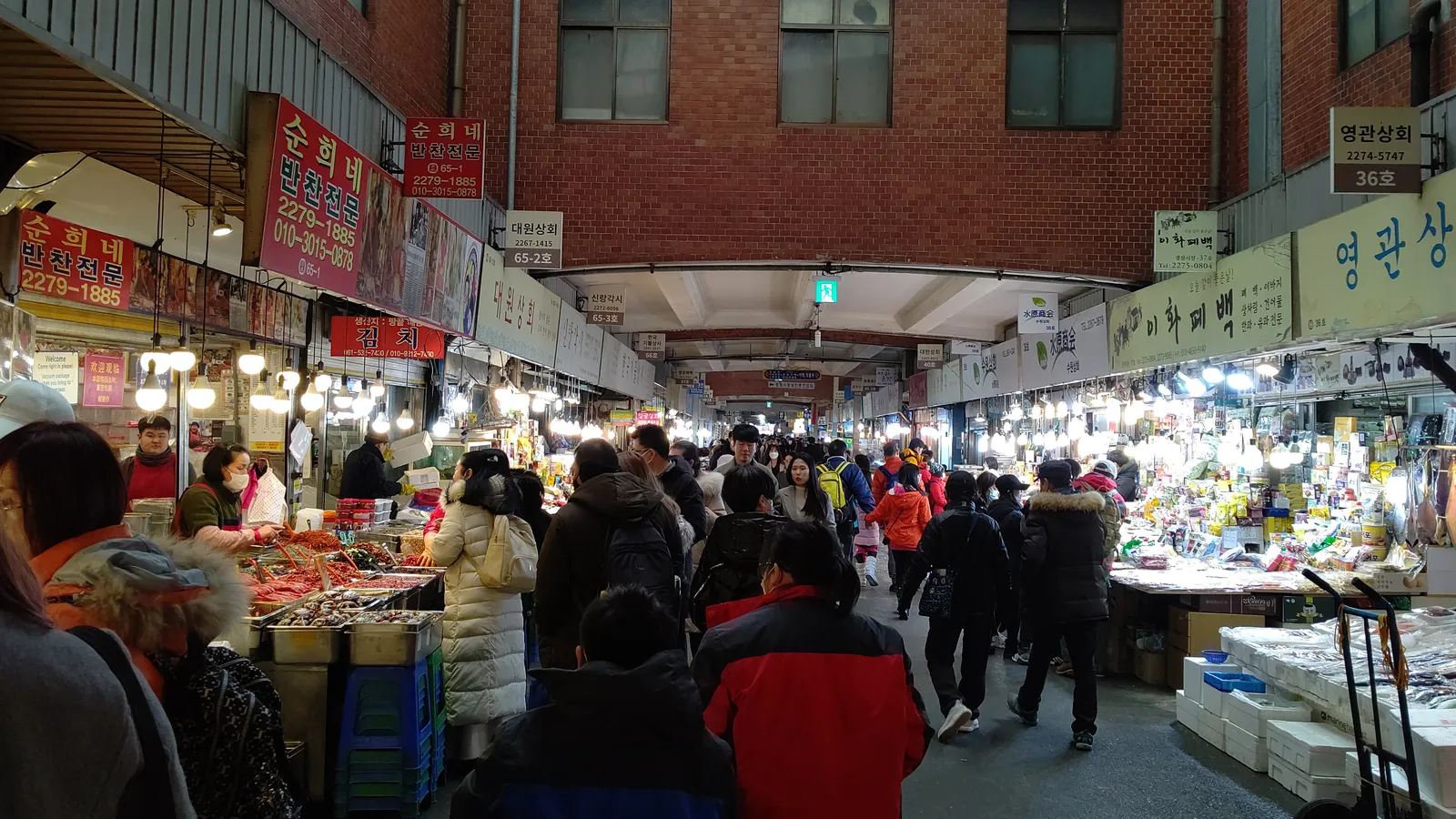
The food stalls cook every day into the evening, while the fabric and hanbok sellers close on Sundays. Seating is a bench at the stall counter. For a guided tasting with someone to explain the dishes, Gwangjang Market food tours run through the main alleys.
The wooden hanok houses of Bukchon
Bukchon is the residential neighbourhood on the slope between Gyeongbokgung and Changdeokgung, the two main Joseon palaces, and its lanes are lined with hanok, traditional Korean houses with tiled roofs, timber frames and walled courtyards. From around 1920 the developer Chŏng Segwŏn redeveloped much of the neighbourhood, building hanok with glass windows and electricity, a deliberate effort, according to his descendants, to keep the area in Korean hands under colonial rule.
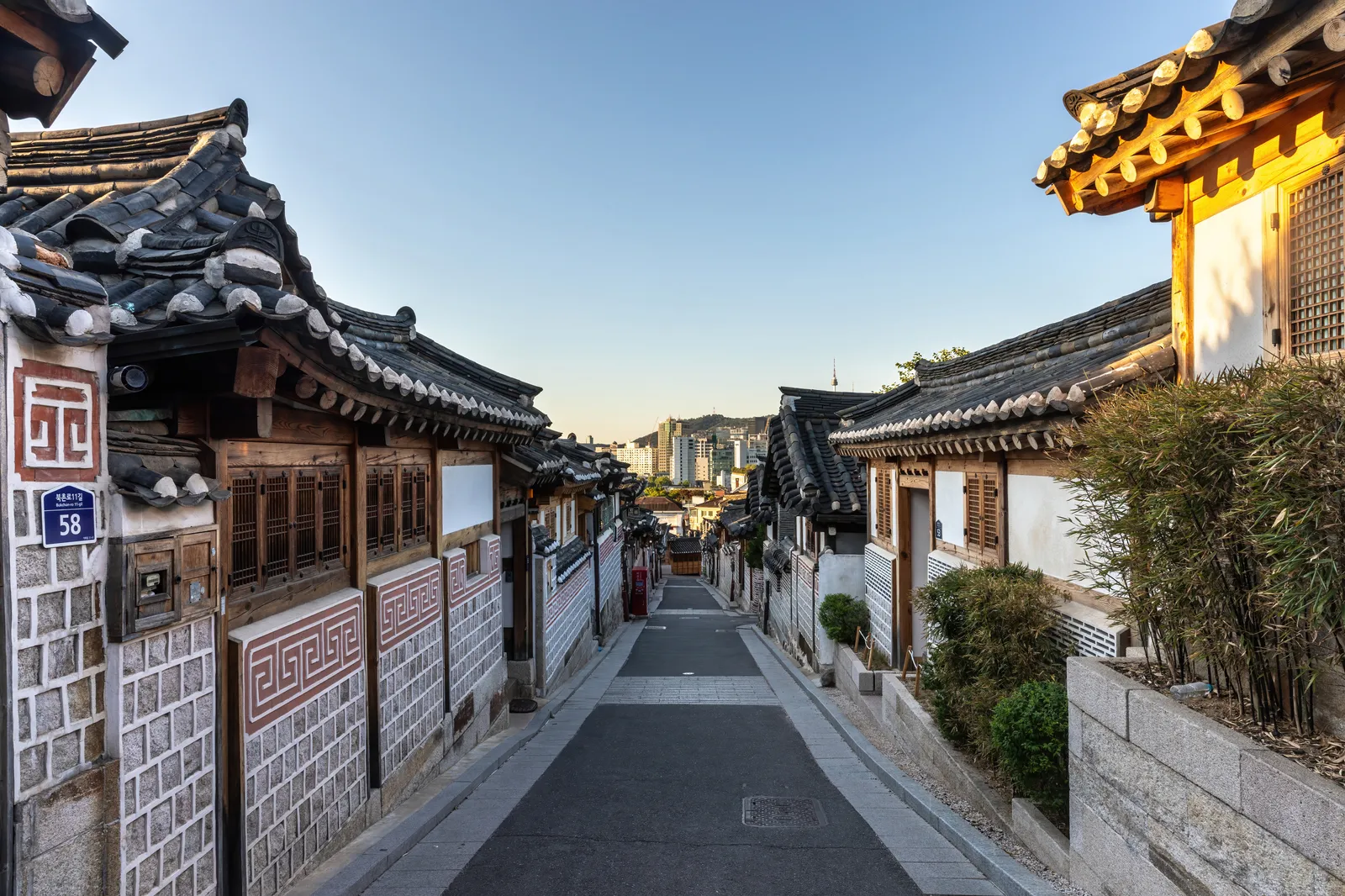
People still live in these houses, and the visitor numbers are the reason for the rules. Annual visits rose from about 30,000 in 2007 to 6.4 million in 2024 while the resident population shrank, and since November 2024 the most-visited area, around the lane called Bukchon-ro 11-gil, has been open to tourists only from 10am to 5pm, with a 100,000 won fine enforced from March 2025. Keep voices down, stay off the doorsteps, and plan Bukchon for the middle of the day. The lanes climb steeply up the hillside toward the palace walls, the kind of gradient where a rolling suitcase has to be hauled rather than pulled.
Deoksugung Palace’s neoclassical stone hall
Deoksugung sits on the corner of Seoul Plaza, opposite City Hall and one metro stop from Seoul Station, and it’s where the last chapter of the Joseon court played out. King Gojong proclaimed the Korean Empire here on 13 October 1897 and made the palace its seat, and he built it out in both Korean and Western styles to present a modernising state. Seokjojeon, the white stone hall with a columned portico, was completed in 1910, designed and furnished by a British team, only months before Japan annexed Korea. It now houses a museum of the Korean Empire period.
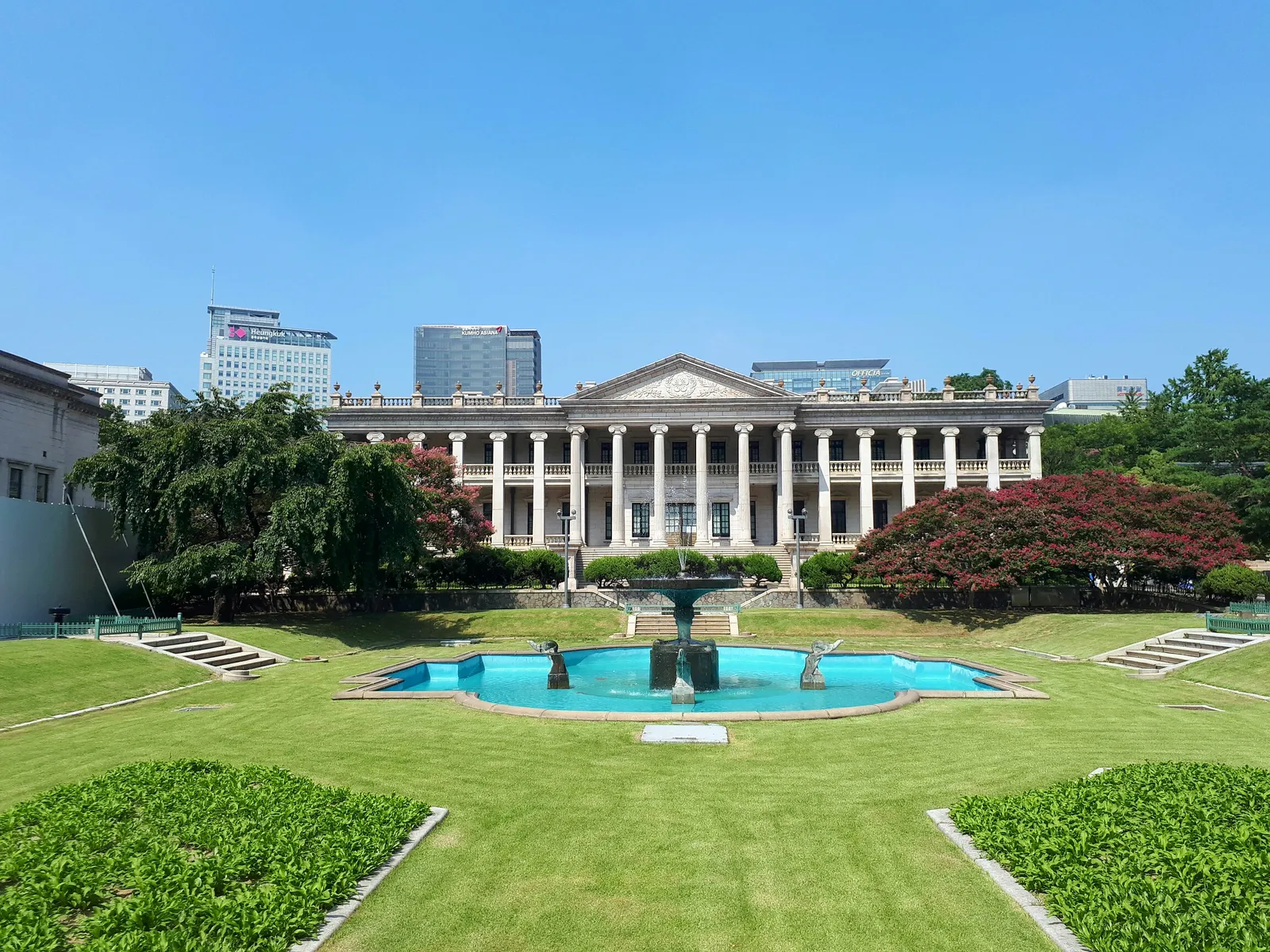
Admission is 1,000 won, the palace opens 9am to 9pm with the last entry at 8, and it closes on Mondays. Outside its main gate, Daehanmun, a guard-changing ceremony takes place at 11am, 2pm and 3:30pm every day except Monday, free to watch from the pavement. Because it keeps such late hours and sits so close to the station, it’s the stop that fits at the end of the day, after Gyeongbokgung has closed.
An airline check-in desk under Seoul Station
The AREX Airport Railroad express leaves Seoul Station non-stop for Incheon International Airport (ICN), 43 minutes to Terminal 1 and 51 to Terminal 2, for 13,000 won bought at the station machines, with departures roughly every 30 to 40 minutes. The all-stop train on the same line costs about 4,750 won and takes about an hour to Terminal 1, calling at Hongik University and Gimpo Airport on the way; it runs far more often, which matters if you have just missed an express.
The express ticket also opens the City Airport Terminal on the station’s second basement level, where a group of airlines, Korean Air among them, check passengers in and take their bags before the train. The counters run from 5:20am to 7pm and stop accepting a flight 3 hours and 20 minutes before its departure, so it works for an evening flight and not a late-night one. Which airlines take part changes from time to time; check with yours before counting on it. Seoul is not the only city in the region that runs a non-stop airport express and an all-stop train on the same line: Taipei’s airport railway splits its service the same way.
Frequently asked questions
What should I do during a layover in Seoul?
Start at Gyeongbokgung Palace, where the guard change outside the front gate is free at 10am and 2pm and the grounds cost 3,000 won through the end of 2026, then walk the hanok lanes of Bukchon on the slope beside it before they close to visitors at 5pm. With the rest of the afternoon, pick one of N Seoul Tower on Namsan or the mung bean pancakes at Gwangjang Market, and finish at Deoksugung, one metro stop from Seoul Station, which stays open until 9pm. Six to eight hours covers the palace quarter and one of the other two once the airport train both ways is counted. The tower observatory is the only stop worth buying a ticket for ahead, and it is also the one you can skip without losing anything else on the list.
Do I need a K-ETA to leave the airport and see Seoul?
Not if you hold a passport from one of the 22 countries and territories covered by South Korea's temporary exemption, which includes the United States, the United Kingdom, Canada, Australia, Japan, Taiwan and most of western Europe, and which runs through 31 December 2026. Those travellers can enter visa-free for a short visit without applying for the K-ETA electronic travel authorisation in advance. Whether the exemption continues into 2027 is a decision for the Ministry of Justice, so for a trip after that date check the K-ETA site before you fly. Nationals of other visa-exempt countries need an approved K-ETA before boarding.
Which days are Seoul's palaces closed?
Gyeongbokgung shuts on Tuesdays, and its guard change at the front gate is off that day too. Deoksugung shuts on Mondays instead, so the two never close on the same day and one royal palace is always open. Gyeongbokgung's closing time also moves with the season: 5pm from November to February, 6pm in spring and autumn, and 6:30pm from June to August, with the last entry an hour before closing.
What in central Seoul is still open in the evening?
More than you might expect, though not Bukchon: the hanok lanes there are closed to tourists after 5pm, with a 100,000 won fine enforced since March 2025. Deoksugung stays open until 9pm with the last entry at 8, the N Seoul Tower observatory runs until about 10:30pm on weekdays and 11pm at weekends, and the food stalls at Gwangjang Market keep cooking well into the evening every day of the week, long after the fabric shops upstairs have closed.
Is the express or the all-stop train better back to Incheon Airport?
For most people the express. The AREX Airport Railroad express runs non-stop from Seoul Station to Terminal 1 in 43 minutes and Terminal 2 in 51, for 13,000 won bought at the machines, and it is the only ticket that lets you use the in-town check-in desk under Seoul Station. The all-stop train on the same line costs about 4,750 won and takes about an hour to Terminal 1, but it runs far more often and calls at Hongik University and Gimpo Airport on the way, which makes it the better choice if you are starting from Hongdae rather than Seoul Station.