Hongik University Station Layover, Seoul
Part of the full Seoul Layover: Gyeongbokgung and Namsan, ICN
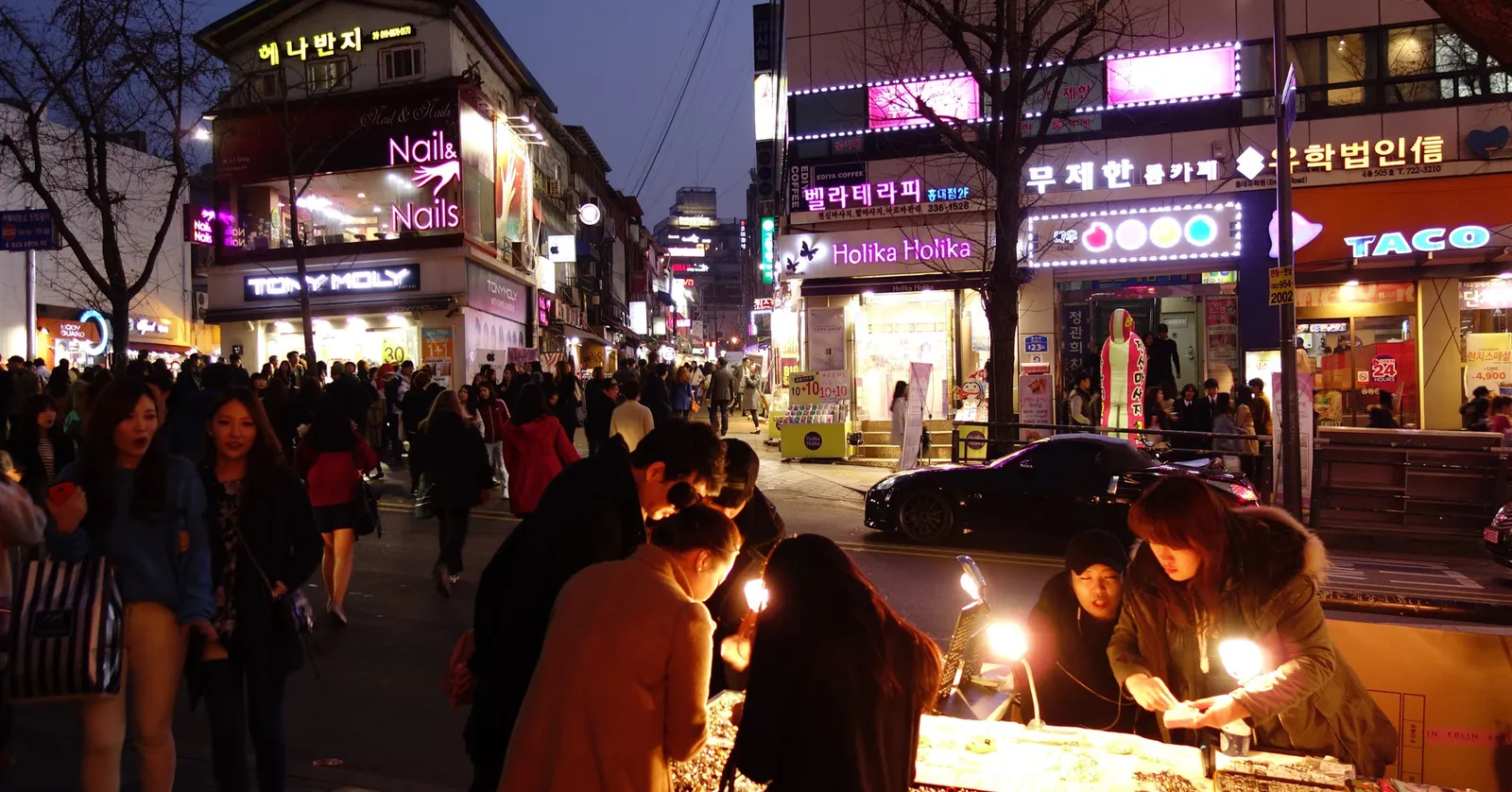
Around Seoul’s Hongik University Station, buskers and dance crews take over Hongdae’s Red Road on Eoulmadang-ro most evenings, and the Yeonnam-dong stretch of Gyeongui Line Forest Park runs along a railway line that now lies underground, with the student district’s bars and cafes on both sides.
Buskers on Hongdae’s Red Road, along Eoulmadang-ro
Hongdae takes its name from Hongik University, whose art school drew musicians and artists to the streets around it, and Eoulmadang-ro, known as the Red Road, is where its busking happens. Singers, bands and K-pop dance crews set up along it from late afternoon, performances run until about 10pm on most days, and on Friday and Saturday nights the busiest stretch lasts from around 6pm to midnight. Watching costs nothing.
On Hongik-ro 3-gil, a few minutes from the station, the Trickeye museum fills a basement with painted optical illusions that turn three-dimensional through a phone app, and it stays open into the evening; Trickeye tickets can be bought ahead rather than at the desk. On Saturdays from March to November, the Hongdae Free Market fills Hongik Children’s Park, opposite the university’s main gate, from 1pm to 6pm.
The circles around the best performers close up across the whole street on a weekend night, and a wheeled suitcase has to go around every one of them.
Yeontral Park and Ttaeng-ttaeng Street on the old Gyeongui railway line
Gyeongui Line Forest Park is a 6.3-kilometre greenway running from Mapo to Yongsan along the route of the Gyeongui railway, which was moved underground in a project begun in 2005. The park was built in sections from 2012 and finished in 2016, and the stretch through Yeonnam-dong, beside exit 3 of Hongik University Station, is the one people mean when they say Yeontral Park, a nickname borrowed from New York’s Central Park. A shallow stream runs between the lawns and paths, and on a warm evening the grass fills with people eating takeaway and drinking beer from the shops along its edges.
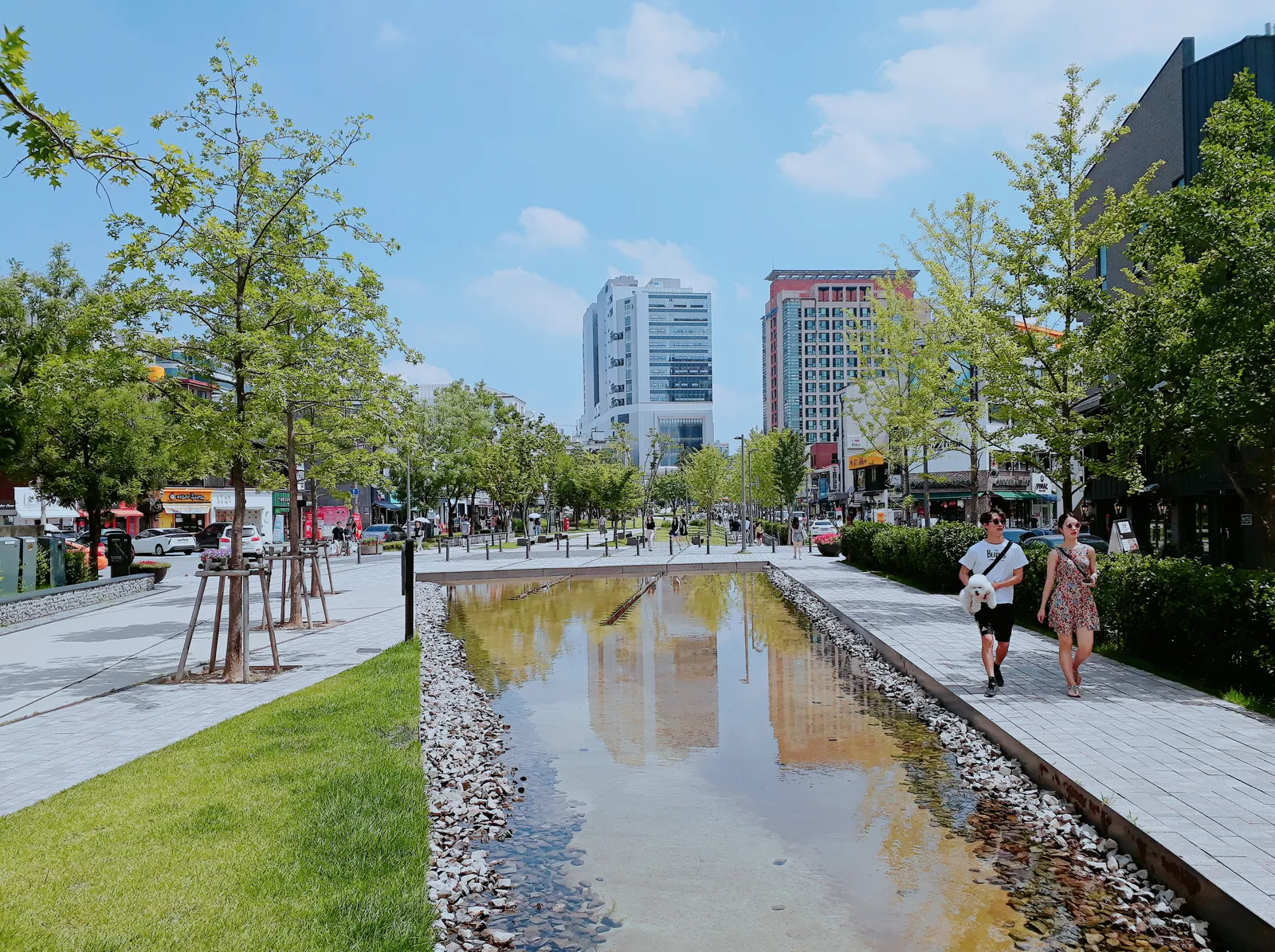
The cafes and restaurants lining both sides of the park mostly opened after it did, which is why Yeonnam-dong reads as newer than the streets around the university.
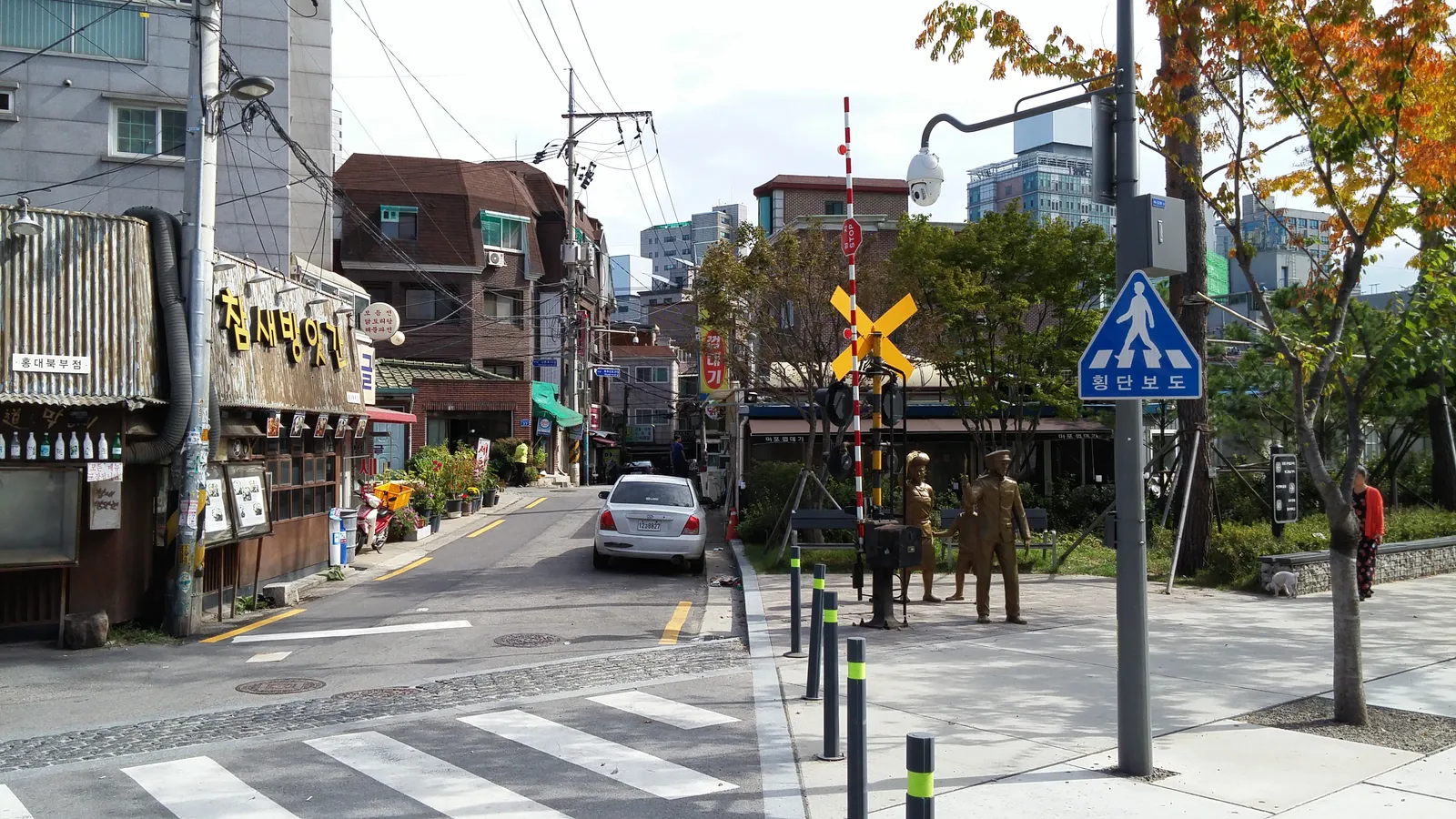
The park’s line is crossed by Wausan-ro 32-gil, a lane known as Ttaeng-ttaeng Street after the ringing bells that sounded when the barriers came down for trains on the old Gyeongui Railway. The crossing sign and a short length of track have been left beside the road. When the tracks were still in use it was a run-down lane of cheap eateries, workshops and the practice rooms where some of Korea’s first indie bands rehearsed; the Sanwoollim Theatre, a long-standing home for indie music, stands on the rise at its entrance.
Hongik University is on the airport railway’s all-stop line
The AREX all-stop train calls at Hongik University and reaches Incheon International Airport (ICN) Terminal 1 in roughly 50 minutes, stopping at Gimpo Airport on the way. The non-stop express does not call here: it starts at Seoul Station, two stops east, which is also where the in-town airline check-in desk is. For a daytime layover with the palaces still open, the Seoul itinerary through Gyeongbokgung and Bukchon is the better use of the afternoon, and Hongdae is where to finish it.
Frequently asked questions
What should I do during a layover near Hongik University Station in Seoul?
Walk Hongdae's Red Road along Eoulmadang-ro in the evening, when buskers and dance crews set up along it, and spend an hour in the optical-illusion rooms of the Trickeye museum if you want something indoors. Then take the Yeonnam-dong stretch of Gyeongui Line Forest Park, the old railway line turned into a park, and look in on Ttaeng-ttaeng Street, named for the bells of the level crossing that used to be there. Three to four hours from late afternoon covers it. Trickeye is the only thing worth booking, and skipping it costs nothing else on the list.
When are the buskers out in Hongdae?
Mostly from late afternoon into the night. Performances build from around 5pm and run until about 10pm on most days, and on Fridays and Saturdays the busiest stretch runs from around 6pm to midnight. The street is thin in the morning and early afternoon, so an evening layover suits Hongdae much better than a morning one.
What in Hongdae can I do without spending money?
Most of it. The street performances along Eoulmadang-ro are free to watch, Yeontral Park is a public park open at all hours, and Ttaeng-ttaeng Street is an ordinary lane. On Saturdays from March to November, the Hongdae Free Market fills Hongik Children's Park, opposite the university's main gate, from 1pm to 6pm, with around a hundred artists and makers selling handmade work and performers on a small open stage.
Can I take the train straight from Hongdae to Incheon Airport?
Yes. The AREX all-stop train calls at Hongik University and reaches Incheon International Airport Terminal 1 in roughly 50 minutes, calling at Gimpo Airport on the way. The non-stop express does not stop here; it starts at Seoul Station, two stops the other way, which is also where the in-town airline check-in desk is.