Seoul Station Layover: Namdaemun and Seoullo
Part of the full Seoul Layover: Gyeongbokgung and Namsan, ICN
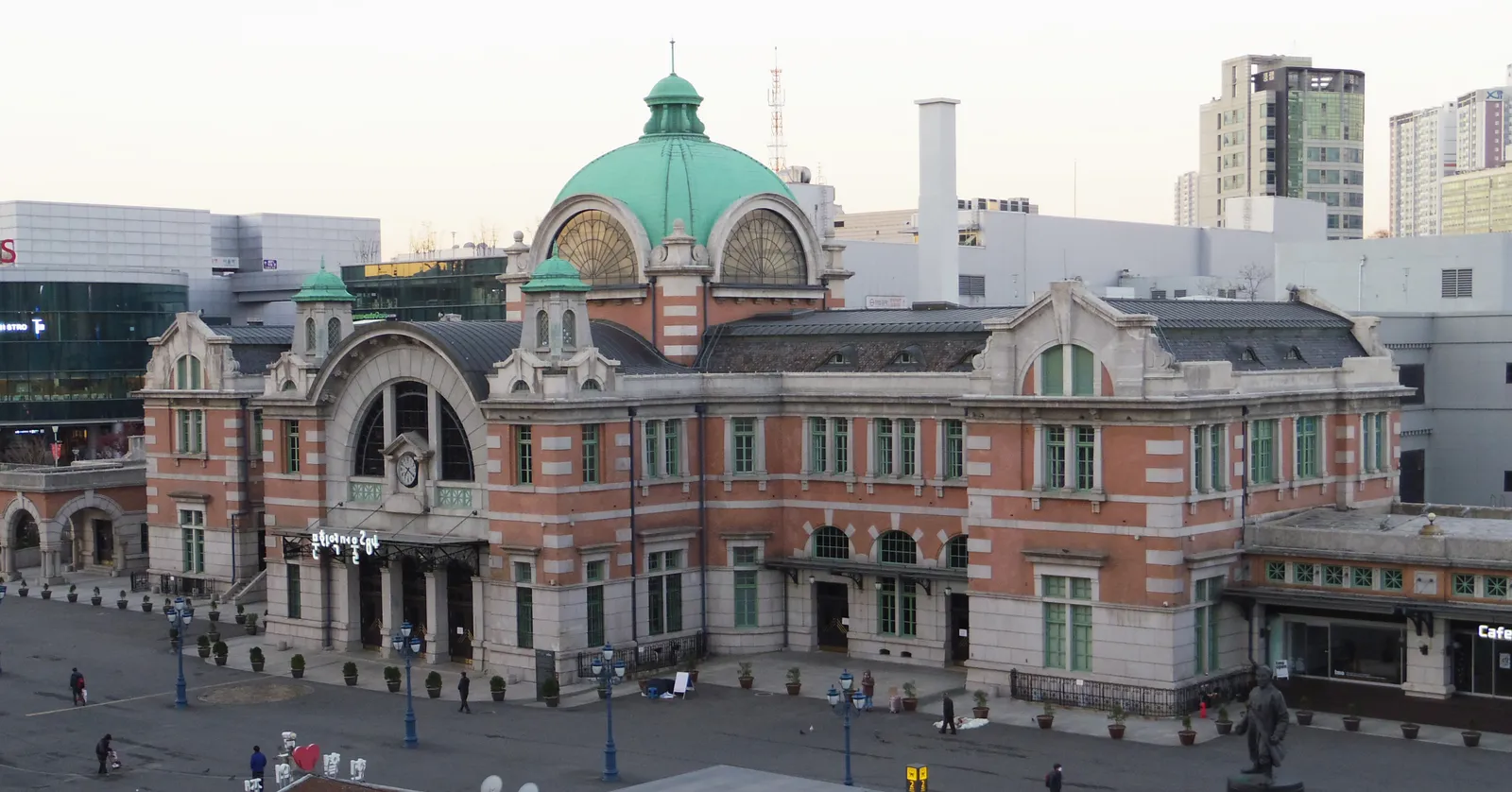
Seoul Station, the city’s main rail hub, sits within a ten-minute walk of Namdaemun Market’s food alleys, Sungnyemun, the south gate of 1398, and Seoullo 7017, an old road overpass replanted as a garden, with the domed 1925 station building free to walk into beside the new one.
The food alleys of Namdaemun Market
Namdaemun Market fills the blocks between Sungnyemun and Hoehyeon subway station, and it has been trading since September 1414, which puts it among the oldest markets in Korea. It burned in 1911, 1921, 1954, 1968 and 1977 and was rebuilt every time. Most of its more than 5,000 shops now sell clothes, glasses, kitchenware and imported goods, but the reason to come on a short stop is food: one alley is given over to galchi-jorim, cutlassfish braised in a red chilli sauce, another to kalguksu, knife-cut noodle soup, and the carts along the main lanes sell hotteok, griddled pancakes filled with sugar syrup, nuts or vegetables.
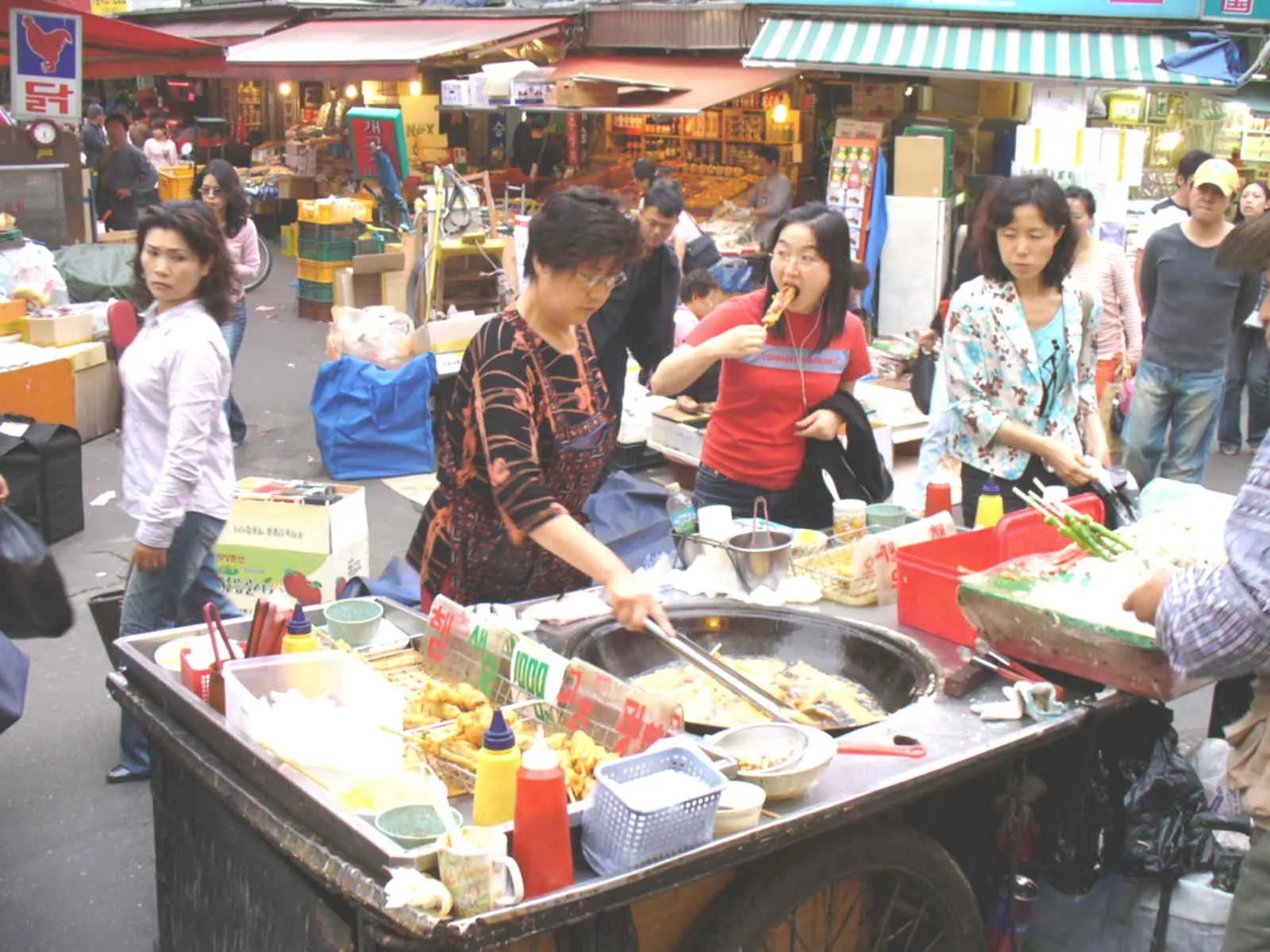
The alleys are narrow and the choice runs to dozens of stalls, so it helps to know what you are pointing at; a guided food tasting tour of Namdaemun Market works through the stalls with someone who can order.
Sungnyemun, the south gate of 1398
Sungnyemun, usually called Namdaemun, stands on a traffic island on Sejong-daero between Seoul Station and City Hall, the main southern gate in the stone wall that once ringed the Joseon capital. It was built in 1398 and rebuilt in 1447. On the evening of 10 February 2008 a 69-year-old man poured paint thinner on the wooden floor of the upper pavilion and set it alight, and much of the wooden pavilion collapsed overnight. Five years of restoration, at a cost of about 20 billion won, reopened it in May 2013.
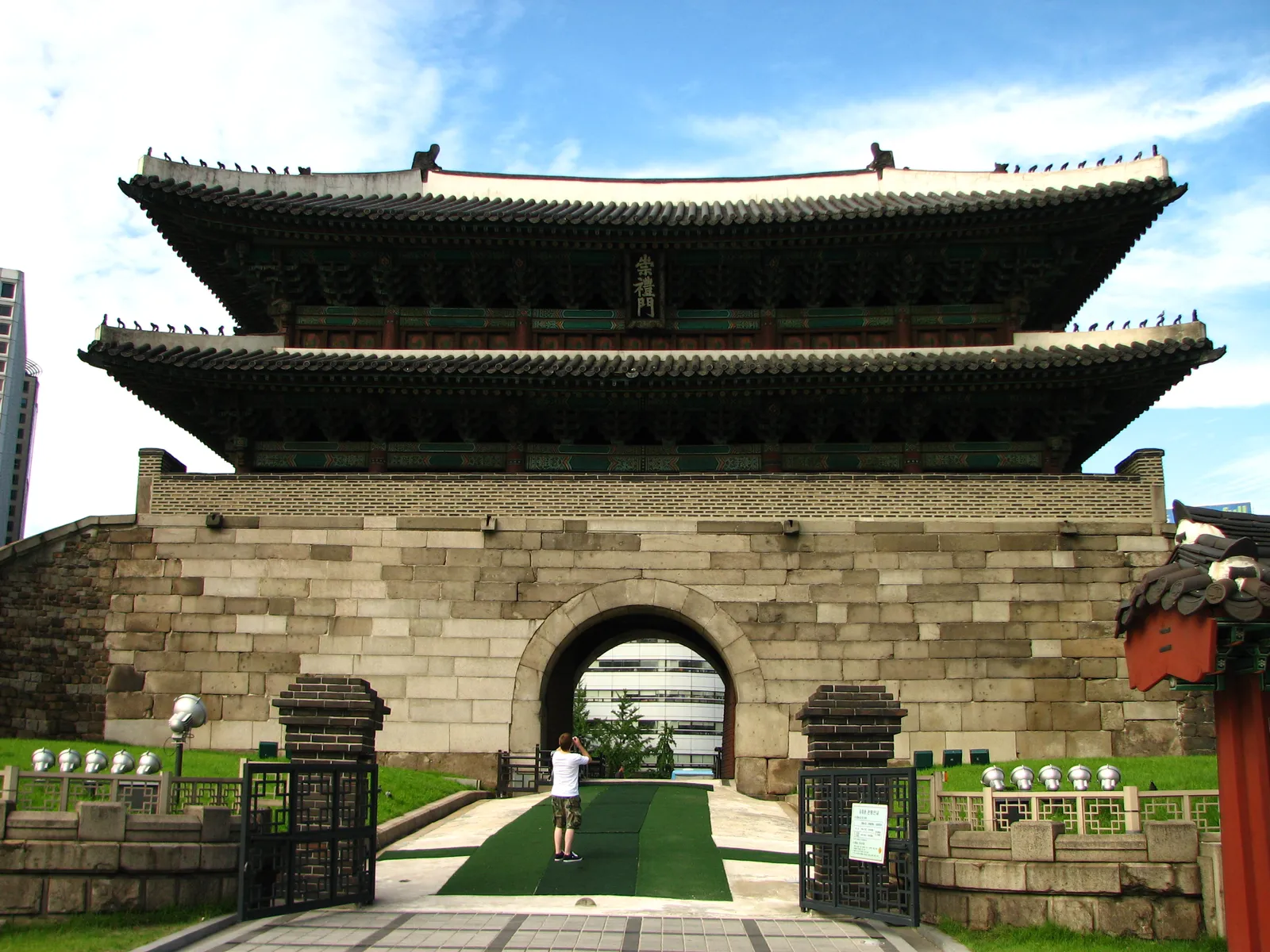
It costs nothing, and during opening hours the gate in the fence is open, so you can cross the lawn and stand at the foot of the stone base, under the arch that traffic into the city once passed through. The wall on either side was pulled down in the early twentieth century to make room for roads, which is why the gate now stands on its own among office blocks.
The green dome of the 1925 station building
The old Seoul Station stands on the plaza in front of the glass KTX terminal that replaced it in 2004: red brick banded with granite under a green copper dome, finished in 1925 to a design by Tsukamoto Yasushi of Tokyo Imperial University. After a two-year restoration it reopened in 2011 as Culture Station Seoul 284, the number taken from its designation as Historic Site 284. The central hall, with its granite floor, and the rooms off it now hold rotating exhibitions and performances, free to walk into from 10am to 7pm, Tuesday to Sunday, apart from some special exhibitions that charge.
The in-town airline check-in desk beneath the new station takes suitcases only for a short list of airlines, only from passengers holding an airport express ticket, and not within 3 hours and 20 minutes of departure, so a bag on any other airline or a later flight needs somewhere else to wait.
Seoullo 7017, the 1970 overpass turned into a garden
Seoullo 7017 runs on the old Seoul Station Overpass, a road flyover built across the tracks in 1970, closed to traffic in 2015 as unsafe and reopened in May 2017 as a pedestrian walkway. The Dutch firm MVRDV designed it, and the deck, about a kilometre long and 17 metres above the street, carries more than 24,000 plants of 228 species in round concrete planters. The “70” in the name is for the year the flyover opened and the “17” for its opening year as a park and for the 17 walkways that connect it to the streets below.
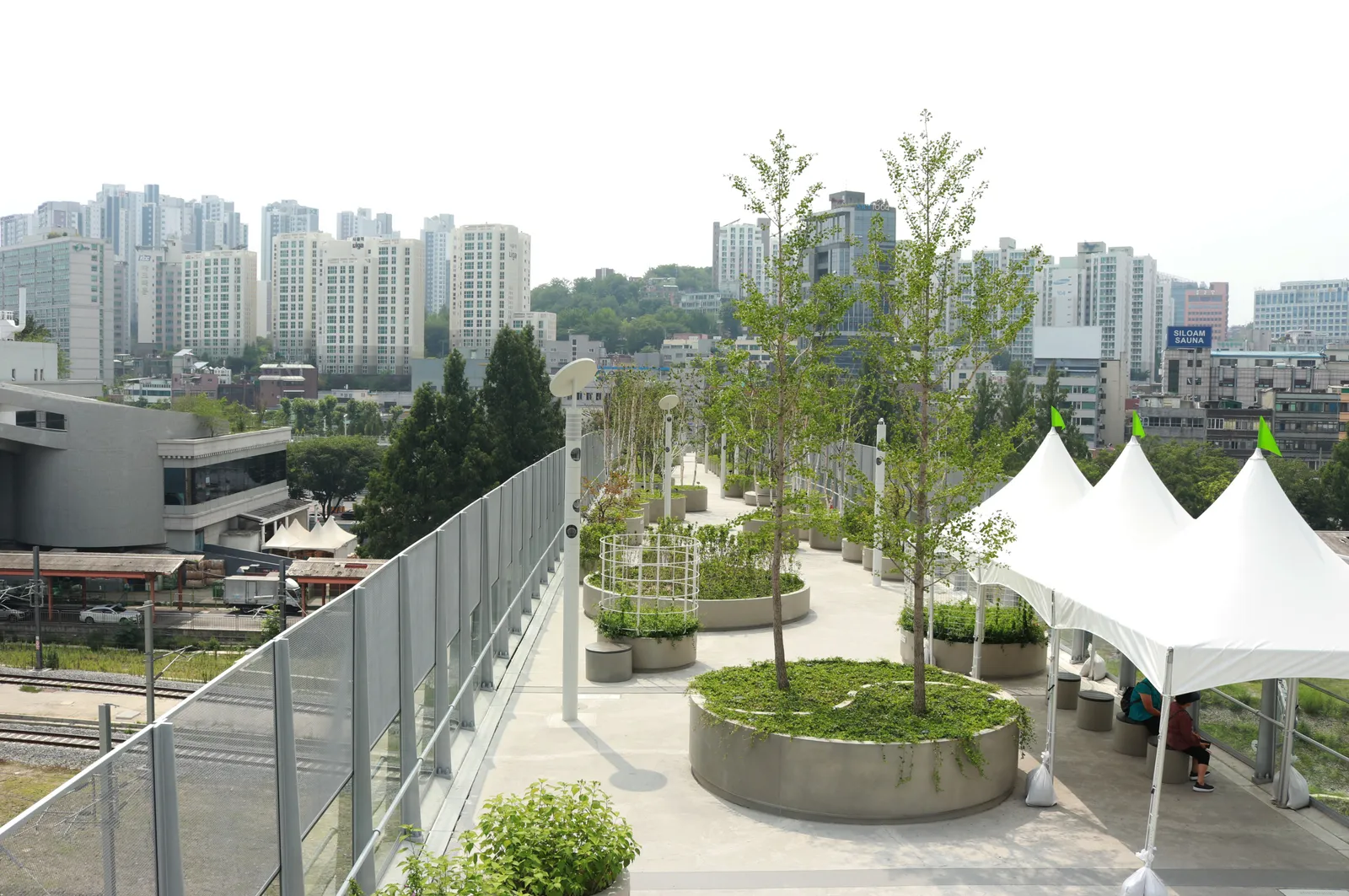
From the middle of the deck you look down on the tracks running out of the station, and the northeast end comes down near the market and Hoehyeon.
The airport express leaves from deep under Seoul Station
The AREX Airport Railroad platforms sit several levels below the main station concourse; allow about ten minutes to get down to them from street level. The express runs non-stop to Incheon International Airport (ICN) in 43 minutes to Terminal 1 and 51 minutes to Terminal 2, for 13,000 won at the ticket machines, leaving roughly every 30 to 40 minutes. The express ticket is also what the check-in desk asks for, and its counters close at 7pm.
Two or three hours around the station covers the market, the gate and the walkway. With a whole afternoon to spend, the Seoul itinerary through Gyeongbokgung and Bukchon is a short metro ride north, and brings you back here for the train.
Frequently asked questions
What should I do during a layover near Seoul Station in Seoul?
Eat in the food alleys of Namdaemun Market, stand under Sungnyemun, the city's south gate from 1398, and walk Seoullo 7017, the old road overpass above the tracks that is now a planted walkway. Step into the domed 1925 station building on the way back, since it costs nothing and sits right beside the new station. Two to three hours covers all four without leaving the blocks around the station. A guided food tour of the market is the only thing here that needs booking, and it is easy to skip in favour of just walking the alleys yourself.
What near Seoul Station can I see without spending anything?
Almost all of it. Culture Station Seoul 284, the old station building, is free to walk into from 10am to 7pm, Tuesday to Sunday, with only some special exhibitions charging. Sungnyemun charges nothing to walk up to, and Seoullo 7017 is a public park on an old overpass. The only money you are likely to spend is on food in Namdaemun Market.
Can I get close to Sungnyemun, or only see it from the road?
Both, depending on the day. The gate stands on a traffic island and can be seen from the pavement at any hour, but the fenced lawn around it opens only from 9am to 6pm, until 6:30pm from June to August and 5:30pm from November to February. It is closed on Mondays, when the fence stays shut and the street view is all there is.
How long does it take to reach the airport train platform inside Seoul Station?
Allow about ten minutes. The AREX Airport Railroad platforms are several levels below the main concourse, and the walk down with luggage takes longer than the station's size suggests. Travellers changing from a mainline train are usually advised to leave at least twenty minutes between the two.