Taipei 101 and Longshan on a TPE Layover
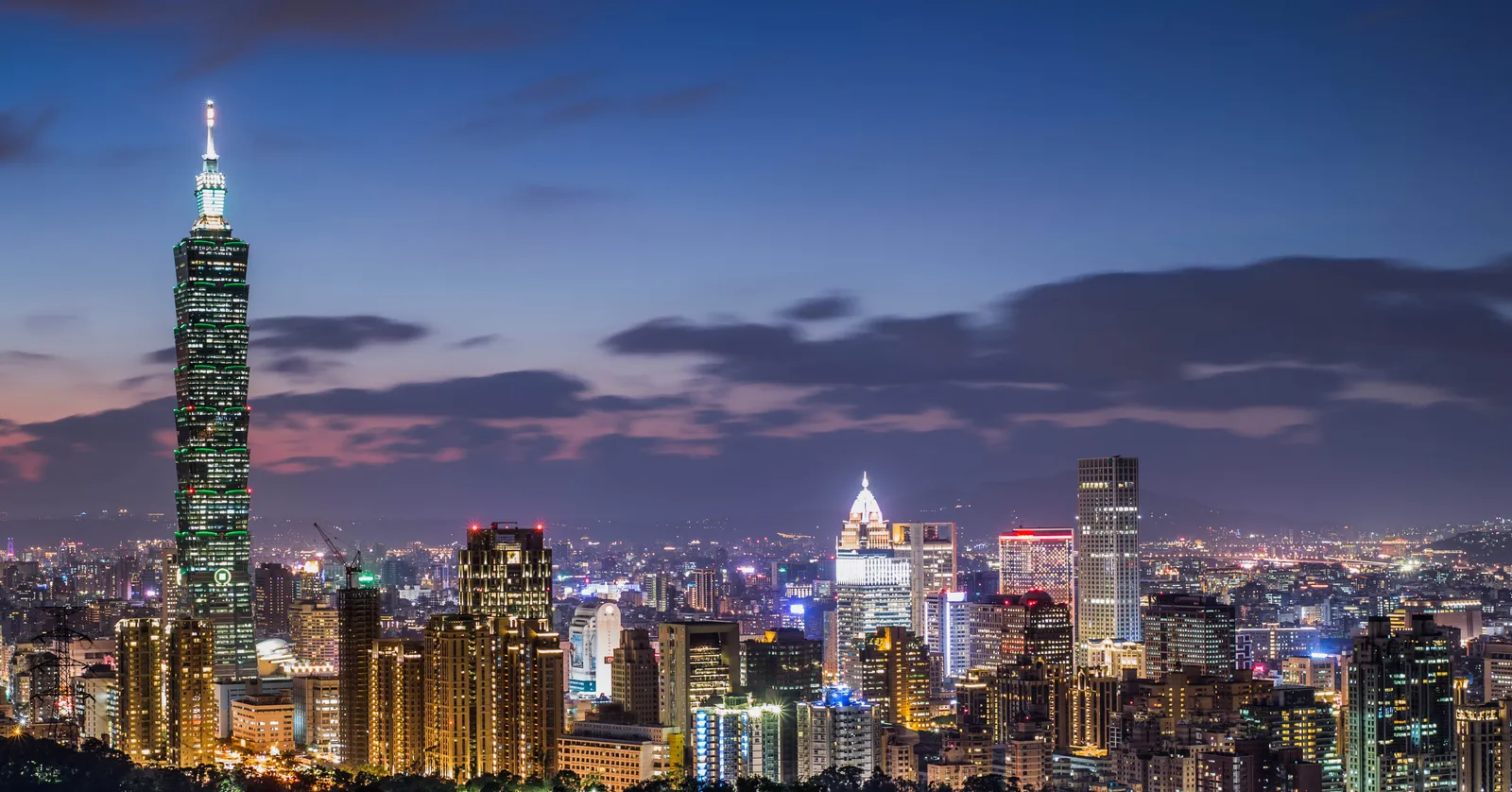
Taipei 101 charges NT$600 to stand on its 89th floor, the hillside path that looks straight across at it costs nothing, and the temples and shophouse streets of old Taipei sit about twenty minutes away by metro.
The gold sphere hanging inside Taipei 101
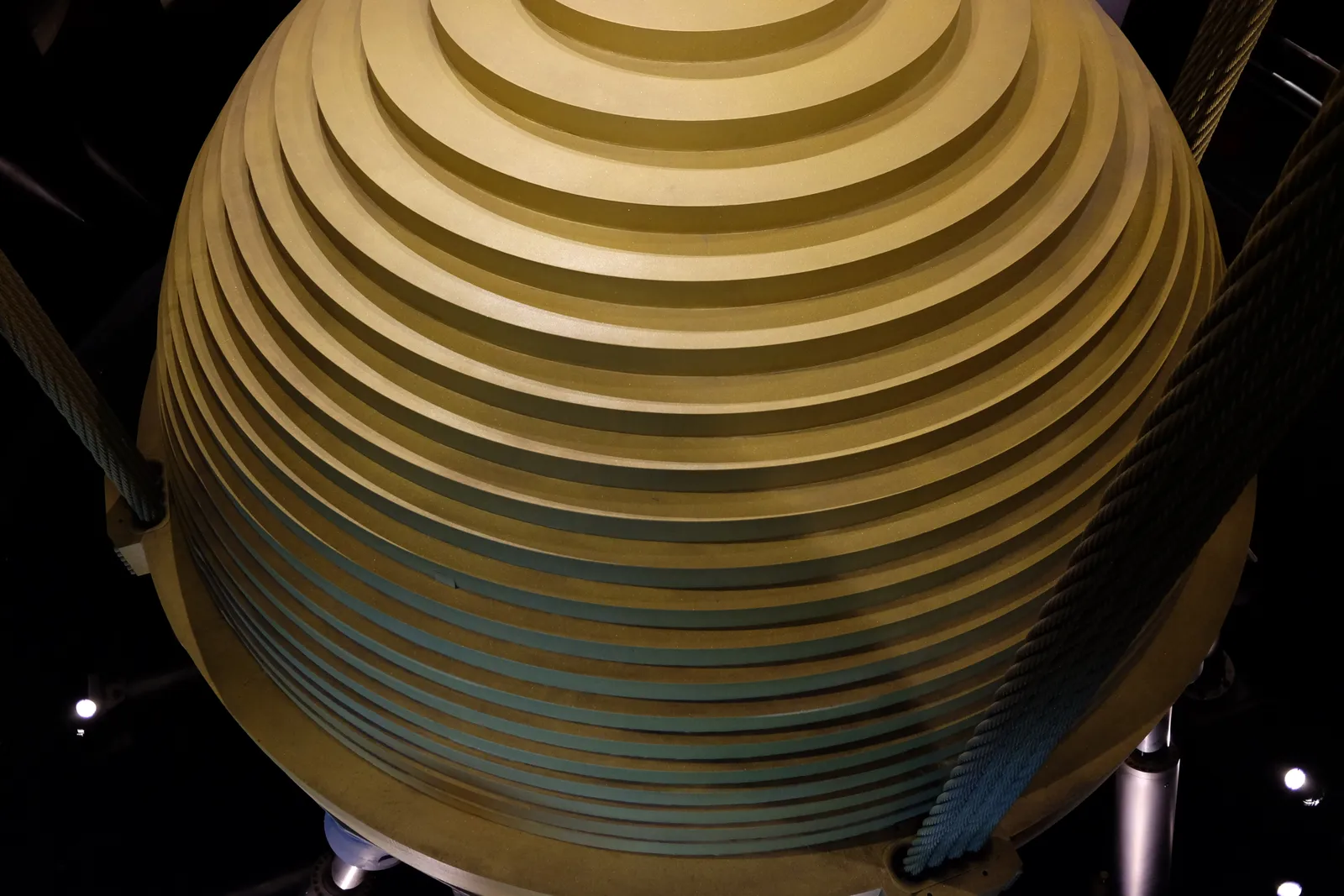
Taipei 101 rises off Xinyi Road at the eastern end of central Taipei, 508 metres and 101 floors, finished on the last day of 2004. The lift covers the fifth floor to the 89th in 37 seconds. What people linger over is one floor below the top of that ride: a gold-coloured ball of 41 welded steel plates, 5.5 metres across and 660 tonnes, slung on cables through the core between the 92nd and 88th floors, where it swings against the building whenever a typhoon or an earthquake leans on it. Typhoon Soudelor moved it a full metre in 2015.
Admission is NT$600 for the 88th and 89th floors, with another NT$380 buying the open terrace on the 101st, and the observatory runs 10am to 9pm every day of the week. The ticket counter sits on the ground floor of the office tower next door, which is where the queue collects, so a ticket bought ahead saves standing in it.
Elephant Mountain’s stone stairs above Xinyi
The wooded ridge on the south side of Xinyi stands far enough back from Taipei 101 that the whole tower fits in a frame with the city under it, and the path up begins about ten minutes on foot from Xiangshan station at the southern end of the metro. From the trailhead it is stone steps the rest of the way, twenty to twenty-five minutes of them, to a cluster of boulders called the Six Giant Rocks that people climb onto to get above the tree line.
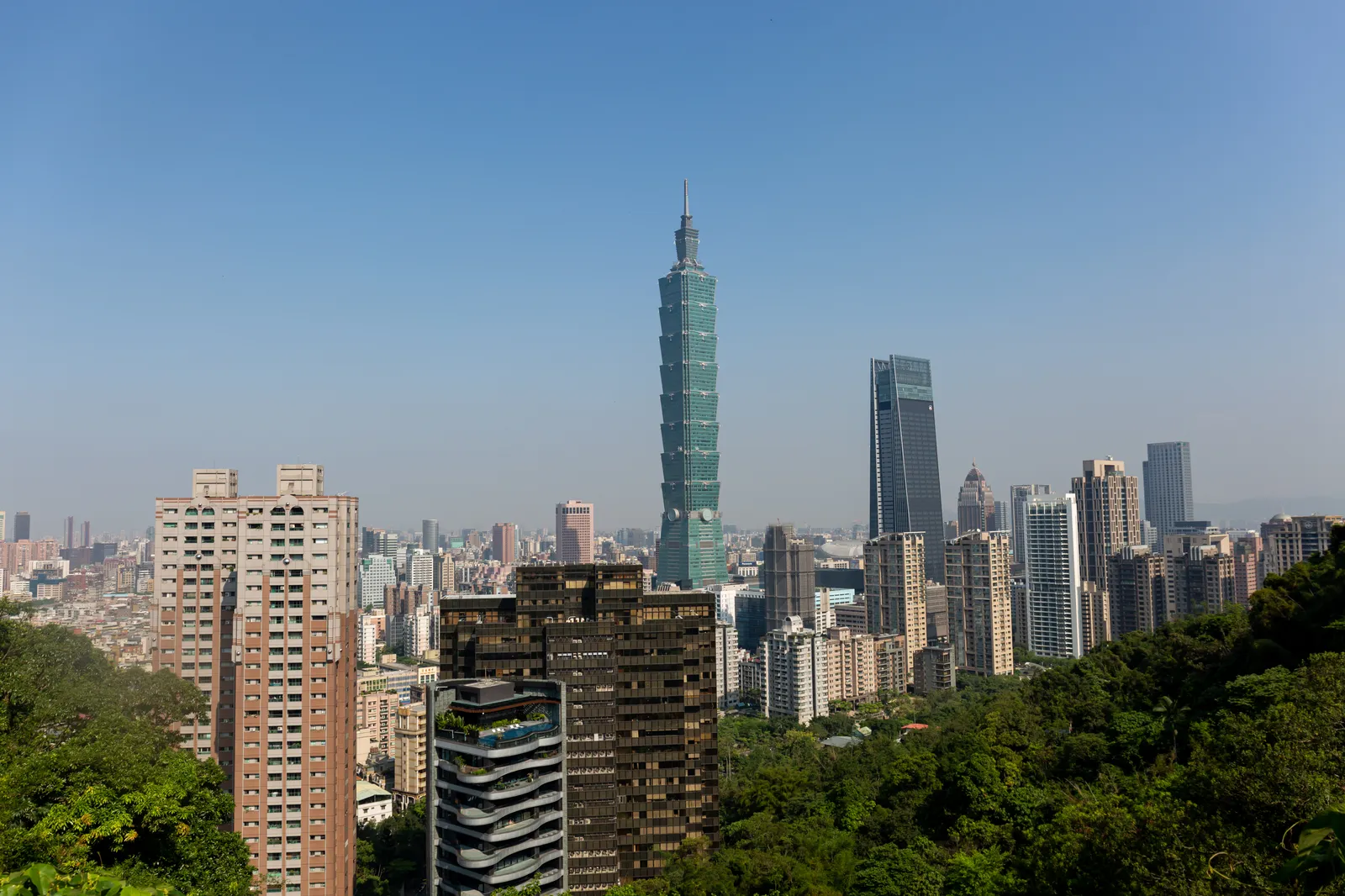
It costs nothing, it never closes, and it is a climb rather than a stroll: the steps are uneven, they are wet for a good part of the year, and there is no lift or shortcut at any point. Late afternoon draws the biggest crowd, because the rocks face north-west across the valley and Taipei 101 lights up while people are still on them.
Chiang Kai-shek Memorial Hall’s hourly guard drill
Chiang Kai-shek Memorial Hall closes the east end of Liberty Square, white marble under an octagonal blue roof, with the National Theater and the National Concert Hall facing each other across the paving in front of it. Since July 2024 the honour guard has worked outdoors instead of upstairs beside the statue: six soldiers march out from the north and south entrances and drill on Democracy Boulevard in front of the hall steps, on the hour from nine in the morning to five in the afternoon, about fifteen minutes a time. Rain cancels it.
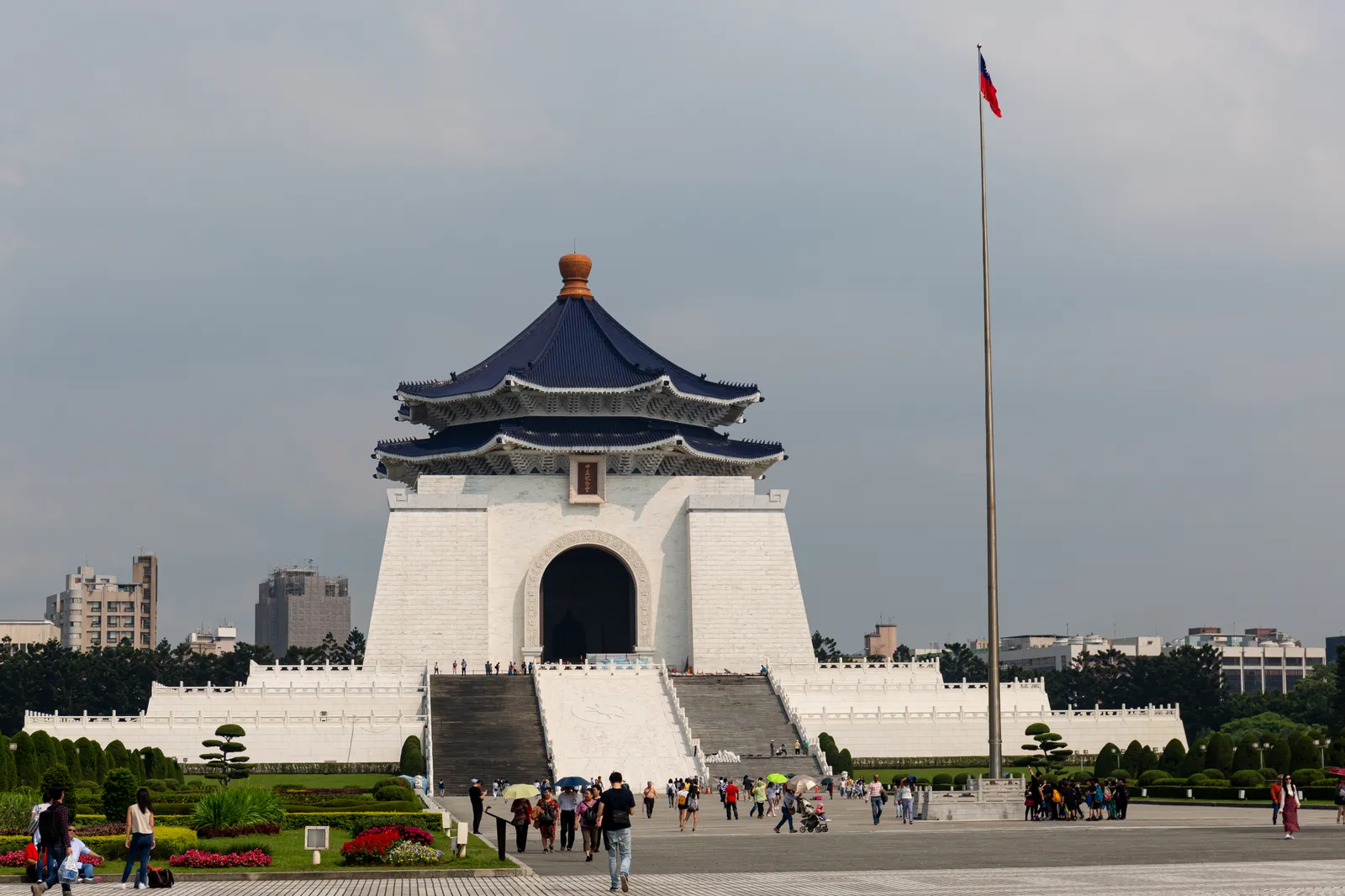
The hall is free and open 9am to 6pm, shut on Lunar New Year’s Eve, Lunar New Year’s Day, 228 Peace Memorial Day and its annual maintenance days. The park around it keeps much longer hours, five in the morning until midnight, which matters if the free time falls late.
Longshan Temple’s bronze dragon pillars
Settlers from Fujian founded Longshan Temple in 1738 on what is now Guangzhou Street in Wanhua, and it has been put back together repeatedly since: rebuilt between 1919 and 1924, then hit on 31 May 1945 when American bombers struck Taipei and destroyed the main building and the left corridor. The two pillars on the front porch came through all of it, cast in bronze rather than carved from the stone used everywhere else in the building, with scenes from the Ming novel Investiture of the Gods spiralling up them. Entry is free, the doors open at six in the morning and shut at 9:45 at night, and this is a working temple rather than a museum: incense, chanting and people with their hands full of offerings at most hours of the day.
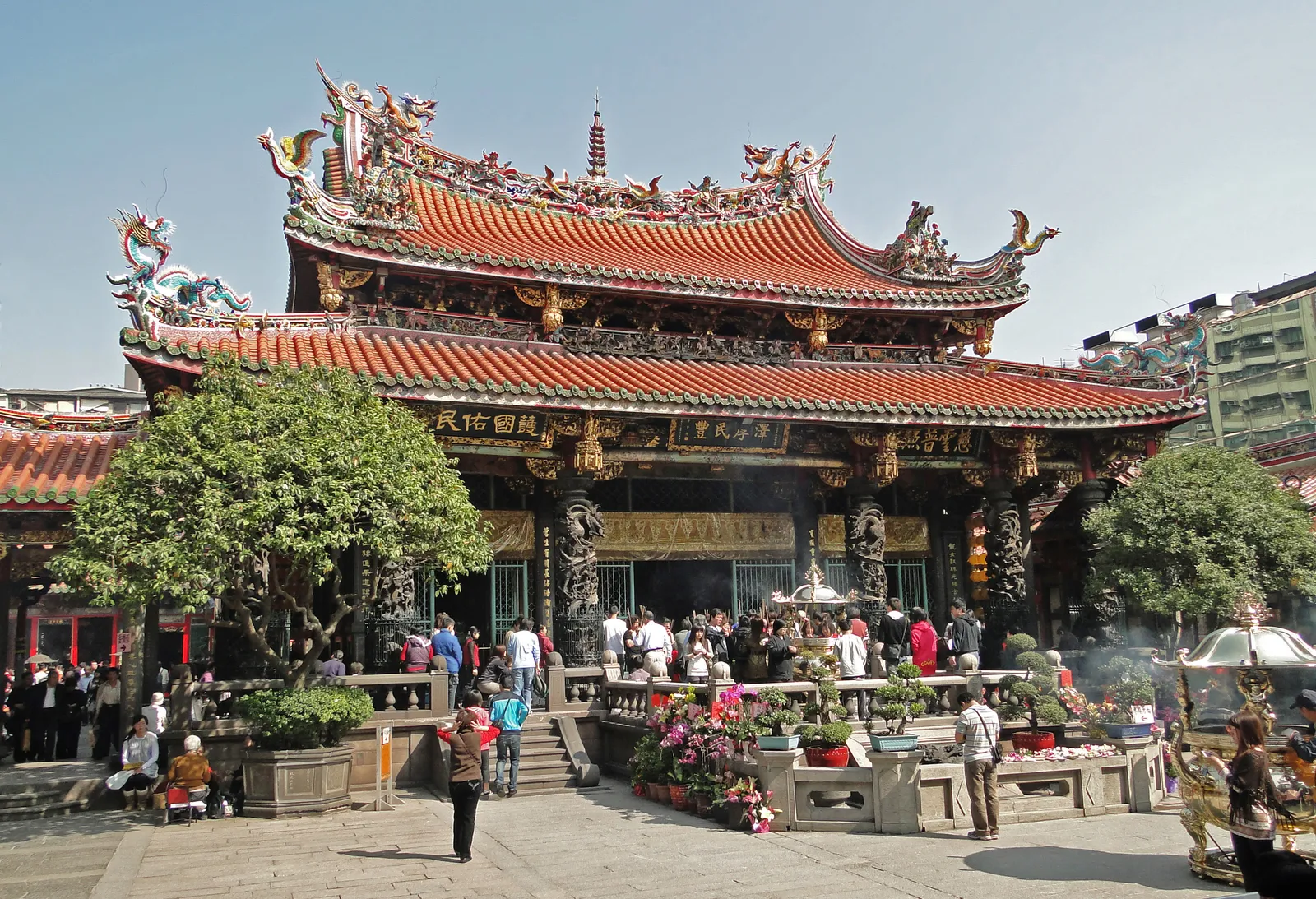
Five minutes away on Kangding Road, Bopiliao is a preserved block of Qing-era shophouses with red brick arcades, free to walk through, though the buildings close at six and the museum inside at five, and the whole block shuts on Mondays. Ten minutes north, at the corner of Zhonghua Road and Changsha Street, Nishi Honganji Square is open ground rather than a ticketed site. A Japanese Pure Land temple complex stood here from the 1900s until it burned down on 5 April 1975, cause never established; a 2011 restoration put back the bell tower and the abbot’s wooden house, which now serves tea and Japanese sweets, and the rest is stone platforms and grass to sit on at any hour.
Most of the older half of Taipei is walked under qilou, the covered arcades cut into the ground floor of the shophouses, and they step up and down a few centimetres between one shopfront and the next with scooters parked across them.
Beimen, the city gate left as the Qing built it
Four of Taipei’s five city gates are not what they were. The West Gate came down under Japanese rule in 1905, and in 1966 the East, South and Little South Gates were rebuilt with northern Chinese palace-style upper storeys, part of a government beautification drive. Beimen, properly Cheng’en Gate, was spared after scholars petitioned for it: a squat red-walled blockhouse on a stone base, put up in 1884, still carrying the roof and proportions it was built with.
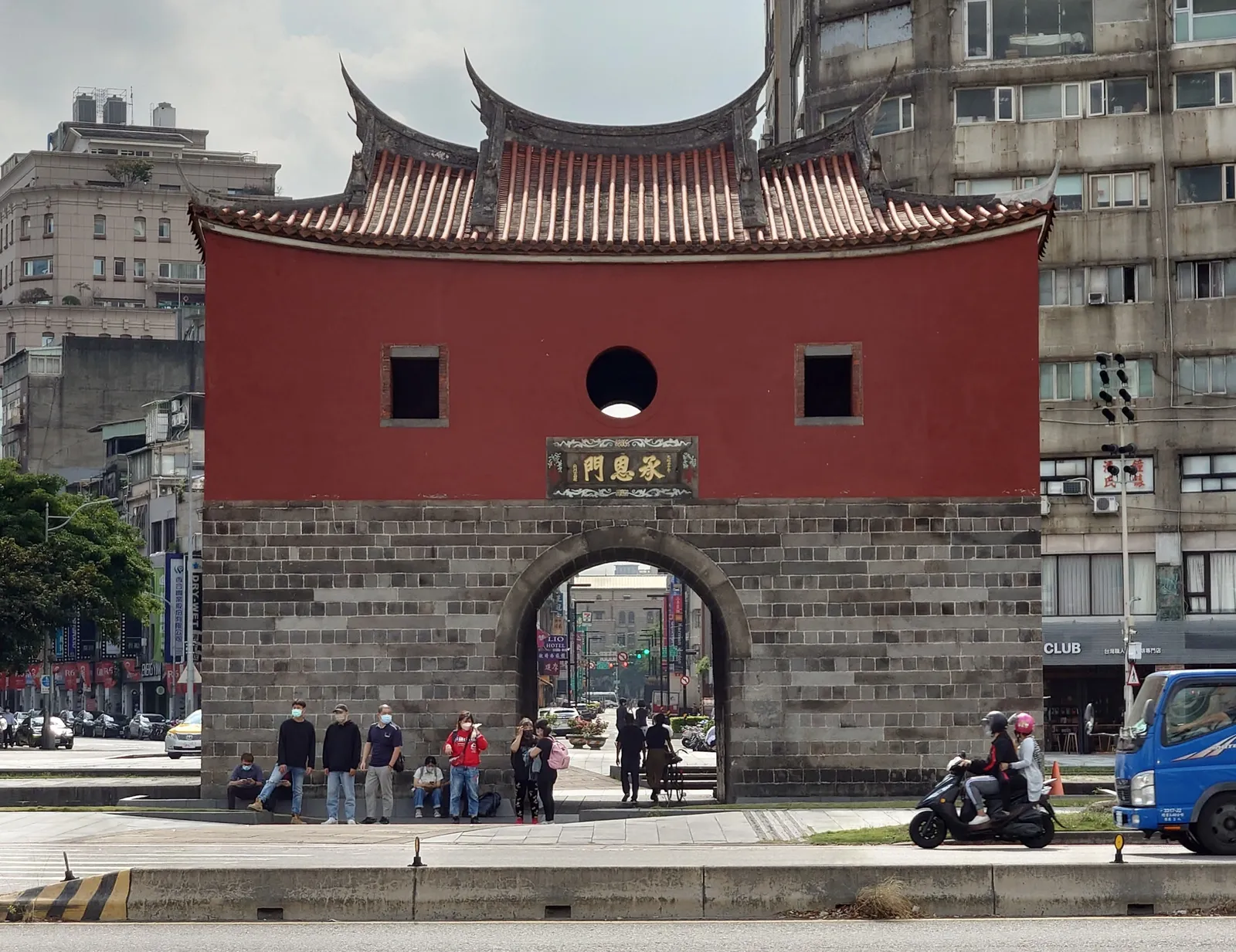
For most of living memory you could barely see it. A ramp of the Zhongxiao elevated road ran directly over the gate until the city demolished that span in 2016, and Beimen Square opened around it the following August. It stands a few minutes west of Taipei Main Station, on a traffic island with the 1930 Taipei Post Office on one side, which makes it the easiest thing on this list to reach and the one most people walk past.
The Baroque gables over Dihua Street’s shophouses
Dadaocheng grew into Taipei’s trading quarter in the 1850s on tea, camphor and rice going down the Tamsui River, and Dihua Street is what is left of it, with the earliest shops on the street dating to 1851. The facades are the reason to walk it: southern Fujianese shophouse frontages that later owners rebuilt with Baroque gables, pilasters and tiled panels, one after another for several blocks, above ground floors still selling dried scallops, medicinal herbs, tea and bolts of fabric.
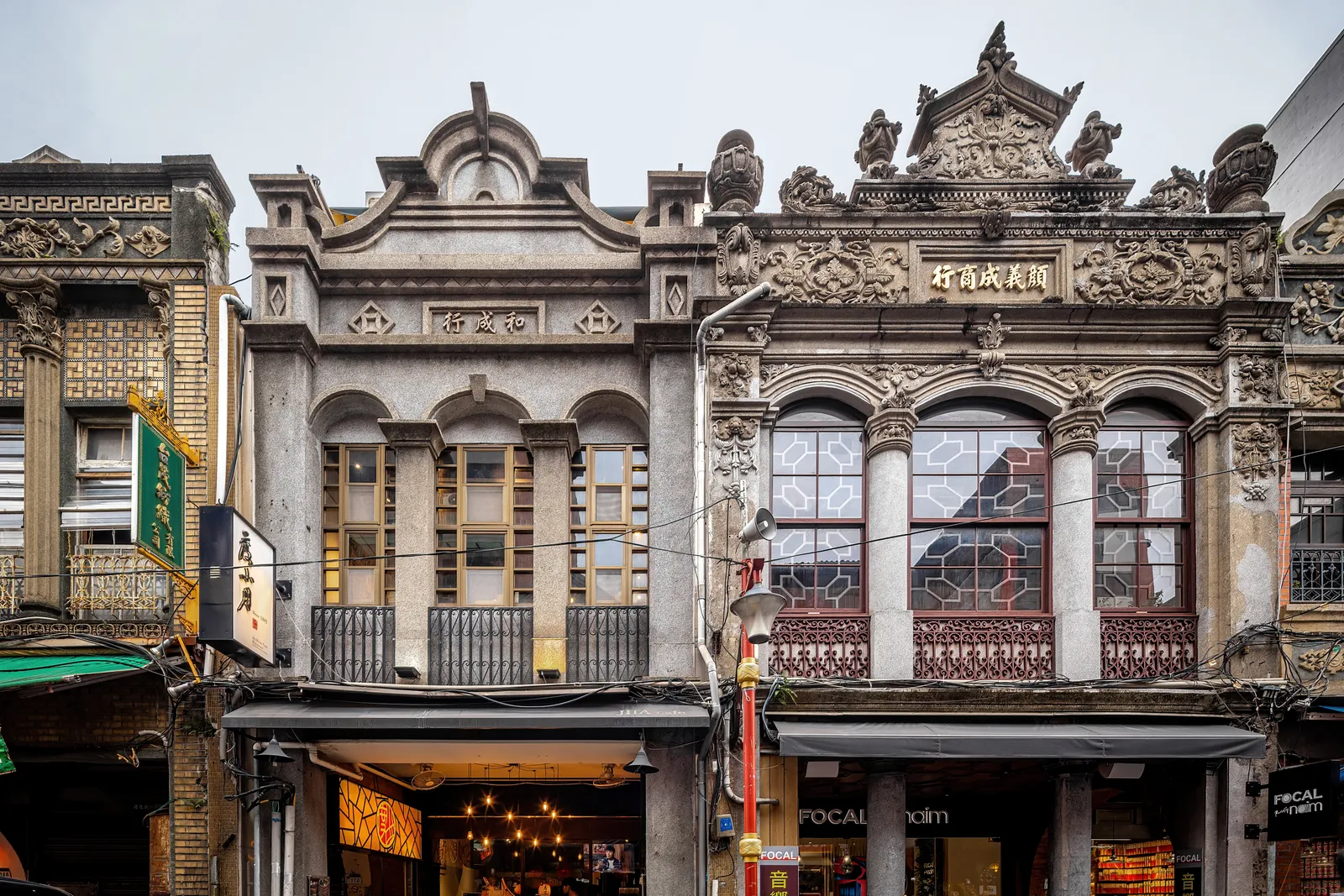
At number 61 is the Xiahai City God Temple, built in 1856 and small enough to cross in a few paces, with more than six hundred deities crowded into it. The one people queue for is Yue Lao, the matchmaker, and the offering is traditionally sugar and a thread of red string. It opens 7am to 7pm.
Pepper buns at the Raohe Street night market
Raohe runs about 600 metres east from Songshan station, one lane of stalls with Ciyou Temple, founded in 1753, standing at the east end under the lit entrance arch. Stalls start setting up around five in the afternoon and the market runs to about midnight, with the crush between seven and ten. The thing to queue for is hujiao bing, a pepper bun of pork, spring onion and black pepper slapped onto the inside wall of a clay oven and baked until the outside blisters.
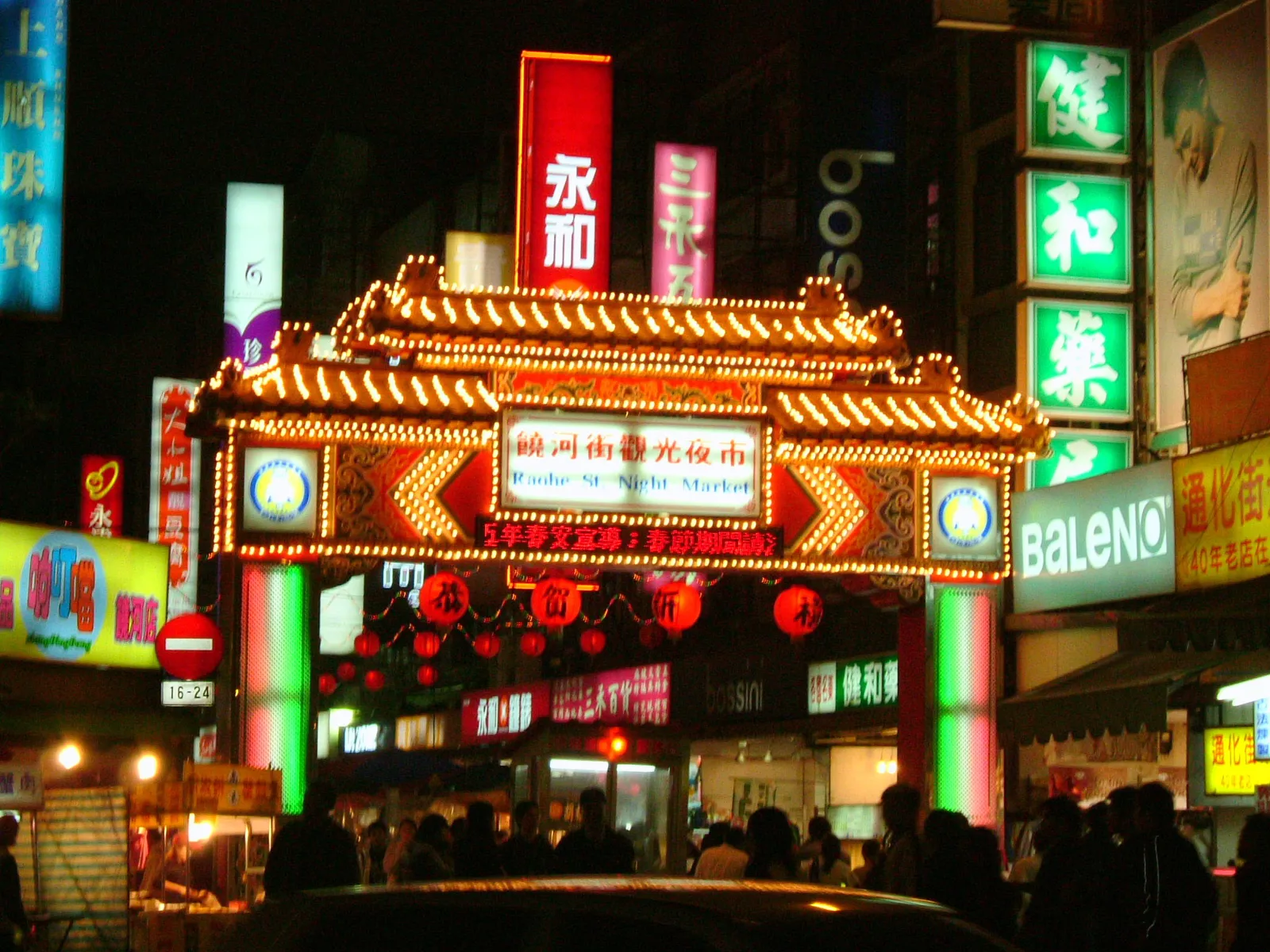
This is the stop that needs a long evening rather than a long afternoon, since the market sits east of everything else in the city and nothing is up before five. If you are tight on time, the old town on its own is the better use of it, because none of that depends on the hour.
Taipei Main Station can check your suitcase for you
Four airlines run in-town check-in desks on the station’s basement level, open six in the morning to half past nine at night, and they will take a bag and hand back a boarding pass as long as you are there more than three hours before departure. Which flights qualify varies by airline and by individual flight, so ask yours rather than counting on it.
The Airport MRT’s own station sits about 250 metres west of the main railway concourse, joined to it by a 115-metre underground walkway, so allow five to ten minutes on foot between the two before the train time. The express, signed in purple, leaves every 15 minutes and makes three intermediate stops, reaching Terminal 1 in about 35 minutes and Terminal 2 in about 38, NT$160 either way. The first express is at 05:30 and the last at 23:15, with a slower commuter train behind it at 23:53 and nothing after that.
If your airline is not one of the four with a desk, the suitcase has to wait somewhere else for the afternoon, and collecting it costs no detour at all, since the walkway to the platforms runs through the station either way. And if the rest of the trip goes through Bangkok, that airport has its own train into the city, though reaching the old quarter there takes a metro connection on top of the train.
Frequently asked questions
What should I do during a layover in Taipei?
Split the time between the two halves of the city. In Xinyi, the Taipei 101 observatory costs NT$600 and opens 10am to 9pm, and the stone stairs up Elephant Mountain behind it are free and never close. West of that, Chiang Kai-shek Memorial Hall drills its honour guard outdoors on the hour from nine to five, Longshan Temple opens at six in the morning, and the shophouse street at Dihua and the 1884 city gate at Beimen are both open ground you walk through rather than sites you enter. Five to seven hours covers both halves comfortably. The observatory is the one stop worth holding a ticket for, and skipping it costs you the view but nothing else on the list, since everything except Taipei 101 is free.
Do I need a visa to leave the airport and go into Taipei?
Taiwan admits passport holders from the United States, Canada, the United Kingdom, Japan, South Korea, Australia, New Zealand and every EU member state without a visa for up to 90 days, so for most travellers a few hours in the city needs no paperwork beyond the passport itself. What it does need is the Taiwan Arrival Card. Since 1 October 2025 the paper form has been withdrawn and the online card is required before you reach the immigration desk; it is free, takes a few minutes, and can be filled in any time within seven days of arrival on the National Immigration Agency's own site.
Is the express or the commuter train better back to Taoyuan airport?
Take the express. Both run on the same Airport MRT line out of Taipei Main Station and both cost NT$160, but the express, signed in purple, makes three intermediate stops and reaches Terminal 1 in about 35 minutes and Terminal 2 in about 38; the commuter train, signed in blue, calls at every station and takes far longer. The express leaves every 15 minutes, with the first at 05:30 and the last at 23:15. After that the commuter train at 23:53 is the final departure of the night, so a flight leaving after midnight still means a taxi if you cut it fine.
What happens to this itinerary if a typhoon is forecast?
Taipei's typhoon season runs roughly June to October, and when the city government announces a suspension of work and classes, most of this list shuts with it: the Taipei 101 observatory closes, the honour guard drill at Chiang Kai-shek Memorial Hall is cancelled as it is in ordinary rain, and the night market stalls do not set up. The metro is the exception and keeps running, because the central sections are underground. Convenience stores stay open too. The practical move on a declared typhoon day is to treat the layover as an airport one rather than a city one, and to watch the flight rather than the itinerary.