Taipei Layover in Ximending: The Red House
Part of the full Taipei 101 and Longshan on a TPE Layover
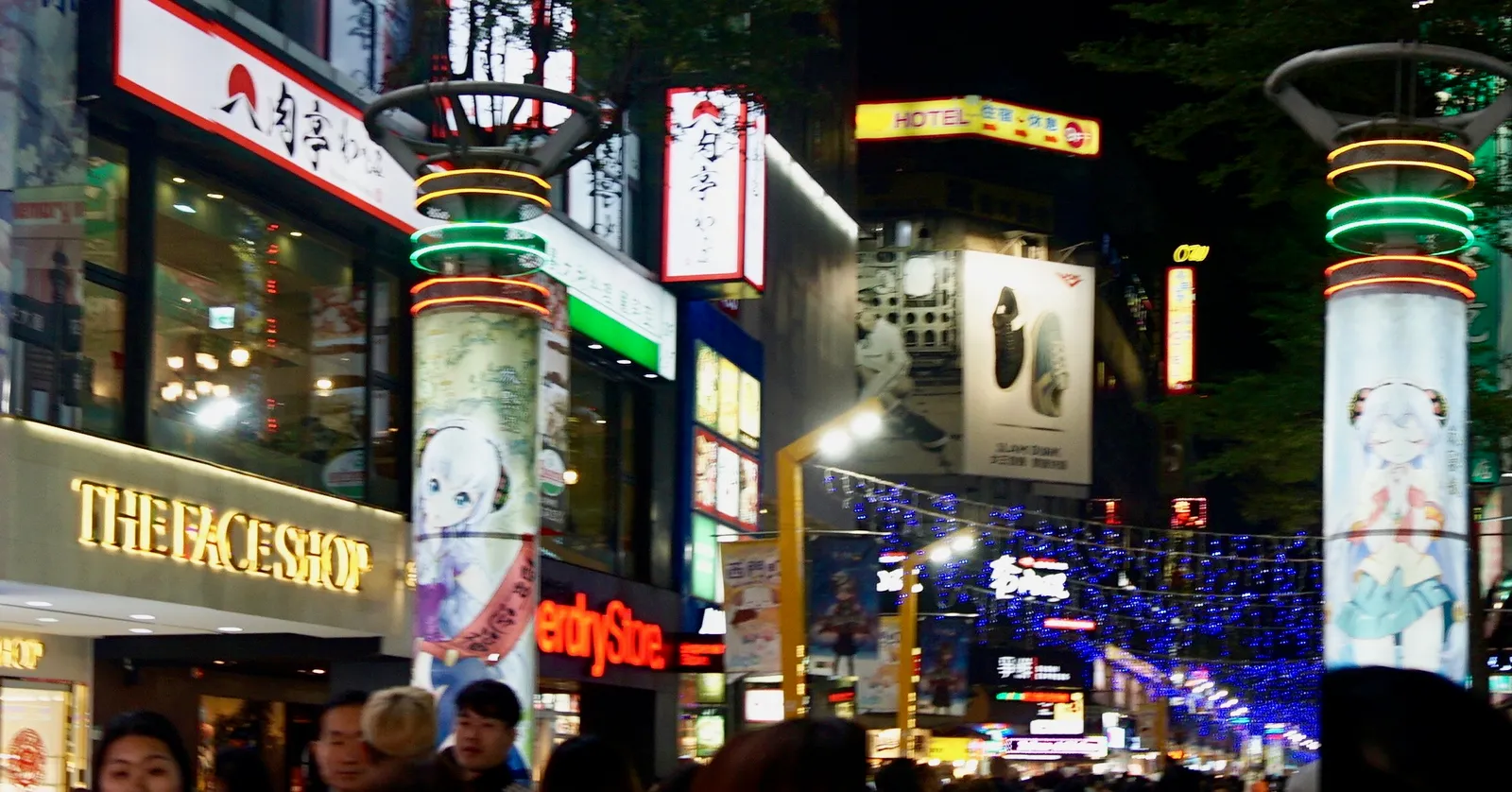
Ximending, the shopping grid west of Taipei’s old city wall line, keeps an octagonal brick market hall from 1908, the auditorium where Japan gave Taiwan up in 1945 and a noodle stall that has sold one dish since 1975 within five minutes of each other.
The 1908 octagon at the Red House
Eight sides, red brick banded in white, and a cruciform hall joined on behind it: the market opened on 20 December 1908, designed by Kondo Juro of the prefectural civil engineering office, and was the first public market any government in Taiwan had built. The ground it stands on had been a burial site, and more than a thousand unclaimed graves were moved to a public cemetery to clear it. Local lore has it the octagon was chosen for the eight trigrams and the cross for the shape it makes, both meant to hold down whatever was left.
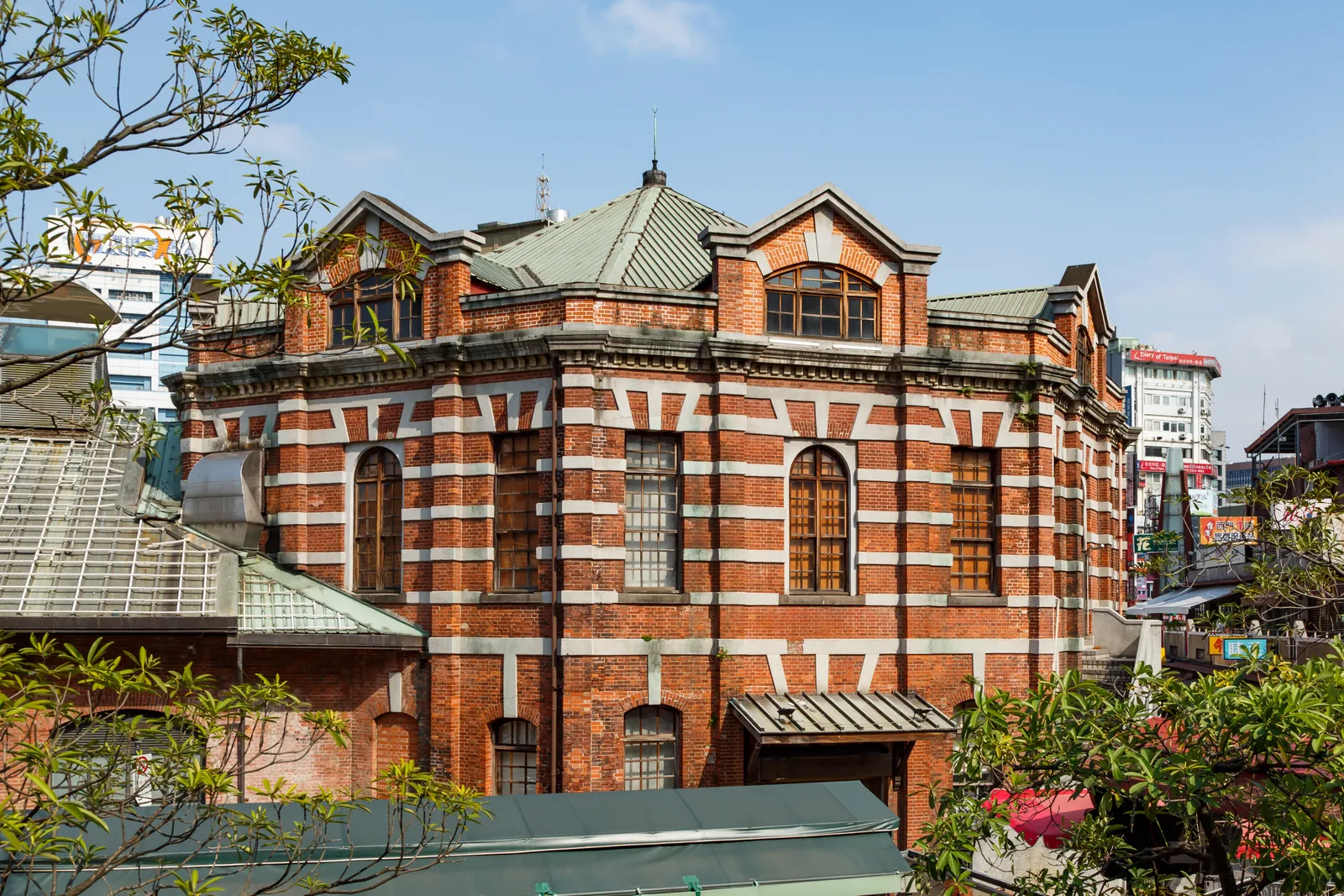
Since then it has been a market, an opera house from 1949, a cinema from 1963, and by the 1990s a cinema of a more specific kind with a gay bar scene growing up around its southern square. It was listed as a historic site in 1997 and rebuilt as an arts centre in 2007. The octagon now has a small theatre and a tea shop upstairs, the cruciform block holds sixteen workshops and a live music room, the north square runs a designers’ market and the south square is an outdoor café. It opens at eleven and closes at eight Tuesday to Thursday, nine on Friday and Sunday, ten on Saturday, and not at all on Monday.
Zhongshan Hall, where Japan handed Taiwan back
On 25 October 1945 the Japanese forces in Taiwan formally surrendered in this building at 98 Yanping South Road, ending fifty years of colonial rule. The hall was finished in 1936 as the Taipei Public Auditorium, put up to mark Emperor Hirohito’s enthronement, and it was among the most modern buildings in Taiwan when it opened: a squared-off, pale-brick front with three tall arches at street level and a modernist bulk behind them.
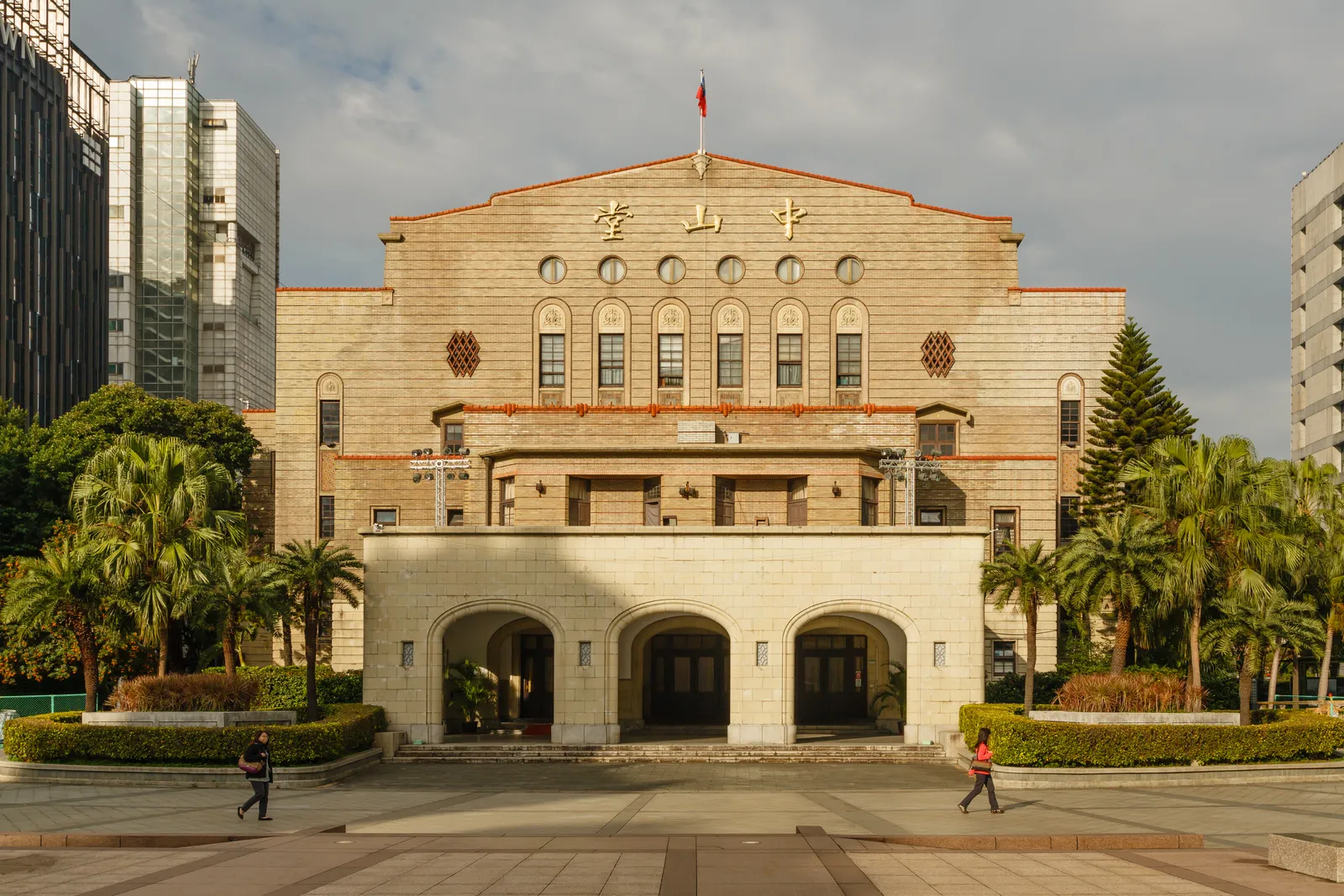
It costs nothing to walk in, 09:00 to 17:00, Tuesday to Sunday, and you can wander the whole building including the roof. Two things are worth finding: the bas-relief along the central staircase, a panel of water buffalo by the sculptor Huang Tu-shui, and the coffee shop on the fourth floor. Twenty minutes covers it unless a concert is on in the 2,000-seat main auditorium.
The Ay-Chung noodle stall on Emei Street
There is nowhere to sit down, which is the first thing you notice: the crowd stands in the street outside No. 8-1 with paper bowls, eating and moving on. One dish has been sold here since 1975, mian xian, threads of wheat noodle in a thick bonito broth with shredded bamboo shoot and braised pork intestine, and it comes in two sizes and nothing else.
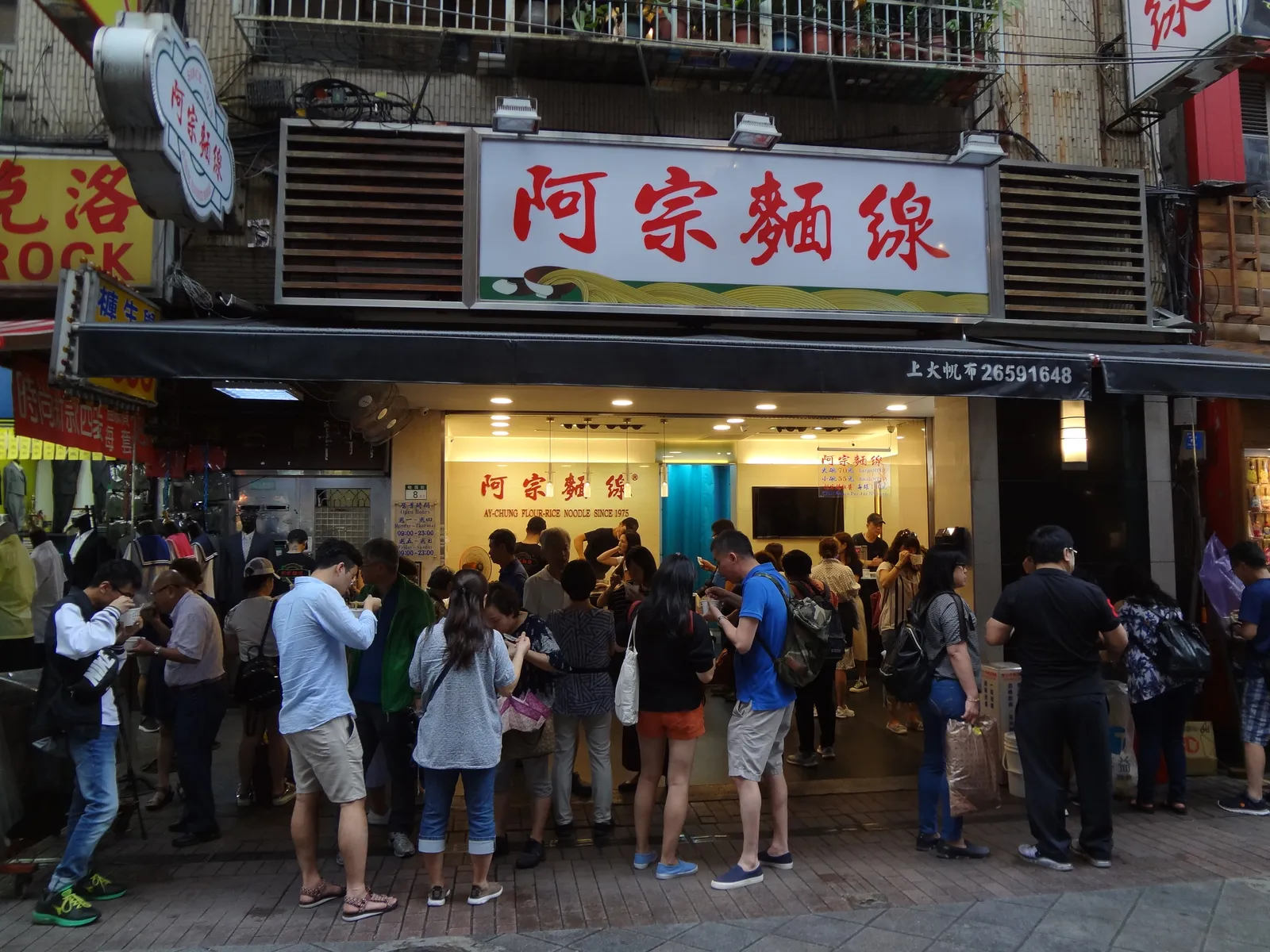
The queue moves fast because there is only one thing to order, and the stall runs from about half past eight in the morning until late at night. If the intestine is a problem, say so when you order and it comes out without.
Ximending’s lanes go car-free at weekends, not every day
The district became Taipei’s first pedestrian area in 1999 and is still the largest in Taiwan, but the vehicle ban runs at weekends and on national holidays rather than daily, so on a weekday the same lanes carry scooters and delivery vans. On a Saturday there is no kerb inside the zone at all, and a taxi or a car has to stop on the ring of streets around the outside, which makes arriving with a suitcase a walk in either direction.
Ximen station is one stop from the airport line’s terminus
The blue line covers Ximen to Taipei Main Station in a single stop, and the Airport MRT leaves from its own building about 250 metres west of the railway concourse, joined to it by a 115-metre underground walkway. The purple express runs every 15 minutes to Taiwan Taoyuan International Airport, about 35 minutes to Terminal 1 and 38 to Terminal 2, NT$160 either way, last departure 23:15.
An evening here is shops, screens and street food rather than sights, which is exactly why it suits a late flight; if the free hours are longer or fall in daylight, the wider Taipei itinerary picks up the temples and the tower, and the old railway offices near Taipei Main Station are the indoor option one stop east.
Frequently asked questions
What should I do during a layover near Ximending in Taipei?
Two hours covers the three fixed things. The Red House, an octagonal brick market hall from 1908, sits directly outside Ximen station and is open every day but Monday; Zhongshan Hall, five minutes east, is the building where Japan formally handed Taiwan back in 1945 and is free to walk into on the same schedule; and the Ay-Chung noodle stall on Emei Street has been selling one dish since 1975 to people standing in the street. Beyond that the district is shops and cinemas, which is better after dark. Monday is the day to skip this trip, since both historic buildings close.
When does Ximending actually close to traffic?
Not all the time. The city turned the district into Taipei's first pedestrian area in 1999 and it is still the largest in Taiwan, but the vehicle ban applies at weekends and on national holidays rather than every day of the week. On an ordinary Tuesday afternoon scooters and delivery vans use the same lanes you are walking down. The practical effect for anyone arriving with luggage is that on a Saturday there is no kerb inside the zone at all: a taxi stops on the ring of streets around the outside and you walk in from there.
Is Ximending worth it in the afternoon, or only at night?
The buildings are an afternoon proposition and the district is an evening one. The Red House opens at eleven and closes at eight from Tuesday to Thursday, nine on Friday and Sunday and ten on Saturday, and Zhongshan Hall shuts at five, so anything historic has to happen in daylight. The shops, the cinema blocks and the street performers only get going once the neon is on, and the crowd on a Friday or Saturday night is the thing people come to see. If the free hours fall between six and nine, you get the better half.
How much of a Ximending stop costs nothing?
Almost all of it, if you skip the shops. Zhongshan Hall is free to walk into and you can go up to the roof; the Red House's north and south squares, where the designers' market and the outdoor café are, cost nothing to wander through, and only the ticketed events inside the buildings charge; and the pedestrian grid itself, the cinema hoardings and the street performers are free by definition. The spend here is food, and the standing bowl of mian xian on Emei Street runs to small change rather than a meal out.