Longshan Temple Layover: Old Wanhua, Taipei
Part of the full Taipei 101 and Longshan on a TPE Layover
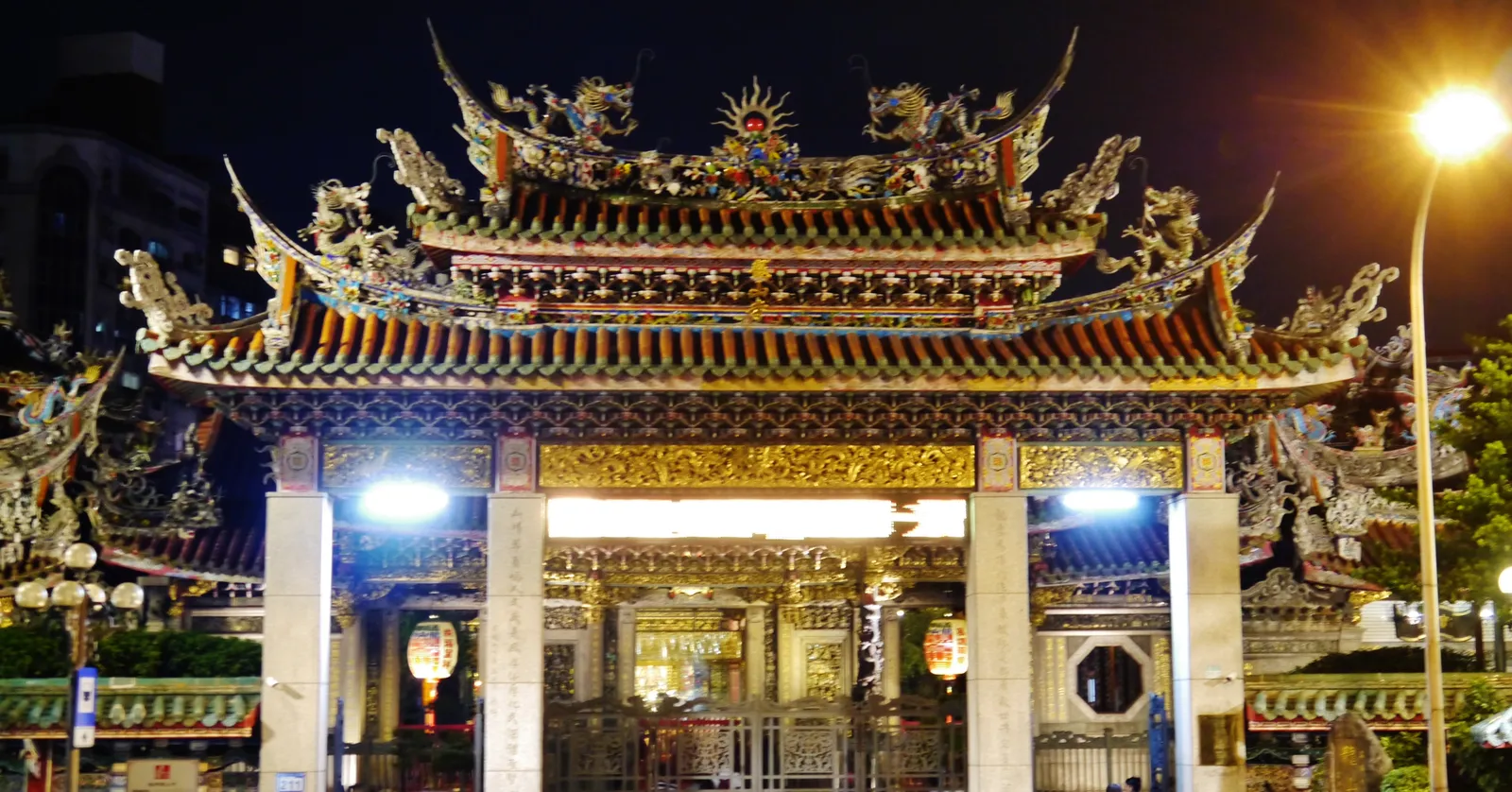
Wanhua, the oldest quarter of Taipei, keeps a lane of herbalists, a horseshoe-shaped market hall from 1935 and a temple that still walks its god around the streets each winter, all within ten minutes of Longshan Temple.
Herb Alley at Lane 224, Xichang Street
Crates of cut greenery stand out on the pavement and the smell reaches the corner before you do. More than ten herbal medicine shops trade along this one covered lane immediately north of Longshan Temple, most of them handed from one generation to the next for over a century, and the trade grew out of the temple: people drew a medical divination slip inside, then came out here to have it filled. Locals called the lane Jiuming Jie, Lifesaving Street.
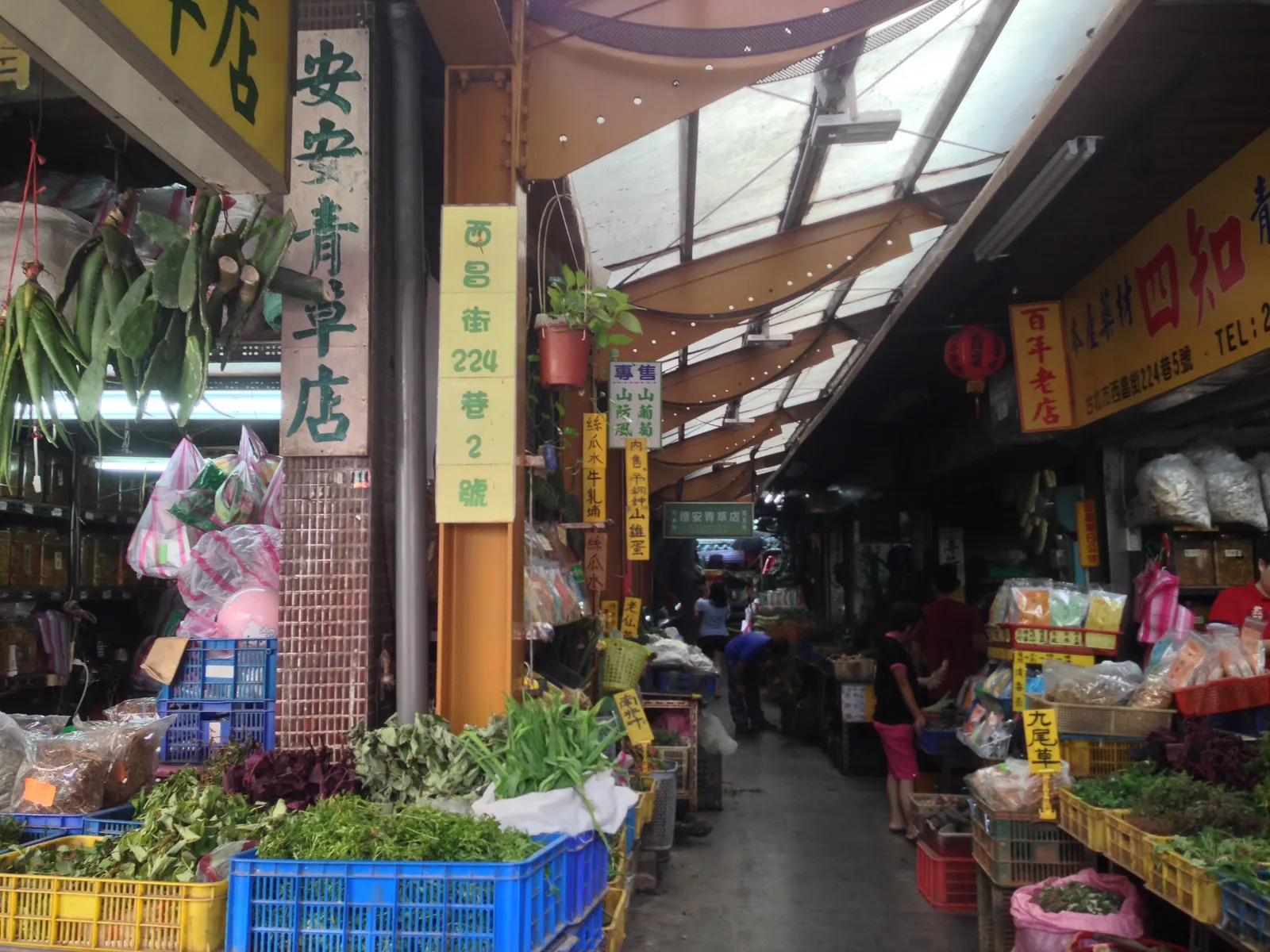
The scattered hawkers around the temple gathered into this one lane after the war, and the city tidied it into a heritage shopping street around 2000. You can buy a cup of cold herbal tea for small change without knowing a word of the language, which is the usual way in. If you want the context rather than just the smell, a two-hour guided walk covers the temple, this lane and the old shophouse block in one go, which is about the right shape for a layover.
Wanhua’s lanes are market aisles rather than streets
Stalls, crates and parked scooters take the walkable strip on most of the lanes around the temple, including the herb alley itself, which leaves a single file gap down the middle at busy hours.
Xinfu Market’s horseshoe hall of 1935
No. 70, Sanshui Street holds a market building bent into a horseshoe around a central atrium, a plan chosen in the 1930s so that light and air could reach the middle of a hall full of butchers’ stalls. It was built in 1935 for the Japanese families living in this part of Wanhua, listed as a city monument in 2006 and reopened in 2017 as a cultural space rather than a working market.
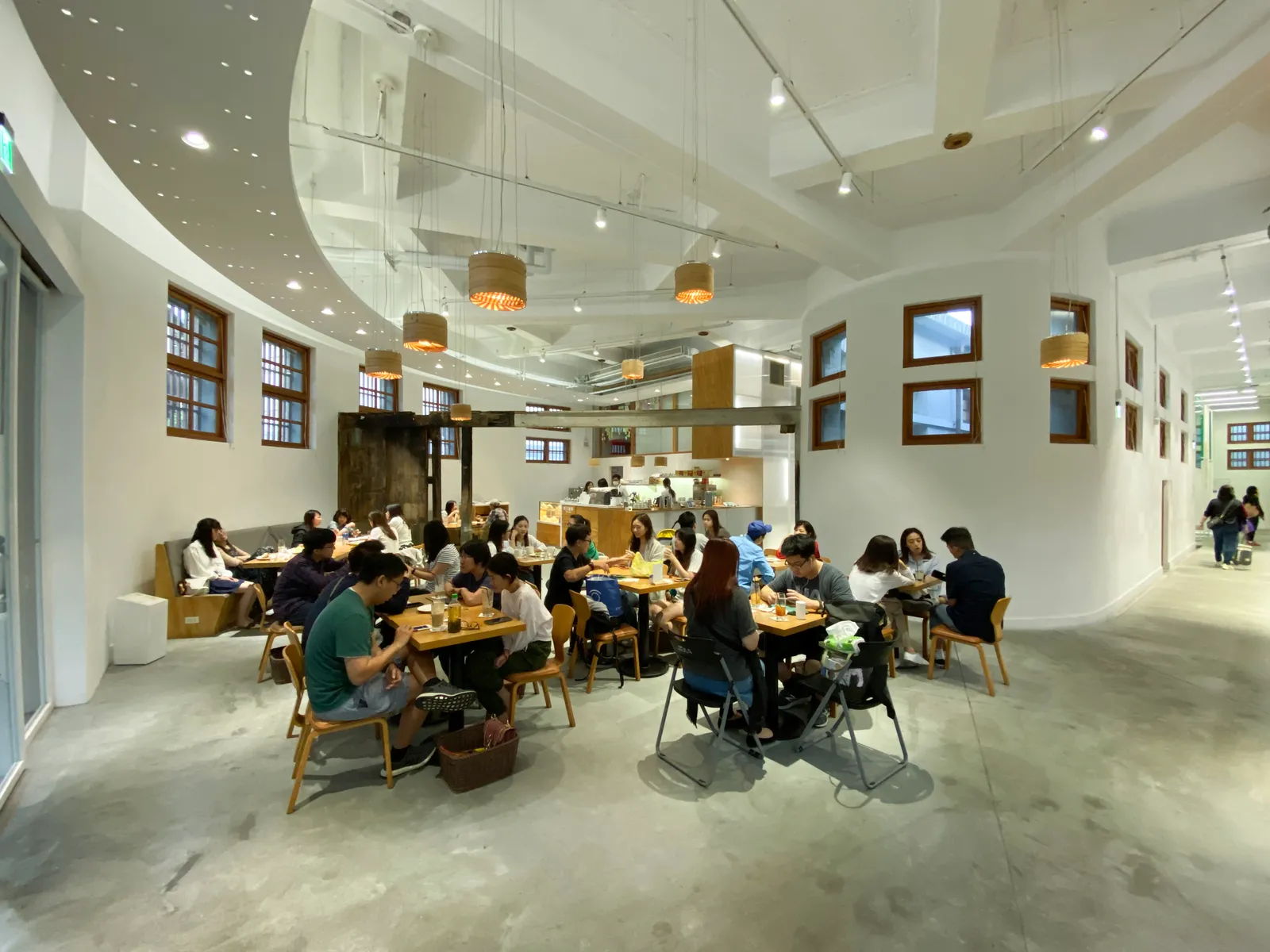
What is in it now is an exhibition on the building itself, a kitchen studio, lecture space and a café, and the curve of the original hall is the thing to look at. Entry costs nothing, it runs 10:00 to 18:00 and it closes on Mondays.
Bangka Qingshan Temple and its night patrol
Zhang Gun was a general in the Three Kingdoms period who governed Hui’an in Fujian well enough to be worshipped for it, and settlers from Hui’an brought him to Wanhua, where a temple went up in 1856. On the 20th and 21st of the tenth lunar month, usually late November, the temple carries him out on a night inspection of the district from five until nine, one evening through southern Wanhua and one through the north, with the main rites following on the 22nd.
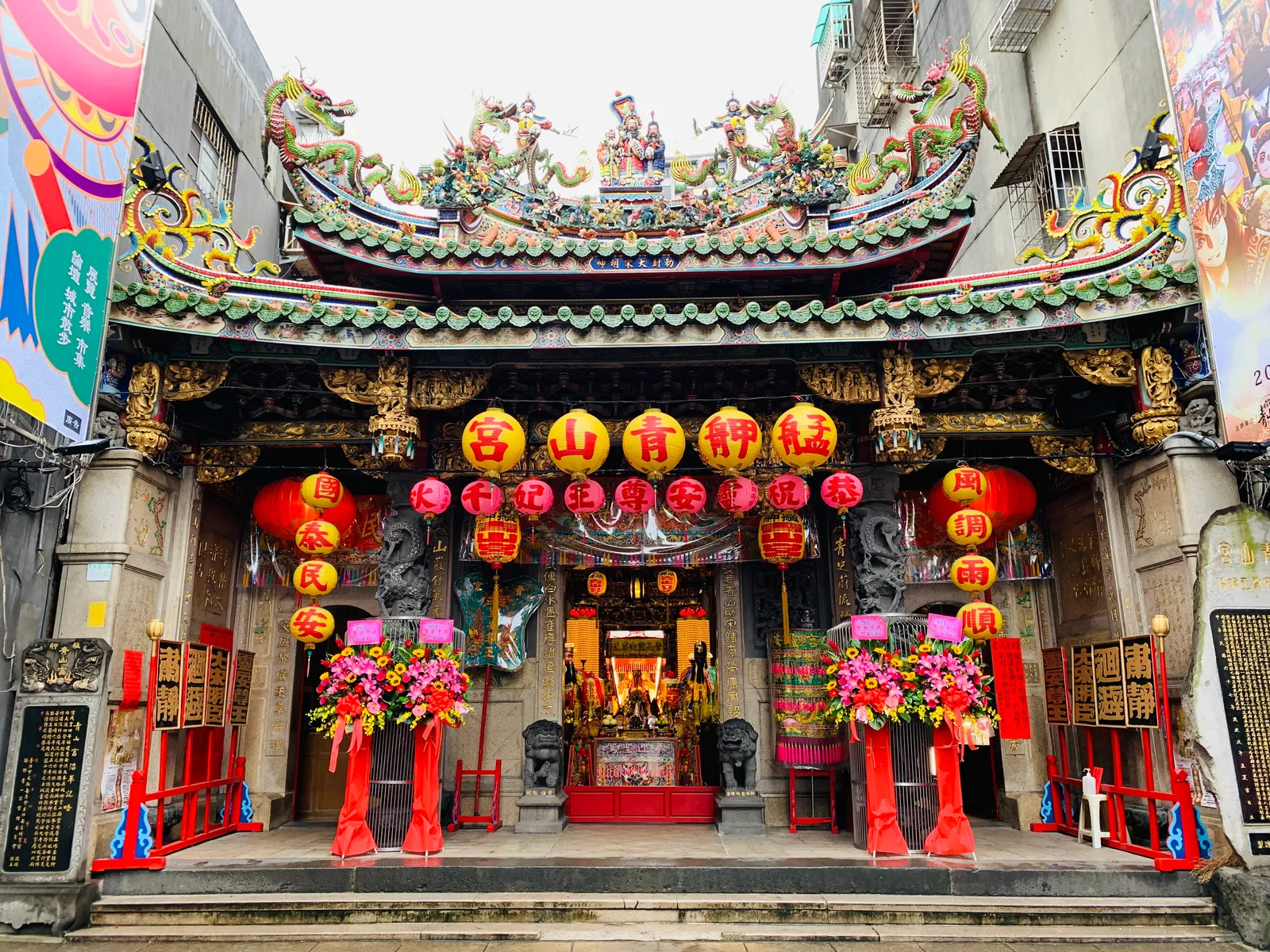
The rest of the year it is a small, quiet temple on a narrow street that takes ten minutes to look round and costs nothing. Qingshui Zushi Temple, from 1787, is a few minutes further north on Kangding Road and works the same way.
Longshan Temple station is two stops from the airport line
The blue line covers Longshan Temple to Taipei Main Station in two stops, and the Airport MRT leaves from a separate building about 250 metres west of the railway concourse, joined by a 115-metre underground walkway. The purple express runs every 15 minutes to Taiwan Taoyuan International Airport, roughly 35 minutes to Terminal 1 and 38 to Terminal 2, NT$160, last departure 23:15.
This district is the oldest part of the city and the flattest walk in it; if the free hours stretch far enough to take in the tower and the memorial halls as well, the wider Taipei itinerary covers those, and Ximending is one stop back towards the centre if the evening turns out longer than the temples’ hours.
Frequently asked questions
What should I do during a layover near Longshan Temple in Taipei?
Everything here is inside a ten-minute walk, so two hours is genuinely enough. Herb Alley, a covered lane of herbalists that has traded beside the temple for over a century, is immediately north at Lane 224, Xichang Street; Xinfu Market, a horseshoe-shaped hall from 1935, is five minutes south on Sanshui Street and free; and Bangka Qingshan Temple, founded in 1856, is a few streets west. The temple itself opens at six in the morning and closes at 9:45 at night, longer than anything else in the district. Xinfu Market is the one to drop if time is short, since it shuts at six and closes on Mondays.
Are Wanhua's temples free to enter?
All of them. Longshan Temple, Bangka Qingshan Temple and Qingshui Zushi Temple charge nothing to walk in, and none of them ask for a donation at the door either. What you are expected to do is stay out of the way: these are working temples with people praying, drawing divination blocks and burning incense at most hours, not museums with a visitor route. Photography is fine in the courtyards; inside the main halls, look before you point a camera at anyone.
When does the Qingshan King procession run?
On the 20th and 21st days of the tenth lunar month, which usually falls in late November or early December, the temple sends its god out on a night patrol from five in the evening until nine, one night through southern Wanhua and one through the north, with the main rites on the 22nd. It is free, it is loud, and it is one of the three big temple festivals in Taipei alongside the Dadaocheng city god's and the Baosheng Emperor's. Outside those three days the temple is quiet and takes ten minutes.
Is this a flat walk, or are there steps?
Flat, which is unusual for a Taipei district worth walking. Wanhua sits on the old river flats and none of the four stops here involve a climb: the temple courtyards, the herb lane, Xinfu Market and Qingshan Temple are all at street level, and the metro station has lifts. The obstacle is width rather than gradient. Stalls, crates and parked scooters narrow the lanes to a single file at busy hours, so a pushchair or a wheelchair moves more easily mid-morning than in the late afternoon.