National Museum of Korea Layover, Seoul
Part of the full Seoul Layover: Gyeongbokgung and Namsan, ICN
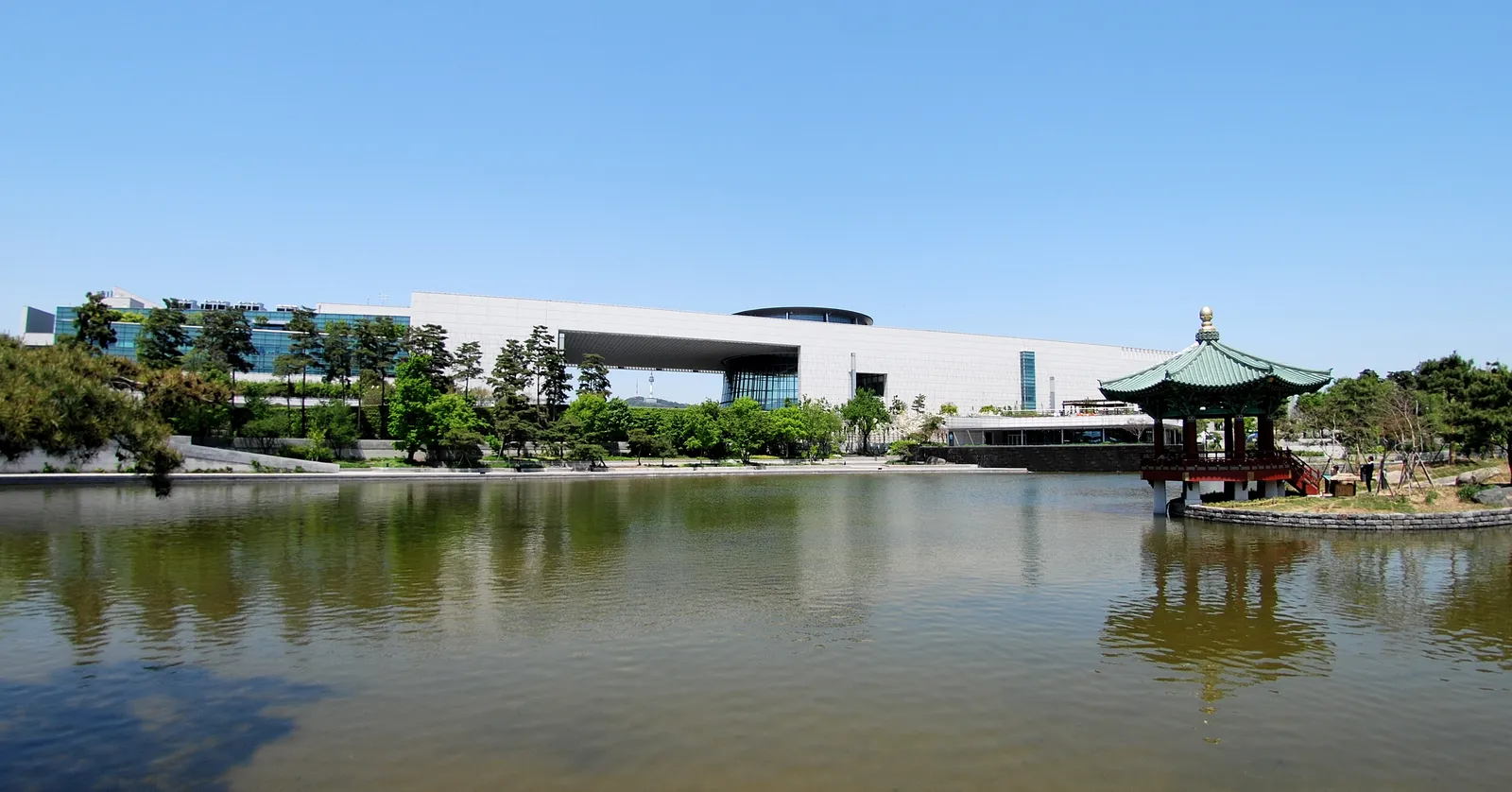
Seoul’s National Museum of Korea, in Yongsan, is free to enter and holds a marble pagoda of 1348 standing indoors, two sixth- and seventh-century gilt-bronze bodhisattvas in a room of their own, and a pond with a pavilion outside, all under one roof and a short metro ride from Seoul Station.
The Ten-story Pagoda of Gyeongcheonsa in the museum’s central hall
The National Museum of Korea moved into its present building in Yongsan Family Park on 28 October 2005, and by floor area it is among the largest museums in the world. Its collection runs past 310,000 objects, with about 15,000 on show at any time. The piece that stops people stands in the long, skylit central hall: the Ten-story Pagoda from Gyeongcheonsa, 13.5 metres of grey marble raised in 1348, a rare material for a Korean pagoda when granite was the norm, and carved on every level with Buddhas, bodhisattvas and stone imitations of timber roofs.
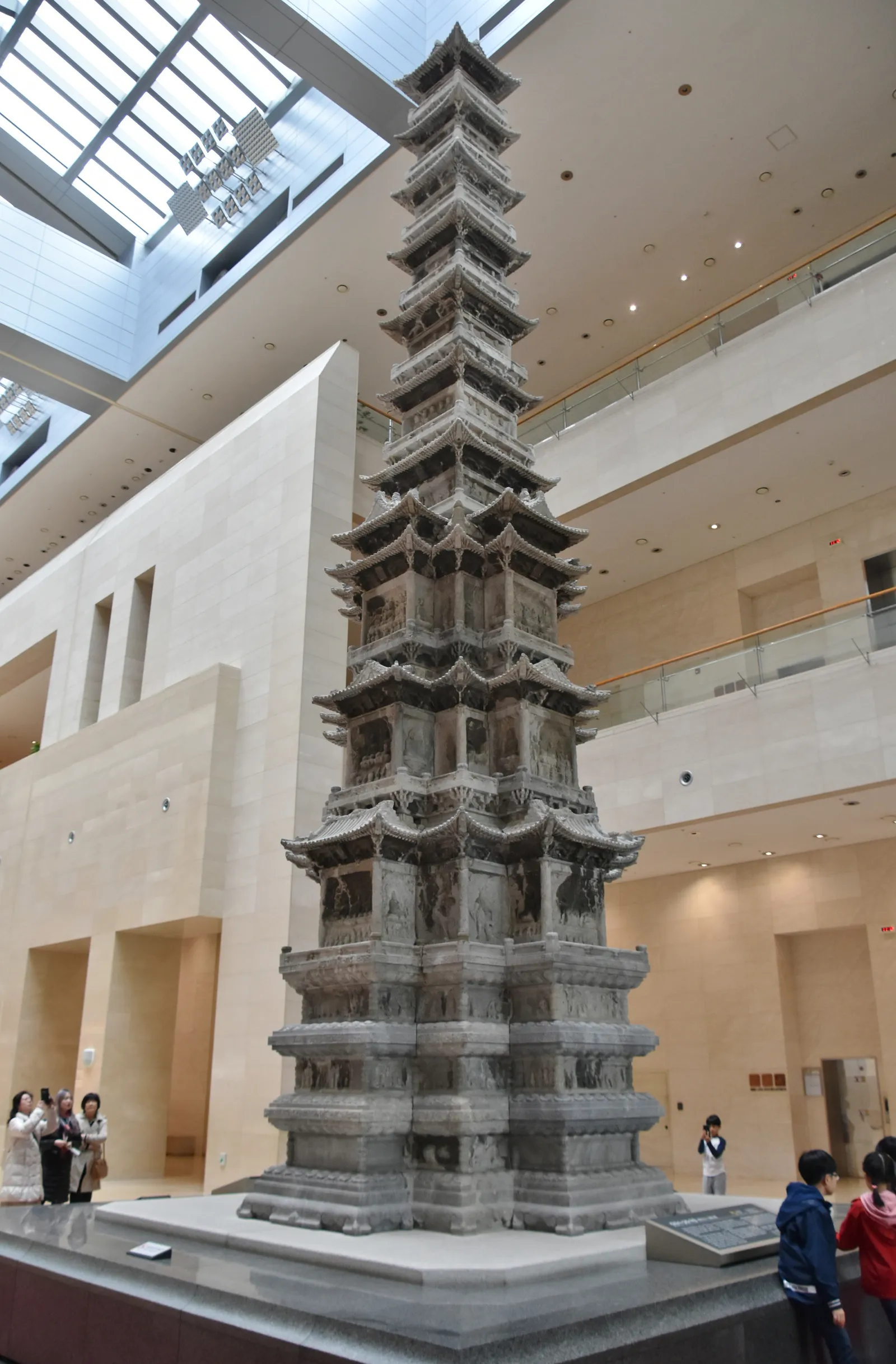
It has been moved before. In 1907 the Japanese court official Tanaka Mitsuaki had it dismantled and shipped to Japan; the journalists Ernest Bethell and Homer Hulbert campaigned against the theft in print, and it came back in 1918. A collection this size is easier with someone choosing the route, and a guided half-day tour of the museum picks out the highlights in English.
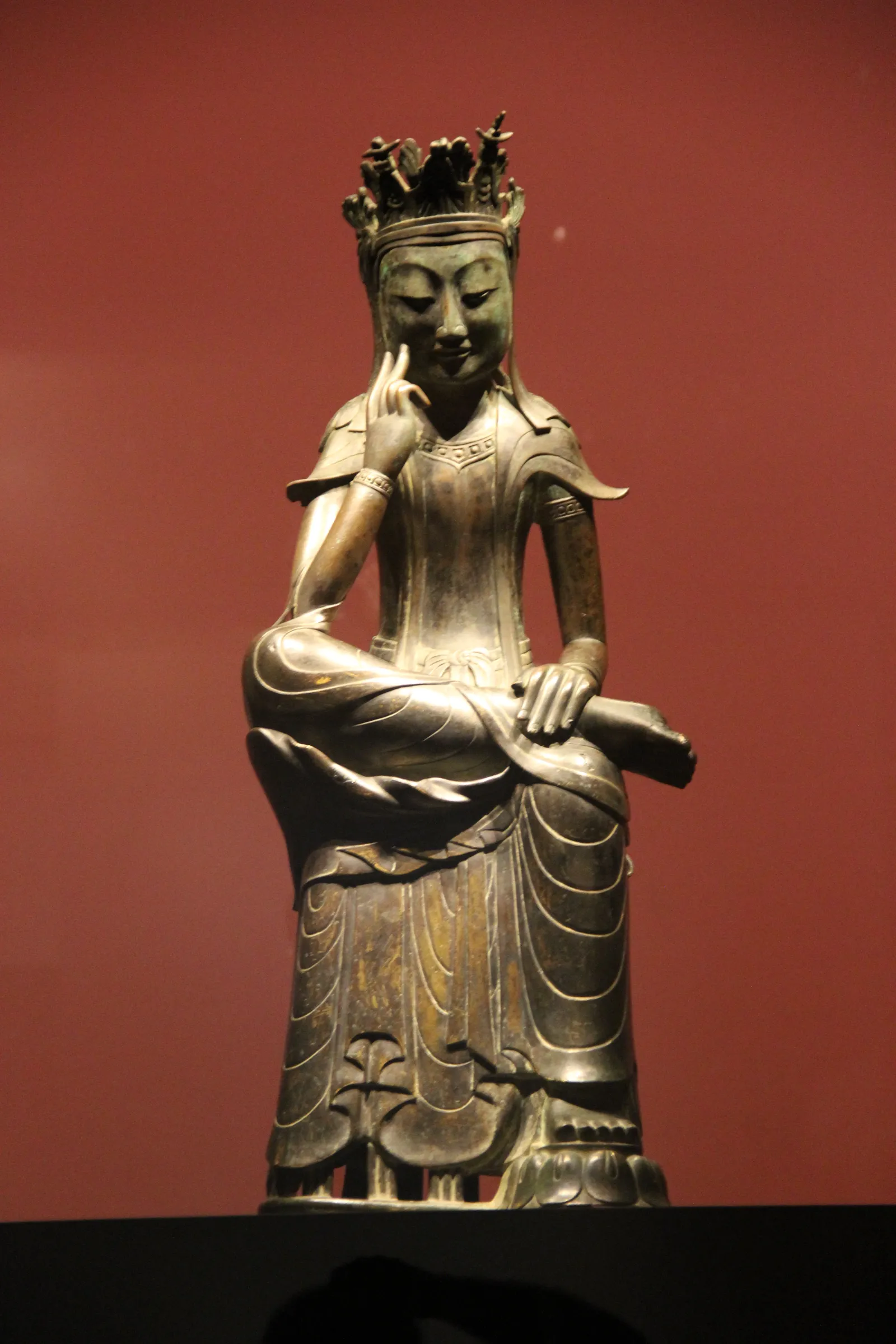
Two pensive bodhisattvas in the Room of Quiet Contemplation
Since November 2021 the museum’s two most famous sculptures have had a 439-square-metre room to themselves. Both are gilt-bronze pensive bodhisattvas, seated with one leg crossed over the other and fingers raised to the cheek: one from the late sixth century, with an elaborate crown and bronze cast just a few millimetres thick, and one from the first half of the seventh, plainer and more restrained. The lights are low, the walls are finished in red earth, and the floor rises by a single degree toward the statues so that people slow down without being asked.
The museum holds bags and suitcases for free while you are inside, but whatever is left in its cloakroom has to be collected by closing time, 5:30pm on most days, which is earlier than an evening flight needs it back.
Mirror Pond and the Cheongjajeong pavilion
Outside the main building, the grounds slope down to Mirror Pond, and on its bank stands Cheongjajeong, a traditional wooden pavilion reflected in the water with the long stone facade of the museum behind it. It is somewhere to sit after the galleries, and the rest of Yongsan Family Park, with its lawns and trees, carries on beyond it.
The museum stays open until 9pm on Wednesdays and Saturdays, so on those days the galleries and the pond both work after dark.
Ichon station, four stops from Seoul Station on Line 4
Ichon station connects to the museum through an underground walkway from exit 2, and it is served by Metro Line 4 and the Gyeongui-Jungang Line. Seoul Station is four stops north on Line 4; from there the AREX express runs non-stop to Incheon International Airport (ICN), 43 minutes to Terminal 1 and 51 to Terminal 2, for 13,000 won. The blocks around Seoul Station are worth a look before the train, and with a full daytime gap and good weather, the Seoul itinerary through Gyeongbokgung and Bukchon covers the palaces themselves.
Frequently asked questions
What should I do during a layover near the National Museum of Korea in Seoul?
See the Ten-story Pagoda of Gyeongcheonsa, a 13.5-metre marble pagoda of 1348 standing indoors, and the two gilt-bronze pensive bodhisattvas in the Room of Quiet Contemplation, then walk round Mirror Pond to the Cheongjajeong pavilion outside. Three to four hours is enough for those and a gallery or two more. The permanent galleries are free; a guided tour is the only thing worth booking, and the museum works perfectly well without one.
Is the National Museum of Korea free, and when is it open?
The permanent galleries are free with no ticket, and only special exhibitions charge. Since 16 March 2026 the museum has opened at 9:30am, closing at 5:30pm on Mondays, Tuesdays, Thursdays, Fridays and Sundays and at 9pm on Wednesdays and Saturdays, with last entry half an hour before closing. Those two late evenings make it an indoor option that still works after dark or in heavy rain. The museum has also said it will trial advance reservations in 2027, so check its site before going after that.
Can I bring a suitcase into the National Museum of Korea?
Not into the galleries, but the museum will hold it. Visitor guides describe free lockers for ordinary bags and a staffed counter to the right of the exhibition hall for suitcases too big for them, also free. The catch is that anything left there has to be collected before the museum closes, which on most days is 5:30pm.
Where is the National Museum of Korea, and how do I reach it from central Seoul?
It stands in Yongsan Family Park at 137 Seobinggo-ro, in Yongsan, south of the old city centre. The nearest metro stop is Ichon, on Line 4 and the Gyeongui-Jungang Line, and exit 2 leads straight into an underground walkway to the museum, so the approach stays under cover in rain. Seoul Station is four stops away on Line 4.