Johannesburg Layover Near Newtown
Part of the full Apartheid Museum, Johannesburg: a JNB Layover
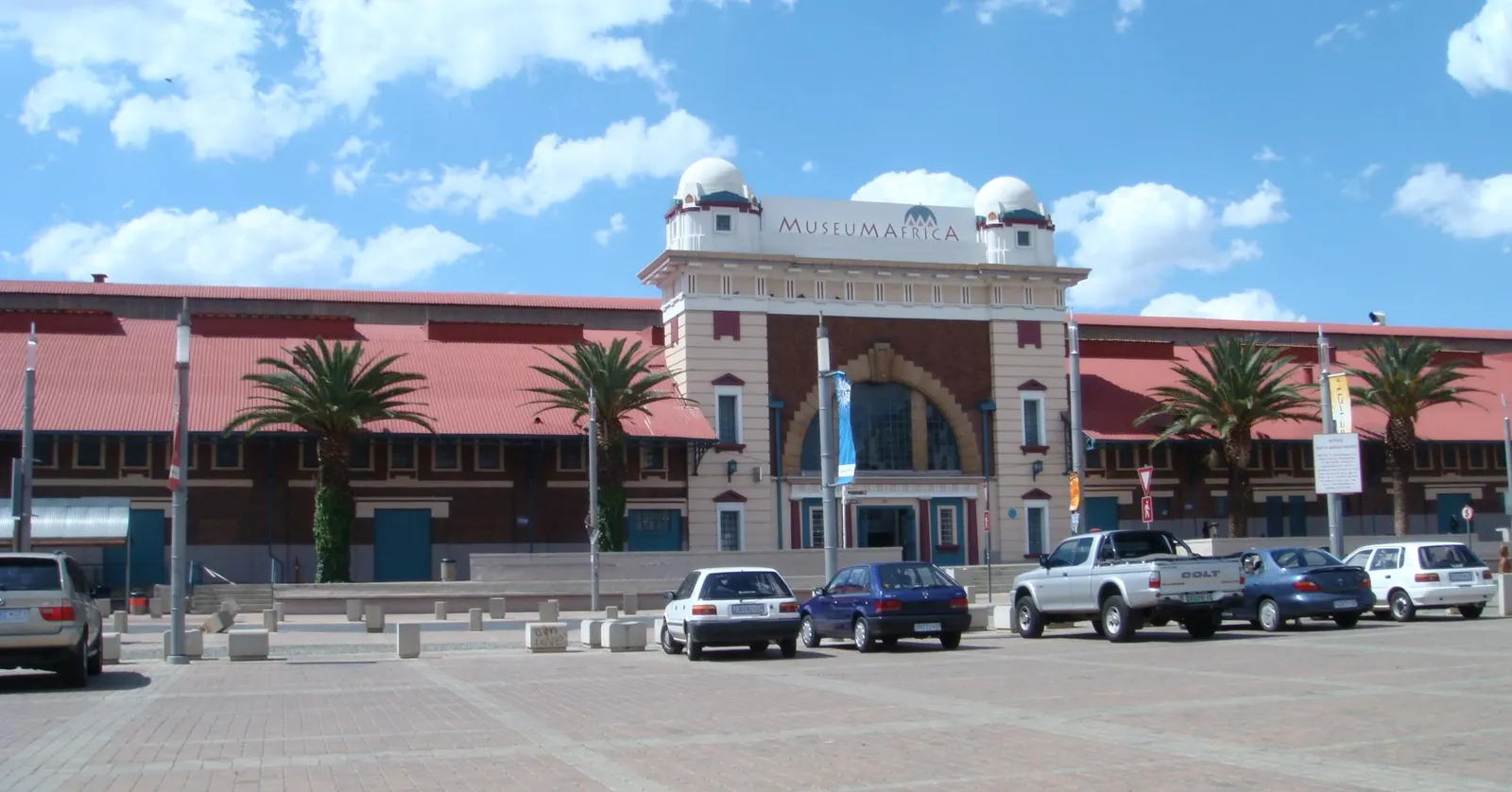
Johannesburg’s Newtown is the old produce-market district on the western edge of the city centre, where Museum Africa fills the 1913 market hall for nothing at the door and the Market Theatre, the Workers Museum and a science centre in a converted tram shed stand within a few blocks of the same square.
Museum Africa fills Newtown’s 1913 market hall
Museum Africa occupies the building Johannesburg’s fruit and vegetable market traded in from 1913: a long brick shed with a red roof and a pale domed centrepiece, facing the brick apron of Mary Fitzgerald Square. The collection was rehoused here and reopened under this name in 1994, and there is no admission charge. Tried for Treason is the room to give time to, with portraits and case papers for the 156 people arrested in 1956, Nelson Mandela and Albert Luthuli among them, and tried over the five years that followed. The Bensusan Museum of Photography holds Victorian and Edwardian plate cameras in the same complex, and since 2022 the South African Hip Hop Museum has run interactive screens through part of the building, also free. Open Tuesday to Sunday, 09:00 to 17:00, and shut on Mondays.
The Market Theatre opened days after the Soweto uprising began
The Indian fruit market hall on Miriam Makeba Street went up in the same 1913 building programme, a steel structure whose arches and cathedral-scale dome were shipped out from Britain and bolted together on site. Barney Simon and Mannie Manim began converting it in 1974 and opened the 120-seat Barney Simon Theatre in it on 21 June 1976, days after the Soweto uprising began on 16 June, and ran it with mixed casts in front of mixed audiences while the law still said otherwise. The 387-seat John Kani Theatre followed that October and the Laager in 1979.
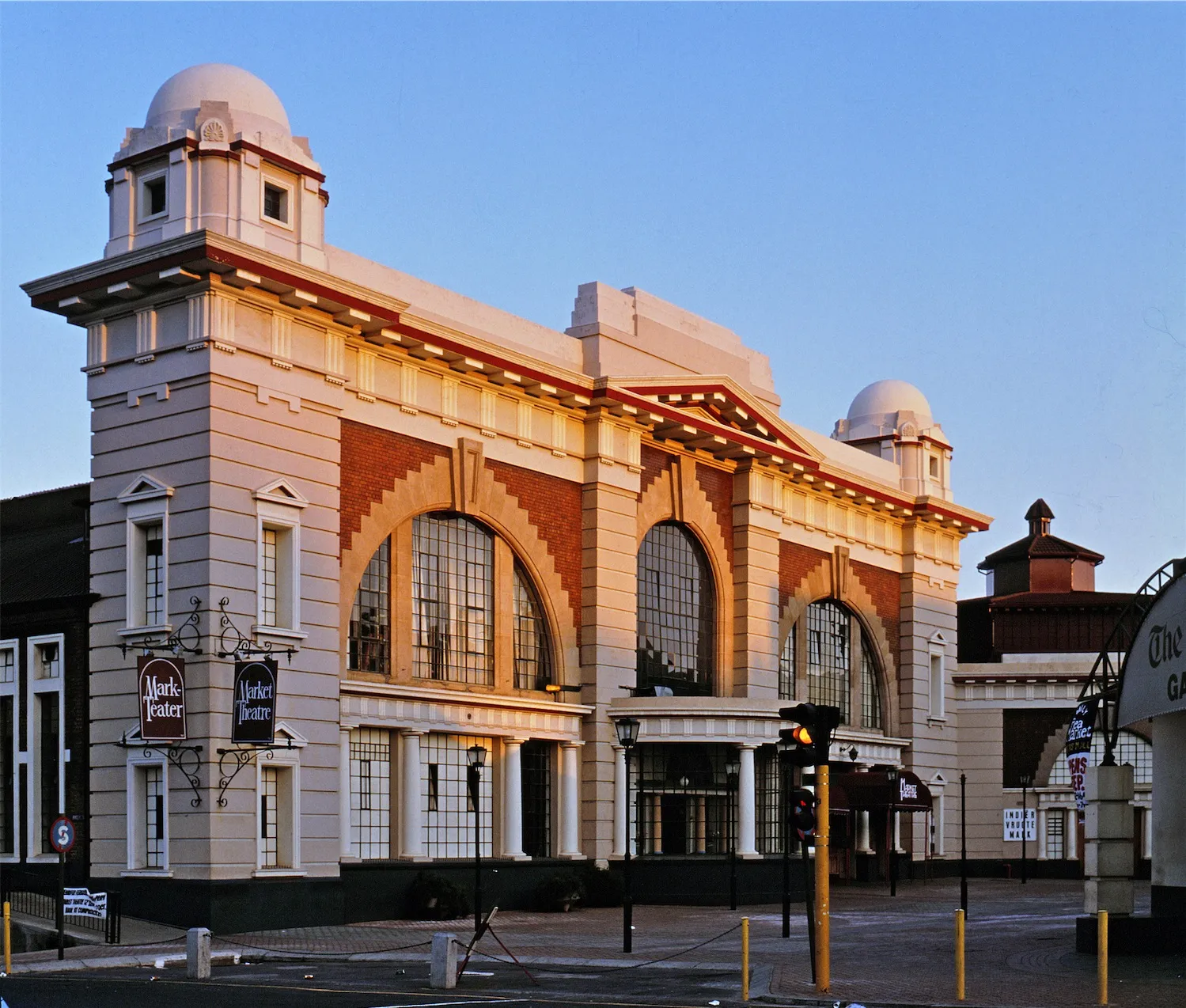
Prices start at around R50 and rise with the production, but the programme runs to evening performances, which is the wrong shape for most flight days. The facade is free and takes two minutes from the square. The Market Photo Workshop, the photography school David Goldblatt founded in 1989, is at 138 Lilian Ngoyi Street with its entrance around the corner on Margaret Macingana Street, and its gallery costs nothing: student and alumni shows, Monday to Saturday 09:00 to 17:00 and Sunday until 16:00.
The Workers Museum was a compound for 330 migrant labourers
At 52 Jeppe Street, a low brick compound built by the city in 1913 housed around 330 black migrant workers, first its cleansing and sanitary staff and from 1927 the men who ran the power station across the road. What survives inside is the arrangement rather than a reconstruction of it: concrete sleeping shelves, wooden bunks, windows whitewashed so the men could not see out, a lock-up room used as a cell, and a tree in the yard that workers were chained to. The compound was declared a national monument in 1995 and opened as a museum in 2010.
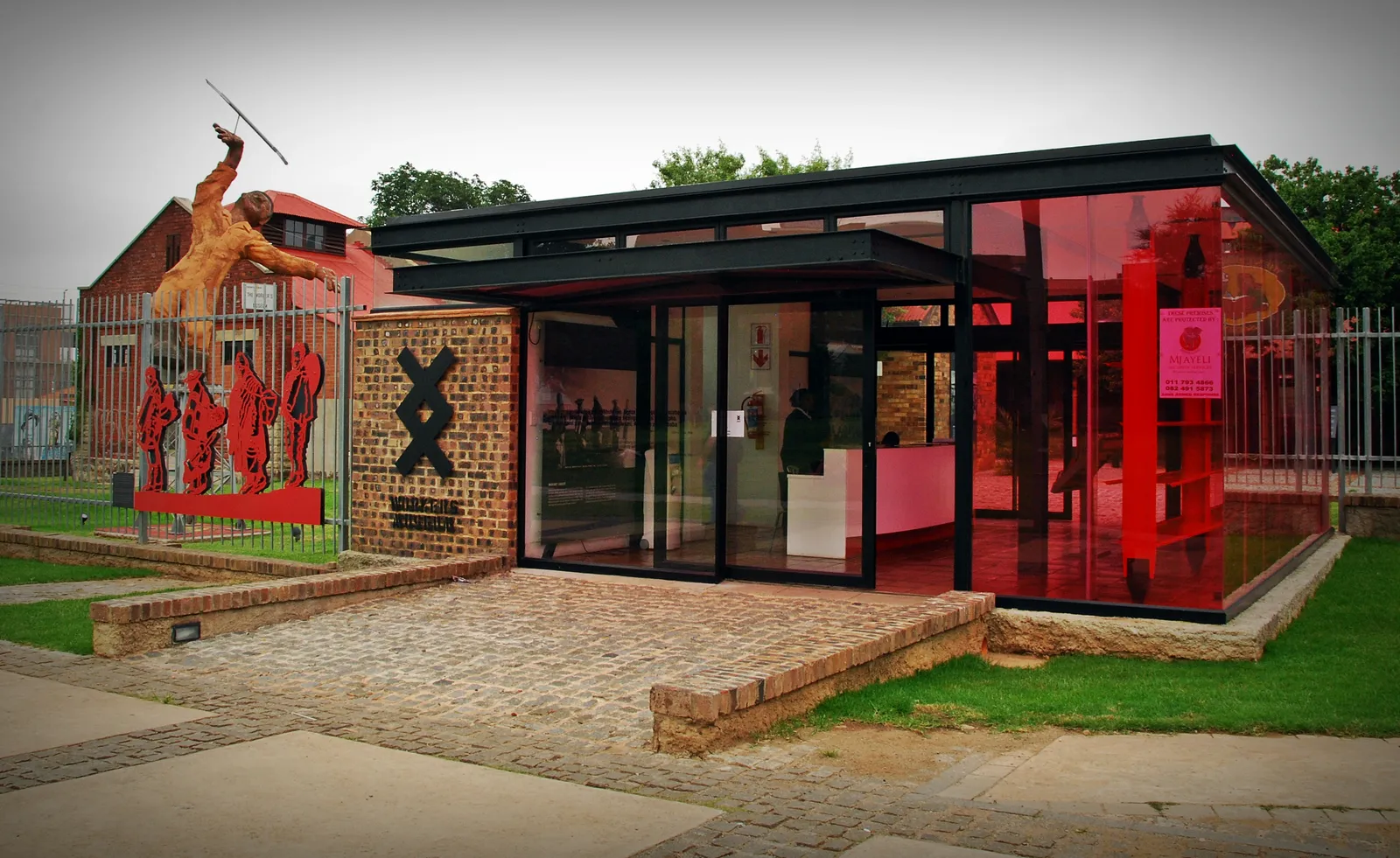
Entry is free, and the hours match Museum Africa’s: Tuesday to Sunday, 09:00 to 17:00, closed Mondays, Christmas Day and Good Friday. An hour covers it comfortably and half an hour covers it at speed.
These are four separate buildings around one square rather than one museum with several wings, so a suitcase goes in and back out through four sets of doors over an afternoon.
Sci-Bono’s exhibits sit under the arches of a tram repair shed
The Electric Workshop, on the corner of Miriam Makeba and Helen Joseph streets, is where Johannesburg’s trams were repaired and maintained in the early 1900s. It stood empty from the 1970s until the Gauteng education department and a group of private backers reopened it in 2004 as Sci-Bono, a hands-on science centre laid out under the shed’s original brick arches and roof trusses.
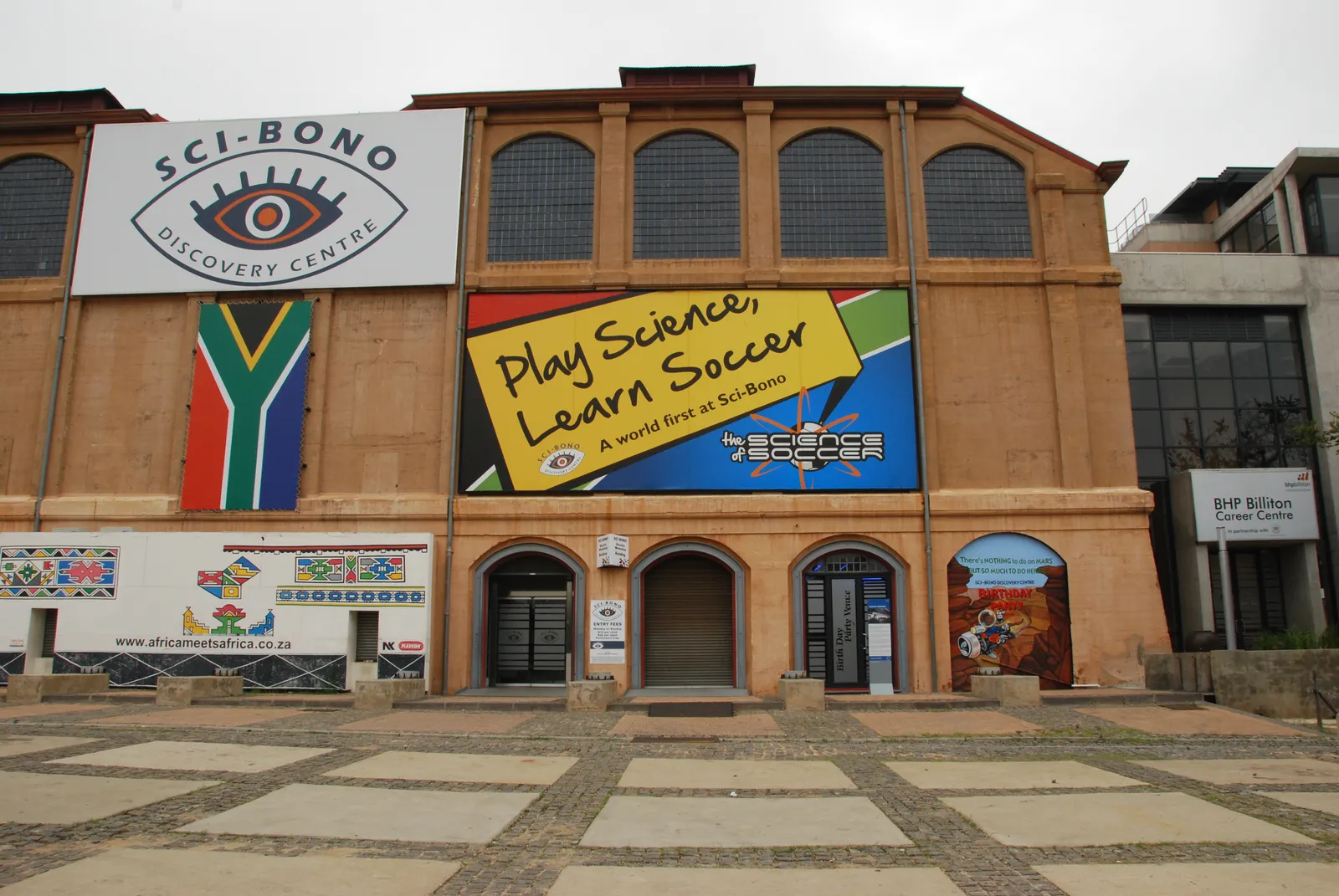
An adult pays R60 and a child aged three to eighteen R40, as do students and pensioners with a card; under-threes go in free. It opens 09:00 to 16:30 on weekdays, Saturdays and public holidays, and 09:00 to 15:30 on Sundays, closing only on Christmas Day and Good Friday. On a Monday, when Museum Africa and the Workers Museum are both shut, this and the photography gallery are what is left.
With more time than Newtown itself needs, the north side of Mary Fitzgerald Square runs into Nelson Mandela Bridge, and the student district of Braamfontein starts at the far end of it; the main Johannesburg guide covers the bridge and what is worth the crossing. Starting from that side, a four-hour guided bike ride works through Braamfontein’s painted walls and back over the bridge, which needs a long gap rather than a short one. For converted market-era buildings without the bike, Maboneng is the same idea a few kilometres east.
Park Station has the nearest airport-train platform to Newtown
Park Station sits a little over a kilometre north of Mary Fitzgerald Square, on the far side of Nelson Mandela Bridge, and it is the closest Gautrain platform to Newtown. No airport service calls there: the airport trains run between O. R. Tambo International Airport (JNB) and Sandton, so from Park Station it is the north-south line up to Sandton and a change, about half an hour of riding plus whatever the connection costs. Trains run daily from about 05:30 to about 20:30, and the operator’s own warning is the one to plan around: the last train out of the airport has no connection to the northern and southern stations, and the last trains on those lines have no connection to the airport. The airport leg is roughly R220 to R230 one way between O. R. Tambo and Sandton, and the gates need either a Gautrain card with at least R38 loaded or a contactless bank card.
The bridge is about fifteen minutes on foot, but the standing advice for Newtown is to arrive and leave by car rather than walk in through the surrounding blocks, and after dark that is the only sensible version: between events the streets around the square empty out. Ride-hailing covers Newtown to the airport in 30 to 45 minutes outside the afternoon peak and considerably longer inside it. Leave at least two and a half hours before boarding.
Newtown is a compact afternoon: a free museum in a market hall, a theatre that has been working since 1976, a compound kept as it was found, and a science centre under tram-shed arches, all within a few blocks. Everything here opens at nine and the last of it closes at five.
Frequently asked questions
What should I do during a layover near Newtown Cultural Precinct in Johannesburg?
Museum Africa is the anchor: free, in the 1913 market hall on Mary Fitzgerald Square, open Tuesday to Sunday from 09:00 to 17:00, with the Treason Trial exhibition and a hip hop museum inside it. The Workers Museum at 52 Jeppe Street costs nothing either and keeps the compound that housed about 330 migrant labourers. Sci-Bono, in the old tram repair workshop on the corner of Miriam Makeba and Helen Joseph streets, charges R60 for an adult and opens seven days a week, which matters on a Monday, when both free museums are shut. Three hours on the ground covers all of it; a Market Theatre performance is the piece to drop, because the programme is built around evenings.
How do I get from Park Station to Newtown?
By car, most of the time. Mary Fitzgerald Square is a little over a kilometre from Park Station across Nelson Mandela Bridge, about fifteen minutes on foot, and a city bus route links the two for R12 to R15. The consistent local advice, though, is to arrive and leave the precinct by car rather than walk in through the surrounding blocks, and ride-hailing fares in Johannesburg are low by European or North American standards. After dark a car is the only sensible answer, because the streets around the square empty out between events.
Can I see a Market Theatre show before an evening flight?
Only on a long gap with a late departure, and check the programme first: the theatre works around evening performances, so a show ends at about the hour you would otherwise be checking in. Prices start at around R50 and rise with the production. If the timing does not work, the building repays the two minutes it takes to look at it from the square. It is the old Indian fruit market of 1913, steel arches and a dome shipped out from Britain and bolted together on site, and the theatre opened its first stage in it on 21 June 1976, days after the Soweto uprising began. Whenever a show does let out, take a car rather than the bridge.
Is Newtown worth it on an early morning arrival?
Not before nine. Museum Africa, the Workers Museum, Sci-Bono and the Market Photo Workshop gallery on Lilian Ngoyi Street all open at 09:00, and the two free museums are shut on Mondays as well, so anyone here at seven has the square, the market sheds and nothing open. Constitution Hill, covered in the main Johannesburg guide, starts fifteen minutes earlier at 08:45 if that quarter of an hour decides the day.