Johannesburg Layover at O. R. Tambo Airport
Part of the full Apartheid Museum, Johannesburg: a JNB Layover
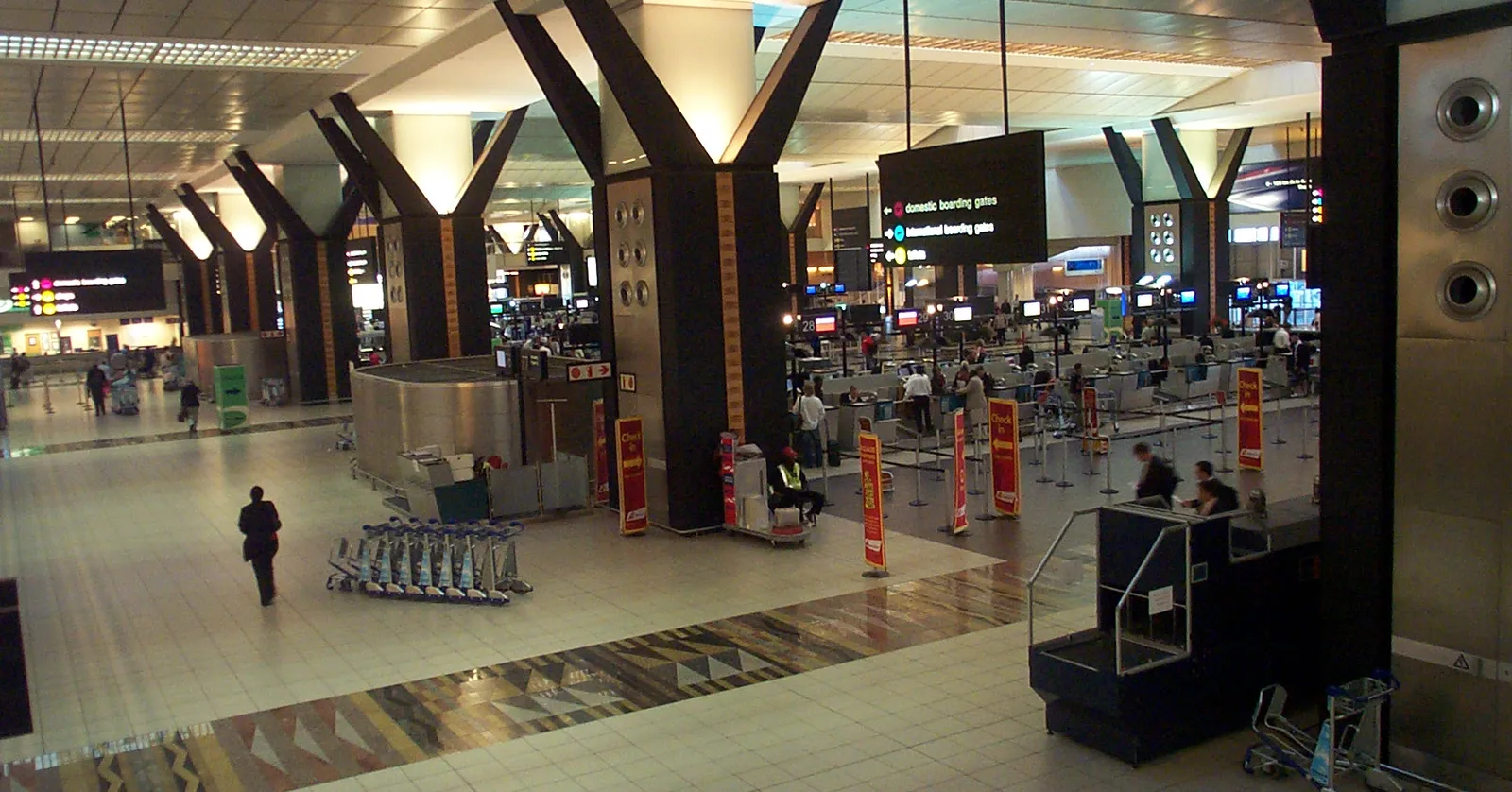
Johannesburg’s O. R. Tambo International Airport sells hotel rooms airside in six-hour blocks, keeps free viewing decks over the apron on the public side of security, and has a train station inside the terminal complex that reaches Sandton in fifteen minutes.
A hotel airside in Terminal A sells rooms by the six hours
The international transfer area of Terminal A has a hotel in it, signposted off the transfer route rather than reached from the street. Rooms are sold overnight, but also in blocks of six and twelve hours, which is the version that matters here: a connecting passenger books one on the transfer signage, never goes near baggage reclaim, never clears immigration, and never needs the visa that entering South Africa would otherwise require. The rooms are soundproofed and reception is staffed around the clock.
For a shorter gap the departure lounges do a cheaper version of the same trick. Both the international lounge in Terminal A and the domestic one in Terminal B have showers, with towels at reception, and both sell access at the door to anyone who walks up rather than only to cardholders and business-class passengers. Access is sold in blocks rather than for the whole wait, so a very long layover means paying twice.
The airport train ends at Sandton, fifteen minutes out
The station sits inside the terminal complex, and the line out of it does one thing: it runs northwest to Sandton and stops there. Fifteen minutes end to end, every twelve minutes at peak, every twenty off-peak and every thirty at weekends and on public holidays, with no change of trains anywhere on the route.
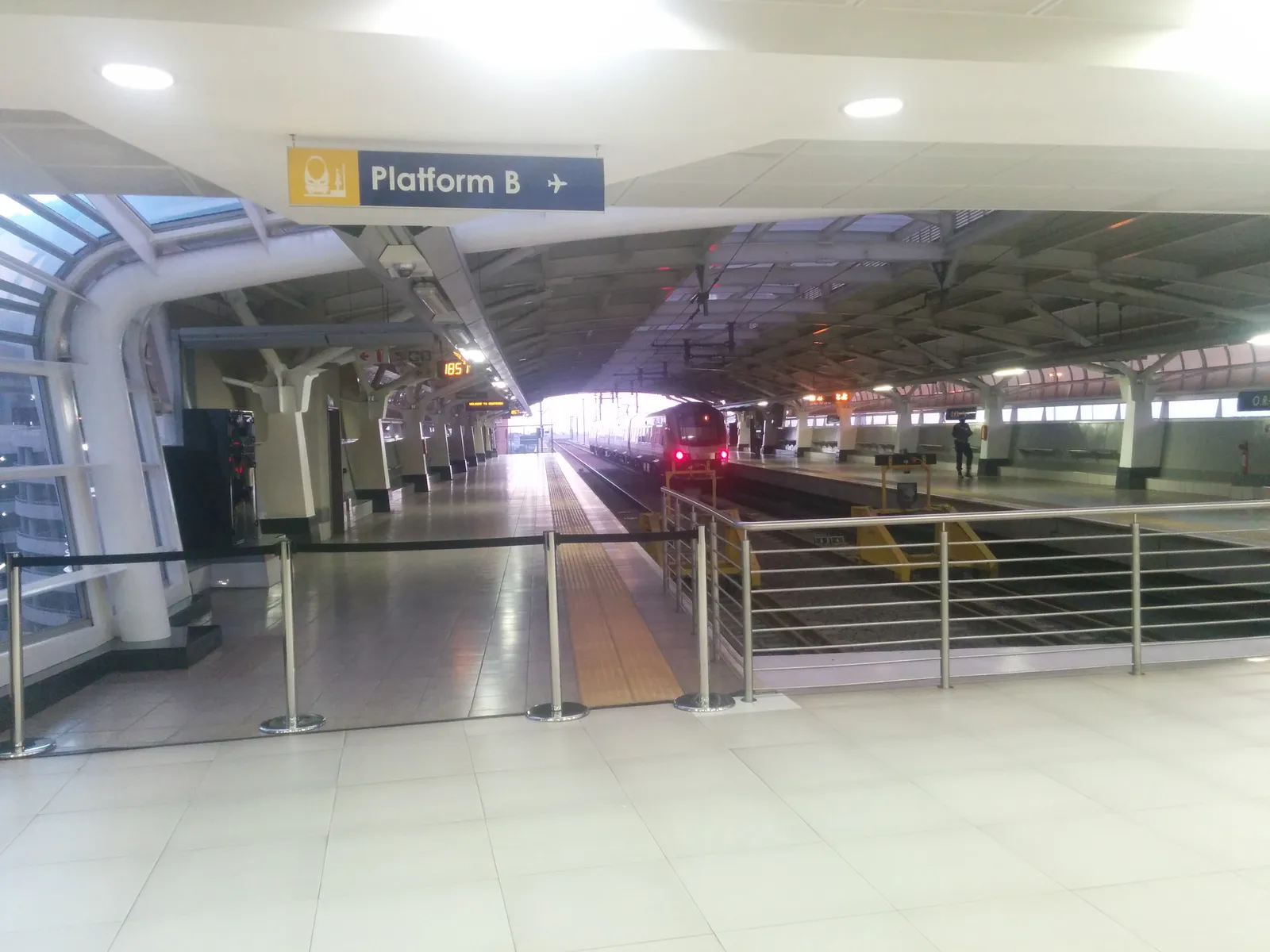
Two things decide whether it is worth using. The service runs daily from about 05:30 to about 20:30, and the operator’s own warning is blunter than the timetable looks: the last train from the airport makes no connection to the northern and southern stations, and the last trains on those lines make no connection back to the airport. The airport leg is also priced apart from the rest of the network, several times what a hop between neighbouring stations costs, and the gates take either a Gautrain card carrying at least R38 or a contactless bank card.
What the line actually reaches is a business district rather than the old city: the streets around Sandton station are towers, a piazza and a shopping centre, and one stop further down the line, Rosebank adds galleries and a Sunday market. The museums are further again, down at Park Station in the centre, and the main Johannesburg guide covers that half day. Past what a train and a return train can sensibly carry, the only shape that works against a boarding time is a car that collects at the terminal and brings you back to it: a private day trip out to the fossil caves at the Cradle of Humankind runs door to door, which is the part a metered taxi and a return plan cannot promise.
Emperors Palace is a Roman-themed resort on the airport’s doorstep
About two kilometres from the terminal, in Kempton Park, stands a casino and entertainment complex built as an imperial Roman fantasy: colonnades, a domed entrance hall, statuary, and a long palm-lined water feature called the Fountain of the Emperors running up to the front doors. Inside are restaurants, bars, a theatre and three hotels, and the gaming floor keeps far longer hours than anything else within reach of the airport.
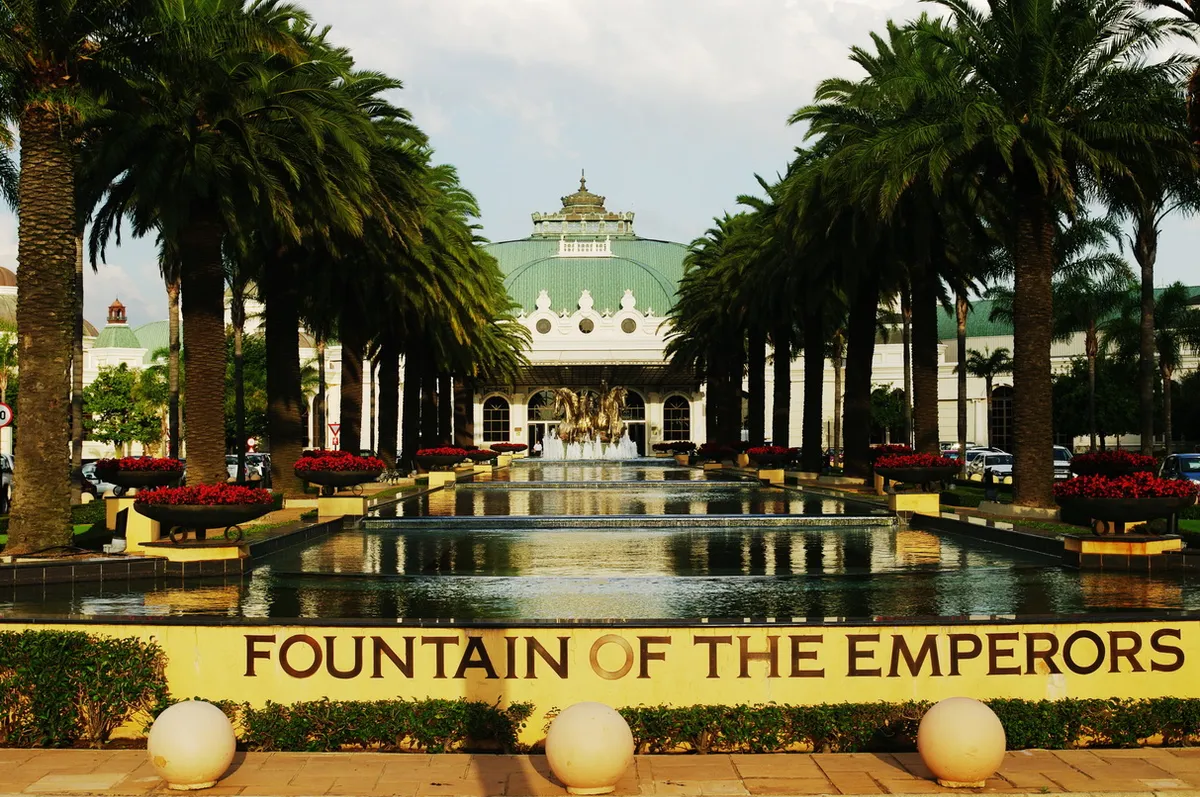
The complimentary shuttle that runs every half hour between six in the morning and eleven at night is for its own hotel guests, so arriving from a departure hall means a metered car for a five-minute drive. It is still the shortest trip out of the terminal that lands somewhere with a roof, a kitchen and a view of something other than a gate.
The viewing decks are free and open all night
Two of them sit on the public side of security, which means anybody can use them, ticket or no ticket. One is signposted past the international check-in counters; the better one is further south in Terminal B, on the level above the domestic check-in desks, glassed floor to ceiling and air-conditioned, looking out over the stands and the taxiways to the tower beyond.
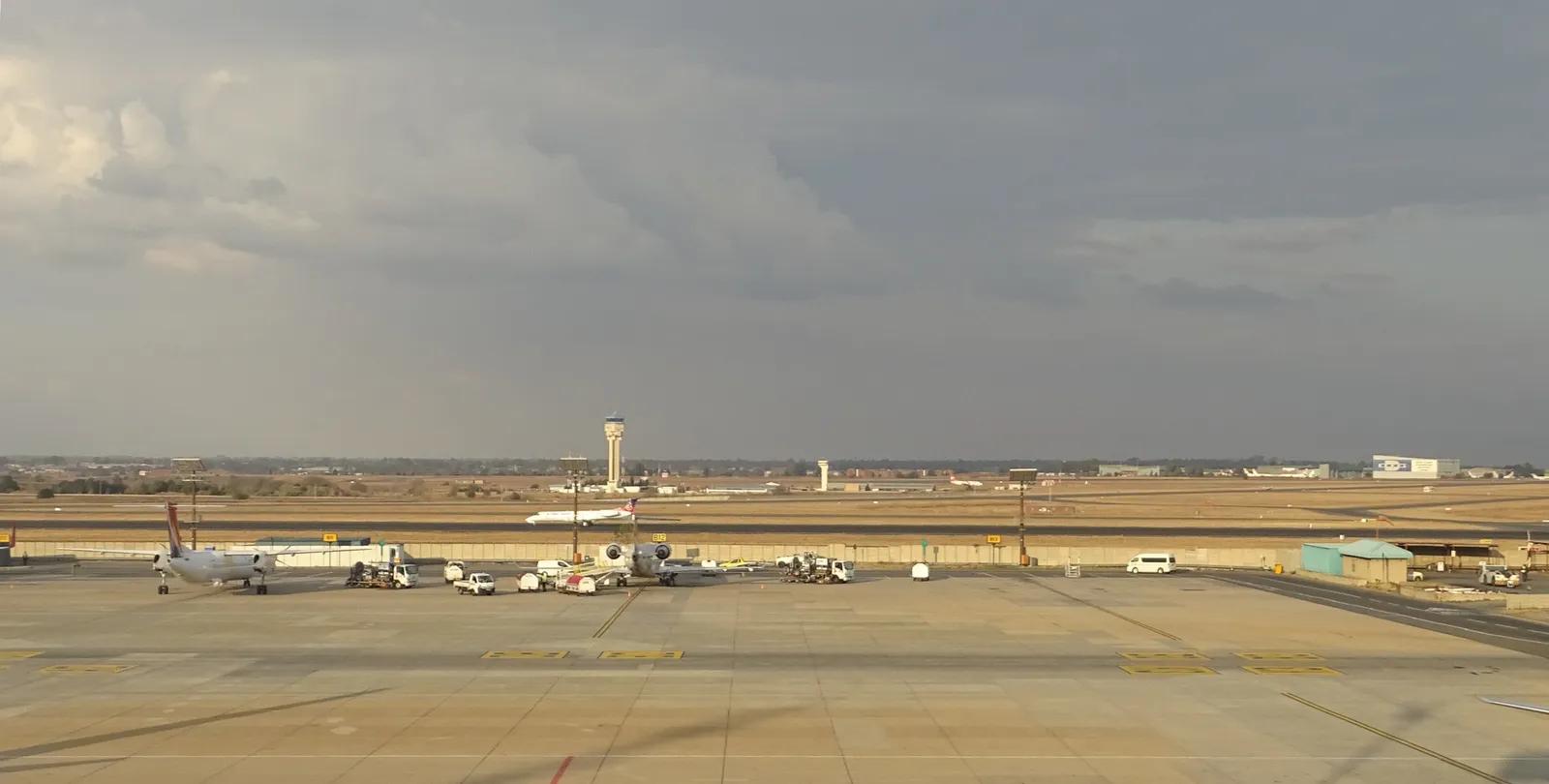
Neither charges anything and neither shuts, which makes them the default answer for the hours between an overnight arrival and a morning connection. The catch is which side of the line they are on: the terminal’s own left-luggage counter is landside too, a floor below Terminal A arrivals, so a suitcase parked there has to be walked back out through the public concourse and put through the security queue a second time before it reaches a gate.
Four hours is the hinge. Under it, the airport is the layover, and it is better equipped for that than most. Over it, the train is sitting downstairs and Sandton is fifteen minutes up the line.
Frequently asked questions
What should I do during a layover at O. R. Tambo International Airport in Johannesburg?
Under about four hours, stay inside. Terminal A's international transfer area has a hotel that sells rooms in six- and twelve-hour blocks without anyone stamping a passport, and the departure lounges sell walk-up access with showers and towels. On the public side, the viewing decks over the apron are free and open around the clock, and the one in Terminal B above the check-in desks is glassed floor to ceiling and air-conditioned. Past six hours, the train reaches Sandton in fifteen minutes, which is the one trip out that reliably gets you back.
Is it worth clearing immigration on a Johannesburg layover?
Only with six hours or more, and only if your passport lets you in without arranging anything first, which depends entirely on your nationality and is worth checking before you count on it. The airport sits out in Kempton Park, so anything in the city proper is a half-hour drive each way before you have done anything at all. Staying airside sidesteps the question completely, which is the whole reason the transfer-area hotel exists.
Where can I shower at O. R. Tambo?
In the departure lounges. Both the international lounge in Terminal A and the domestic one in Terminal B have showers, including a roll-in shower, with towels handed out at reception. You do not need a qualifying credit card or an airline ticket in the right class: access is sold at the door. It is sold by the block rather than for as long as you like, though, so a very long wait means paying for a second stretch.
How late does the airport train run, and what happens after that?
The airport service runs daily from about 05:30 to about 20:30, every twelve minutes at peak, every twenty off-peak and every thirty at weekends and on public holidays. The warning the operator prints itself is the one that catches people out: the last train from the airport makes no connection to the northern and southern stations, and the last trains on those lines make no connection to the airport. After that it is a road trip, 30 to 45 minutes to the northern suburbs outside the afternoon peak and considerably more inside it.