Johannesburg Layover Near Sandton Station
Part of the full Apartheid Museum, Johannesburg: a JNB Layover
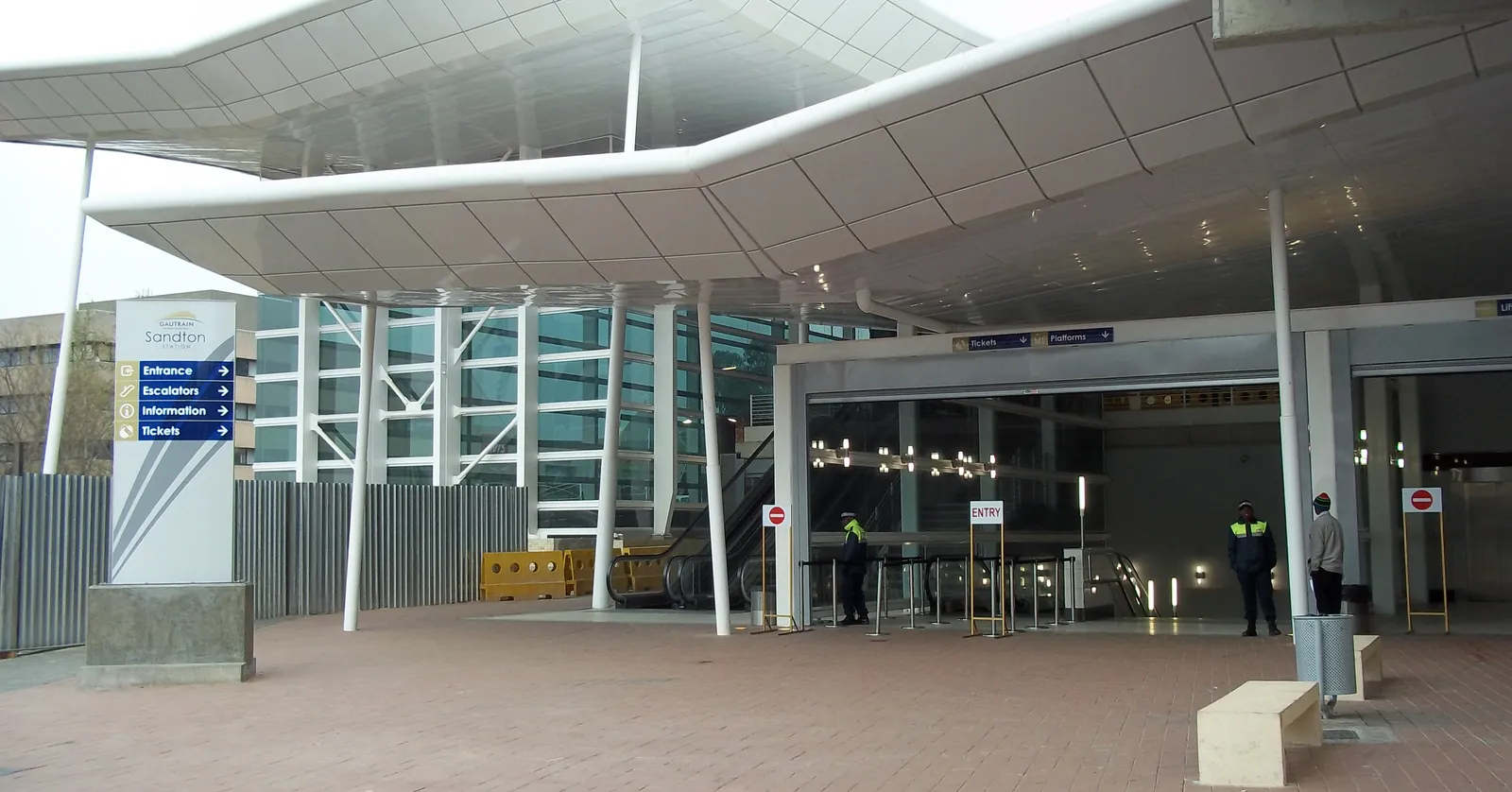
Johannesburg’s Sandton station sits one block from Nelson Mandela Square, a faux-Venetian piazza with a fountain and restaurants on three sides that costs nothing to walk into, and two streets from the tallest building in South Africa.
Nelson Mandela Square was built to look like a Venetian piazza
Nelson Mandela Square opened in 1994 at the corner of Maude and Fifth Streets, under the name Sandton Square, and the architects modelled it on St Mark’s in Venice: an open rectangle of paving ringed by arcades, stone-coloured facades, a fountain, and a shopping centre folded in behind the colonnades rather than announced. Whether the imitation works is a matter of taste. What it is, undeniably, is one of the few places in northern Johannesburg where you can stand outdoors in a large open space with nothing to buy and nobody moving you along.
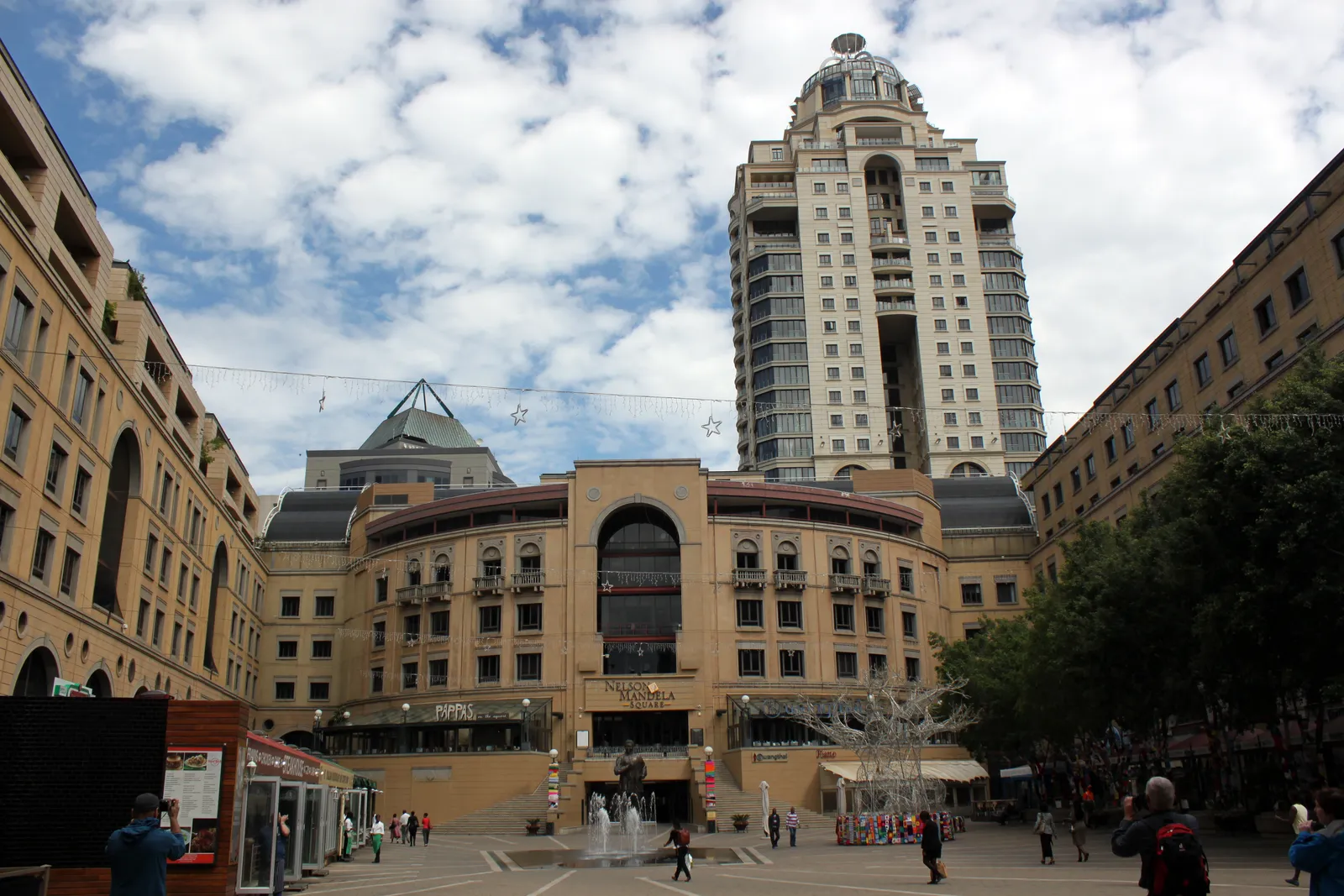
The name changed on 31 March 2004, the day a six-metre bronze of Nelson Mandela was unveiled at one end. It was the first public statue of him anywhere in South Africa, timed to the tenth anniversary of the 1994 election; Kobus Hattingh and Jacob Maponyane made it, and it weighs somewhere around two and a half tonnes. The restaurants under the arcades run from coffee to long lunches, and the tables spill onto the paving, which is the closest thing Sandton has to a street-life scene.
Maude Street runs between Sandton’s newest towers
Maude Street is the street the square opens onto, and it carries most of what the district is known for. The Sandton Convention Centre stands on it at number 161, which is where the BRICS summit was held in August 2023 and where most of the trade shows that bring people to this part of the city end up. At number 75 stands The Leonardo: 234 metres, 55 floors, apartments and offices and a hotel stacked on top of each other, finished at the end of 2019 to a design by Co-Arc International Architects, and the tallest building in South Africa.
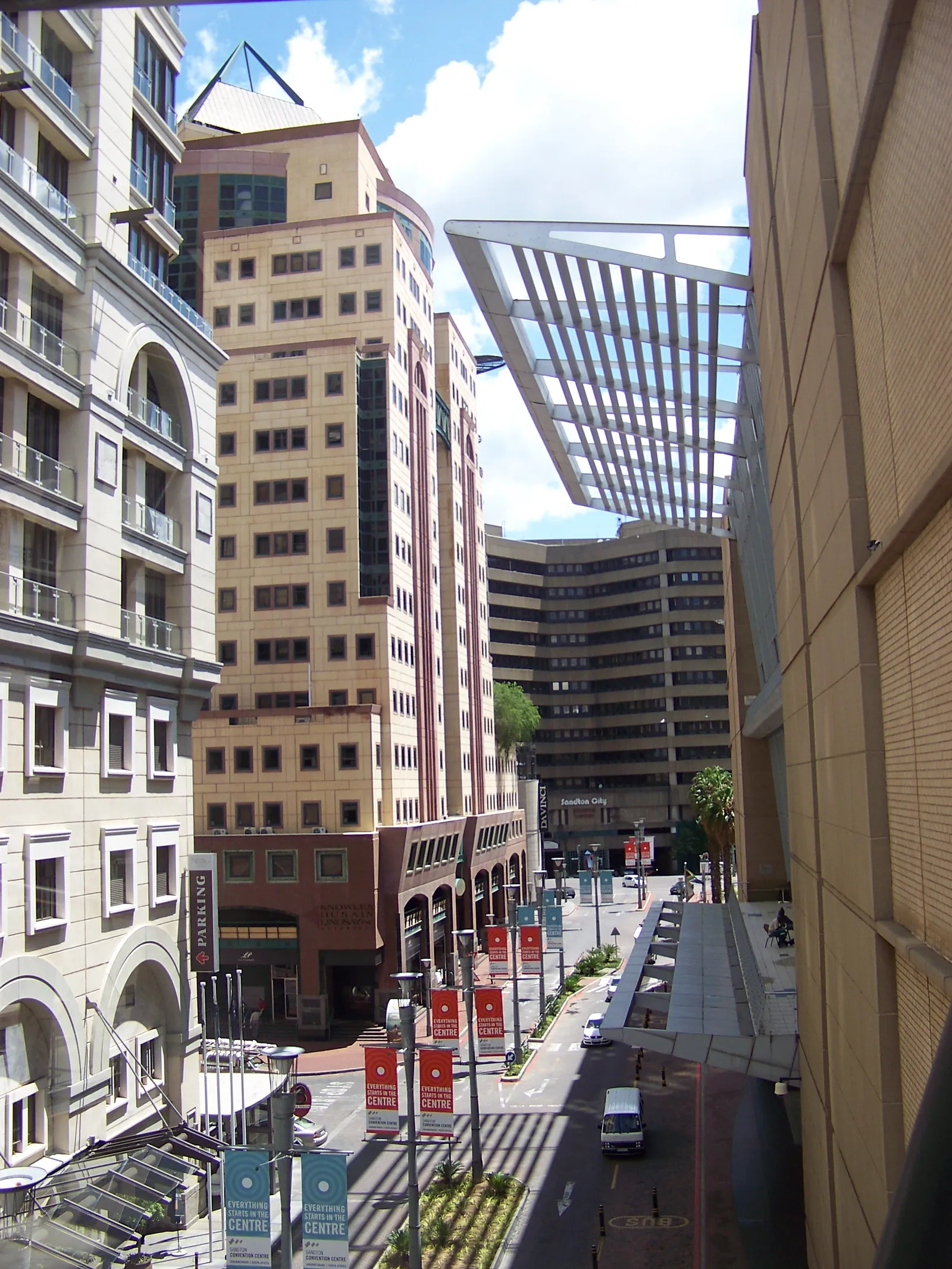
Nothing on this street is old, and that is the honest summary of Sandton as a whole: it is a business district that grew up from the 1970s onward and has no historic quarter to go looking for. Two to three hours is what it supports. If your gap is longer than that, the answer is to go somewhere else rather than lap the same four blocks, and the obvious somewhere else is the old centre: the city-wide Johannesburg itinerary starts down at Park Station and covers Constitution Hill and the Apartheid Museum, and if you would rather not work out the streets yourself, a guided walking tour of the centre covers the same ground with someone who knows it.
Getting out of the station is forty-five metres of escalator, and the walkway between the platforms and the square fills with office workers at the same hours the airport trains run fullest.
No change of trains between Sandton and O. R. Tambo
Sandton station opened on 8 June 2010 and is the only one on the Gautrain network with two levels of platform: north-south trains to Pretoria and the city centre on the upper level, and the airport service terminating on the lower one. That makes it the operational hub, the station every train on both lines passes through, and it also makes O. R. Tambo International Airport (JNB) a single fifteen-minute ride away with nothing to change onto. Trains leave every twelve minutes at peak, every twenty off-peak and every thirty at weekends and on public holidays.
Two practical limits. The service runs daily from about 05:30 to about 20:30, and the operator warns that the last train from the airport has no connection to the northern and southern stations and the last trains on those lines have no connection to the airport, so a late evening puts you in a car whether you planned on one or not. And the airport fare sits well above a normal hop on the network, roughly R220 to R230 one way, payable with either a Gautrain card carrying at least R38 or a contactless bank card. The station entrance is at the corner of Rivonia and West Streets, and the platforms are fifteen storeys below it, so leave a few minutes for the escalators on top of the ride.
That vertical distance is the whole argument for travelling up here empty-handed. Fifteen minutes from the gate to a piazza with a fountain is a good trade; fifteen minutes plus two long escalator rides with a suitcase in front of you is a less good one.
Frequently asked questions
What should I do during a layover near Sandton Gautrain Station in Johannesburg?
Walk the one block to Nelson Mandela Square. It opened in 1994 as Sandton Square, was built in a faux-Italian style modelled on St Mark's in Venice, and was renamed on 31 March 2004 when a six-metre bronze of Nelson Mandela went up at one end of it. The square costs nothing, the arcades around it are full of restaurants, and Maude Street, which it opens onto, carries the convention centre and the tallest building in South Africa. Two to three hours covers all of it comfortably; Sandton is small enough that a longer gap is better spent on a trip out than on a second lap.
Is a Soweto tour worth booking from a Sandton layover?
Only on a long one. Soweto is about thirty kilometres southwest of Sandton, so even a stripped-down visit costs the best part of half a day once the driving is counted, and it is not something to improvise with a boarding time in mind. If the gap is genuinely that long, the practical version is a scheduled tour rather than a hired car and a map: a hop-on hop-off Soweto tour runs on a fixed loop with fixed pickup times, which is the part that makes it plannable against a flight. Anything under six hours on the ground, stay in Sandton.
Does Sandton work for a layover with kids?
Better than most of Johannesburg, because almost none of it involves a car. The square is a flat, traffic-free rectangle of paving with a fountain and space to run, and the shopping centre beside it has a food court and public toilets on the same level. Mushroom Farm Park, a free municipal park on Daisy Street off Rivonia Road, adds a duck pond, an amphitheatre, an outdoor gym and a fenced play area with a sandpit. The one thing to know before you commit is the escalators: the platforms are forty-five metres down, which is a long ride each way with a pushchair.
How far is central Johannesburg from Sandton station?
About ten minutes on a train, without leaving the same network. The old city centre is where the museums and the apartment-block streets are, and it is a completely different half day from this one: the Johannesburg itinerary starts down there, at Park Station, and runs to Constitution Hill and the Apartheid Museum. Sandton has no historic quarter at all, so if that is what you came for, ride down rather than looking for it here.