Johannesburg Layover: Vilakazi Street, Soweto
Part of the full Apartheid Museum, Johannesburg: a JNB Layover
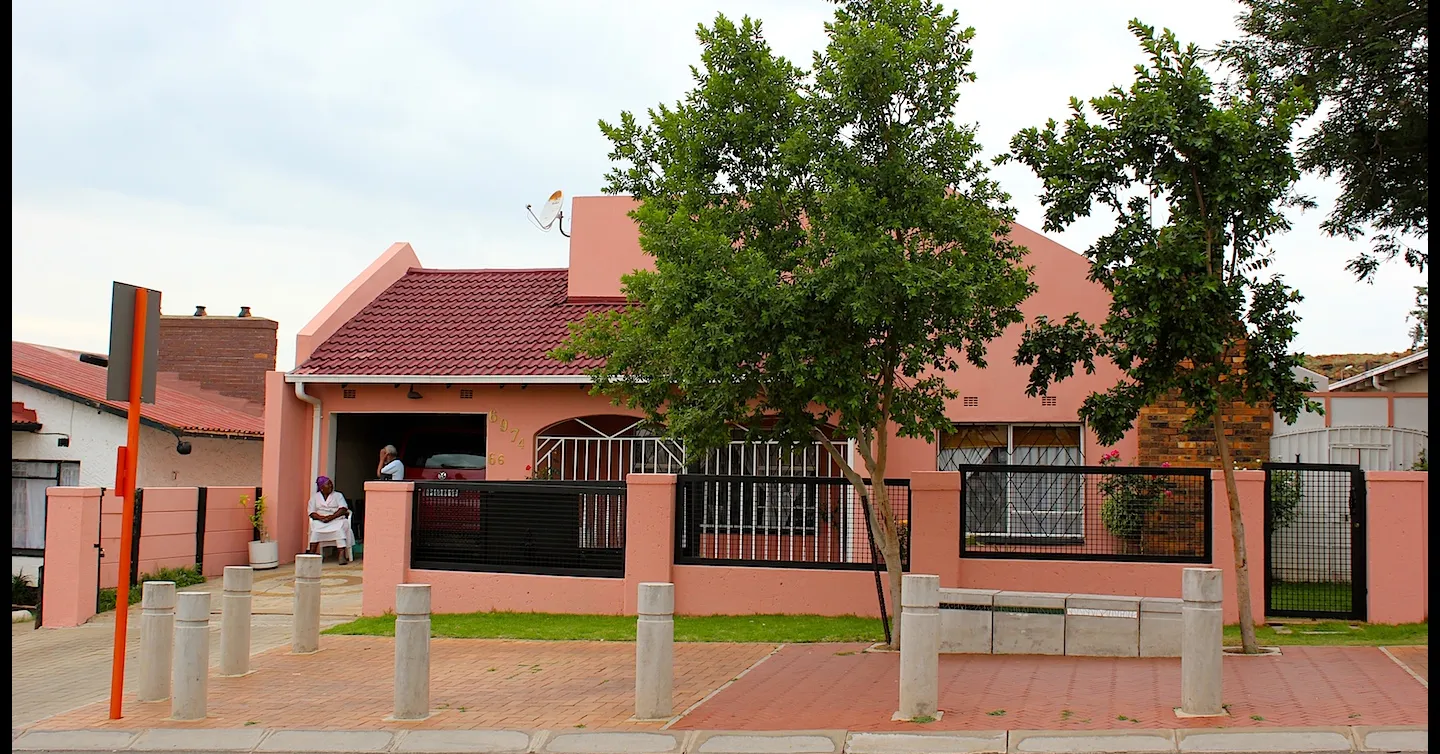
Johannesburg’s Vilakazi Street, in the Orlando West part of Soweto, is two blocks of restaurant terraces and heritage plaques, with the open-air Hector Pieterson Memorial free to walk into two streets north and a pair of painted cooling towers three kilometres east in Orlando East.
Vilakazi Street was named after a poet who died in 1947
Benedict Wallet Vilakazi wrote poetry and novels in Zulu at a time when almost nobody was publishing in the language, taught at the University of the Witwatersrand, where he was the first Black South African to lecture white students, and in 1946 took the first doctorate a Black South African had been awarded. He died the following year, and the street he had lived on in Orlando West carries his name. Two of its blocks now run on visitors: terraces set out on the pavement, craft tables, and Sakhumzi at number 6980, where a buffet of chakalaka, pap, samp, trotters and stew is R270 a head and the kitchen is open from eleven in the morning until nine at night.
The plaques are the other half of it. Nelson Mandela’s four-room house at 8115 is the ticketed museum on the street, and the main Johannesburg guide covers what is inside it. Desmond Tutu’s house stands further along, still a private home, so what there is to see is the frontage and the sign outside. That leaves a street where the reading matters more than the looking, which is the argument for a guided walk of the street with lunch built in rather than a self-directed lap of it.
The Hector Pieterson Memorial is free and never shuts
Khumalo Street, two blocks north of the corner of Vilakazi and Moema, holds a plaza of brick and dark stone with a shallow channel of water running through it and an inscription along the edge. Enlarged on the wall behind is Sam Nzima’s photograph from 16 June 1976: Mbuyisa Makhubo carrying the body of thirteen-year-old Hector Pieterson, with Pieterson’s sister Antoinette running alongside. There is no gate, no ticket desk and nobody to pay. Hastings Ndlovu, shot the same morning, died six hundred metres away on the old Orlando West bridge.
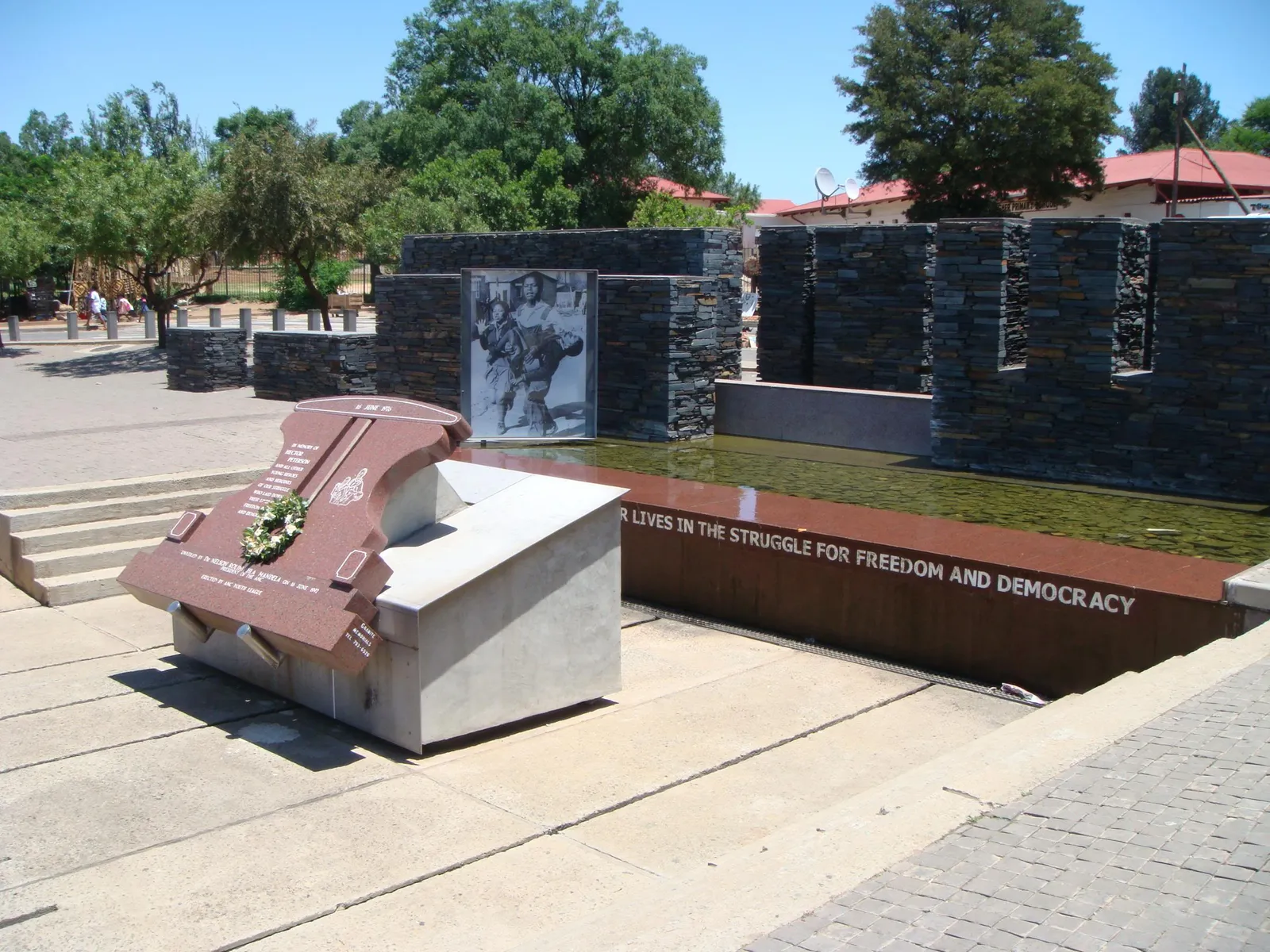
The museum built around that memorial stone is the part with a ticket desk. Mashabane Rose Associates designed it and Nelson Mandela opened it on 16 June 2002, twenty-six years to the day after the march, and it runs on photographs, testimony and film rather than objects. It opens Tuesday to Sunday, 10:00 to 17:00, and shuts on Mondays, Good Friday, Christmas Day and New Year’s Day. An international adult pays R100, a student R50 and a child R25; South Africans pay R30 and R15. Photography is not allowed inside, which is worth knowing before you plan an afternoon around it.
The street and the memorial are a few minutes’ walk apart, and nothing else in Soweto is within walking distance of either, so a suitcase would spend the afternoon in the boot of a car rather than with you.
Orlando Towers are two painted cooling towers with a bungee bridge between them
The Orlando power station was planned in 1935, built from 1939, commissioned in 1942 and shut down in 1998 after fifty-six years of burning coal for Johannesburg. The turbine hall went, the two cooling towers stayed, and both were painted: one carries an advertising wrap and the other is covered base to rim in a mural of township scenes. They stand at the corner of Sheffield and Chris Hani roads in Orlando East, about three kilometres east of Vilakazi Street, and a suspension bridge is strung between the two rims.
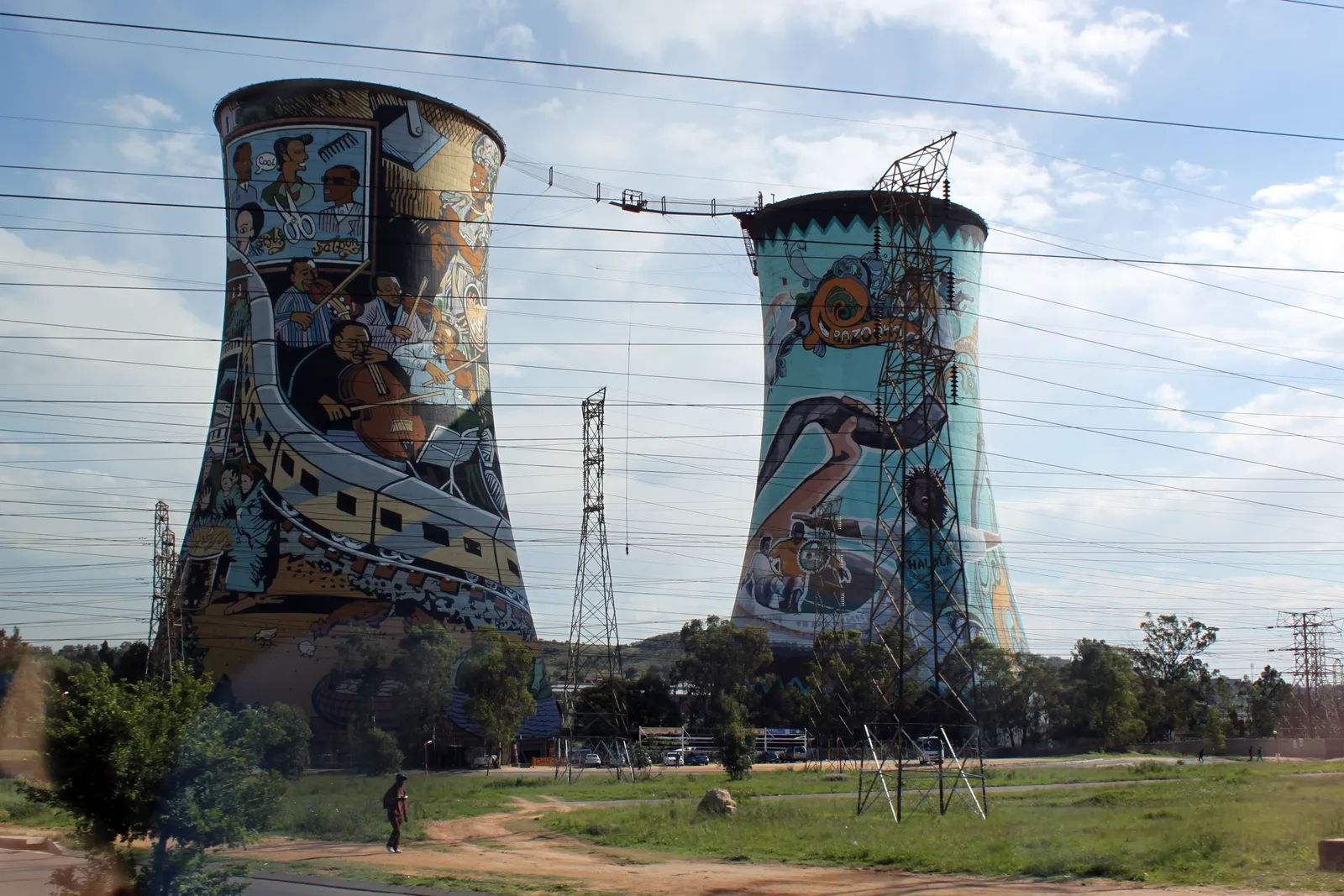
Walking in to look costs R20 a head. Off the bridge there is a hundred-metre bungee jump at R630, a swing into the open mouth of one tower, a zipline over the Orlando dam and, at the bottom of the western tower, a paintball court inside the shell. The opening days are the catch, and they are the reason to check the calendar before committing a Soweto afternoon to this: Thursday from noon and Friday to Sunday from ten, each until sunset, and nothing at all from Monday to Wednesday. The bungee is not bookable, it runs first come first served, jumpers have to weigh between 35 and 110 kilograms, and everything stops when the rain starts.
Regina Mundi church still has the bullet holes in its ceiling
Four kilometres south of Orlando West, at 1149 Khumalo Street in Rockville, a wide brick church with a steep gable front holds several thousand people. Anthony Noel Errol Slaven designed it, the ground was broken in 1960 and it was finished in 1962. On 16 June 1976 students running from the police went inside, and the police went in after them, firing live rounds. Nobody was killed in the building. The marble altar was broken, the statue of Christ was damaged, and the holes are still in the ceiling.
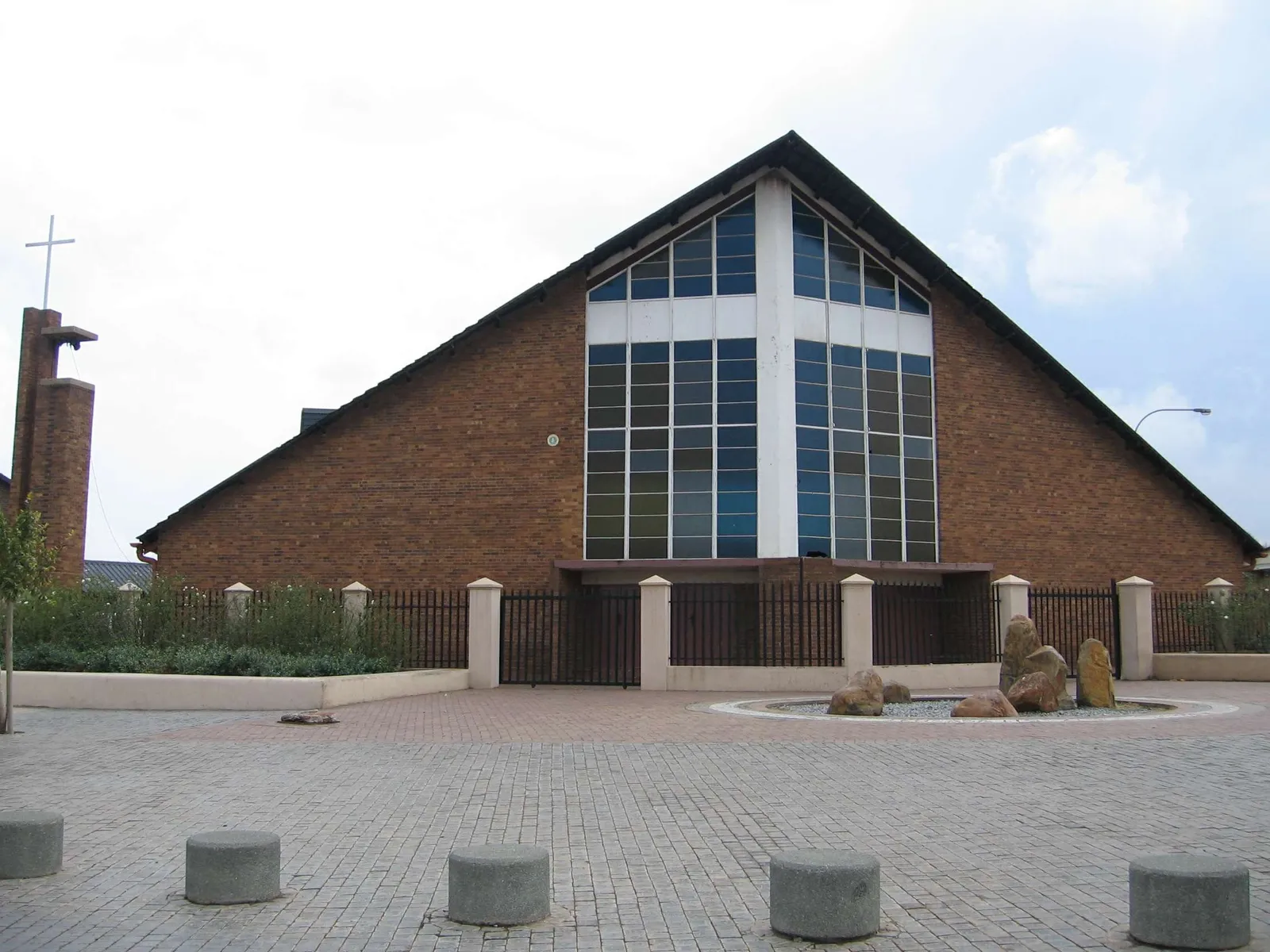
Larry Scully painted the Madonna and Child of Soweto here in 1973, a Black Virgin and Child with a single large eye below them. The stained glass came later, a gift from Poland in 1998. Between 1995 and 1998 the Truth and Reconciliation Commission sat in the nave with Desmond Tutu presiding. Nothing is charged at the door and a donation is the expectation, but this is a working parish rather than a museum: Mass is at 08:00 from Tuesday to Friday and at 07:00 and 09:00 on Sundays, and getting in outside those hours depends on somebody being there to open up.
Soweto has no rail link a visitor would use
O. R. Tambo International Airport (JNB) is about forty-five kilometres from Orlando West by road, which is an hour on a clear run and a good deal more once the late-afternoon peak sets in, and ride-hailing is what covers it. The Gautrain network does not come near Soweto at all: its closest station is Park Station in the centre, and that one has no direct airport service either, so even reaching a useful platform means a car first, then a train north to Sandton and a change there. The city’s bus rapid transit does run out here from Park Station with one change, on a stored-value card that costs R30 in the 2026/27 year and needs at least R30 loaded on it, with no cash taken on board. On a flight day that is not the plan to pick. Leave Soweto at least three hours before boarding.
So the shape is a car out, a couple of hours of flat walking split between two streets in Orlando West, and a car back, with the towers and the church added if the gap is genuinely long. Out here the going takes about as long as the seeing, which is the thing to size the afternoon around.
Frequently asked questions
What should I do during a layover near Vilakazi Street in Johannesburg?
Walk the two blocks of Vilakazi Street in Orlando West, then the two streets north to the Hector Pieterson Memorial, which is open air and free. The museum beside it charges R100 for an international adult and opens Tuesday to Sunday, 10:00 to 17:00, so a Monday visit is the plaza only. With a clear half day, the painted cooling towers at Orlando are three kilometres east and Regina Mundi, the church the 1976 students ran into, is four kilometres south. Soweto is a drive from anywhere else in the city, so this is a half-day commitment rather than something to slot between two other stops.
Can I see Vilakazi Street on my own, without a guide?
People do, and the advice that comes with it is consistent: come in daylight, keep to the restaurant blocks and the memorial plaza, which are used to visitors and busy with them, and arrive and leave by car rather than walking in from the surrounding streets. Going further into Soweto on your own on a first visit is not what anyone local recommends, and after dark the answer is a car in both directions. Solo travellers in particular tend to find a guide worth the money here, less for safety on the strip itself than because the street is a row of plaques without someone to say what happened on it.
Are the Orlando Towers open midweek?
No. The towers open Thursday from noon and Friday to Sunday from ten, each day until sunset, and stay shut Monday to Wednesday, which is the single fact most likely to break a Soweto afternoon planned from photographs. Walking in and looking up costs R20 a head. The bungee jump off the bridge between the two tops is R630 and is not booked in advance, it runs first come first served, with a 35kg minimum and a 110kg maximum, and everything stops when it starts to rain.
How much time does Soweto actually need?
A clear half day, and that is with the driving counted honestly. Orlando West is about twenty kilometres southwest of the city centre, nothing here is on the rail network, and the three stops worth making sit three to four kilometres apart, so the afternoon is a series of car hops with walking in between. Under about six hours on the ground it is the wrong call: the two apartheid-era museums in the city itself do similar work in half the travelling, and a shorter gap still is better spent on the blocks around Sandton station, where the airport train already puts you.