Auckland in One Day: Sky Tower and Domain
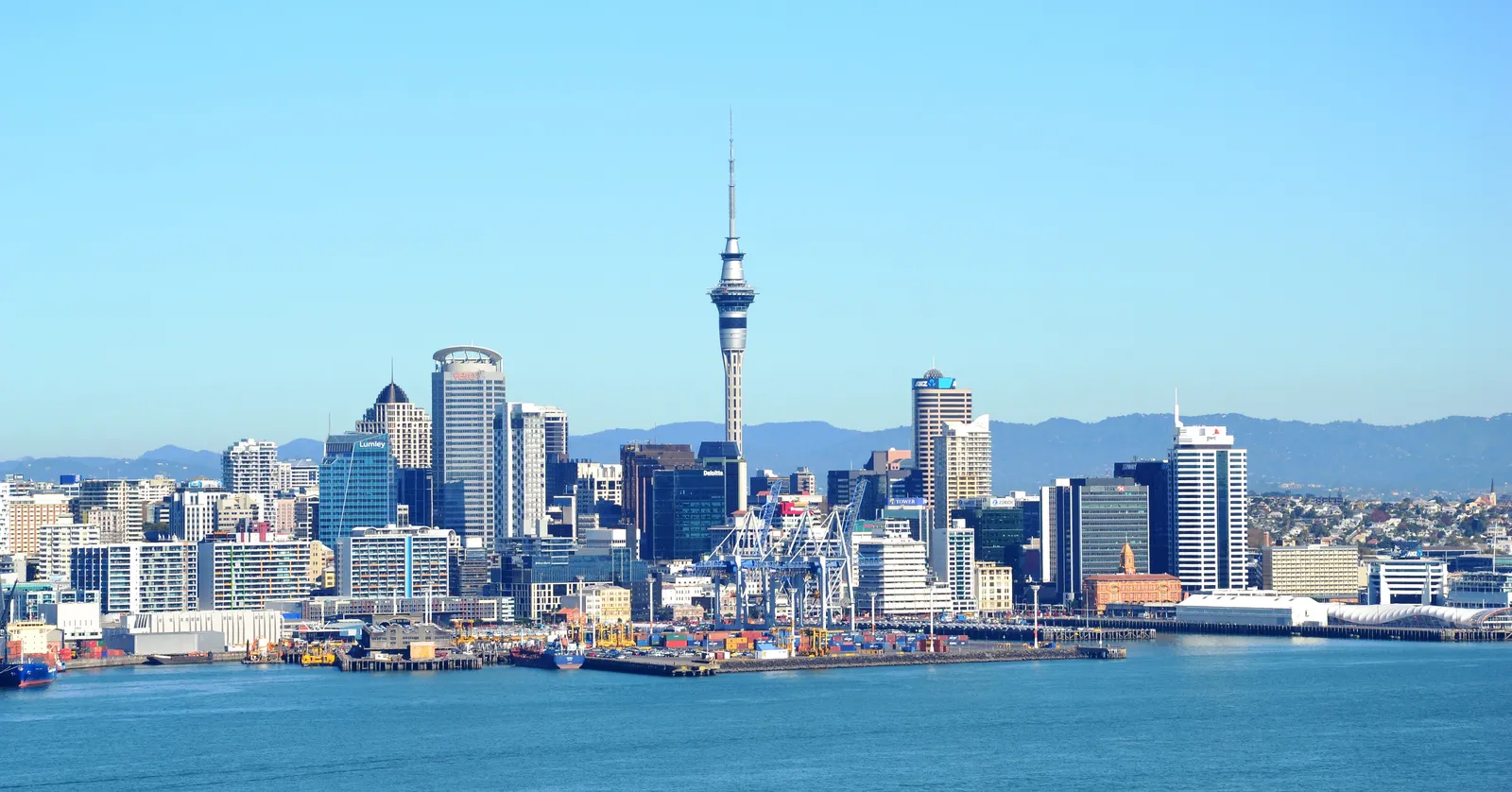
Auckland’s city centre puts four stops within a twenty-five-minute walk of Queen Street: the Sky Tower’s glass floor panels, the free Auckland Art Gallery, Albert Park’s cast-iron fountain, and the Auckland Domain, a 75-hectare park sitting inside a volcanic crater.
Glass floor panels at the top of the Sky Tower
The Sky Tower stands at the corner of Victoria and Federal Streets and measures 328 metres from the pavement to the tip of its mast, which is why the Auckland skyline reads the way it does from anywhere out on the water. It opened on 3 August 1997. The main observation level is at 186 metres, and set into part of that floor are panels of 38-millimetre glass, so the drop to the street is visible straight down past your own feet.
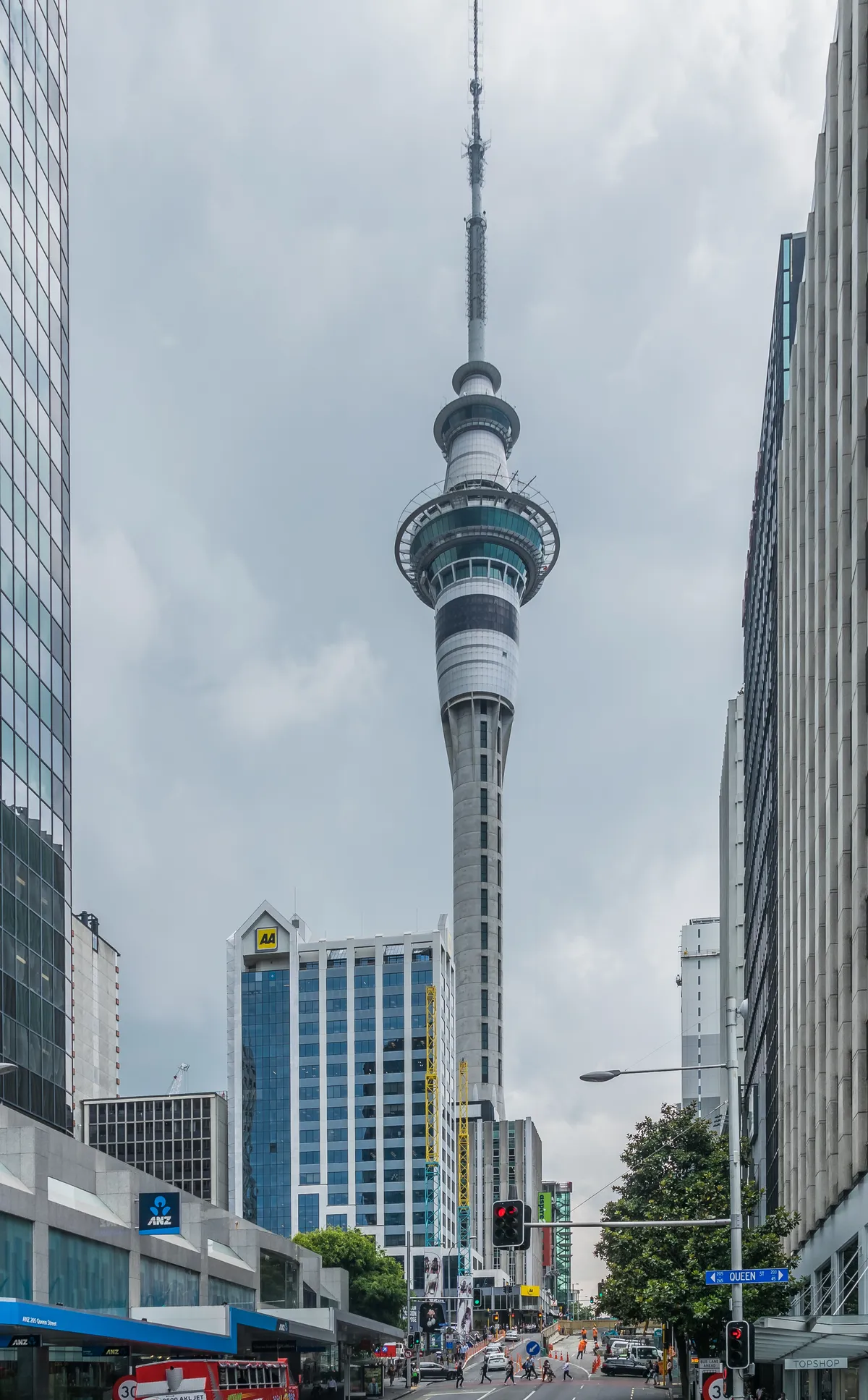
Admission covers all three viewing levels and runs NZ$47 for an adult, NZ$32 for children aged 10 to 14 and NZ$25 for ages 3 to 9, and tickets are sold in advance through a tours and activities platform. Doors are open 9am to 10.30pm, with the last lift up at 9.30pm. Getting here from underground is new: Te Waihorotiu, a train station 15 metres below Albert Street, opened on 13 September 2026 with two of its entrances on Victoria Street West, a couple of minutes from the base of the tower. It takes its name from the Waihorotiu Stream, which still runs in a culvert beneath Queen Street.
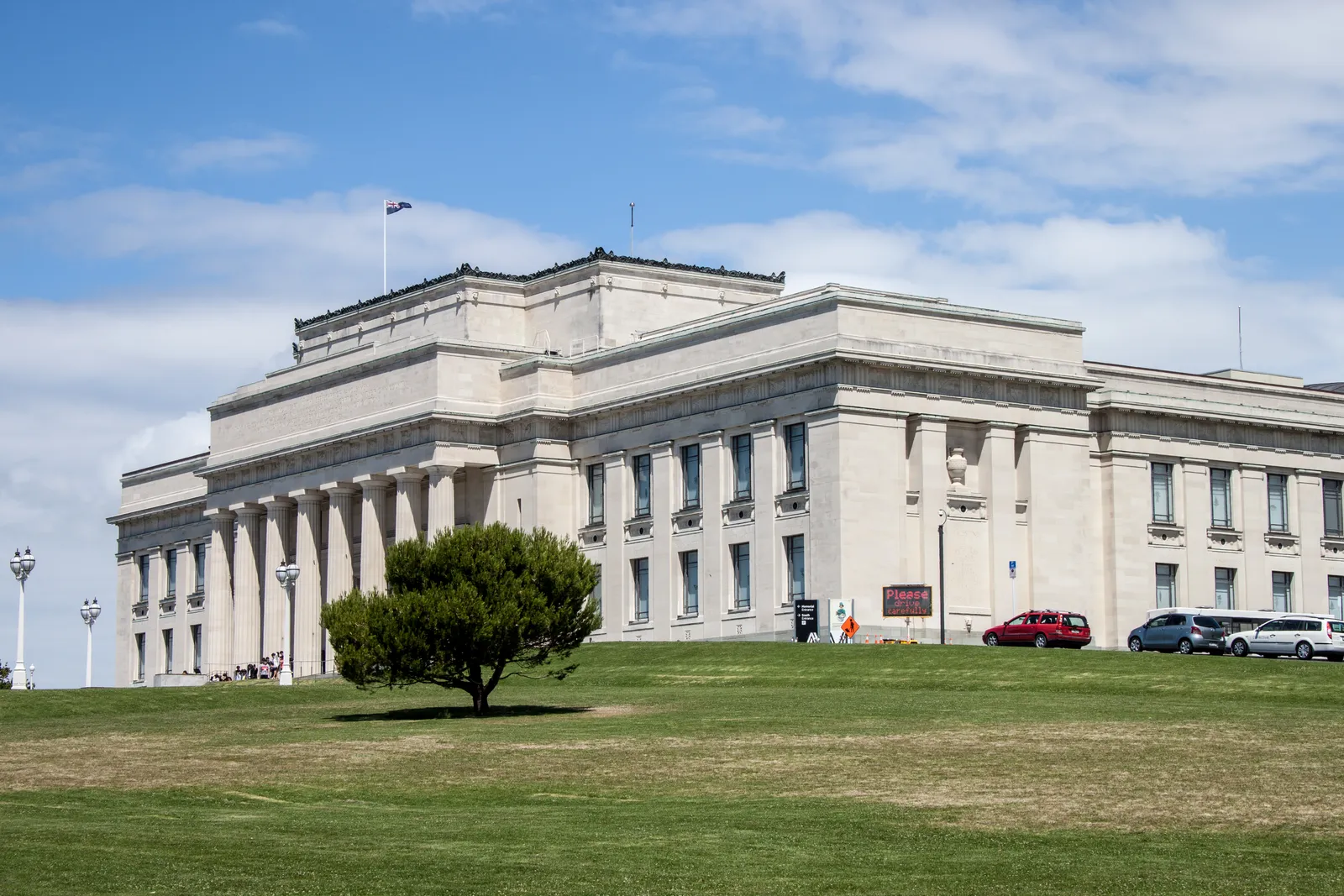
Auckland War Memorial Museum sits on the rim of a volcanic crater
The Auckland Domain covers 75 hectares in Grafton, and what it covers is the explosion crater and tuff ring of Pukekawa, a volcano that last erupted around 100,000 years ago. The sports fields are laid out on the crater floor. The museum is on the rim: Portland stone with granite detailing, a Greek portico across the front, built in stages between the 1920s and the 1950s and given an undulating copper dome in 2007. A Cenotaph and Court of Honour stand in front of it, and two Halls of Memory inside list the Auckland dead of the twentieth century’s wars.
The Māori and Pacific collections are the reason to go in rather than walk past. Hotunui, a carved meeting house of 1878, stands on the ground floor, and Te Toki-a-Tapiri, a war canoe of 1830 cut from a single tōtara, sits alongside it. Admission works by where you live: Auckland residents go in free on production of ID with a local address, New Zealanders from elsewhere are asked for a donation, and overseas visitors pay, with entry booked ahead the same way as the tower. The walk up from Queen Street takes about twenty-five minutes and climbs for all of it, because Queen Street sits on the floor of a buried stream valley and everything on either side of it goes up. A suitcase turns that into a different sort of walk.
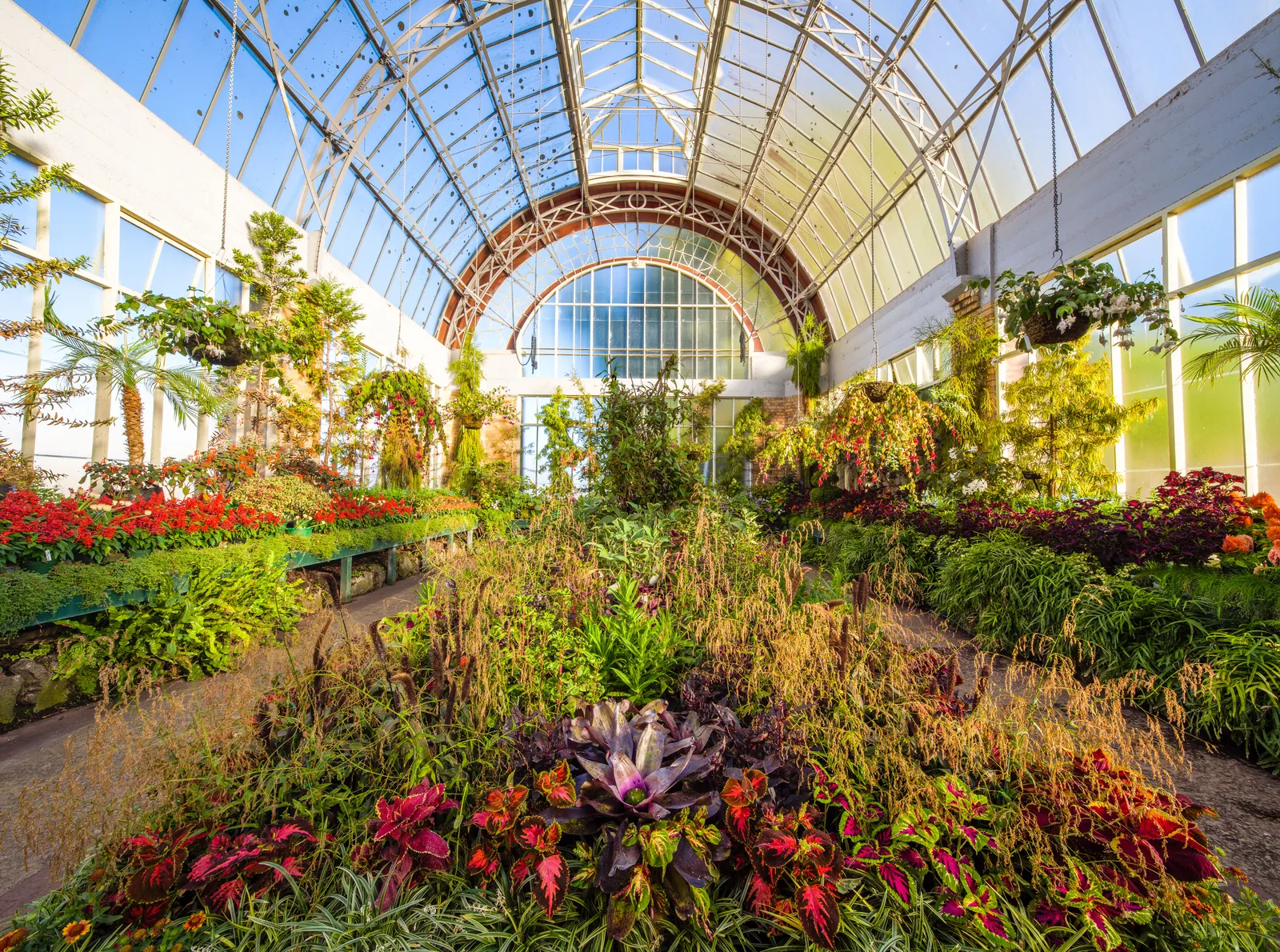
The Domain Wintergardens keep one glasshouse at 28 degrees
Two glasshouses face each other across a courtyard of neoclassical statues and a sunken pond, at the end of Wintergarden Road inside the Auckland Domain, in Grafton. Building ran from 1916 to 1928, and the mayor opened the finished pair on 2 May 1928. The Temperate House is unheated and runs to camellias, cinerarias and bulbs that turn over with the seasons. The Tropical House next to it is held at an average of 28°C, which is the warmest place on this itinerary and, on a wet Auckland afternoon, the most useful.
Behind the glasshouses the Fernery occupies a worked-out scoria quarry cut into the side of Pukekaroro, a small cone within the larger crater, so the ferns are growing in the hole the stone came out of. All of it is free. Summer hours, 1 November to 31 March, are 9am to 5pm; winter hours, 1 April to 31 October, are 9am to 4.30pm, and Christmas Day is the one day it shuts.
Auckland Art Gallery’s timber canopy and its 1887 wing
Auckland Art Gallery Toi o Tāmaki stands on the corner of Wellesley Street East and Kitchener Street, with its main entrance at 1 Kitchener Street, and it is two buildings pretending to be one. The older half went up in 1887 to a design by the Melbourne firm Grainger & D’Ebro. The 2011 addition, by the Australian practice FJMT with Auckland’s Archimedia, put a canopy of tall timber columns over the new entrance, each one spreading into the roof above the forecourt. It reopened on 3 September 2011 and took the World Architecture Festival’s World Building of the Year in 2013.
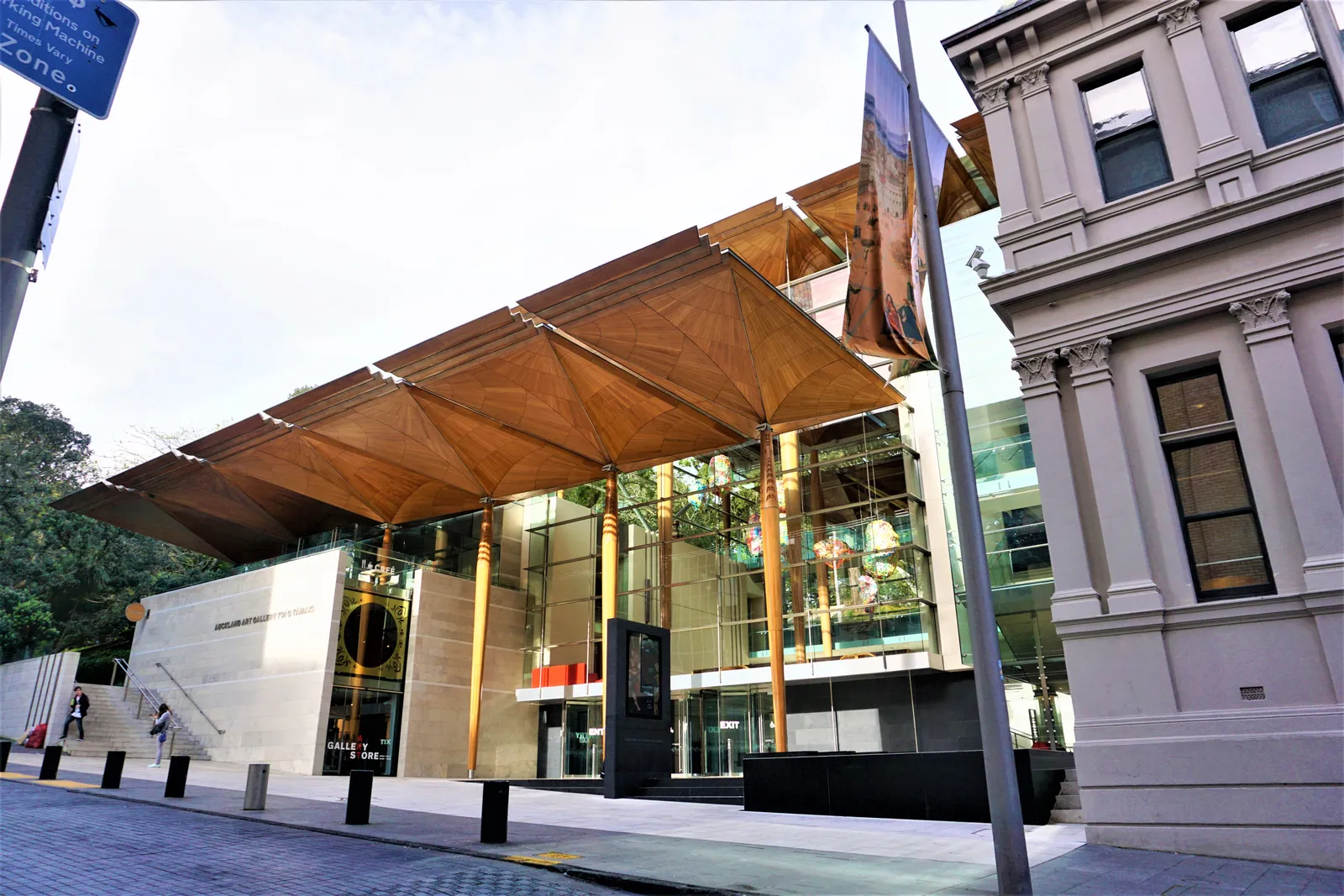
The collection is free to walk into, with charges only on some special exhibitions, and the doors are open 10am to 5pm every day except Christmas Day. That combination, free, central, and open through the middle of the day, is what makes it the easiest stop here to fit around a flight.
Albert Park’s fountain sits on 3.5 kilometres of sealed tunnels
Albert Park climbs the block bounded by Kitchener Street, Wellesley Street East, Princes Street and Bowen Avenue, directly behind the art gallery and against the edge of the University of Auckland. Paths run up through the trees to a flat summit, where a cast-iron fountain shipped from Britain in 1881 throws spray over a basin ringed with dolphins and cherubs on water-spouting horses. A floral clock was planted in 1953. The ground under all of it was the Albert Barracks, one of the first European fortifications in Auckland, and a length of the barracks wall still stands in the university grounds next door.
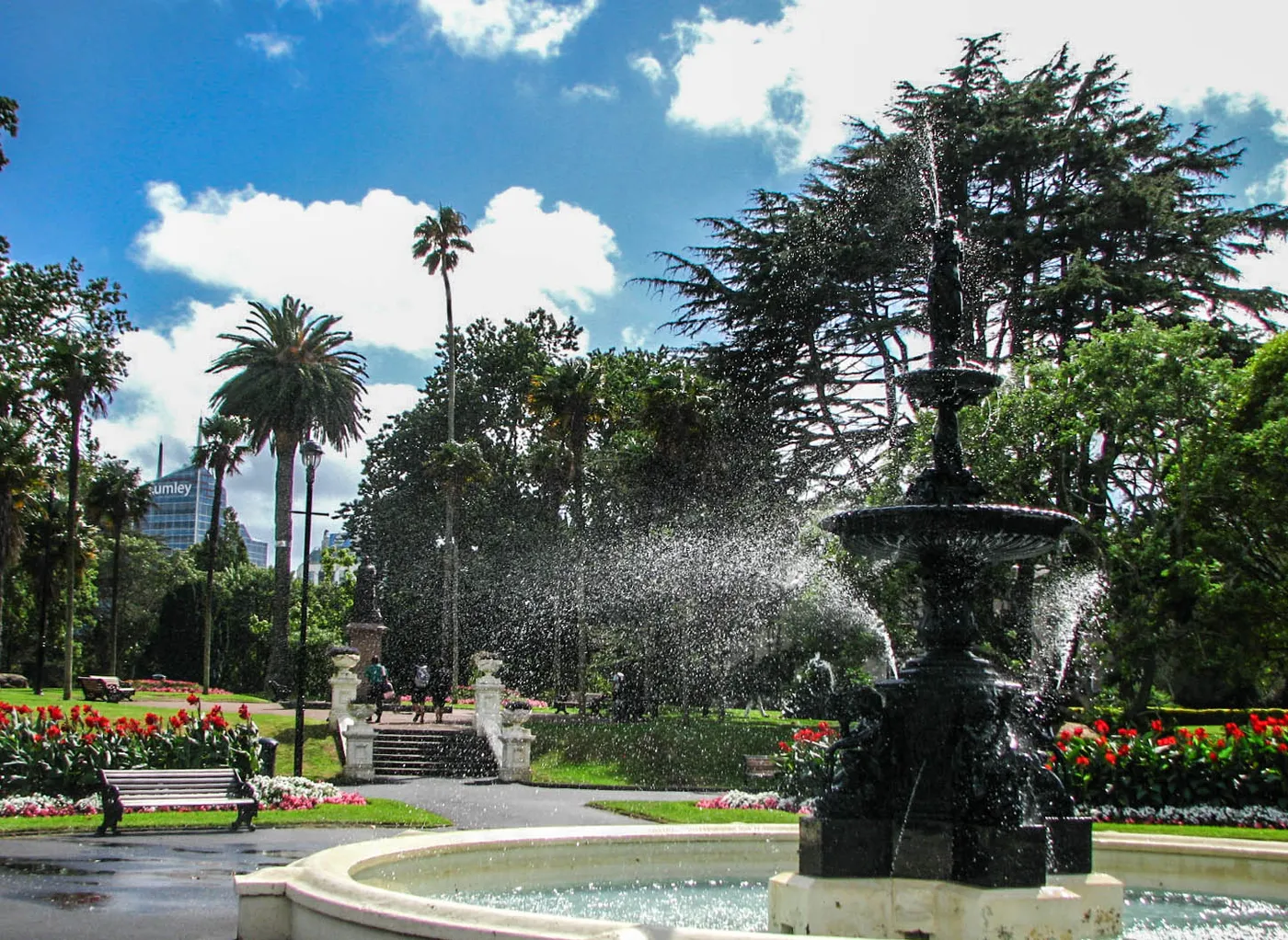
What is not open is underneath. With Japan in the war, Auckland City Council had more than 3.5 kilometres of tunnels driven through the soft rock beneath the park in 1942, as air-raid shelters for 20,400 people; digging began in February, finished in August, and the mayor opened them that October. No raid came. By late 1943 the timber props were failing, so the whole network was backfilled with 8.8 million unfired clay blocks and the entrances sealed and buried by 18 April 1946. Several of those blocked entrances are still there to find from the paths: one behind a decorative wall at the top of Victoria Street, a steel door at the foot of Constitution Hill, and three more behind the park’s Gateway sculpture.
Devonport’s wharf and the volcanic cone above it
With five or more hours before a flight, the harbour is worth crossing. Ferries leave the Downtown Ferry Terminal on Quay Street every fifteen to thirty minutes through the day and reach Devonport in twelve, usually on a double-ended vessel called the Kea. A one-way adult fare is NZ$7.80 on a contactless card or an AT HOP card, NZ$12 on a paper ticket, and an adult day-trip return bought at the terminal is NZ$23.
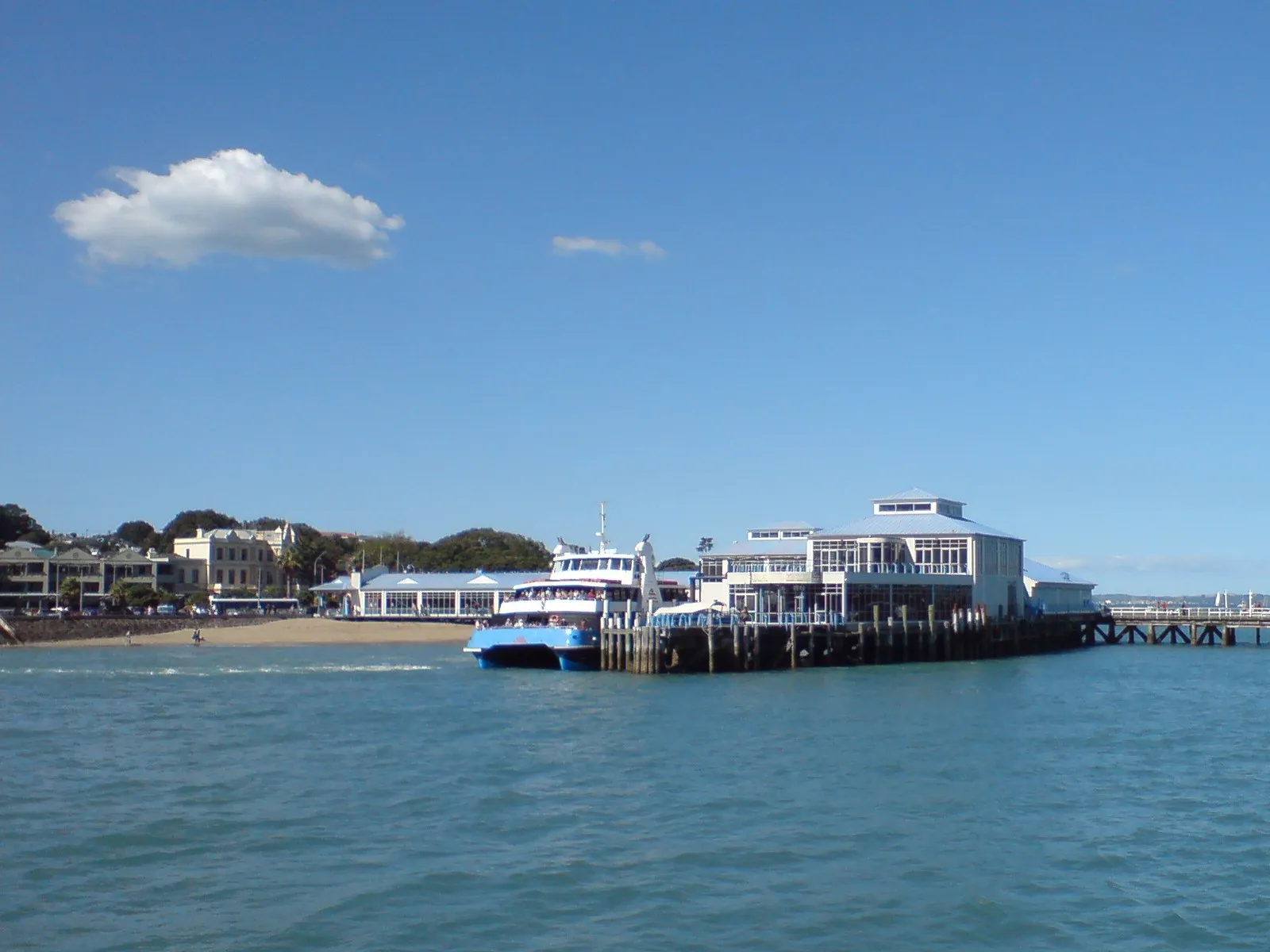
Victoria Road runs inland from the wharf through a stretch of Victorian and Edwardian shopfronts, including the Victoria Theatre of 1912, which still shows films, and the Esplanade Hotel, an 1890s seaside hotel. Behind the shops the ground rises to Takarunga, also called Mount Victoria, a volcanic cone 81 metres high with a signal station on top that dates from 1841; the climb takes ten to twenty minutes and the summit looks back over the harbour to the city and out to Rangitoto. Maungauika, or North Head, stands 65 metres above the harbour mouth to the east, tunnelled through with gun emplacements and passages left from a century of coastal defence.
No train from Auckland Airport, a bus to the trains instead
The orange AirportLink bus is what connects Auckland Airport to the rail network, and it delivers you to a train rather than into town: it leaves stop A at the international terminal and stop B at the domestic terminal, runs every 10 minutes from 4.30am to 12.40am seven days a week, and reaches Puhinui Station in 18 to 20 minutes from international, 13 to 17 from domestic. Trains from Puhinui take a little over half an hour into the city centre and finish at Waitematā Station at the foot of Queen Street, which was called Britomart until it reopened as a through station in September 2026. The bus and the train together count as one three-zone fare, NZ$6.50 on a contactless card or an AT HOP card since the February 2026 fare change, and the whole thing takes about an hour door to door once the transfer and the wait are counted, not the thirty minutes the train leg alone suggests.
The alternative is a direct coach between both terminals and the city centre, half-hourly from 5am to 10.30pm, no stops along the way, 40 to 50 minutes when the motorway is clear and noticeably longer on a weekday afternoon, for about NZ$20. Auckland Airport handles most of New Zealand’s international traffic, and if the same trip also puts you on the ground in Sydney with hours to spare, that city’s harbour foreshore is walkable from its own downtown in much the same way.
Budget the full hour for the trip back either way, and a few minutes on top to collect the bag from wherever it spent the day, which on the Queen Street side is rarely more than a block or two from the platform.
Frequently asked questions
What should I do during a layover in Auckland?
Four stops sit within about twenty-five minutes' walk of Queen Street in central Auckland: the Sky Tower, whose main observation level at 186 metres has glass panels set into the floor; Auckland Art Gallery Toi o Tāmaki, which charges nothing for its own collection; Albert Park and its 1881 cast-iron fountain; and the Auckland Domain, where the Wintergardens' glasshouses and Auckland War Memorial Museum share a 75-hectare volcanic crater. With four to six hours free, all four fit without rushing. The Sky Tower is the only one that needs a ticket, and it is also the one to drop first if the timing gets tight.
How steep is the walk from central Auckland up to the Auckland Domain?
It climbs the whole way. Queen Street runs along the floor of a buried stream valley, so every route out of the city centre towards the Domain goes uphill, about twenty-five minutes on footpaths. The gentler line is up Queen Street to Karangahape Road and across Grafton Bridge to the Domain's main gate, which skirts the steepest of the side streets. Inside the Domain the paths mix level ground, slopes and steps, so it is a poor stretch to be towing a suitcase along.
What is there to do in Auckland on a layover if it rains?
Three of the four central stops are indoors, and two of those cost nothing. Auckland Art Gallery opens 10am to 5pm every day except Christmas Day and charges nothing for its own collection. The Domain Wintergardens are free as well, and the Tropical House is held at an average of 28°C, which makes it the warmest room on the itinerary. Auckland War Memorial Museum, a few minutes across the Domain from the glasshouses, is the third. Albert Park and the harbour ferry are the two that want dry weather.
Is the bus and train cheaper than the direct coach from Auckland Airport?
Considerably. The AirportLink bus to Puhinui Station plus a train into the city centre counts as one three-zone fare, NZ$6.50 on a contactless card or an AT HOP card, and runs about an hour door to door once the transfer and the wait are in. The direct coach from both terminals to the city centre is around NZ$20 and takes 40 to 50 minutes with no stops, longer on a weekday afternoon. The AirportLink also runs every 10 minutes from 4.30am to 12.40am, against the coach's half-hourly 5am to 10.30pm, so for a very early or very late flight it is the one still operating.