Auckland Layover Near Waitematā Station
Part of the full Auckland in One Day: Sky Tower and Domain
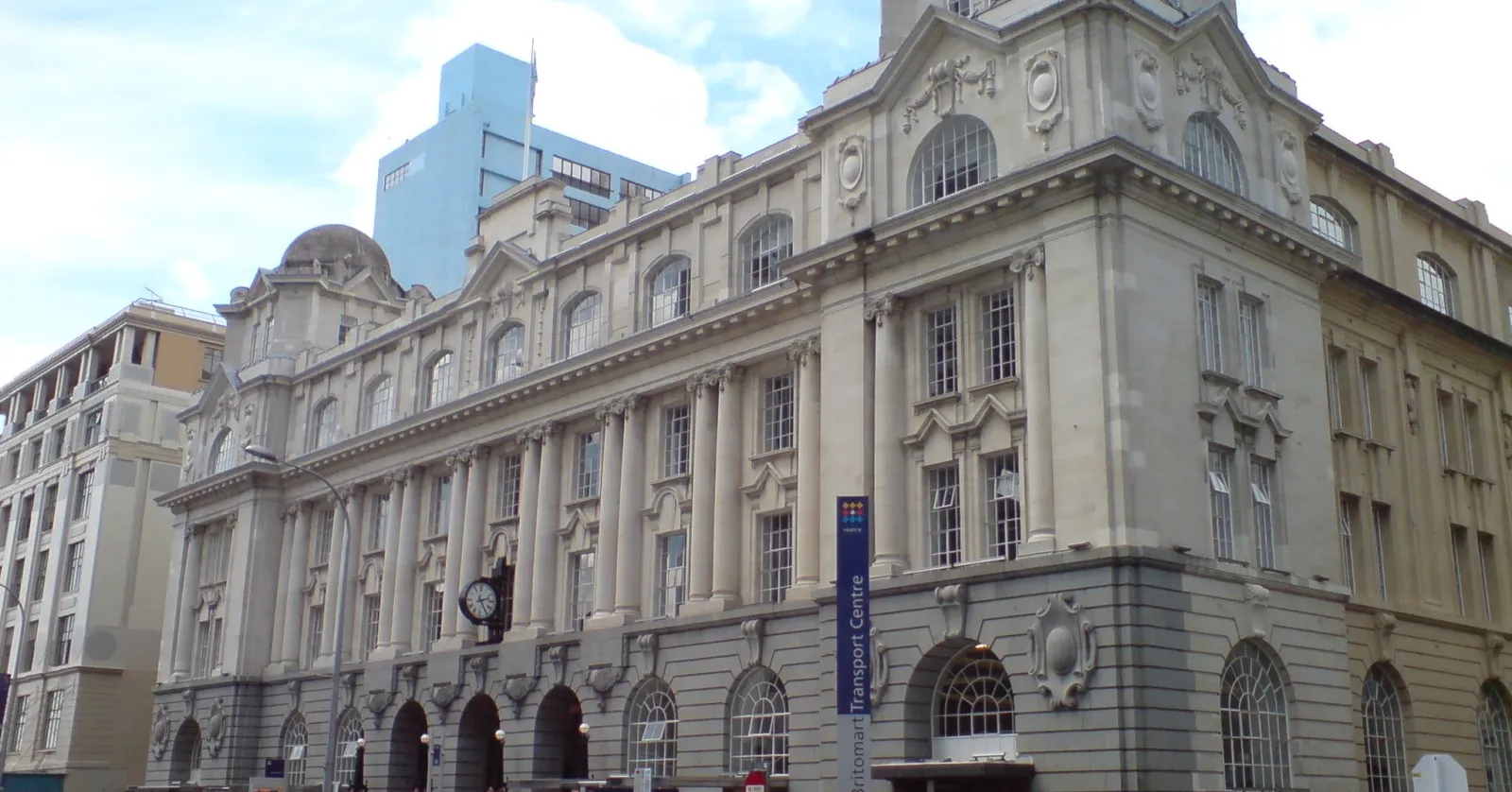
Waitematā Station, Auckland’s downtown train and ferry hub, opens onto the foot of Queen Street, and the Maritime Museum’s wharf, the 1912 Ferry Building and a square paved with 137,000 basalt setts are all within ten minutes’ walk of it on level ground.
Heritage boats sail from the Maritime Museum’s own wharf
The New Zealand Maritime Museum occupies Hobson Wharf at the head of Viaduct Harbour, about ten minutes west along the waterfront from the foot of Queen Street. What it holds is the whole span of how people reached these islands by sea: Polynesian voyaging canoes, the reconstructed below-decks of a colonial migrant ship with the bunks and the smell of it, and, outside on the wharf, KZ1, the 36-metre carbon-fibre and Kevlar monohull Bruce Farr designed for New Zealand’s 1988 America’s Cup challenge against Stars & Stripes.
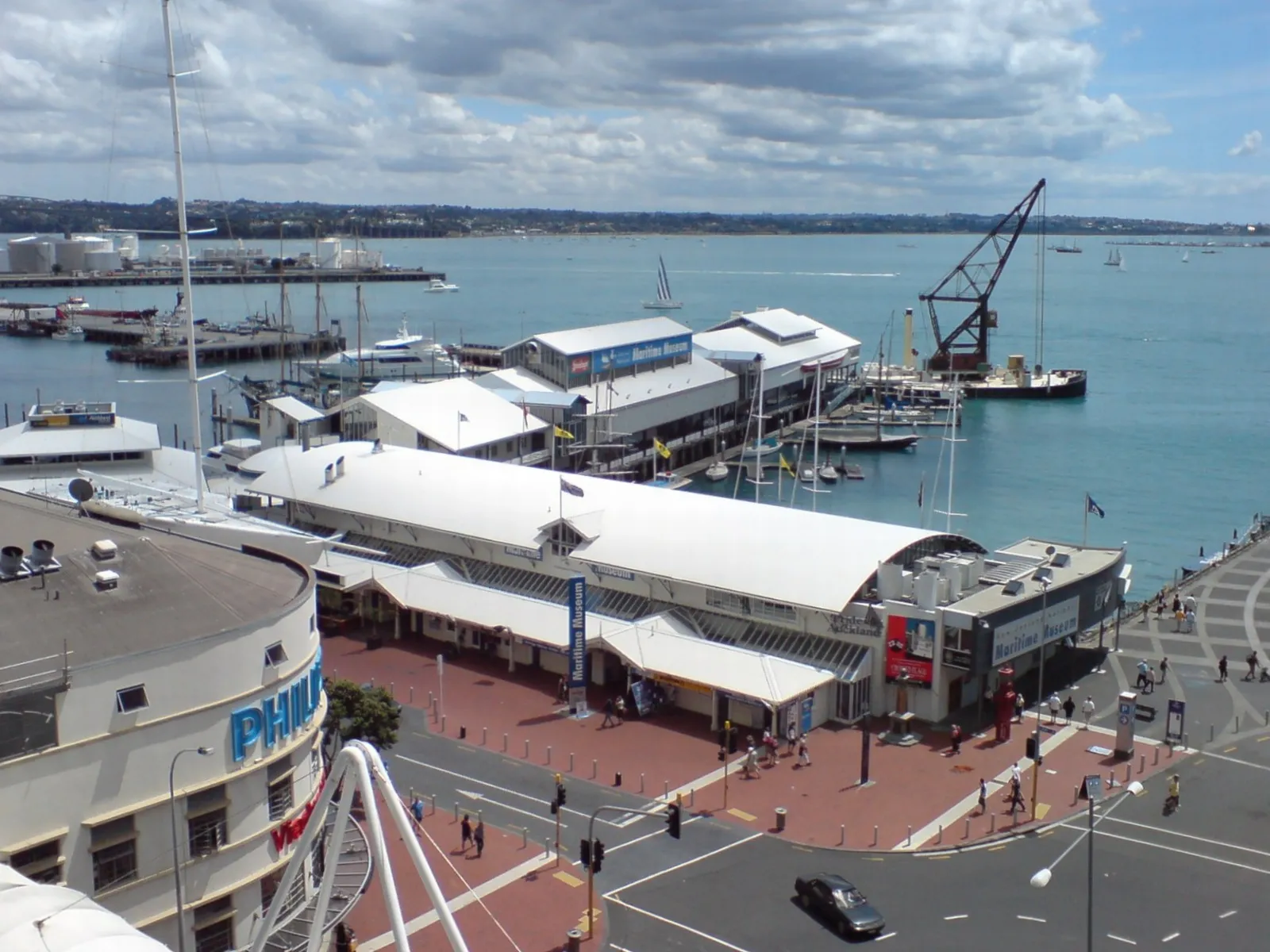
Adult admission is NZ$24, NZ$19 for seniors and students and NZ$12 for children aged 5 to 14, and entry can be bought ahead through a tours and activities platform. Auckland residents go in free on proof of a local address. Doors are open 10am to 5pm every day except Christmas Day, with last entry at 4pm. The museum also puts its own heritage boats out onto the harbour year-round, on a package that folds in admission; if you would rather be out on the water without the museum attached, a ninety-minute sail on a 50-foot yacht leaves from the Viaduct Basin nearby and comes back to the same pontoons.
Both the station concourse and the ferry gates sit in the same building, and the run between the barriers and the escalators narrows noticeably at the evening peak.
The Ferry Building’s Sydney sandstone on Quay Street
The Auckland Harbour Board put the Ferry Building up between 1909 and 1912, at the point on Quay Street where the ferry network converged, and spent accordingly: a base of Coromandel granite under a facing of Pyrmont sandstone shipped from Sydney, four storeys of Imperial Baroque by the architect Alexander Wiseman, and a clock tower on top of it. It was an argument about the city’s prosperity as much as a terminal.
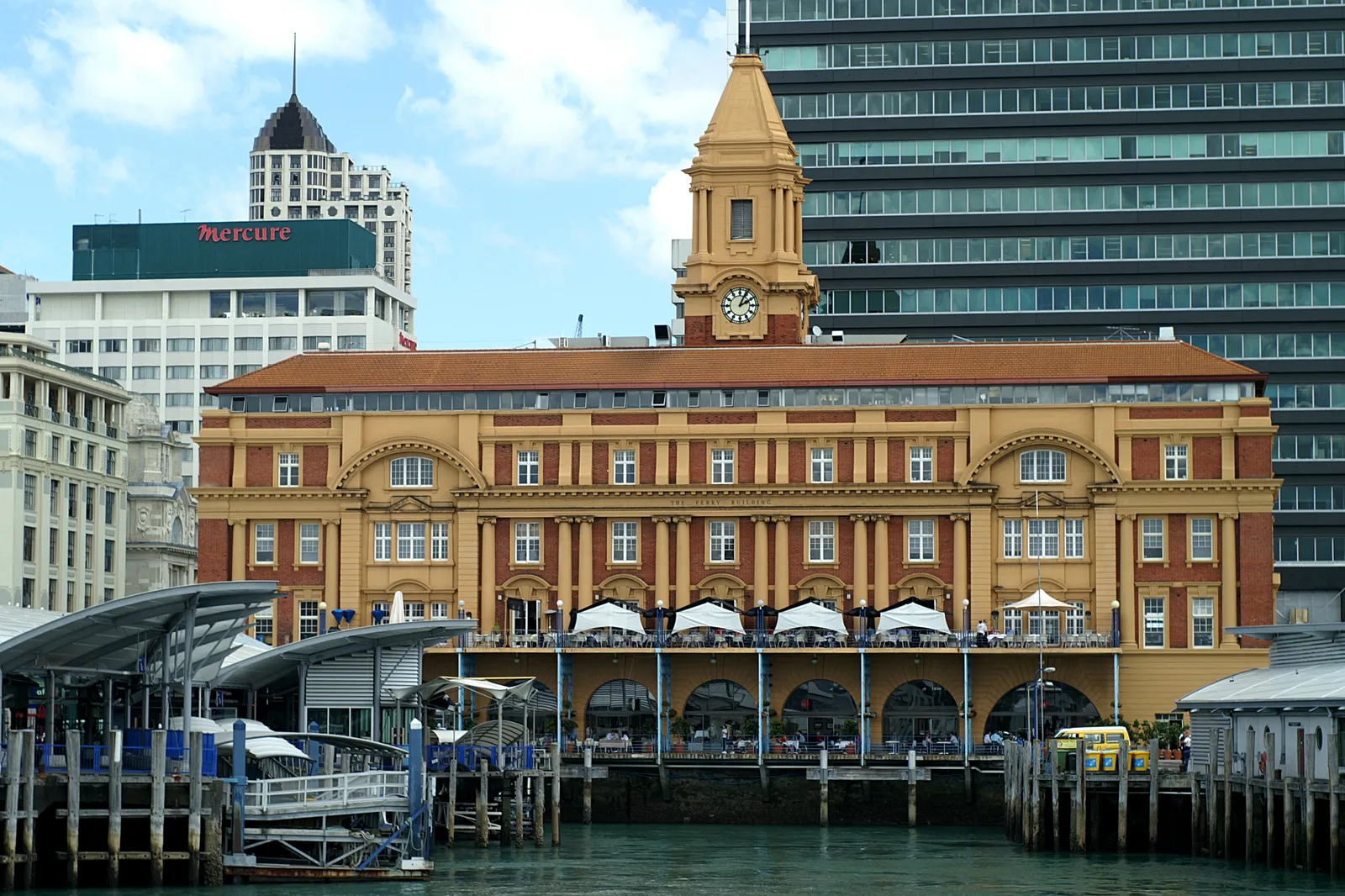
It is still a working terminal, and walking through the ground floor and out onto the pontoons costs nothing. Queens Wharf runs out into the harbour immediately to the west, built in ferro-cement as part of the same dock reorganisation, and is open deck for most of its length. Its Shed 10 is the city’s cruise terminal.
Te Komititanga is paved as a woven flax mat
The square between the old post office and the Commercial Bay tower opened on 18 December 2020, and the name was given by Mana Whenua: it means to mix or to merge, for the meeting of the Waihorotiu stream, which runs in a culvert under Queen Street, with the Waitematā Harbour. More than 137,000 individual basalt pavers were laid across it to a design by Mana Whenua weavers, forming a whāriki, a welcome mat, patterned as woven harakeke flax for people arriving from the sea.
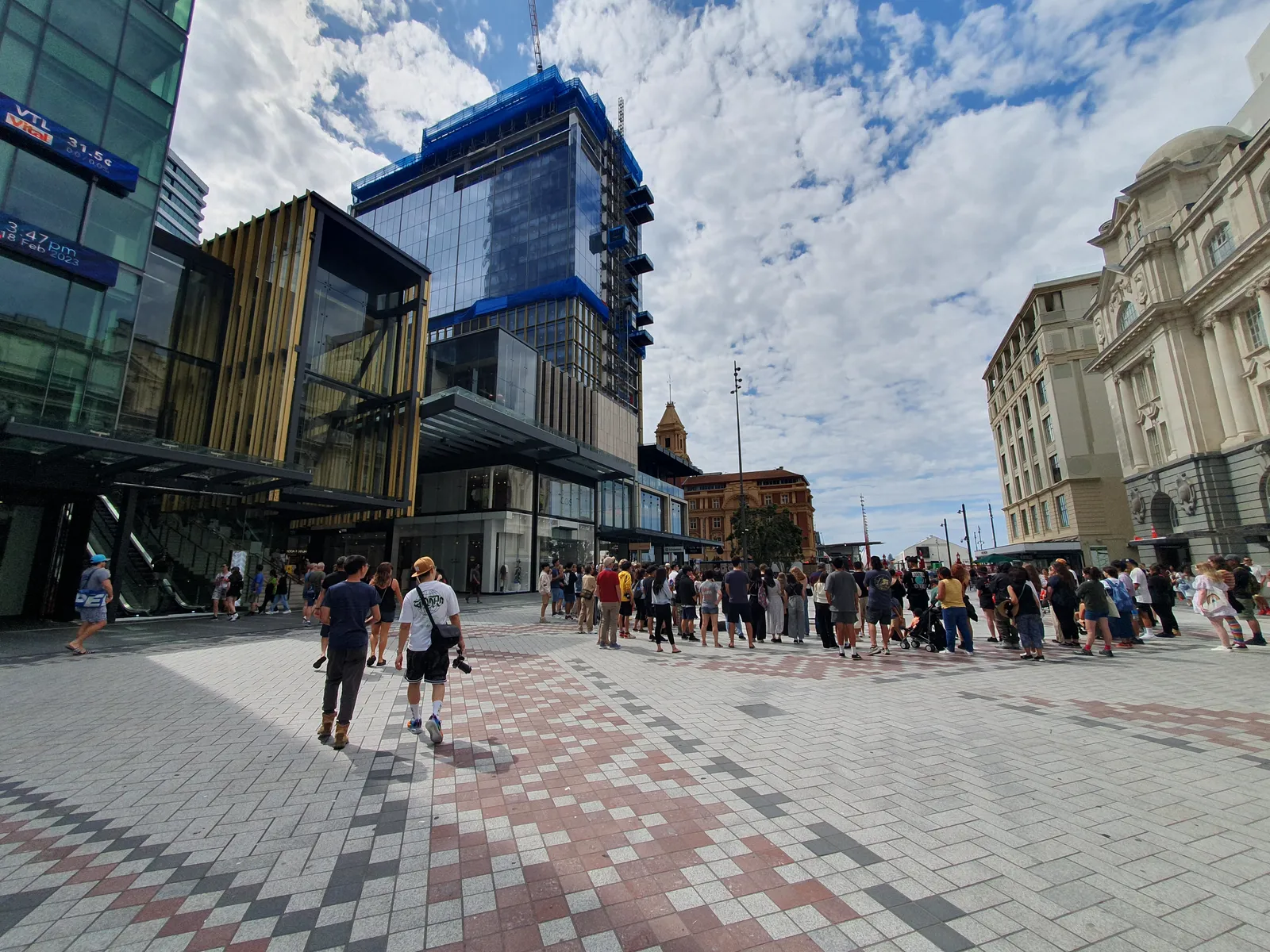
Most people cross it without looking down, which is the reason to mention it at all. It takes about thirty seconds to walk and is the one thing on this list that is genuinely free, genuinely open at any hour, and genuinely outside the station door.
The 1912 post office at the front of Waitematā Station
Prime Minister William Massey opened the Chief Post Office on 20 November 1912 in front of a crowd of around 10,000, into a building Claude Paton had designed with the government architect John Campbell: Imperial Baroque, white Oamaru stone and grey Coromandel granite across the Queen Street front. It stopped being a post office long ago and became the city’s central train station in July 2003.
Then came the hard part. The rail tunnels under the city centre had to pass directly beneath it, so the whole Category 1 listed building was shifted onto temporary foundations, held there while the tunnels were driven through, and transferred onto new permanent ones afterwards. The interior went back in behind it, curved skylights and original materials included. If you are arriving from the city-centre itinerary instead, the full Auckland guide covers the uphill half of town, the Domain and Albert Park, which this waterfront loop deliberately leaves out.
No rail link to Auckland Airport, a bus to Puhinui instead
The orange AirportLink bus is the only public connection between Auckland Airport and the rail network, and it goes to a suburban interchange rather than into town. It runs every 10 minutes from 4.30am to 12.40am, seven days, taking 18 to 20 minutes from the international terminal and 13 to 17 from domestic to reach Puhinui Station. Trains from Puhinui take a little over half an hour and terminate here at Waitematā. Bus and train together count as a single three-zone fare, NZ$6.50 on a contactless card or an AT HOP card, and the realistic door-to-door figure is about an hour, not the half hour the train leg alone would suggest.
The direct coach is the other option: half-hourly from 5am to 10.30pm between both terminals and the city centre, no stops on the way, 40 to 50 minutes in clear traffic and longer on a weekday afternoon, for about NZ$20. Collect your bag before you head for the platform rather than after, since the barriers are the last thing between you and the train.
Frequently asked questions
What should I do during a layover near Waitematā Station in Auckland?
Everything worth the walk from here is on the flat and inside ten minutes. The New Zealand Maritime Museum on Hobson Wharf holds the Polynesian voyaging canoes, with the 1988 America's Cup challenger KZ1 out on the wharf beside it, and it runs heritage boats onto the harbour. The Ferry Building on Quay Street is free to walk through, and Te Komititanga, the square immediately outside the station, is paved with more than 137,000 basalt setts laid as a woven flax mat. With three or four hours this is a comfortable loop; the museum's sailings are the one part that needs booking, and skipping them costs you nothing else.
Is the walk from Waitematā Station to Viaduct Harbour step-free?
Yes. The route runs west along Quay Street and Te Wero Island on level, sealed footpaths the whole way, with no steps and no gradient worth naming, which is unusual for central Auckland once you leave the waterfront. Lifts serve every level inside the station itself. The Maritime Museum, the Ferry Building and Te Komititanga are all reachable without a stair.
What is free to do near Waitematā Station?
The Ferry Building's ground floor and the wharves either side of it cost nothing, and so does Queens Wharf, which runs out into the harbour beside them. Te Komititanga is free and open at all hours. Inside the station, the restored Chief Post Office hall with its curved skylights is public space, not a ticketed attraction. Auckland residents also get into the Maritime Museum free on proof of a local address.
Do the Maritime Museum's heritage sailings need booking ahead?
They are worth arranging before you arrive rather than turning up for. The sailings run year-round but on a set daily timetable and are weather-dependent, and a visitor sailing package including museum entry is NZ$63 for an adult against NZ$24 for admission alone. General museum entry is sold in advance through a tours and activities platform, which is the safer option if your flight time is tight enough that a cancelled sailing would strand you.