Auckland Layover From the Devonport Ferry
Part of the full Auckland in One Day: Sky Tower and Domain
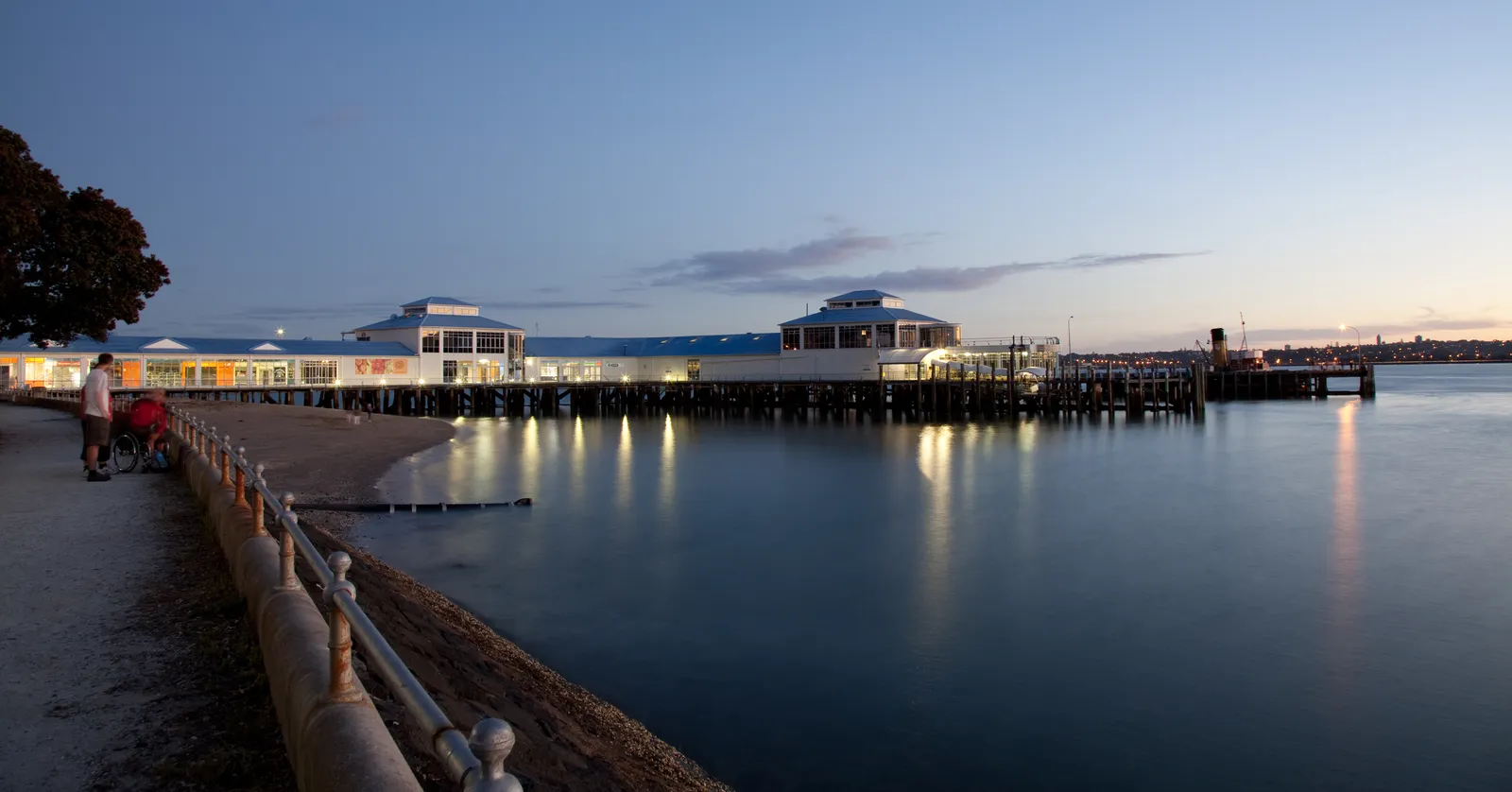
Devonport Ferry Terminal sits twelve minutes across the Waitematā Harbour from central Auckland, and the village behind it holds a free headland tunnelled through with Victorian gun emplacements, the Royal New Zealand Navy’s museum on the beach, and an 81-metre volcanic cone looking back at the city.
The Victoria Theatre on Victoria Road opened in 1912
Victoria Road runs inland from Devonport’s ferry wharf through a few hundred metres of two-storey Victorian and Edwardian commercial buildings with decorated parapets, most of them still standing as built. The Victoria Theatre of 1912 is among them and still shows films. So is the Esplanade Hotel, an 1890s seaside hotel facing the water at the bottom of the road.
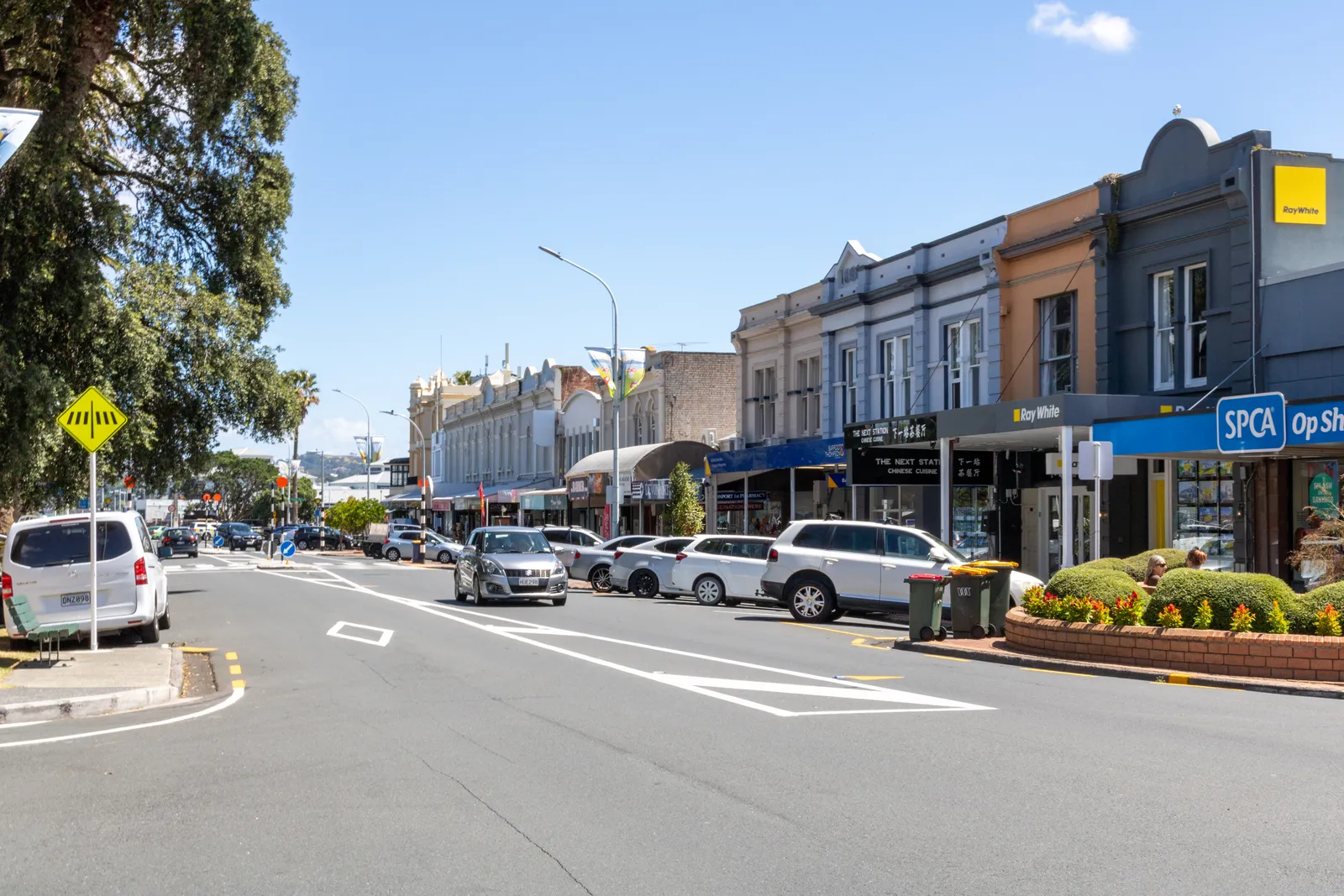
The cafés, bakeries and second-hand shops along here are the part that actually fills the gap between ferries, and the road takes about five minutes end to end if you do not stop. For the other side of the harbour, where the walking is city blocks and a museum hill rather than a village main street, the full Auckland guide covers the climb from Queen Street up to the Domain.
The disappearing gun at North Head sank into its own pit
Maungauika, the headland at the harbour mouth, has 150 years of tunnels, gun pits, magazines and searchlight positions cut into it, dug from the 1880s onward against a Russian invasion that never came. The set piece is an eight-inch gun mounted on a turntable in a circular concrete pit, built so that firing it drove the barrel back down below the parapet, where the crew could reload it without standing up into whatever was being shot at them.
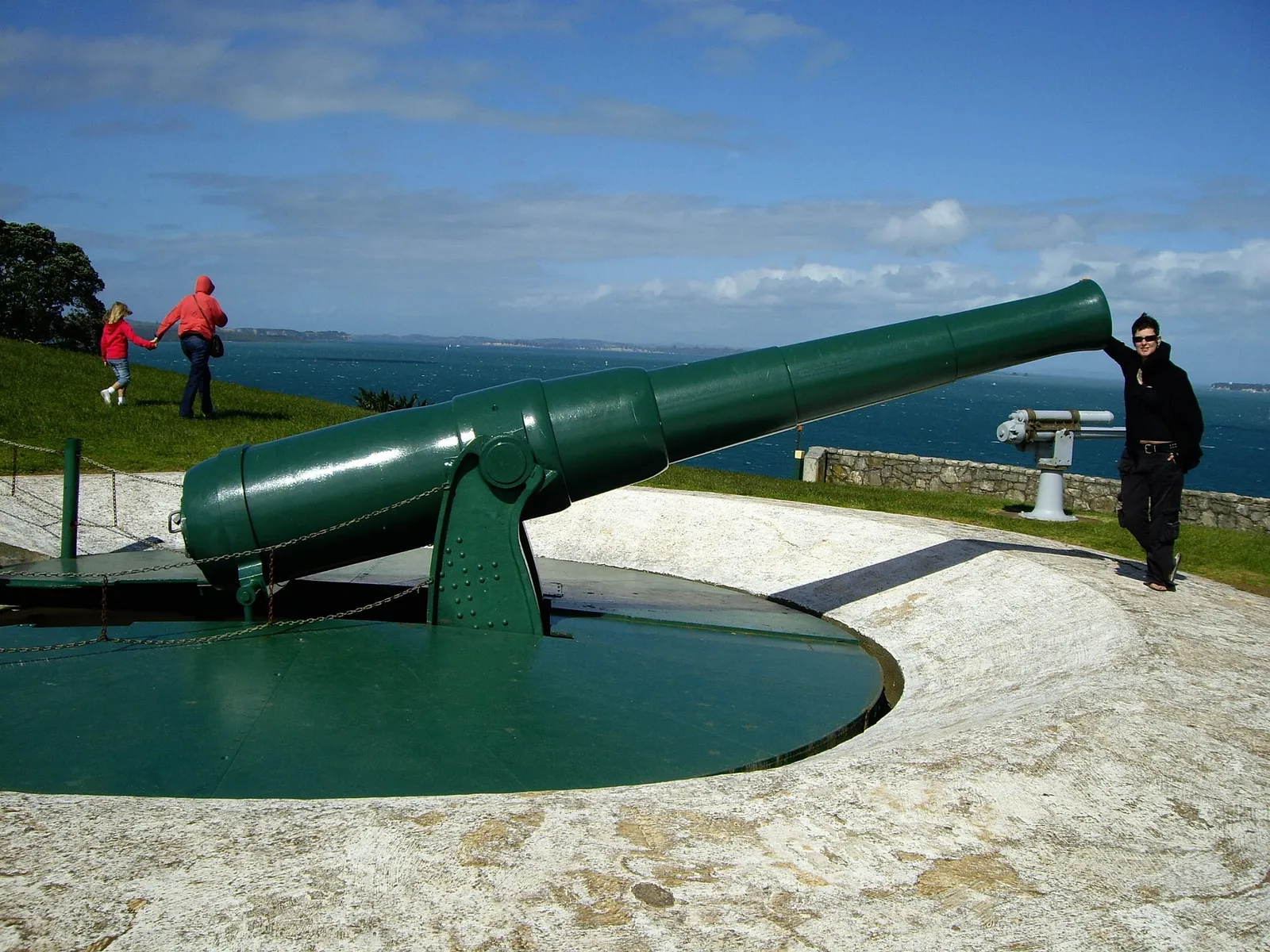
None of it costs anything and it is open every day of the year, with the pedestrian gate running 6am to 10pm in summer and 7am to 8.30pm in winter. Three loops are marked out, about 20 minutes for the tunnels, 25 for the summit and 30 for the coastal route, each one-way, and a stone kitchen of 1885 near the top runs a film about the place daily between 8.30am and 4pm. Bring a phone torch: the tunnels are unlit in stretches.
The Royal New Zealand Navy’s museum stands on the beach at Torpedo Bay
Between the wharf and the headland, at 64 King Edward Parade, a group of white heritage buildings holds the national naval collection. The object worth walking in for is a piupiu, a Māori flax skirt, given to Captain Lionel Halsey of the battlecruiser HMS New Zealand by a Māori chief during the ship’s 1913 visit, along with three predictions: that she would fight three sea battles, that she would be hit once, and that nobody aboard would die. Halsey wore it into action at Heligoland and Dogger Bank. His successor, Captain John Green, wore it at Jutland on 31 May 1916, where HMS New Zealand took a single hit and lost nobody while the Queen Mary, in line directly ahead of her, blew up with 1,266 men. Elsewhere the museum covers the night in January 1943 when two New Zealand minesweepers, Kiwi and Moa, took on the Japanese submarine I-1 off Guadalcanal, and the run of conflicts from the Flagstaff War of 1845 to Afghanistan.
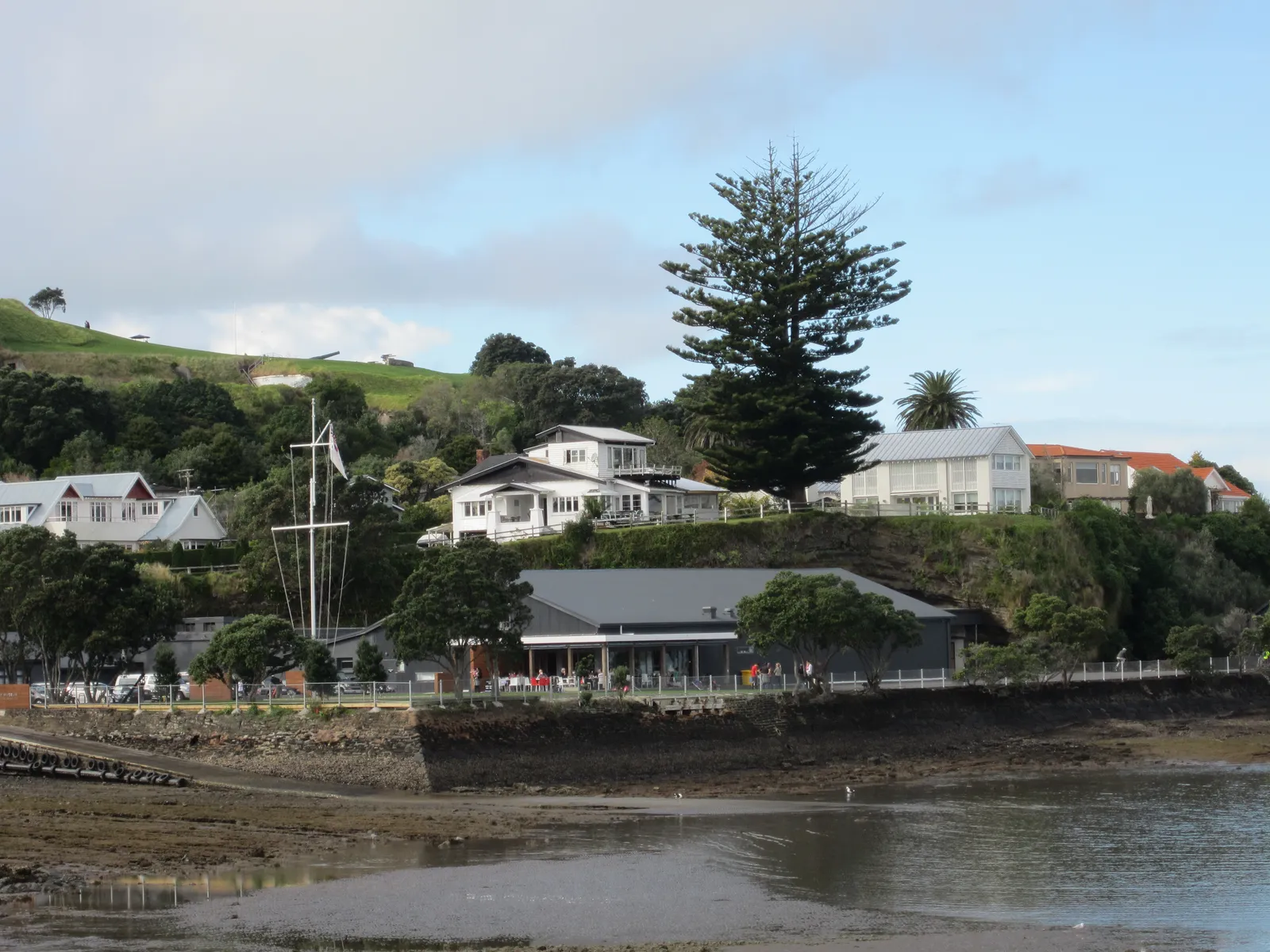
New Zealand residents walk in free and international visitors aged 18 and over pay NZ$15. It opens 10am to 5pm seven days, shutting only for Good Friday, Christmas Day and Boxing Day. There is a café inside the heritage buildings, and on a day when the weather turns this is the only roof on this side of the water worth planning around.
Takarunga, or Mount Victoria, is 81 metres of volcano over the village
Takarunga, also called Mount Victoria, rises directly behind Victoria Road, and at 81 metres it is the tallest of the volcanoes on this peninsula. Māori terraced it as a pā long before Europeans arrived, and a signal station went up on the summit in 1841, marking the first permanent European settlement here. The climb takes ten to twenty minutes on made paths.
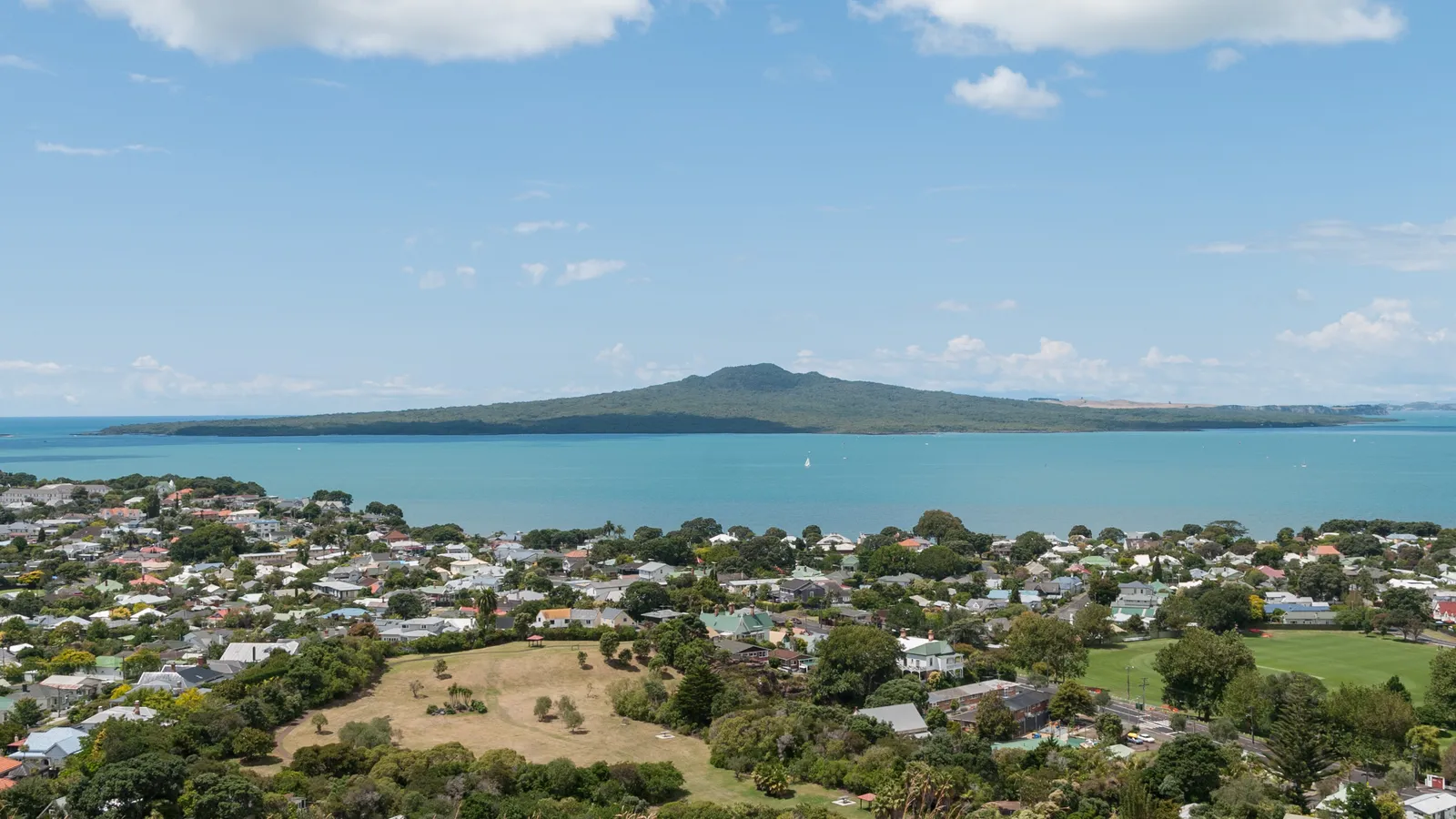
What you get at the top is the reason to do it: the whole Auckland skyline across the water on one side, and Rangitoto Island sitting flat and symmetrical on the horizon on the other. Almost everyone else coming off the ferry is carrying nothing at all, which is worth bearing in mind on a flight day, because both cones are grass and gravel underfoot and neither is a surface a rolling suitcase enjoys.
Ferries every 15 to 30 minutes, then an hour out to Auckland Airport
Sailings cross to the Downtown Ferry Terminal on Quay Street in about twelve minutes, every 15 to 30 minutes through the day and every 15 at the peaks, for NZ$7.80 one way on a contactless card or an AT HOP card, NZ$12 on paper, or NZ$23 for an adult day-trip return bought at the city end. First departures from Devonport are 6am on weekdays, 6.30am on Saturdays and 7.30am on Sundays and public holidays.
From the city side, the trip out to the airport is a train from Waitematā Station to Puhinui, a little over half an hour, then the orange AirportLink bus, every 10 minutes from 4.30am to 12.40am and 18 to 20 minutes to the international terminal. One three-zone fare of NZ$6.50 covers the train and bus, and about an hour door to door is the honest figure. Stack the ferry crossing on top of that and this side of the harbour wants five hours before a flight, not three.
Frequently asked questions
What should I do during a layover near the Devonport Ferry Terminal in Auckland?
Four things sit within about twenty minutes' walk of the wharf. Maungauika, or North Head, is a free headland tunnelled through with Victorian gun emplacements, including a disappearing gun that dropped back into its own pit to be reloaded. The Royal New Zealand Navy's museum stands on the beach at Torpedo Bay. Takarunga, also called Mount Victoria, is an 81-metre cone with the whole city laid out from the top. Victoria Road between them is a run of Victorian and Edwardian shopfronts. Five or six hours covers all of it comfortably, with the two cones being the parts to drop if time runs short.
How often do ferries run between Auckland and Devonport?
Every 15 to 30 minutes through the day, tightening to every 15 minutes at the morning and evening peaks, with a crossing of about twelve minutes each way from the Downtown Ferry Terminal on Quay Street. An adult one-way fare is NZ$7.80 on a contactless card or an AT HOP card and NZ$12 on a paper ticket, and an adult day-trip return bought at the Downtown terminal is NZ$23. The first sailing from Devonport to the city is 6am on weekdays, 6.30am on Saturdays and 7.30am on Sundays and public holidays.
Is North Head free, and when do its gates close?
It costs nothing and is open every day of the year. The pedestrian gate runs 6am to 10pm in summer and 7am to 8.30pm in winter; the vehicle gate closes earlier, 8pm in summer and 7pm in winter. Three marked loops cover it, roughly 20 minutes for the tunnels, 25 for the summit and 30 for the coast, each one-way. The 1885 stone kitchen near the top shows a film about the site daily from 8.30am to 4pm.
Does the Navy Museum at Torpedo Bay charge admission?
New Zealand residents go in free; international visitors aged 18 and over pay NZ$15. It opens 10am to 5pm seven days, closing only on Good Friday, Christmas Day and Boxing Day, and it sits at 64 King Edward Parade, right on the water between the wharf and North Head. There is a café in the heritage buildings, which makes it the most sheltered stop on this side of the harbour.