Sydney's Harbour Foreshore: A Layover From SYD
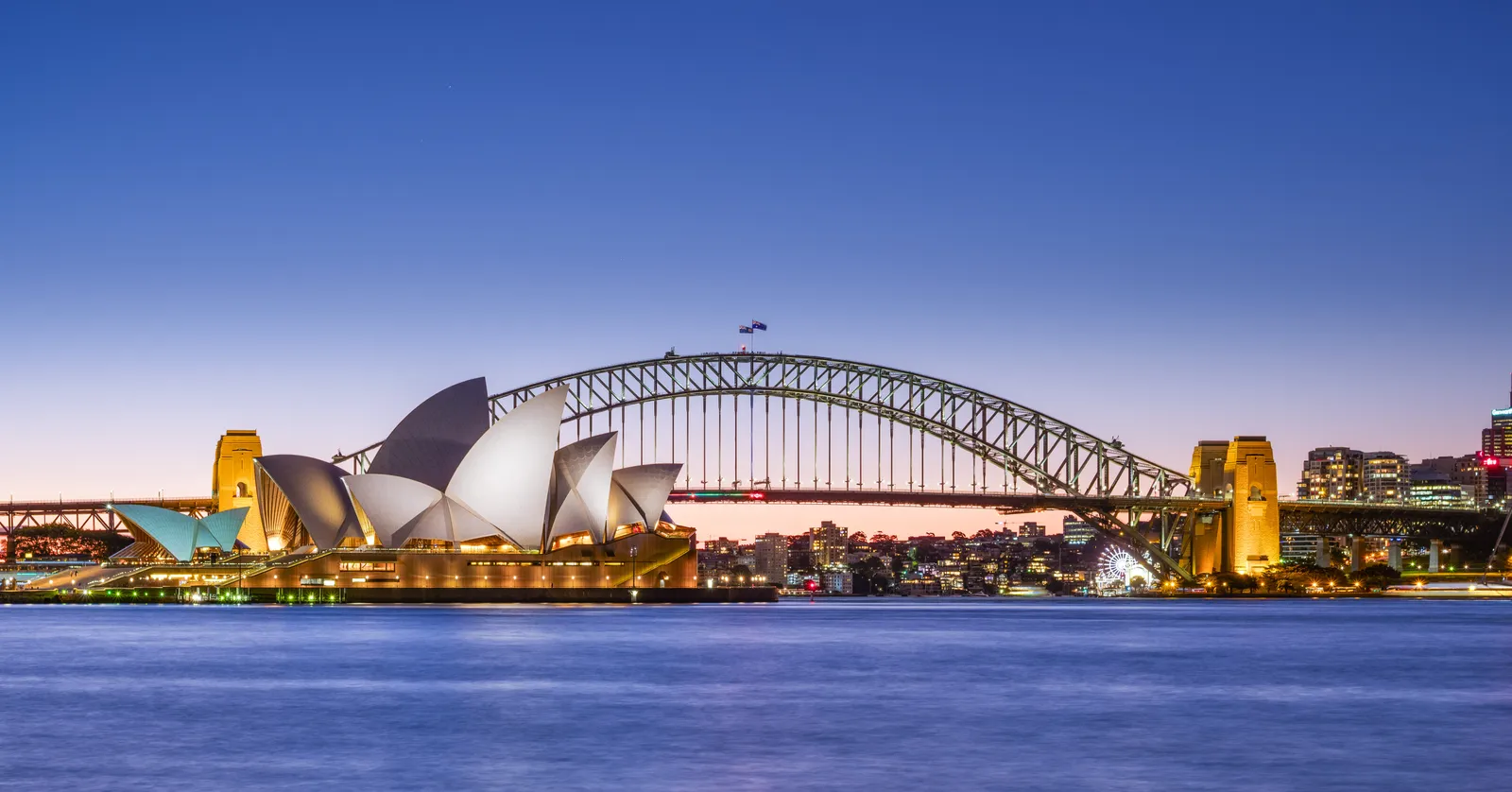
Sydney’s harbour foreshore walk runs about three kilometres from the convict-cut sandstone of The Rocks, round Circular Quay to the Opera House, and through the Royal Botanic Garden to Mrs Macquarie’s Chair, with the gardens, the bridge footway and the chair all free and an Opera House tour the one stop worth booking.
The Sydney Opera House’s million-tile roof
The Sydney Opera House stands on Bennelong Point, the peninsula on the eastern side of Circular Quay, the city’s ferry and train hub, and its forecourt and the broad Monumental Steps up to the sails are open to anyone walking past. Jørn Utzon, a Danish architect, won the design competition in 1957, resigned in 1966 after a fight with the state government over fees and control, and never came back to see the building Queen Elizabeth II opened on 20 October 1973. The shells are covered in 1,056,006 tiles made by Höganäs in Sweden, in two finishes, glossy white and matte cream, which is why the roof reads as patterned rather than flat white up close.
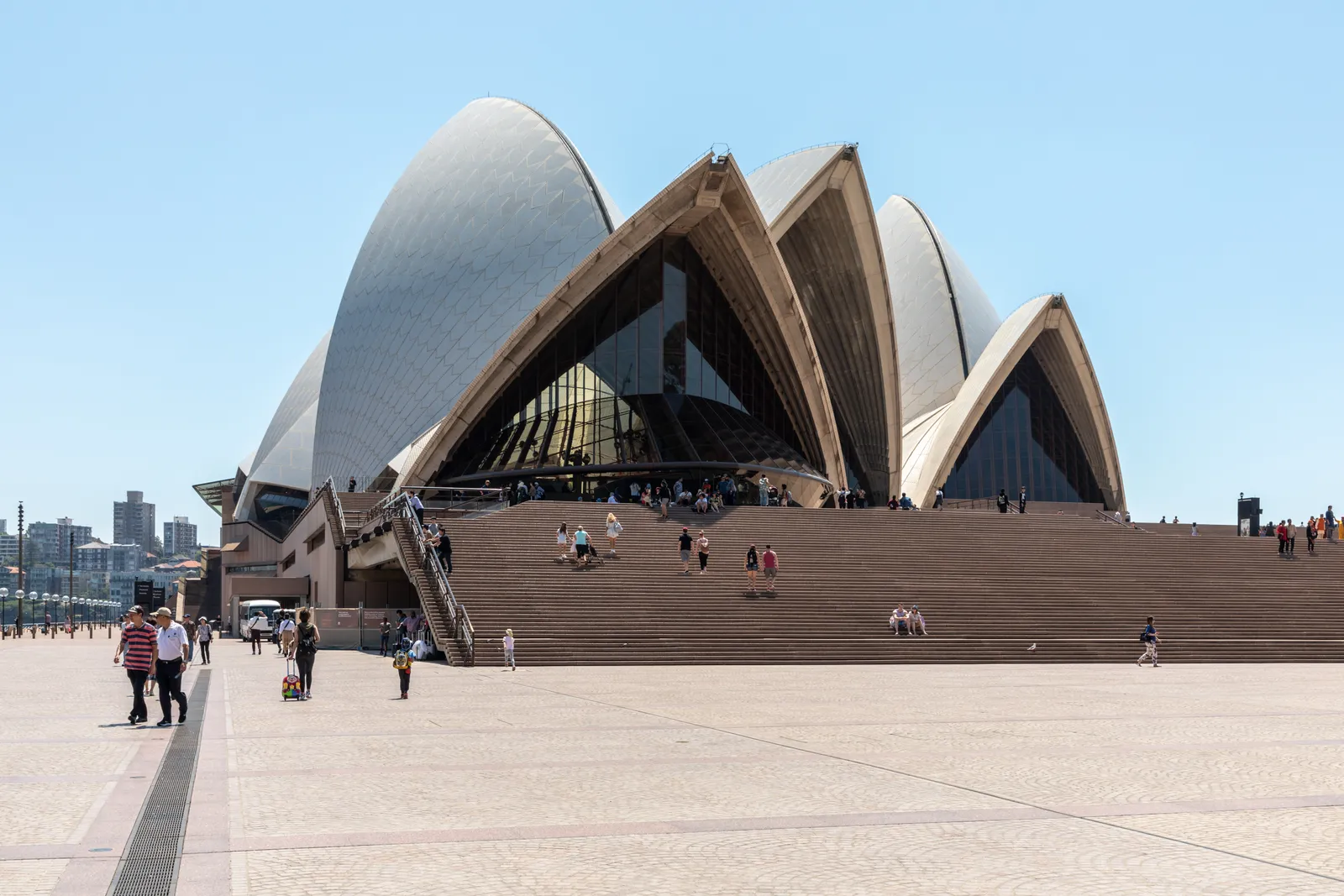
The inside is only open on a ticketed visit. The standard guided tour lasts an hour, costs A$48 for an adult, runs through the day from about 9am to 5pm and climbs and descends around 300 stairs on the way through the foyers and performance spaces; booking a tour slot ahead through a tours and activities platform is what gets you a fixed time. The Opera House asks tour visitors not to bring bags at all, anything larger than an A4 sheet has to be cloaked first, and it says outright that its cloakroom cannot take suitcases.
The Pylon Lookout in the Harbour Bridge’s south-east pylon
The Sydney Harbour Bridge opened on 19 March 1932, a steel arch whose summit sits 134 metres above the water, and Sydneysiders still call it the Coathanger. Its four granite-faced pylons, 89 metres tall, were added for looks rather than to carry any load, and the south-eastern one, on the city side, holds the Pylon Lookout: about 200 steps up past three levels of exhibits on how the arch was built, to an open platform at the top looking over Circular Quay and the Opera House. Entry was about A$30 at last check.
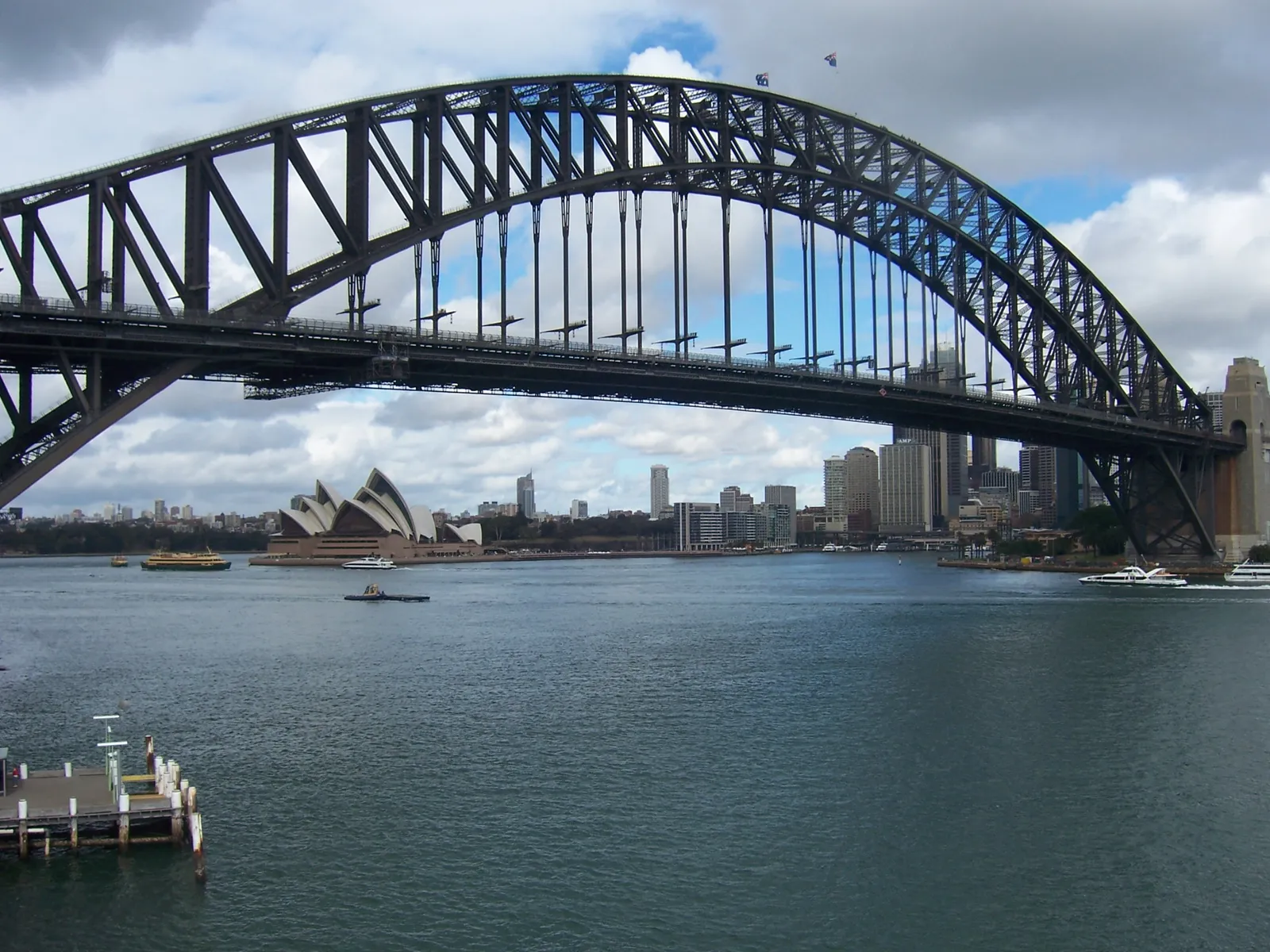
The eastern footway across the deck is free and open to anyone on foot, and the way up to it from The Rocks is a long, sheltered flight of stairs near the corner of Cumberland and Gloucester streets. The bridge climb, running since 1998, takes groups up the upper arch to the flags at the summit; climb tickets include entry to the Pylon Lookout as well, but the climb itself runs to around three and a half hours, which only fits a very long day in the city.
Convict chisel marks in the Argyle Cut
The Rocks is the sandstone ridge on the western side of Circular Quay where the colony began, and Argyle Street cuts straight through the top of it. Convicts from the Hyde Park Barracks, some of them in chains, started the Argyle Cut in 1843 with picks and hand tools; the rock beat them, only the two ends got dug, and it took council labourers with explosives from 1864 to open the middle to traffic. The walls still carry the marks of the convicts’ chisels, and the arch overhead carries Cumberland Street across the gap.
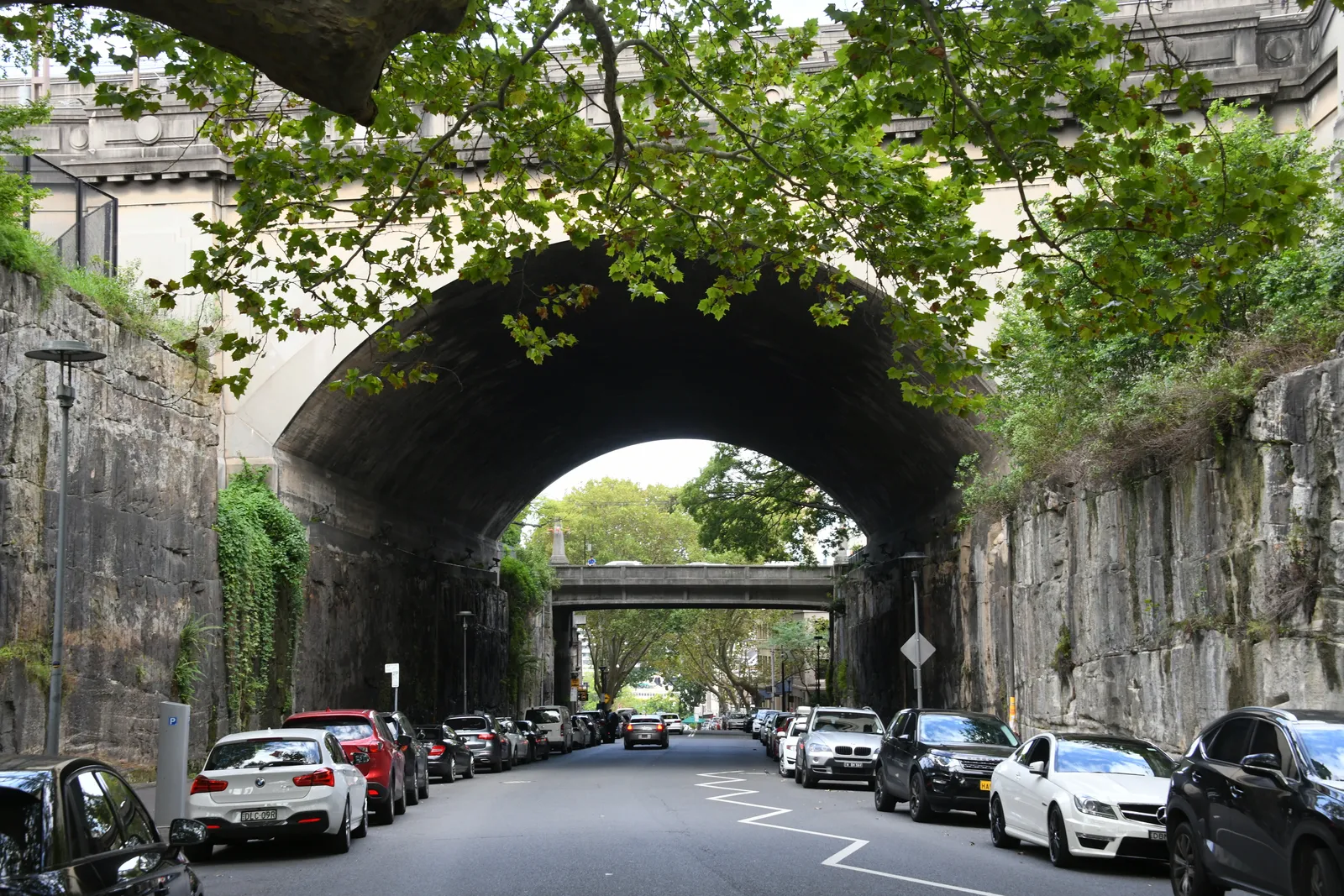
The Argyle Stairs, built in 1911 and 1912, climb from inside the cut up to Cumberland Street, and the stairs up to the bridge footway also leave from Cumberland Street. On Saturdays and Sundays from 10am to 5pm, The Rocks Markets fill George Street, Playfair Street and Jack Mundey Place below with stalls of jewellery, prints, homewares and street food, with a smaller market on Fridays.
Mrs Macquarie’s Chair, carved for a governor’s wife in 1810
Mrs Macquarie’s Chair is a bench cut into a sandstone ledge on the point that closes off the eastern side of Farm Cove, inside the Royal Botanic Garden Sydney. Convicts carved it in 1810 for Elizabeth Macquarie, wife of Governor Lachlan Macquarie, who by local account came here to watch for ships from Britain. The inscription above the seat records the road her husband had built out to this point, three miles and 377 yards of it, finished on 13 June 1816.
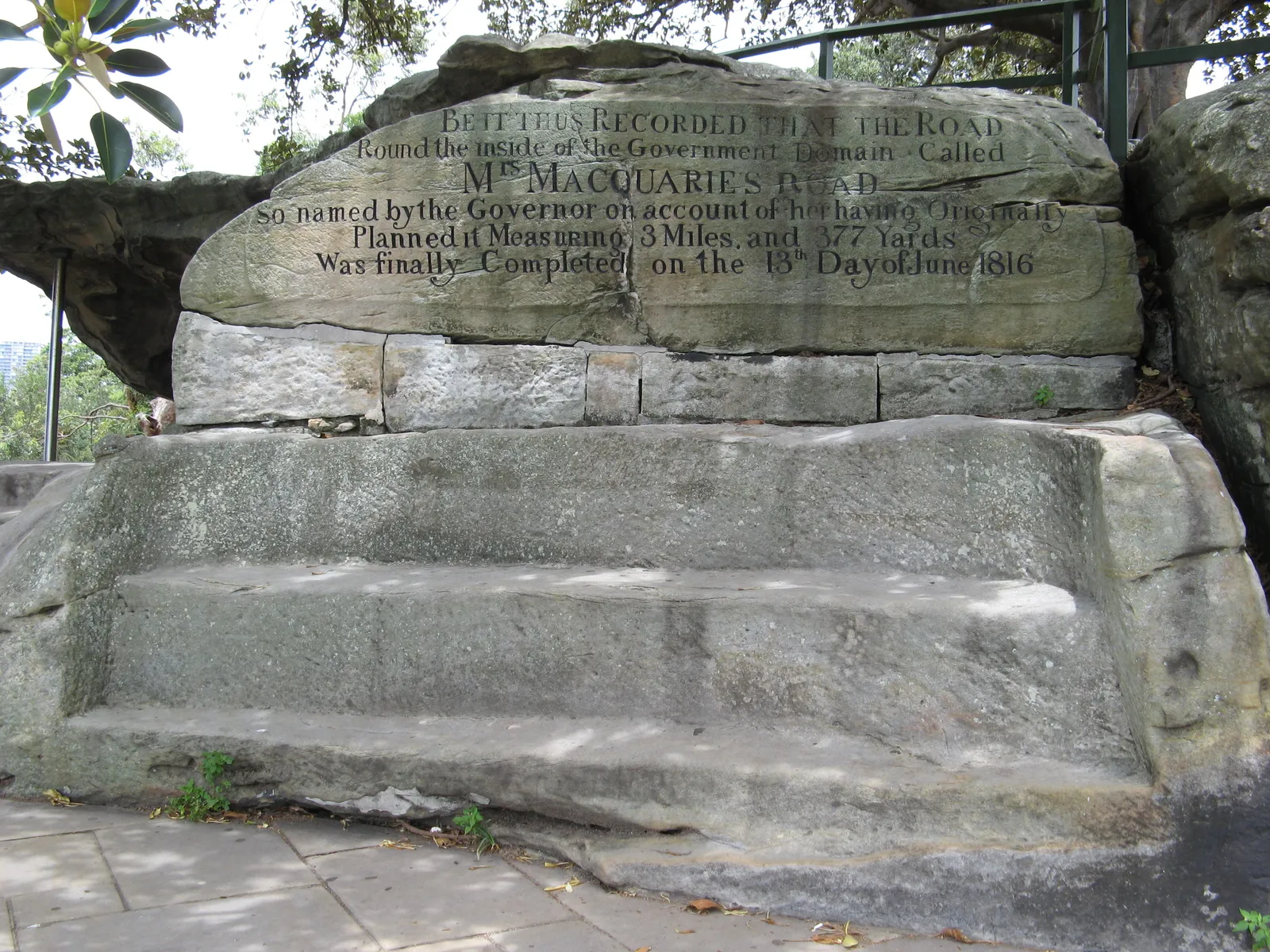
The chair itself faces north-east toward the fort on Fort Denison, but the reason most people walk out here is the view the other way, back across Farm Cove, where the Opera House sails and the bridge’s arch line up in a single frame. The garden costs nothing, opens at 7am and closes at sunset, so the closing time moves with the season, and the harbour path round Farm Cove from the Opera House is about 20 minutes on foot.
The Art Gallery of New South Wales and its 2022 north building
With more than about five hours in Sydney, the gallery in The Domain, the parkland behind the Botanic Garden, is the addition worth making, about 15 minutes on foot from Mrs Macquarie’s Chair. The Art Gallery of New South Wales fronts Art Gallery Road with a columned sandstone portico, and since December 2022 it has had a second building, Naala Badu, designed by the Japanese practice SANAA and stepping down the slope toward Woolloomooloo Bay, given over to contemporary work and to Aboriginal and Torres Strait Islander art.
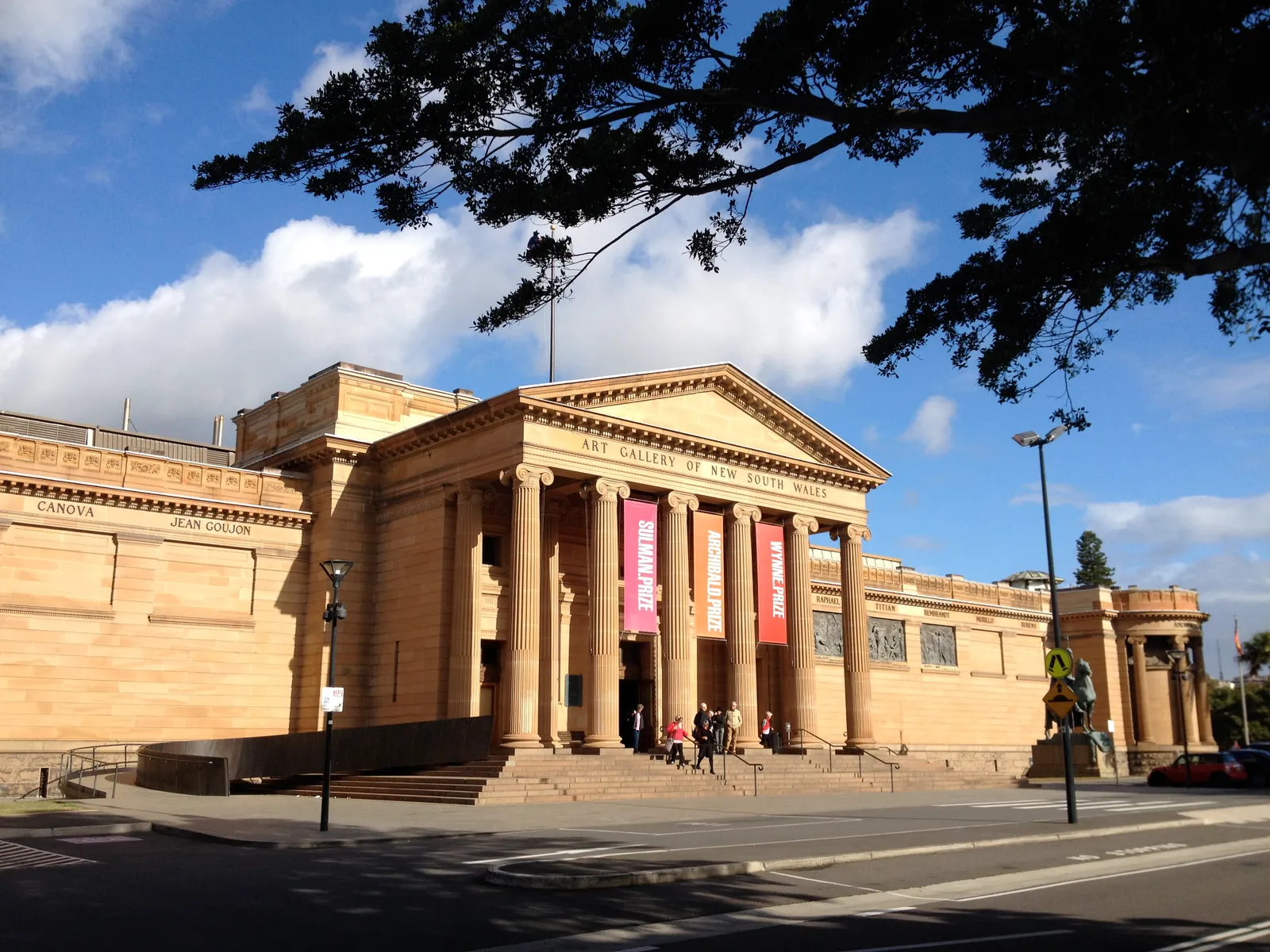
General admission to both buildings is free, with charges only for some temporary exhibitions. The doors are open 10am to 5pm every day, and until 10pm on Wednesdays, when the evening programme adds talks and music.
Sydney’s airport train charges a fee just for the airport stations
The T8 Airport & South Line (green on the network map) is the direct rail link to Sydney Kingsford Smith Airport (SYD): Central to the International Airport station under Terminal 1 takes about 13 minutes, with trains roughly every 10 minutes from before 5am until after midnight. Circular Quay is on the same line, since T8 trains run round the City Circle loop, and the ride from there to International is about 20 minutes. Tap on with a contactless bank card or an Opal card; the airport stations add a station access fee, close to A$19 for an adult, on top of the ordinary train fare, which puts a single adult trip from Central somewhere around A$22.
Sydney Airport suggests arriving three hours before an international departure. From Mrs Macquarie’s Chair it is about 25 minutes on foot back to Circular Quay station, so leaving the foreshore a little under four hours before your flight covers the walk, the train and the airport. Domestic flights, including the shuttle down to Melbourne, leave from Terminals 2 and 3 instead, served by the Domestic Airport station one stop before International.
Leaving the suitcase at a storage point in the city is what makes the Opera House tour possible at all, and it keeps the stairs out of the Argyle Cut and up to the bridge footway a walk rather than a haul.
Frequently asked questions
What should I do during a layover in Sydney?
Walk the harbour foreshore. Start in The Rocks, where the Argyle Cut still carries convict chisel marks and a flight of stairs off Cumberland Street climbs to the free footway on the Harbour Bridge; continue round Circular Quay to the Opera House, where a one-hour guided tour is the stop to book ahead; then follow the Royal Botanic Garden's harbour path out to Mrs Macquarie's Chair. With more than about five hours, add the Art Gallery of New South Wales in The Domain, which is free to enter. The Pylon Lookout and the bridge climb are both optional extras, and the climb takes most of an afternoon on its own.
Can I climb the Sydney Harbour Bridge before a flight?
Only with a long gap before your flight. The standard climb to the summit of the arch runs to around three and a half hours from check-in to finish, including the briefing and suiting up, so on top of the walk to the airport train and the three hours Sydney Airport suggests for an international departure it needs a full day in the city. Climbers cannot carry anything loose on the arch, so bags go into lockers at the base in The Rocks. The Pylon Lookout in the south-east pylon gives a view from 200 steps up for a fraction of the time and price.
Which parts of the Sydney harbour walk are free?
Most of it. The Rocks, the Argyle Cut, the Opera House forecourt and its Monumental Steps, the footway across the Harbour Bridge, the whole of the Royal Botanic Garden and Mrs Macquarie's Chair cost nothing, and general admission to the Art Gallery of New South Wales is free too. The paid parts are the Opera House guided tour (A$48 for an adult), the Pylon Lookout inside the bridge's south-east pylon, and the bridge climb.
What is there to do in Sydney if it rains?
Go indoors at either end of the foreshore. The Opera House tour spends its hour inside the building, the Art Gallery of New South Wales is free and open 10am to 5pm every day, with Wednesdays running until 10pm, and the Pylon Lookout keeps three levels of exhibits on the bridge's construction under cover before the open lookout at the top. The exposed stretches are the harbour path through the Royal Botanic Garden and the bridge footway, which has no roof and catches the wind off the water.