Melbourne Layover: Arcades and Trams From MEL
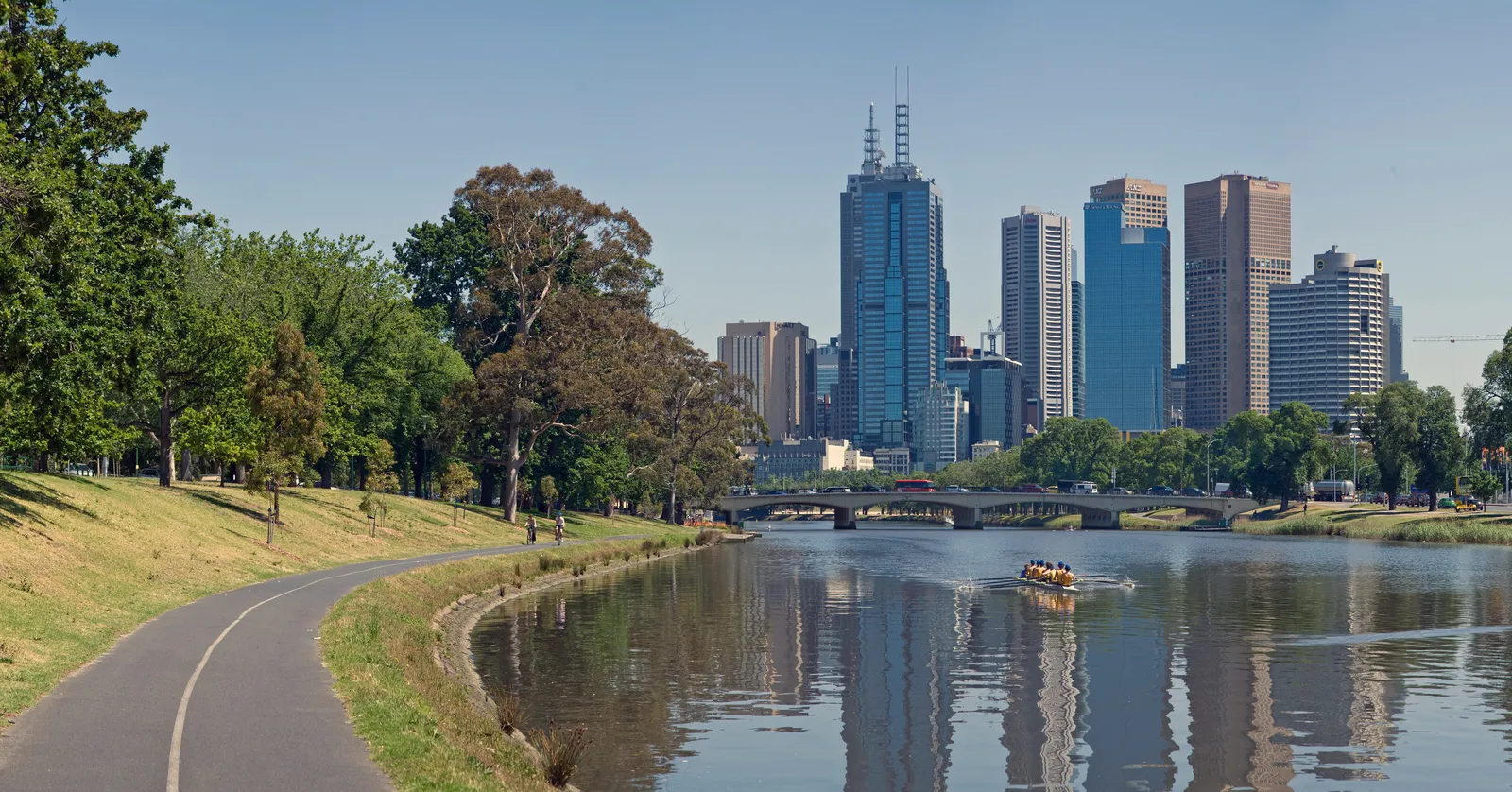
Central Melbourne fits inside a grid a mile long and half a mile deep, and the walk north from the Yarra through it passes 1890s shopping arcades, a domed reading room that costs nothing to enter, and a bluestone laneway repainted every few days, before it reaches the produce sheds of Queen Victoria Market.
Melbourne Skydeck fills level 88 of Eureka Tower
Eureka Tower stands on Riverside Quay in Southbank, on the south bank of the Yarra, 297 metres to the top of its gold-glazed crown. The public floor in it, Melbourne Skydeck, is at 285 metres on level 88, and the two lifts that serve it get there in under 40 seconds.
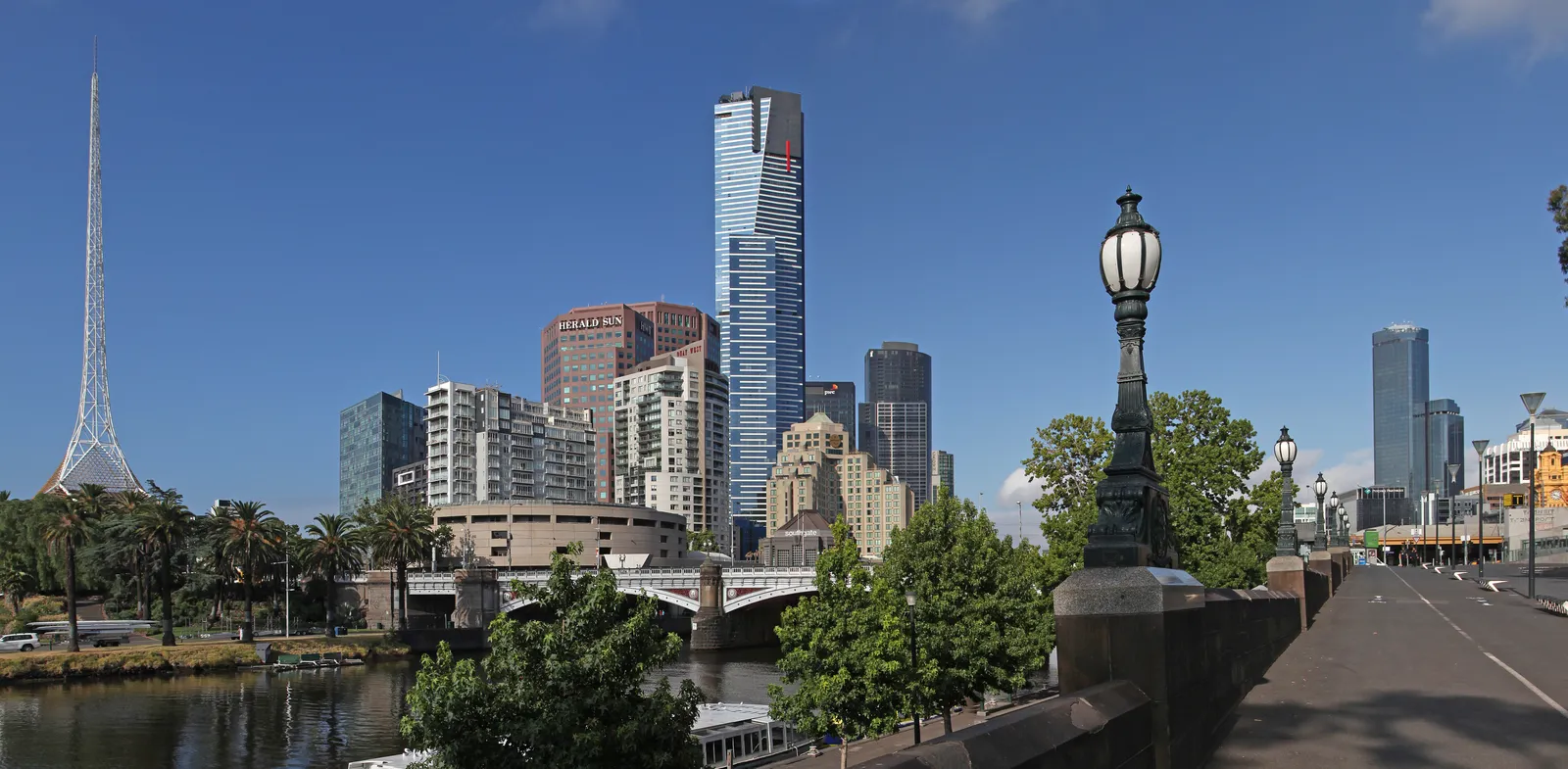
The view is worth the lift mainly because it explains the city’s shape in one look: the grid laid out square to the north, the Yarra bending east past the sports grounds, the container cranes west, and Port Phillip Bay closing the horizon south. The Edge is a separate add-on to the ticket, a glass cube that slides three metres out from the side of the building with you standing inside it. Prices at the door run about 15 percent above the online rate, so booking the entry ahead through a tours and activities platform is worth doing before you cross the river. Southbank sits outside the free tram zone that covers the rest of the centre, so the ride over Princes Bridge is one of the few on this route you pay a fare for.
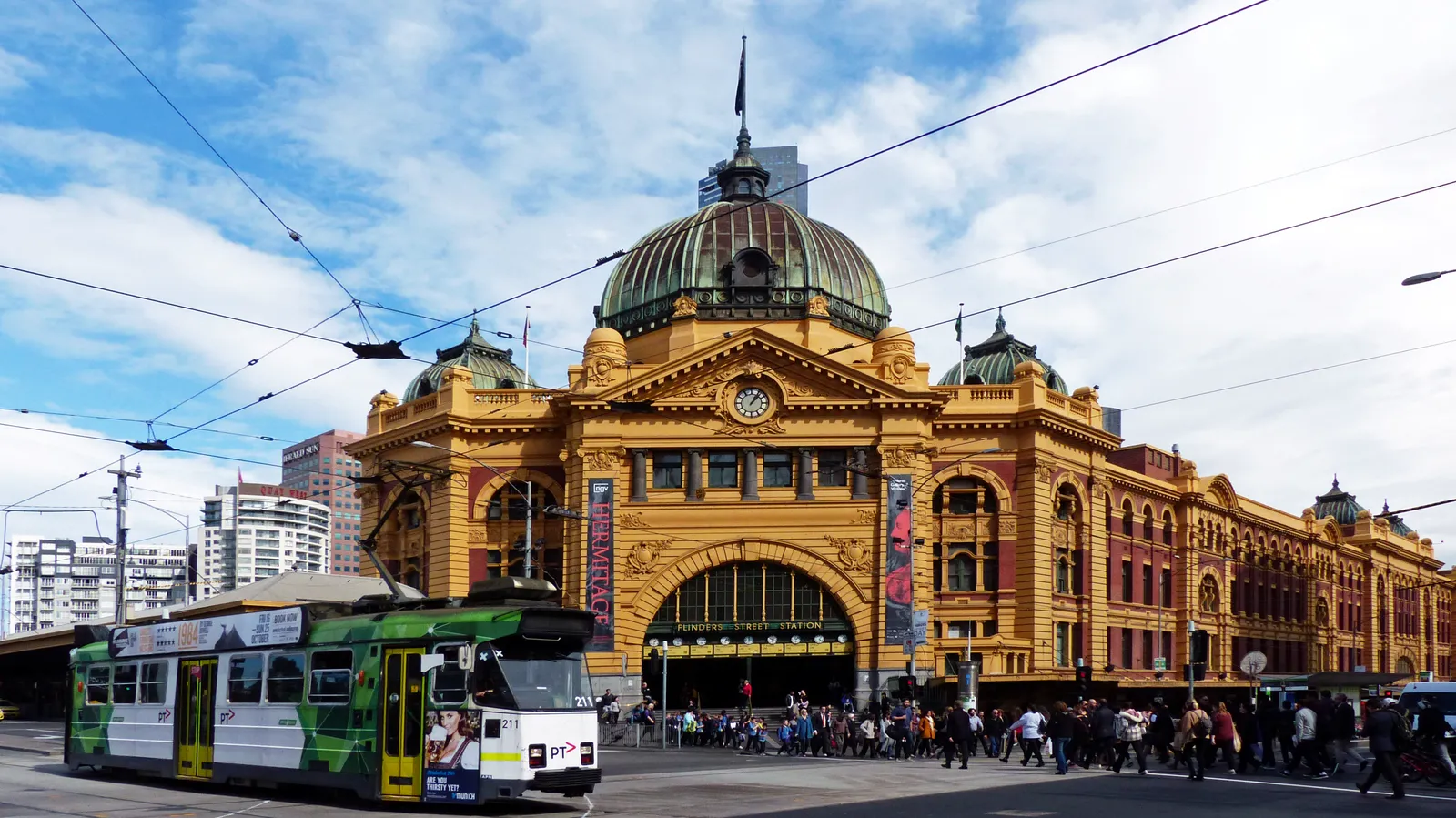
The clocks over Flinders Street Station’s main entrance
Flinders Street Station has held the corner of Flinders and Swanston streets since 1909, when the railways built a competition design by two of their own employees, James Fawcett and H. P. C. Ashworth: yellow stucco, a green copper dome over the entrance, and a row of indicator clocks above the doors, one for each suburban line, showing when the next train on it leaves. Melburnians have been arranging to meet under those clocks for a century, on the steps below them, and this is still the busiest railway station in Victoria.
Federation Square faces the station across Swanston Street, opened in 2002 on a deck built over the Jolimont railyards, its sandstone, zinc and glass panels cut into triangles and laid in a pinwheel that never quite settles into a pattern. ACMI, the moving-image museum built into it, asks nothing for its permanent exhibition.
Hosier Lane opens off Flinders Street directly opposite the square, a bluestone service lane running through to Flinders Lane. The City of Melbourne has permitted painting in a handful of designated laneways since the early 2000s while it remains illegal on any other wall in the centre, which is why the work here turns over so fast: what is on the bluestone changes weekly, and sometimes overnight. Only about a fifth of Melbourne’s tram services pair a low-floor tram with a level stop, so boarding usually means lifting a bag up two steps from a painted strip in the middle of the road.
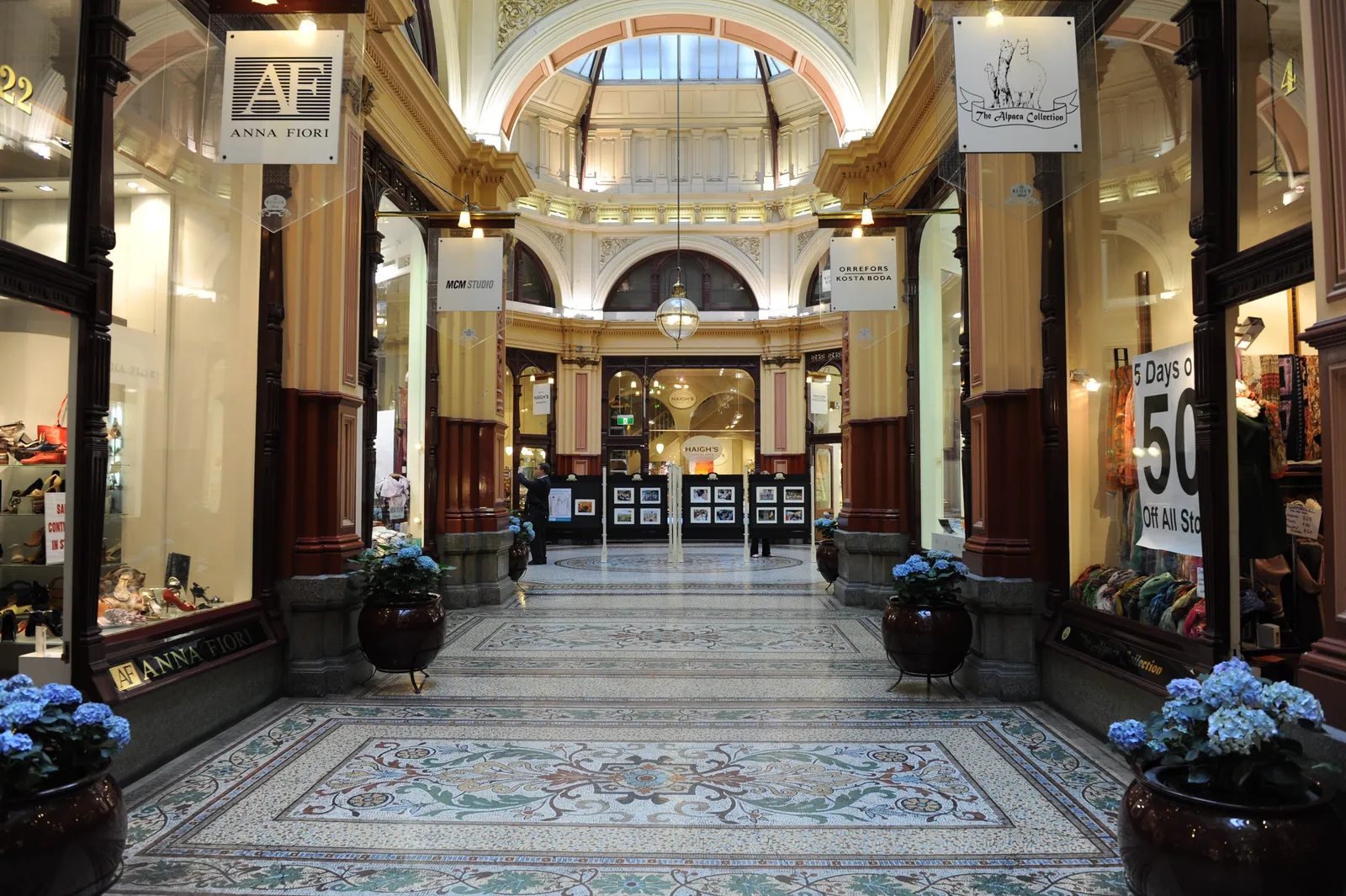
The Block Arcade’s mosaic floor under its glass dome
Robert Hoddle surveyed Melbourne’s grid in 1837 with rear access lanes cut through the middle of every block at half the width of the main streets, and the arcades are what several of those half-width lanes became once the gold money arrived. The Block Arcade is the grandest of them, built between 1891 and 1893 and opened that October, an L-shape running off Collins Street through to Elizabeth Street with a branch north to Little Collins. Its floor is mosaic tile laid in panels the whole length of the walk, and the glass dome over the crossing lights all of it without a lamp switched on.
The name predates the building. From the late 1870s, Melbourne’s wealthy took to dressing up and walking the stretch of Collins Street between Elizabeth and Swanston and back again, and doing the block is what they called it. Hopetoun Tea Rooms has traded inside the arcade since 1907.
Royal Arcade runs from Bourke Street Mall through to Little Collins Street, opened in 1870 and the oldest surviving arcade in Australia. Gaunt’s Clock hangs at its southern end, and standing on either side of it are Gog and Magog, two carved wooden giants a little over two metres tall, copied from figures in London’s Guildhall and installed in the early 1890s. Wires run down from the clock’s machine room to their arms, and they strike a bell on the hour, which is the reason to time the walk through here rather than past it.
The 1913 dome over State Library Victoria’s reading room
State Library Victoria takes the block on Swanston Street between Little Lonsdale and La Trobe, behind a lawn people eat lunch on. The La Trobe Reading Room at its centre opened in 1913: an octagonal hall six storeys high under a reinforced-concrete dome that was the largest of its kind anywhere when it was finished, with desks radiating from the middle for 320 readers and about 32,000 books shelved around the walls.
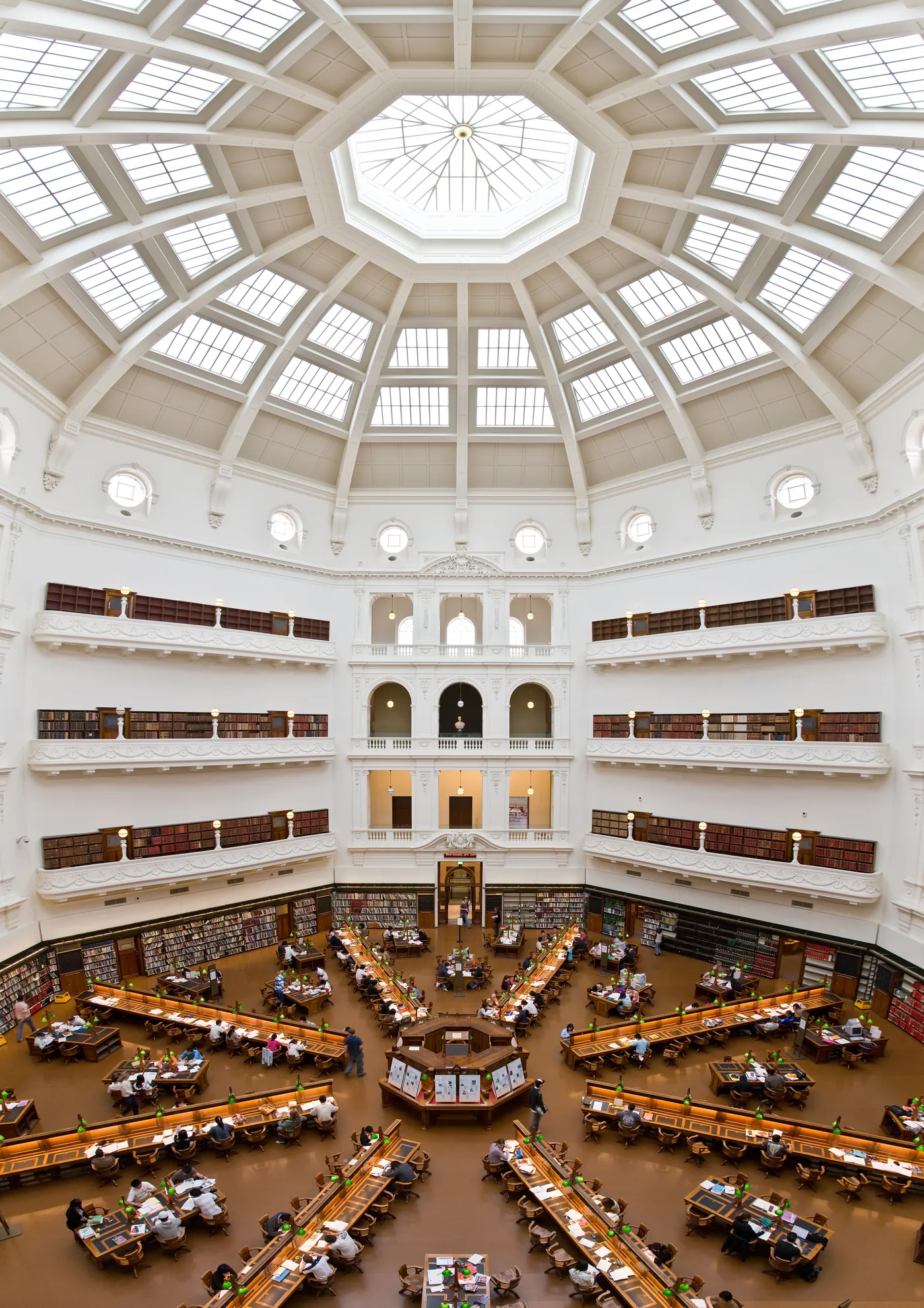
Getting in costs nothing and the doors are open 10am to 6pm every day but New Year’s Day, Good Friday, Christmas Day and Boxing Day. The view most people come for is from the balcony on the sixth floor, looking straight down the spokes of desks. The Dome Galleries on the two floors below it are free as well and hold the Changing Face of Victoria exhibition, which is where Ned Kelly’s bullet-dented armour and the Jerilderie Letter he dictated are kept. Those galleries shut at 5pm, an hour before the rest of the building.
Queen Victoria Market trades five days a week, not seven
Queen Victoria Market covers two blocks at the top of Elizabeth Street, just inside the northern edge of the grid, and has sold produce on that ground since 1878. It opens Tuesday, Thursday and Friday from 6am to 3pm, Saturday from 6am to 4pm, and Sunday from 9am to 4pm. Mondays and Wednesdays it is shut, which is the one thing on this page worth checking against your flight day before you plan the walk around it.
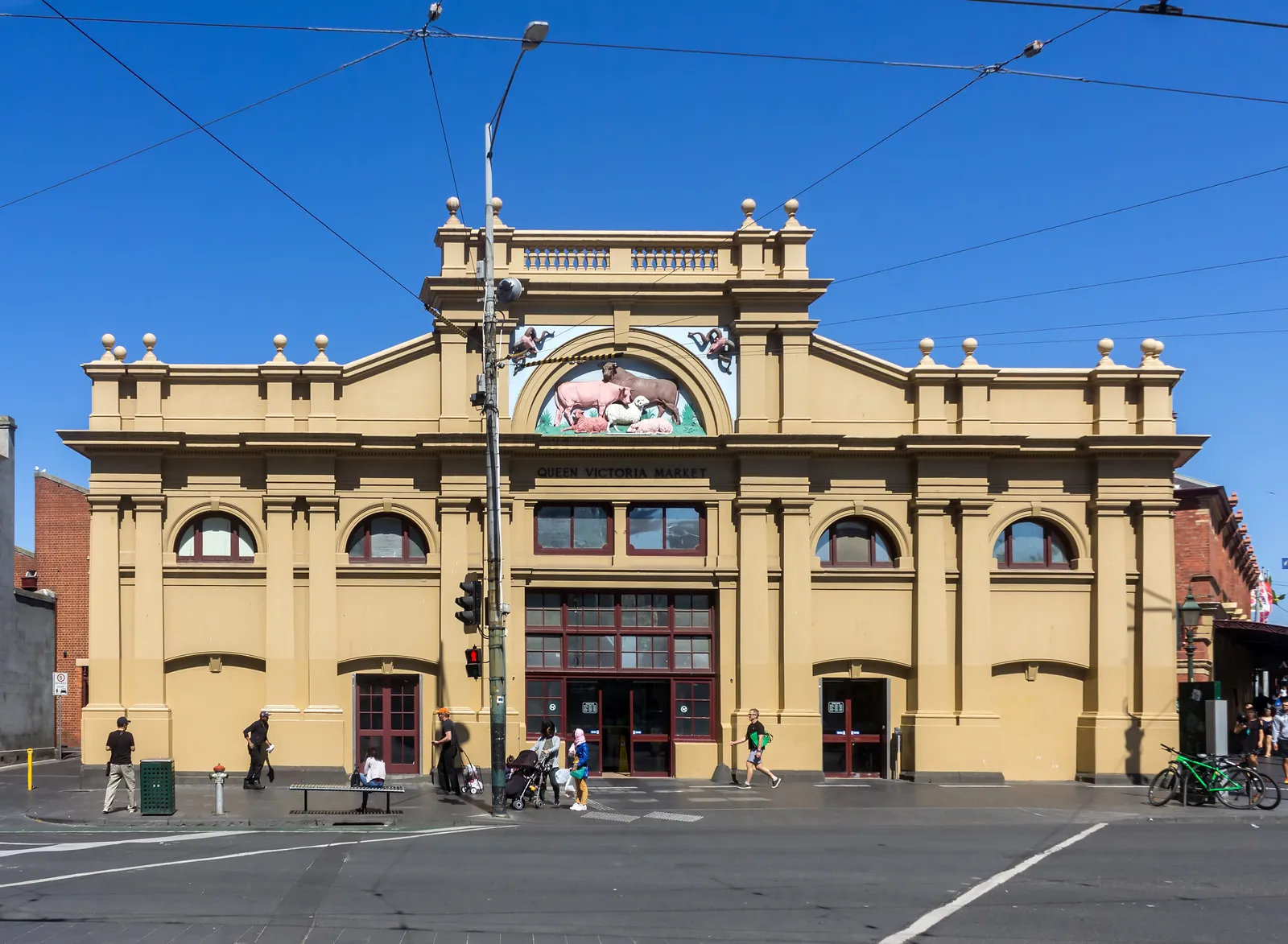
The specialty shops under the sheds keep shorter hours than the fruit and vegetable traders and do not open until 9am even on trading days, so an early arrival gets the produce halls and the delicatessen but little else. From November to March a night market runs on Wednesday evenings from 5pm to 10pm, the single exception to the midweek closure.
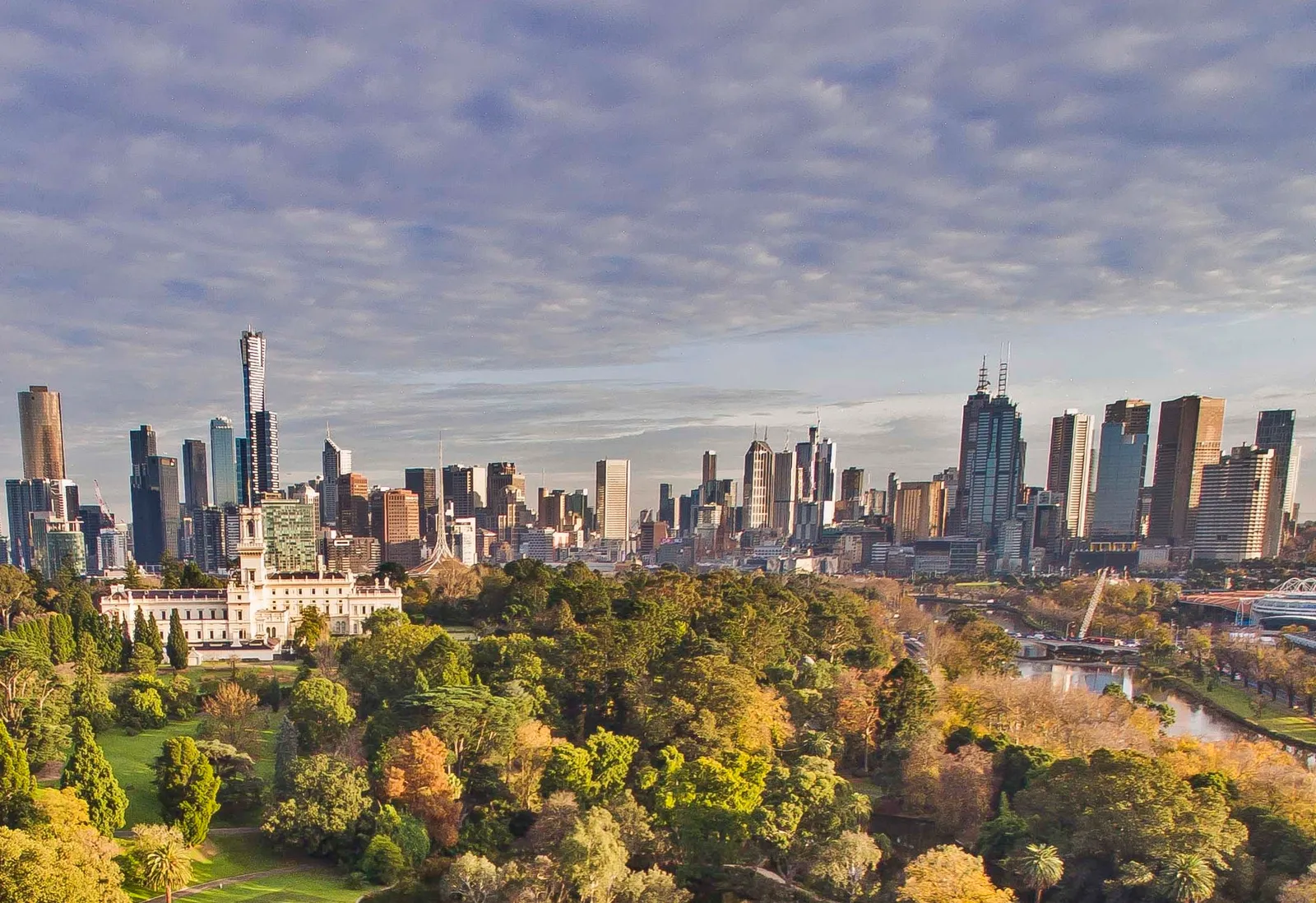
The Royal Botanic Gardens on the Yarra’s south bank
With more than about five hours to spend, the gardens are the addition worth making. The Royal Botanic Gardens Melbourne cover 38 hectares on the south bank of the Yarra, hold more than 8,500 plant species, cost nothing to walk into and open at 7.30am. The Ornamental Lake sits in the middle with black swans on it, and the lawns rise from there to the Shrine of Remembrance on the ridge above, which is as much of a hill as this city offers.
NGV International stands on the way, at 180 St Kilda Road, behind a sheet of water running down plate glass that almost nobody walks past without putting a hand through. General admission is free and the doors are open 10am to 5pm. Both the gallery and the gardens are outside the free tram zone, so the ride down St Kilda Road is a paid one.
Melbourne Airport has never had a train
Construction on Melbourne Airport Rail began in 2026 on the section between West Footscray and Albion, with that first stage due in 2030 and trains later again, so the SkyBus Melbourne City Express is the public link that exists: an express coach between the terminals at Melbourne Airport (MEL) and the coach terminal at Southern Cross Station on Spencer Street, at the western edge of the grid. It runs from about 4am to 1am seven days a week, every 10 minutes at peak and every 15 outside it, and no booking is needed for a particular departure. The ride averages 30 minutes; allow closer to 45 between 6am and 10am or between 3pm and 7pm, when the freeway out is full.
An adult one-way fare is A$25.90 and a return is A$43.40, with children aged 4 to 16 at A$6.60 each way. Departures to the airport go from Bay 75 in the coach terminal, up from the main concourse. Southern Cross is inside the free tram zone, so getting back across the grid to it costs nothing, and from the Collins Street end of the walk it is about 15 minutes on foot anyway. Two and a half hours between leaving the city and an international departure covers the ride, the check-in queue and security without hurrying. If the long wait on this trip is at the other end rather than this one, a Singapore layover is the stop most one-stop routes out of Melbourne put in the middle.
Whatever you are holding at Bay 75 is what you carried up the arcade steps, into the reading room and through the market aisles, which is the whole argument for leaving the suitcase in the grid and walking the rest of it with your hands free.
Frequently asked questions
What should I do during a layover in Melbourne?
Walk the grid from the river north. Flinders Street Station and Federation Square face each other at Flinders and Swanston, with Hosier Lane opening off Flinders Street opposite; the Block Arcade and Royal Arcade cut through the blocks above Collins Street; the La Trobe Reading Room at State Library Victoria is free and open 10am to 6pm; and Queen Victoria Market sits at the top of Elizabeth Street. With five hours or more, add the Royal Botanic Gardens on the south bank. Melbourne Skydeck is the one stop worth booking before you land, and Queen Victoria Market is shut on Mondays and Wednesdays, so a mid-week arrival may need the walk reordered.
Are trams really free in central Melbourne?
Inside the Free Tram Zone, yes, and you do not need to touch on a myki fare card at all. The zone covers the city grid and Docklands: Victoria Street in the north, Spring Street in the east, Flinders Street and the river in the south, Harbour Esplanade in the west. Both Southern Cross and Flinders Street stations are inside it. Southbank, St Kilda Road and the National Gallery of Victoria are outside it, so the short ride over the river to Melbourne Skydeck or the gallery is one you pay for, and trains are never free even between two stations in the zone.
What is there to do in Melbourne if it rains?
Almost the whole of this route is under a roof already. The Block Arcade and Royal Arcade are covered lanes between Collins, Elizabeth, Little Collins and Bourke Street Mall; the La Trobe Reading Room and the galleries above it are indoors and free; ACMI at Federation Square charges nothing for its permanent exhibition; and the produce and specialty halls at Queen Victoria Market are all under the sheds. The stretch that gets you wet is Hosier Lane and the walk over Princes Bridge to Southbank, both of them a few minutes.
Is the Melbourne Cricket Ground worth the detour before a flight?
Only with five hours or more in hand, and only if you book. The ground is in Yarra Park, about 25 minutes on foot east of Federation Square or a few minutes by train, and you cannot walk in off the street: the stadium tour runs in sessions every 20 minutes between 10am and 4.20pm, and capacity on each one is limited, so a tour slot held in advance is what makes it possible at all. Allow about an hour inside on top of the walk each way.
Is this walk step-free with a wheeled bag?
The footpaths are, since the grid is flat and the arcades and the library are all at street level with lifts inside. The trams are the problem. Victoria's Auditor-General put the share of tram services that are accessible, meaning a low-floor tram calling at a level-access stop, at about 18 percent, so most boardings in the centre mean lifting a bag up two steps from a painted stop in the middle of the road. Walking the grid instead avoids the issue entirely: Flinders Street to Queen Victoria Market is under 20 minutes on foot.