Melbourne Layover Near Southern Cross Station
Part of the full Melbourne Layover: Arcades and Trams From MEL
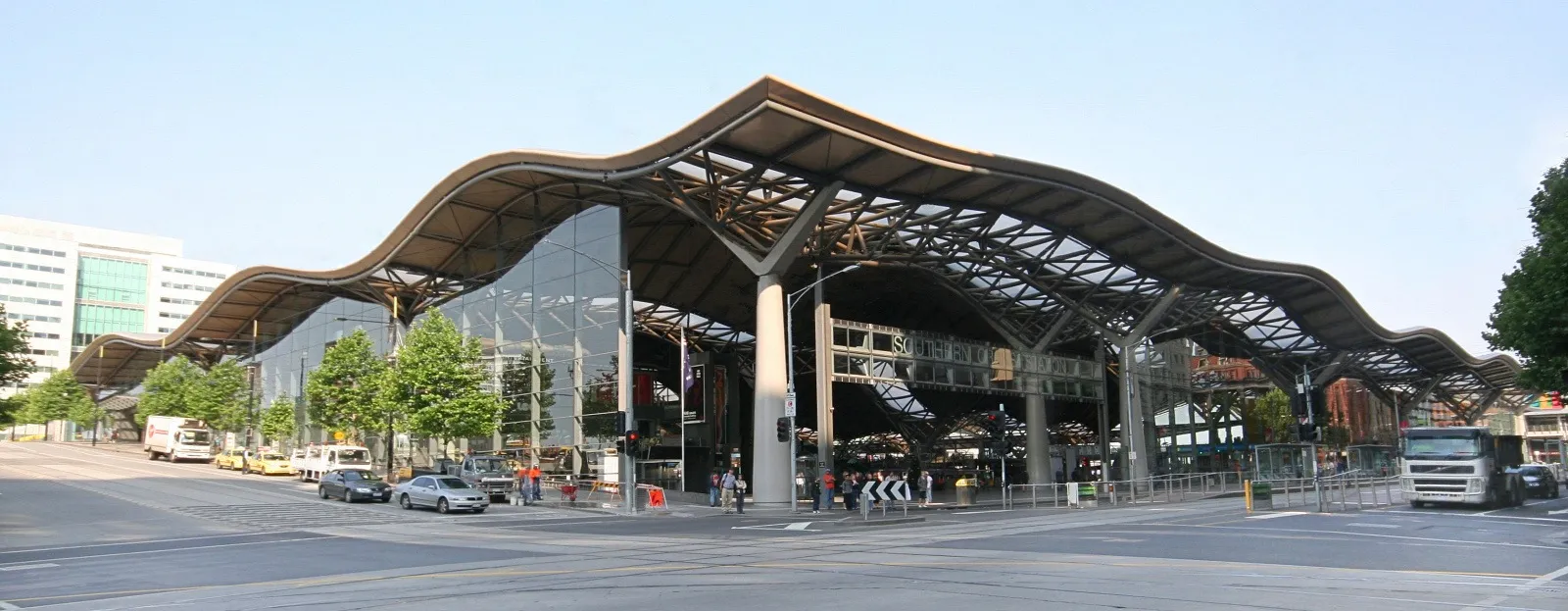
Southern Cross Station stands on Spencer Street at the western edge of central Melbourne, within ten minutes on foot of the aquarium on the Yarra’s north bank, the lawns of Flagstaff Gardens, an Arts and Crafts seafarers’ mission of 1917 and the marina at Victoria Harbour.
SEA LIFE Melbourne Aquarium at King and Flinders streets
The aquarium occupies the river bend where King Street meets Flinders Street, ten minutes south on foot from Spencer Street, and it is built around a 2.2 million litre oceanarium with a walk-through tunnel under it. Twelve zones run off that: gentoo penguins on real ice, a jellyfish room, seahorses, and a croc lair holding Pinjarra, a saltwater crocodile fed once a week rather than daily.
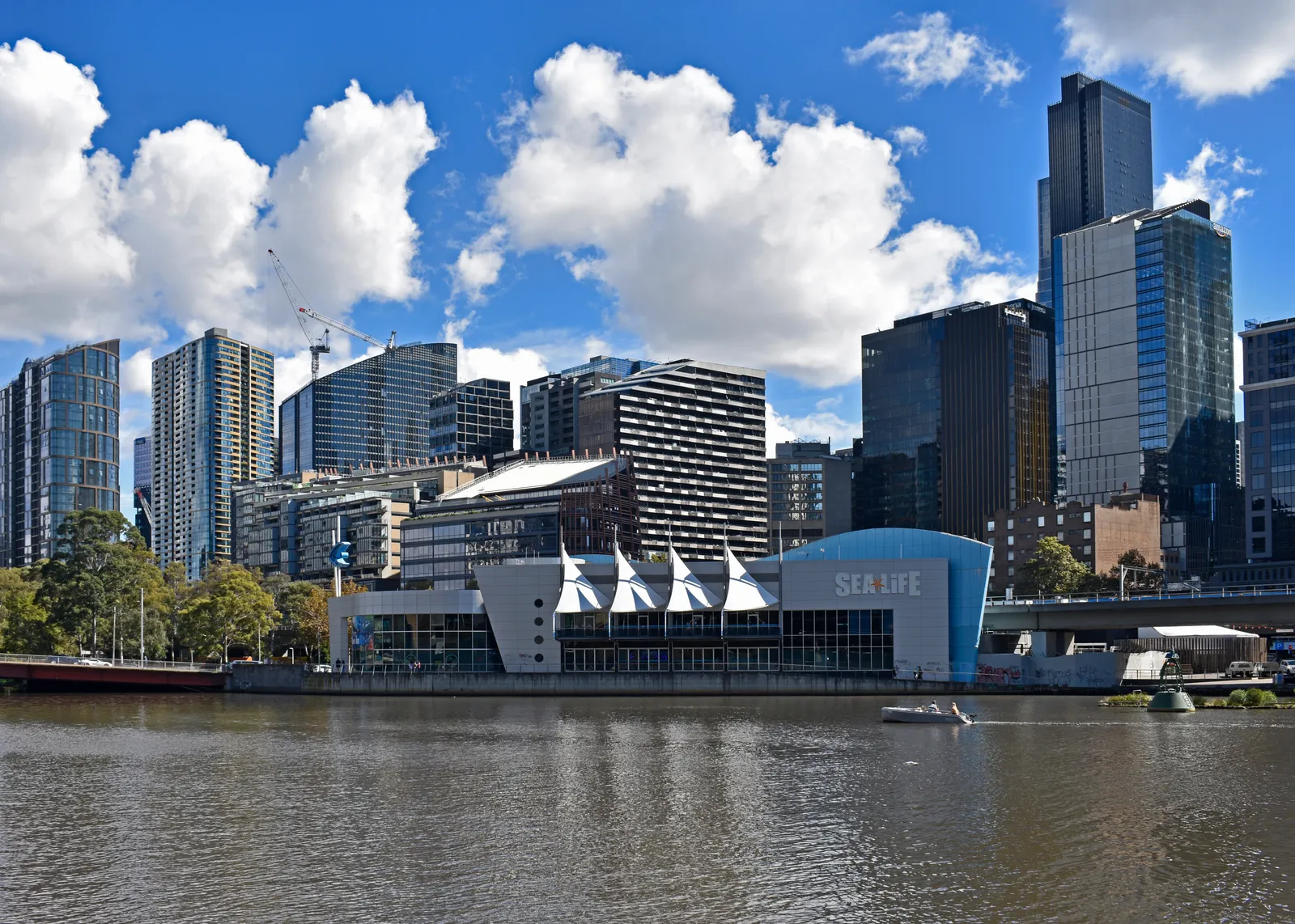
Talks and feedings anchor the day: rays at 10.30am, penguins at 11.30am and the coral atoll tank at 1.30pm, worth checking against whatever hour you happen to arrive. Doors open at 10am on weekdays and 9.30am at weekends and in school holidays, last entry is 4pm, and a full circuit takes most people two and a half to three hours. Adult tickets start around A$39 on a weekday and climb over A$50 at peak, so buying entry before you arrive through a tours and activities platform is the cheaper way in.
The wave roof Grimshaw put over Southern Cross Station
Spencer Street Station opened on this ground in 1859 and stayed a plain shed for most of the next century and a half. What replaced it between 2002 and 2006, by Grimshaw Architects with Jackson Architecture, is a single undulating canopy carried on tree-like steel columns, rolling in waves the length of the platforms with open gaps at the crests to draw diesel exhaust out. It won the Royal Institute of British Architects’ Lubetkin Prize in 2007, and the name changed from Spencer Street on 13 December 2005.
Everything under it arrives at once: suburban trains, V/Line regional services from Geelong, Ballarat and Bendigo, the overnight train to Adelaide and every airport coach. A regional traveller here is usually carrying a weekend bag and a flier is carrying everything they own for a fortnight, and the two queue in the same hall, which is the argument for putting the larger one down somewhere before you spend the afternoon walking.
Flagstaff Gardens was Melbourne’s first burial ground
The hill bounded by William, La Trobe, King and Dudley streets held the colony’s first cemetery in 1836 and 1837, before the town had one anywhere else, and it was known as Burial Hill. A memorial put up in 1871 marks roughly where the settlers were laid. From 1840 the summit carried the flagstaff the whole place is named for, part of a signalling chain that told Melbourne when a ship had been sighted at Williamstown, and between 1857 and 1862 it was a weather and magnetic observatory instead.
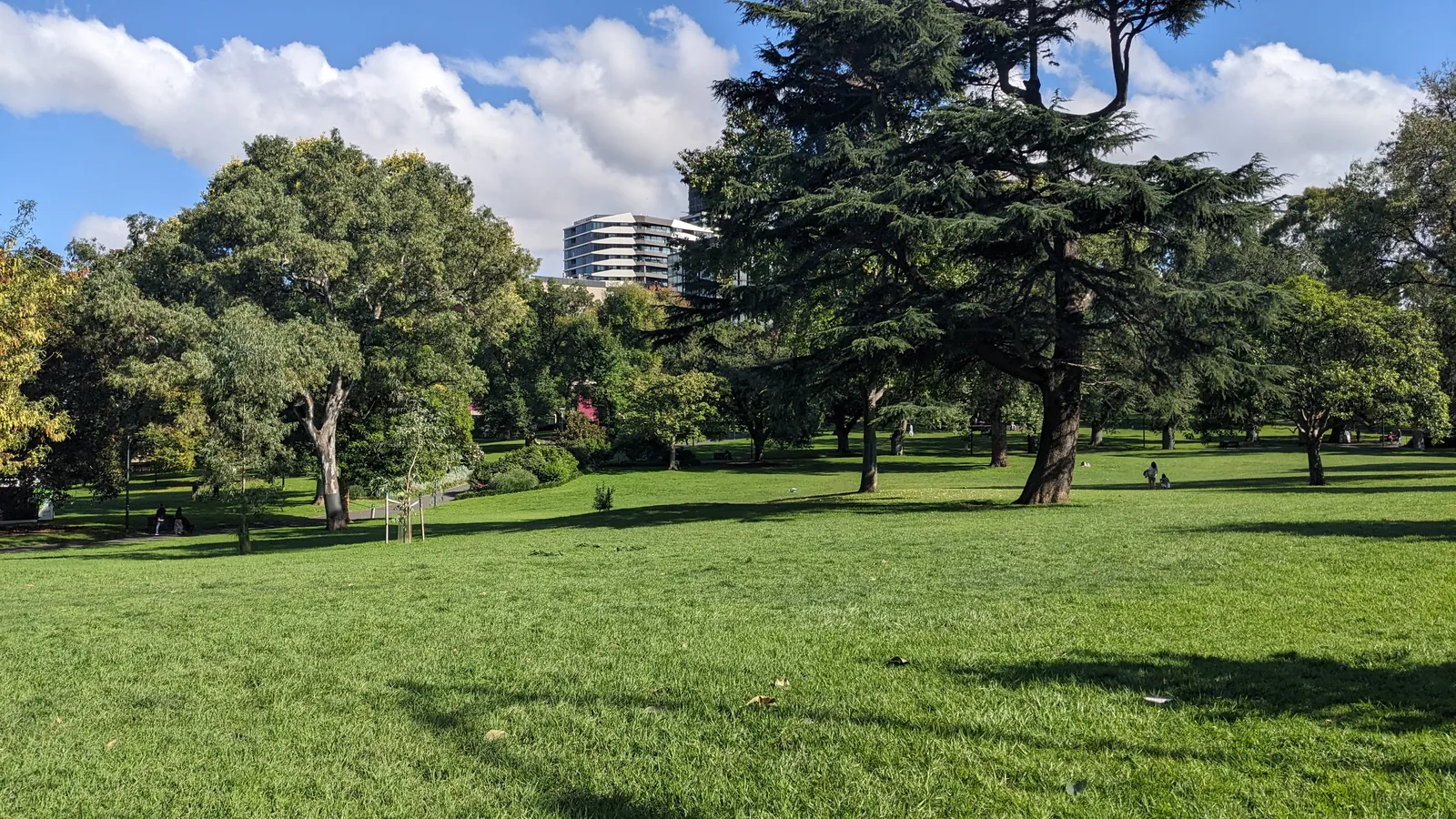
West Melbourne residents petitioned to have the derelict hillside turned into gardens, and Clement Hodgkinson, who had already laid out the Fitzroy and Treasury Gardens, drew the plan in 1862. Seven hectares of it survive, five minutes north-east of Spencer Street, with lawns that fill with office workers at lunchtime and empty again by two.
The 1917 seafarers’ mission at 717 Flinders Street
Walter Richmond Butler designed the Mission to Seafarers for the men coming off ships at the western docks, and it opened in 1917 as an Arts and Crafts building with Spanish Mission borrowings: red pantile roofs, a squat bell tower, a courtyard, and a windowless brick dome at the eastern end called the Norla Dome, built as a gymnasium.
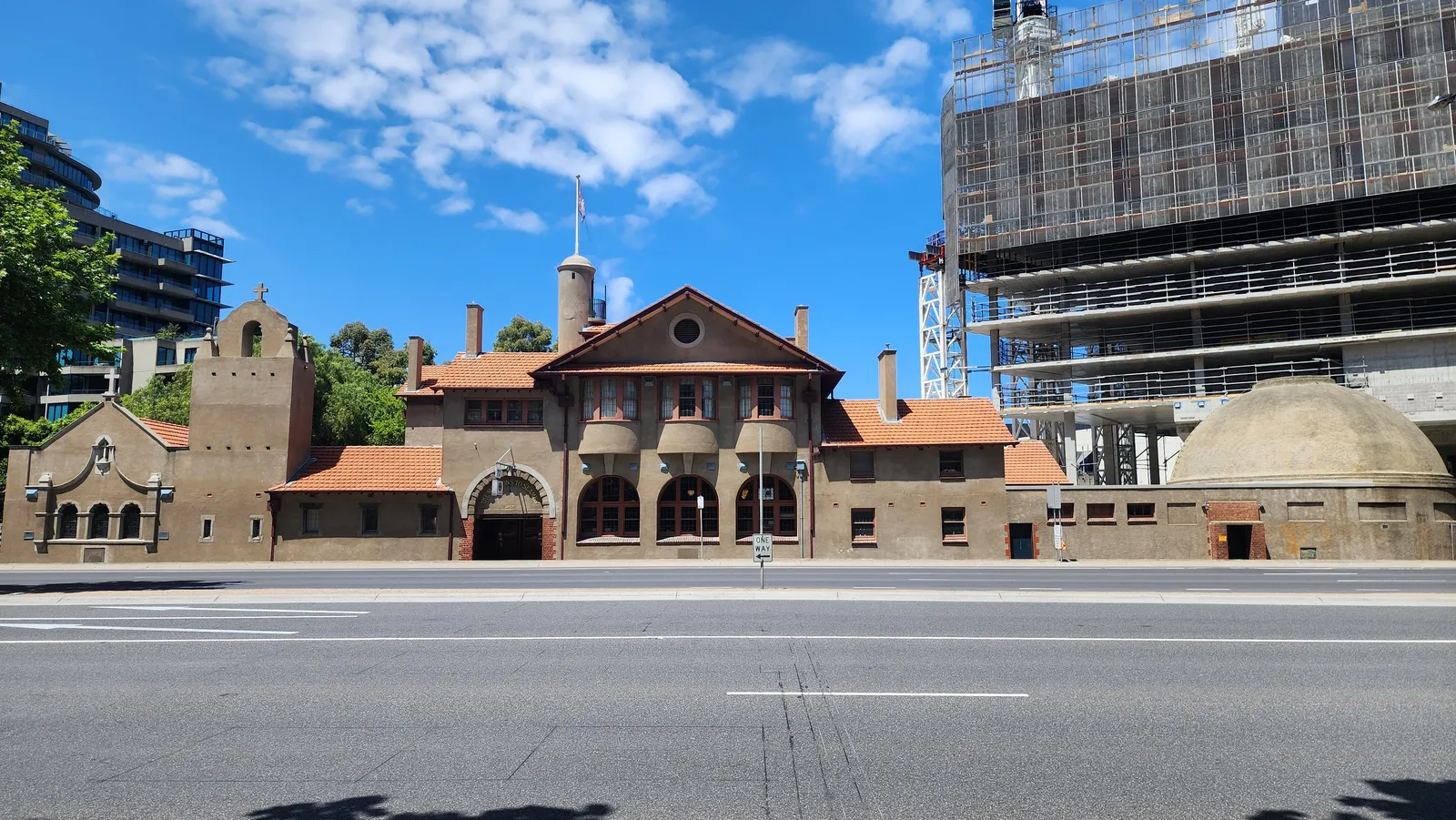
The chapel of St Peter the Mariner is still consecrated and still used, and the mission itself has looked after crews in Victorian ports since 1857. Doors open to walk-in visitors from midday, there is no admission charge, and a self-guided route takes you through the chapel, the dome and a set of displays on the port’s own history. Thirty minutes covers it comfortably, which makes it the easiest thing on this list to fit into an awkward gap.
Victoria Harbour, the working dock turned marina at Docklands
Collins Street runs out of the grid and finishes at the water. Victoria Harbour is what the shipping berths became: pontoons of moored boats, a promenade around the edge, and the arched roof of Marvel Stadium closing the northern side. The Library at the Dock, at 107 Victoria Harbour Promenade, is built out over the wharf itself and is a normal public library, open to anyone who wants to sit down indoors for half an hour.
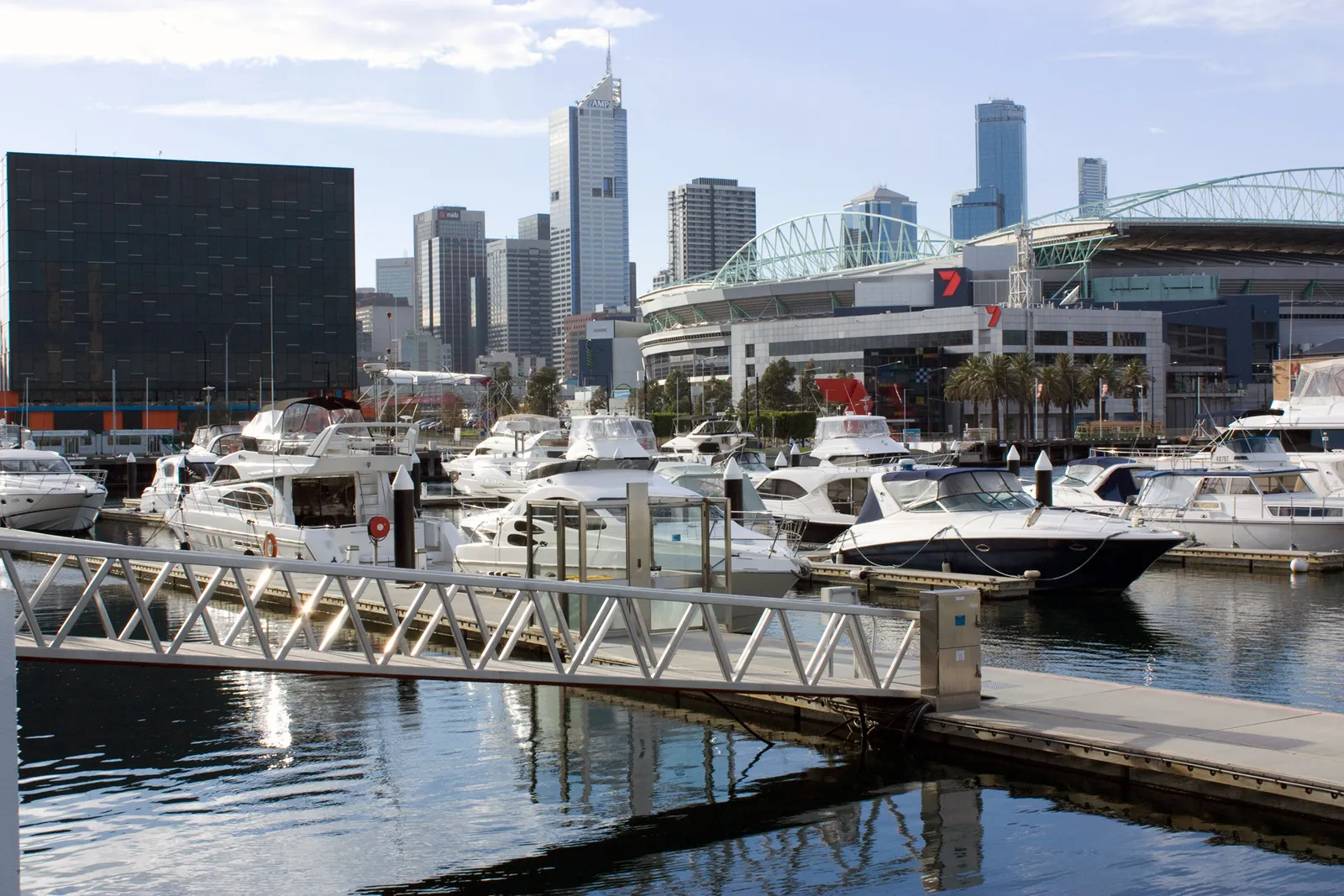
It is about ten minutes on foot from Spencer Street, or three tram stops along Collins Street, and the whole of Docklands is inside the free tram zone so that ride costs nothing. Everything on this page sits west of Spencer Street; the 1890s arcades, the domed reading room at the State Library and Queen Victoria Market are all on the other side of the grid, which is what the main Melbourne layover route covers instead.
Bay 75, upstairs in the Southern Cross coach terminal
The airport coach goes from the coach terminal on the northern side of the station, and departures to Melbourne Airport (MEL) leave from Bay 75. The SkyBus Melbourne City Express runs from about 4am to 1am every day, every 10 minutes at peak and every 15 outside it, with no need to book a particular departure. An adult one-way fare is A$25.90 and a return is A$43.40, children aged 4 to 16 travel for A$6.60, and the ride averages 30 minutes, nearer 45 in the morning and evening peaks.
That is the one genuine advantage of spending a layover on this side of the grid: the coach leaves from the building you have been walking circles around all afternoon, so the last leg is a lift and an escalator rather than a tram ride with a suitcase across town.
Frequently asked questions
What should I do during a layover near Southern Cross Station in Melbourne?
Stay west of Spencer Street and you can fill three hours without a tram. SEA LIFE Melbourne Aquarium is about ten minutes south at the corner of King and Flinders streets, Flagstaff Gardens is five minutes north-east across William Street, and the Mission to Seafarers, an Arts and Crafts building of 1917, is a few minutes west along Flinders Street. Victoria Harbour and the Docklands promenade are ten minutes north-west of the station. Only the aquarium needs booking, and it is the one stop that will eat two hours rather than thirty minutes.
What is free to do near Southern Cross Station?
Most of it. Flagstaff Gardens costs nothing and never closes, the Mission to Seafarers opens its chapel, courtyard and domed hall to walk-in visitors from midday with no admission charge, and the Harbour Esplanade and Victoria Harbour promenade at Docklands are public waterfront the whole way. The Library at the Dock, out on the wharf at 107 Victoria Harbour Promenade, is a public library anyone can sit in. The aquarium is the only paid stop in this radius.
What is open early in the morning near Southern Cross Station?
Very little, which matters if a coach or an overnight train has just put you here at dawn. Flagstaff Gardens and the Harbour Esplanade never close. The aquarium does not open until 10am on weekdays, 9.30am at weekends and in school holidays, with last entry at 4pm and two and a half to three hours needed inside, so an entry ticket held in advance is worth having before you walk down. The Mission to Seafarers is the latest of the three, opening at midday.
How long does the airport coach take from Southern Cross Station?
The SkyBus Melbourne City Express averages 30 minutes between the coach terminal here and Melbourne Airport (MEL), and closer to 45 between 6am and 10am or 3pm and 7pm. It runs from about 4am to 1am seven days a week, every 10 minutes at peak and every 15 outside it, and no advance booking is needed. Adult fares are A$25.90 one way and A$43.40 return, with children aged 4 to 16 at A$6.60. Departures leave from Bay 75.