Sydney's Darling Harbour and Barangaroo
Part of the full Sydney's Harbour Foreshore: A Layover From SYD
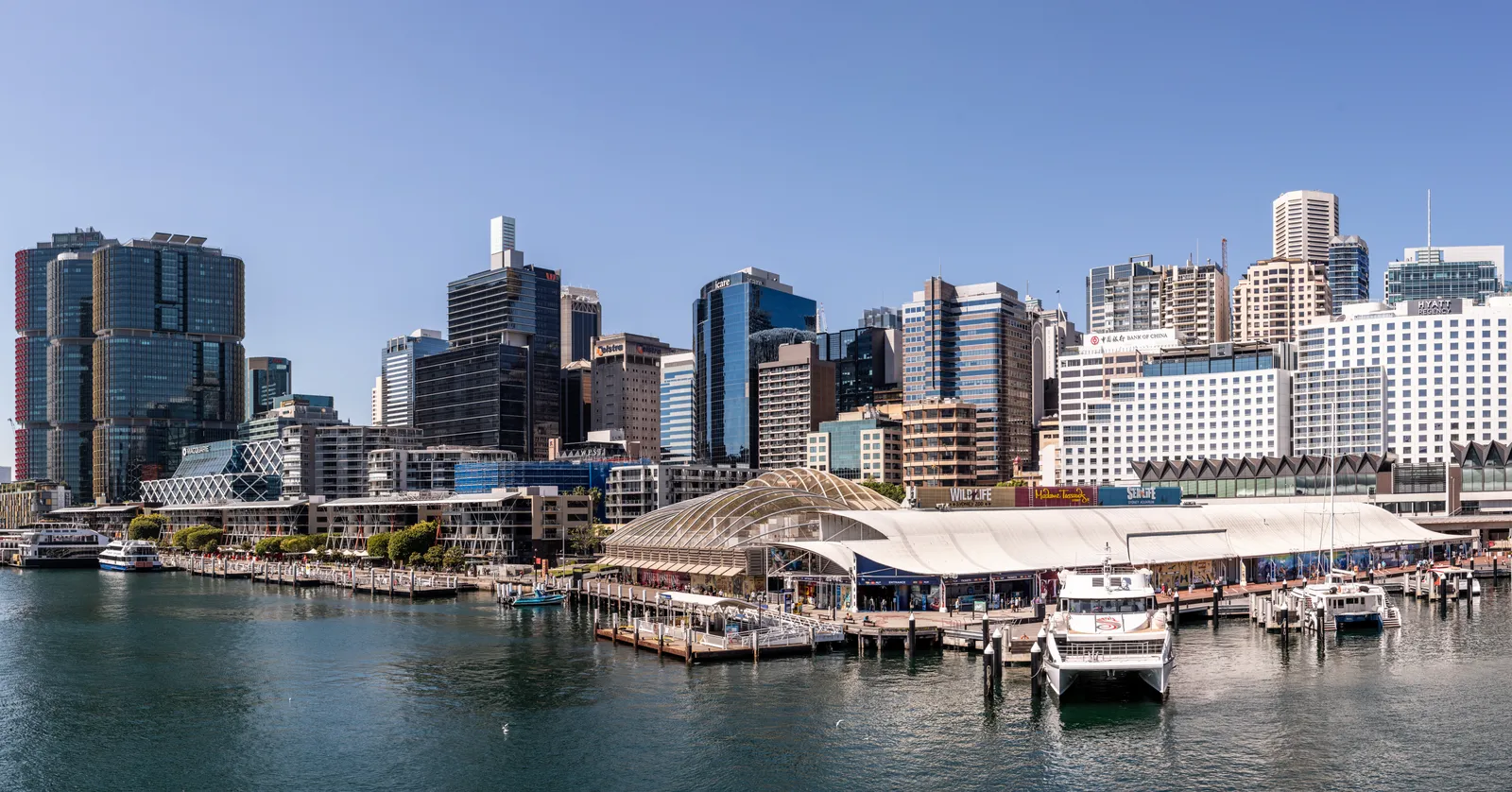
Sydney’s Darling Harbour, on the western side of the city centre, pairs SEA LIFE Sydney Aquarium and a destroyer and submarine you can board at the Australian National Maritime Museum with two free walks: across Pyrmont Bridge, the 1902 swing bridge that still opens for boats, and north to the rebuilt sandstone headland of Barangaroo Reserve.
Sharks and king penguins at SEA LIFE Sydney Aquarium
SEA LIFE Sydney Aquarium sits on its own wharf on the eastern side of Cockle Bay, the inner arm of Darling Harbour, at 1-5 Wheat Road, a walk of under ten minutes from Town Hall station. Inside are more than 700 species across a string of themed zones, and the two that justify the ticket are Shark Valley, where the tunnel runs beneath three-metre sharks and wide rays, and Penguin Expedition, a slow boat ride through a sub-Antarctic enclosure of king and gentoo penguins.
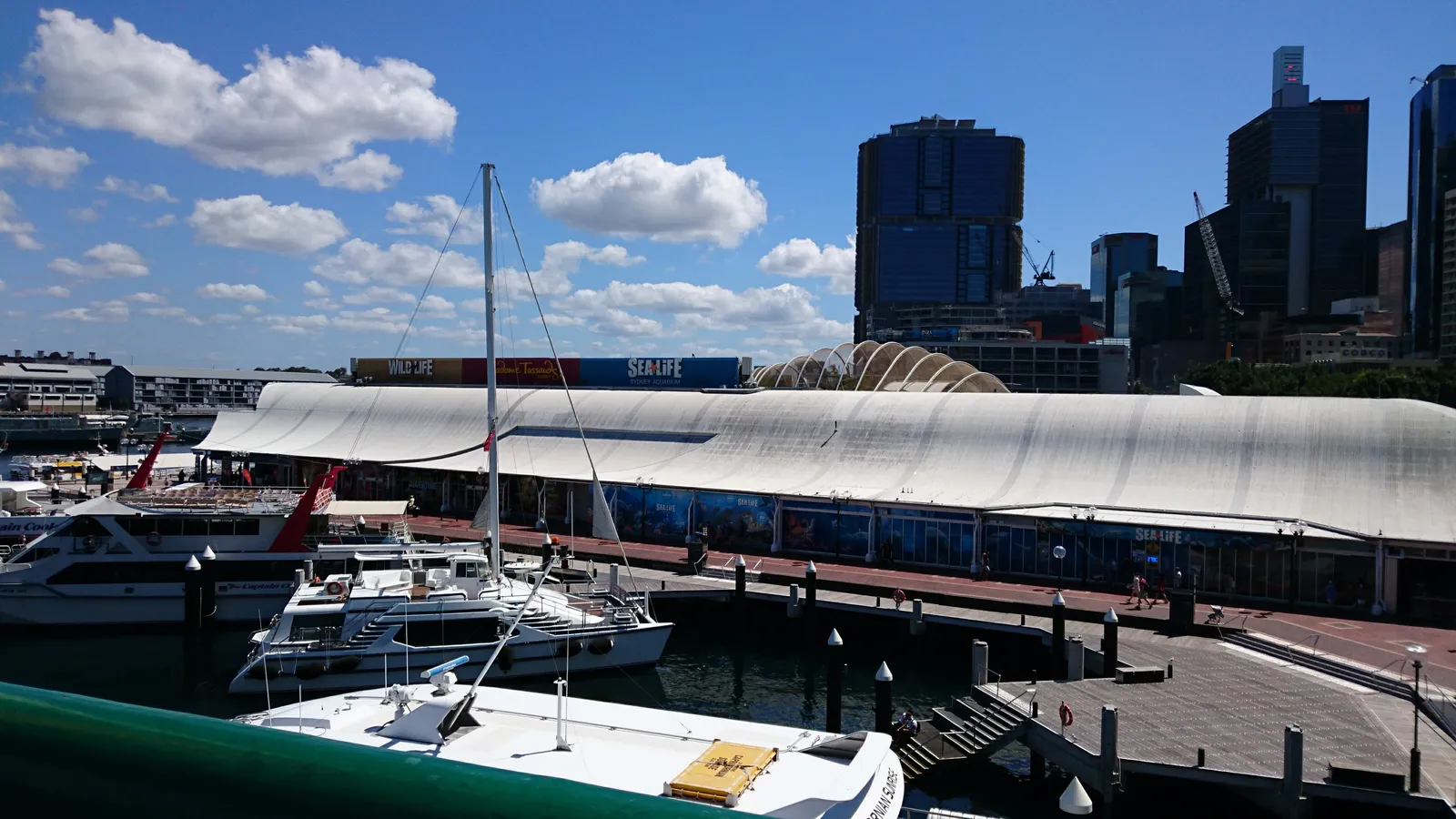
The doors open at 10am on weekdays and 9.30am at weekends, with last entry at 4pm, an hour before closing. Aquarium tickets bought in advance through a tours and activities platform come with a set entry time, which saves queueing for a ticket at the door on weekends and in school holidays.
A destroyer and a submarine at the Australian National Maritime Museum
The Australian National Maritime Museum stands on Pyrmont Bay, on the western shore of Darling Harbour, its white roof curving along the Pyrmont shore, with a fleet of real ships moored at the wharves outside. The two most people come for are HMAS Vampire, a Daring-class destroyer and the last big-gun warship left in Australia, and HMAS Onslow, a Cold War Oberon-class submarine you squeeze through from bow to stern.
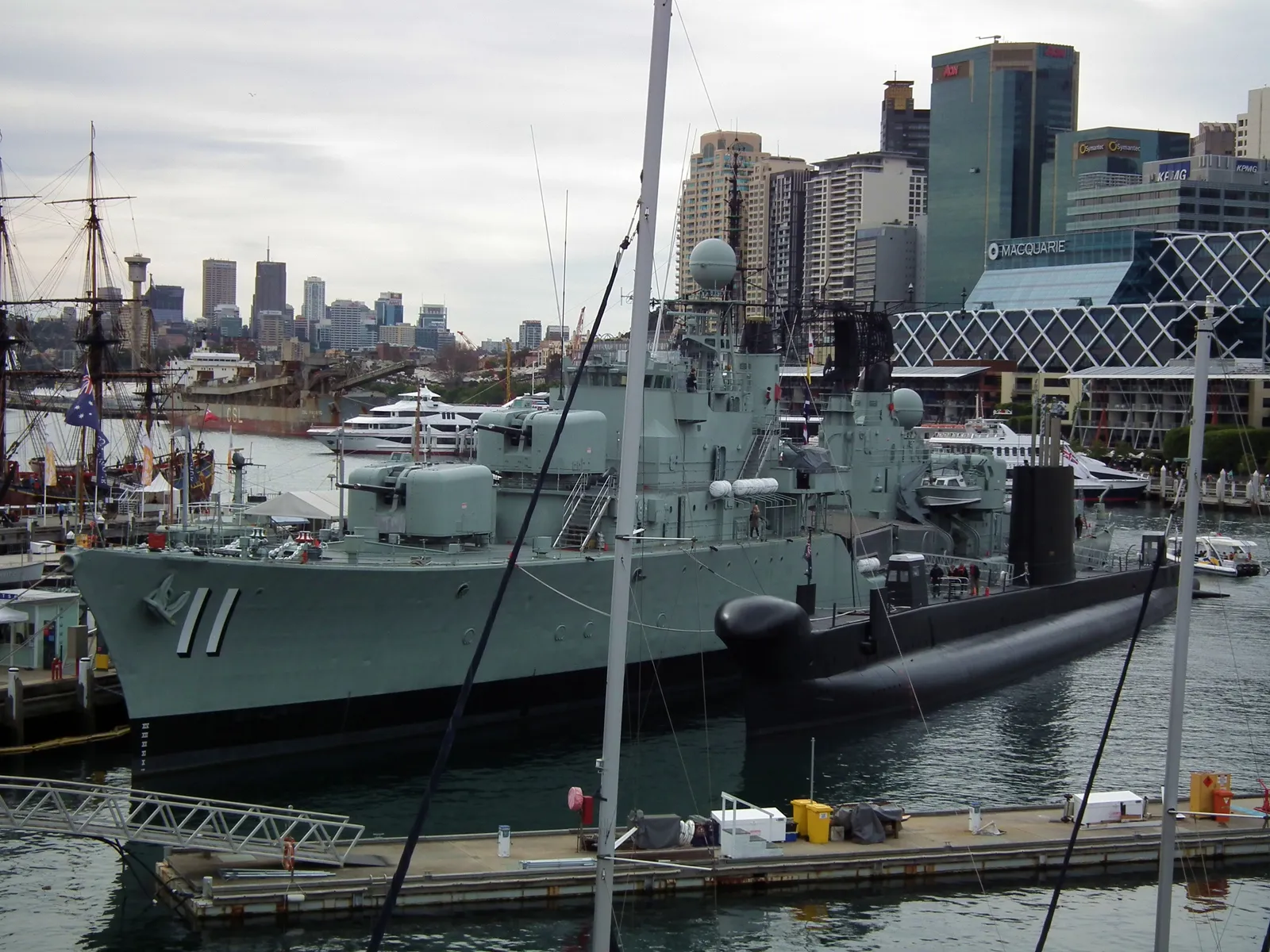
The indoor galleries are free to walk into; boarding the vessels takes a paid ticket, and a museum entry ticket can be booked ahead. The museum is open 10am to 4pm, until 5pm in NSW school holidays, and the last boarding of the ships is at 3.10pm, so arrive with at least an hour in hand. Individual ships close for maintenance from time to time, and the museum lists those closures on its own site.
Pyrmont Bridge, the 1902 swing bridge across Cockle Bay
Pyrmont Bridge opened on 28 June 1902 to carry traffic from the city to the wharves at Pyrmont, and its designer, Percy Allan, gave it a centre span that swings sideways on a pivot, driven by electric motors that were among the first used on a bridge of this kind and still turn it today. Cars were taken off it in 1981, and since the Darling Harbour redevelopment of 1988 it has been a walking and cycling bridge, with the span still opening for any vessel taller than 7 metres.
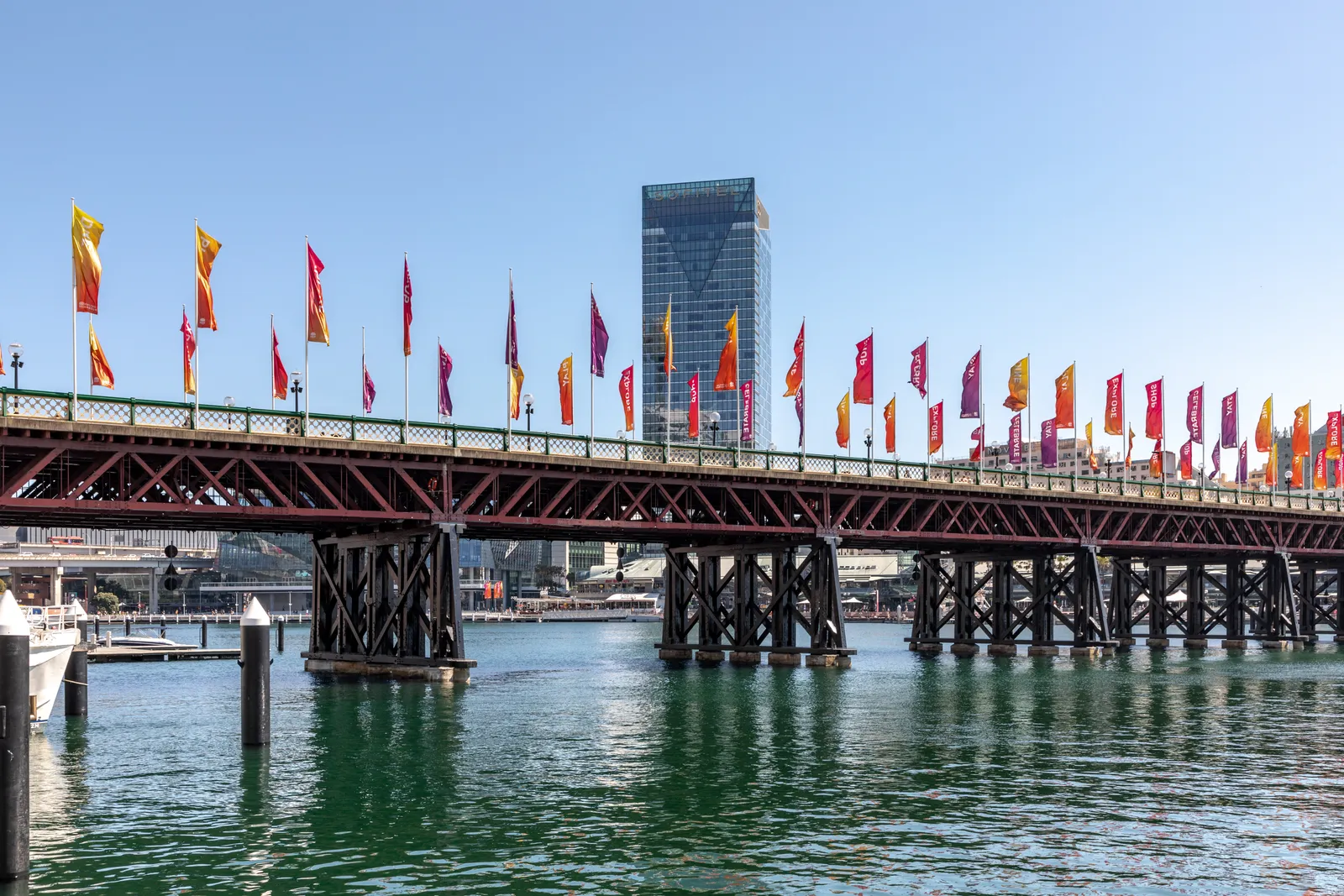
The bridge, the promenades either side of Cockle Bay and the harbour path north all run in full sun with next to no shade, which on a January afternoon is a long way to pull a bag.
Barangaroo Reserve’s headland of cut sandstone
Barangaroo Reserve takes up the northern tip of the western harbour front, where Hickson Road meets the water, a few minutes’ walk from Wynyard station. It was once a flat concrete container wharf; the park that opened on 22 August 2015 rebuilt the headland to the shape of the shoreline before 1836, when the first sea walls went in, using sandstone excavated and cut on the site itself. About 6,500 of those blocks were laid along the water’s edge in steps you can sit on, and the six hectares above are planted with native trees and shrubs.
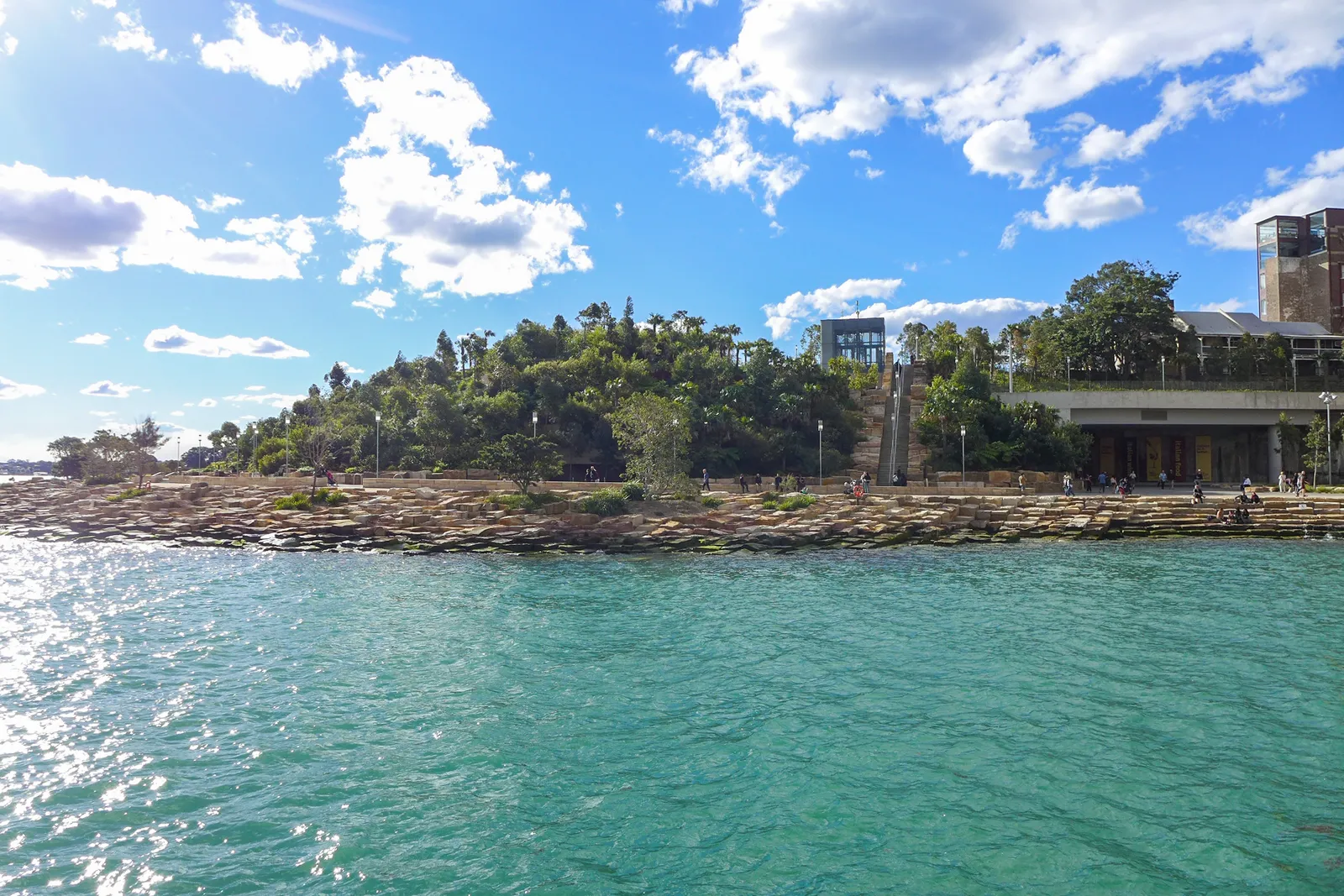
The reserve costs nothing to walk into. The top of the headland looks west across the water to Balmain and north to the Harbour Bridge, which is the reason to walk the extra 20 minutes or so up the foreshore from Pyrmont Bridge.
Town Hall and Wynyard stations for the airport train
Both Town Hall and Wynyard, the two city stations closest to Darling Harbour, are on the T8 Airport & South Line, whose trains run round the City Circle loop and then out to Sydney Kingsford Smith Airport (SYD). From Town Hall it is about 15 to 20 minutes to the International Airport station under Terminal 1, a little longer from Wynyard; from Central, the last city stop, it is about 13, with trains roughly every 10 minutes. The airport stations add a station access fee close to A$19 for an adult on top of the train fare, and Sydney Airport suggests being at the terminal three hours before an international departure.
Whatever you are carrying crosses Pyrmont Bridge in the sun, waits at the barrier if the span swings, and climbs the sandstone steps at Barangaroo, so the bag is better left in the city until the train.
Frequently asked questions
What should I do during a layover near Darling Harbour in Sydney?
Pick one of the two paid stops on the Cockle Bay waterfront, SEA LIFE Sydney Aquarium or the warships at the Australian National Maritime Museum, and book it ahead; then cross Pyrmont Bridge, the 1902 swing bridge between the two, and finish on the sandstone headland of Barangaroo Reserve at the northern end of the harbour front. Both walks are free. Three hours covers one paid stop and both walks; five lets you do both.
Is Darling Harbour a good layover stop in summer heat?
In the morning or late afternoon, yes; around midday, spend the hot hours indoors. The promenades round Cockle Bay, Pyrmont Bridge and the path up to Barangaroo Reserve are open to the sun almost the whole way, while the aquarium and the museum galleries are air-conditioned. The aquarium opens at 10am on weekdays and 9.30am at weekends, so an early start there and a late walk to the headland keeps the exposed stretches out of the middle of the day.
Does Pyrmont Bridge still swing open?
Yes. The swing span still turns on the original electric motors it was built with in 1902, opening to 83 degrees in about 60 seconds, and it has to open for any vessel taller than 7 metres. Pedestrians are held at the barriers while it is open, so a crossing can occasionally take a few minutes longer than expected.
Can I walk from Darling Harbour to the Opera House?
Yes, though it is a separate walk in itself. From Barangaroo Reserve the harbour path continues round Dawes Point, under the Harbour Bridge and into The Rocks, and from there the foreshore walk round Circular Quay to the Opera House is the main Sydney itinerary. Allow about half an hour on foot from the headland to Circular Quay, more if you stop.