Cancún Layover: Maya Ruins and Beach From CUN
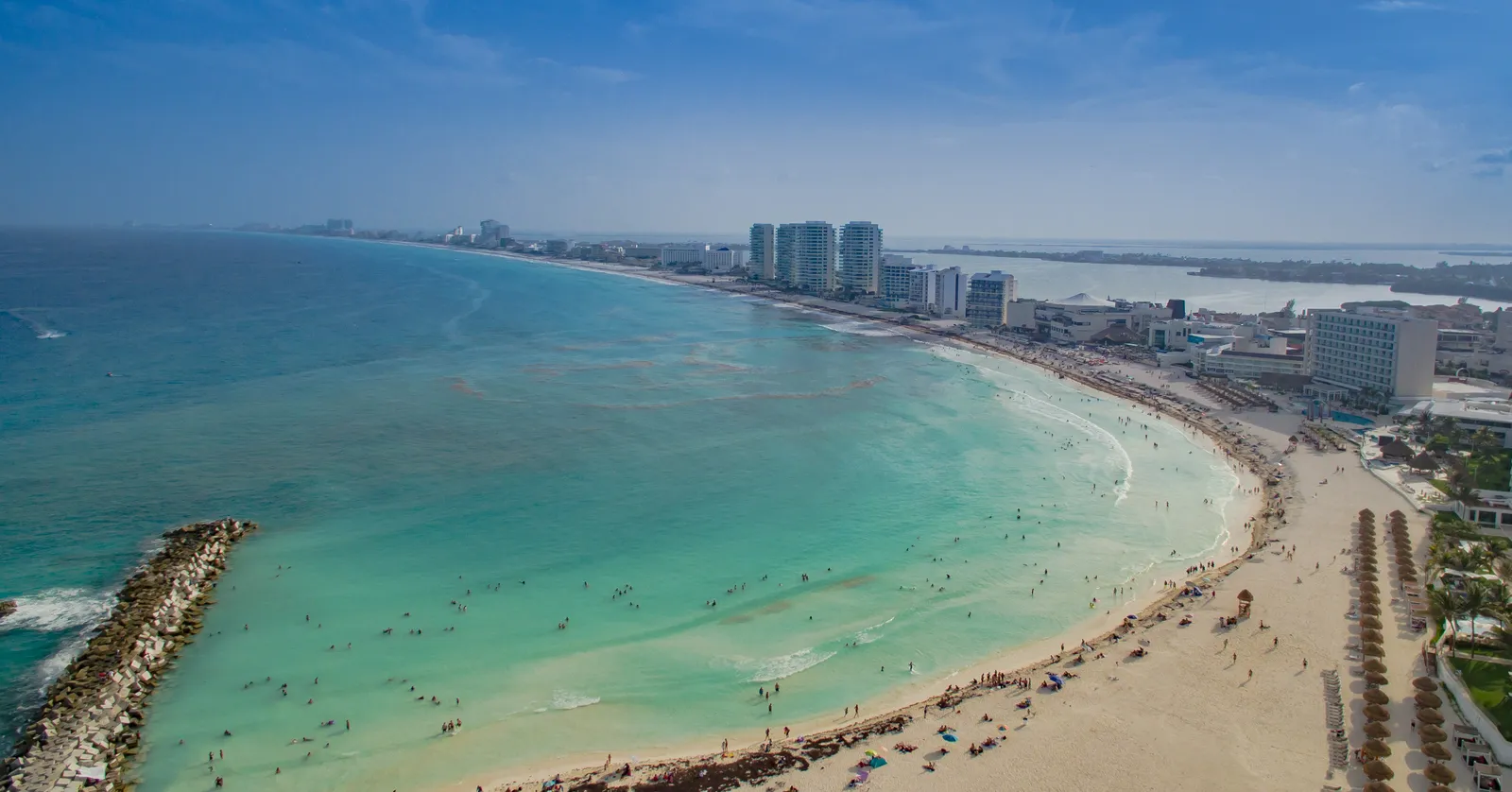
Cancún’s largest free public beach sits across the road from two Maya ruin sites at the south end of the Hotel Zone, all of it within a kilometre and a half and all of it on the same 12-peso city bus that runs back downtown.
San Miguelito’s ruins stand behind Cancún’s Maya museum
The Museo Maya de Cancún occupies kilometre 16.5 of Boulevard Kukulcán, the single road running the length of the Hotel Zone, and its collection is Maya specifically, drawn from across the Yucatán peninsula, rather than the nationwide sweep of the big anthropology museum in Mexico City. It opened in November 2012 and holds over 350 objects. Alberto García Lascurain designed the building to stand on columns clear of the ground, on the assumption that a hurricane will eventually put water through the site, which is why the galleries start a flight up.
One ticket covers the museum and the archaeological site sharing its grounds. San Miguelito is a wooded plot behind the building on the lagoon side, crossed by paths between forty-odd low stone structures, and its tallest is a stepped pyramid about eight metres high with a broad staircase up the front.
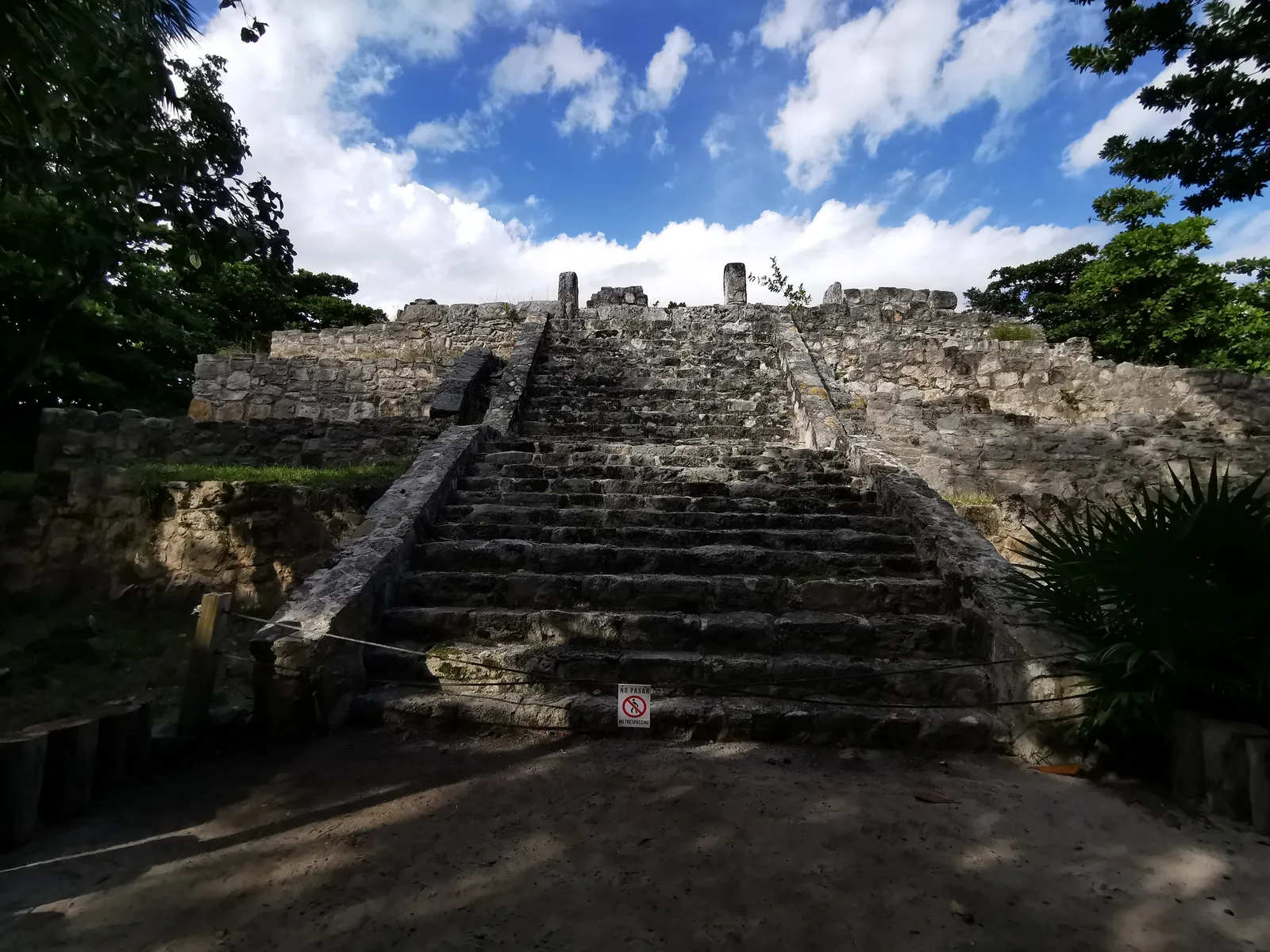
Entry is 210 pesos for foreign visitors and 105 for Mexican nationals, over-sixties free, and the doors are open Tuesday to Sunday from 9am to 6pm. Last entry to the ruins is 4:30pm and to the galleries 5:30pm, so this is a stop for the front half of an afternoon rather than the end of one. Mondays it is shut entirely. Skip-the-line tickets are sold ahead through a tours and activities platform if you would rather not queue at the counter.
The El Rey ruins and the iguanas living in them
Forty-seven structures make up the El Rey archaeological zone, on a low strip of ground at kilometre 17.5 of Boulevard Kukulcán between the road and the Nichupté lagoon. Most of what survives is platforms and foundation walls at knee height, but a small temple with two doorways still stands, and a line of stubby columns marks out a hall.
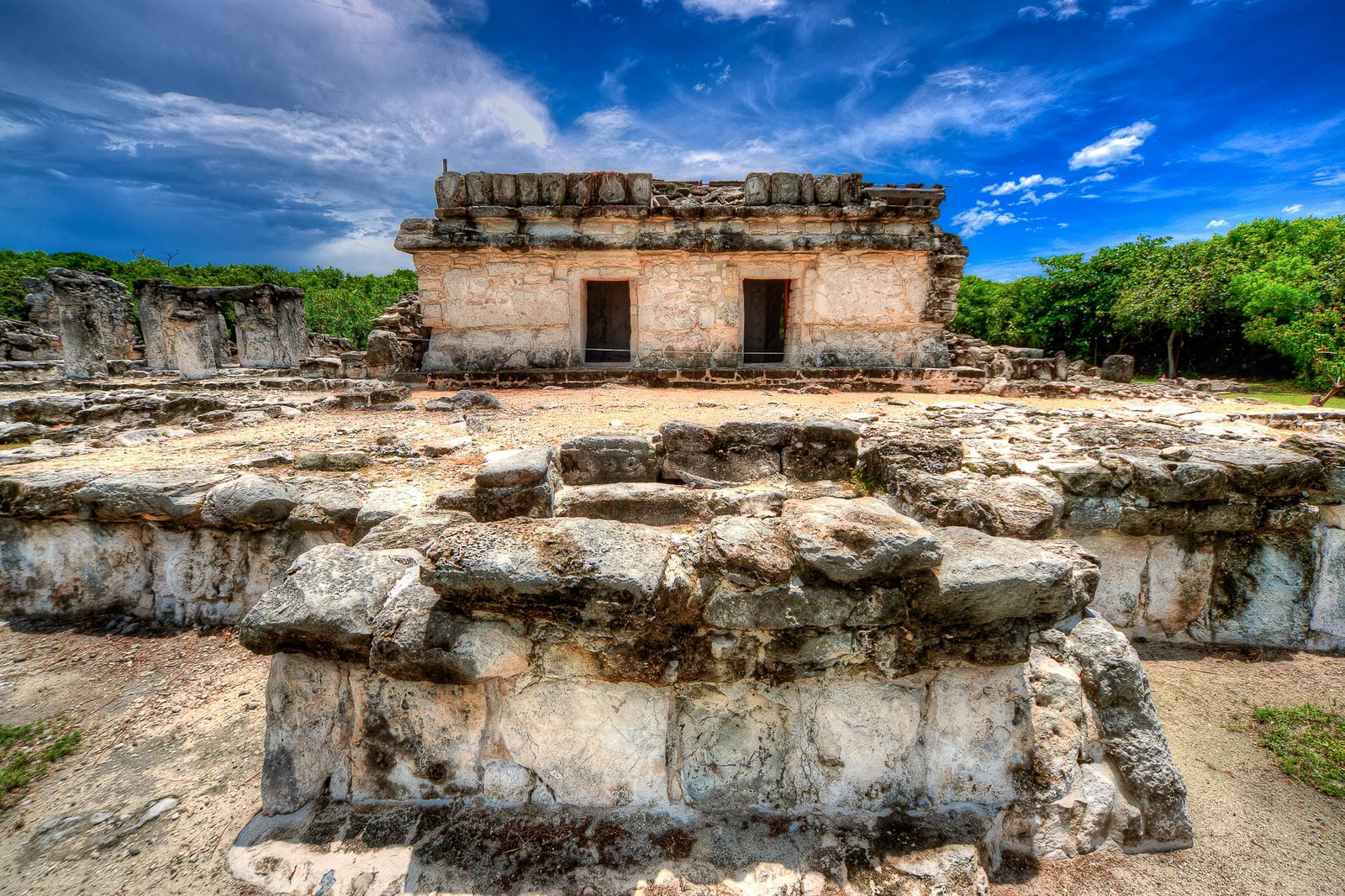
The name is Spanish for “the king”, after a sculpture found on the site that resembled one; its head went into the city’s museum collection. The other residents are iguanas, dozens of them, lying on the warm limestone and declining to move for anyone. Admission is under 150 pesos and has to be paid in pesos, the ticket window takes no dollars, and the gate opens every day from 8am to 5pm with last entry half an hour before closing. There is no shade to speak of once you are past the entrance.
Thatched umbrellas and open sand at Playa Delfines
Playa Delfines runs along kilometres 17.5 to 18 of the boulevard with no hotel in front of it. The sand is public, the rows of thatched palapa umbrellas cost nothing to sit under, and there are showers, toilets and free parking at the back. The ground behind rises to a lookout the city calls El Mirador, where block letters spelling out the city’s name face the water; photographing them is free and the spot is open at any hour.
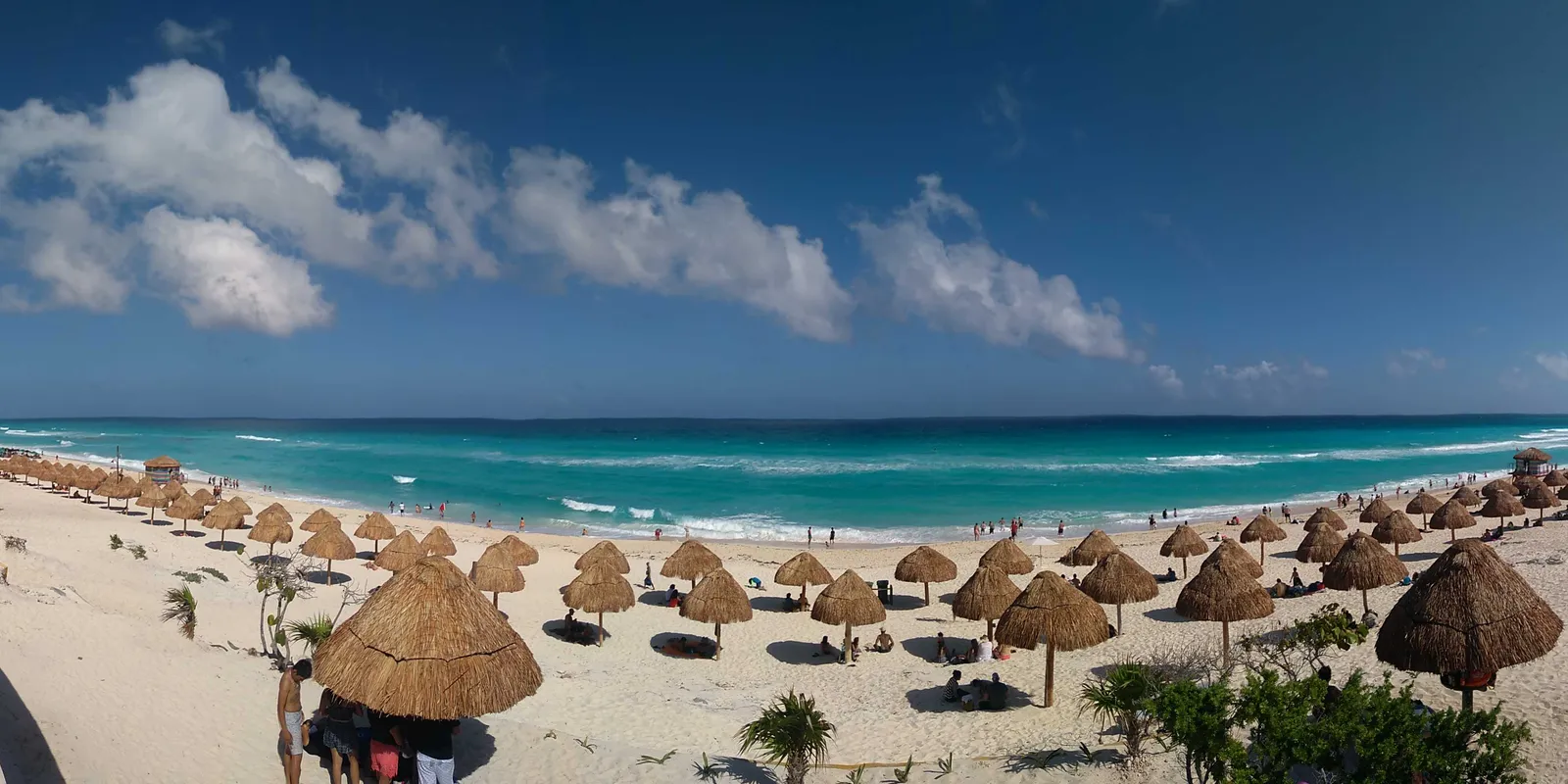
What decides whether the water looks like the postcard is the season. Sargassum, a brown floating seaweed, reaches this coast most years between about May and October and lands heaviest through June, July and August; crews rake the main beaches but it can leave the shallows murky for days. From November to March it is largely absent. The buses along this boulevard run every few minutes and take 30 to 40 minutes to reach downtown from here; you pay the driver in coins as you board and they fill up between stops, so a suitcase means standing with it in the aisle the whole way.
Hammocks and embroidered cloth at Mercado 28
Mercado 28 is an open-air market laid out around Plaza San Miguel in downtown Cancún, a few blocks west of Avenida Tulum, and it has been trading since the 1980s. It began as a food market and turned toward crafts after the mid-1990s, so the tight lanes in the middle are now hammocks strung across the stall openings, embroidered cotton, leather and woven discs, with Yucatecan food counters around the outside. It opens daily, 9am to 7pm, and about three thousand people come through on an average day.
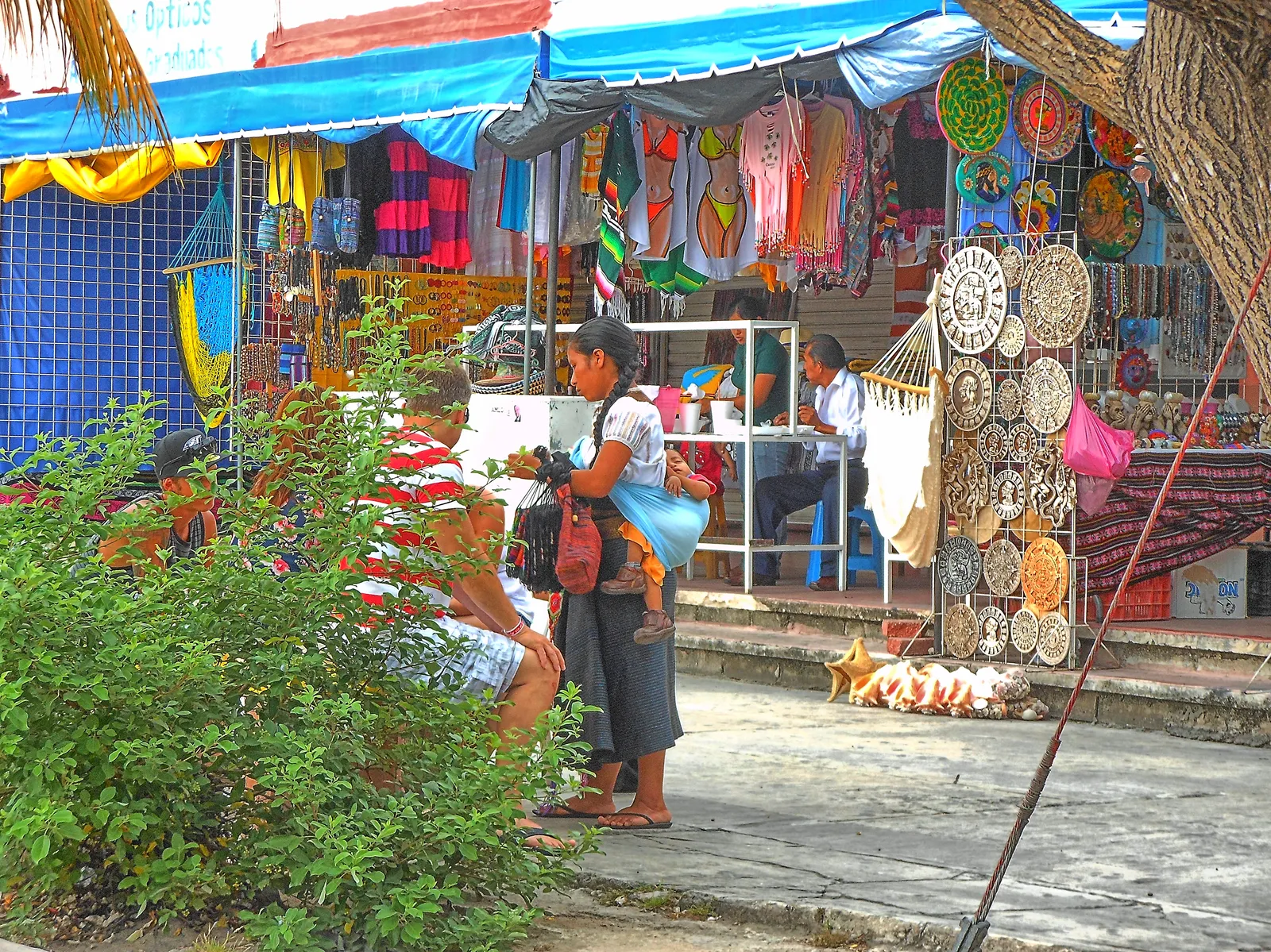
Mercado 23, a short walk north, is the one people who live here use. It is smaller and older, mostly groceries, butchers, household goods and a handful of food counters with almost nothing aimed at visitors, and it winds down in the afternoon rather than running into the evening.
If you have more than six hours, the thing worth staying downtown for is what happens after dark. Food carts start setting up in Parque de las Palapas, a square a block off Avenida Tulum, at around six or seven, and the Yucatán speciality to look for is the marquesita: crepe batter cooked crisp on a hot plate and rolled around shredded Edam cheese, or Nutella, or both at once. An amphitheatre on one side of the square runs live music most nights, and the crowd around it is local rather than visiting.
The railway reaches the airport but not the city
Cancún’s one train station opened in December 2023 on the far side of Federal Highway 180 from the airport terminals, and it is the largest on the Tren Maya network, but no line runs into the city: getting between downtown and Cancún International Airport (CUN) is a road trip either way. ADO coaches are the public version of it, and the ones from town leave the terminal at the corner of Avenida Tulum and Avenida Uxmal, a short walk from Parque de las Palapas. The fare is around 140 pesos, departures come roughly every half hour, and the ride is about thirty minutes. Budget closer to an hour door to door: you buy at the counter first, then wait for the next departure, and neither step is quick at a busy time.
A second ADO route runs direct between the airport and Punta Cancún at kilometre 9 of the Hotel Zone, about 45 minutes for around 170 pesos, which is the better option if the day ends at the beach rather than in town. Neither route stops at hotels; both go terminal to terminal. Whichever one you take, the bag is waiting where you left it rather than having spent the afternoon on the sand with you.
Frequently asked questions
What should I do during a layover in Cancún?
Take a city bus to the south end of the Hotel Zone, where the Museo Maya de Cancún, the San Miguelito ruins behind it and the El Rey archaeological zone all sit within about a kilometre and a half of each other, and Playa Delfines is directly across the boulevard with free public sand and a lookout above it. Downtown fills the rest: the craft lanes at Mercado 28 in the afternoon, and food carts in Parque de las Palapas once it gets dark. Six to eight hours covers all of it without rushing. With less, drop the museum first, since it is the one stop that charges 210 pesos and keeps fixed hours, and it is shut on Mondays.
When is seaweed worst on Cancún's beaches?
Sargassum, the brown floating seaweed, reaches this coast most years from around May through October, and it is heaviest in June, July and August. Crews clear the main public beaches, Playa Delfines included, but the water can stay murky and the smell noticeable for a few days after a big landing. November to March is when the water is clearest.
Can I pay for Cancún's Hotel Zone bus in US dollars?
No. The flat fare along the Hotel Zone is 12 pesos, handed to the driver in cash as you board, and routes that stay inside the city proper are 10. Drivers do not take US coins and will not break a 200-peso note, so carry small change. The ticket window at the El Rey ruins is the same: pesos only.
Which Cancún sights are closed on Mondays?
The Museo Maya de Cancún and the San Miguelito site on the same grounds both shut on Mondays, opening Tuesday to Sunday from 9am to 6pm, with last entry to the ruins at 4:30pm. The El Rey archaeological zone across the boulevard opens every day, 8am to 5pm, and Mercado 28 opens daily too, 9am to 7pm, so a Monday still leaves most of the itinerary intact.