Cancún ADO Terminal Layover: Kabah Park
Part of the full Cancún Layover: Maya Ruins and Beach From CUN
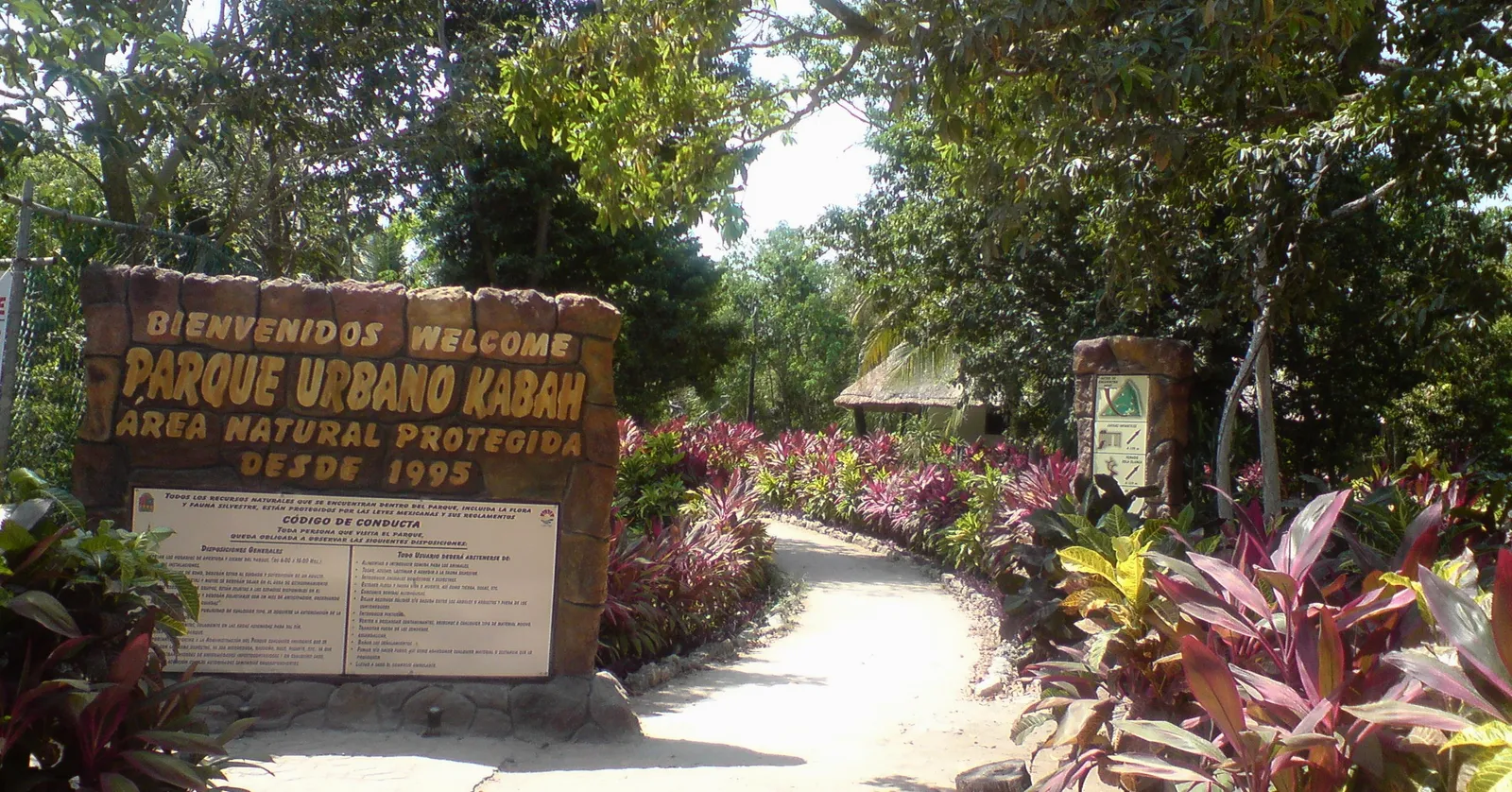
Cancún’s downtown coach terminal stands at the corner of Avenida Tulum and Avenida Uxmal, within reach of two things the beach strip has none of: 41 hectares of protected jungle at Parque Urbano Kabah, free and open from six in the morning, and four blocks of restaurants on Avenida Yaxchilán where the city actually eats.
Iguanas and coatis on the loop through Parque Urbano Kabah
Forty-one hectares of forest were fenced off here in 1995 and left alone, which is why there is a patch of genuine Yucatán jungle sitting two kilometres from the middle of a resort city. The entrance is at Avenida Kabah and Avenida Nichupté, there is no ticket office, and the gates run 6am to 6pm every day.
The loop is around two kilometres and shaded for nearly all of it, which is the difference between a pleasant hour and a miserable one in this climate. Iguanas sit out on the path edges, coatis cross it, and the birds are loud enough that you notice them before you see them. Further in, the park keeps a reconstructed chiclero camp, the kind of gum-tappers’ bush camp this coast ran on before tourism, and a traditional Maya house, with a small museum alongside them on how Cancún came to exist at all. An hour covers the loop at a walking pace.
Four blocks of restaurants on Avenida Yaxchilán
Between Avenida Uxmal and Avenida Sunyaxchén, Yaxchilán runs four blocks of Mexican restaurants, bars and live music, about five minutes on foot from Avenida Tulum. Mariachi bands work this stretch in the evening, moving between tables and occasionally within earshot of each other, and the tables fill from dinner onwards rather than at lunch.
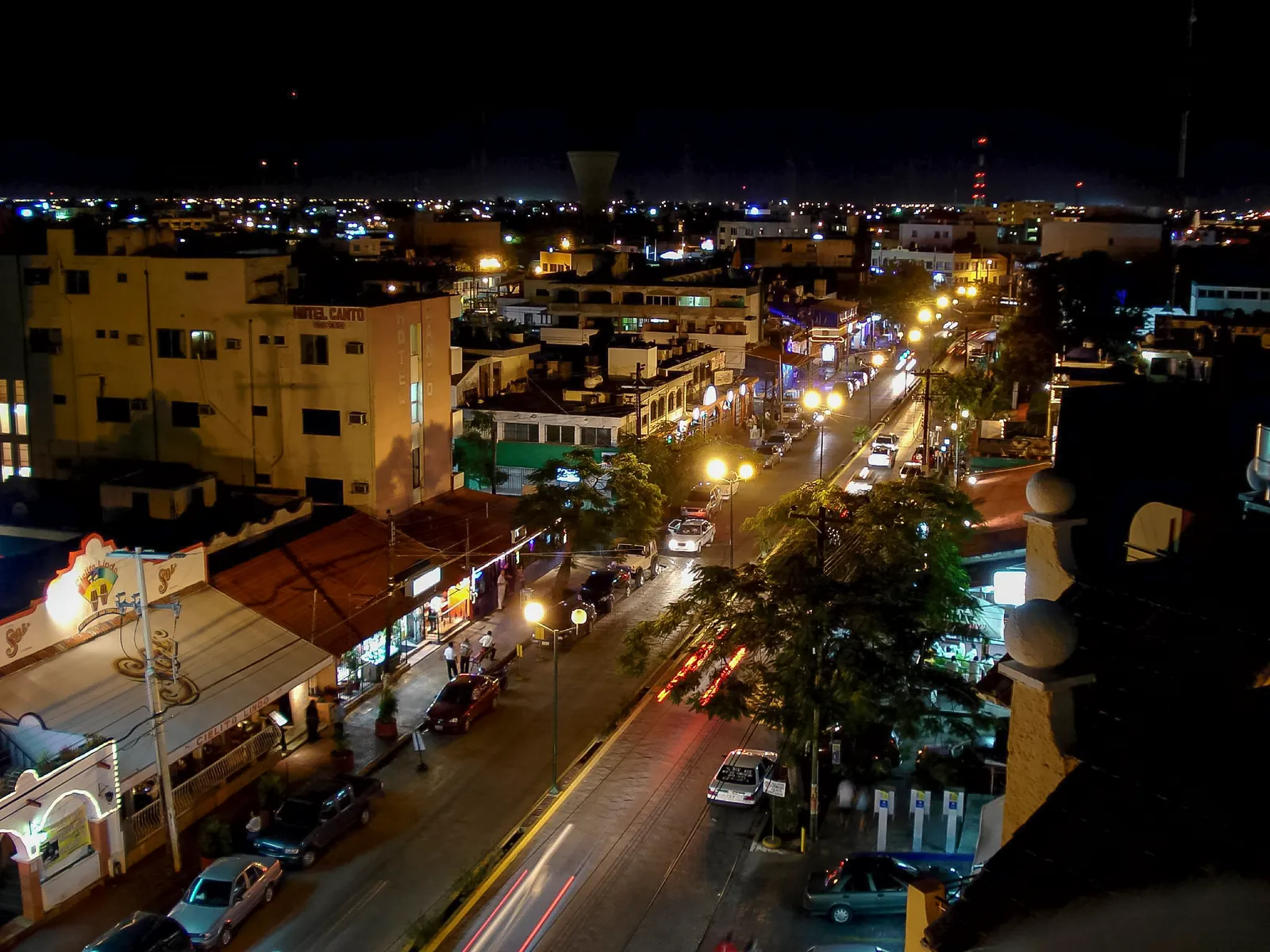
Yaxchilán, Uxmal, Tulum, Kabah and Nichupté are all named after Maya cities and lagoons, which is the one design decision from the 1970s master plan that still shows up on every street sign downtown. If there is more time than an afternoon and you would rather have the ruins and the sand at the far end of the Hotel Zone, that is a different trip on a different bus, and the full Cancún run covers it.
The terminal’s own bag counter is not an official facility, and travellers’ reports of its opening hours and prices disagree from one year to the next, so it is not something to plan an afternoon around.
Downtown addresses are superblock numbers, not street names
Cancún was drawn up from nothing in the 1970s, and the planners laid the city out as numbered supermanzanas, superblocks, each one a ring road enclosing a block of housing, shops and a park. Addresses read SM23, MZ56 rather than a number on a named street, the coach terminal included. It sounds confusing and is not: find the superblock number and everything inside it is signposted and walkable, which is why the downtown grid is easier on foot than a first look at a map suggests.
Airport coaches leave the downtown terminal about every half hour
Around 140 pesos buys the run out to Cancún International Airport (CUN), which takes about half an hour on the road. Budget closer to an hour from the moment you join the ticket queue, since departures come roughly every thirty minutes and you may have just missed one. Buy the ticket when you arrive rather than when you are ready to leave, and the park and the restaurants both fit comfortably inside the gap.
Frequently asked questions
What should I do during a layover near Terminal de Autobuses ADO Cancún in Cancún?
Three to five free hours covers both things worth doing on this side of the city. Parque Urbano Kabah is 41 hectares of protected jungle with a shaded two-kilometre loop, iguanas and coatis on the path, and a reconstructed chiclero camp and Maya house among the trees; it costs nothing and runs 6am to 6pm. Then Avenida Yaxchilán, four blocks of restaurants between Avenida Uxmal and Avenida Sunyaxchén, which is where downtown eats and where the mariachi bands work. Neither costs anything to reach or enter, so the only spending is on dinner.
Is Parque Urbano Kabah free to enter?
Yes, and it has been a protected natural area since 1995. The gates are open 6am to 6pm, Monday to Sunday, and there is no ticket office. The loop inside is a walking and running trail through the trees rather than a manicured park, so it is shaded almost the whole way, which matters more here than it sounds.
How far is Parque Urbano Kabah from Cancún's downtown bus terminal?
About two kilometres, with the park entrance at Avenida Kabah and Avenida Nichupté. That is roughly a 25-minute walk from Avenida Tulum, or a few minutes on one of the 10-peso city buses that run the downtown grid. Allow an hour or so for the loop itself once you are there.
Why do Cancún addresses use SM and MZ numbers?
Downtown Cancún was planned from nothing in the 1970s on a system of numbered superblocks rather than a conventional street grid, so an address reads as a supermanzana (SM) and a manzana (MZ) instead of a house number on a named street. The coach terminal's own address is in SM23. Once you know the superblock, the rest is signposted.