Punta Cancún Layover: Lighthouse and Beaches
Part of the full Cancún Layover: Maya Ruins and Beach From CUN
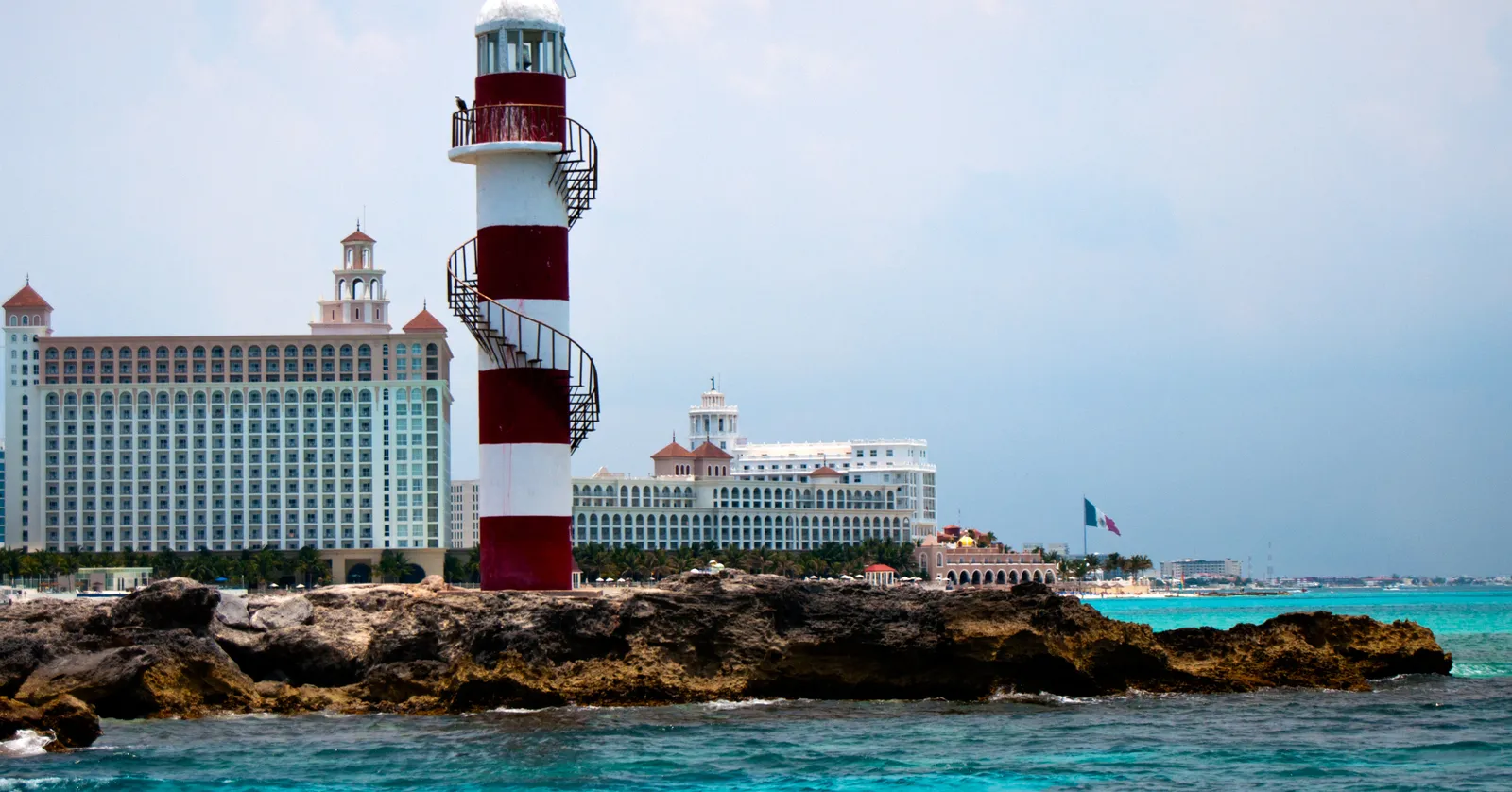
Punta Cancún is the elbow in Cancún’s Hotel Zone, with free, flat, sheltered water at Playa Caracol on the bay side of the turn, open-Caribbean swell at Playa Gaviota Azul on the other, and a striped 1970 lighthouse out on the rocks between them.
Calm water on one side of Punta Cancún, Caribbean swell on the other
Bahía de Mujeres is what the first nine kilometres of the Hotel Zone face, with Isla Mujeres and a line of reef sitting across the mouth of it, and the two together take most of the energy out of the swell before it reaches the sand. Past Punta Cancún the strip swings east and points straight into open water with nothing in front of it. The result is two different seas a few hundred metres apart: Playa Caracol, Playa Langosta and Playa Tortugas flat enough to stand in, Playa Gaviota Azul and everything south of it breaking properly.
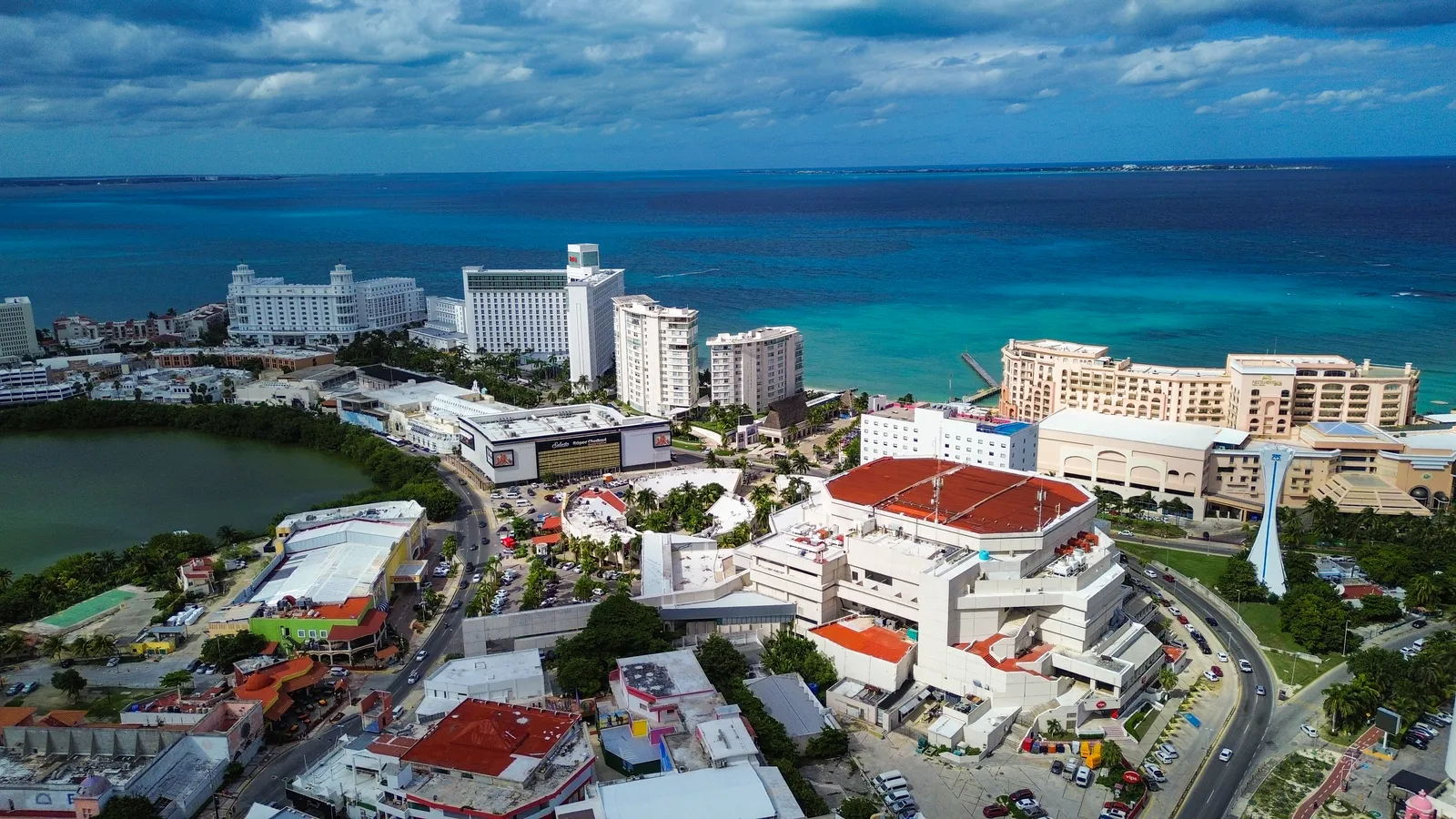
Playa Caracol at kilometre 8.5 is the one to use for a few hours. It is short, 150 to 200 metres of sand, free to walk onto like every beach in Mexico, and it has public showers and toilets, with a shopping centre directly across the boulevard if the afternoon needs air conditioning. Because it is smaller and less photographed than the beaches at the far end of the strip, it tends to be the emptier of the two sides.
The striped lighthouse on the rocks past Playa Caracol
Nineteen seventy is when the red and white tower at the tip of the point went up, and the spiral staircase wrapped around its outside stops well short of the ground, so nobody is going up it. What draws people is the shelf of dark rock it stands on, a break in an otherwise unbroken run of sand, and the view back down the coast from it. Cancún residents turn up here at the end of the day for the sunset rather than for the lighthouse.
Getting to it means twenty minutes along the shore from Playa Caracol, with the last stretch over uneven rock rather than sand, so a wheeled bag has nowhere useful to go on this particular walk.
The direct airport coach stops at kilometre 9
Punta Cancún is the one Hotel Zone stop on the direct coach route to and from Cancún International Airport (CUN), which takes about 45 minutes and costs in the region of 170 pesos. That is the fast version. The slower and much cheaper one is a 12-peso city bus down the boulevard to the downtown terminal, then the 140-peso airport coach from there, which adds a change and the better part of an hour. If the return flight is tight, the direct route is worth the extra fare, and it is the reason a few hours at this particular point works when the same few hours at the far end of the strip would not. The city-wide Cancún itinerary is the one to read instead if the day is long enough to take in the Maya sites and downtown too.
Frequently asked questions
What should I do during a layover near Punta Cancún in Cancún?
Three to five free hours is about right for the point itself. Playa Caracol at kilometre 8.5 is free, short, and has public showers and toilets, with water kept flat by Isla Mujeres and the reef sitting offshore. Past the end of the sand, a rocky shelf carries the red and white lighthouse that has stood here since 1970, and locals come out to it for sunset. Round the turn, Playa Gaviota Azul gets the open-Caribbean swell that the bay side never sees, so the two beaches are worth a look each rather than picking one.
Why is the water calm at some Cancún beaches and rough at others?
The Hotel Zone changes direction at Punta Cancún. Everything before the turn faces north across Bahía de Mujeres, with Isla Mujeres and the reef offshore breaking most of the swell before it arrives, which is why Playa Caracol, Playa Langosta and Playa Tortugas are the flat ones. Everything past the turn faces east into open water, so Playa Gaviota Azul, Playa Marlín and Playa Delfines get real waves. A few hundred metres of coastline separates the two.
Can you climb the Punta Cancún lighthouse?
No. The spiral staircase wrapped around the outside of the tower stops well short of the ground, so there is no way up it and no visitor access. It is a thing to walk out to and look at, not to go inside, and the reason people make the trip is the rocks it stands on and the view back along the coast rather than the tower itself.
Is there anything to do near Punta Cancún out of the sun?
The Interactive Aquarium sits about three and a half kilometres further down the boulevard at the La Isla centre, which is a short ride on a city bus and entirely indoors. Admission tickets are sold ahead through a tours and activities platform. It is the obvious fallback on an afternoon when the heat or the weather makes two beaches and a rock walk sound like a bad plan.