Playa Delfines Layover: Cancún's Free Beach
Part of the full Cancún Layover: Maya Ruins and Beach From CUN
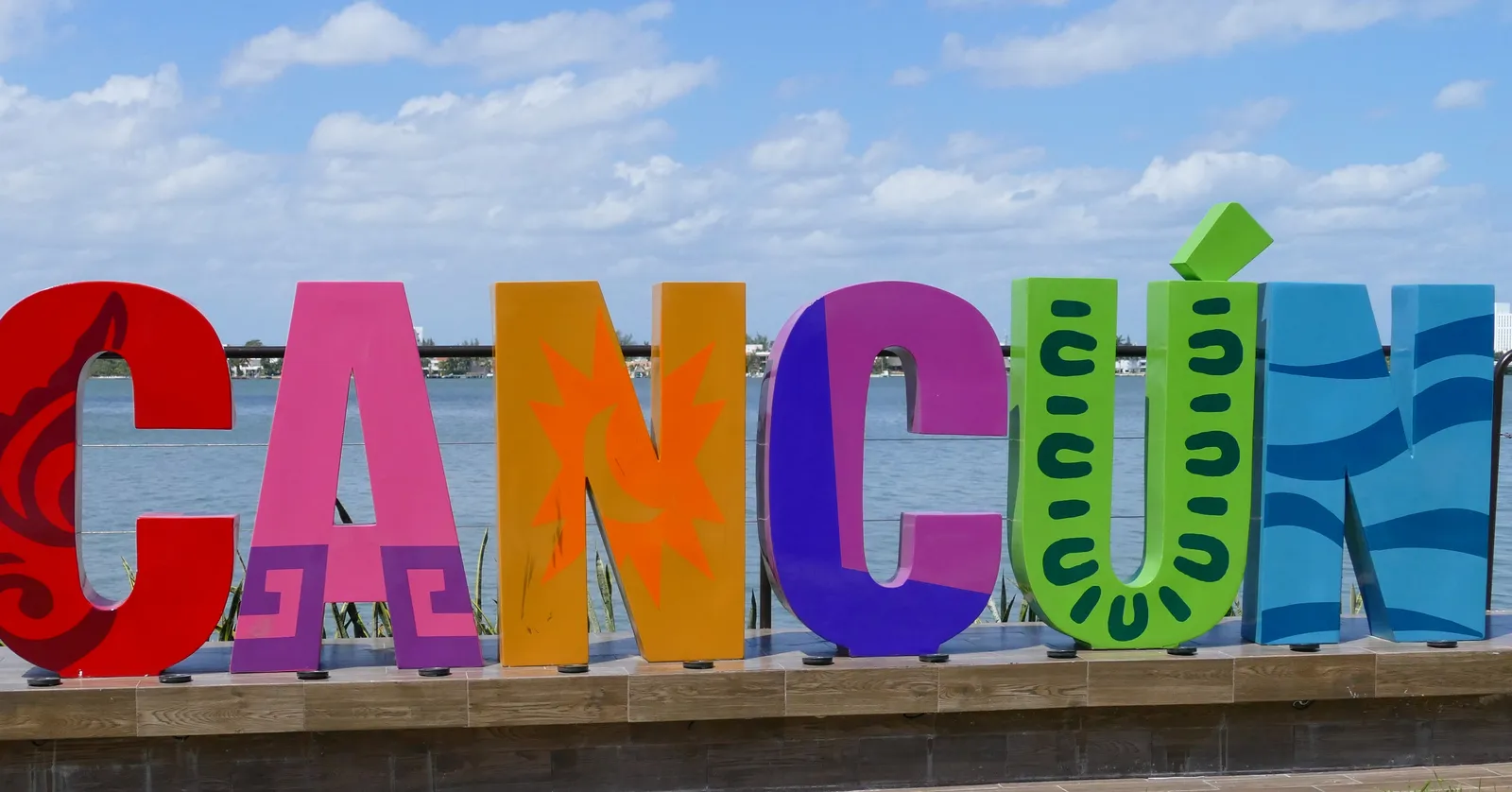
Playa Delfines, at kilometre 18 of Cancún’s Hotel Zone, is the widest free beach on the strip and the roughest, with a lifeguard tower flying the day’s warning flag and a rise behind the sand carrying the painted block letters that spell the city’s name.
Nothing offshore breaks the swell at Playa Delfines
Open Caribbean is what this stretch of coast faces, with no island and no reef between the sand and deep water, which is why the waves here arrive with their full size intact while the beaches on the other side of Punta Cancún stay flat. It makes Playa Delfines the beach in Cancún that people surf and bodyboard, and it makes it a poor one for wading in without paying attention. Larger sets arrive without warning on days that look calm, and the currents move: a sandbar that was safe in the morning can be running a rip by the afternoon.
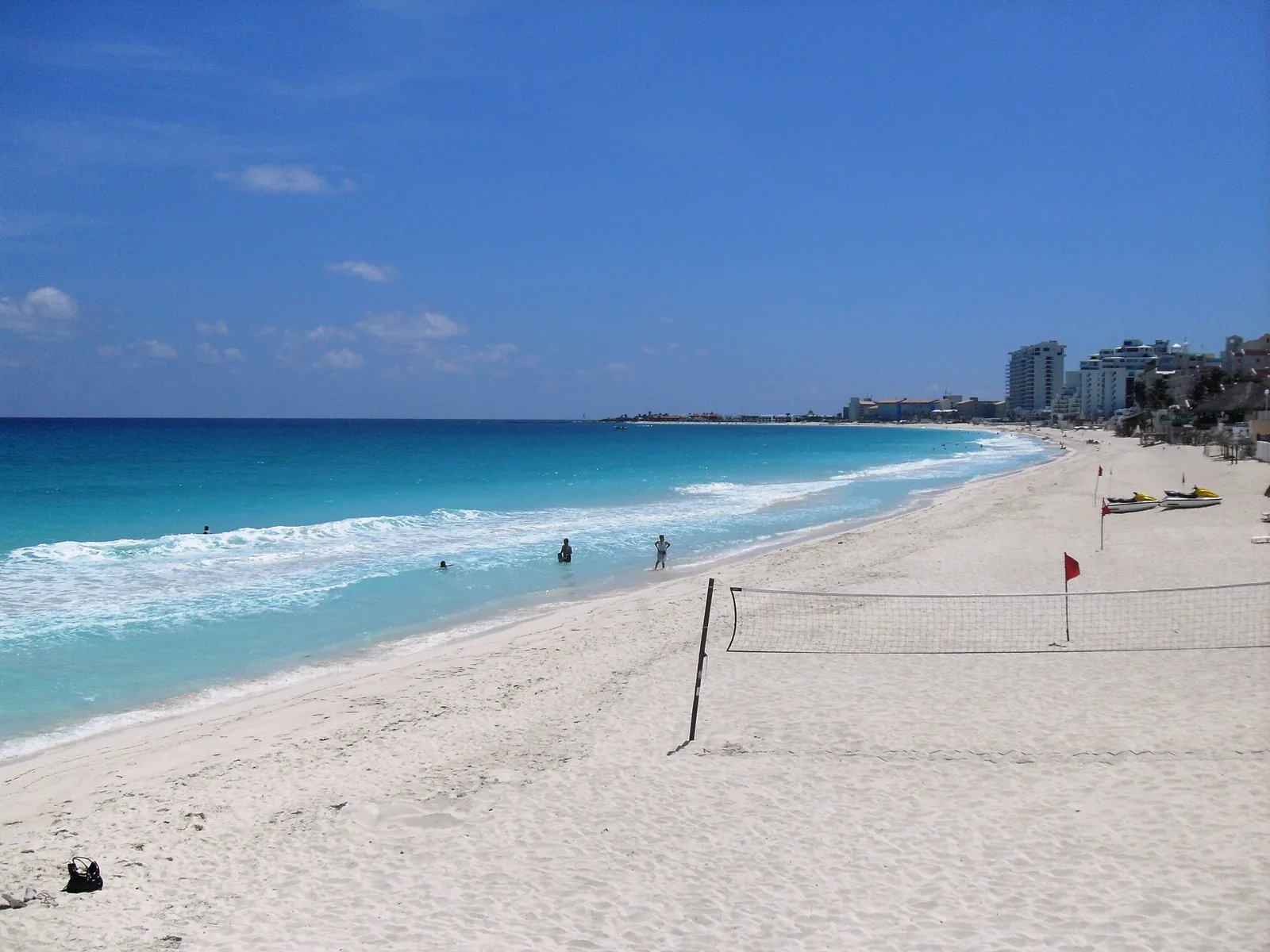
The sand itself is the widest on the strip, free like every beach in Mexico, and busy without being packed, because there is no hotel frontage feeding people onto it.
Green, yellow and red flags under the lifeguard tower
A permanently staffed tower stands on this beach and the flag flying from it is changed more than once on an average day. Green means calm water and no meaningful current. Yellow means waves are running and only confident swimmers should go in, carefully. Red means heavy surf and strong current, and under a red flag the rule is knee depth and no further, not a judgement call about how strong a swimmer you are. Reading the flag on arrival is the whole safety procedure here, and it is worth doing again if you have been on the sand a couple of hours.
The painted block letters at El Mirador
Behind the sand the ground rises to a platform the city calls El Mirador, and the letters standing on it are each a different colour with a different pattern drawn from Maya design worked into the face. There is no gate, no ticket and no opening time, so the rise is as available at six in the morning as at four in the afternoon. It looks east over open water and back west across the Nichupté lagoon, which means the sun comes up out of the sea in front of it and sets behind the lagoon, making this a sunrise spot rather than a sunset one.
Across the boulevard, the El Rey archaeological zone fills an afternoon that the water has ruled out, and the full Cancún itinerary pairs it with the Maya museum a kilometre north for a longer day.
Arriving here by bus for the afternoon means carrying everything you brought onto soft sand, which is a different proposition from walking over from a hotel room a few hundred metres away with nothing in your hands.
No direct service runs from this end of the strip to the airport
Twenty kilometres separate Playa Delfines from Cancún International Airport (CUN), and nothing covers them in one ride. The route is a 12-peso city bus down the boulevard to the downtown terminal, 30 to 40 minutes depending on traffic, then an ADO coach to the airport for around 140 pesos and roughly half an hour more. Two hours from the sand to the terminal is a sane allowance, and it is the single reason this beach suits a shorter gap better than a long itinerary: there is one thing to see here, and the ride back is the longest part of the day.
Frequently asked questions
What should I do during a layover near Playa Delfines in Cancún?
Three or four free hours covers this end of the Hotel Zone without a second bus ride. The beach itself is the draw, wide, free, and rougher than anywhere else on the strip because nothing offshore breaks the swell, with a permanently staffed lifeguard tower flying the day's flag. Behind the sand, the rise at El Mirador holds the painted block letters spelling the city's name, free to photograph at any hour, with the Nichupté lagoon on the other side. The El Rey archaeological zone sits directly across the boulevard if the water is closed or the sun is too much.
What do the beach flags at Playa Delfines mean?
Green means calm water with no significant current. Yellow means waves and caution, for confident swimmers taking care. Red means strong current and heavy surf, and the rule under a red flag is to stay shallower than knee depth rather than swim at all. Lifeguards change the flag more than once a day because conditions here shift quickly, so read the tower when you arrive rather than what someone posted last week.
Can you surf at Playa Delfines?
Yes, and it is the Hotel Zone beach people actually surf and bodyboard. The reason is geography: the beaches north of Punta Cancún sit behind Isla Mujeres and the reef, while this stretch faces open water with nothing in front of it, so the swell reaches the sand intact. The same thing that makes it a surf beach makes it an unreliable swimming one, and sudden larger sets turn up even on days that look flat.
Is the viewpoint at Playa Delfines better at sunrise or sunset?
Sunrise. El Mirador and the beach below it face east into the Caribbean, so the sun comes up out of the water in front of you and goes down behind the lagoon at your back. The letters are out in the open with no gate or opening hours, so an early arrival costs nothing and the rise is empty at that time of day in a way it is not by mid-morning.