Kuala Lumpur in One Day: The Twin Towers
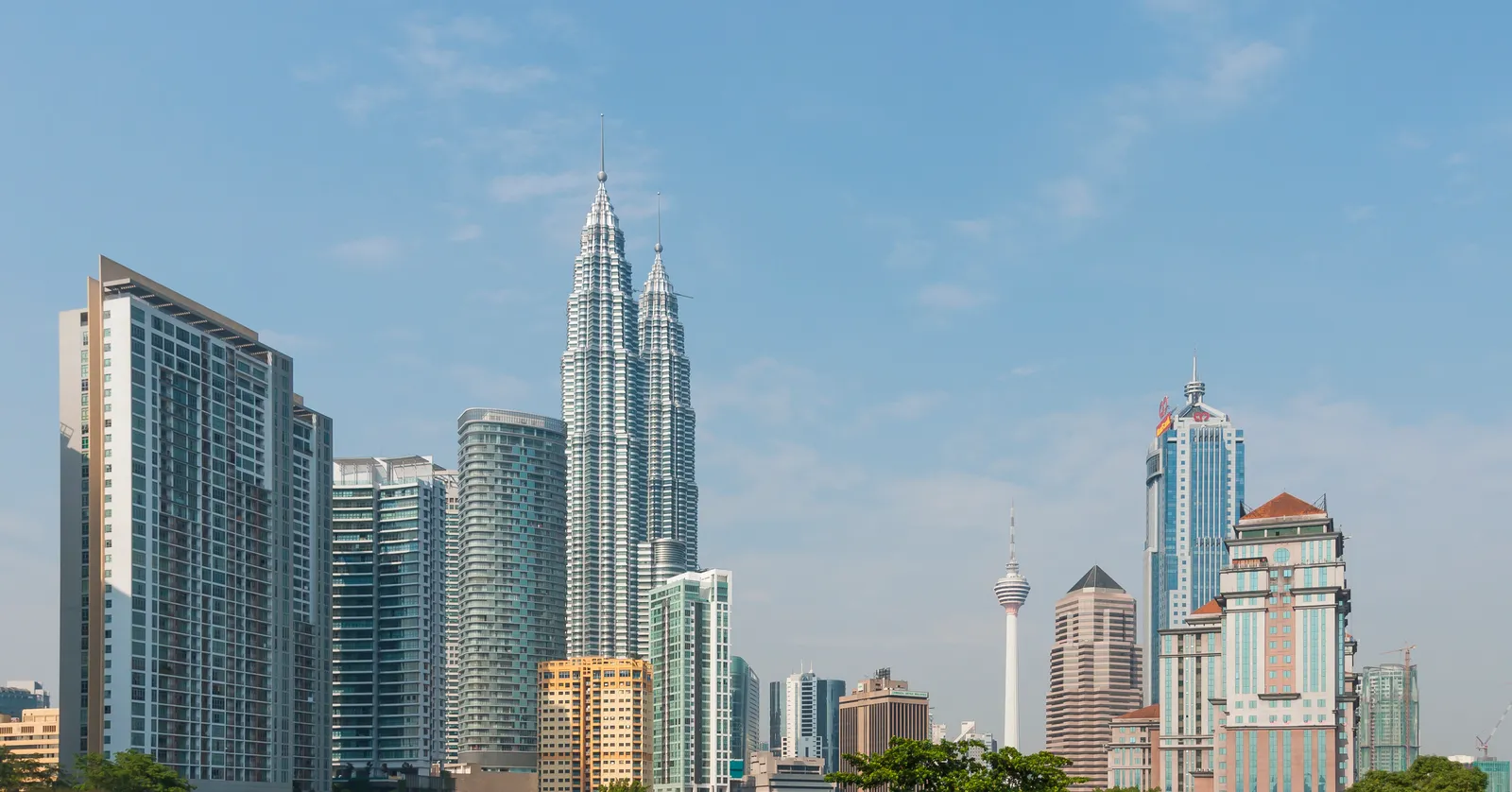
The Petronas Twin Towers, Merdeka Square and Chinatown’s 1888 market hall sit four stops apart on one direct train line through central Kuala Lumpur, each a few minutes’ walk from its own station.
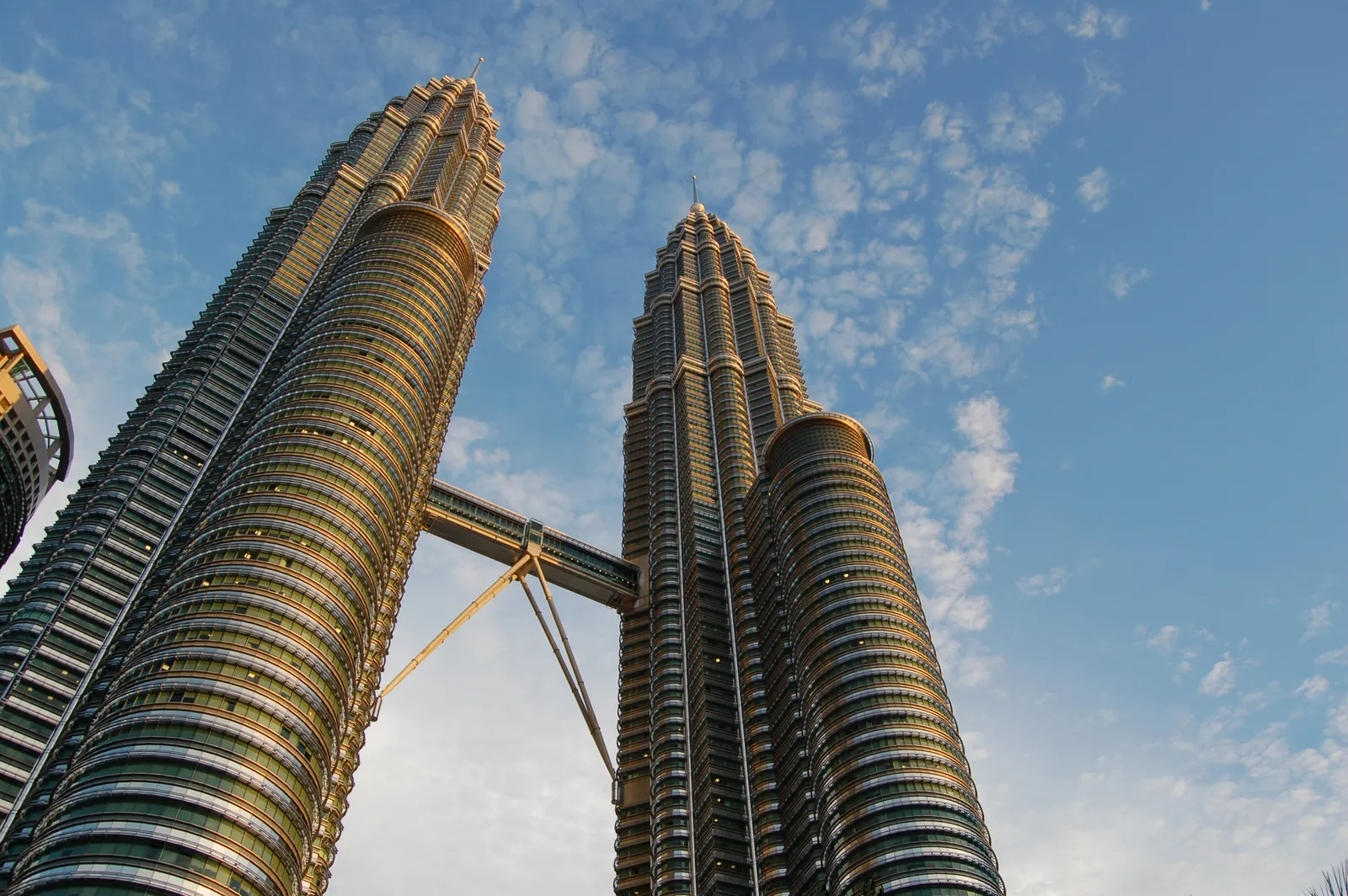
A skybridge links the Petronas Twin Towers on the 41st floor
The Petronas Twin Towers rise off Jalan Ampang at the eastern edge of the centre, 451.9 metres to the tips of their masts, and they held the title of tallest buildings in the world from 1998 until Taipei 101 passed them in 2004. César Pelli gave them a floor plan drawn from an eight-pointed Islamic star and hung a two-storey bridge between them at the 41st and 42nd floors, 170 metres up. That bridge is where the visitor route starts; a second lift carries on to an open deck on the 86th.
Entry is timed and the number of slots per day is fixed, which is the whole argument for sorting it out before you fly rather than at the desk: a non-Malaysian adult pays RM127 on a weekday and RM137 at a weekend for the skybridge and level 86 together, and tickets are sold in advance through a tours and activities platform. Tuesday to Sunday the towers open at 9am with last admission at 9.30pm. Mondays are the catch: only the second, fourth and fifth Monday of the month are open, and the first and third are maintenance days when nothing goes up at all. Luggage and large bags do not go up either, so anything bigger than a small daypack has to be left at the counter past the security check, where locker space is limited.
Roberto Burle Marx’s last park sits below the Petronas Twin Towers
KLCC Park spreads over 20 hectares behind the Petronas Twin Towers, planted with 1,900 indigenous trees and sixty-odd species of palm chosen to pull local birds and insects back into the middle of the city. Roberto Burle Marx, the Brazilian landscape architect who laid it out, built a career on native tropical planting in place of imported European lawns, and this was the last commission he took on. A 1.3-kilometre rubberised track loops the whole thing, and the Lake Symphony at the centre is a 10,000 square metre pool whose fountains run to music and light in short bursts through the evening. It costs nothing at any hour.
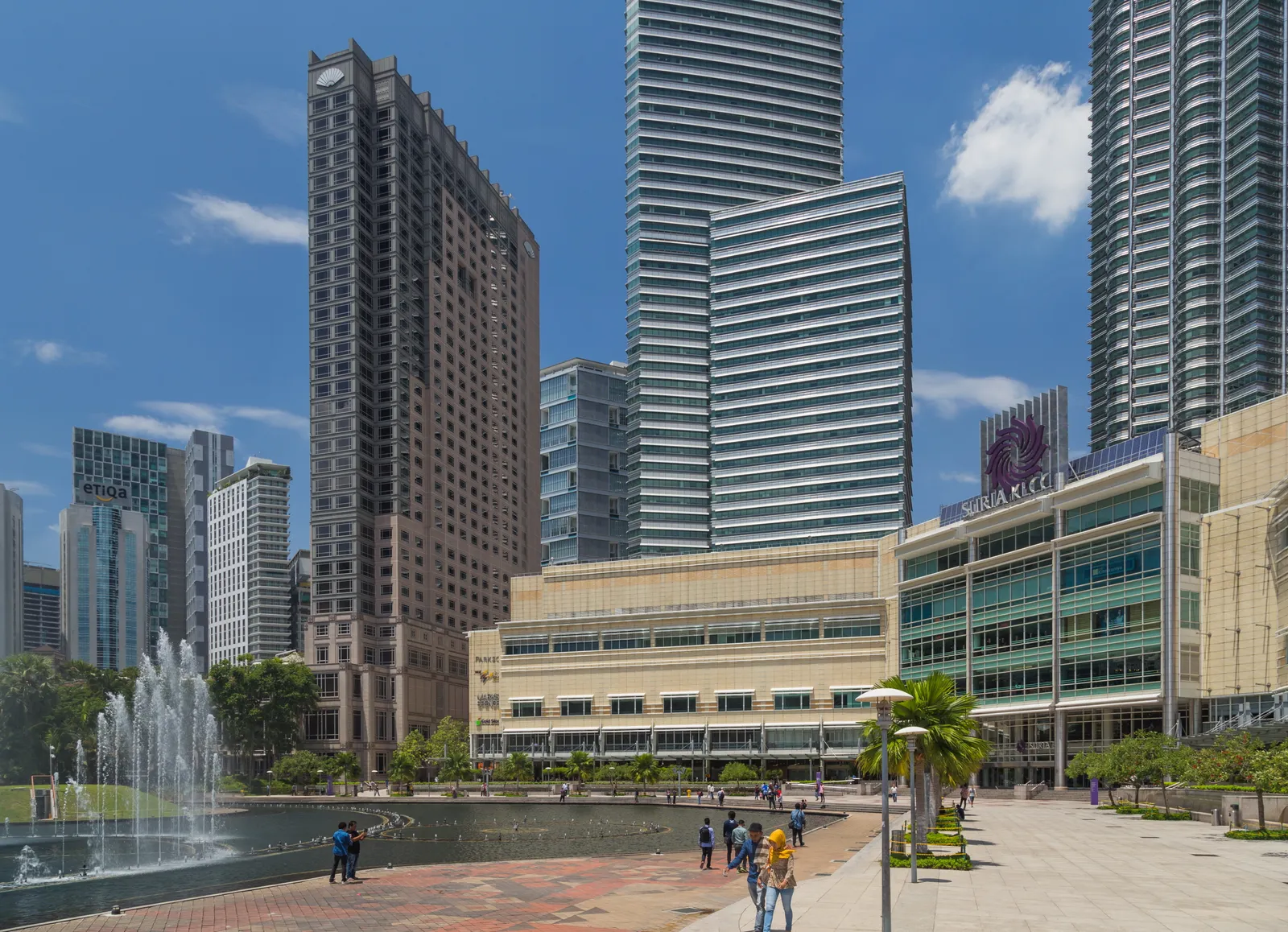
Under the convention centre on the park’s southern side, Aquaria KLCC runs a 90-metre walk-through tunnel with sharks and rays overhead and a touch pool of starfish and sea cucumbers, which is the indoor option here when the afternoon rain arrives; entry can be booked ahead the same way. On the park’s western side there is a two-acre playground and a free wading pool with sprinklers, open Tuesday to Sunday from 10am to 6pm.
The Islamic Arts Museum keeps the world’s mosques at 1:40 scale
The Islamic Arts Museum Malaysia stands on Jalan Lembah Perdana, on the slope between the botanical garden and the National Mosque, and holds the largest collection of Islamic art in Southeast Asia. Its architecture gallery is the room to find first: scale models of the Grand Mosque at Mecca built to 1:40, the Dome of the Rock, the Alhambra, and a run of mosques from Iran, India and Turkey, all at a size you can walk around and look down into.
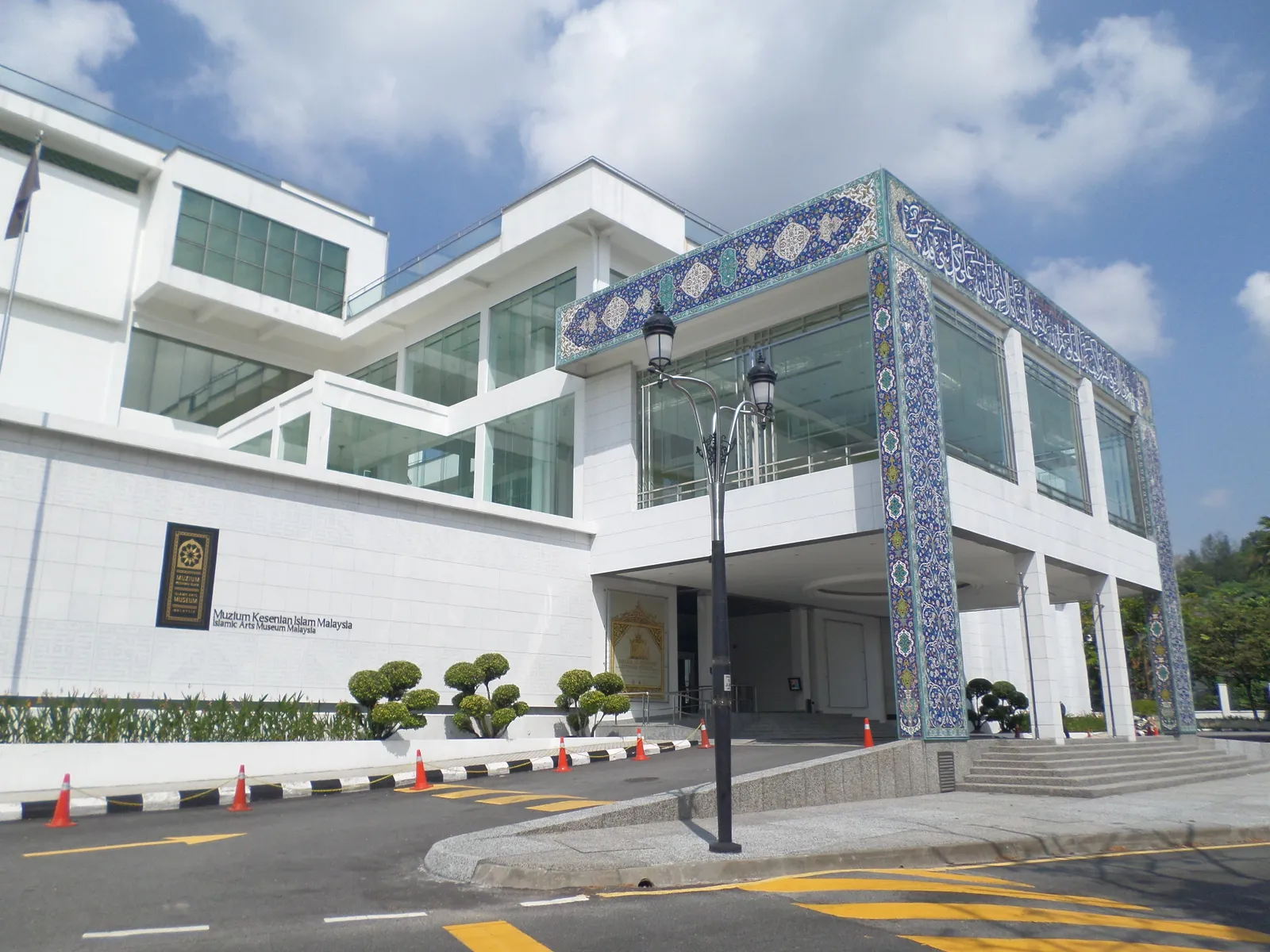
The building itself is worth the walk up: white concrete with five domes tiled by Iranian craftsmen in turquoise and cobalt, and an entrance porch faced in the same work. Admission is RM20 for an adult, it opens daily from 9.30am to 6pm with last entry at 5.30pm, and the galleries are cold enough to be a genuine relief in the middle of the day.
The Sultan Abdul Samad Building has faced Merdeka Square since 1897
Construction on the Sultan Abdul Samad Building started on Jalan Raja in September 1894 and finished in 1897, and it went up as the offices of the British administration in what was then a tin-mining town. A. C. Norman’s design put copper onion domes along a long brick arcade and a clock tower 41 metres high in the middle of it, which is still the profile on most postcards of the city.
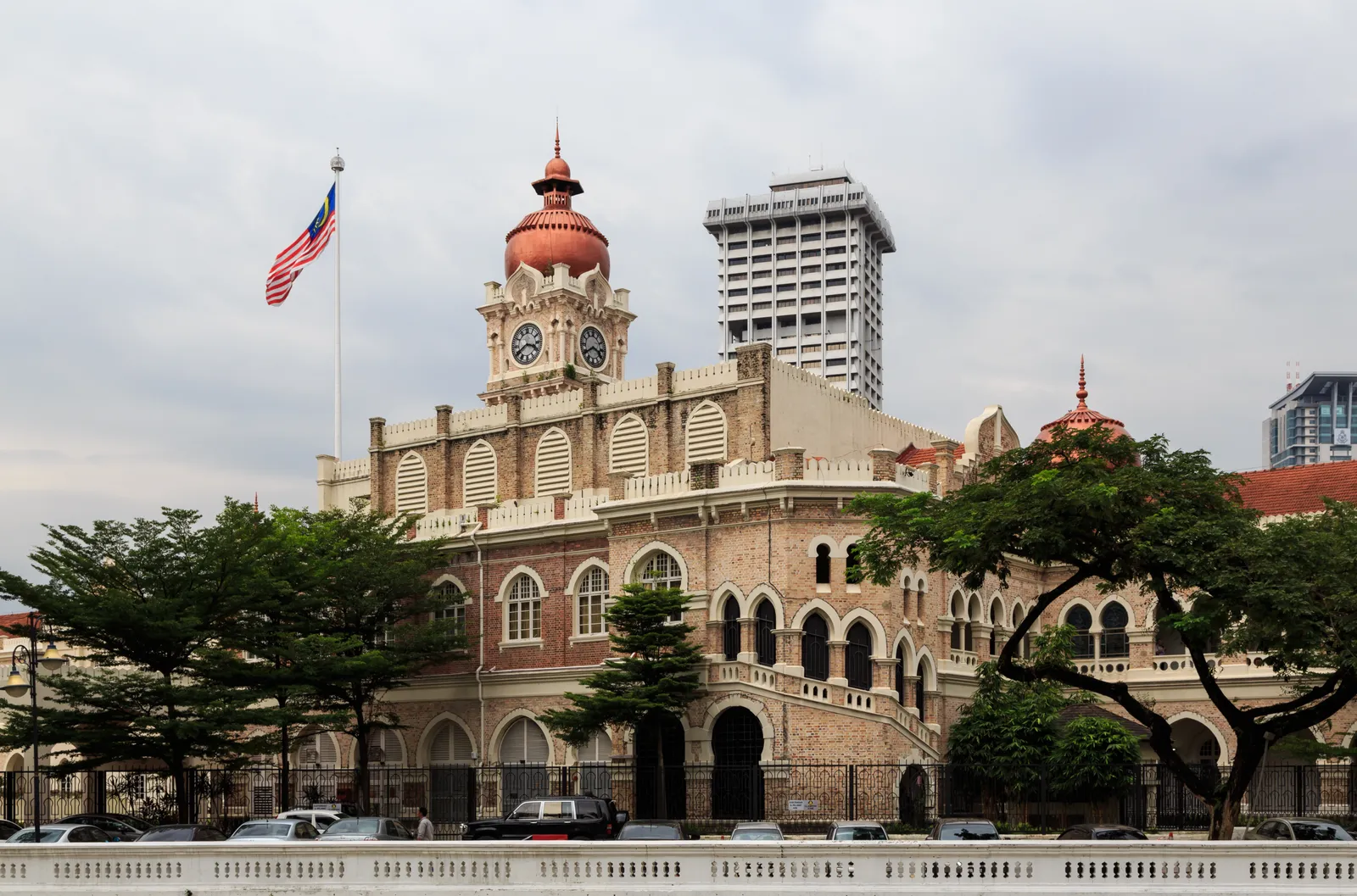
The open field opposite is Dataran Merdeka, where the Union flag came down and the Malayan flag went up for the first time just before midnight on 31 August 1957. A 95-metre flagpole at the southern end marks the spot. It was a cricket pitch for the Royal Selangor Club, whose mock-Tudor clubhouse still runs along the western side, until the ground was turned into a public square in 1987. Standing on it costs nothing and there is no gate to queue at.
Jamek Mosque stands where the Klang and Gombak rivers meet
Kuala Lumpur translates as muddy estuary, and Masjid Jamek sits on the narrow spit of land at the confluence it was named for, where the Klang and the Gombak join. Arthur Benison Hubback finished the mosque in 1909 in pink and white banded brick, three white onion domes over the prayer hall and minarets in the same striping, with palms planted around the courtyard.
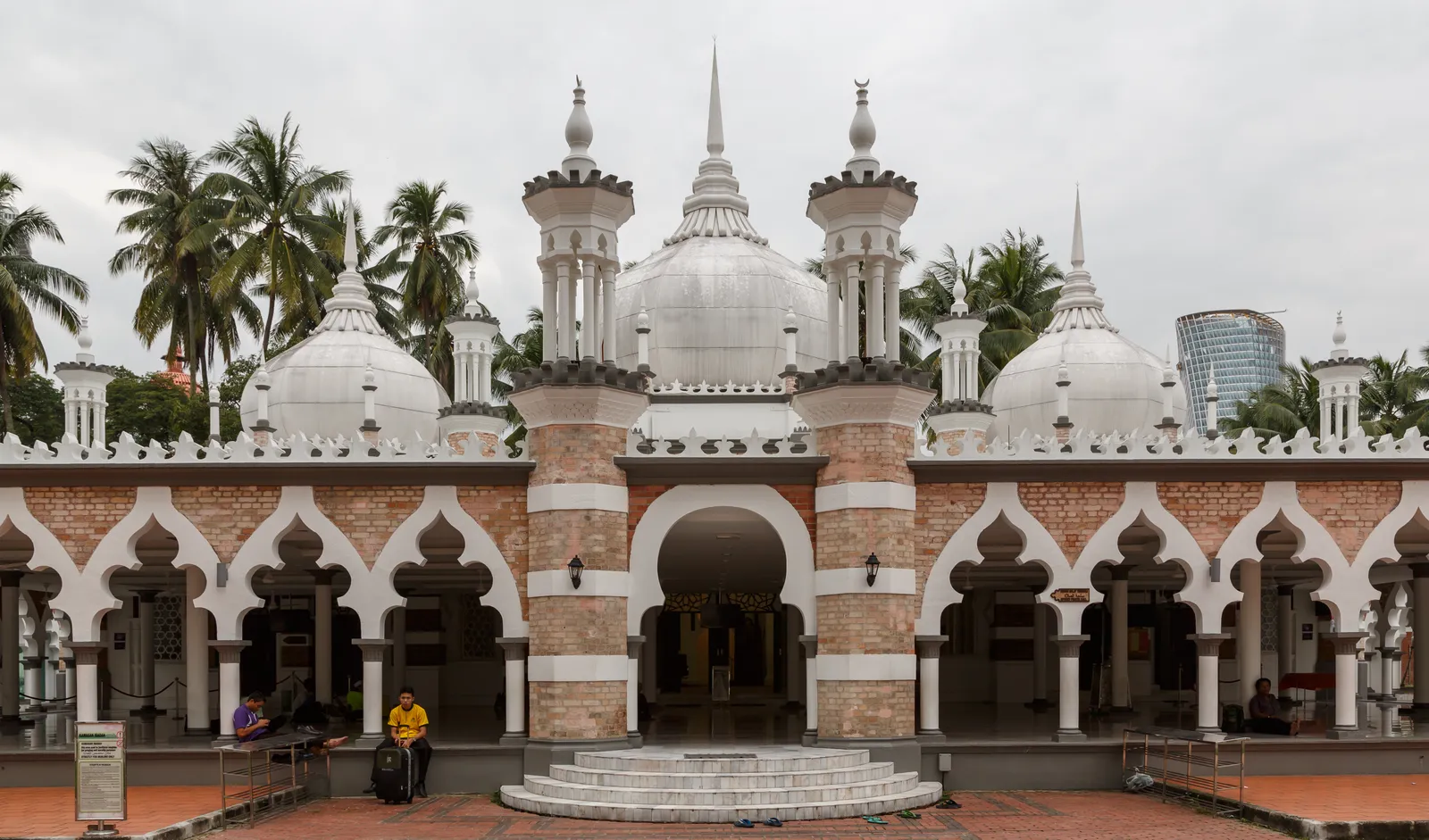
Visitors are welcome daily from 8am to 12.30pm and again from 2.30pm to 4.30pm, outside prayer times, and it is free. Robes and headscarves are lent at the door to anyone dressed for the heat rather than for a mosque, men in shorts included. The riverbanks below were rebuilt as a lit promenade under the River of Life scheme, and the stretch either side of the confluence is floodlit and misted after dark.
Central Market has traded on the same site since 1888
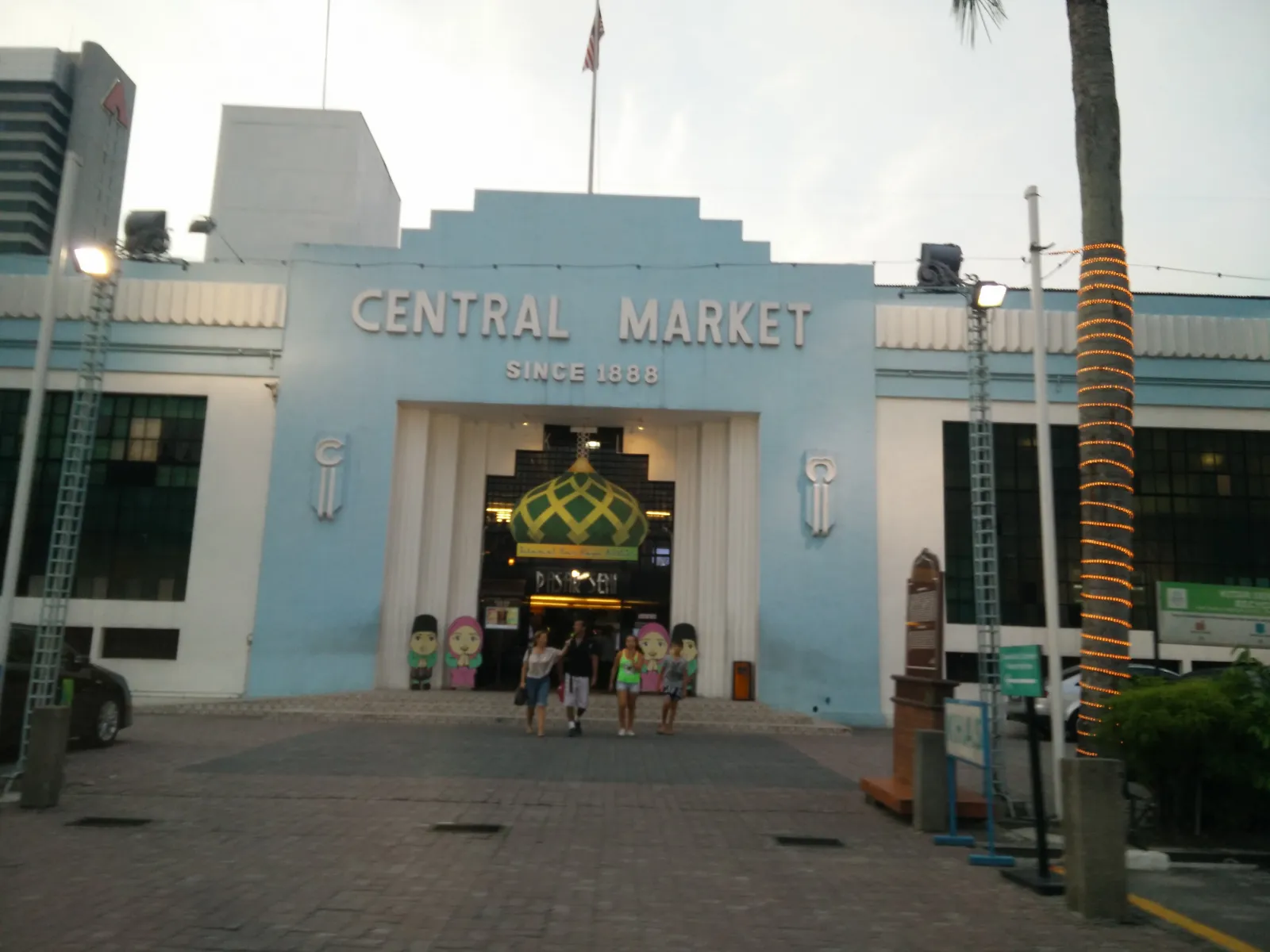
Central Market fronts Jalan Hang Kasturi as a pale blue art deco box with its own name and founding year written across the top. It opened as a wet market in 1888, was rebuilt in the shape it has now in 1937, and was saved from demolition in the 1980s when the Malaysian Heritage Society got it listed. The fish and vegetables are long gone; what fills it now is about 350 stalls of batik, pewter, woodcarving and food, on two floors, open 10am to 10pm.
Chinatown starts a couple of streets east, along Jalan Petaling under its green roof canopy, and the best thing in it is off the main drag: Kwai Chai Hong, a lane between Jalan Petaling and Lorong Panggung where ten shophouses were restored in 2019 and six murals of 1960s street life painted along the walls, each with a QR code that tells you what is going on in it. Free, and quiet compared to the market lane it opens off. A block away at 14A Lebuh Pudu, Sin Sze Si Ya Temple is the oldest Taoist temple in the city, founded in 1864 by Yap Ah Loy for two deities he credited with getting him through the Selangor Civil War, and made a national heritage site in 2020. It is free to walk into, it takes ten minutes, and it sits at an odd angle to the shophouse rows on either side, which local accounts put down to feng shui.
272 painted steps climb into the Batu Caves
With more than five hours before a flight, Batu Caves is the one stop worth leaving the centre for. It is a limestone outcrop thirteen kilometres north, and the staircase up the cliff to the Temple Cave was repainted in 2018 in blocks of colour that run the full 272 steps. The cave at the top is a cathedral-sized chamber with shrines set into the rock and an opening in the roof that drops a shaft of daylight into the middle of it. Entry is free and it is open from 6am to 9pm.
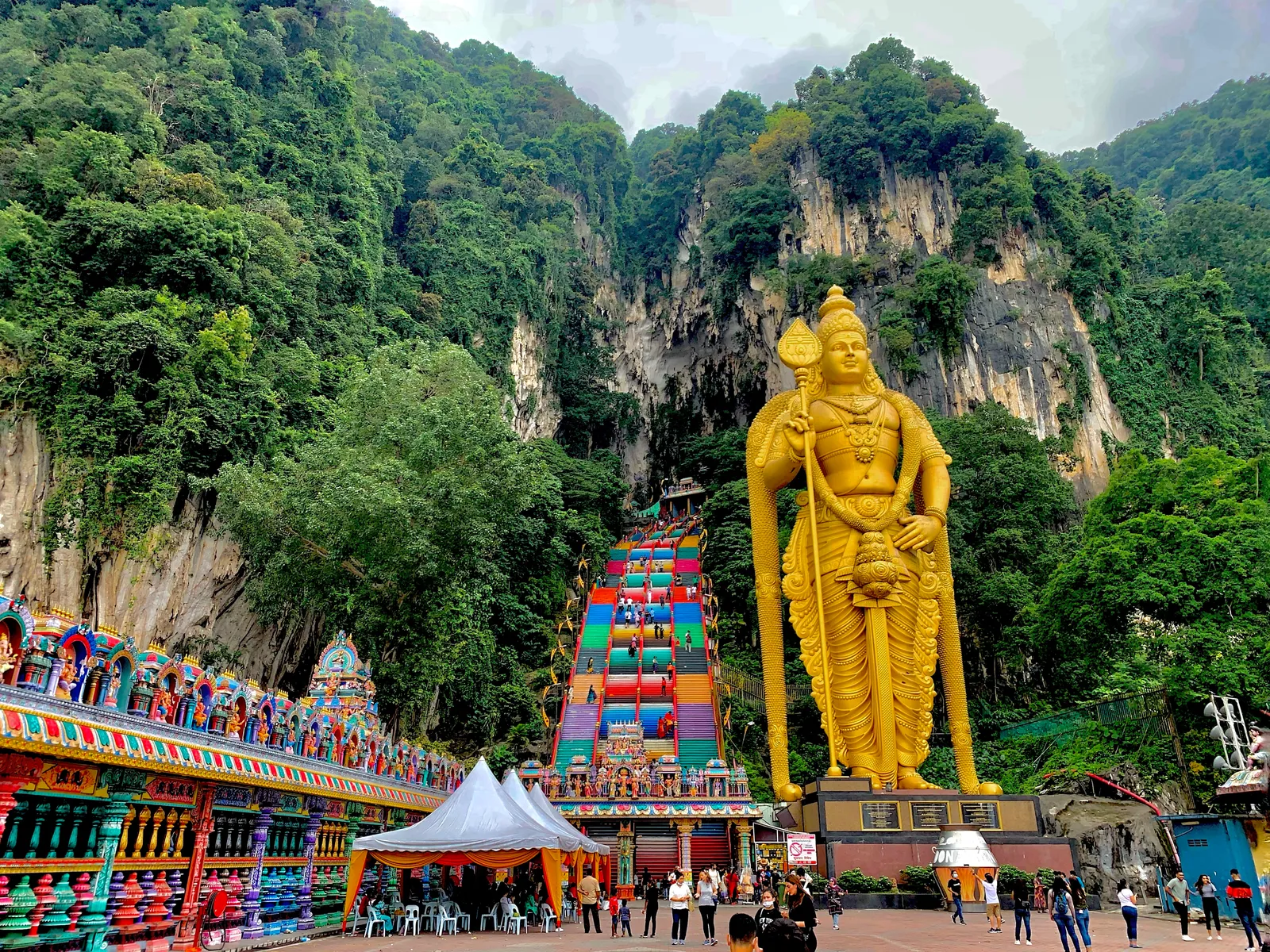
A suburban train from KL Sentral runs the whole way and terminates at the foot of the hill, about 30 minutes for RM2.60, every half hour in the morning and evening peaks and roughly hourly between 10am and 4pm, which is the timetable to check before committing. Long-tailed macaques work the staircase and will take an open bottle or a bag of food out of your hand, so nothing edible should be visible on the climb.
A non-stop train covers KL Sentral to the airport in 28 minutes
The KLIA Ekspres leaves KL Sentral every 20 minutes from 5am to midnight, charges RM55 for an adult one way, and puts you at Terminal 1 of Kuala Lumpur International Airport (KUL) in 28 minutes, Terminal 2 about five minutes after that. The KLIA Transit runs the same track for the same RM55 from KL Sentral but stops at Bandar Tasik Selatan, Putrajaya and Salak Tinggi on the way, which makes it 39 minutes to Terminal 2, so from KL Sentral there is no reason to take it. Getting to KL Sentral is the part worth budgeting for rather than the ride itself: it is about fifteen minutes on the direct line from the towers, four minutes from Chinatown, and both of those are before any wait on the platform. Two and a half hours between leaving the centre and an international departure covers all of it without hurrying.
One thing that can take the last hour out of the day: Malaysia Airlines and Batik Air both run check-in desks and bag drop inside the airport-train departure hall at KL Sentral, from 6am and closing at 8pm and 6pm respectively, with a cutoff two hours before departure. Hand the hold bag over there and you arrive at the terminal with nothing but a boarding pass. If the long wait on this trip falls at the other end of the route, Singapore is the stop most one-stop itineraries out of Kuala Lumpur put on the far side, and its airport sits on the metro rather than at the end of a premium-fare line, which changes the arithmetic on how late you can leave town.
Collect the stored bag on the way through rather than doubling back for it. Most of the drop-off points here cluster around KL Sentral, Bukit Bintang and Merdeka Square, which is the same ground this route already covers.
Frequently asked questions
What should I do during a layover in Kuala Lumpur?
Four things sit on one direct train line through the middle of the city: the Petronas Twin Towers and the park behind them, the Sultan Abdul Samad Building facing Merdeka Square, Jamek Mosque at the river confluence the city is named after, and Central Market's 1937 art deco hall in Chinatown. Five hours covers the towers and a walk through the colonial core and Chinatown; closer to seven leaves room for the Islamic Arts Museum out by the botanical garden, or for Batu Caves, thirteen kilometres north on a suburban train. Book the towers before you fly, because entry is timed and capped and the first and third Monday of every month are maintenance days. The park, the square, the mosque and the market hall are all free, so a short stop can skip the ticket desk entirely.
Is the KLIA Ekspres or the KLIA Transit better from KL Sentral?
The KLIA Ekspres, and it is not close. Both run on the same track out to Kuala Lumpur International Airport (KUL) and both charge RM55 for an adult one-way from KL Sentral, but the Ekspres runs non-stop and reaches Terminal 1 in 28 minutes and Terminal 2 in about 33, while the Transit calls at Bandar Tasik Selatan, Putrajaya and Salak Tinggi and takes 39 minutes to Terminal 2. The Ekspres leaves KL Sentral every 20 minutes, first train at 5am and last at midnight. The Transit is the better buy only if you are starting from one of those intermediate stations rather than from KL Sentral.
Is Kuala Lumpur worth a layover with kids?
It works better than most cities on this kind of schedule, because the two things children tend to want are in the same block. KLCC Park has a two-acre playground and a free wading pool with sprinklers and water jets, open Tuesday to Sunday from 10am to 6pm with changing rooms beside it, and the fountains on the lake run shows through the evening. Aquaria KLCC, under the convention centre on the same site, has a 90-metre walk-through tunnel and a touch pool. Both are a few minutes from a station on the line that runs straight through the centre, so neither needs a taxi.
Which days are the Petronas Twin Towers closed to visitors?
The first and third Monday of every month, when the visitor route shuts for maintenance. The second, fourth and fifth Mondays are open, 9am to 8pm with last admission at 7pm, and Tuesday to Sunday the towers open at 9am with last admission at 9.30pm. They also close for Hari Raya Aidilfitri and Hari Raya Aidiladha, which move by about eleven days each year against the Gregorian calendar, so check the date before booking if your flight falls near either. Non-Malaysian adults pay RM127 on a weekday and RM137 at a weekend for the skybridge and the level 86 deck together.
Can non-Muslims go inside Kuala Lumpur's mosques?
Yes, at set hours and at no charge. Jamek Mosque, on the spit of land where the Klang and Gombak rivers meet, takes visitors daily from 8am to 12.30pm and again from 2.30pm to 4.30pm, outside prayer times. Robes and headscarves are lent at the door to anyone who needs them, which includes men in shorts, and shoes come off before you go in. The National Mosque, near the Islamic Arts Museum on the other side of the railway, works the same way and has its own longer visiting windows.