Kuala Lumpur Layover: Petaling Street Market
Part of the full Kuala Lumpur in One Day: The Twin Towers
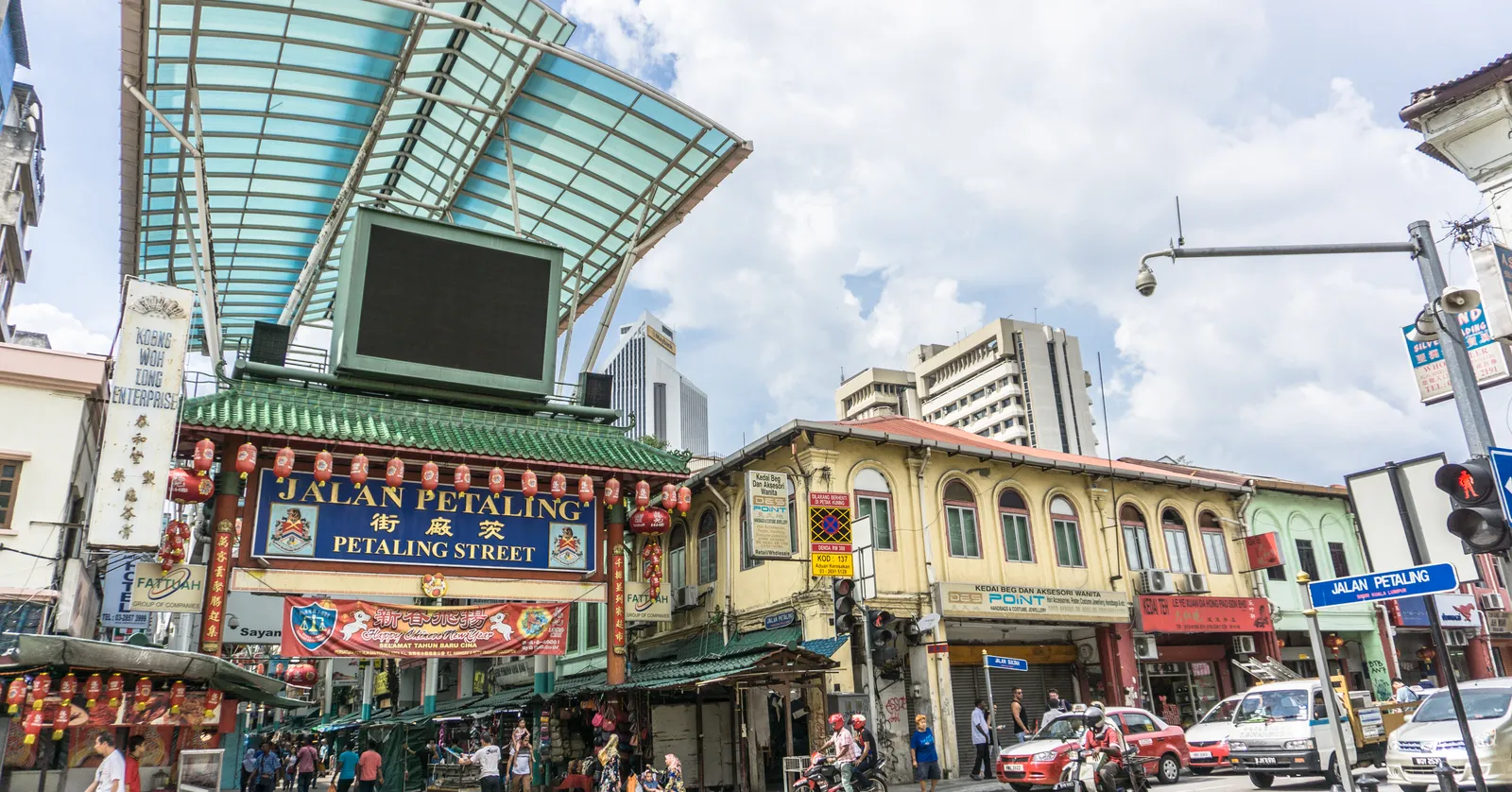
Kuala Lumpur’s Chinatown packs Petaling Street’s covered market, the 1873 Sri Mahamariamman temple and the 1888 Guan Di temple into four blocks, all of it free to walk into.
Petaling Street trades under a green roof called the dragon
Jalan Petaling runs south from Jalan Tun Tan Cheng Lock through the middle of Chinatown, and the stretch that everyone means by Petaling Street is the pedestrianised part between two Chinese-style arches. A RM11 million rebuild in 2003 closed it to traffic and put a continuous green roof over the whole width of the road, which locals took to calling the green dragon. Underneath it, stalls sell watches, football shirts, phone cases and dried fruit, and behind them are shophouses that have been on this street since the tin-mining decades.
The eating is the better reason to be here. Kim Lian Kee has been on the corner of Jalan Hang Lekir since 1927, which makes it the oldest business on the street, and it is generally credited with inventing the dark, soy-black Hokkien mee that Kuala Lumpur has cooked ever since. If you would rather be walked through the street by someone who knows which stall is which, a guided Chinatown food walk is sold through a tours and activities platform and covers the heritage stops alongside the eating.
Sri Mahamariamman’s gate tower carries 228 sculpted figures
The oldest Hindu temple in Kuala Lumpur stands on Jalan Tun H. S. Lee at the western edge of Chinatown, and you see the top of it from several streets away: a five-tier gate tower 22.9 metres high, painted in full colour, with 228 sculpted deities worked into it by craftsmen brought from southern India. The tower went up in the late 1960s; the temple itself dates to 1873, when K. Thamboosamy Pillai built it as a private shrine for his family. His descendants opened it to the public in the 1920s.
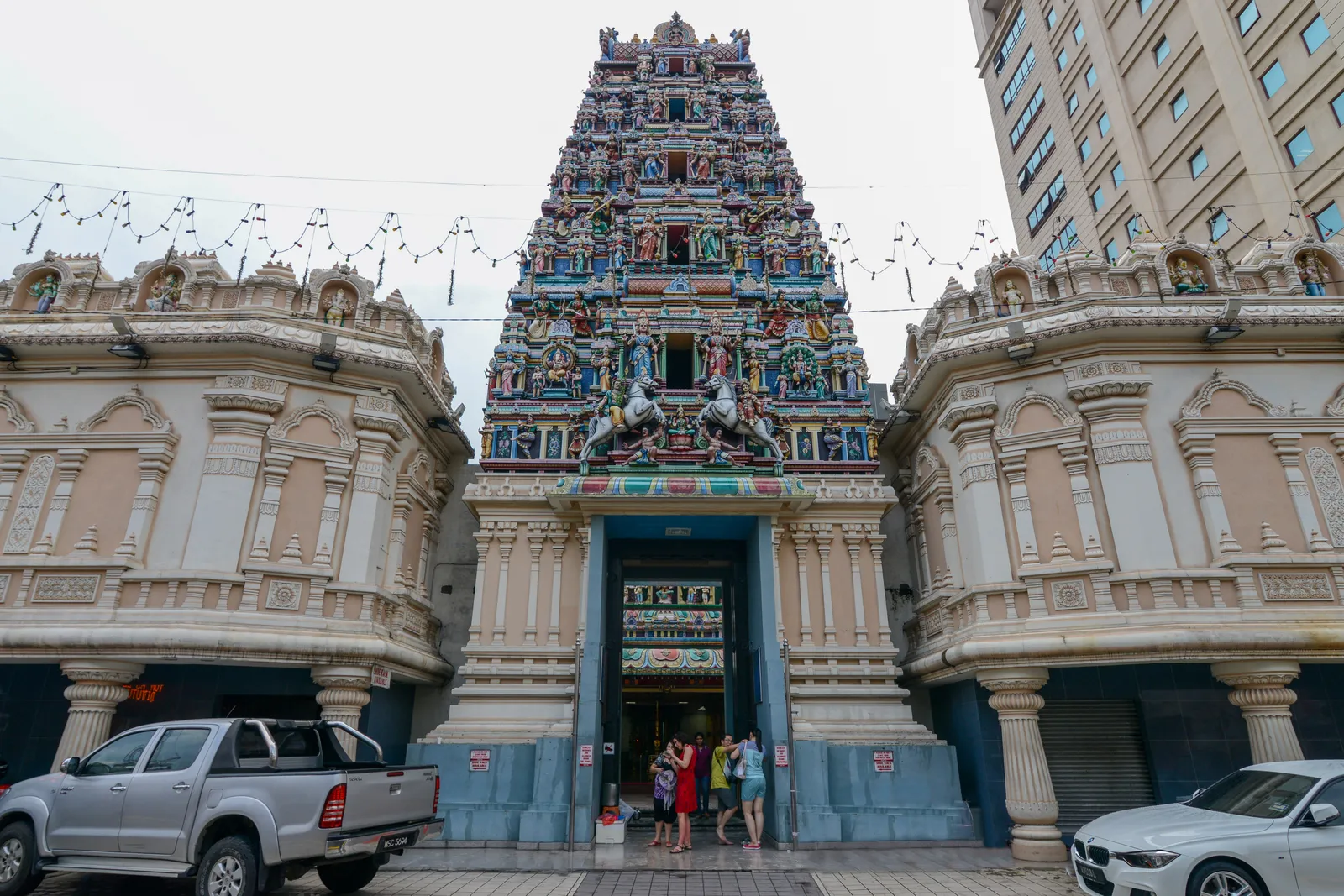
Inside is a courtyard and a main hall with shrines round the edge, and a silver chariot kept here that is pulled out once a year for the Thaipusam procession north to the caves. It is free, shoes come off at the rack by the door, and fifteen minutes is enough unless a ceremony is running.
Guan Di Temple keeps a 59-kilo copper blade inside the door
At 168 Jalan Tun H. S. Lee, a red frontage with gold dragons up its columns marks a Taoist temple built in 1888 and dedicated to Guan Yu, the Han-dynasty general who became the god of war and, by a turn nobody quite explains, of literature as well. The hall is dark, low and thick with incense smoke, with the standing figure at the back behind a screen of hanging coils.
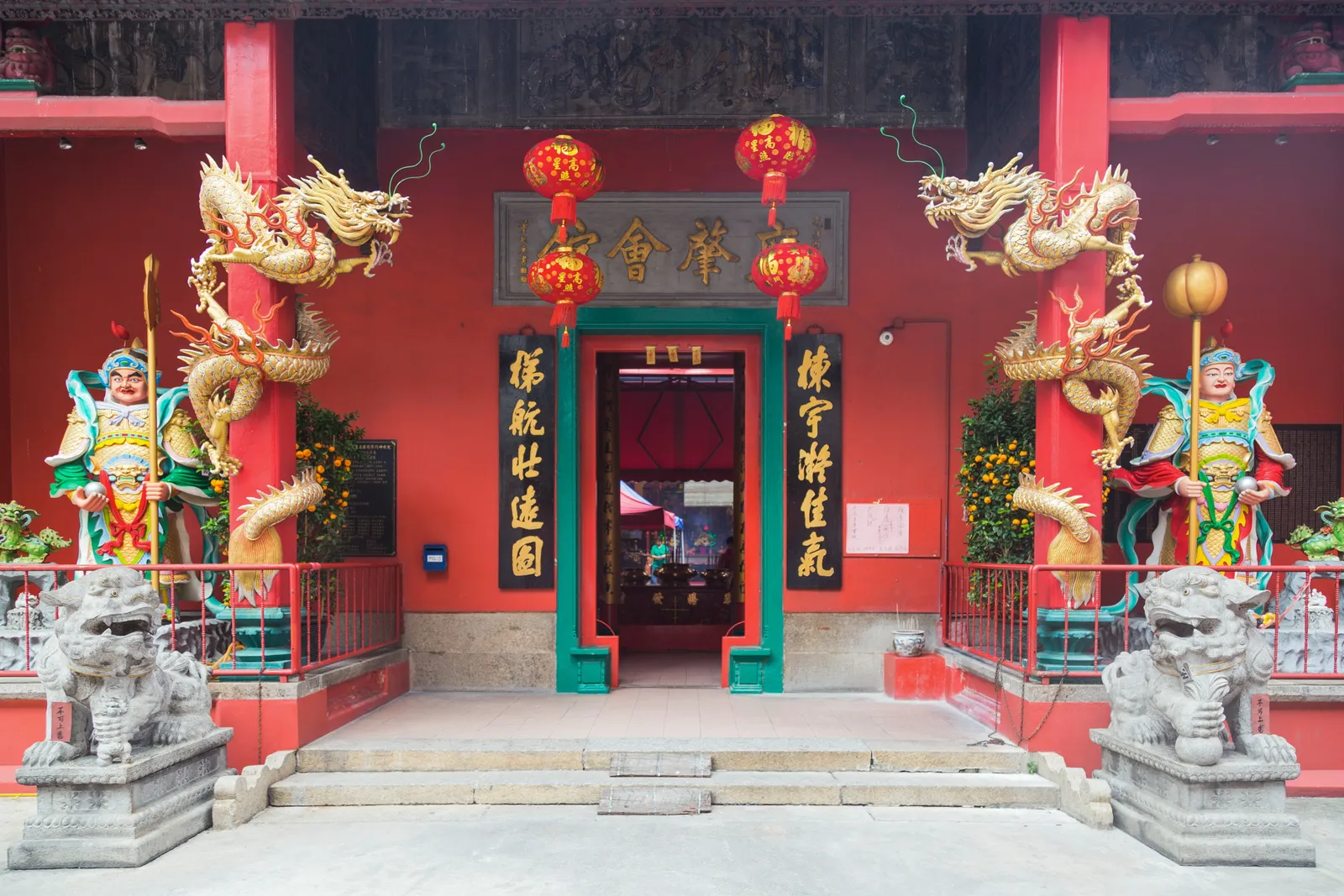
The thing people come for is a copper guan dao, the long-handled blade Guan Yu is always shown carrying, standing against the wall and weighing 59 kilograms. Touching it, or getting it off the floor, is supposed to bring luck, and there is usually a small queue of people trying. Neither temple charges anything and both shut in the early evening, before the market reaches its peak.
Chinatown’s market aisle is the pinch point on this itinerary: between the stall fronts it narrows to a single file in places, and after six it moves at the speed of the slowest person in it, which is not a stretch to take a suitcase through.
Pasar Seni station sits at the top of Chinatown
Pasar Seni is one stop and about four minutes from KL Sentral on a direct line, and KL Sentral is where the KLIA Ekspres leaves from: 28 minutes non-stop to Terminal 1 of Kuala Lumpur International Airport (KUL), RM55 for an adult, every 20 minutes from 5am until midnight. That combination is why Chinatown works on a short gap when other parts of the city do not; door to door from Jalan Petaling to the terminal is comfortably inside ninety minutes.
If the gap is long enough to justify crossing town instead, the full Kuala Lumpur route runs east to the Petronas Twin Towers and the museums in the Lake Gardens, neither of which fits in the three hours this corner of the city needs.
Pick the bag up at the station rather than carrying it through the market. The drop-off points nearest here cluster around Merdeka Square and KL Sentral, both of which are on the way out.
Frequently asked questions
What should I do during a layover near Petaling Street in Kuala Lumpur?
Walk the covered market street itself, which runs between two Chinese arches and is lined with stalls and century-old shophouses, then take the two temples on the parallel street. Sri Mahamariamman, founded in 1873, is the oldest Hindu temple in the city and carries 228 sculpted figures up its five-tier gate tower. Guan Di, from 1888, keeps a copper blade weighing 59 kilos inside the door that people queue to touch. Three hours covers all of it at a walking pace with time to eat; nothing here is ticketed, so there is nothing to book and nothing to skip if you are short.
Is Petaling Street worth it in the rain?
It is one of the few places in the city that improves in a downpour. The market stretch between the two arches has been roofed since a 2003 rebuild, so the stalls keep trading when an afternoon storm empties everywhere else, and the shophouse arcades on the side streets are covered too. The two temples are indoors. What does not work is the walk between Chinatown and anywhere further out, which is fully exposed, so plan to stay put rather than move around during the heaviest hour.
Can non-Hindus and non-Chinese visitors go inside the temples here?
Yes, both are open to anyone and neither charges. Shoes come off at the door of Sri Mahamariamman and are left on a rack outside, and shoulders and knees should be covered. Guan Di is a working Taoist temple where people come to light incense, so the etiquette is to keep to the sides, not to photograph anyone mid-prayer, and not to walk between someone and an altar. Both close in the evening rather than staying open with the market.
When is Petaling Street actually busy?
The stalls set up through the morning and the street fills properly after dark, when the day traders are joined by the night market and the aisle between the stall fronts narrows to something closer to a queue than a street. Mid-afternoon is the quietest useful window and the easiest time to get a table at the food shops on the Jalan Hang Lekir crossroads. If your gap falls in the evening, the temples will be shutting but the market will be at full stretch.