Kuala Lumpur Layover: Bukit Bintang at Night
Part of the full Kuala Lumpur in One Day: The Twin Towers
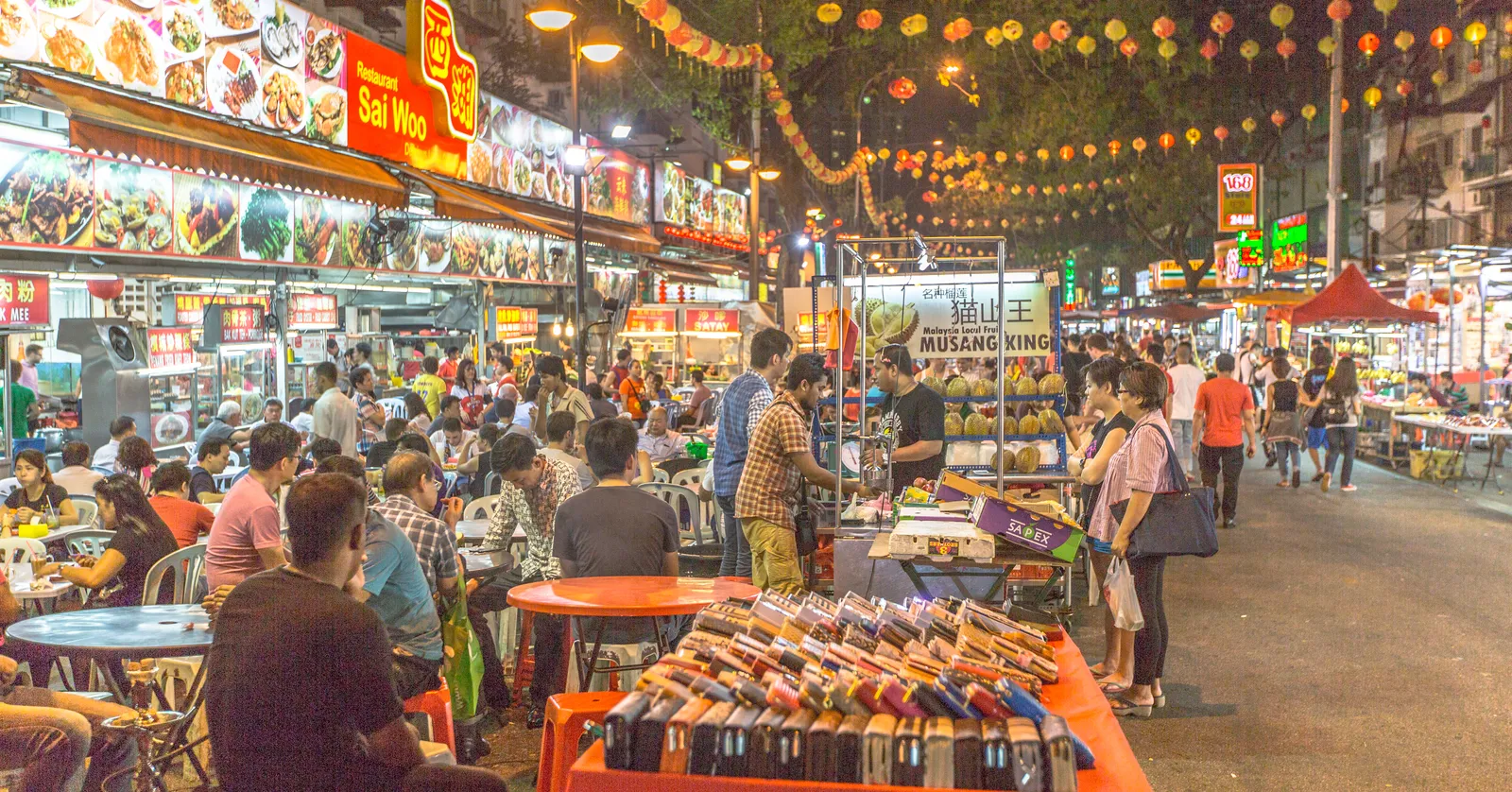
Bukit Bintang, Kuala Lumpur’s shopping and eating quarter, runs an indoor roller coaster on the fifth floor of one mall and a hawker street that closes to traffic at six every evening, four blocks apart.
Berjaya Times Square put a roller coaster on its fifth floor
The two red-brown towers on Jalan Imbi hold 133,000 square feet of theme park across the fifth and seventh floors, split into two zones, with the Supersonic Odyssey roller coaster threading through both of them and a dozen other rides included in one ticket. It is entirely indoors, which in a city that rains hard most afternoons is less of a gimmick than it sounds.
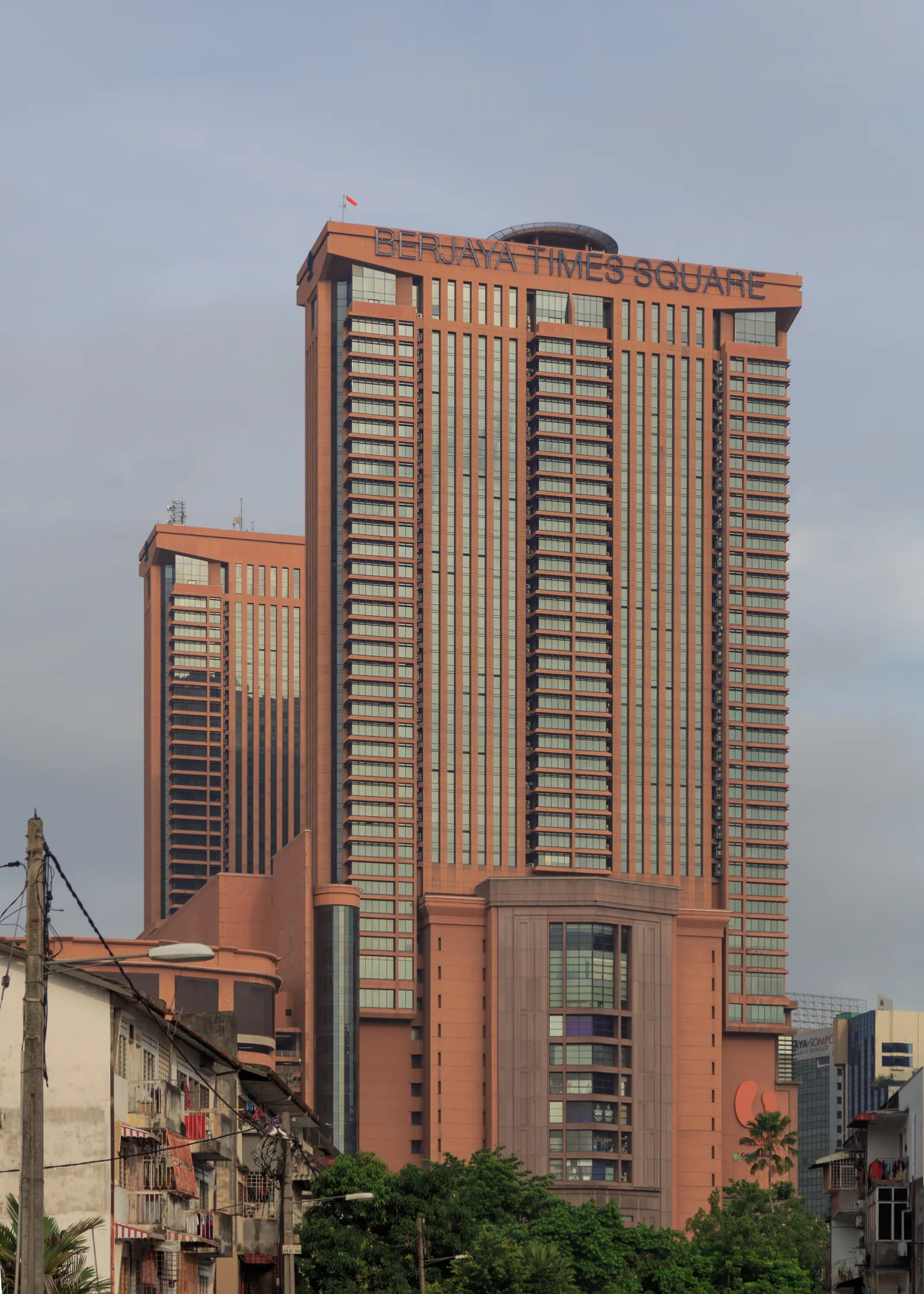
Admission covers the rides but not the arcade machines, the haunted house or the virtual reality booths, which are charged separately at the door. Tickets are sold in advance through a tours and activities platform, which is worth doing on a weekend afternoon when the queue at the counter is the longest part of the visit.
Jalan Alor shuts to traffic at six and fills with tables
Jalan Alor was a red-light street into the 1980s and is now the best-known eating address in the city. Since 1 July 2023 it has been a designated food walk, closed to vehicles from six in the evening until three in the morning, and what happens in those hours is that the whole carriageway disappears under plastic tables while the grills, woks and satay pits work the pavement on either side.
The range is the appeal: Chinese seafood restaurants with tanks out front, Thai stalls, satay, grilled stingray, durian sold by the kilo from tables in the middle of the road. Ordering from three different stalls at one table is normal, and each one bills you separately. Most kitchens run until around midnight, some past one, which makes this the part of the city that still works when a flight leaves in the small hours.
What the street does not have is shade or cover. Jalan Alor, Changkat Bukit Bintang and the blocks between them are open road in heat in the low thirties and high humidity, and a suitcase turns a five-minute walk between two of them into a fifteen-minute one.
An air-conditioned bridge runs 1.2 kilometres to the twin towers
An elevated pedestrian link opened in 2012 between Bukit Bintang and the city centre, and it is enclosed and air-conditioned along most of its 1.2 kilometres, which means the walk to the Petronas Twin Towers takes fifteen to twenty minutes without anyone arriving soaked through. It runs mall to mall rather than street to street, so you go in through one shopping centre and come out inside another.
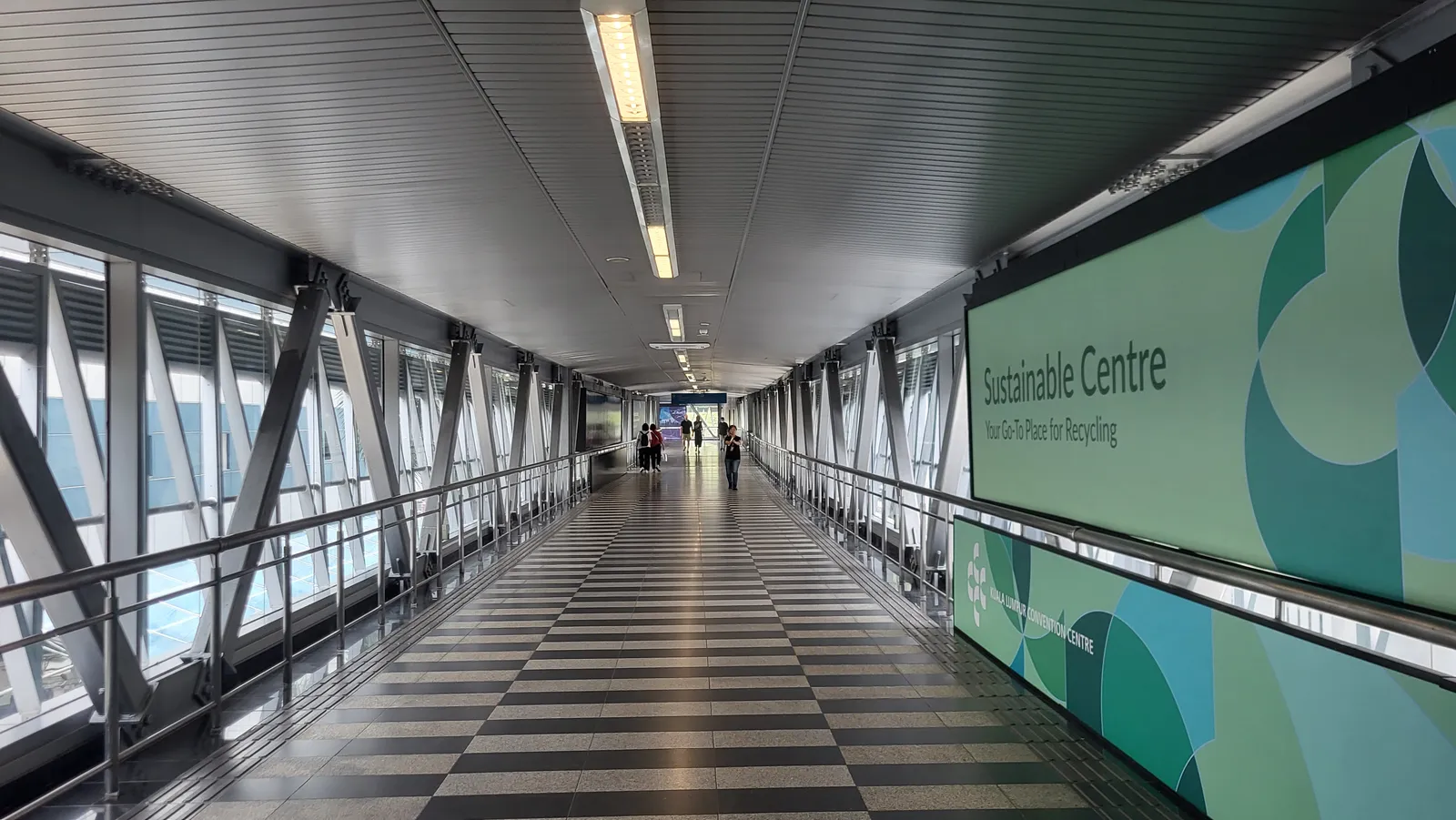
The link is also why the two districts read as one long afternoon rather than two separate trips: the towers, the park behind them and the malls at this end join up without anyone stepping outside into the weather. Follow the signs rather than a map at the mall ends, where the route threads through retail floors before it finds the bridge again.
Two separate lines run from Bukit Bintang to the airport hub
Bukit Bintang has a metro station and, across the road, a monorail station of the same name, and both end up at KL Sentral, where the KLIA Ekspres runs from: 28 minutes non-stop to Terminal 1 of Kuala Lumpur International Airport (KUL), RM55 for an adult, every 20 minutes until the last train at midnight. The metro is three stops to Muzium Negara and then a 240-metre indoor walkway into KL Sentral; the monorail runs overhead through the middle of town and terminates at KL Sentral itself, which is slower and better to look at.
The late-night arithmetic is the thing to watch here rather than the distance. Jalan Alor is still going at one in the morning, and the airport train is not, so anything after about eleven means a car to the terminal instead. If the gap falls in daylight instead, the full Kuala Lumpur route covers the mosques, the museums and the colonial core, all of which shut long before this district gets going.
Drop the bag before dinner rather than after. Storage points cluster around Bukit Bintang itself and around KL Sentral, so either end of the evening works.
Frequently asked questions
What should I do during a layover near Bukit Bintang in Kuala Lumpur?
Eat on Jalan Alor, which shuts to traffic at six every evening and fills the road with tables and grills until the small hours. Before that, Berjaya Times Square on Jalan Imbi keeps a 133,000-square-foot theme park with a roller coaster on its fifth and seventh floors, which is the indoor option when the afternoon rain arrives. The enclosed walkway from Bukit Bintang to the city centre runs 1.2 kilometres under air conditioning, so the twin towers are a comfortable twenty minutes away on foot. Four hours covers the theme park and dinner; the theme park is the part to book ahead, and the street food needs nothing at all.
When does Jalan Alor actually open?
The stalls start setting up in the late afternoon, the road closes to vehicles at six and stays closed until three in the morning, and most kitchens run until around midnight or one. That has been the arrangement since the street was formally designated a food walk on 1 July 2023. A handful of the permanent shophouse restaurants serve through the day, but arriving at two in the afternoon gets you a half-empty street and none of the point of it.
Can I walk from Bukit Bintang to the Petronas Twin Towers?
Yes, and it is the one walk in Kuala Lumpur that does not punish you for doing it in the middle of the day. An elevated pedestrian link opened in 2012 runs 1.2 kilometres between the two districts, enclosed and air-conditioned along most of its length, and takes fifteen to twenty minutes at a normal pace. It connects the malls at either end rather than the street, so you enter and leave it through shopping centres.
Is Bukit Bintang a good place to eat alone?
It is one of the easier places in Southeast Asia to do it. Jalan Alor's stalls plate single portions as a matter of course, the tables are shared and turn over fast, and nobody works out a bill by group. The satay and the grilled fish stalls will do one skewer or one fish rather than a platter. Ordering from two or three different stalls at one table is normal practice rather than a special request, which is what makes a solo meal here more interesting than a restaurant.