Rome Layover Near St. Peter's Square
Part of the full Rome Layover: Colosseum and Pantheon From FCO
St. Peter’s Square sits on the far side of the Tiber from central Rome, about twelve minutes from Roma Termini on metro line A plus a ten-minute walk, and the two things worth a short stop there cost between them either nothing or eight euros: the basilica, which charges no admission at all, and the climb up its dome. Castel Sant’Angelo, Hadrian’s round brick mausoleum, stands ten minutes back along the river.
The Vatican has no metro station of its own
The Vatican has no station of its own. Ottaviano on metro line A is the usual one, about ten minutes’ walk from the top of the colonnade, and Cipro, one stop further out, is closer to the museums entrance than to the square. From Roma Termini the metro takes roughly twelve minutes to Ottaviano, so budget around twenty-five door to door.
St. Peter’s Basilica is free to walk into
There is no ticket for the basilica. There never has been. The queue that snakes around the square is the security line, not a box office, and on a weekday outside high summer it moves in twenty to thirty minutes.
What you walk into is the largest church interior in the world by floor area, and the scale is the point: it is built to be misread. The gold lettering running around the base of the dome looks ordinary from the floor and is about two metres tall. Michelangelo’s Pietà is behind glass in the first chapel on the right, carved when he was twenty-four and the only work he ever signed. Bernini’s bronze baldacchino stands over the papal altar on four twisted columns nearly thirty metres high.
It opens at 7am and shuts at 6pm from late March to late October, an hour earlier through the winter. The dress code is enforced at the screening point and applies to everyone: shoulders and knees covered, no exceptions for the weather. That same screening turns back large bags outright, and the free cloakroom inside is sized for coats and daypacks rather than luggage.
The 551 steps up St. Peter’s dome
The climb is the one thing here that costs money and the one thing most people on a short stop skip, which is the wrong way round. Eight euros gets you the whole ascent on foot; ten gets you a lift as far as the roof terrace and leaves around 320 steps to do yourself. Either way the last stretch is the same: the staircase follows the curve of the dome, so the walls lean inward and it narrows to single file, with a rope down the middle to hold.
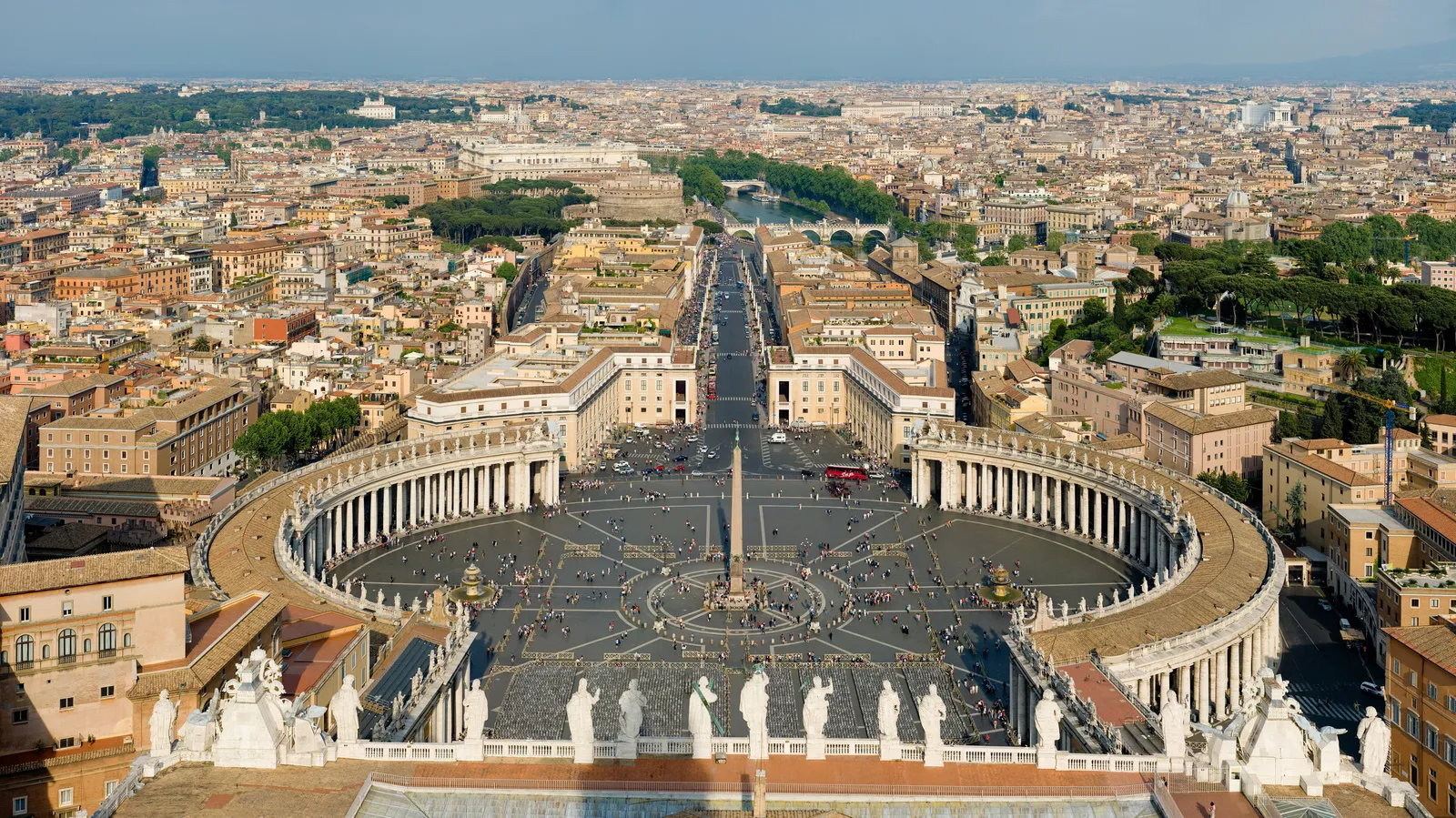
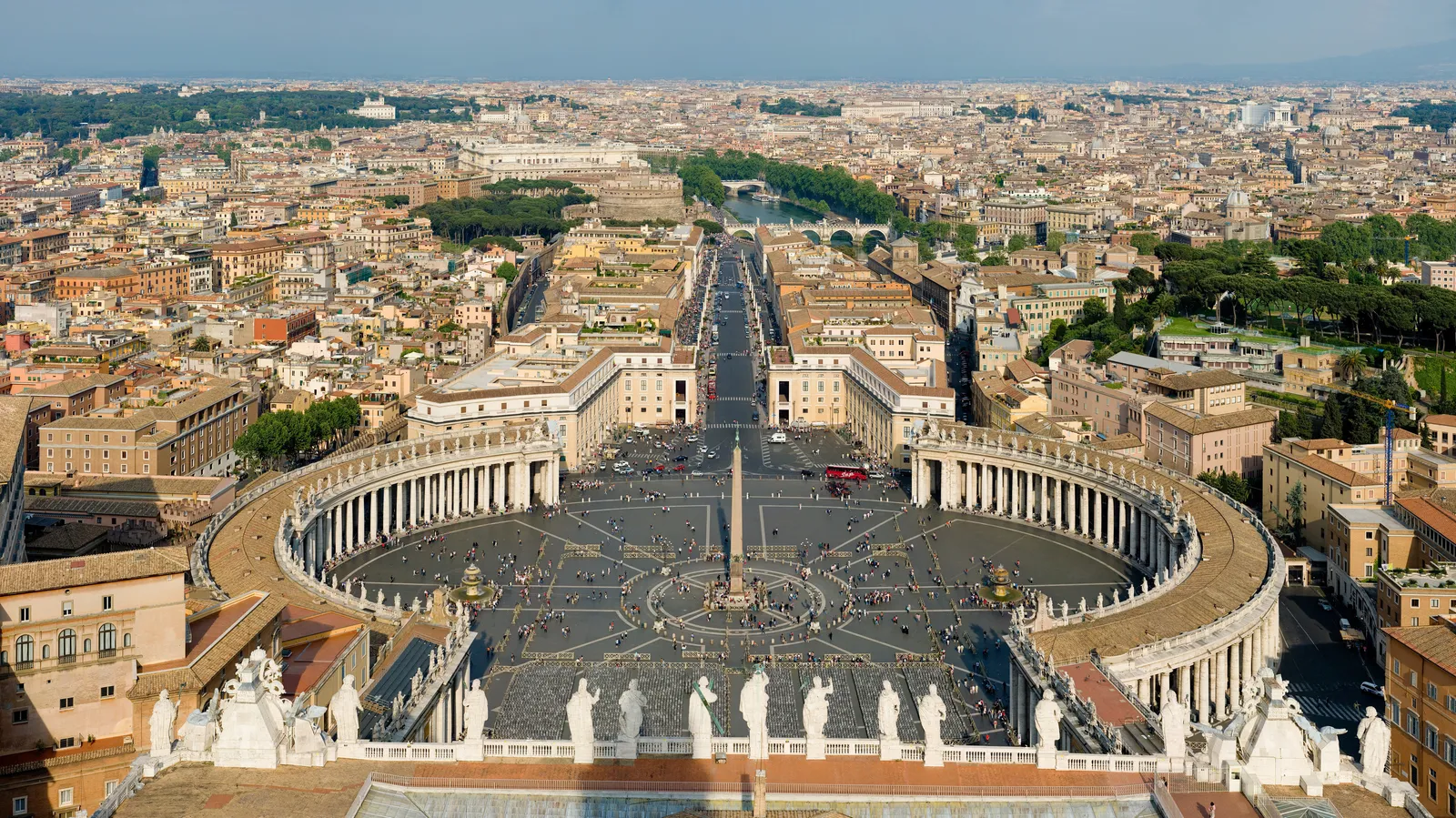
What you get at the top, about 136 metres up, is the only place the square makes visual sense. From the ground Bernini’s colonnade is two curved walls; from the lantern it reads as what he designed, an ellipse with arms held out, 284 columns set four deep with 140 saints along the parapet, the obelisk on the centre line and Via della Conciliazione running dead straight to the river. The dome opens half an hour after the basilica and closes an hour before it.
Hadrian’s tomb inside Castel Sant’Angelo
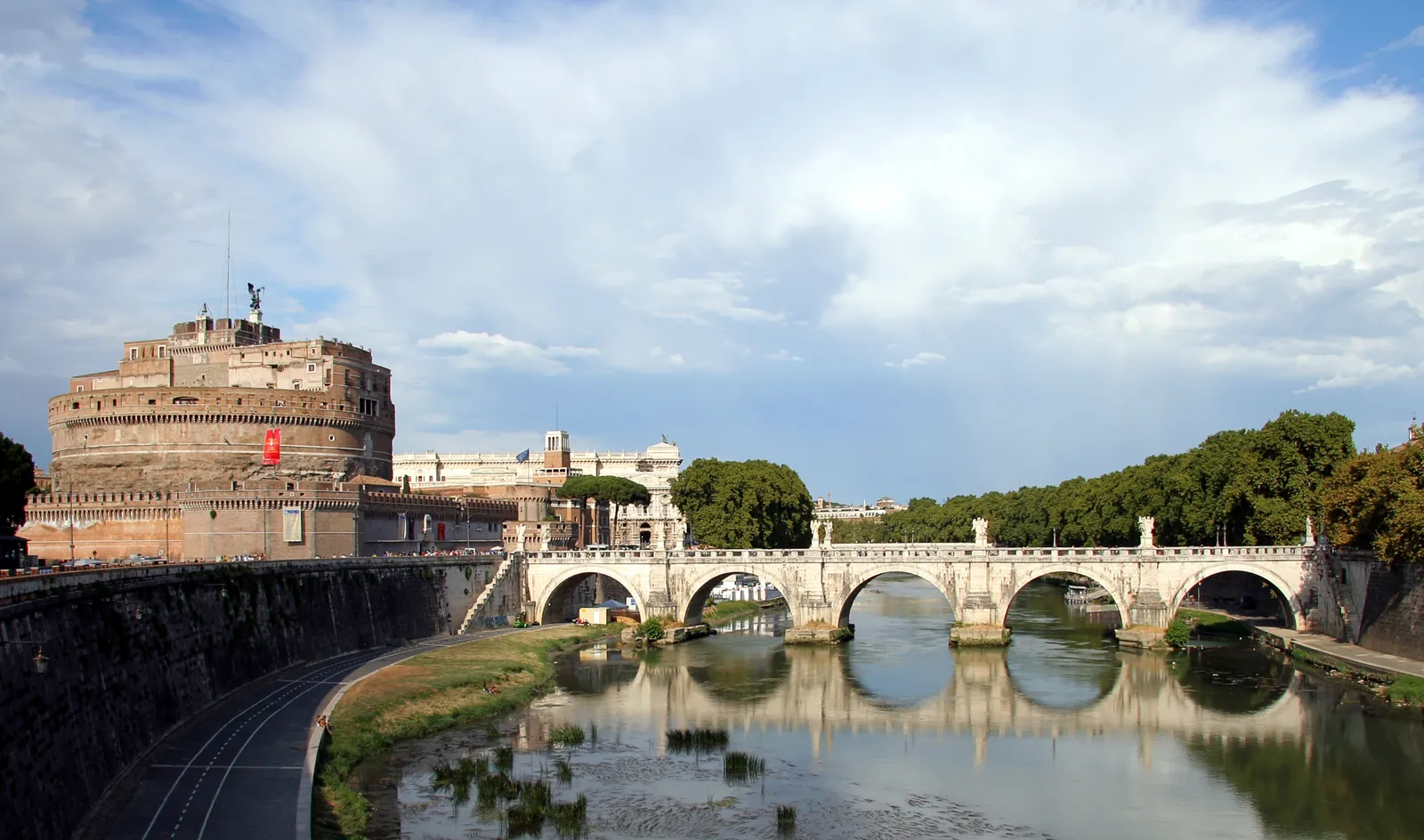
Ten minutes east along the riverbank, a fat brick drum sits on a square base at the head of a bridge. Hadrian built it in the AD 130s as a tomb for himself and his successors, and almost every emperor down to Caracalla was buried in it.
Then it became a fortress, then a prison, then a papal bolthole. The Passetto di Borgo, an elevated walled corridor running about 800 metres from the Vatican to the castle, was built so a pope under threat could get out of the palace without touching the street, and Clement VII used it for exactly that during the sack of Rome in 1527. The spiral ramp inside still runs on Hadrian’s original alignment, and the terrace at the top looks straight back at the dome you may just have climbed.
Entry is 18 euros, and booking it ahead through a tours and activities platform gets you past the ticket window rather than the security check. It opens 9am to 7.30pm with last admission at 6.30, and it closes on Mondays. The Ponte Sant’Angelo in front of it is free and always open: ten angels along the parapet, designed by Bernini and carried out mostly by his workshop, each holding an instrument of the Passion.
The Vatican Museums are a half-day, not a stopover
This is the honest part. The Vatican Museums and the Sistine Chapel are the reason most people come to this corner of Rome, and they are a bad fit for a few free hours before a flight. The route through is one-way and roughly seven kilometres long if you follow it end to end, the entrance is on the other side of the Vatican walls from the square, near Cipro station, and even with a timed ticket the crowd sets the pace once you are inside.
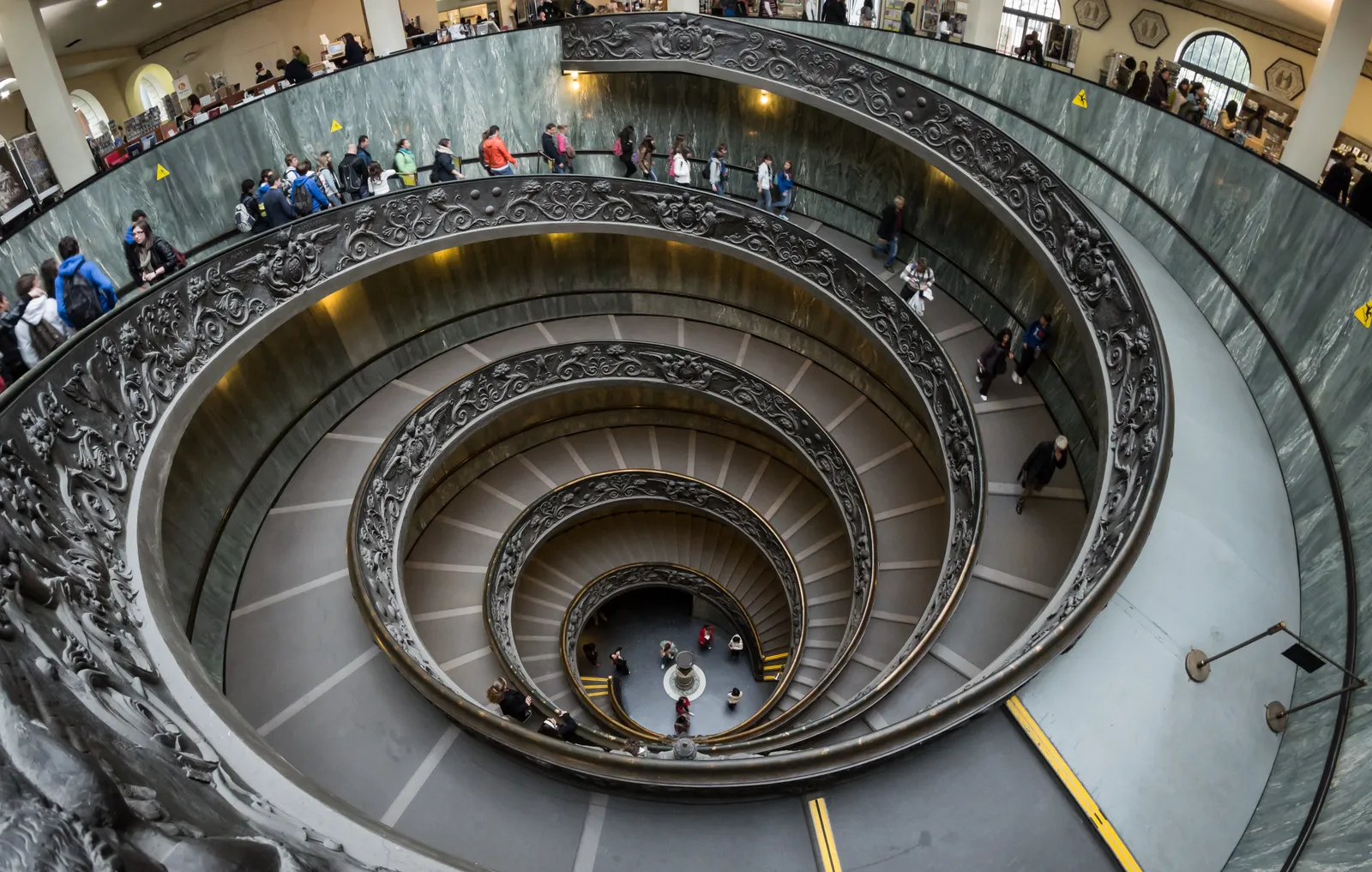
If you have five hours or more and this is what you came for, it can be done, but book the slot rather than turning up: you can reserve timed entry in advance through a tours and activities platform, and the same dress code applies at that door as at the basilica’s. Giuseppe Momo’s double spiral staircase of 1932, near the exit, is the one thing everyone photographs on the way out; the two helices never meet, so nobody going down passes anybody coming up.
If your stop is shorter than that, the basilica and the dome are the version that fits, and the walk through the old centre on the other side of the river covers more ground in the same time.
Coming back the other way for a Fiumicino flight, allow two and a half hours from the square to the gate: the walk to the metro, twelve minutes to Termini, up to fifteen on the platform for the airport train, 32 minutes on it, then check-in and security. That is a longer tail than anywhere on the eastern side of the city, which is the real cost of crossing the river for a stop this short.
Frequently asked questions
What will get me turned away at the basilica door?
Bare shoulders and knees, mostly. St. Peter's enforces its dress code at the screening point under the colonnade and it applies to everyone: no shorts, no short skirts, no vest tops, on a hot August afternoon as much as in February. A scarf over the shoulders is enough to satisfy it and vendors on the approach sell them for a few euros, but it is easier to have sleeves on before you join the queue than to argue at the front of it. The same screening takes sharp objects, and it turns back large bags outright.
Is a Wednesday morning a bad time to come here?
It is a different proposition, at least. The pope's general audience is held on Wednesdays, usually in St. Peter's Square itself and in the Paul VI Hall in bad weather, with security opening around 7.30am and the audience beginning about 9. The square is laid out with seating for it from early morning. Free tickets come from the Prefecture of the Papal Household. If your stop lands on a Wednesday morning and you had planned a quick look at the basilica, plan around the middle of the day instead, or go and see Castel Sant'Angelo first.
Can I get up the dome without climbing 551 steps?
Partly. The lift costs 10 euros and takes you as far as the roof terrace; from there it is still around 320 steps to the lantern, and there is no way to avoid them. The full climb from the ground is 551 steps for 8 euros. The last stretch is the hard part either way: the staircase narrows and leans inward as it follows the curve of the dome, so it is single file, and there is no way back down except the same stairs. The roof terrace itself, which the lift does reach, has a fair view of the square on its own.
How long does it actually take to get here from Termini?
About 25 minutes door to door. Metro line A runs from Roma Termini to Ottaviano in roughly 12 minutes, and it is a further ten-minute walk down Via Ottaviano to the top of the colonnade. Bus 40 and bus 64 run from Termini to the Tiber near Castel Sant'Angelo and take longer in traffic but drop you at the other end of this route, which works well if you want to walk toward the basilica rather than away from it.