Rome Layover Near Ostiense and Piramide
Part of the full Rome Layover: Colosseum and Pantheon From FCO
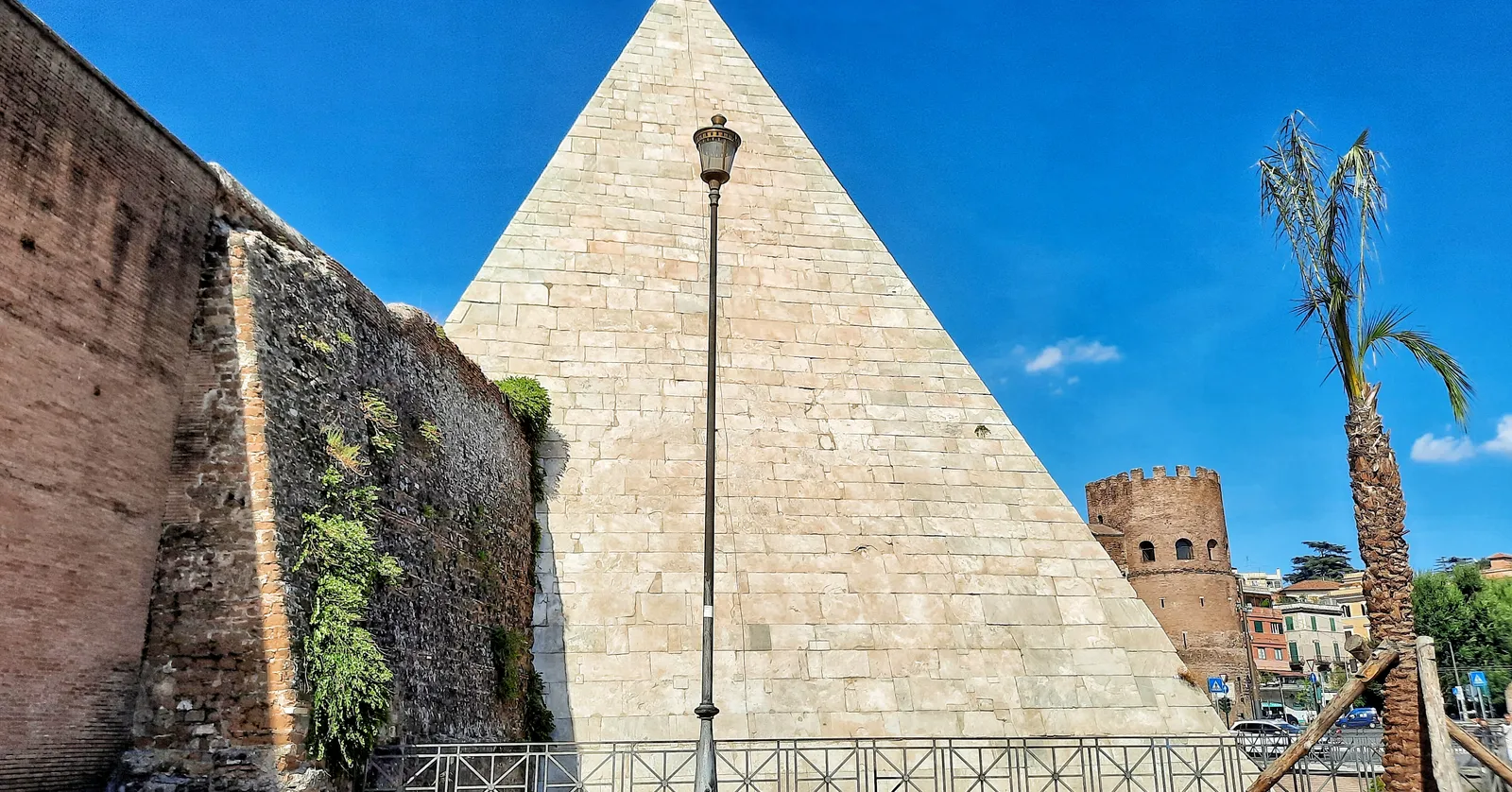
Rome’s Ostiense station sits south of the centre, and directly across the road from it stands a 37-metre Roman pyramid, with Keats and Shelley buried in the cemetery beside it and the Testaccio market hall ten minutes further west. None of the imperial monuments in the middle of the city are on this route.
Inside the Pyramid of Cestius, two weekends a month
The first thing you see coming out of Ostiense is a pyramid, which is not a sentence most people expect to write about Rome. Gaius Cestius, a magistrate with more money than restraint, had it built as his tomb between about 18 and 12 BC, in the decades after Egypt’s annexation when Egyptian things were briefly the fashion in the city. It stands 37 metres high on a base 29.6 metres square, faced in slabs of white marble over brick and concrete: taller than it is wide, which is the giveaway that whoever drew it up was working from descriptions rather than from the buildings themselves.
It survived because it got absorbed. When the Aurelian Walls went up between 271 and 275 the pyramid was built straight into them as a triangular bastion, which is why it now sits half-embedded in a brick curtain wall next to the Porta San Paolo gate.
The outside is free and permanently on view. The burial chamber inside is another matter: it opens for individual visits at 11am on the third and fourth Saturdays and Sundays of each month, costs 5.50 euros, is usually run in Italian, and has to be booked in advance through the state archaeological service. Inside is a plain barrel-vaulted room a little under six metres long, painted in the third Pompeian style; it was looted in antiquity and what survives is the decoration on the plaster rather than anything Cestius was buried with.
Keats and Shelley in the Non-Catholic Cemetery
On Via Caio Cestio, beside the pyramid, there is a gate with a bell on it. Ring it and you are let into a walled garden of cypress, box hedge and olive that has been burying Rome’s non-Catholic dead since the early eighteenth century, in the days when Protestants could not be buried in consecrated ground and were put outside the walls, at night.
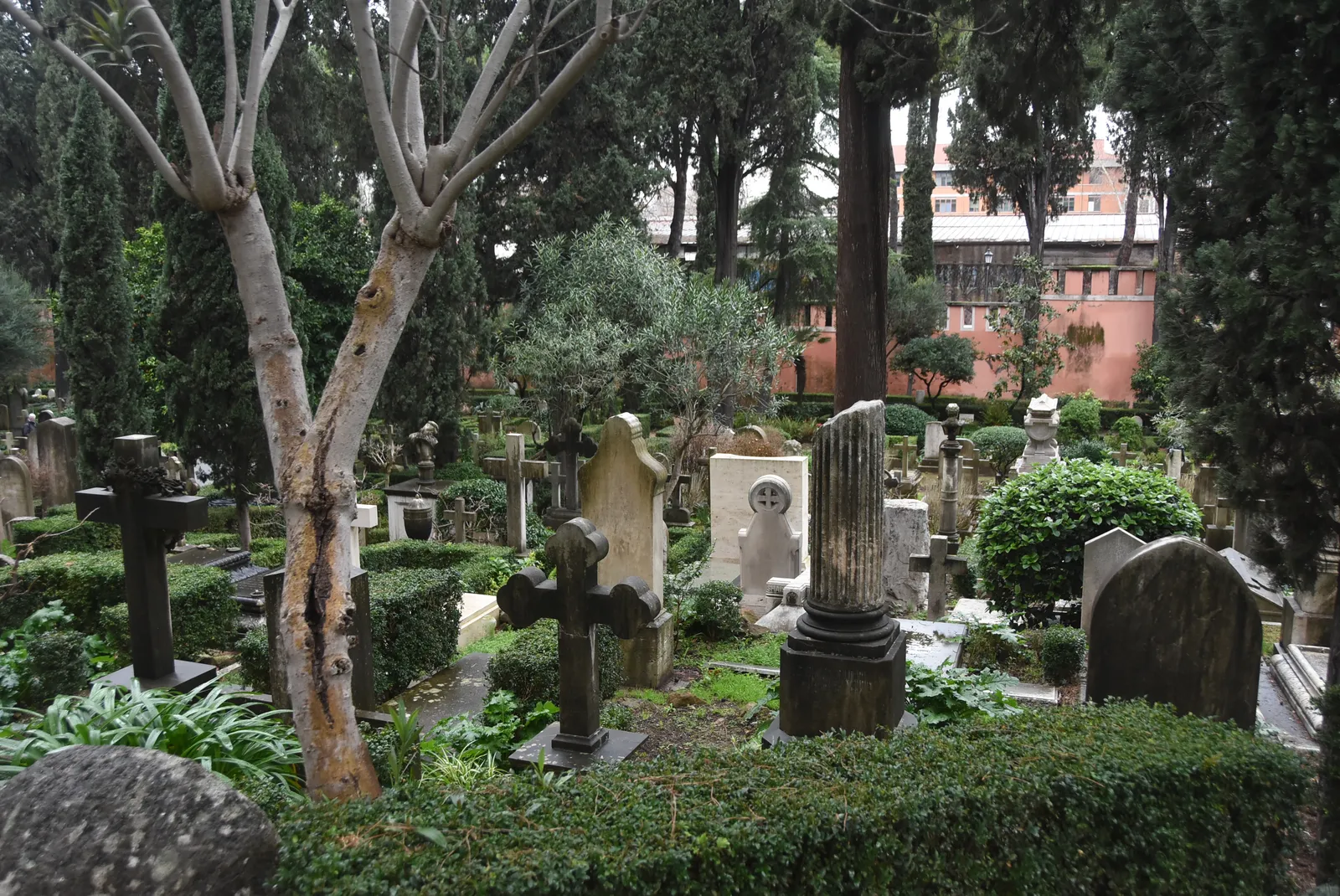
John Keats is in the oldest part, under a stone that does not carry his name. He died in Rome at twenty-five in 1821, bitter about his reviews, and left instructions for the epitaph: Here lies One Whose Name was writ in Water. His friend Joseph Severn is beside him. Shelley, who drowned off the Tuscan coast the year after, is up against the far wall under three words, Cor Cordium, heart of hearts. Antonio Gramsci is here too, and so is a working population of cats.
Entry is free in the sense that nobody stops you, and five euros in the sense that this is what the cemetery asks per visitor to stay open. One thing to check before you build a few hours around it: it closed for the whole of August 2026 and reopens on 1 September, and it takes a maintenance week in mid-July. The rest of the year it runs 9am to 5pm Monday to Saturday, mornings only on Sundays.
A hundred stalls at Mercato Testaccio
Ten minutes west of Ostiense station, the neighbourhood changes character into Testaccio, Rome’s former slaughterhouse and river-port district, built for the people who worked the docks. It has stayed stubbornly itself while the rest of the centre turned into a menu in four languages.
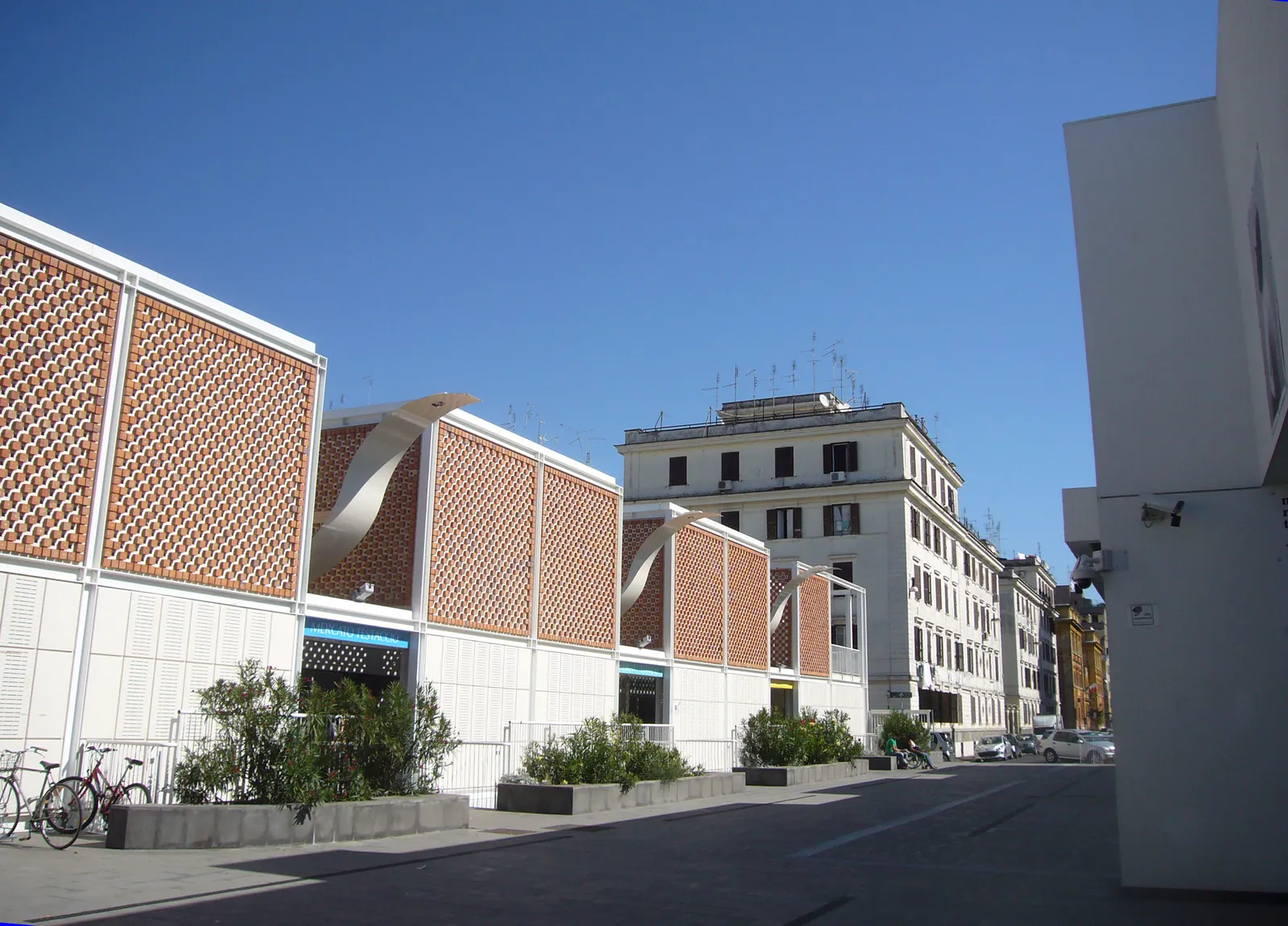
The market moved into a purpose-built hall on Via Beniamino Franklin in 2012, and it is the reason to come: around a hundred stalls of produce, fish, butchery and cooked food, priced for people doing their weekly shop rather than for visitors. This is the home ground of Roman offal cooking, the quinto quarto, the fifth quarter that the slaughterhouse workers were paid in, and several stalls still sell it to people who grew up eating it.
It opens at 7am and shuts at 3.30pm, Monday to Saturday, closed Sundays. That is the single most useful thing on this page to know in advance, because a mid-afternoon arrival finds the shutters coming down.
A hill built out of 53 million oil jars
Behind Mercato Testaccio the ground rises about 35 metres into what looks like an unremarkable scrubby mound with a running track and some workshops around its foot. It is not a natural hill. It is a rubbish tip, and everything in it is broken pottery.
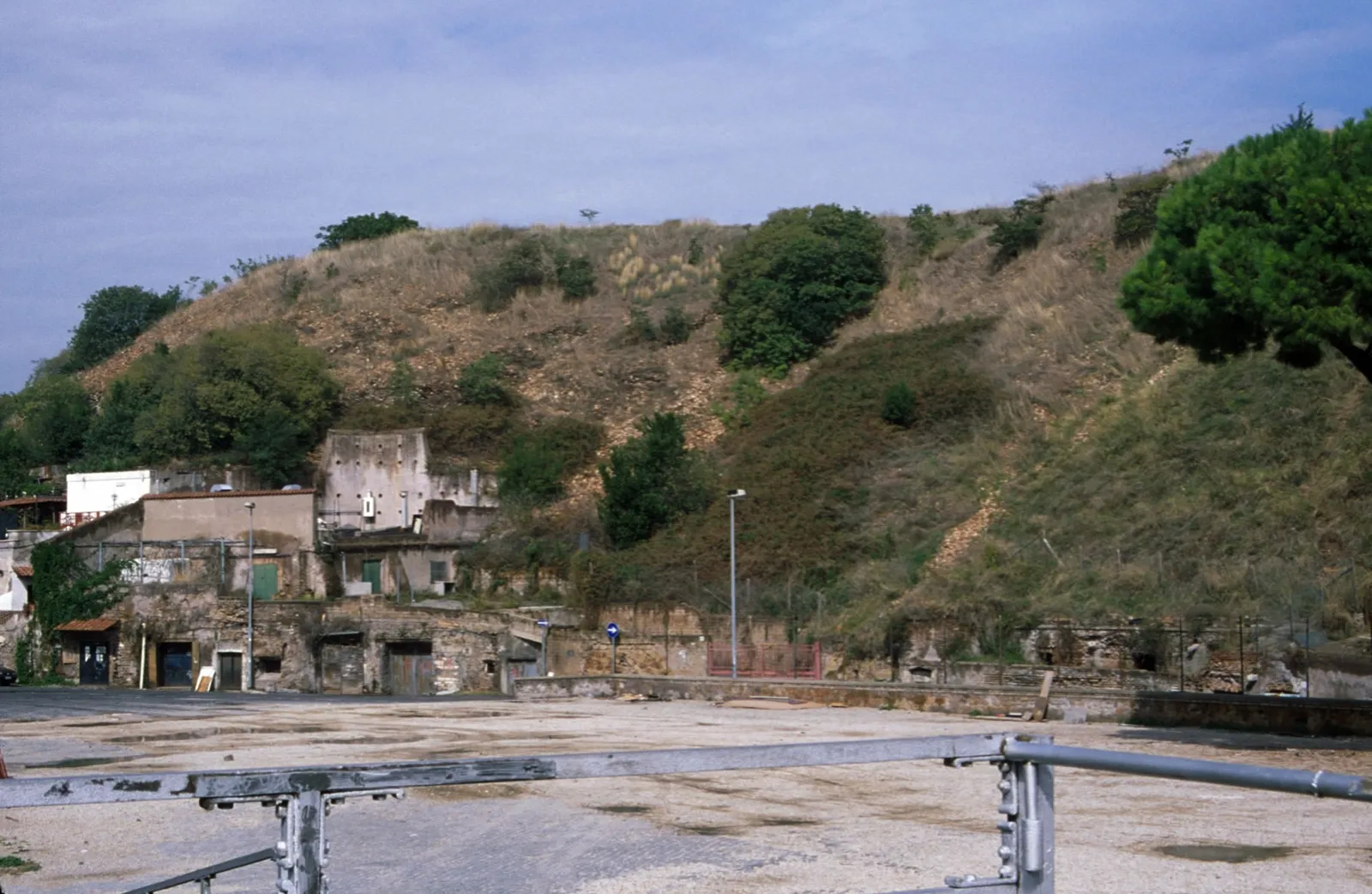
For something over a century, from roughly AD 140 to 250, the amphorae that carried olive oil up the Tiber to the imperial capital were emptied here and smashed. Oil soaks into terracotta and turns rancid, so unlike wine jars these could not be reused, and rather than scatter them the authorities stacked them in orderly terraced layers with lime between. The estimate is 53 million vessels, in a mound nearly a kilometre around. Many still carry painted inscriptions recording the shipper, the weight and the consul of the year, which has made this heap of ancient litter one of the better records of Roman trade that survives anywhere.
Ostiense and Piramide are 257 metres apart
The one piece of local geography worth planning around is that the two stations here are not the same building. Roma Ostiense is the mainline station, built in 1938 to receive Hitler on his state visit and finished in 1940, all travertine and columned portico with a Bellerophon relief over the front. Piramide, the metro line B station, is a separate building about 257 metres away, four minutes on foot, and Porta San Paolo for the Lido line is a third. Signposts connect them but the walk is a walk, and on a return trip you pay it twice.
The FL1 line runs from Ostiense straight to Fiumicino for 8 euros, which makes this one of the easier corners of Rome to leave from, and the same line reaches Roma Trastevere one stop north if you would rather spend the time on the west bank. If your stop runs past four hours and you want the monuments after all, metro line B reaches the Colosseum in a few minutes and the walk through the old centre picks up from there.
Frequently asked questions
Can I go inside the Pyramid of Cestius?
Only on two weekends a month, and only if you booked. Individual visits run at 11am on the third and fourth Saturdays and Sundays of each month, cost 5.50 euros, and are usually conducted in Italian; group slots run at 10am and midday. Reservation through the state archaeological service is compulsory and places go well in advance, so this is not something to decide on the day. What you see inside is the burial chamber and its wall paintings in the third Pompeian style. From the outside, at any hour, it costs nothing.
Is the Non-Catholic Cemetery open in August?
Not in 2026. It closed for the whole of August 2026 and reopens on 1 September; it also shuts for a maintenance week in mid-July. Outside those, hours are 9am to 5pm Monday to Saturday with last entry at 4.30pm, and 9am to 1pm on Sundays and public holidays, last entry 12.30. There is no admission charge, but a five-euro contribution per visitor is asked for at the gate and it is what keeps the place running.
Why does Ostiense station look like that?
Because it was built for a state visit. Work started in 1938 so that Rome would have something monumental to receive Adolf Hitler at, and the architect Roberto Narducci gave it a travertine front with a columned portico, a relief of Bellerophon and Pegasus by Francesco Nagni, and black and white floor mosaics on Roman themes in the vestibule. Hitler actually arrived in May 1938, before it was finished; the building was only completed in 1940. It is a strange thing to walk through on the way to a regional train, and most people crossing the concourse never look up.
Is this a cheap few hours compared with central Rome?
Noticeably. The pyramid from the outside, Monte Testaccio and the streets around it cost nothing, the cemetery asks five euros rather than charging it, and Testaccio market is where the neighbourhood actually shops, so a plate of food there runs well under what the same thing costs near the Pantheon. The one real expense on this route is the metro ticket at 1.50 euros, and even that is only needed if you would rather not walk the 257 metres between the two stations.