Rome Layover Near the Spanish Steps
Part of the full Rome Layover: Colosseum and Pantheon From FCO
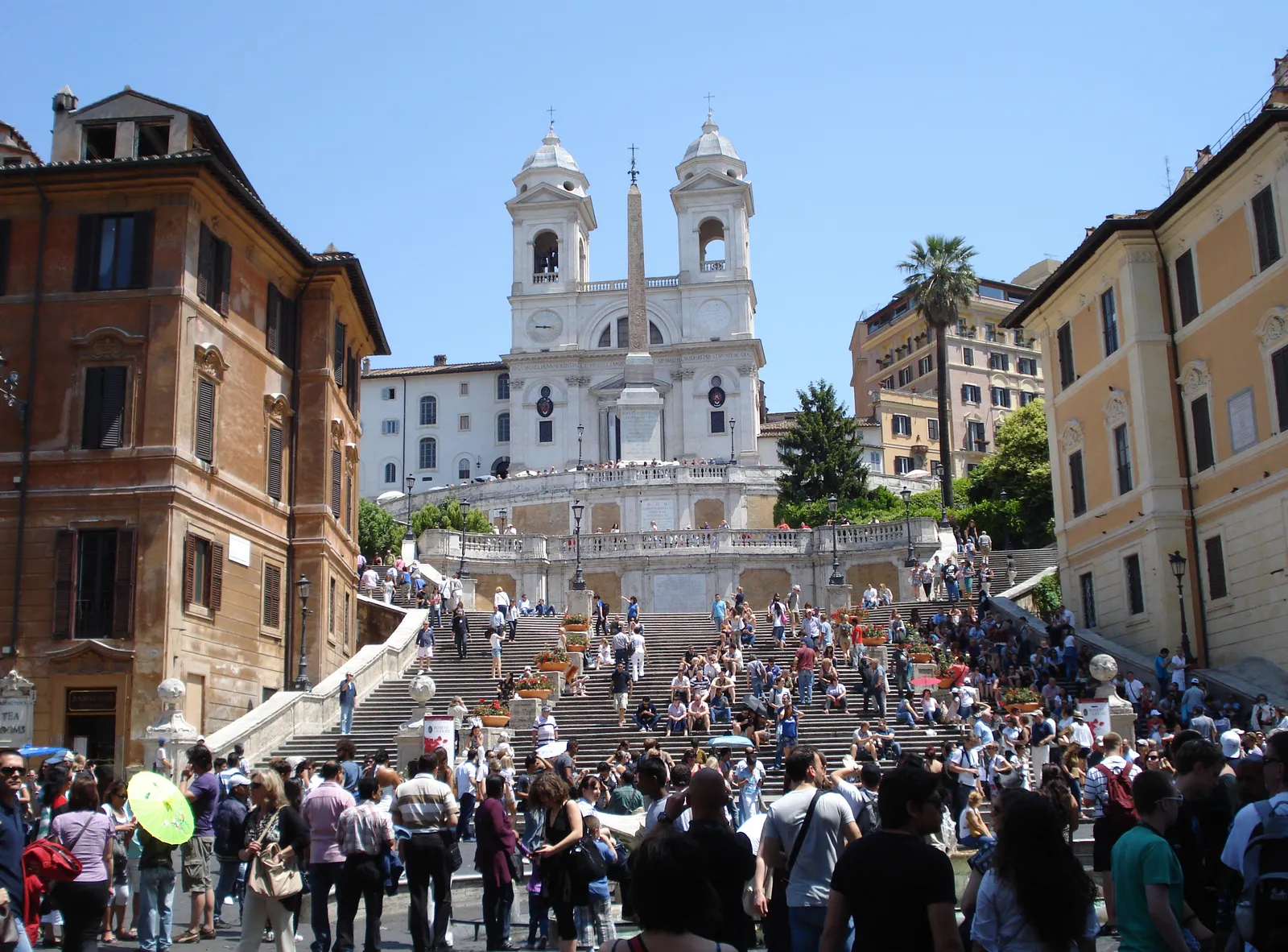
Piazza di Spagna sits at the northern end of Rome’s old centre, directly above its own metro station, and the 135 steps rising out of it to the church of Trinità dei Monti are the reason most people come. At the foot of them is the apartment where Keats died, along one side runs Via dei Condotti, and at the top the hill carries on into the Pincio terrace and the Villa Borghese gardens. It is a slower stop than a run of ancient monuments.
The Spanish Steps have banned sitting since 2019
The staircase was built between 1723 and 1725 by Francesco de Sanctis and Alessandro Specchi, funded by a bequest a French diplomat had left for the purpose in 1660 and then argued over for sixty years. It solved a practical problem: the church of Trinità dei Monti stood on French-controlled ground at the top of a steep, awkward slope, and the 135 steps are the diplomatic compromise that finally got people up it, splitting and rejoining in terraces rather than running straight.
Since 2019 you cannot sit on them. Rome extended its urban decorum rules to cover the staircase, banning sitting, lying, eating and drinking, with fines from 250 euros up to 400 if the stone gets marked, and officers do move people along. It changes the character of the place: what used to be Rome’s most famous set of benches is now a staircase people walk up.
In April and early May the middle terraces are banked with azaleas in pots, several hundred of them brought up from the city nursery, which is the one time of year the steps are worth photographing rather than just climbing.
The Barcaccia, a fountain shaped like a sinking boat
At the bottom of the staircase, set into a hollow below pavement level, is a stone boat half full of water and slowly going down.
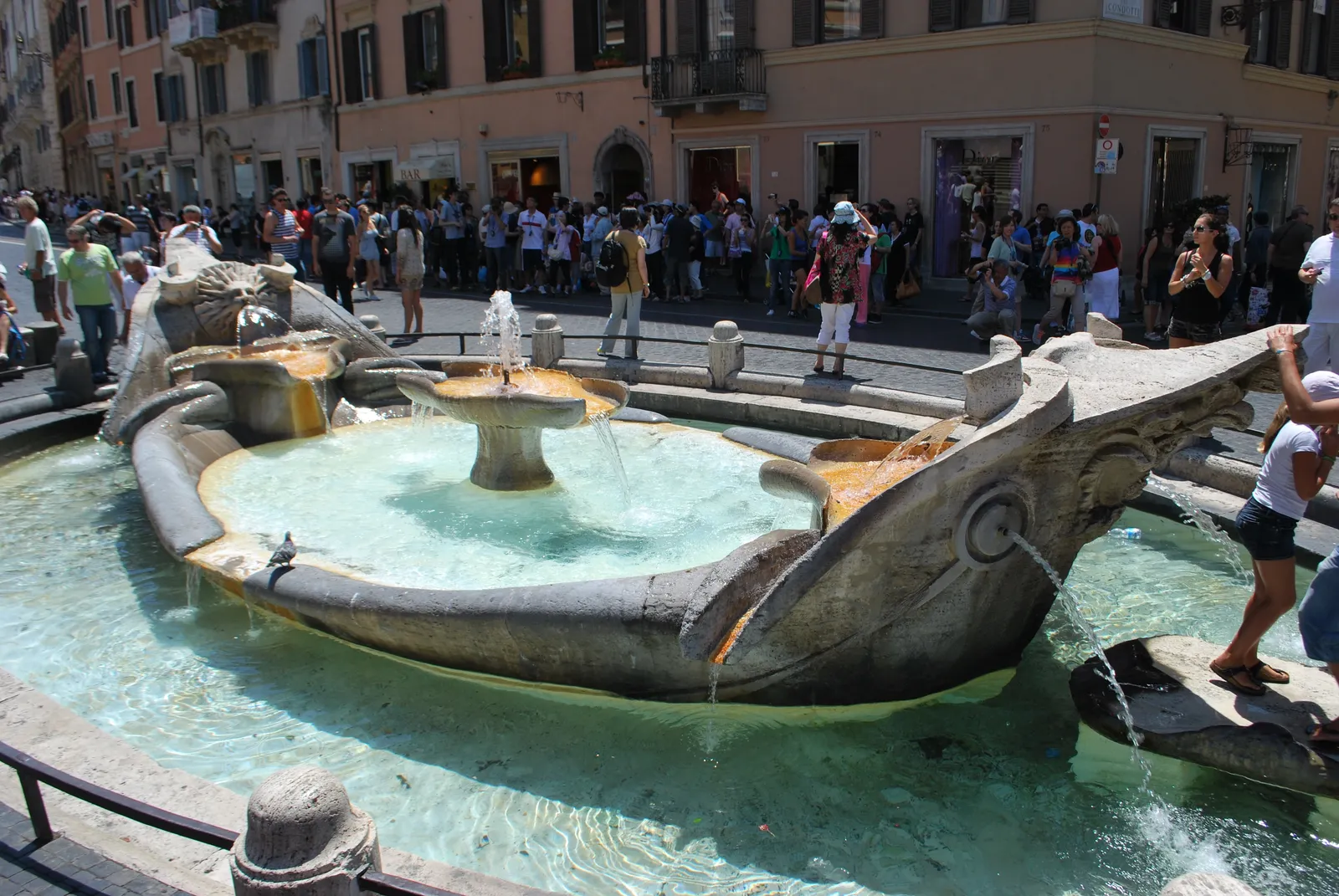
The Fontana della Barcaccia, the fountain of the worthless old boat, was made between 1627 and 1629 and is usually credited to Pietro Bernini, father of the more famous Gian Lorenzo, who is now thought to have worked on it too. The sunken design was not whimsy. The Acqua Vergine, the ancient aqueduct that feeds it, arrives at this square with very little pressure, so a tall fountain was impossible; dropping the basin below street level was the way to get any flow at all. Drinking water still runs from it, and unlike the staircase behind it nobody minds you sitting on the rim.
The room where Keats died, at number 26
The ochre house against the bottom right of the staircase is Piazza di Spagna 26. John Keats came to Rome in November 1820 on medical advice, took rooms on the second floor, and died there of tuberculosis on 23 February 1821, aged twenty-five.
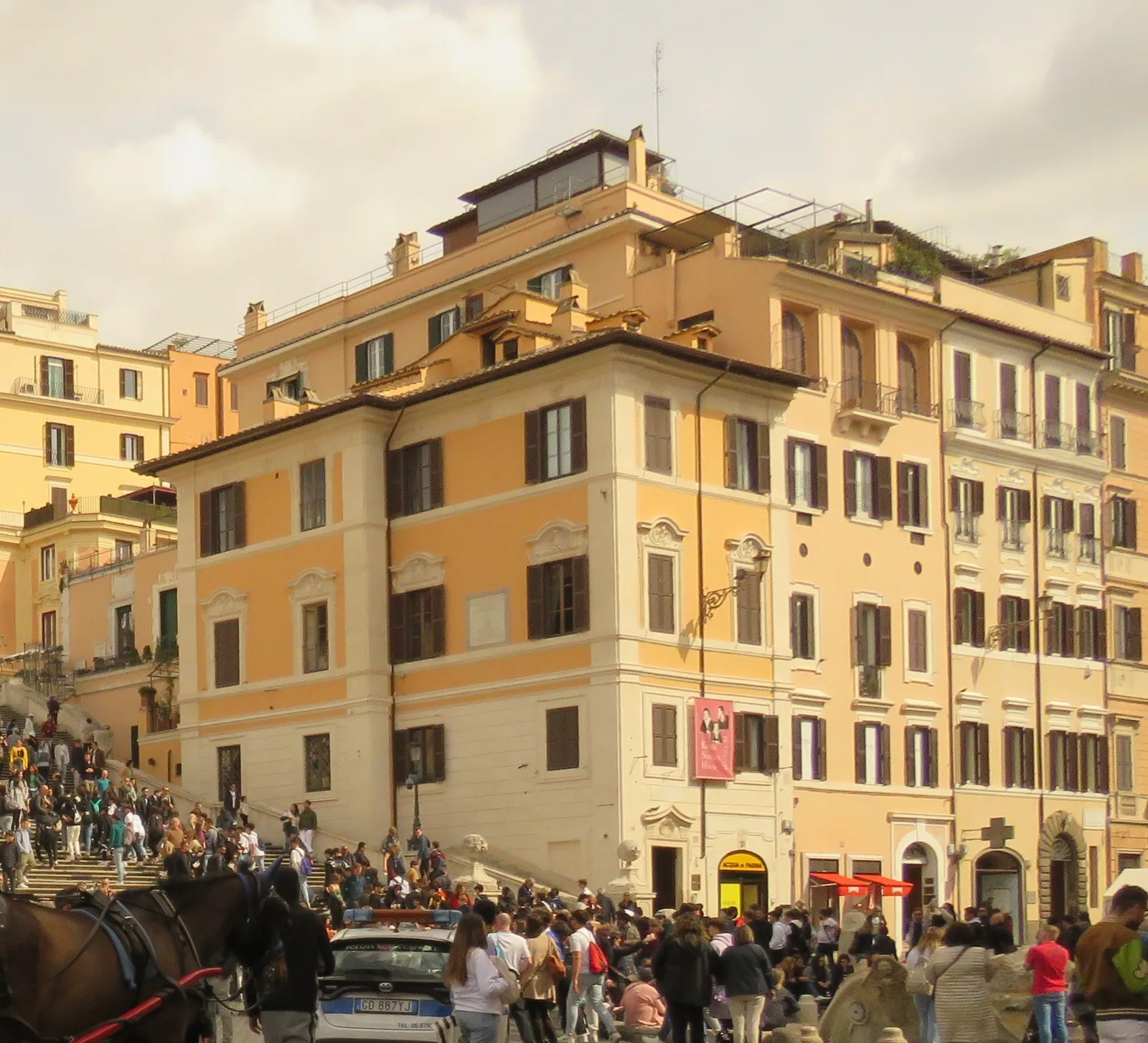
It is now the Keats-Shelley Memorial House, and it is a small museum: his bedroom kept as it was, with a view of the steps from the window he spent his last months looking at, and a few rooms of letters, manuscripts, portraits and relics of the English Romantics in Italy. Entry is 7 euros, it opens Monday to Saturday from 10am to 1pm and again from 2pm to 6pm, last entry 5.45, and half an hour covers it comfortably.
Keats himself is buried at the other end of the city, in the Non-Catholic Cemetery beside the Pyramid of Cestius, under a stone that does not carry his name.
That storage note is the practical half of what this stop is: shop windows and a park bench rather than monuments, and with the staircase itself off limits for sitting, there is nowhere obvious along the way to put anything down.
Shop windows the length of Via dei Condotti
Via dei Condotti runs west from the foot of the steps to Via del Corso, and it is where Rome keeps its expensive shops: a straight, narrow, flat few hundred metres of flagship windows. You do not have to buy anything, and the view back along it from the top of the staircase, with the street running dead straight between the palazzi, is one of the better free things here.
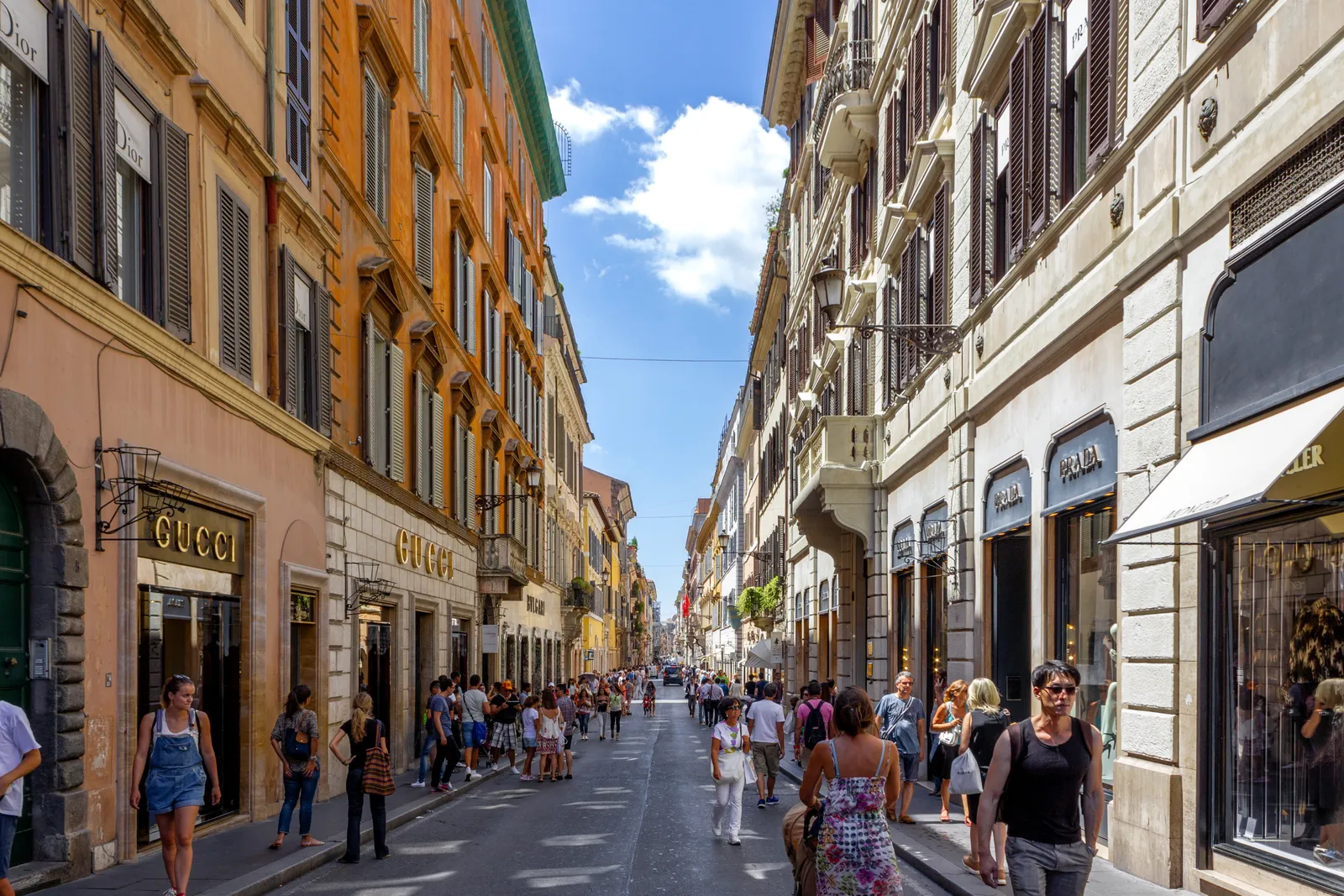
One correction to older guidebooks, and it is worth knowing before you go looking: the Antico Caffè Greco at number 86, which had traded there since 1760 and served Byron, Goethe and Casanova, closed in October 2025 after a long dispute over its rent and stands empty. Its owners have talked about reopening and the building’s landlord about finding a new tenant, but at present the door is shut.
The Pincio terrace over Piazza del Popolo
From the top of the steps the ground keeps climbing, and ten minutes north along the ridge the Pincio terrace opens out over a balustrade lined with busts. Below is the oval of Piazza del Popolo with its Egyptian obelisk, and beyond it the roofs run west to the dome of St Peter’s.
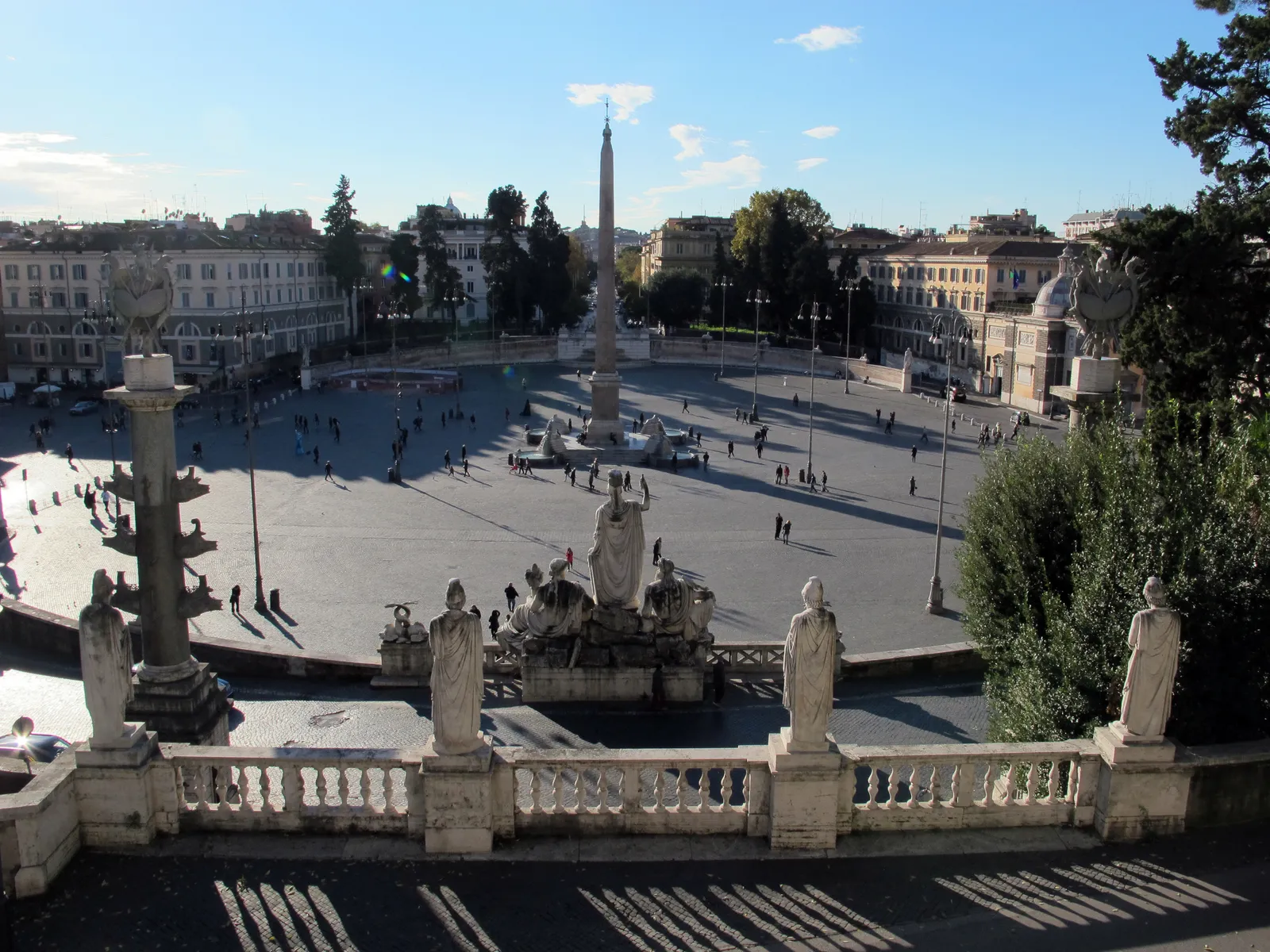
There is no gate and nothing to pay, and behind the terrace the Villa Borghese gardens run on for a couple of kilometres of gravel walks, umbrella pines and benches, which on this particular stop is the point.
The Galleria Borghese is at the far side of them, holding Bernini’s Apollo and Daphne and six Caravaggio paintings, the largest group of them in any one collection, and it needs planning rather than wandering into: admission runs in fixed two-hour blocks at 9, 11, 1, 3 and 5, capped at 360 visitors each, with no ticket window at the door. A ticket is 16 euros plus a compulsory 2-euro booking fee, and you can reserve a slot in advance through a tours and activities platform. With less than five hours it is not worth the commitment; the gardens are.
Spagna station is directly under the square
Metro line A has a station called Spagna underneath Piazza di Spagna, which makes this one of the easiest corners of the centre to reach and leave. Roma Termini is three stops east, past Barberini and Repubblica, about six minutes, and the airport train to Fiumicino leaves from there, so budget around two hours from the square to the gate: the metro, up to fifteen minutes waiting on the platform at Termini, 32 minutes on the train, then check-in and security.
The station has a second exit as well, reached from the platforms by a run of moving walkways and coming out by the Porta Pinciana gate into the Villa Borghese gardens, which saves the climb if you are heading for the Pincio and would rather walk down than up. And if you decide that shop windows and a park are not what you came to Rome for, the walk through the old centre starts twenty minutes south of here and picks up the Trevi Fountain, the Pantheon and the Colosseum instead.
Frequently asked questions
Can I sit down anywhere around Piazza di Spagna?
Not on the staircase. Rome banned sitting, lying, eating and drinking on the Spanish Steps in 2019 and fines run from 250 euros to 400 if you mark the stone; officers patrol the steps and move people on. The places that do work are the rim of the Barcaccia fountain at the bottom, the benches along the Pincio terrace at the top of the hill, and the grass and seating in the Villa Borghese gardens beyond it. This is a stop with plenty of standing and very little official sitting, which is worth knowing before you plan a long one here.
How much is the Keats-Shelley House and how long does it take?
Seven euros for adults, and half an hour is enough. It occupies the apartment at Piazza di Spagna 26, right against the bottom right-hand side of the staircase, where John Keats died of tuberculosis in February 1821 at twenty-five. His bedroom is kept as it was, and the rest is letters, manuscripts and Romantic-era relics across a few small rooms. It opens Monday to Saturday, 10am to 1pm and 2pm to 6pm, with last entry at 5.45, so the middle of the day is a closed door.
Is the Borghese Gallery realistic before a flight?
Only with a booked slot and five hours or more. Entry runs in fixed two-hour blocks at 9, 11, 1, 3 and 5, capped at 360 people each, and there is no walk-up ticket window at all; a ticket is 16 euros plus a compulsory 2-euro reservation fee. Add twenty minutes to walk up through the gardens from the top of the steps and it is a solid three hours of your day. The gardens around it are free and open, so a shorter stop can have the park without the gallery.
What is worth seeing here at night?
The staircase and the square, both of which are lit and open at all hours, and the shop windows on Via dei Condotti, which stay lit long after the shops shut. The museums and the gallery are all daytime-only, so an evening stop here is a looking-at-things stop rather than a going-inside one. That suits a late departure better than it sounds: the crowds on the steps thin out considerably after dark, and the Pincio terrace above is a good place to watch the light go.