Rome Layover: Museums Beside Termini Station
Part of the full Rome Layover: Colosseum and Pantheon From FCO
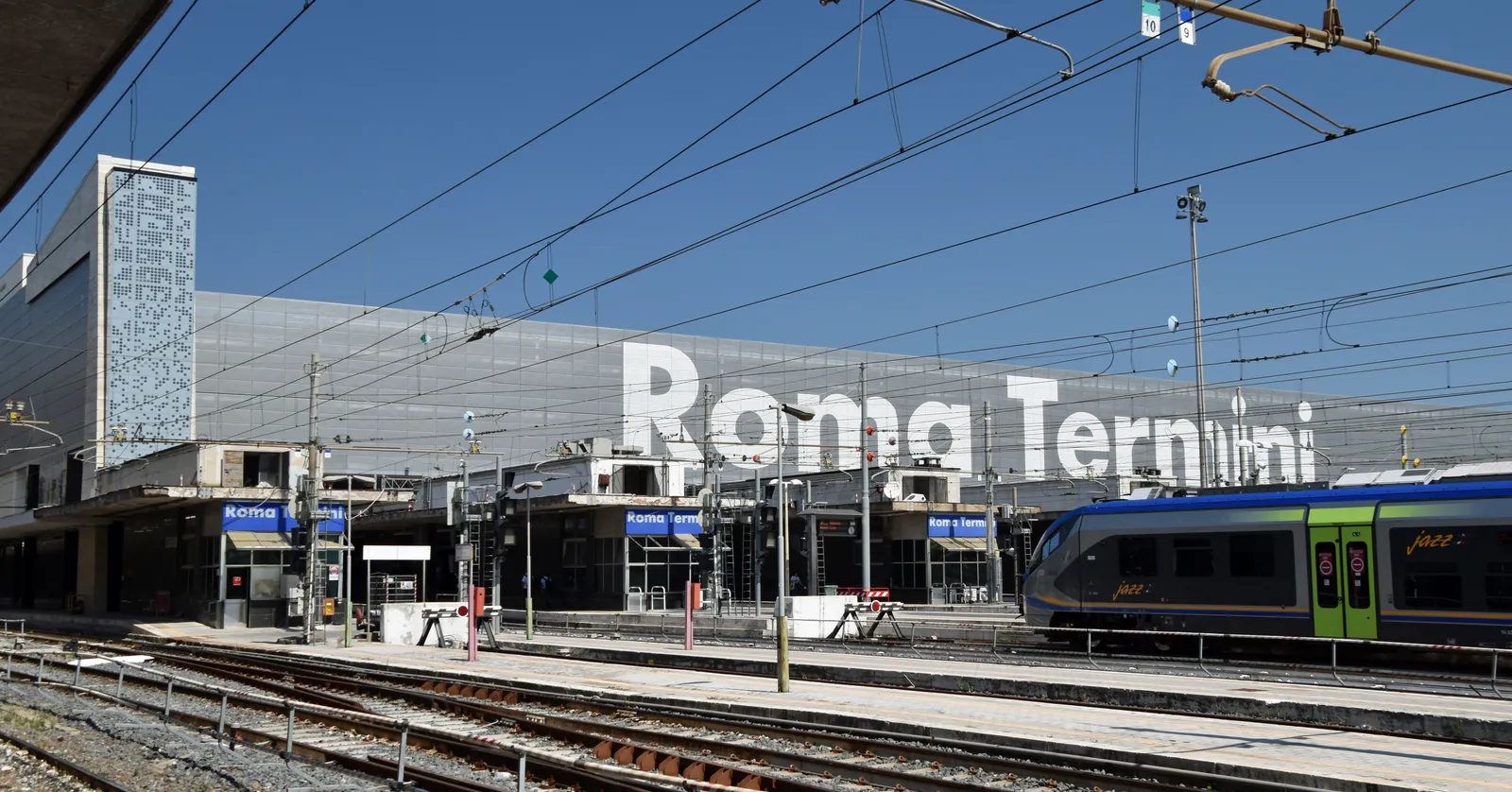
Rome’s Termini station has a stretch of fourth-century-BC city wall standing free on the square outside it, and two branches of the National Roman Museum within a few minutes of the doors: Palazzo Massimo, which holds the painted garden room from Livia’s villa, and the Baths of Diocletian across the road. It is a much tighter radius than a walk across the old centre, and it suits a stop measured in two or three hours rather than a full afternoon.
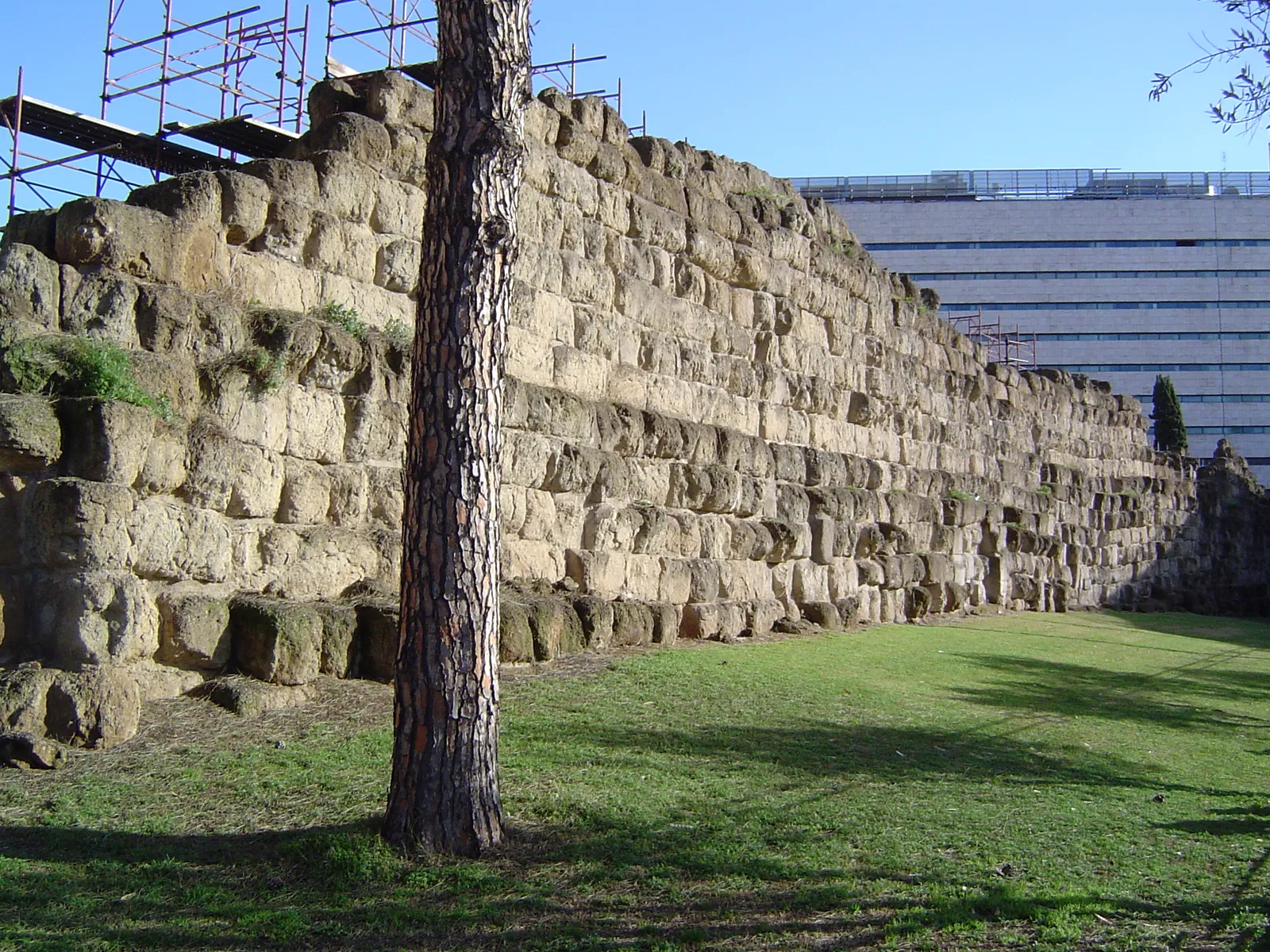
The Servian Wall on Piazza dei Cinquecento
Come out of the front of Termini, look left, and there is a bank of squared golden blocks sitting on the grass, about ninety metres of it. This is the Servian Wall, built in the early fourth century BC out of tufa quarried at Grotta Oscura, and it is the longest and most accessible surviving run of Rome’s first city wall. Nothing encloses it. There is no ticket, no gate and no opening hour: it is a piece of street furniture that happens to be twenty-four centuries old, and most of the people crossing the square to catch a train walk past it without a glance.
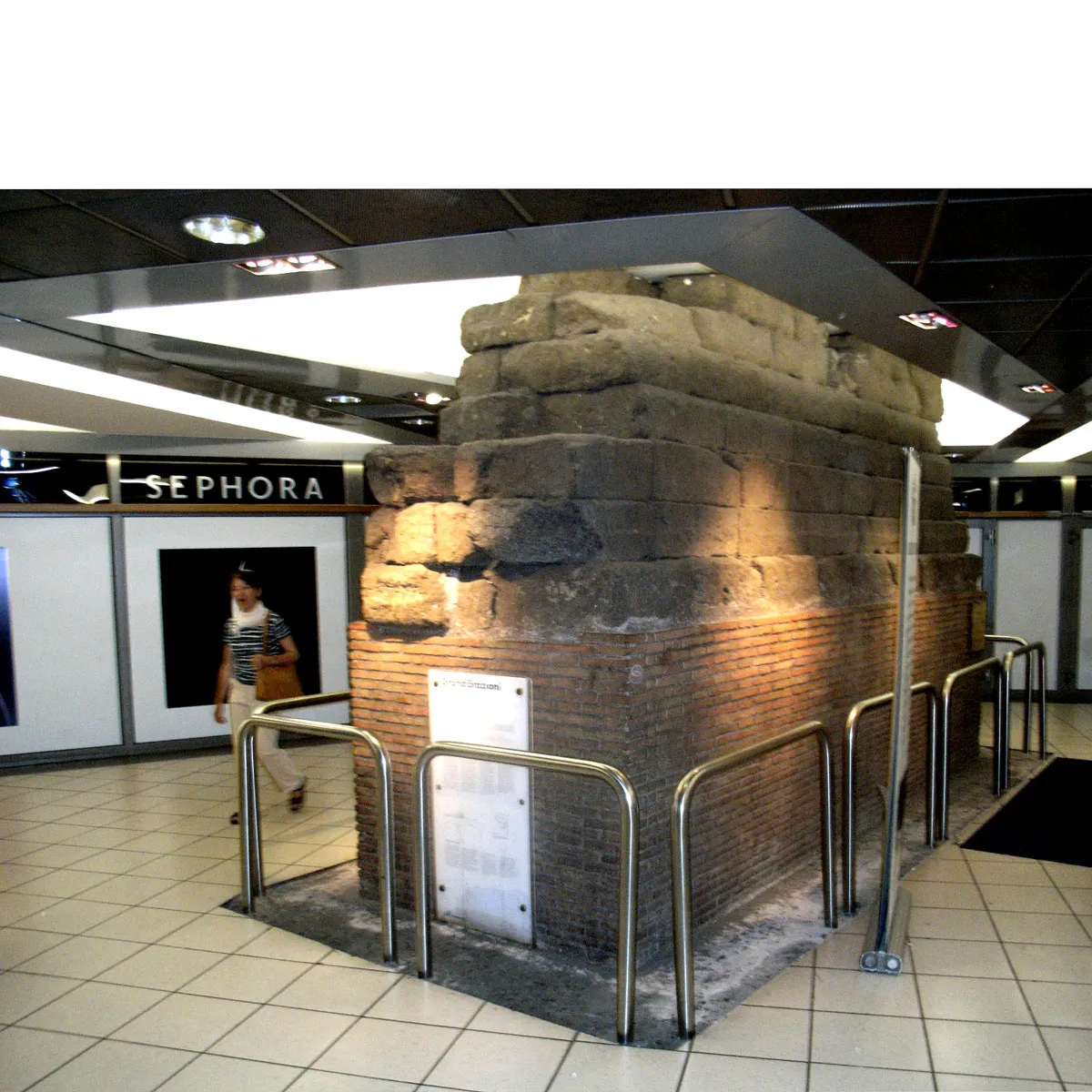
The stranger version is downstairs. When the station’s lower-level shopping concourse was dug out, another block of the same wall turned up, and rather than remove it the builders left it standing where it was and put the shops around it. It is still there, railed off in the middle of a tiled passage between lit shopfronts, with an explanatory panel bolted to one face.
Getting to either of them with luggage is the awkward part: Termini’s central concourse and the ramp down to the metro funnel every high-speed arrival through the same few gates, and they bunch hardest in the ten minutes after a Frecciarossa berths.
Livia’s painted garden room at Palazzo Massimo
Palazzo Massimo is two minutes from the station. The reason to go is on the second floor. Archaeologists took an entire underground dining room out of the villa Livia owned at Prima Porta, walls and all, and rebuilt it here: a continuous painted garden running unbroken around all four sides, quinces and pomegranates and laurel behind a low painted fence, birds in the branches, no figures and no story, just a room that pretends to be outdoors.
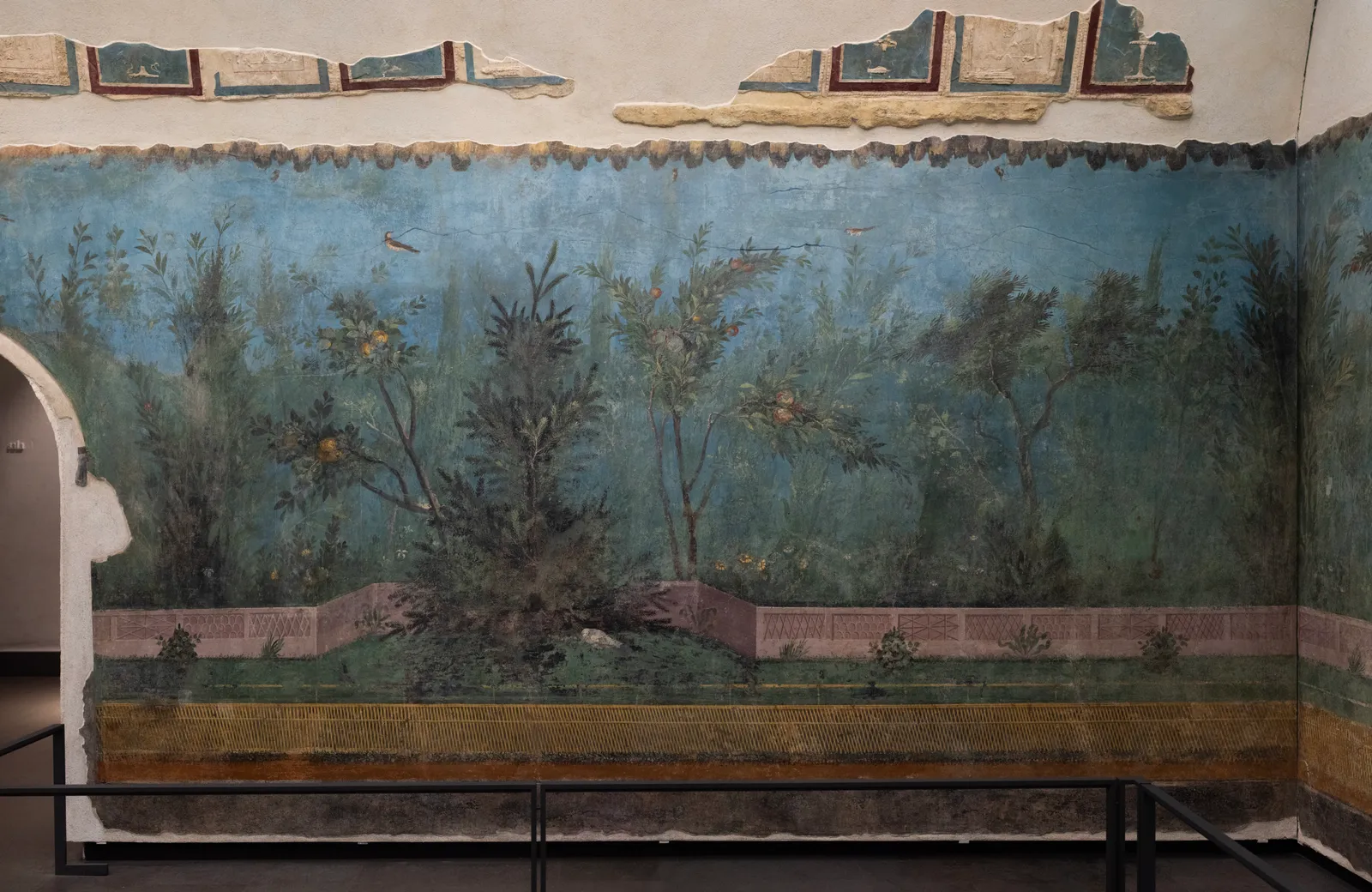
It was painted in the late first century BC and dug up in 1863. Downstairs, on the ground floor, is the Boxer at Rest, a Greek bronze from around 100 BC found on the Quirinal in 1885: a seated fighter with a broken nose and copper inlay for the blood, resting his gloved hands on his knees and looking up at something out of frame.
Entry is on a 15-euro combined ticket, and the museum is closed on Mondays. It rarely queues, which on a stop with a train to catch matters more than it would on a normal day out.
What survives of the Baths of Diocletian
The 15-euro combined ticket also covers this half, directly across Piazza dei Cinquecento. The Baths of Diocletian were the largest bath complex Rome ever built, finished around AD 306 and sized for something over three thousand bathers at once. What survives is enormous and fragmentary at the same time: brick walls the height of an office block, a cloister lined with inscriptions and sarcophagi, and column drums lying about the gravel where they fell.
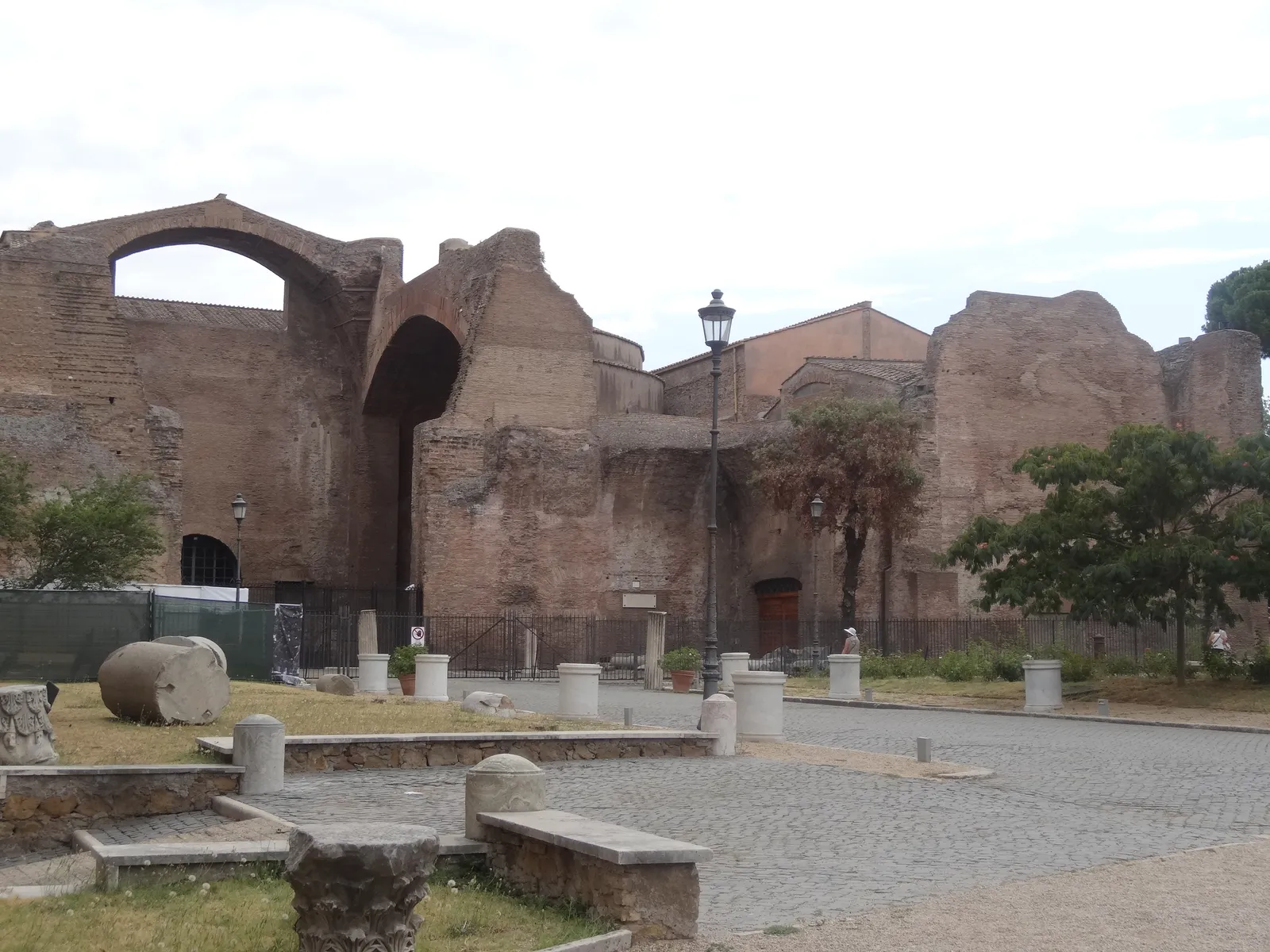
Part of the site is currently off the visitor route: the Natatio, the open-air swimming hall, along with Hall VIII and the Museum of Protohistory, is closed to the public until further notice, so check what is open before you commit the time. The cloister and the epigraphic galleries are the reliable part, and they are the part worth coming for. You can book a guided tour of the Baths through a tours and activities platform if you’d rather not navigate the combined ticket alone.
Caravaggio’s Judith at Palazzo Barberini
With more than three hours, Palazzo Barberini is fifteen minutes on foot uphill from Termini, or one stop on metro line A to Barberini. It is a full baroque palace with three of the seventeenth century’s biggest names in its fabric: Carlo Maderno started it, Bernini and Borromini both finished parts of it, and Borromini’s oval helicoidal staircase is still in the left wing.
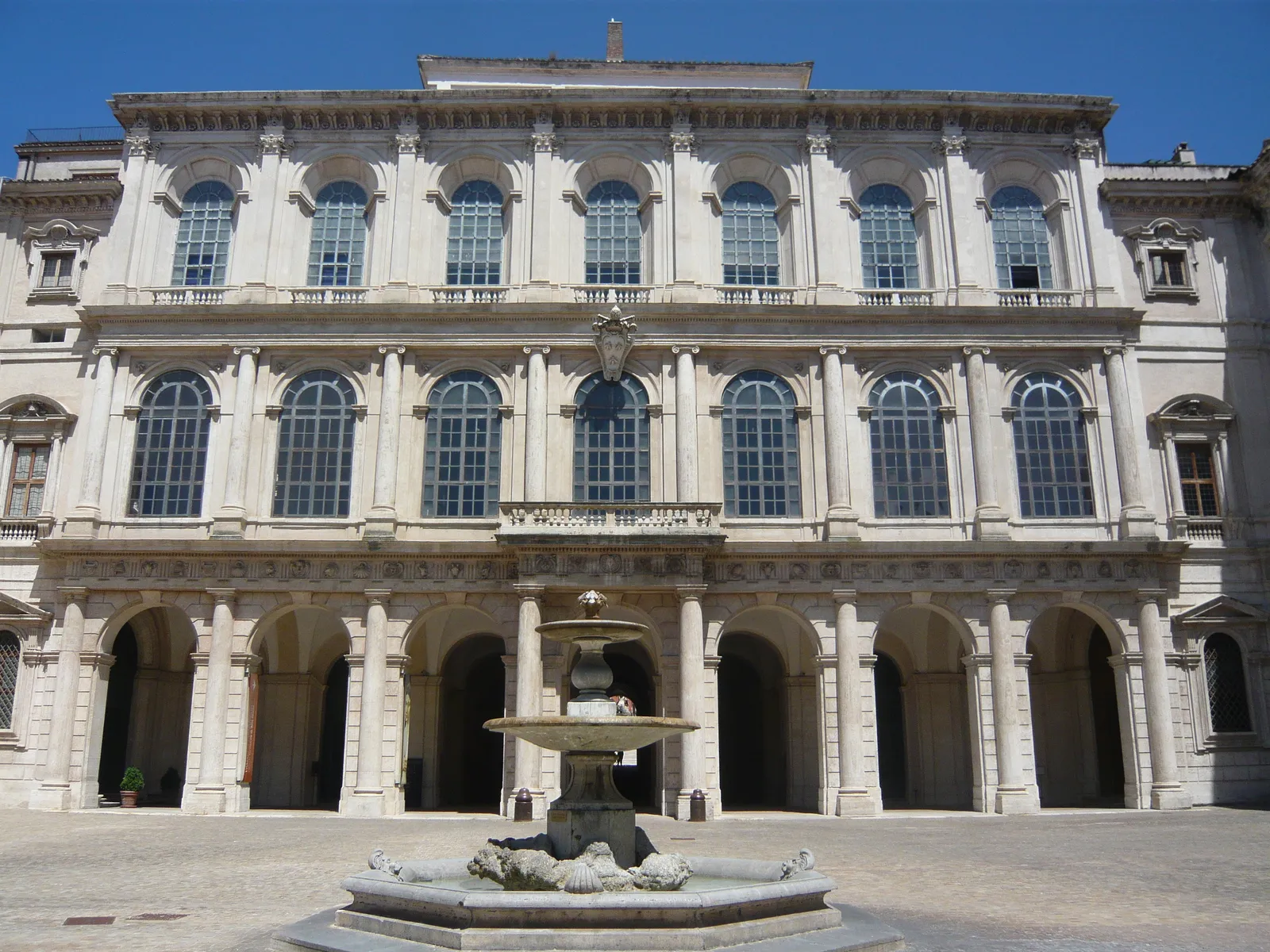
The paintings are the draw. Caravaggio’s Judith Beheading Holofernes is here, painted around 1599, and it is a much smaller and much nastier picture in person than reproductions suggest. Raphael’s La Fornarina hangs in the same collection. Overhead, Pietro da Cortona spent six years painting the great hall ceiling into an open sky. Entry is 12 euros, it opens 10am to 7pm with last entry at 6pm, and it is shut on Mondays like the other two; you can book entry before you land through a tours and activities platform if you would rather not find out at the door.
The concrete canopy Termini opened with in 1950
The station you are standing in is worth thirty seconds of attention on the way back. Termini was finished in 1950 after the war stopped an earlier fascist-era design halfway, and the front is a single concrete canopy cantilevered out over the entrance in one flattened, segmented curve, a modernist take on the vault of a Roman bath. Romans call it the dinosaur. Inside, Amerigo Tot’s long anodised aluminium frieze runs above the concourse.
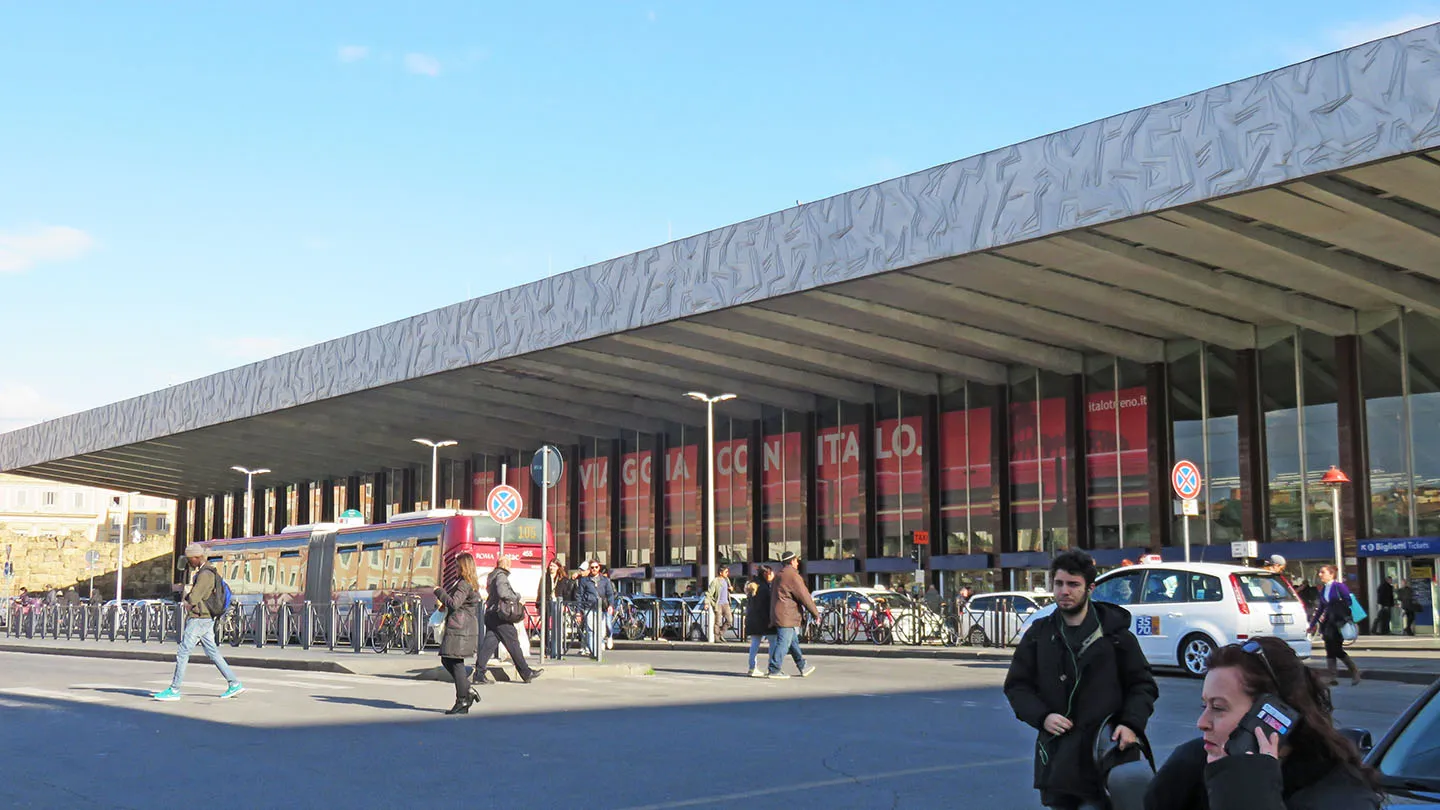
From here the Leonardo Express leaves for Fiumicino every fifteen minutes and takes 32, with the last departure at 23:05. If your stop is long enough to justify crossing the city instead, the walk through the old centre picks up the Colosseum, the Pantheon and the Trevi Fountain and starts from these same platforms. This version exists for the hours that will not stretch that far: everything above is inside a ten-minute radius of the concourse, which is the only reason it fits at all.
Frequently asked questions
Are the museums beside Termini open every day?
No, and this is the one thing that can flatten this plan. Palazzo Massimo and the Baths of Diocletian both belong to the Museo Nazionale Romano and both close on Mondays, along with Christmas Day and Easter Sunday. On the days they do open they run 9am to 7pm with last admission at 6pm. Palazzo Barberini, up the hill, is also shut on Mondays and opens later than the other two, 10am to 7pm with last entry at 6pm. If you land at Termini on a Monday, the Servian Wall outside the station is the part of this that still works, because it is a public street and keeps no hours at all.
Is one ticket enough for both museums by the station?
Yes. The Museo Nazionale Romano sells a single combined ticket at 15 euros covering Palazzo Massimo, the Baths of Diocletian, Palazzo Altemps and Crypta Balbi, with one entry to each and a week to use it. Since Palazzo Massimo and the Baths face each other across the square outside Termini, that one ticket covers both halves of this stop with no second queue. Palazzo Barberini is a separate ticket at 12 euros; it is a different museum system.
Which platforms at Termini involve a long walk?
Platforms 1 to 24 run straight off the main concourse, numbered left to right, and getting to any of them is barely a walk. That is where the Frecciarossa and Italo high-speed services and most long-distance trains berth. The outliers are platforms 25 to 29, which sit set back behind the rest and are reached by walking about 450 metres down platform 24, and 1est and 2est, roughly 550 metres along platform 1, which mostly handle regional services. Nothing at the concourse end signals how far those are. Read your platform number off the board before you decide how much time you have left, because a departure from 25 to 29 costs several minutes the layout does not advertise.
Is there anything to see here after the museums shut?
The wall, and the Piazza della Repubblica end of the square. The Servian Wall stretch outside Termini is unenclosed and lit at night, and the block preserved on the station's lower level sits in a public concourse that stays open as long as the station does. Beyond that, this particular corner of Rome empties out once the museums close, and the evening is better spent on the walk through the old centre than around the station.