The Museum Campus on a Chicago Layover
Part of the full Chicago Layover: Millennium Park From ORD
Chicago’s Museum Campus is 57 acres of lakefront lawn about twelve minutes’ walk east of Roosevelt station, with the Field Museum, the Shedd Aquarium and the Adler Planetarium standing on it, and the ground past the planetarium runs out to a point where the whole Loop skyline lines up across open water for nothing at all.
The Field Museum on South Lake Shore Drive
The Field Museum’s natural history collection fills a classical block at 1400 South Lake Shore Drive, at the inland end of Chicago’s Museum Campus. The campus itself only exists because the city moved the northbound lanes of Lake Shore Drive west of Soldier Field in 1996, which freed up 36 acres of roadway and let the Field Museum join the other two on one continuous piece of lawn when the park opened on 4 June 1998.
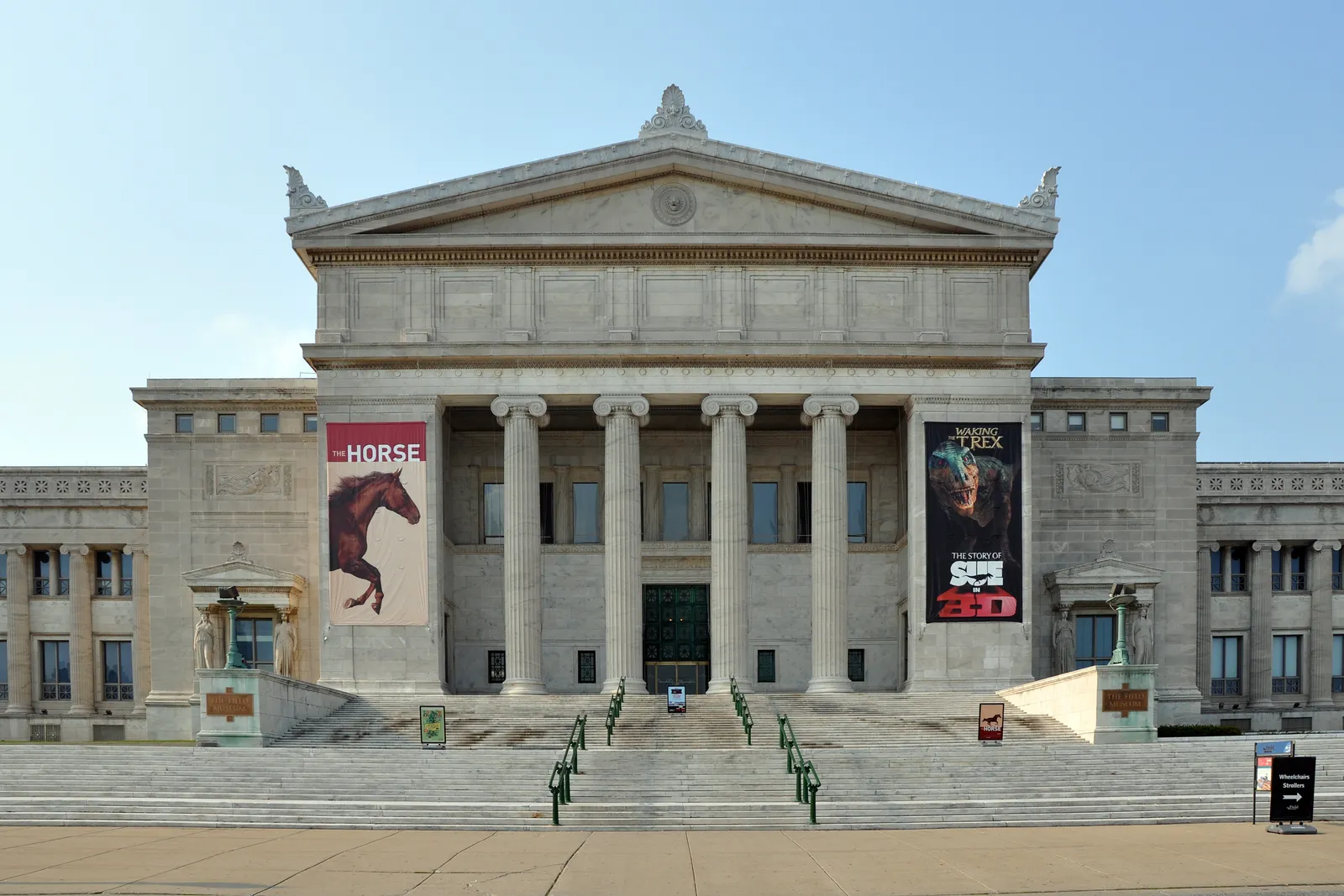
General admission runs about $27 for adults and $24 for ages 5 to 18, with under-fives free and free days for Illinois residents on Wednesdays. It is the one building on this campus you can hold a timed slot for in advance through the usual booking sites, which matters when your afternoon has a hard end. What is inside it, including the most complete Tyrannosaurus rex skeleton ever dug up, gets the longer treatment in the itinerary that reaches here from Midway.
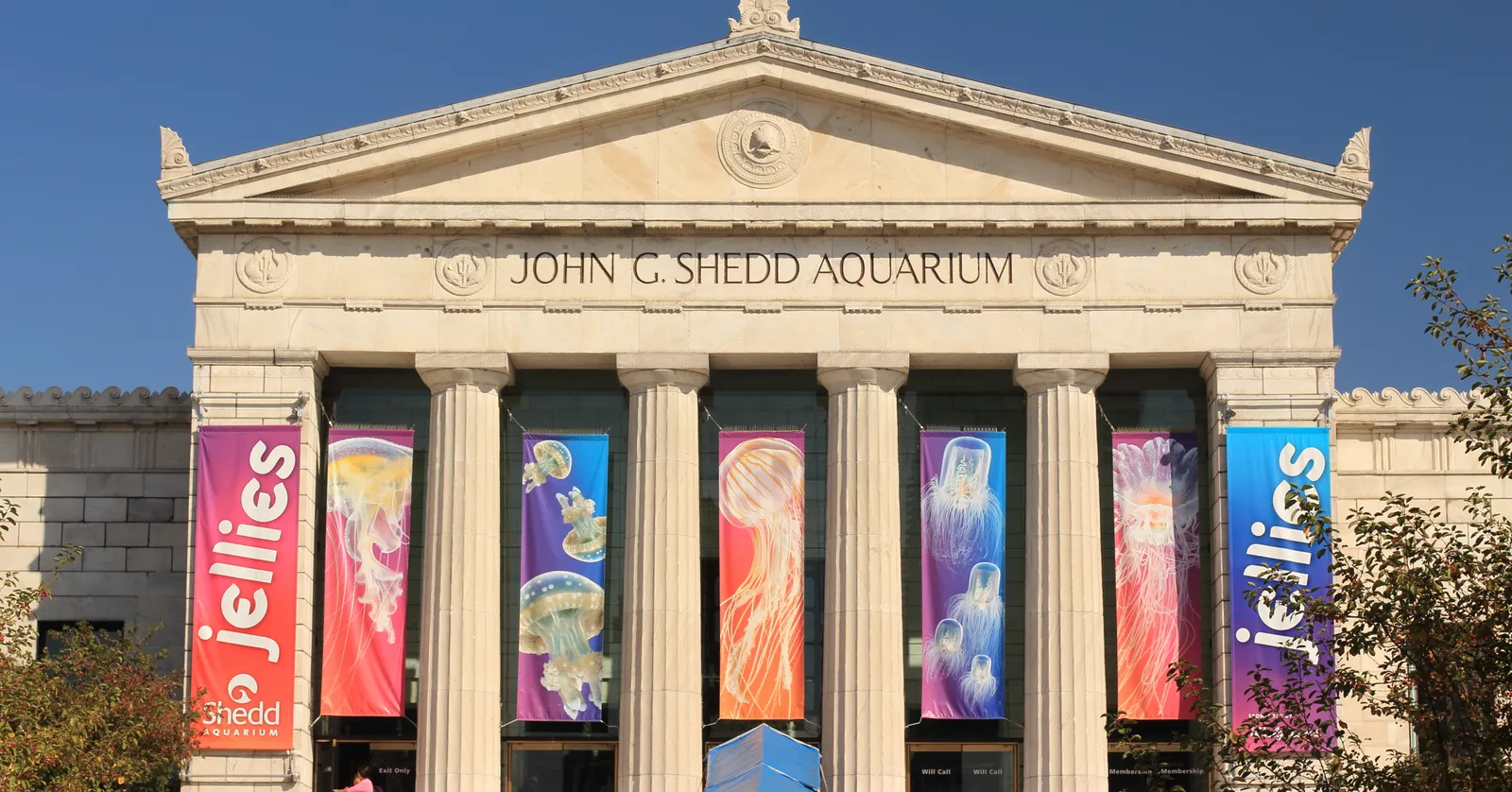
A million gallons of Key West seawater in the Shedd Aquarium
Graham, Anderson, Probst and White finished the Shedd Aquarium at 1200 South Lake Shore Drive in May 1930, giving it Doric columns, a formal staircase and a dome, which is a lot of classical architecture for a building full of fish. There are roughly 32,000 animals of about 1,500 species in five million gallons of water: the Caribbean Reef in the rotunda, Wild Reef built as a Philippine coral shelf, and the Abbott Oceanarium out on the lake side with beluga whales and Pacific white-sided dolphins in it.
Filling the saltwater tanks in 1930 took twenty railroad tank cars running eight round trips between Key West and Chicago, hauling a million gallons of Florida seawater up to a city on a freshwater lake.
Admission starts around $39 for adults and $29 for children, several dollars less booked ahead than at the door, and Illinois residents get free-admission days scattered through the year. Hours move around with the day and the season here more than at the other two, so check the calendar before you build an afternoon on it.
The aquarium’s largest lockers take a carry-on-sized bag but not a checked suitcase, and there is no other bag check in the building.
The Adler Planetarium and the skyline view off its point
Max Adler, a Sears executive, paid for the building that Ernest A. Grunsfeld Jr. designed at 1300 South Lake Shore Drive, and it opened on 12 May 1930 as the first planetarium anywhere in the Western Hemisphere. It has been a National Historic Landmark since 1987. Inside are the Atwood Sphere, a walk-in metal globe with holes punched through it for stars, the Doane Observatory’s 20-inch telescope, and a sky theater under a 21-metre dome.
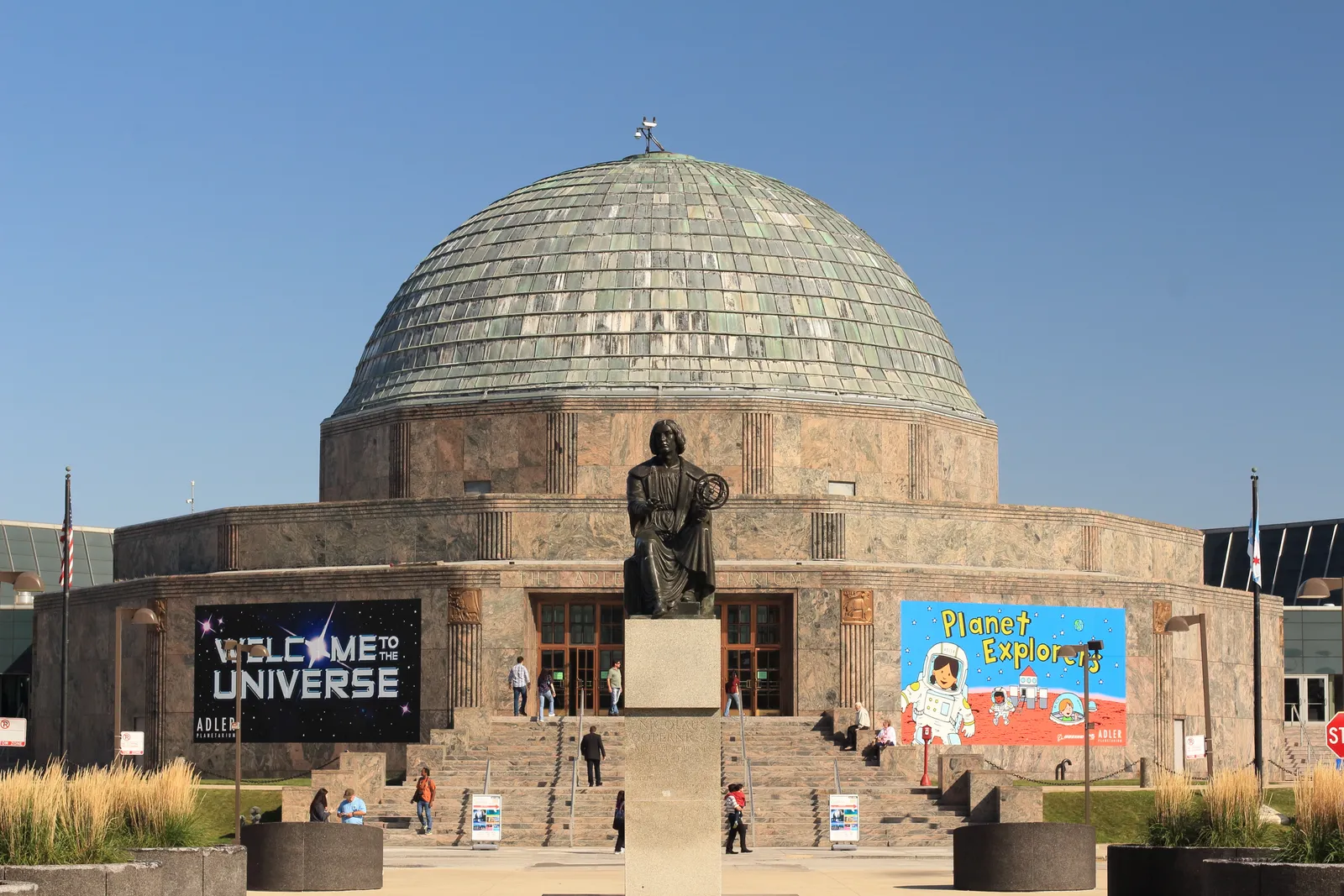
The best thing here does not need a ticket. Keep walking past the building onto the open ground east of it, the Skyline Walk, and the entire Loop stands up across roughly two kilometres of water with nothing in between. There is no gate, no fee and usually nobody much on a weekday afternoon.
Northerly Island, a park where an airport runway used to be
Northerly Island reaches south from the Adler Planetarium into Lake Michigan, 119 acres of made land carrying a story Chicagoans still argue about. This was Meigs Field, a single-runway airport, until the night of 30 March 2003, when Mayor Richard M. Daley sent city crews out to bulldoze X-shaped gouges into the runway without warning. Forty acres of the southern end reopened as parkland in 2015, laid out with a five-acre lagoon, wildlife planting and a concrete trail, and the rest holds a concert pavilion and 12th Street Beach.
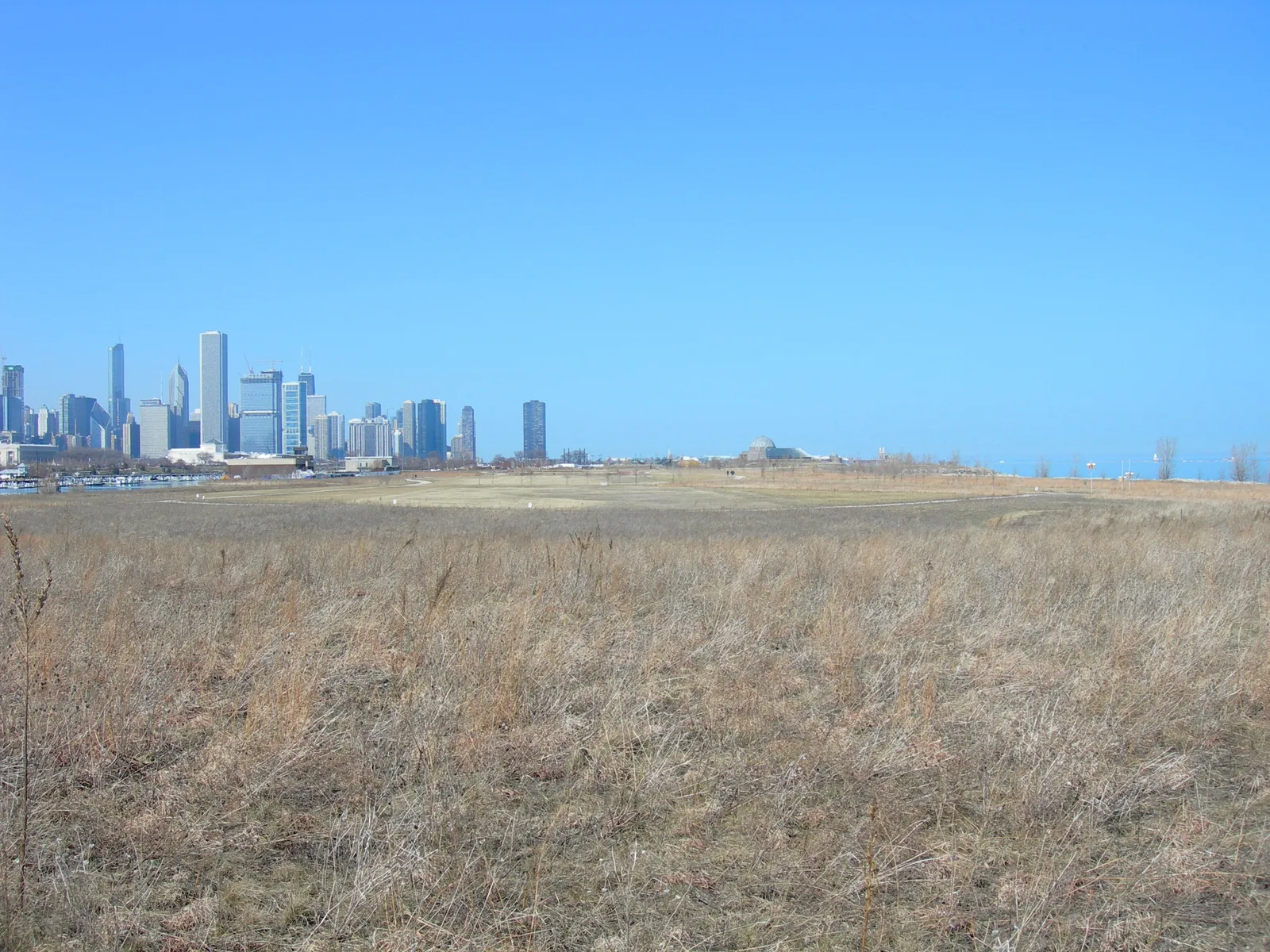
What it feels like now is a scrap of open prairie with a skyline behind it, ten minutes from three large museums and almost empty most of the time. With four hours the museum and the point are enough; with six, the trail down the island and back is the part of this day people remember. If a museum is not what you came for at all, the free walk from Millennium Park along the Chicago Riverwalk starts a mile and a half north of here and costs nothing either.
Three train lines meet at Roosevelt, none of them at the lake
Roosevelt is two stations stacked on each other at 1167 South State Street: the Red Line runs underneath in the State Street subway, opened in October 1943, and the Green and Orange lines run overhead on the elevated structure, which has been there since June 1892. A 200-foot transfer tunnel joined them in December 2002, and it is worth slowing down in rather than hurrying through: more than 4,000 clay tiles line the east end, made by visitors to the Museum Campus in 1999 and set as a timeline of the Earth, with the sections keyed to what the three museums each cover.
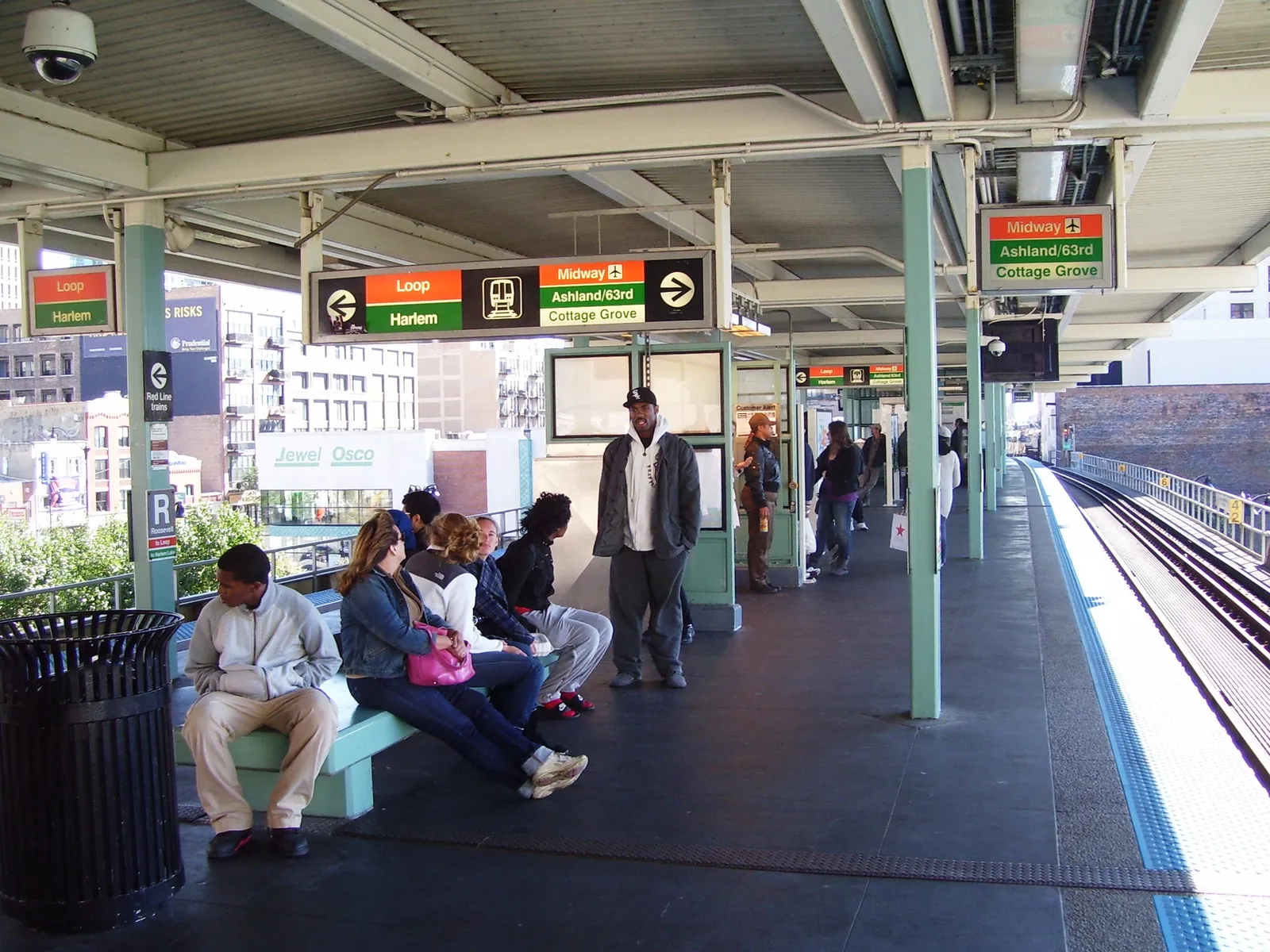
None of those three lines goes to O’Hare. The airport train is the Blue Line, and the usual way onto it from here is the Red Line two stops north to Jackson, then the pedestrian tunnel across to the Blue Line platform, roughly 45 minutes from there to the airport. Trains run around the clock, the fare boarding downtown is the standard rail fare, and the $5 surcharge only ever applies to journeys starting at O’Hare. Two hours from the campus to the gate is the honest figure.
The whole day out here is one building and a walk. Both halves get easier once the suitcase is not part of the equation: the museums will not hold it, and the lakefront half has nowhere to put it down.
Frequently asked questions
What should I do during a layover at Chicago's Museum Campus, near Roosevelt station?
Pick one museum and then walk. Four to six hours covers a single building properly plus the lakefront around it: the Field Museum, the Shedd Aquarium or the Adler Planetarium, each of which will absorb two to three hours on its own. The free half is the rest of the 57-acre campus, the point past the Adler where the whole Loop skyline lines up across the water, and the prairie and beach on Northerly Island south of it. Book the museum ahead if you have a fixed flight, because the walk-up line at the door is the part that varies.
How do I get from Roosevelt station to the Museum Campus?
It is about half a mile east, twelve to fifteen minutes on foot and flat the whole way, with a bus from outside the station covering the same ground if you would rather not walk it. Roosevelt has elevators to both levels, so the route is step-free from the platform. Metra's Museum Campus/11th Street station is closer still, about a third of a mile from the Field Museum, if you are already on a suburban train.
Can I do more than one museum on the Museum Campus in an afternoon?
Not properly. Each of the three is a two to three hour building, and they are five to ten minutes' walk apart, so two of them in one afternoon means rushing both and paying twice. The better trade with a fixed flight is one museum and then the free lakefront: the Adler's point, the Lakefront Trail south, and Northerly Island.
Is the Museum Campus a good stop in summer heat?
The buildings are, and the ground between them is not. The campus is 57 acres of open lawn with very little shade and the walk in from the station has none at all, so the sensible order on a hot afternoon is to do the museum first and the outdoor half at the end of the day. 12th Street Beach on Northerly Island is the one place out here you can get into the water, and the lake stays cold well into July.
How long does the train take from Roosevelt out to O'Hare?
Roughly 45 minutes on the Blue Line, but not from Roosevelt itself, which is a Red, Orange and Green line station. The usual route is the Red Line two stops north to Jackson and then the pedestrian tunnel across to the Blue Line platform. Trains on both run 24 hours and the fare boarding downtown is the standard rail fare, since the $5 surcharge applies only to trips that start at the O'Hare station. Leave two hours from the Museum Campus to your gate.