Edinburgh Waverley Layover: the New Town
Part of the full Edinburgh Layover: Royal Mile Walk From EDI
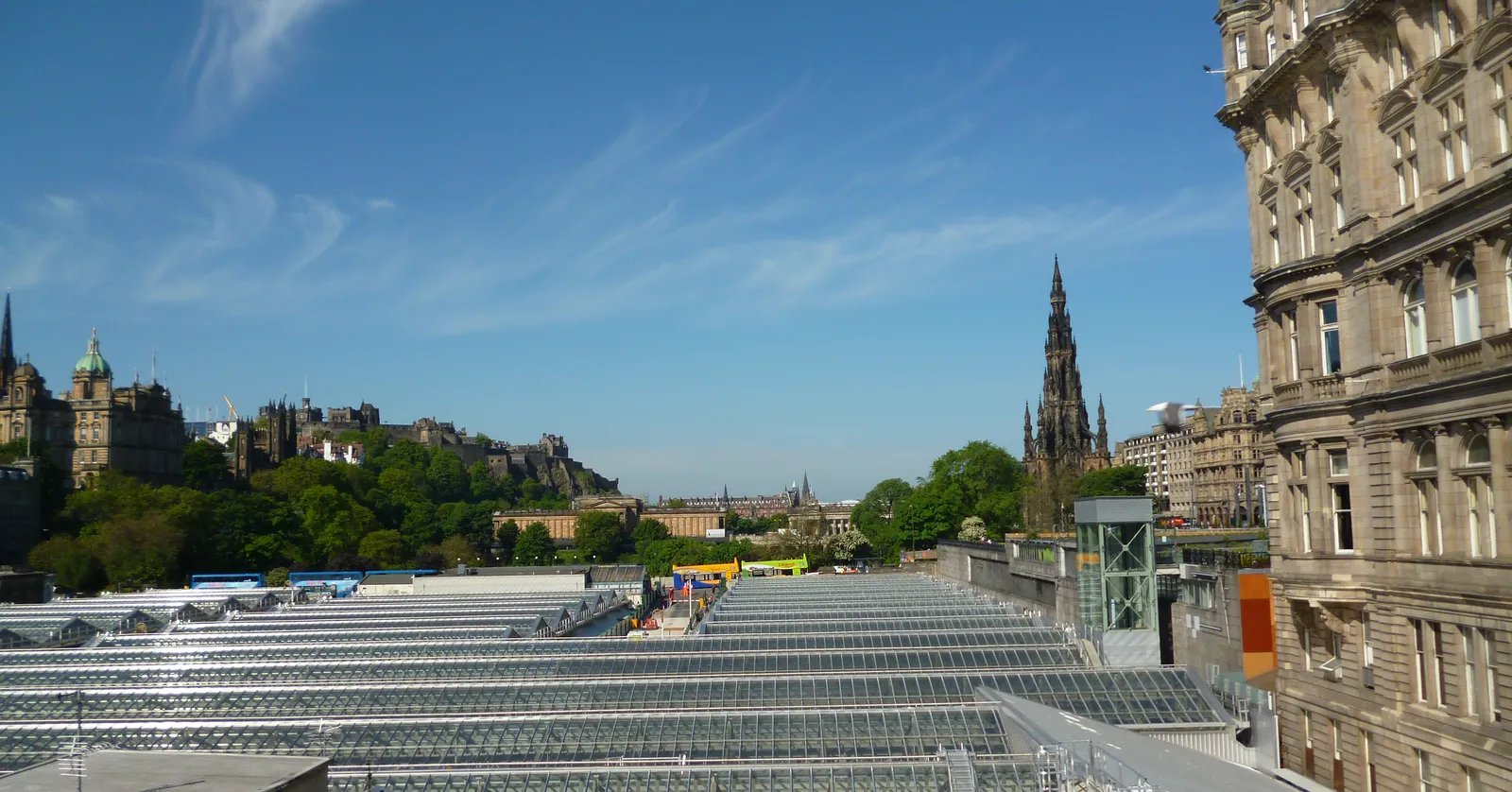
Edinburgh Waverley station sits in a valley between the Old and New Towns, and the walk north out of it reaches the Scott Monument, the starred dome inside the bank on St Andrew Square and the free Scottish National Portrait Gallery inside ten minutes, all on flat ground rather than the Old Town’s stairs.
Waverley station’s glass roof sits in a drained loch bed
The valley the station occupies was a lake. The Nor Loch filled the ground under the Old Town’s north face until the 1760s, when it was drained to let the city build the North Bridge and lay out the New Town beyond it. The railway took the empty bottom of the valley, which is why Waverley is a station you look down into rather than up at, its glazed ridge-and-furrow roof spread out below the pavement of Princes Street. It is the northern end of the East Coast Main Line, 393 miles from London King’s Cross, and the second-busiest station in Scotland.
If it is raining hard enough that the walk is off, the Edinburgh Dungeon is on Market Street at the station’s southern exit: an hour and a bit of costumed actors and one short drop ride, and a timed ticket booked ahead saves standing in the queue outside it.
The 287 steps up the Scott Monument
Two minutes from the Princes Street exit, in the eastern half of Princes Street Gardens, stands a 61-metre Gothic tower gone almost black with two centuries of soot. It went up between 1841 and 1844 for Sir Walter Scott, and it is the second-largest monument to a writer anywhere in the world, after José Martí’s in Havana. Underneath the arches sits Scott himself in white Carrara marble, John Steell’s statue, his dog Maida at his feet; the tower above carries 64 small figures of characters out of Scott’s novels. Its architect, George Meikle Kemp, never saw it finished: he drowned in the Union Canal walking home from the site in the fog one evening in March 1844.
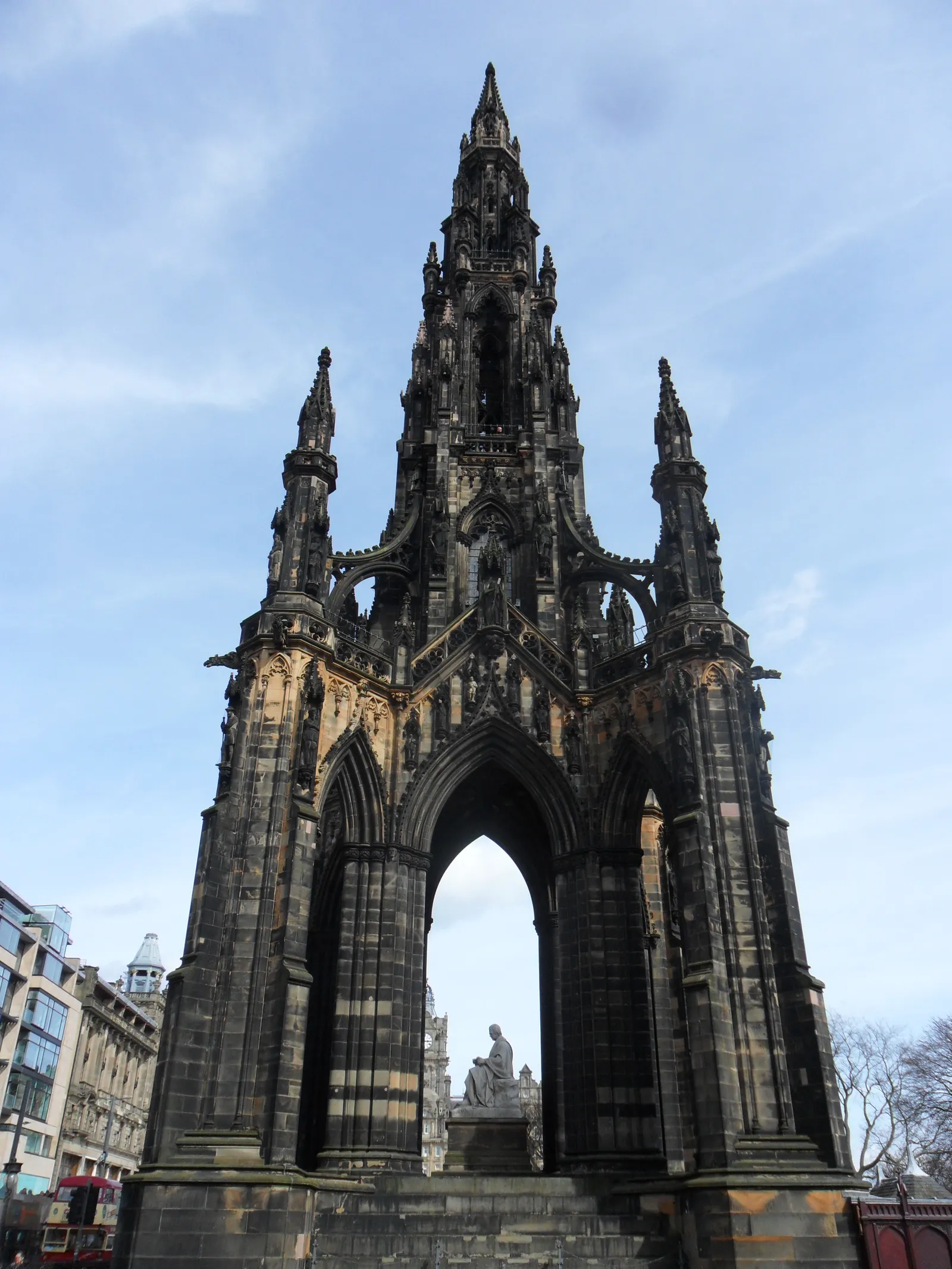
Going up costs £9 and means 287 steps of spiral stair that get narrower with every platform, ending on a walkway near the top with the castle on one side and the Firth of Forth on the other. Waverley is where the London and Glasgow trains unload, so a fair share of the people standing at the bottom of it have just spent four hours in a seat with a full-size suitcase in the rack, and there is nowhere on that stair to put one.
The starred dome inside the bank on St Andrew Square
Five minutes north of the station, the east side of St Andrew Square is closed off by Dundas House, a Palladian mansion built in 1774 for Sir Lawrence Dundas and described six years later as “incomparably the handsomest townhouse we ever saw”. The Royal Bank of Scotland bought it in 1825, and in 1857 John Dick Peddie added a banking hall behind it: a square room under a deep blue dome pierced by five tiers of gold-rimmed, star-shaped skylights that shrink as they spiral in towards a central oculus, meant to read as the night sky.
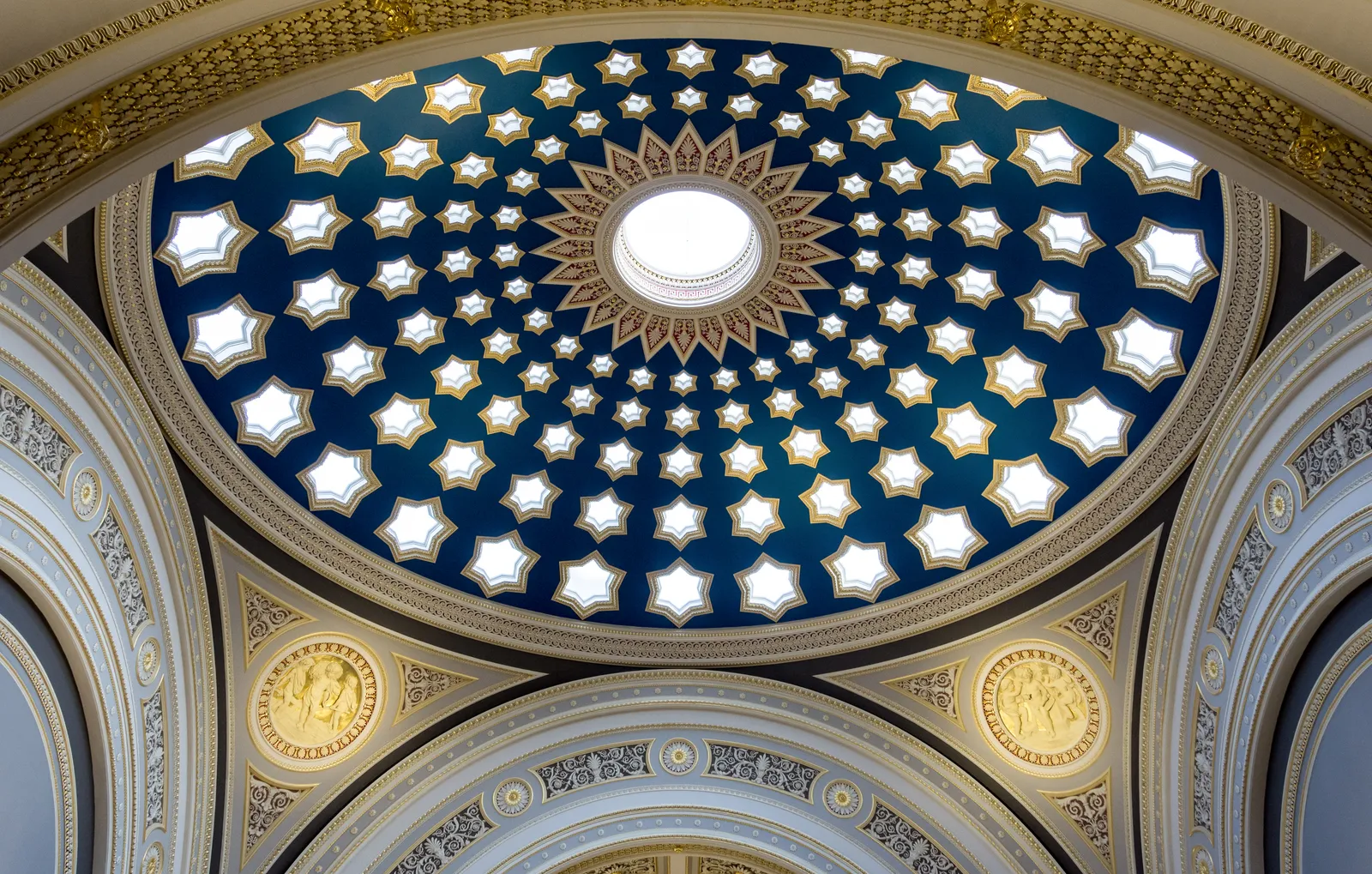
That ceiling was printed on Royal Bank of Scotland notes for nearly thirty years, until the Islay series went out of circulation in 2016. It is still a working branch rather than a museum, so seeing it means turning up during weekday banking hours and walking in like a customer. The square’s garden outside was private ground for two centuries; it opened to the public in 2008 and now has paths, a café and a reflecting pool round the Melville Monument.
The painted frieze in the Portrait Gallery’s Great Hall
The Scottish National Portrait Gallery is on Queen Street, ten minutes from the station and free to walk into. It opened in 1889 in a red sandstone neo-Gothic pile by Robert Rowand Anderson, built as the first purpose-built portrait gallery anywhere, and the room to walk into first is the Great Hall.
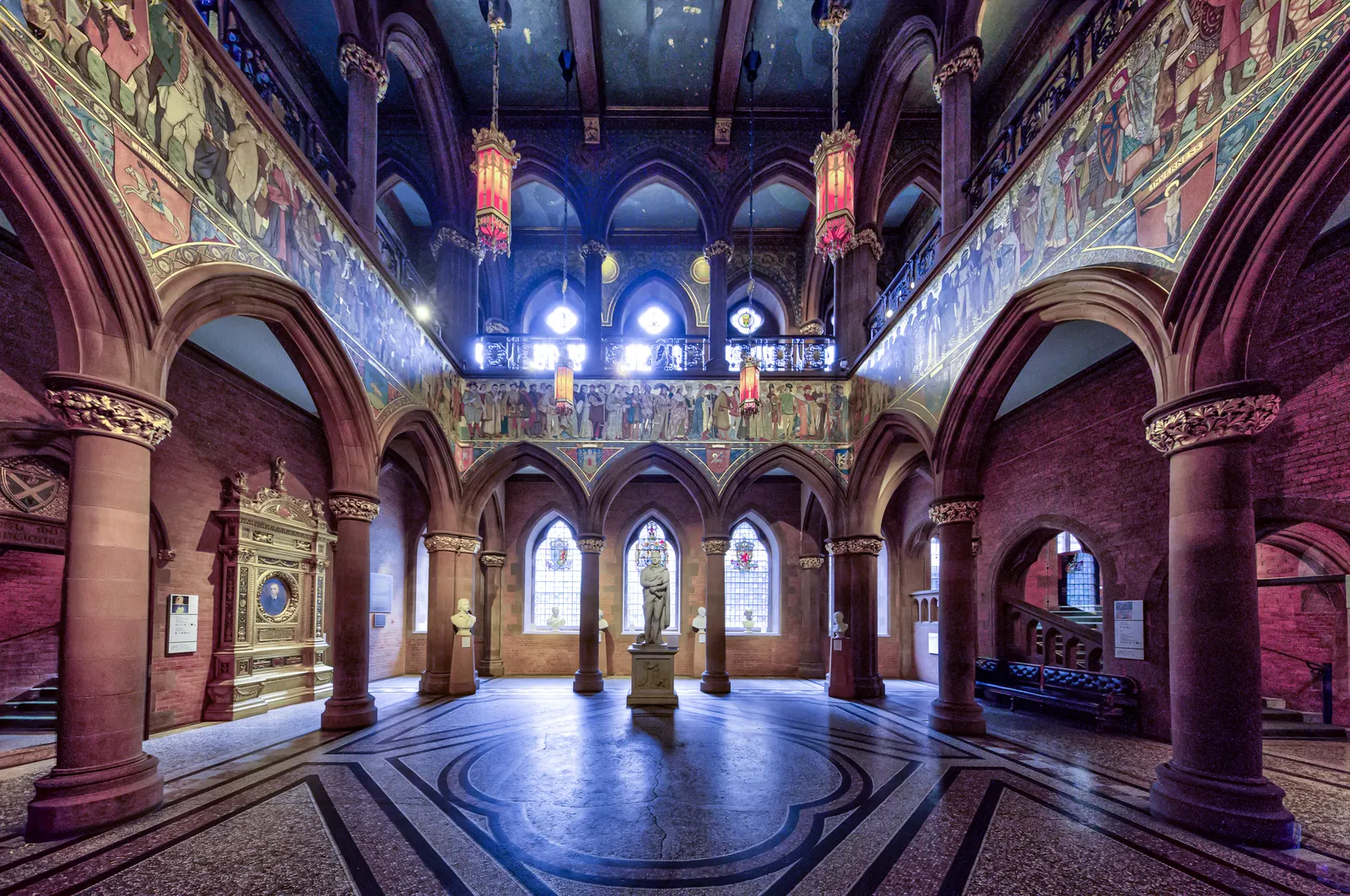
William Hole painted the frieze that runs round all four walls of it in 1897: 155 figures out of Scottish history, laid out in reverse, starting with the 19th-century historian Thomas Carlyle and working backwards to the Stone Age. Above it the ceiling carries something over 2,000 gold stars in the constellations of the northern sky, with a figure of Caledonia at the centre pulling a curtain aside to show them. Ten minutes here is enough to see the room; the portraits themselves will take as long as you give them.
Robert Adam’s north side of Charlotte Square
With three hours or more, keep going west along George Street, the New Town’s spine, and it ends at Charlotte Square fifteen minutes from Waverley. Robert Adam drew the square in 1791 and died the following year, just as the first stones went up, and the north terrace is the piece that got built closest to his design: eleven houses handled as one palace front, with a pediment in the middle and a rusticated ground floor running the length of it.
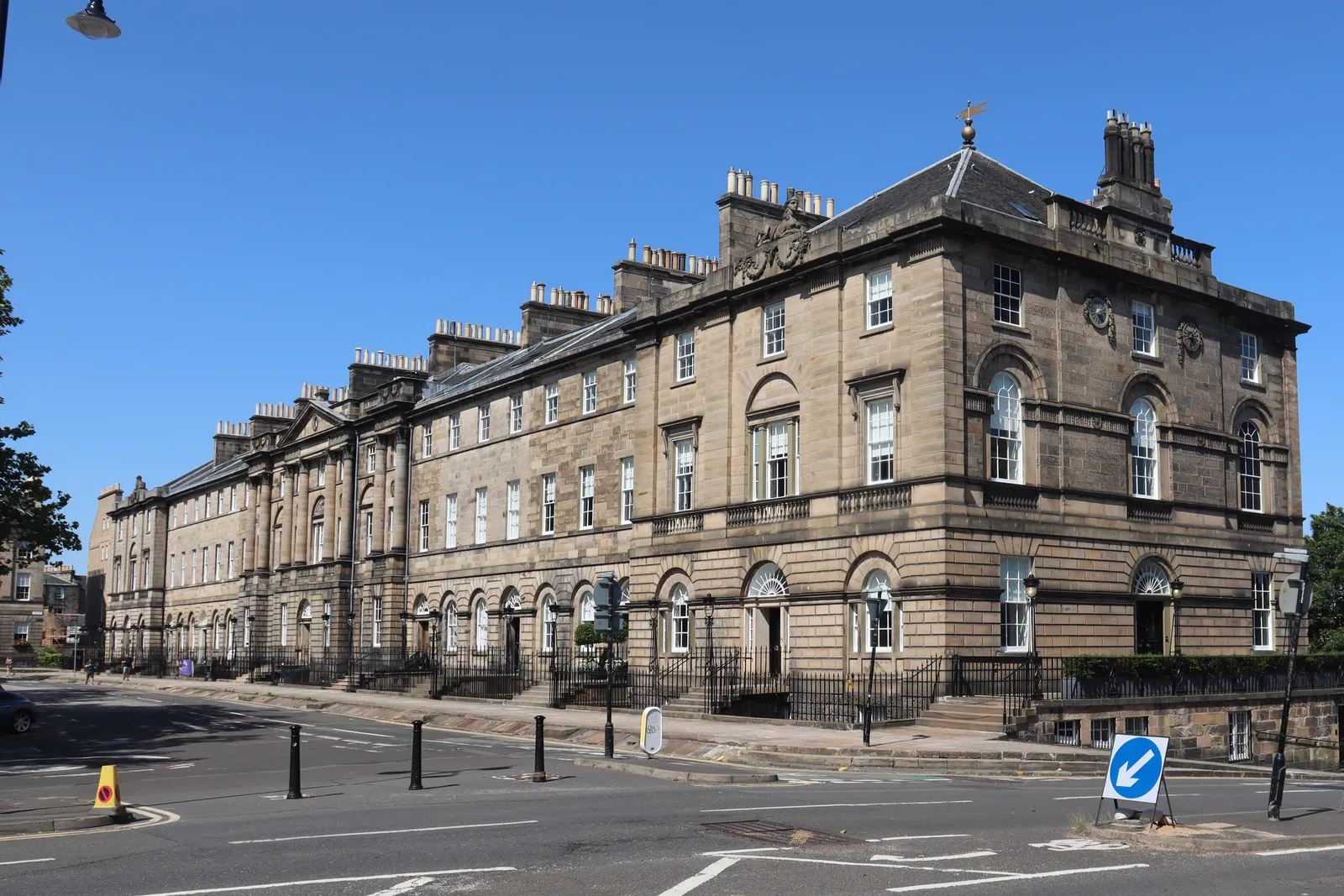
Number 6 is Bute House, where the First Minister of Scotland lives, and number 7 is kept as a Georgian interior open to visitors. The gardens in the middle are private, so this is a square you walk round rather than sit in.
No train reaches Edinburgh Airport from Waverley
Nothing on the rail network runs into Edinburgh Airport itself. The direct option is the Airlink 100 bus, leaving from Waverley Bridge at the station’s western exit, about 30 minutes and £6 single, running 24 hours a day. A ScotRail service out to Edinburgh Gateway connects to the tram over a covered footbridge instead, but that means a change and runs slower than the bus does from here.
Take the escalators back down into the station for your suitcase before crossing to Waverley Bridge, rather than wheeling it back through the crowds on Princes Street. If you would rather climb into the Old Town than walk the New Town grid, the Edinburgh guide this belongs to heads the other way from the same valley, up the Royal Mile to St Giles’ and the castle.
Frequently asked questions
Is there a train from Waverley to Edinburgh Airport?
Not to the terminal, no. Nothing on the rail network runs into Edinburgh Airport itself. The direct option from Waverley is the Airlink 100 bus, which leaves from Waverley Bridge at the station's western exit, takes about 30 minutes and runs 24 hours a day for £6. The rail-and-tram alternative is a ScotRail service out to Edinburgh Gateway, where a covered footbridge connects the platforms to the tram, but that involves a change and is slower than the bus from here.
Is the Scott Monument climb realistic on a short stop?
Only if you have half an hour to give it and no problem with tight spaces. The 287 steps run up a spiral stair that narrows sharply on the upper flights, and there is no lift. Tickets are £9 and entry is by timed tour, with the monument shut for lunch in the middle of the day and the last tour around 15:30, so it is easy to arrive on the wrong side of a closure. It stands a two-minute walk from the station's Princes Street exit, which is the main argument for it.
How step-free is the route from Waverley up to Princes Street?
Fully step-free since 2012. The Waverley Steps were rebuilt with three banks of double escalators and a glass canopy over the whole climb, and two 16-person lifts were added alongside, running up to Princes Street over the roof of the Princes Mall. Before that there was no level route out of the station at all in 140 years of it being there. George Street and Queen Street beyond are flat.
Which Edinburgh station do trains from London use?
Waverley. It is the northern end of the East Coast Main Line, 393 miles from London King's Cross, and it is where the London services terminate, along with the Glasgow trains and most of what runs to Fife and the north. Some of those trains call at Haymarket a few minutes earlier, which is the smaller station at the west end of the city and the one to get off at if your few hours are going that way instead.