Holyrood Layover: Parliament and Palace
Part of the full Edinburgh Layover: Royal Mile Walk From EDI
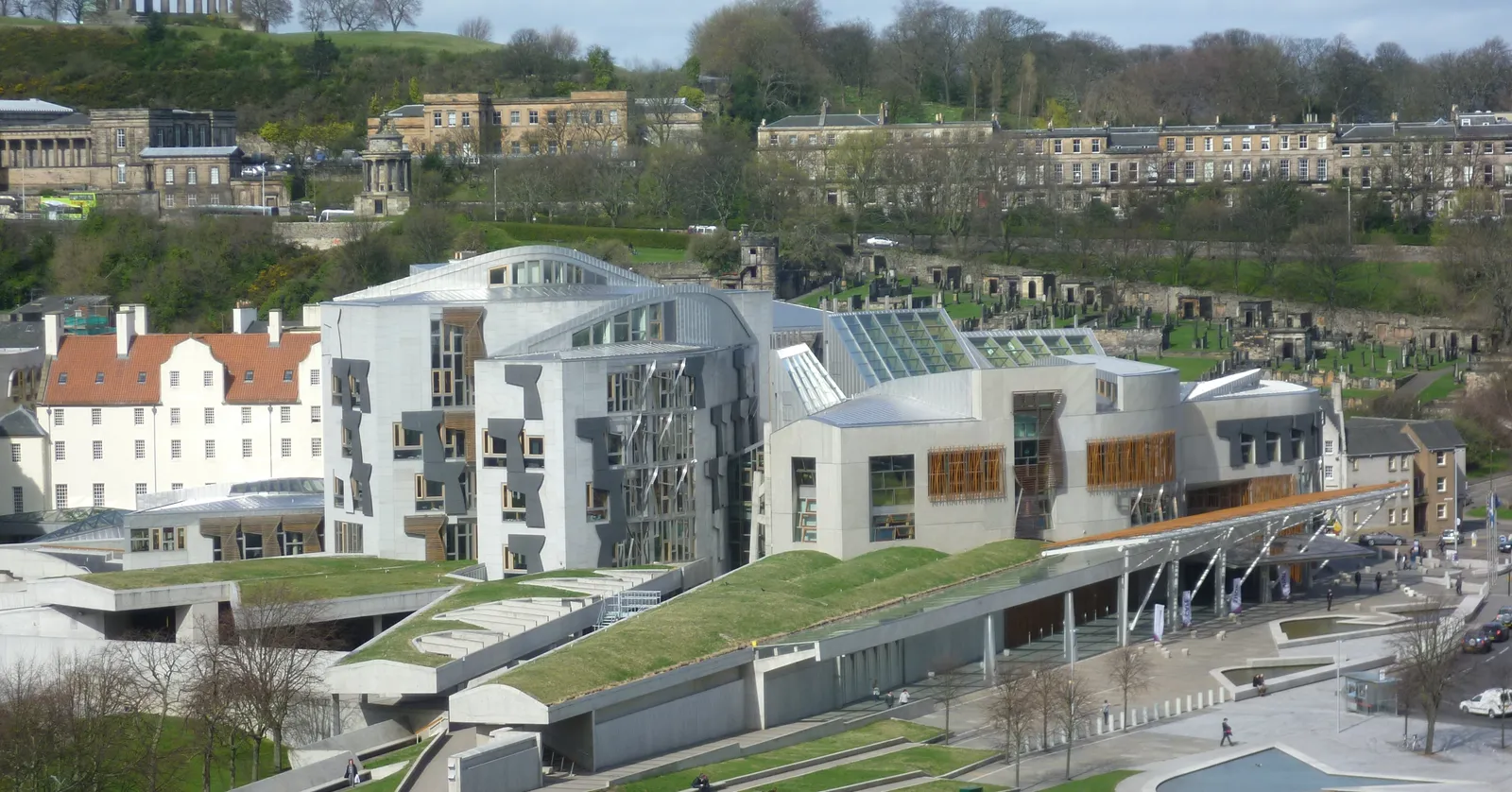
The bottom of Edinburgh’s Royal Mile ends in a junction of three things: the Scottish Parliament, free to walk into six days a week, the Palace of Holyroodhouse across the road from it, and the gate into Holyrood Park with Salisbury Crags standing over both.
Enric Miralles’ Scottish Parliament is free to walk into
The building took five years, opened three years late in 2004, and cost £414 million against early estimates in the tens of millions, which is most of what Scots said about it for a decade. Enric Miralles, the Catalan architect who designed it, died before it was finished. What he left is a low, sprawling complex that deliberately refuses to look like a parliament: leaf-shaped roofs turfed over in grass, concrete and oak and granite in irregular panels, and elongated glass skylights over the central garden lobby modelled on upturned boats pulled up on a shore. Each MSP’s office has a bay window with a built-in seat, designed as a place to sit and look at Salisbury Crags.
Entry costs nothing and you do not need to book. Everyone goes through airport-style screening with metal-detecting arches at the visitor entrance opposite the palace, so anything you are carrying gets scanned and looked at on the way in.
The oak and steel roof over the debating chamber
The public gallery above the chamber is the thing worth climbing to, and on most non-sitting days you can walk straight up into it. The desks curve in a half-circle rather than facing each other across a floor, which was a deliberate break from Westminster’s benches, and above them the roof is a lattice of laminated oak beams pinned together with stainless-steel nodes, with the glass set between them.
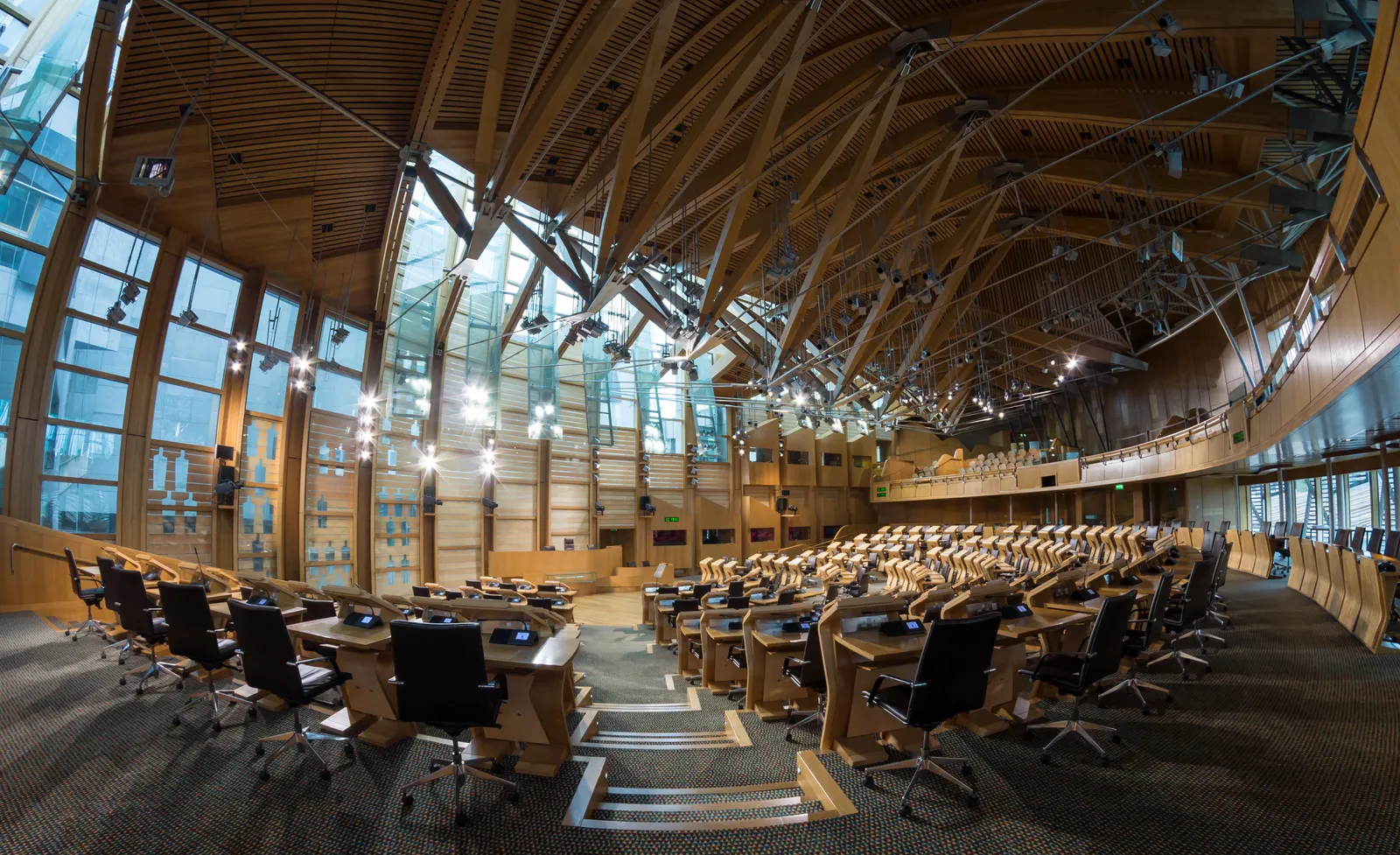
On a Thursday afternoon during session you can sit in the gallery and watch First Minister’s Questions, which needs a free ticket booked in advance and an hour’s allowance for the security queue. Any other day, the Main Hall below has an exhibition on how the place works, a café, and a granite floor patterned to Miralles’ drawings.
The Palace of Holyroodhouse at the foot of the Royal Mile
The palace is the King’s official residence in Scotland and the older half of this junction by four centuries. Mary, Queen of Scots lived here, and her apartments in the north-west tower are where her secretary David Rizzio was stabbed to death in front of her in 1566, a fact the palace does not undersell. Beyond them run fourteen state apartments and the Great Gallery, hung with 110 portraits of Scottish kings that the Dutch painter Jacob de Wet contracted in 1684 to produce inside two years for £120 a year, running from the legendary Fergus to Charles II. A good many of the men on that wall never existed.
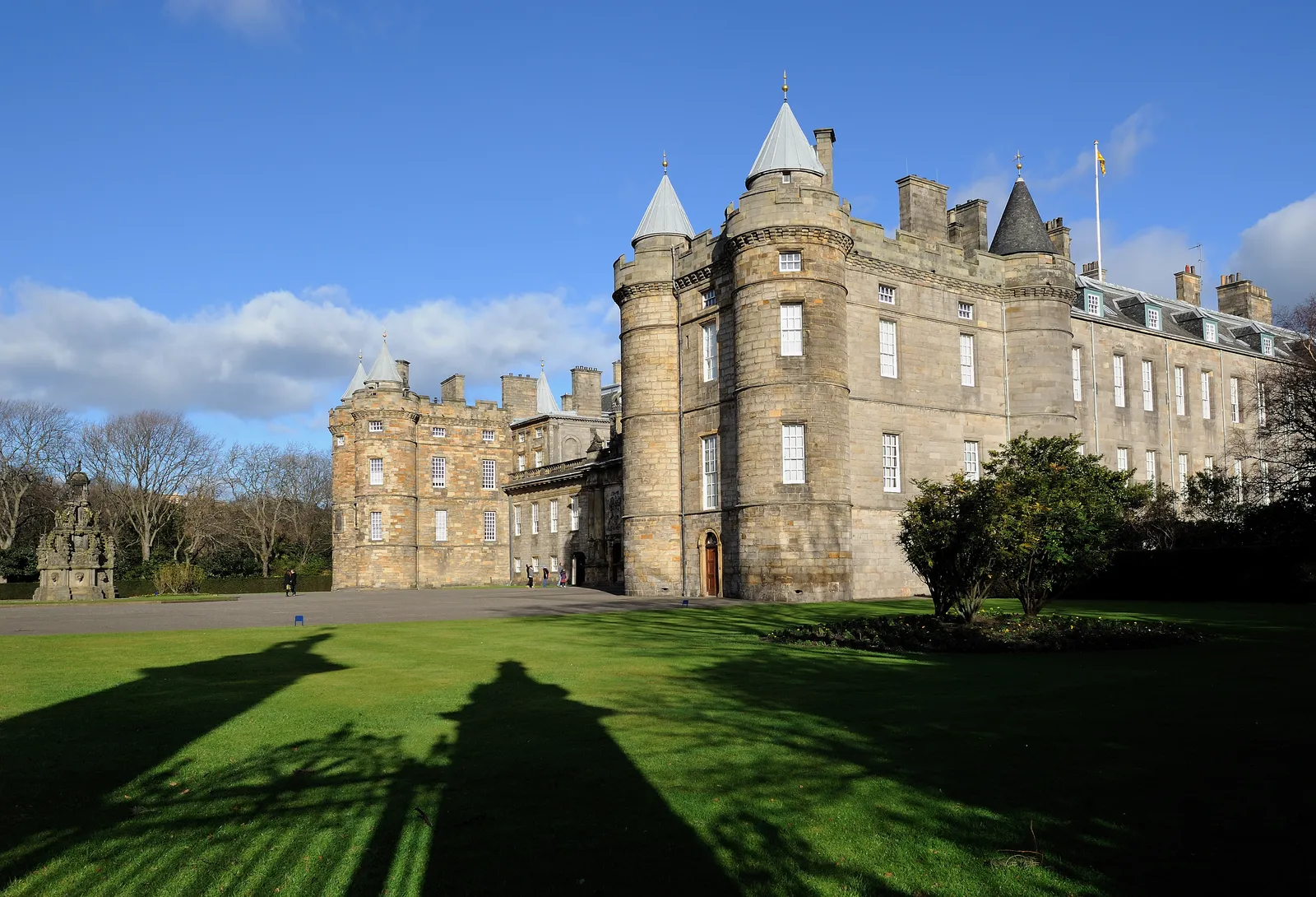
Adult entry is £22 booked ahead or £26 on the door, so a ticket bought before you arrive saves four pounds for no effort. The roofless nave of the twelfth-century abbey stands alongside it and is normally part of the same ticket, though the abbey and the palace gardens have been closed to visitors with no reopening date announced, so check what is actually open on the day rather than assuming.
With an hour spare on top, walk through the park gate behind the palace instead of buying anything. Holyrood Park is 260 hectares of hill, loch and cliff inside the city, free and never shut, and the path along the foot of Salisbury Crags gets you the view without the climb.
The Airlink to the airport leaves from Waverley, a mile back up the hill
There is no shortcut from Holyrood: the return route is the same mile back up the Royal Mile, or a bus along Holyrood Road and the Canongate, to Waverley Bridge, where the Airlink 100 leaves for Edinburgh Airport up to every ten minutes until 01:00, £6 single for the 30-minute ride.
Collect your bag on the way past before that last leg, and build the climb, or the bus, into your timing along with the ride itself. If you would rather work the other direction, uphill and inside the old walls, the main Edinburgh itinerary starts near Waverley and covers Calton Hill, St Giles’ and the castle instead.
Frequently asked questions
Can anyone walk into the Scottish Parliament?
Yes, and it costs nothing. The public spaces are open Monday to Saturday, generally 10am to 5pm with last entry at 4:30pm, and longer on sitting days in the middle of the week. Everyone goes through airport-style screening at the entrance opposite the palace, which usually takes a few minutes but is worth allowing twenty for, and an hour if you are coming for First Minister's Questions.
Do I need to book the Palace of Holyroodhouse in advance?
Not required, but it is £22 booked ahead against £26 at the door, so there is no reason not to. The bigger catch is the calendar: outside the summer it closes on Tuesdays and Wednesdays, and it shuts entirely for a week or so each summer while the King is in residence. Check the date before you build an afternoon around it.
Is Holyrood a downhill walk from the centre?
Going, yes. The Royal Mile drops a mile from the castle esplanade to the palace gates, so walking down to Holyrood is the easy direction. Coming back up is the same mile in reverse and it is a steady climb the whole way; buses run along Holyrood Road and the Canongate if you would rather not.
What at Holyrood costs nothing?
The Parliament, including its exhibition and public galleries, and Holyrood Park, which is open ground with no gate or ticket. The palace and the Queen's Gallery next to it are the paid part. If the budget is the constraint, the free half here is still a couple of hours.