Edinburgh Layover: Royal Mile Walk From EDI
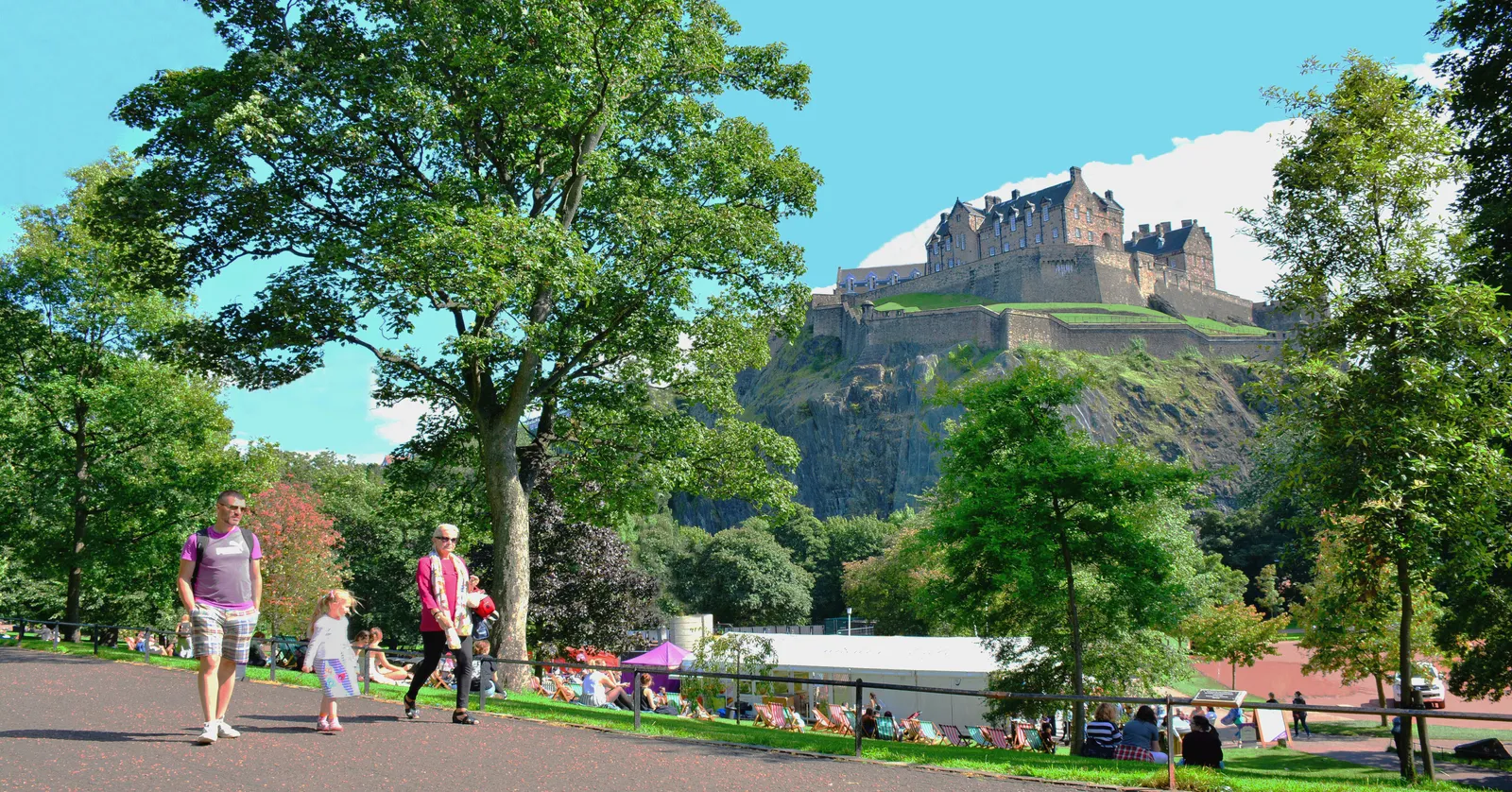
Edinburgh’s Old Town climbs in one ridge from Waverley train station up to Edinburgh Castle, with Calton Hill’s unfinished monument, St Giles’ Cathedral and the National Museum of Scotland all free and within fifteen minutes’ walk of each other along the way.
The castle esplanade is free to stand on
Uphill from Waverley train station, the Royal Mile climbs the length of the Old Town to the castle esplanade, the wide sloping forecourt where the Tattoo’s stands go up each August. Standing on the esplanade costs nothing, and for most people on a short stop that is as close as they get: admission inside is £23.50 booked online and £26 at the gate, and Historic Environment Scotland warns outright that tickets often sell out far in advance over the summer, so a ticket bought ahead is the difference between going in and looking at the gate.
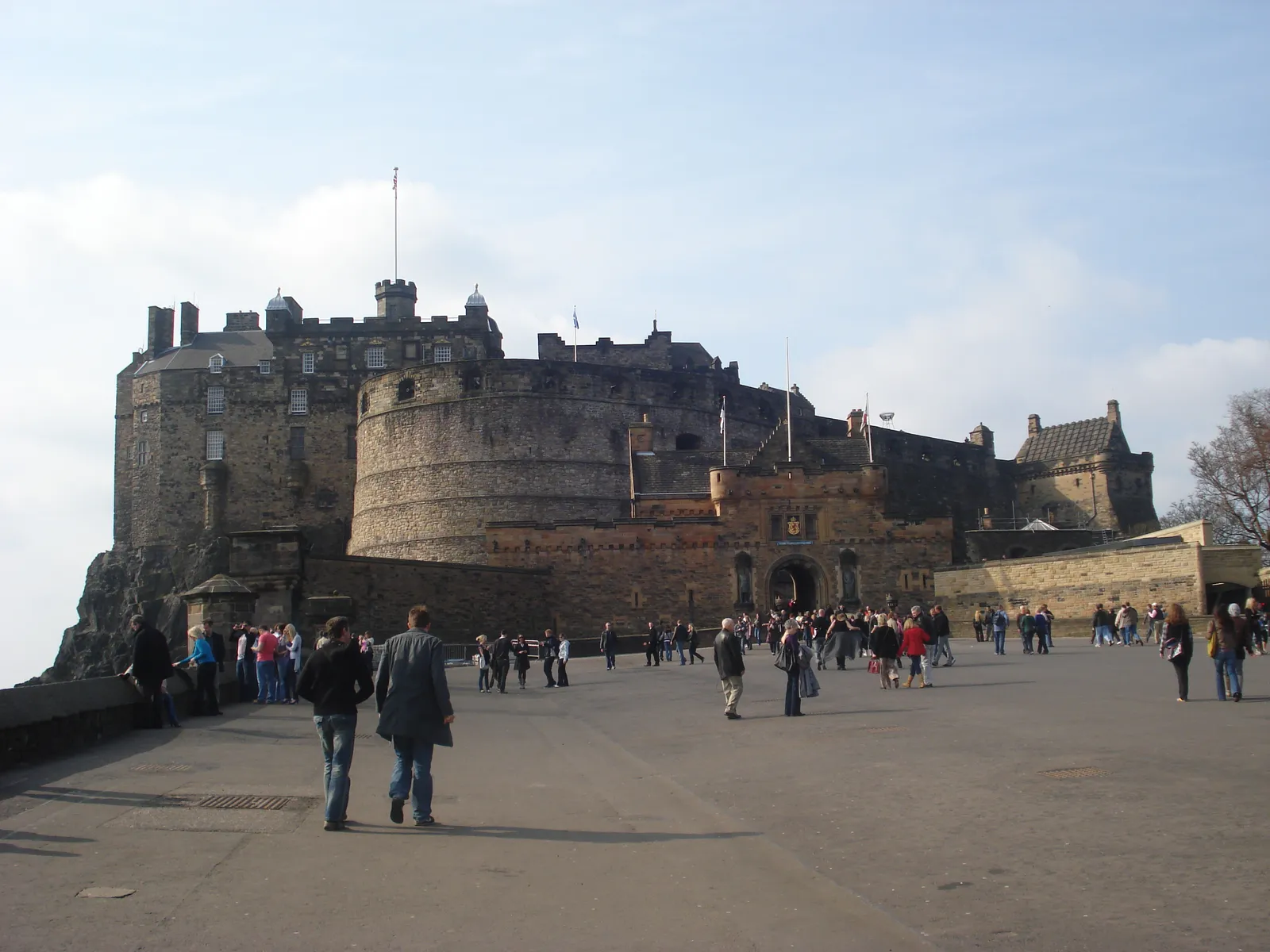
It opens at 9:30 and closes at 6pm from April to September, 4pm the rest of the year, and two hours inside is a realistic minimum for the Crown Jewels, St Margaret’s Chapel and the views off the batteries. If that does not fit, stand somewhere in earshot at one o’clock instead: the gun has been fired from the Mills Mount Battery at 13:00 every day but Sunday since 1861, and it carries the length of Princes Street.
The unfinished National Monument on Calton Hill
Calton Hill rises straight off the east end of Princes Street, ten minutes from Waverley train station along Waterloo Place, and the way up is a flight of shallow steps rather than a climb. It costs nothing and it never closes. What stands on the summit is a row of twelve enormous Doric columns carrying a length of architrave, and nothing at all behind them: the National Monument, begun in 1826 as Scotland’s memorial to the dead of the Napoleonic Wars and modelled on the Parthenon. The plan called for twenty-four columns and a burial vault underneath. By 1829 the money had run out, and the twelve already standing have stayed exactly as the builders left them ever since.
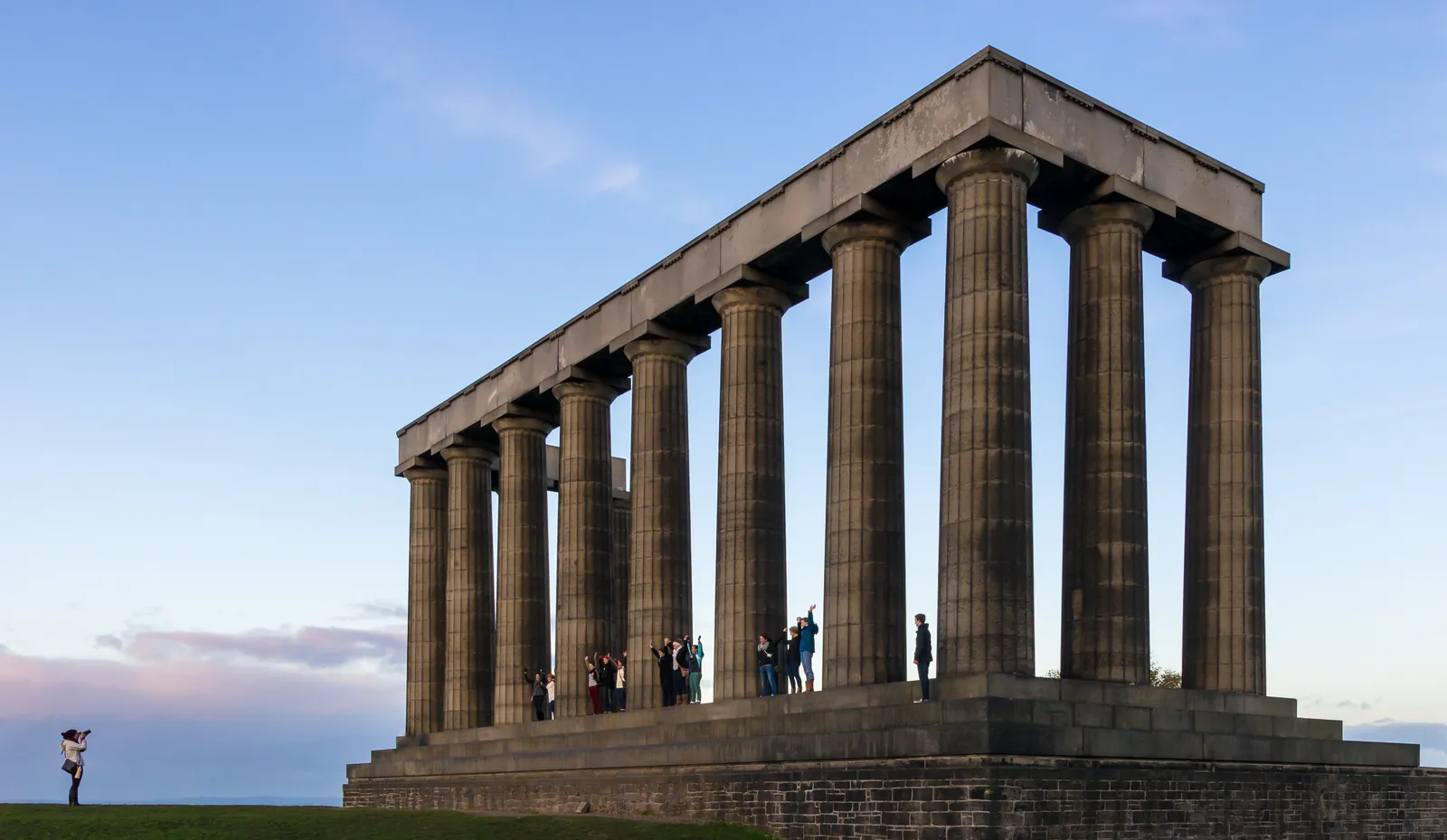
Sharing the hilltop are the Nelson Monument, a tower shaped like an upturned telescope, and the small circular Dugald Stewart Monument that turns up in most photographs of the city. The view is the reason to come up: the Old Town ridge running west to the castle, Arthur’s Seat bare and green to the south, and the Firth of Forth past the rooftops to the north. A ball on top of the Nelson Monument used to be hoisted and dropped at one o’clock so ships out in the Forth could set their chronometers, and because fog kept hiding it, the castle began firing a gun at the same moment instead.
An airport bus reaches Waverley Bridge day and night
An airport bus reaches Waverley Bridge, beside Waverley Station and a minute off Princes Street, in about 30 minutes for £6 single, £8.50 for an open return, running from just after four in the morning until one at night and every twenty minutes through the small hours after that, more often than the tram, which stops for the night before 23:00.
Between the station and the Royal Mile there is a shortcut most people walk past. The Scotsman Steps climb inside an octagonal stone tower from Market Street up to North Bridge, and in 2011 the artist Martin Creed re-clad all 104 of them, each tread in a different marble, so the colour and grain change under your feet the whole way up. It is free and it is covered, which counts for something here. It is also 104 steps: the Old Town sits a full storey above Princes Street, and most of the links between the two levels are stairs like these rather than ramps.
St Giles’ Cathedral on the Royal Mile
St Giles’ stands on the Royal Mile where North Bridge meets the High Street, set back behind Parliament Square on worn setts, and the thing to look up at is the steeple: an open stone crown, arches curving in from the corners of the tower to meet under a short spire, put up in 1495. It is free to walk into, with a donation asked at the door.
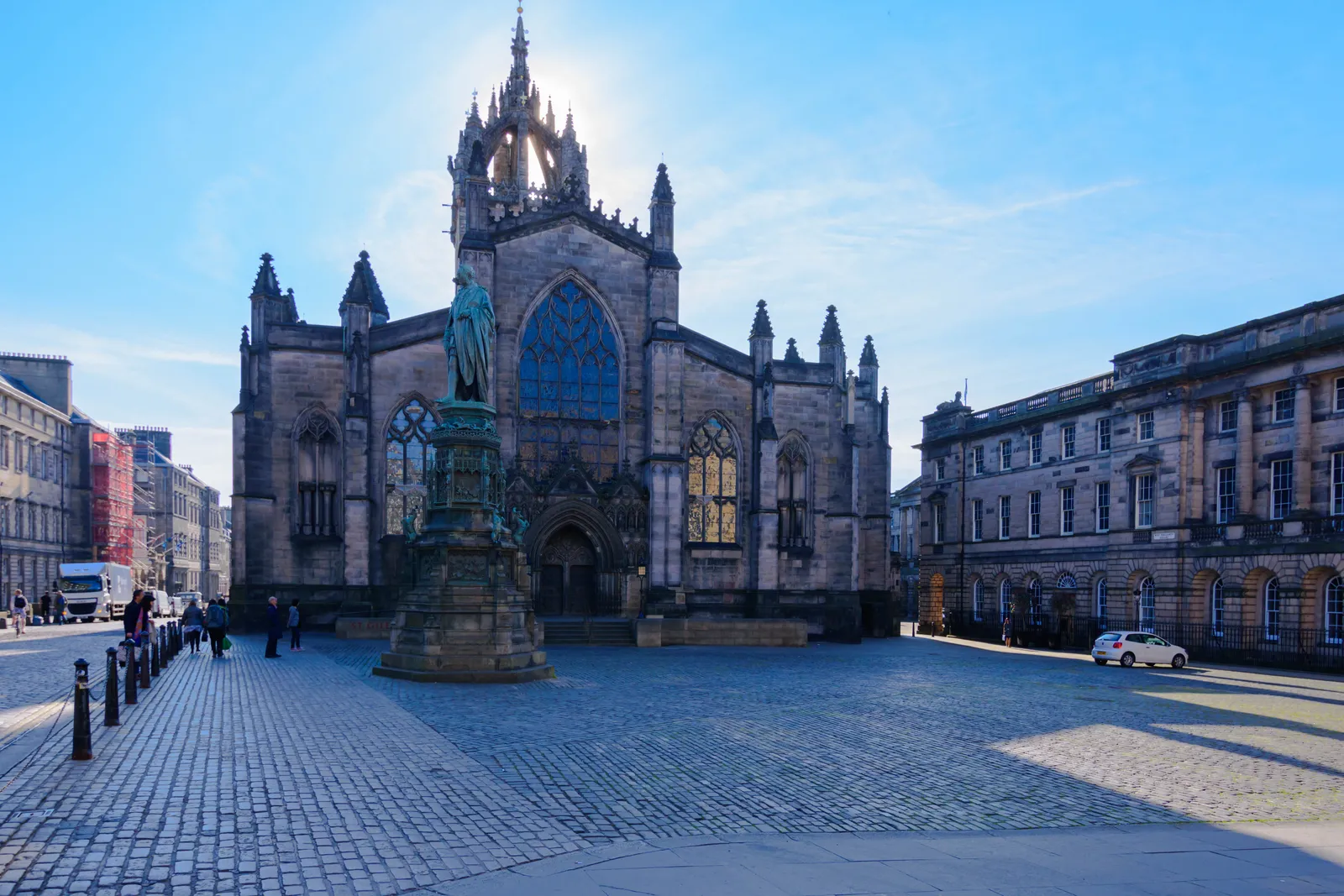
Off the south-east corner of the nave is the Thistle Chapel, built in 1911 for the Order of the Thistle and carved by the brothers William and Alexander Clow: stalls, canopies and bosses covered in Scottish detail, including three angels playing bagpipes, two hidden in the woodwork near the door and one in stone above a window. Hours are worth checking against your flight, because they are not the same all week: 10am to 6pm Monday to Friday, 9am to 5pm on Saturday, and on Sunday the cathedral does not open to visitors until 1pm.
Victoria Street’s curve down to the Grassmarket
Victoria Street runs off the Royal Mile where it crosses George IV Bridge, curving where most of the surrounding streets run straight. It was cut between 1829 and 1834 to Thomas Hamilton’s design, part of an Improvement Act meant to give the Old Town a decent approach from the west, replacing a steep Z-shaped lane called the West Bow. It kept the name Bow Street until 1837. The shopfronts along it are painted in flat blocks of colour, and a raised walkway, Victoria Terrace, runs above the north side with its own row of buildings behind it.
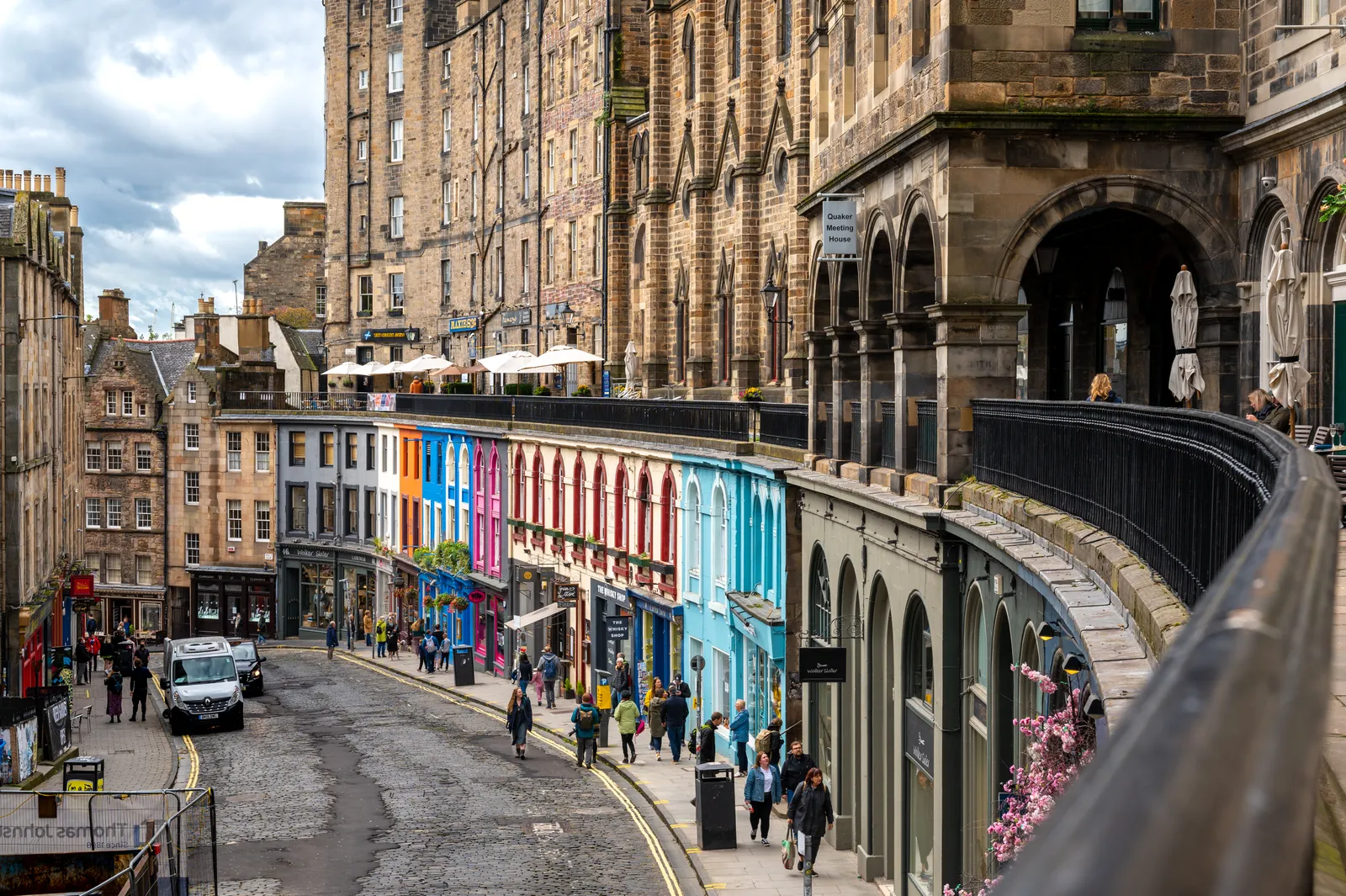
The curve ends in the Grassmarket, a long open rectangle directly under the castle rock, which is the angle most people underestimate: on this side the crag rears up to 80 metres out of the ground around it, with the castle walls sitting on top. Guided tours will tell you the street is what Diagon Alley was based on, and enough of them do that the shops have leaned into it.
The Grand Gallery at the National Museum of Scotland
The National Museum of Scotland takes up most of one side of Chambers Street, off George IV Bridge. Entry is free. The Victorian half opened in 1866 to a design by Francis Fowke, the Royal Engineer behind the Royal Albert Hall, and its Grand Gallery is the reason to walk in even if you look at nothing else: a hall over 80 metres long and 24 high, white cast-iron columns and balconies on three levels, all of it under a glass barrel roof modelled on the Crystal Palace.
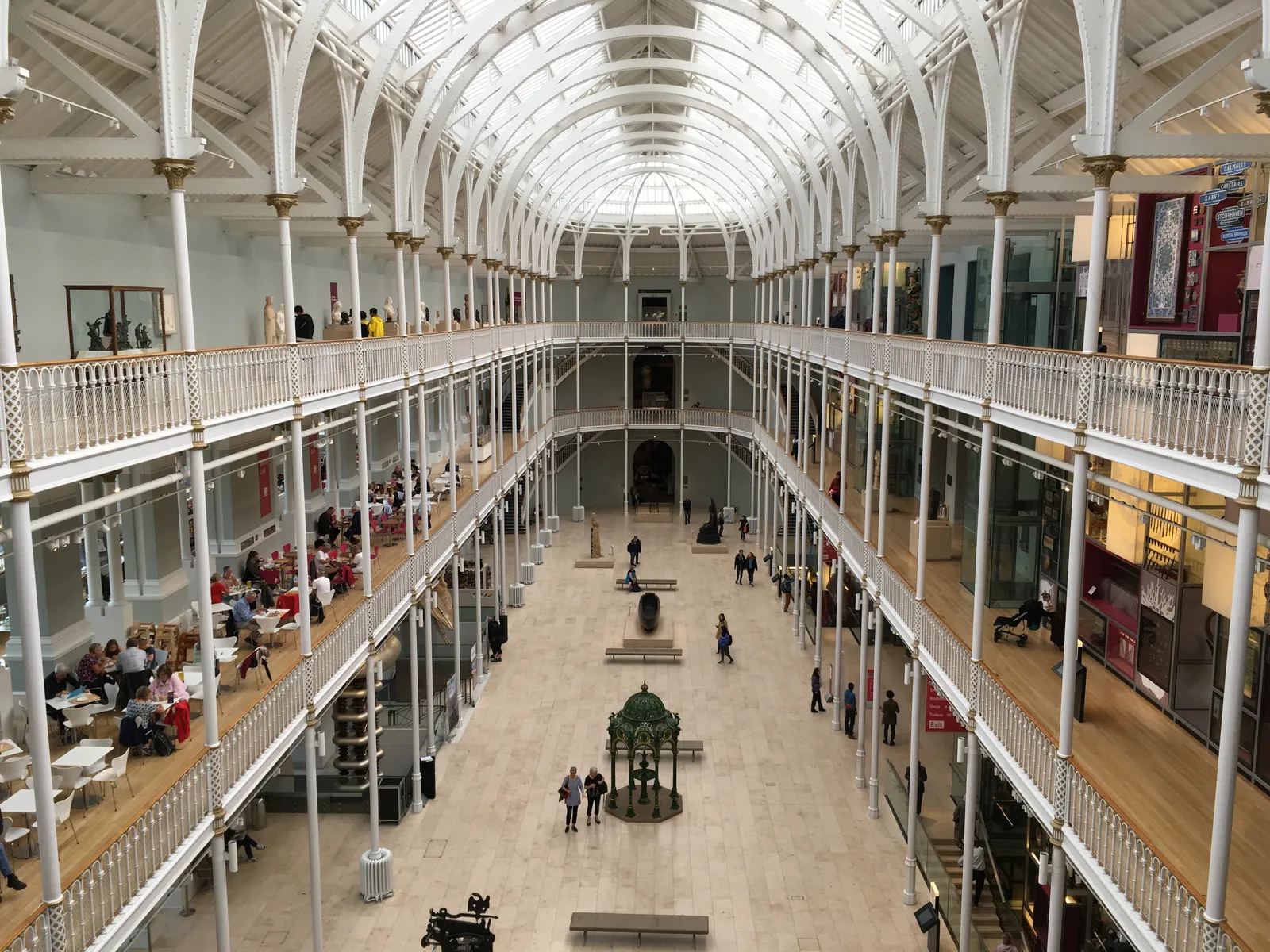
There is a lift to a roof terrace on Level 7 that looks straight across the Old Town to the castle and round to Arthur’s Seat, also free, though it closes at 16:45 while the museum itself stays open until 17:00. Dolly the sheep is in the Scotland galleries a couple of floors down. On a wet afternoon this is the stop that saves the itinerary, because the building is large enough to absorb an hour without noticing.
Salisbury Crags and Arthur’s Seat above Holyrood Park
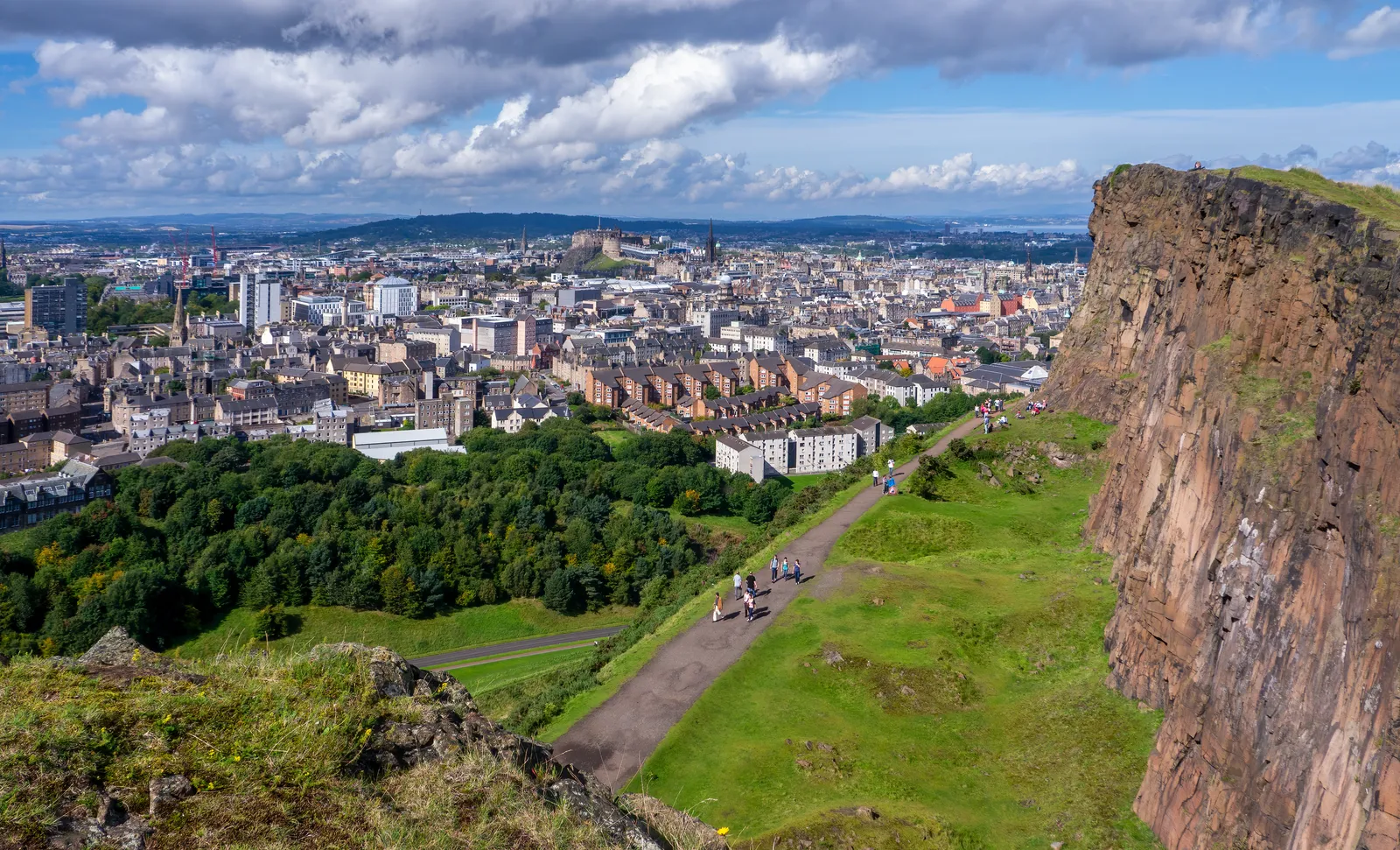
With more than four or five hours, the Royal Mile’s downhill run from the castle esplanade to Holyrood is worth the extra stretch: a mile past the Palace of Holyroodhouse and the Scottish Parliament, ending at a gate into Holyrood Park: 260 hectares of hill, loch and crag inside the city, free and open. Salisbury Crags is the cliff line you see from almost everywhere in the centre, a curve of dolerite with a grass slope beneath it. Arthur’s Seat, the extinct volcano behind it, tops out at 251 metres, about an hour up from the palace gate.
The Airlink runs all night, but check-in doesn’t
The Airlink 100 leaves Waverley Bridge for Edinburgh Airport on the same schedule it arrives on, up to every ten minutes until 01:00 and every twenty minutes through the rest of the night, £6 single for the 30-minute ride to the terminal’s landside forecourt, a short walk from check-in.
Walk back down for your suitcase before heading for the bus rather than dragging it around Holyrood Park, and build in a margin beyond the ride itself: the bus runs all night, but check-in and security do not. If your connection is out of London rather than Edinburgh, the same kind of afternoon works there from Paddington, on flat ground and a faster train.
Frequently asked questions
What should I do during a layover in Edinburgh?
With four to six hours, an airport bus reaches Waverley Bridge in about 30 minutes, close to Calton Hill's unfinished National Monument, free and open at any hour with a view over the whole Old Town ridge. From there it's a walk up through the Old Town to St Giles' Cathedral, free to enter, and down curving Victoria Street to the Grassmarket beneath the castle rock. The National Museum of Scotland on Chambers Street is free and a good stop for a wet afternoon. Edinburgh Castle itself is worth the walk up but tickets often sell out in summer, so it's the one stop worth booking (£23.50) before you land rather than deciding at the esplanade.
Should I take the tram or the airport bus from Edinburgh Airport?
The bus, in most cases. The Airlink 100 costs £6 single, takes about 30 minutes to Waverley Bridge and runs 24 hours a day. The tram covers similar ground in a similar time for £7.90, or £7.50 booked online, but it stops for the night before 23:00. Since a fire on Princes Street in July 2026 the tram has also been turning back at the West End instead of running through to St Andrew Square; the city plans to reopen the street and the trams will return to the full line once it is safe, but the bus has been unaffected throughout.
How late can I still get from central Edinburgh to the airport?
At any hour. The Airlink 100 from Waverley Bridge runs up to every ten minutes between 04:12 and 01:00 and every twenty minutes through the small hours, so a 06:00 departure and a 23:30 departure are both covered without a taxi. The airport's own left-luggage desk, in the landside arrivals area, keeps shorter hours than that and shuts at 22:00.
What is Edinburgh like during the August festival?
Busier than any other time of year. The Fringe runs for most of August, 7 to 31 in 2026, and the stretch of the Royal Mile around St Giles' fills with performers and audiences to the point where walking its length takes two or three times as long as usual. Calton Hill and Holyrood Park stay comparatively quiet, and the museums are free and indoors, which makes them the reliable stops in festival weeks.
Is there anything worth seeing in Edinburgh in January?
The Turner watercolours at the Scottish National Gallery on the Mound, which come out for that month alone. The collector Henry Vaughan left 38 of them to Scotland in 1900 on the condition that they be shown together, free, every January, when daylight is weakest and least likely to fade them, and the gallery has done it every year since. Entry to the gallery is free year-round.
Is climbing Arthur's Seat realistic before a flight?
Only with time to spare. The summit is 251 metres up and the walk from Holyrood at the foot of the Royal Mile takes close to an hour each way at a steady pace, on grass and loose stone that wants proper shoes rather than the ones you flew in. Salisbury Crags, the cliff line below it, is a much shorter walk from the same gate and gives most of the same view over the city.