Edinburgh Haymarket Layover: Dean Village
Part of the full Edinburgh Layover: Royal Mile Walk From EDI
Edinburgh’s Haymarket station sits at the west end of the city, and the walk north from it reaches St Mary’s Cathedral, the mill houses of Dean Village on the Water of Leith and the two free modern art galleries on Belford Road, all of it a mile clear of the Royal Mile crowds.
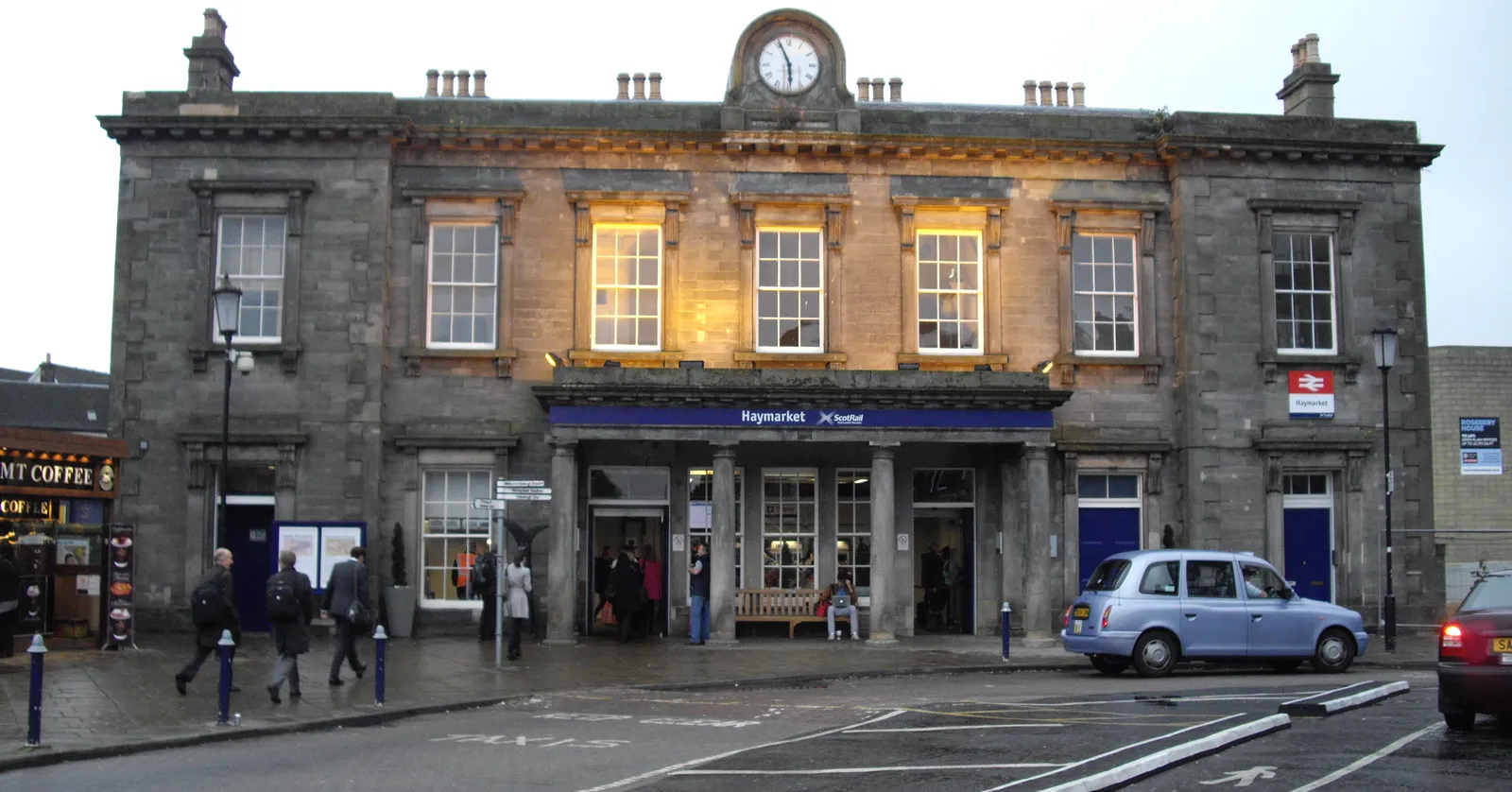
Haymarket kept its 1842 station front
Haymarket was the first of Edinburgh’s stations. It opened in 1842 as the eastern terminus of the Edinburgh and Glasgow Railway, cutting the journey between Scotland’s two biggest cities to two and a half hours, which was fast enough that the line had carried a million passengers by 1846. That same year the tracks were pushed on through the Haymarket tunnels into the valley where Waverley now sits, and Haymarket stopped being the end of the line.
John Miller’s 1842 building survived all of it, including a 2003 proposal to take it down and re-erect it somewhere else, which was dropped after enough people objected. It still fronts the station, with a modern glass and plastic-membrane concourse grafted on behind it in 2013. Rail platforms, a tram stop and the airport bus all meet on one narrow pavement out front, and at commuter hour there is not a lot of room on it.
The three spires of St Mary’s Cathedral in the West End
Ten minutes north of the station, at the end of Melville Street’s long Georgian canyon, three spires come up over the roofline. St Mary’s is the Scottish Episcopal cathedral, designed by George Gilbert Scott and consecrated in 1879, and the central tower carries a 90-metre spire with two shorter ones at the west end.
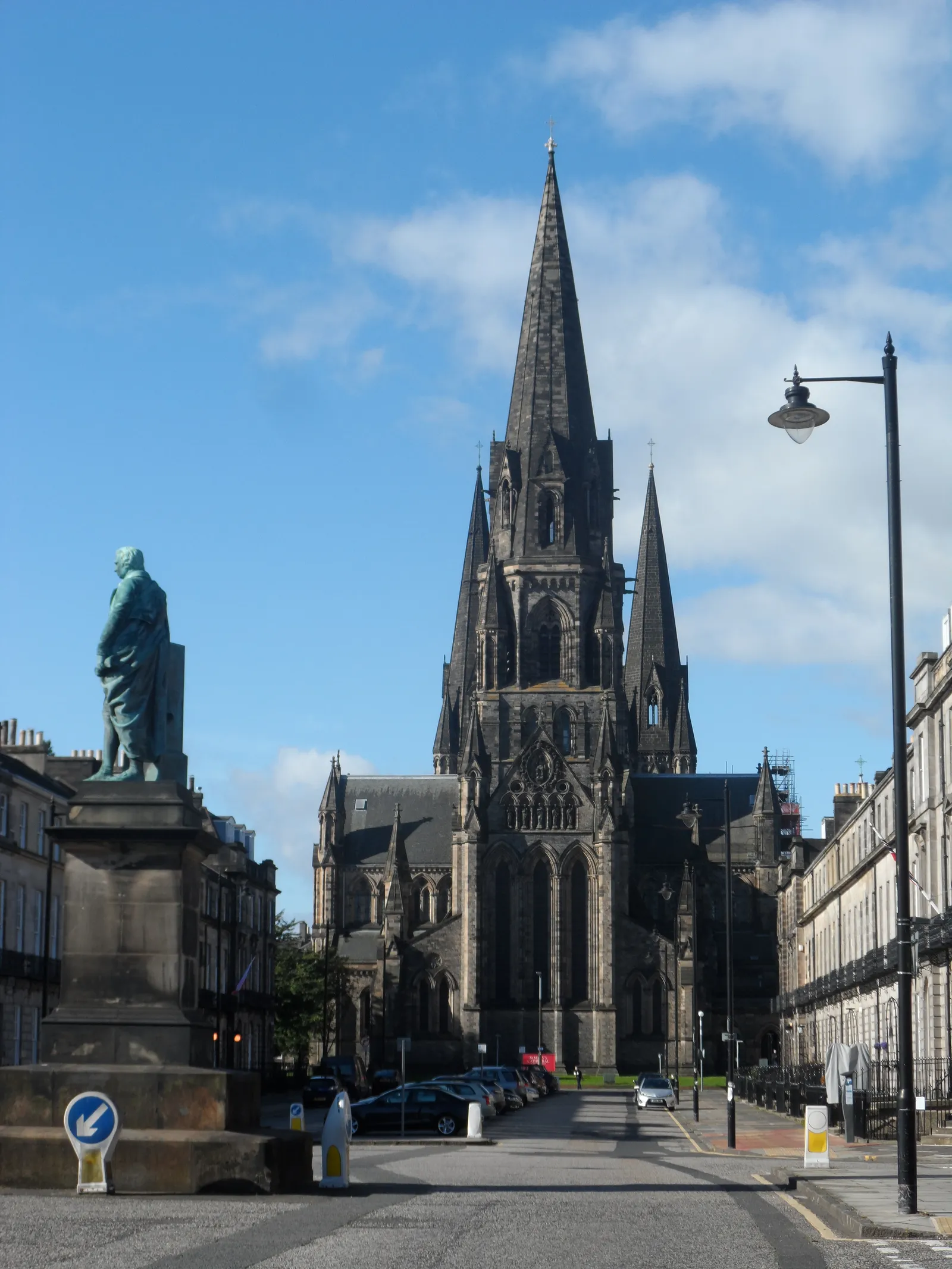
Those two western spires have names, Barbara and Mary, after the Walker sisters whose money paid for the building. Entry costs nothing. The cathedral runs a sung service most days and choral evensong at half past three on Sundays, and the nave is a plain, high, cold-stone space that takes about ten minutes to walk round.
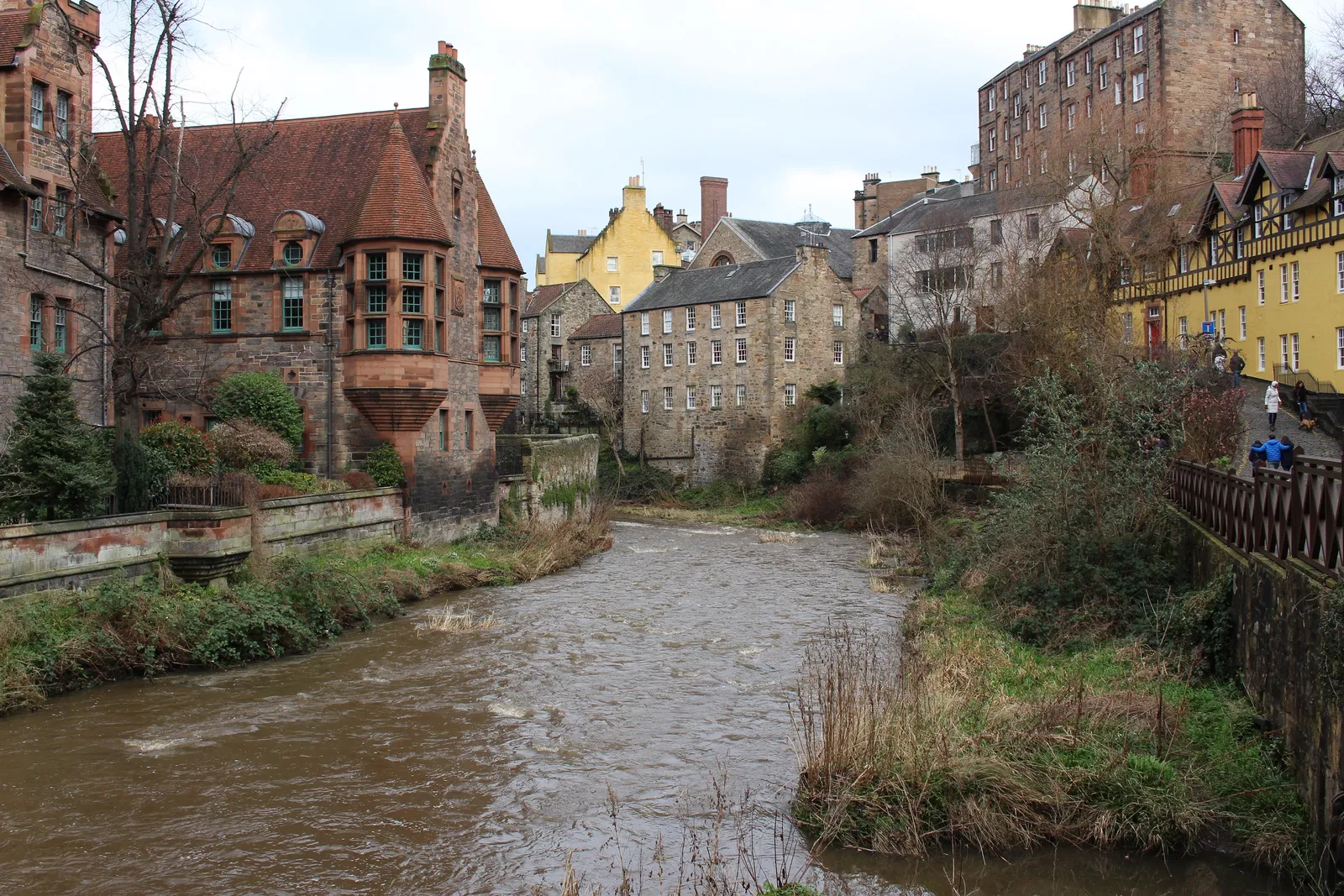
The mills and the weir at Dean Village
Keep north and the ground drops away into a gorge, and at the bottom of it is a village. Dean Village milled grain on the Water of Leith for something like 800 years, eleven mills at its peak, and when the industry died the buildings stayed: stone mill houses stacked on both banks, a weir, a couple of footbridges, and Well Court’s red-tiled tenement and clock tower built in the 1880s as housing for local workers. Thomas Telford’s Dean Bridge crosses 32 metres overhead on four arches, finished in 1831 when he was seventy-three, which is the last thing you expect to look up and see from a riverbank.
The riverside walkway runs both ways from here. Ten minutes downstream, on the way to Stockbridge, there is a small circular Roman temple sitting on the bank: St Bernard’s Well, built in 1789 by the landscape painter Alexander Nasmyth over a mineral spring some boys found while fishing in the 1760s, with a marble Hygieia standing inside the ring of columns and “Bibendo Valeris” cut over the door. Edinburgh’s wealthy came out here to drink the water for their arthritis. The chamber below has been shut since 1940 and opens only for Doors Open Day, so what you get is the outside, which is most of the point.
Haymarket funnels rail platforms, a tram stop and the airport bus queue onto one short stretch of pavement, and a suitcase parked there at five in the afternoon is standing in the middle of three flows of people at once.
The turfed landform outside the modern art galleries
Fifteen minutes upstream, or twenty straight up Belford Road, two galleries face each other across the street. Modern One is William Burn’s 1825 building for John Watson’s Institution, a refuge for fatherless children, all columns and pediment; Modern Two, opposite, was Thomas Hamilton’s Dean Orphan Hospital of 1833. Between them they hold the national modern and contemporary collection, more than 6,000 works, and both are free.
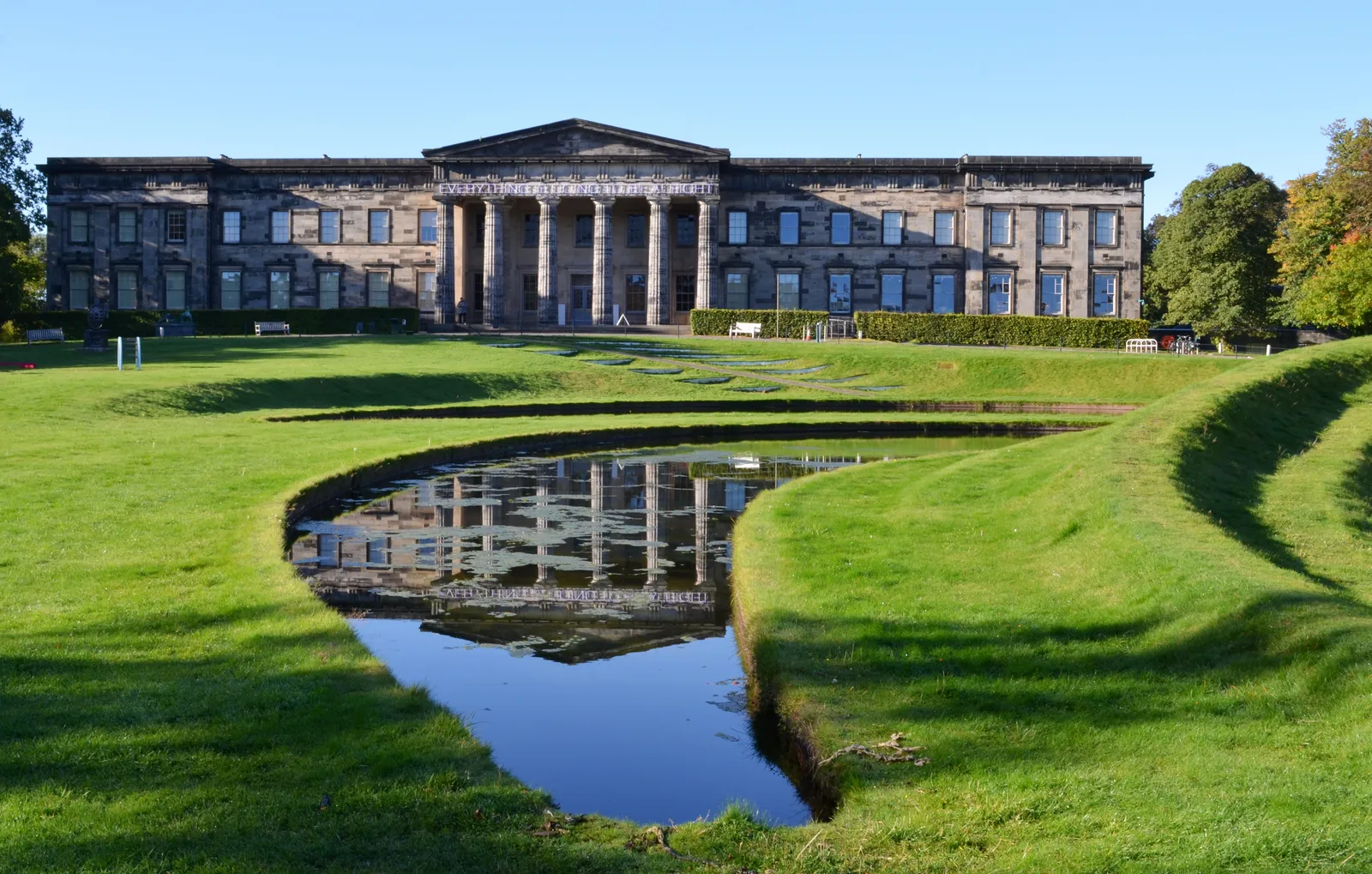
The lawn in front of Modern One is not a lawn. Charles Jencks reshaped it in 2002, with Terry Farrell and Partners, into Landform: a stepped serpentine mound of turf curling round three crescent pools, which you walk up rather than look at. It won the Gulbenkian museum prize in 2004, and since it sits on open ground in front of the building, it is there to walk on whether or not the galleries themselves are unlocked.
Haymarket is closer to the airport than the city centre is
Both the tram and the Airlink 100 bus call at Haymarket on the way out from Edinburgh Airport, putting the station a few minutes nearer the terminal than Princes Street or Waverley Bridge. The bus runs 24 hours a day for £6 single; the tram covers the same run for a similar fare but stops for the night before 23:00, the difference that matters on a late departure.
Head back the way you came for your suitcase, then it is one tram or one bus from Haymarket out to the terminal. This whole route stays low and west; if you would rather spend the time up on the ridge, the main Edinburgh walk climbs the other way, from Waverley up to the Royal Mile and the castle.
Frequently asked questions
How far is Edinburgh Airport from Haymarket?
Closer than it is from the city centre. Both the tram and the Airlink 100 bus call at Haymarket on their way in from Edinburgh Airport, so the station sits a few minutes nearer the terminal than Princes Street or Waverley Bridge do. The bus runs 24 hours a day; the tram stops for the night before 23:00, which is the difference that matters for a late departure.
Is the Water of Leith walkway a good idea after dark?
Not really. The path runs below street level through wooded sections with very little lighting, and in winter it is dark along there by half past four. It is a fine walk in daylight and an awkward one at night, so if your flight is a late one, do this stretch early and spend the last of the time up at street level in the West End instead.
Do people actually live in Dean Village?
Yes, and that is worth knowing before you go. It is a residential neighbourhood of a few hundred people, not a preserved site, and the lanes visitors photograph are somebody's front doors and private courtyards. Well Court, the red-tiled block with the clock tower, is flats. Stick to the public paths and the river bank.
Should I get off at Haymarket or stay on to Waverley?
It depends which way you want to walk. Haymarket puts you at the west end, closest to Dean Village, the Water of Leith and the Belford Road galleries, and it is a few minutes nearer the airport on both the tram and the bus. Waverley, one stop further on, is the station for the New Town and the Old Town, and everything in this guide is a mile or more from it. Trains from London and Glasgow call at both.