Souq Waqif Layover: Doha's Standing Market
Part of the full Doha in One Day: The Souq Waqif Market
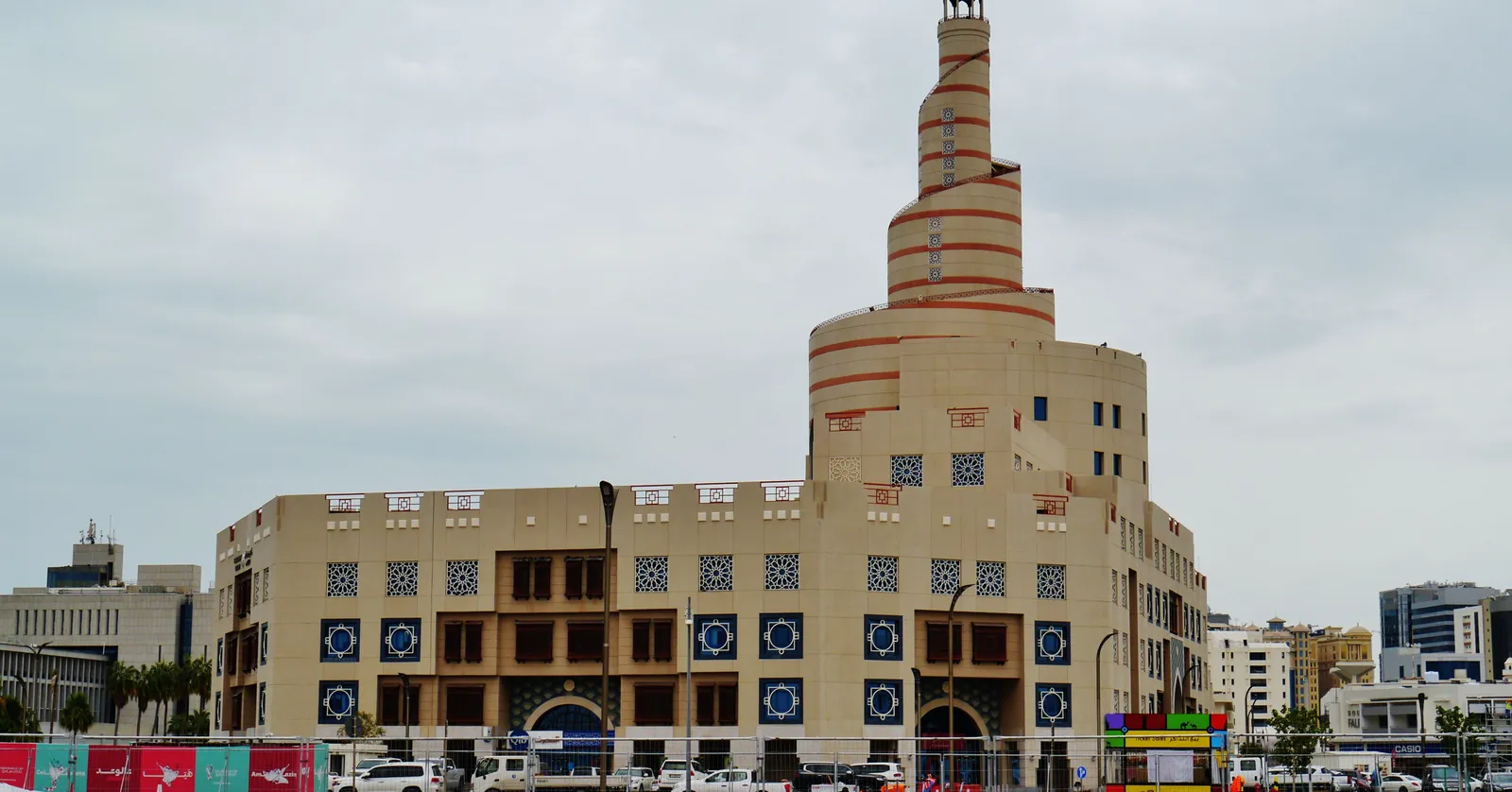
Souq Waqif, the old standing market in central Doha, has a spiral-minareted cultural centre at one edge running free tours, a gold market in a lit building of its own, and lanes of shops still weighing spices and nuts out of open sacks.
Fanar’s minaret copies the Great Mosque at Samarra
Fanar, the Qatar Islamic Cultural Centre, closes the western end of the market with a sand-coloured block set all over with panels of blue tilework, and the thing everyone photographs is the minaret: a tapering tower with its ramp wound around the outside instead of a staircase inside, which is a direct quotation of the ninth-century Great Mosque at Samarra in Iraq. Floodlit, it is the marker you navigate the whole quarter by.
The centre exists to explain Islam to people who did not grow up with it, and the guided tours it runs are free, come with Arabic coffee and dates and a short film, and take in the mosque itself. Cover arms and legs, and expect to leave shoes at the prayer hall door. The building keeps long hours but the welcome desk breaks in the early afternoon, so mid-morning or evening is the safer arrival.
The Gold Souq trades out of a building of its own
The gold market at Souq Waqif is not a lane of stalls but a separate two-storey hall, symmetrical, arcaded on both floors, with external staircases running up the front and its name lit in gold above the central door. Inside, shop after shop sells by weight against the day’s rate, and what is in the windows runs from thin everyday chains to the heavy ceremonial collars and headpieces that go with a Gulf wedding.
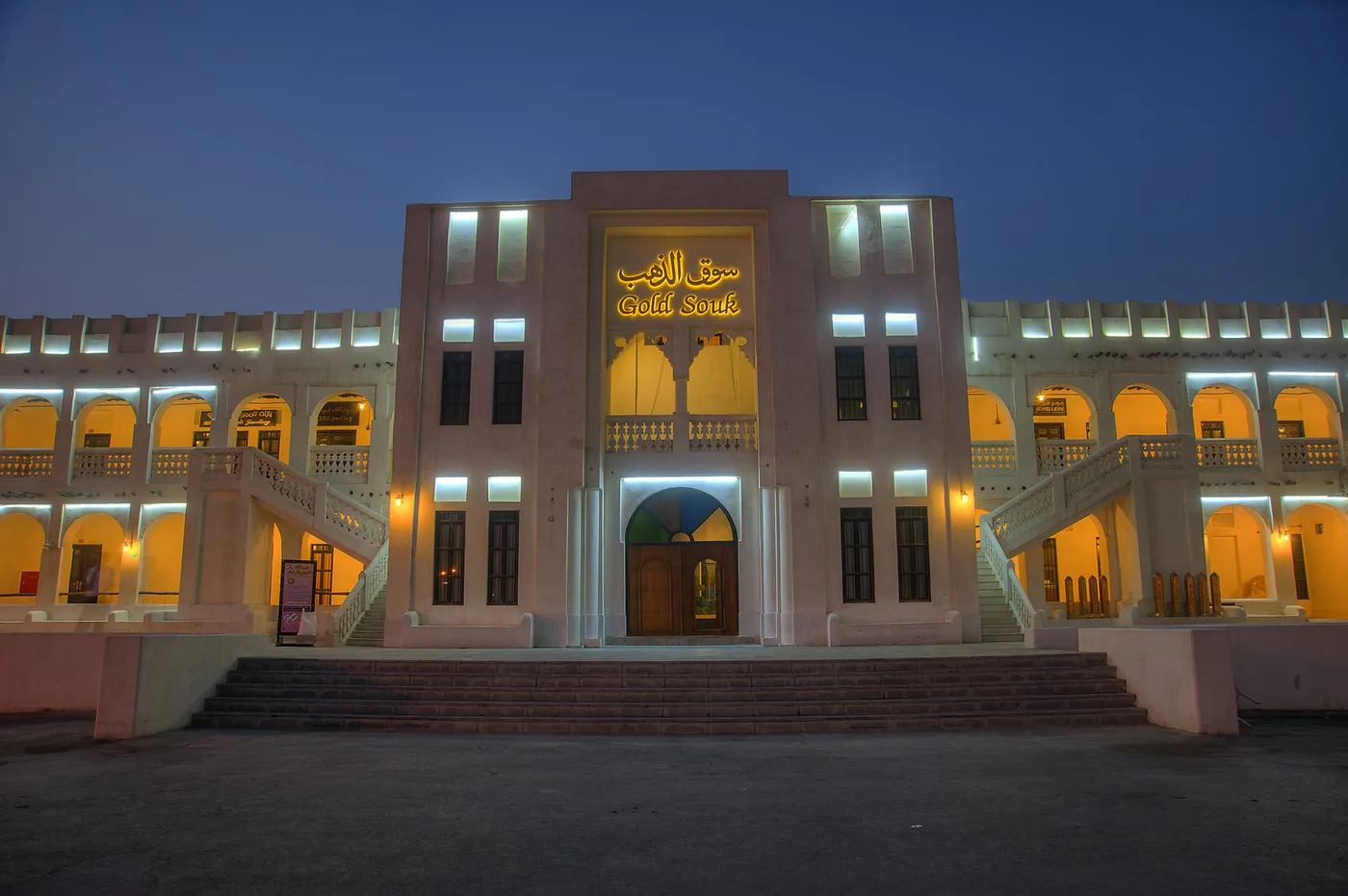
Nobody is going to mind you looking without buying, and the building is worth the detour after dark when the whole facade is lit. If you would rather see the market as part of something broader, a half-day tour combining the city with a boat out on the bay can be booked through a tours and activities platform and takes in this quarter on the land half.
The lanes here are laid in uneven stone setts with shallow steps between levels, and the older passages narrow to about the width of two people, so a wheeled bag is the one thing that turns a twenty-minute wander into a job.
The spice shops still sell by the scoop
In the lanes between the market blocks, a run of shops sells out of open sacks and jars stacked on the floor rather than off a shelf in packets: dried limes, saffron, cardamom, nuts, dried fruit, sweets by the kilo. Frankincense is sold the same way, alongside the clay burners it goes into, which is the single most common thing to come out of here in a suitcase.
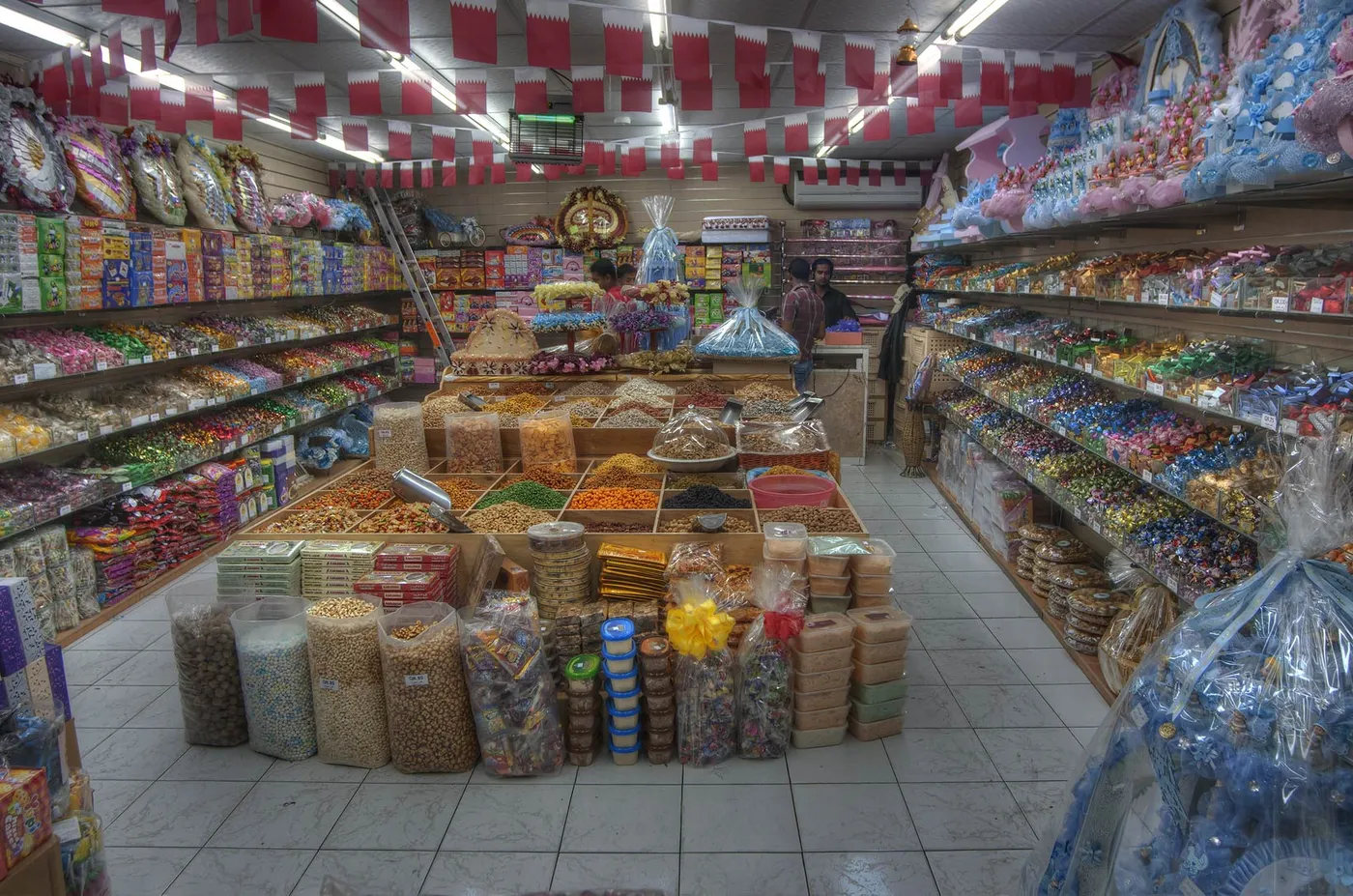
Prices are not fixed and are not meant to be, though the gap between the asking price and the going rate is narrower here than it looks. The practical warning for a flight day is simpler: loose spices and resins go in hold luggage rather than in a coat pocket, and the shops will vacuum-pack if you ask.
The market’s terraces only fill after the sun drops
The main thoroughfare runs between two rows of restaurant terraces under awnings, and in the middle of the day almost all of them are empty, because Doha’s afternoon high sits above 40°C from May through September and the shops themselves keep a long midday break. From about seven in the evening the same street is full, the lamps are on, the minaret at the end is floodlit and the mounted heritage police ride their patrol down the middle of it.
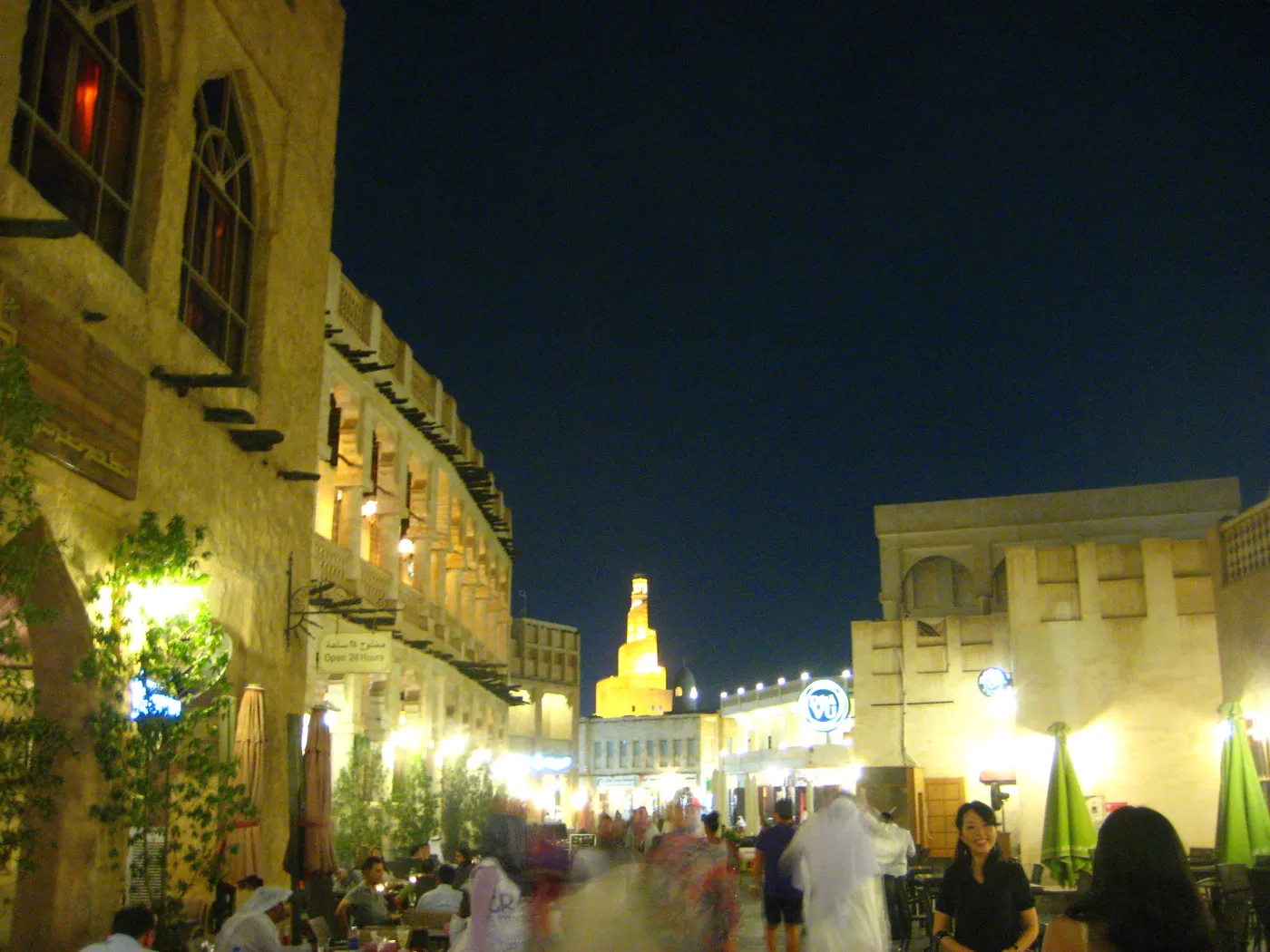
This is the argument for pointing a late departure at the market rather than at a museum: the two big museums shut at 7pm most days and 9pm on Thursdays, and the full Doha route needs them open, while this quarter is at its best exactly when they are closing. The Arabian horse stables sit a short walk in from the falcon shops, free to look into, with a sand arena behind them.
The market has its own metro station, one stop from the interchange
Souq Waqif station is on the Gold Line at the market’s northern edge, one stop from Msheireb where all three lines meet. Getting to Hamad International Airport (DOH) means changing there onto the Red Line and running five stops south, which is about twenty-five minutes of travel all in, plus whatever the transfer costs you. A standard single is QAR 2 with a QAR 6 daily cap.
Trains run 5am to 1am Saturday through Thursday and from 9am on Fridays. That Friday start is worth checking against a morning departure, because this is the one part of the city where a taxi at 7am on a Friday is genuinely the only option; a metered one runs around QAR 40 to 60 out to the terminal at any hour. Leave two hours between the last coffee here and an international departure and none of it is tight.
Pick the stored bag up on the walk out rather than at the end, since the drop-off points around this quarter sit on the street rather than inside the station gates.
Frequently asked questions
What should I do during a layover near Souq Waqif in Doha?
Walk in from the market's own metro station and give it three hours. Fanar's spiral minaret stands at the western edge and runs free guided tours with Arabic coffee, the Gold Souq trades out of a lit arcaded building of its own, and the spice and nut shops in the lanes between still weigh things out of open sacks. If you can time it for the evening, do: the restaurant terraces along the main street only really fill after dark, and the heat stops being a factor. Nothing here needs booking, which is the point of choosing it over the museums.
Can non-Muslims visit Fanar in Doha?
Yes, and that is largely what it is there for. The centre runs free guided tours for visitors, which take in the mosque and the building, come with Arabic coffee and dates, and include a short film. Dress modestly, arms and legs covered, and expect to take your shoes off before the prayer hall. Tour times run through the day but the welcome desk keeps a gap in the early afternoon, so turning up mid-morning or in the evening is the safer bet.
Are there Arabian horses at Souq Waqif?
There are, in stables inside the market a short walk from the falcon shops, and looking at them costs nothing. The grounds open onto an outdoor sand arena, and the mounted heritage police ride their patrol through the market's main thoroughfare, which is the version of this most people end up seeing without going looking for it. There is also a camel pen on the sand at the market's edge, by the old fort.
What is Souq Waqif like in summer?
Unworkable in the afternoon and good again after about 7pm. Doha's daytime high sits above 40°C from May through September, and while the lanes are roofed in timber and genuinely shaded, they are not air-conditioned and the open stretches between blocks are not shaded at all. The shops keep a long midday break in any case. Come in the evening, when the market is lit, the terraces are out and the temperature has dropped to something a walk can survive.