Katara Layover: Doha's Cultural Village
Part of the full Doha in One Day: The Souq Waqif Market
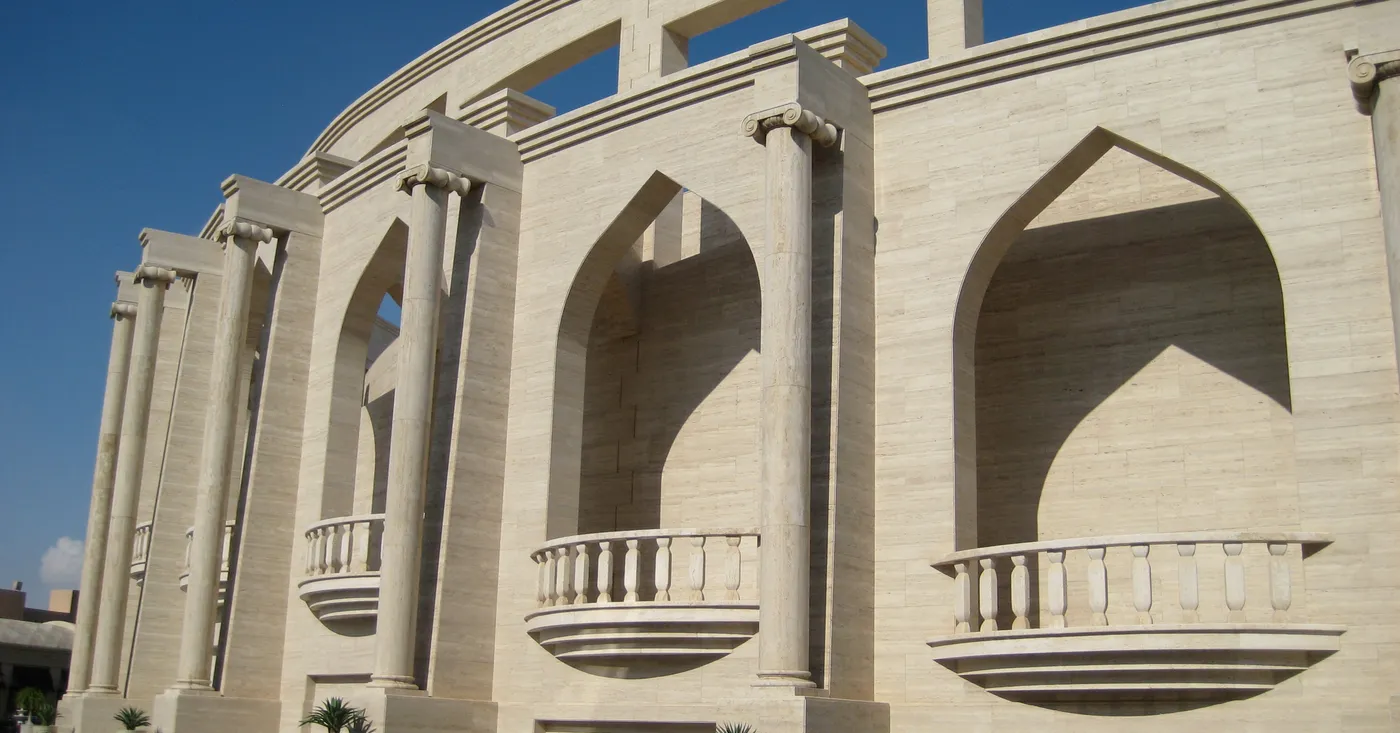
Katara Cultural Village, on the coast north of central Doha, is free to walk into, and inside it are an open-air amphitheatre seating 5,000 with the sea behind the stage, two mosques tiled in turquoise and in gold, and a kilometre and a half of beach.
The amphitheatre seats 5,000 with the water behind the stage
The amphitheatre at Katara covers 3,275 square metres and takes 5,000 people, and it was put up in travertine with a curving outer wall of deep pointed-arch niches and stone balconies, a Greek plan wearing Arabic detailing. The stage backs onto the water, so what a performer faces is the bowl and what the audience gets behind them is the Gulf.
Most of the time nothing is scheduled and you can walk straight in, which is the version worth planning for: an empty stone arena on a Tuesday afternoon is a stranger and better thing to stand in than a full one. If you would rather have the coast and the centre handed to you in one go, a half-day tour taking in the village, the old market and the museums can be booked through a tours and activities platform and does the connections for you.
The village runs the better part of a kilometre from the road side down to the water, and you will cross it more than once, so every extra kilo in hand turns into real minutes on a fixed gap.
The Katara Mosque was designed by Zeynep Fadıllıoğlu
Zeynep Fadıllıoğlu became the first woman to design a mosque in modern Turkey when Istanbul’s Şakirin Mosque opened in 2009, and the mosque she built at Katara the following year is the reason to walk to this end of the village. It is faced in Persian and Turkish tile and enamel, turquoise and purple glass mosaic run through with gold-leafed calligraphic panels, over a cluster of domes, with a freestanding minaret standing apart from the building rather than growing out of it.
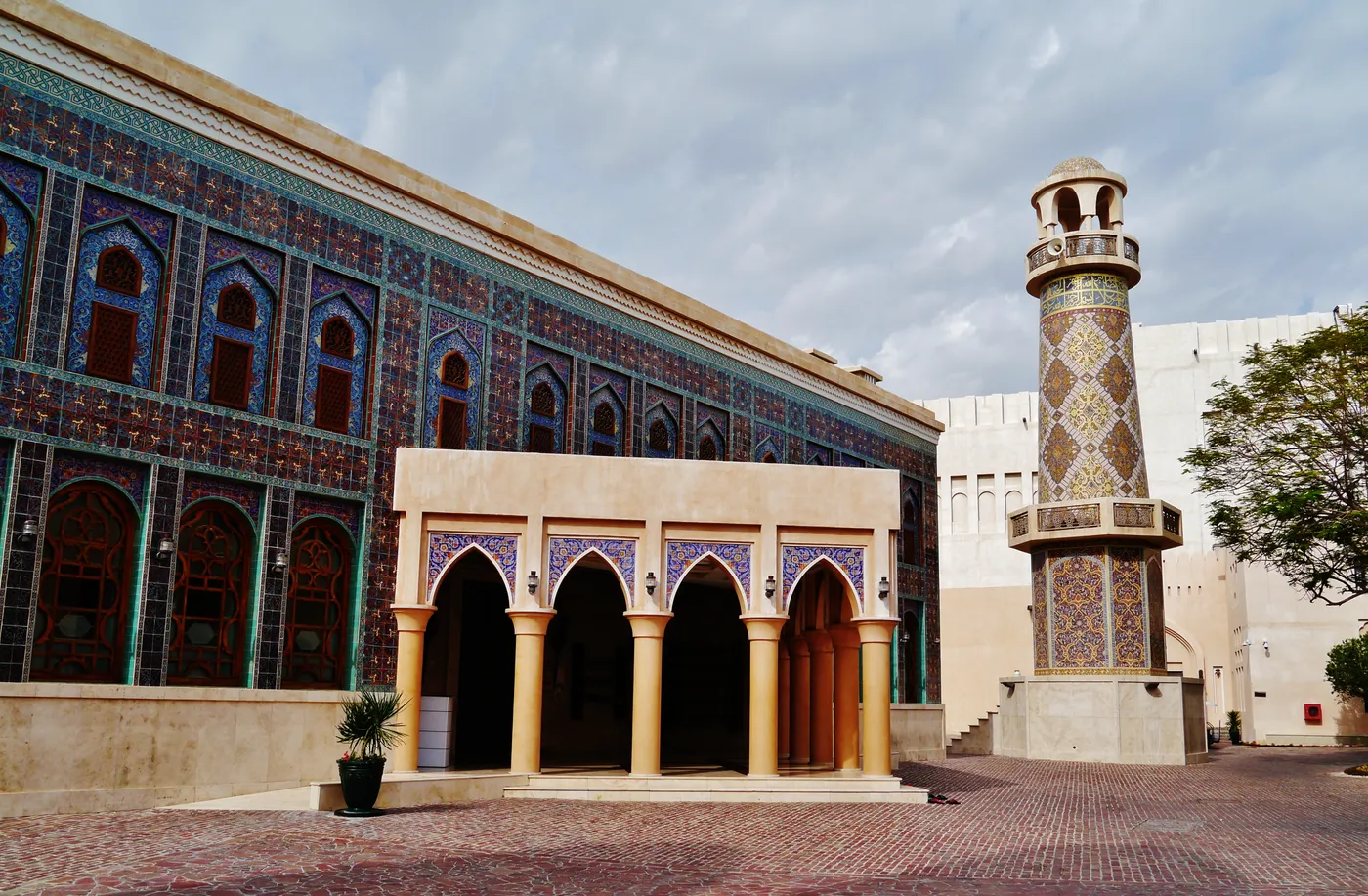
The courtyard in front of it is brick-paved and usually empty outside prayer times, which is the best condition to see the tilework in, since the glass mosaic changes completely depending on where the sun is. Dress modestly if you intend to go past the arcade.
The Golden Mosque is covered in nothing but gold tile
A few minutes away stands the opposite argument: a plain cubic building with almost no ornament at all, clad from the ground to the roofline in small gold mosaic tiles and left at that. There is one dark fountain niche cut into a wall and a timber screen over an upper window, and that is the whole vocabulary.
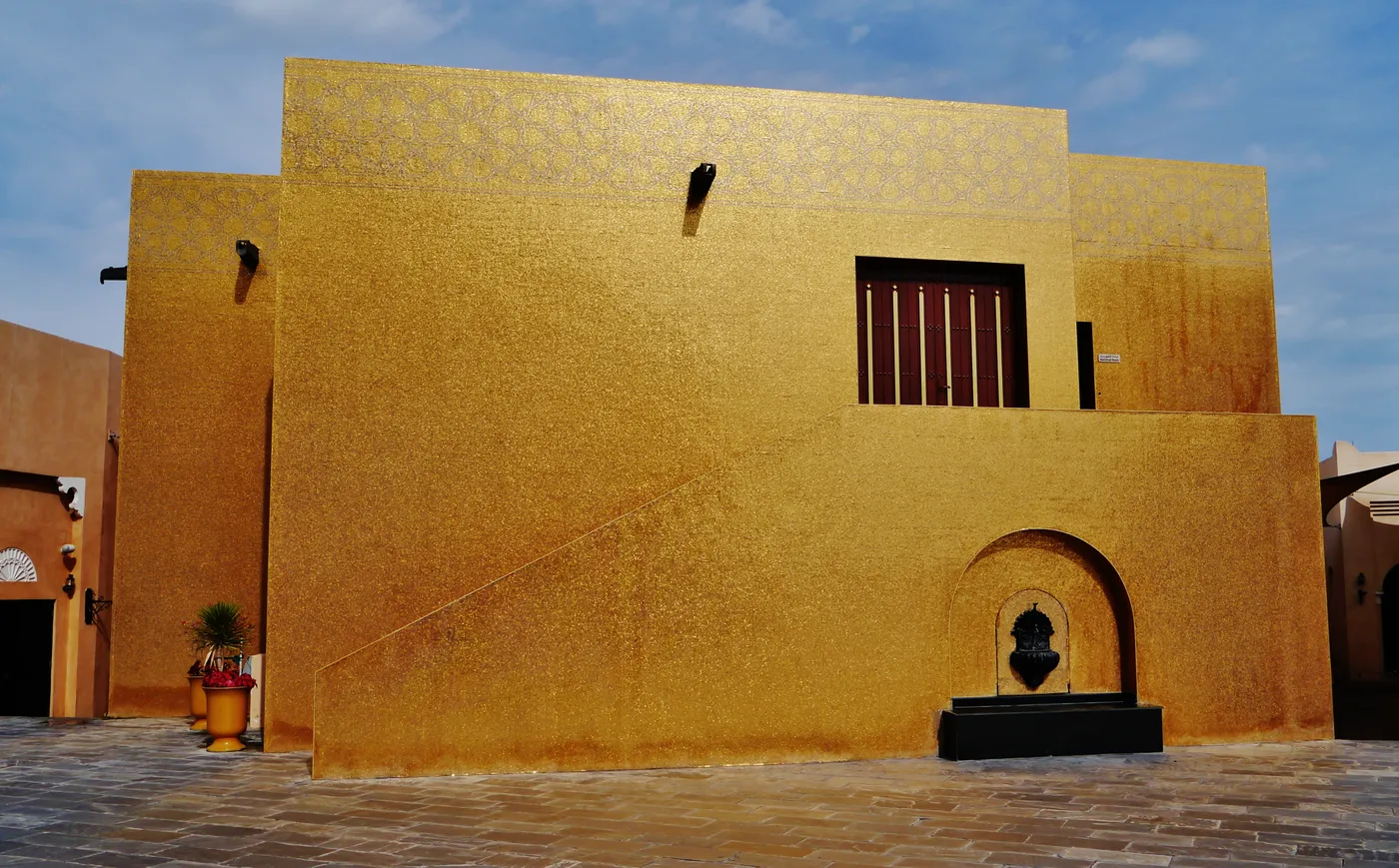
It reads as either austere or extravagant depending on the hour, and in full afternoon sun it is genuinely hard to look at directly. Both mosques cost nothing, and neither takes more than a few minutes unless you want to sit.
The beach runs a kilometre and a half along the village front
Katara Beach is the seaward edge of the site: pale sand, shallow turquoise water, and patterned majlis benches set out on the sand instead of deck chairs, with the towers of the Pearl on the horizon to the north. It is a managed beach rather than an open shore, so there are lifeguards, changing facilities and watersports rental on it.
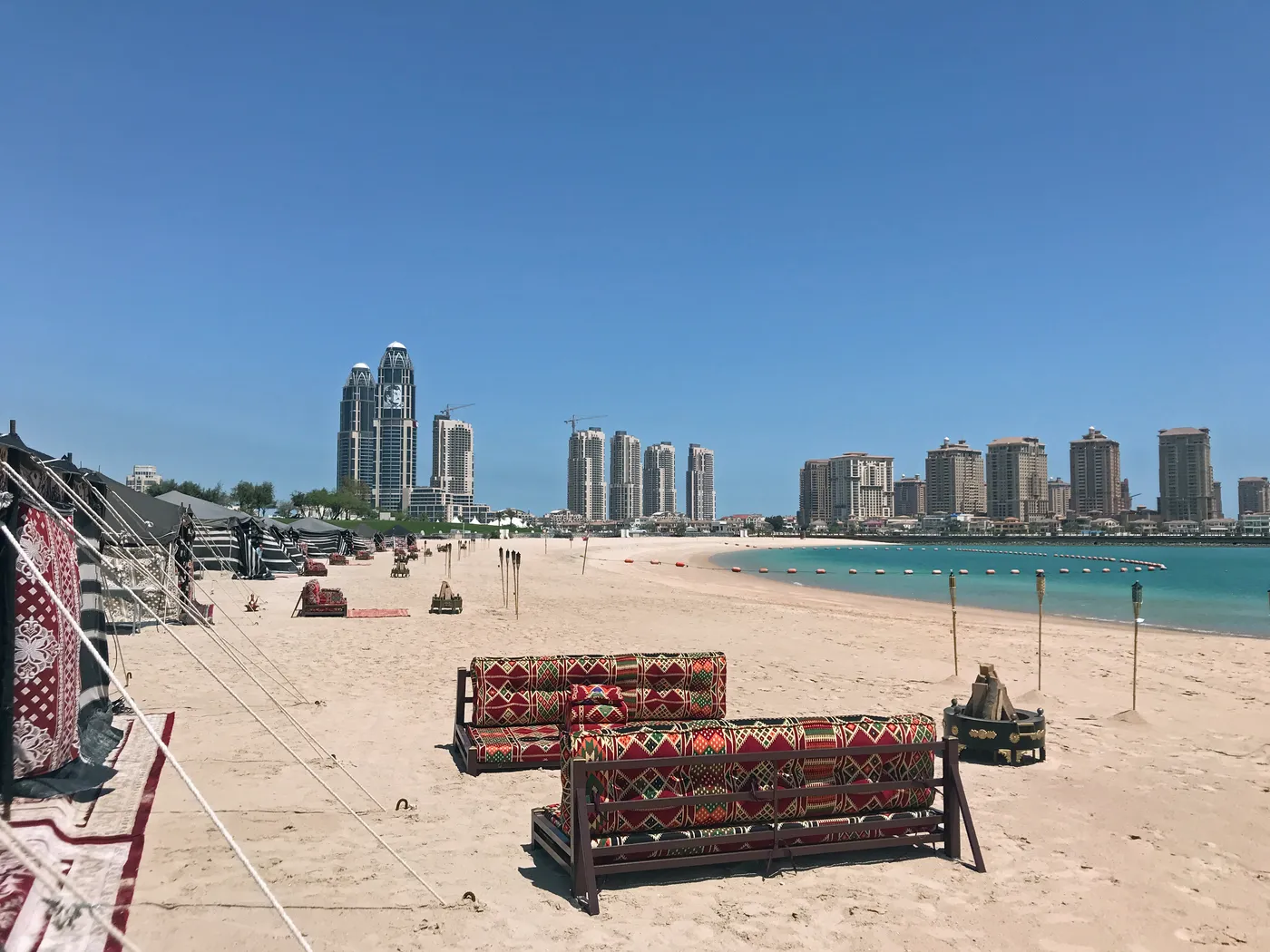
Entry runs about QR 10 for an adult and another QR 5 for a lounger, which is the only charge anywhere in the village that a short visit is likely to hit. Walking the promenade above it is free, and on a flight day that is usually the better use of twenty minutes than getting sand into a bag you have to repack.
The village has its own station on the line down to the airport
A direct train runs down the coast from Katara’s own station into the middle of the city and carries on south to Hamad International Airport (DOH): it is all one line, the Red Line, so there is no change to make, and the whole run from here to the Terminal 1 station is roughly three quarters of an hour of travelling. A standard single is QAR 2 regardless of distance, the daily cap is QAR 6, and trains come every three to five minutes.
Service runs 5am to 1am Saturday through Thursday and starts at 9am on Fridays. Add five minutes at the far end, because the airport station sits beside the West short-term car park rather than inside the terminal, and allow for the walk back up through the village to the station at this end too. If your gap is nearer four hours than six, the central Doha itinerary is the better shape for it, since everything on that route sits within a stop or two of one interchange.
Collect the bag on the way south rather than doubling back for it: the drop-off points sit around the middle of the city, which is on this route anyway.
Frequently asked questions
What should I do during a layover near Katara Cultural Village in Doha?
Walk the village, which costs nothing and takes about two hours end to end. The open-air amphitheatre is the piece to find first, 3,275 square metres of it seating 5,000 with the sea behind the stage, and it is usually open to wander into when nothing is scheduled. The Katara Mosque and the Golden Mosque are a few minutes apart and are worth seeing for the tilework alone, one in turquoise and gold, the other clad entirely in gold mosaic. The beach runs a kilometre and a half along the front and charges a small fee if you want to use it. Four hours is comfortable; five if you want to eat here as well.
Is Katara Cultural Village free to enter?
The village itself is, with no gate and no ticket, and the mosques, the squares and the amphitheatre grounds cost nothing. The beach is the exception: entry runs about QR 10 for an adult, with another QR 5 if you want a sun lounger. Individual venues inside, the planetarium among them, charge separately. Galleries and shops generally run from 10am to late evening, opening in the afternoon on Fridays and Saturdays, while the outdoor spaces are open all day.
Is Katara Cultural Village good for a layover with kids?
Better than the museums in the middle of the city, mostly because there is somewhere to put them. The beach has shallow water, lifeguards and watersports rental, and the wide paved squares between the buildings are traffic-free the whole way across. The Al Thuraya Planetarium on the site runs shows under a 22-metre dome, seats 200, and is free, with seats given out first come first served. The catch is the walking: the village is close to a kilometre from the road end to the water, and there is no shade over most of it.
Who designed the Katara Mosque?
Zeynep Fadıllıoğlu, the Turkish designer who in 2009 became the first woman to design a mosque in modern Turkey with Istanbul's Şakirin Mosque. At Katara she worked in Persian and Turkish tile and enamel, turquoise and purple glass mosaic with gold-leafed calligraphic panels, over a cluster of domes and a freestanding minaret. It opened with the rest of the village in 2010 and stands a few minutes from the Golden Mosque, which takes the opposite approach and is faced in nothing but gold.