Doha in One Day: The Souq Waqif Market
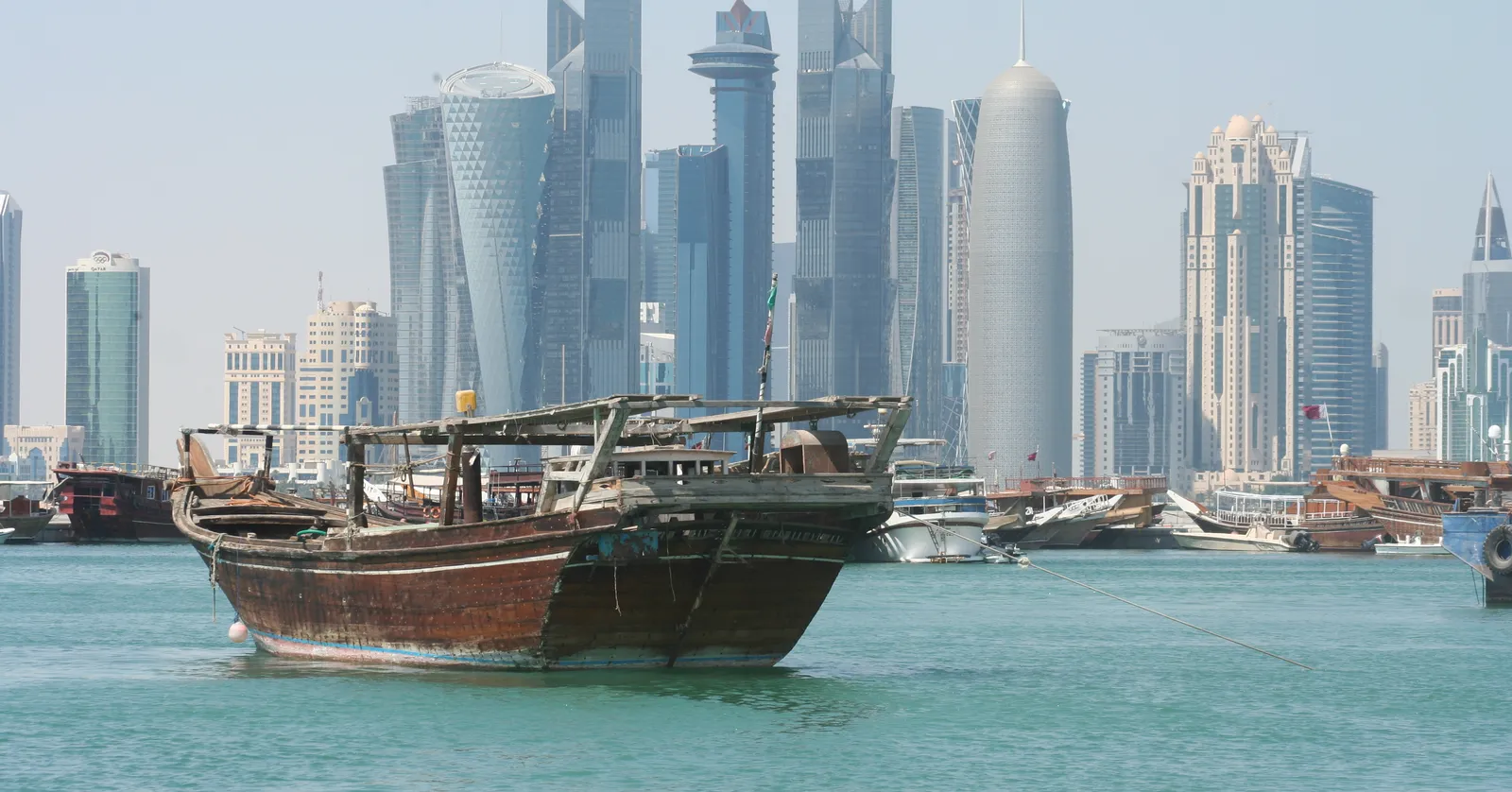
Souq Waqif, Doha’s old market, has stood on the same ground in central Doha for a century, and the National Museum of Qatar sits one metro stop east of it, the four free heritage houses of the Msheireb Museums one stop west, and the Museum of Islamic Art a fifteen-minute walk along the Corniche.
The National Museum of Qatar is built as interlocking discs
The National Museum of Qatar stands on Museum Park Street where the Corniche turns south, and Jean Nouvel drew it from the desert rose, the crystal of gypsum and sand that forms in Qatar’s coastal salt flats. The result is a pile of enormous sand-coloured discs, some flat, some tilted, jammed into each other at angles no two of which repeat, and the gaps between them are what keeps the ground floor in shade. It opened on 28 March 2019 and covers 40,000 square metres.
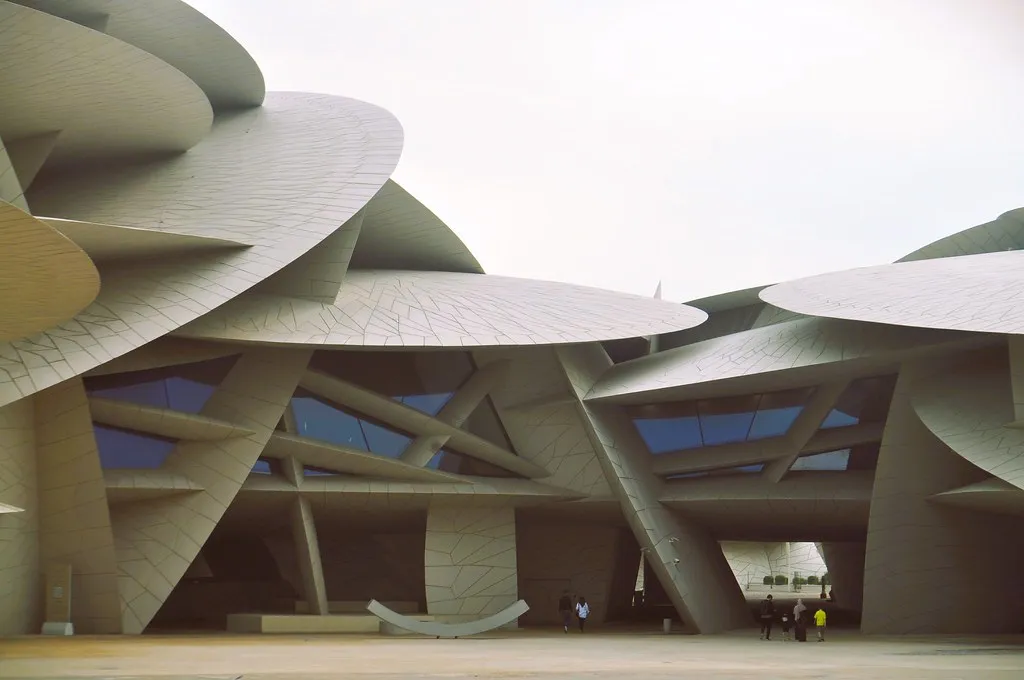
At the centre of all that sits the palace of Sheikh Abdullah bin Jassim Al Thani, restored in its own right and enclosed by the new building rather than cleared for it. A non-resident adult pays QAR 50 and can book ahead through a tours and activities platform; under-16s and Qatar residents go in free. It opens 9am to 7pm on Saturday, Sunday, Monday and Wednesday, until 9pm on Thursday, and 1.30pm to 7pm on Friday, with last entry 45 minutes before closing. Tuesday is the closed day.
The Museum of Islamic Art stands on an island of its own
The Museum of Islamic Art was given a purpose-built island off the Doha Corniche so that nothing could ever be put up next to it, and a short causeway is the only way across. I. M. Pei was 91 when it opened in 2008, and he built it as stacked cream limestone blocks that narrow as they rise, with a single arched window near the top that people read as a veiled face. Inside are fourteen centuries of metalwork, manuscripts, ceramics, glass and textiles from Spain to India.
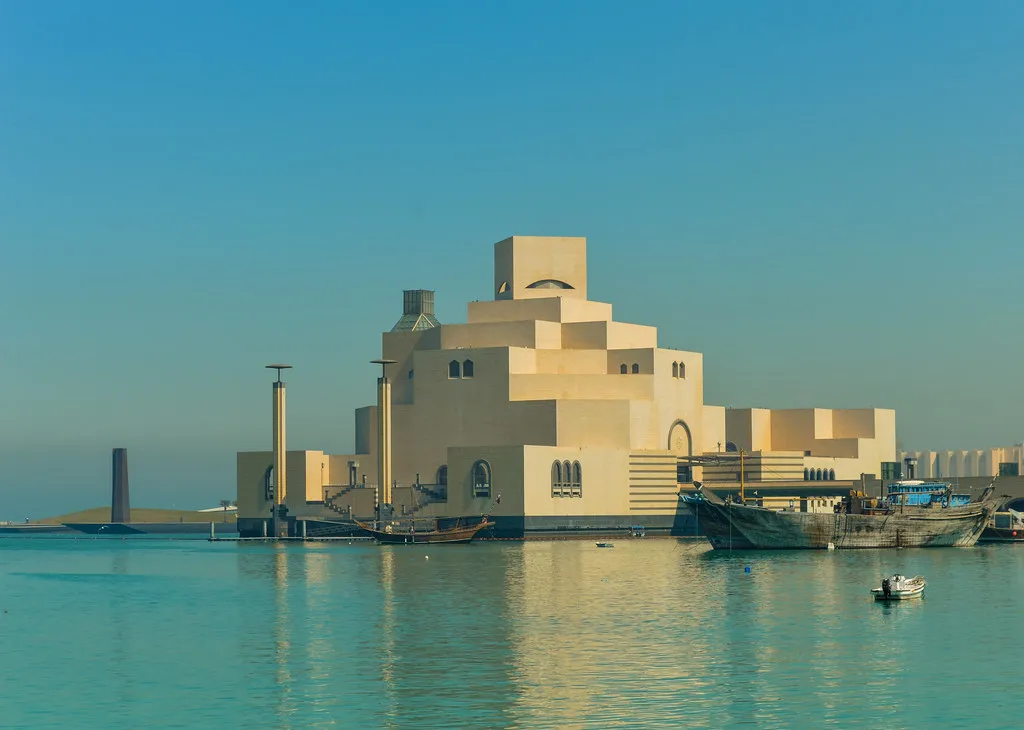
Entry is QAR 50 for a non-resident adult, free for under-16s and residents, and tickets are sold in advance the same way. Hours run 9am to 7pm Saturday through Tuesday, until 9pm on Thursday and 1.30pm to 7pm on Friday, and Wednesday is the day it shuts.
MIA Park wraps the landward side of the island and stays open around the clock, which makes it the one part of this itinerary that works at any hour. It joins the Doha Corniche, seven kilometres of continuous waterfront that runs from the Sheraton up in West Bay round to Doha Club Park in Al Khulaifat, with the port on the inland side of the road and wooden dhows tied up along it.
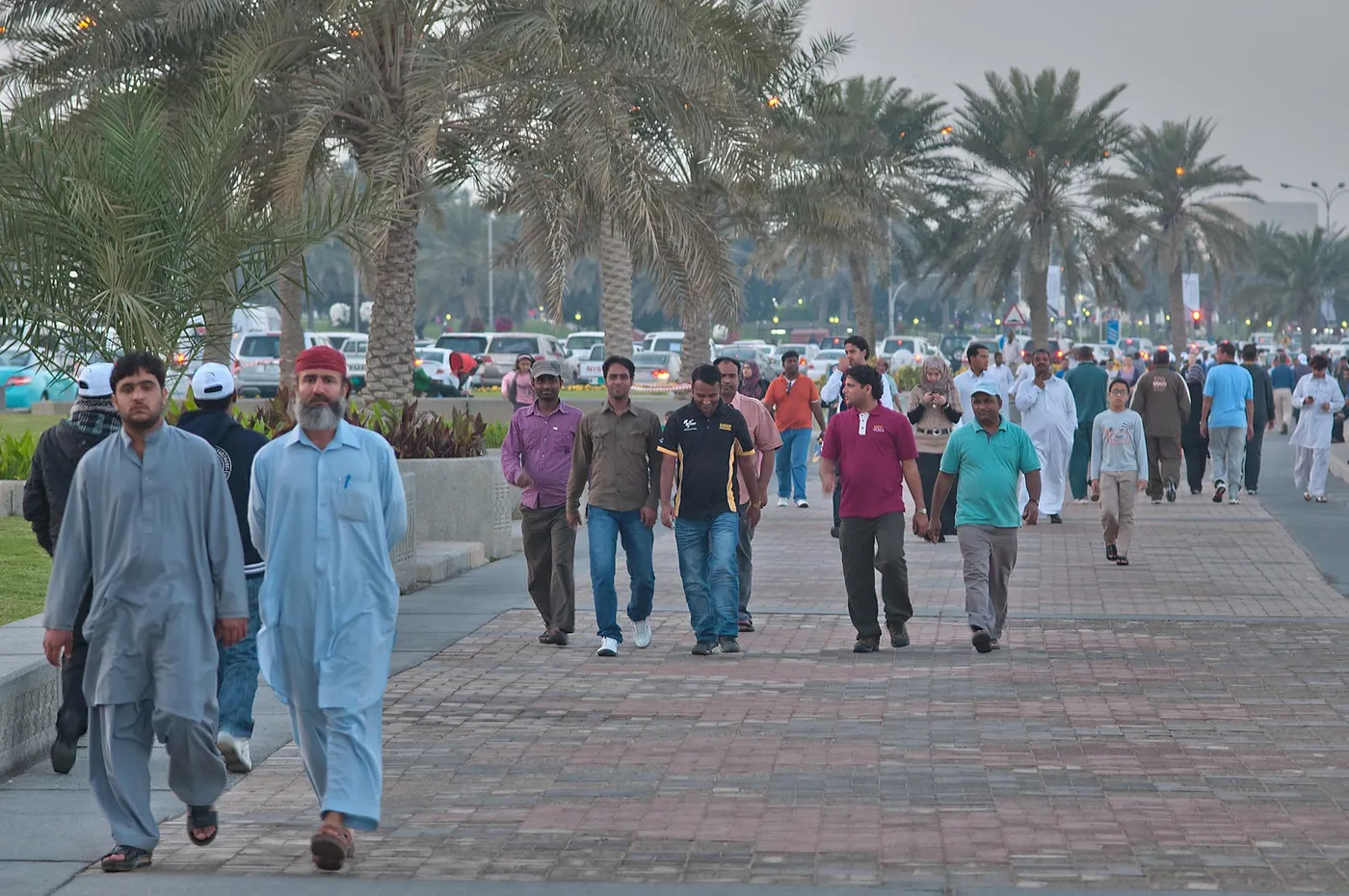
That Corniche stretch between Souq Waqif and the museum island has no shade on any part of it, and Doha’s afternoon high sits above 40°C from May through September, so a suitcase is the last thing worth having on it.
Souq Waqif’s falcon market has a hospital next to it
Souq Waqif means the standing market, after the traders who stood at the gates with their goods, and the ground it covers has been traded on since the early 1900s. A fire went through most of it in 2003. Reconstruction started in 2006 and finished in 2008, and the decision taken then was to pull down everything built after the 1950s and put the older fabric back as it was: mud-rendered walls, exposed timber roofs, lamps strung down the middle of lanes barely wide enough for two people.
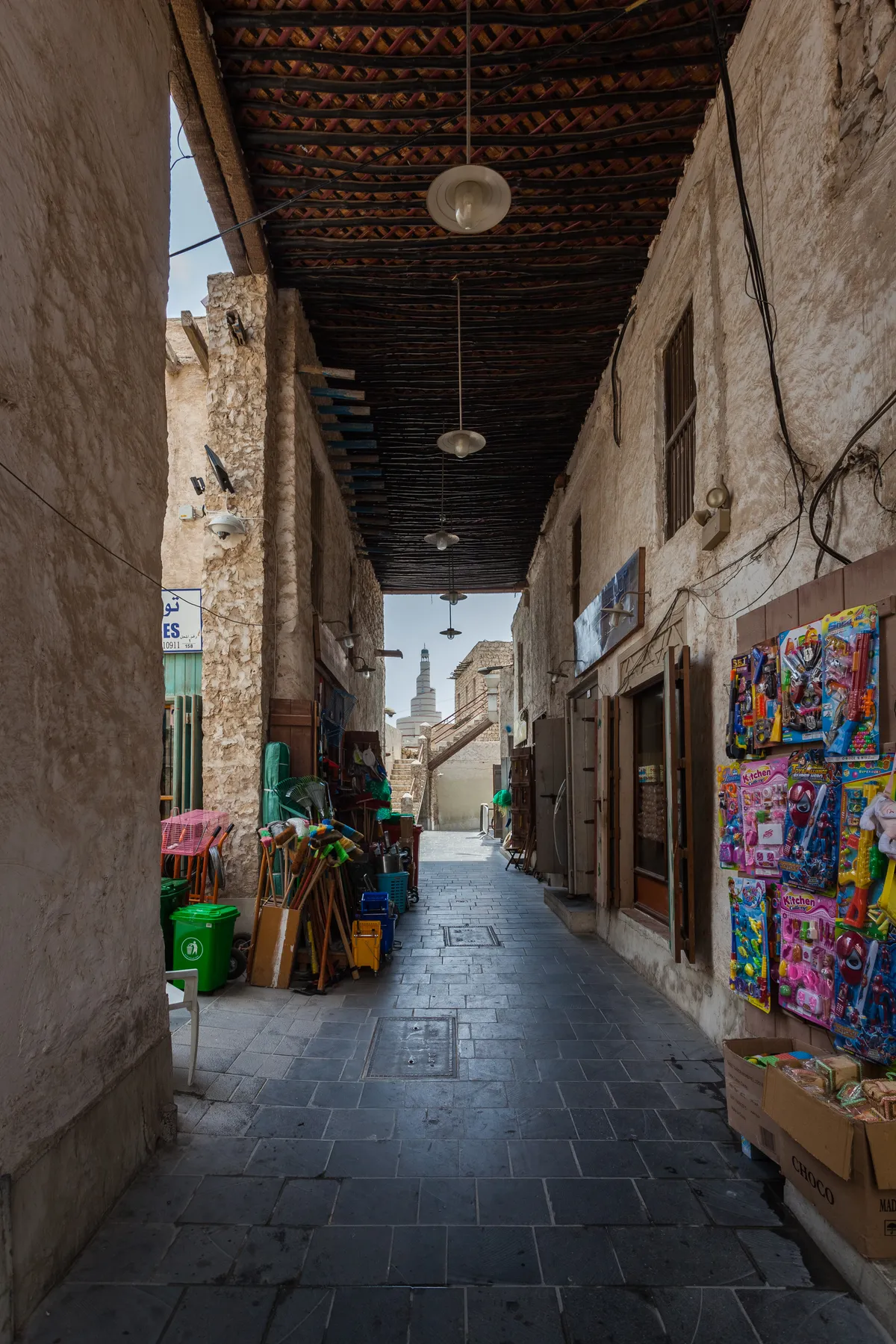
The section between Al Asmakh and Al Ahmed streets is the falcon market, and it is the reason to come here rather than to any other restored souq in the Gulf. Birds sit hooded on perches at the front of shop after shop, and what is sold alongside them is the full working kit: hoods, gloves, leather jesses, and GPS trackers for birds that go out into the desert and do not come back on their own. A falcon hospital opened next to it in 2008 and is a working veterinary clinic rather than an exhibit, so looking in depends on the day and on asking first. The market itself is free and has its own metro station.
The Msheireb Museums fill four restored courtyard houses
The Msheireb Museums occupy four early-20th-century houses left standing in Msheireb Downtown Doha when the rest of the district was rebuilt around them. Restoration ran from 2011 to 2015, and the four opened together in October 2015. Entry is free to all of them.
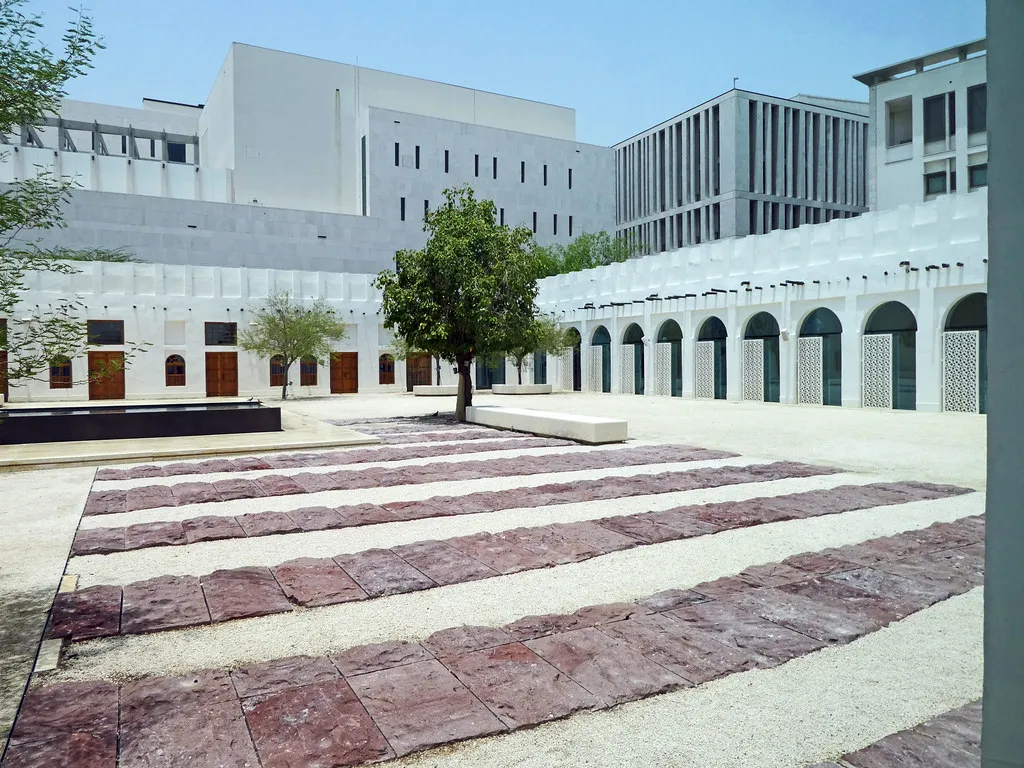
Bin Jelmood House is the one to go to first, and it is unusual anywhere: a museum about the Indian Ocean slave trade, mounted in the country that ran on it, covering abolition and what came after. Company House deals with the men who worked Qatar’s first oil fields and the families who moved for them. Radwani House is a 1920s family home kept as one, down to an excavated well set into the floor. Mohammed Bin Jassim House turns the lens on the redevelopment itself. Opening hours are 9am to 5pm Monday to Thursday and on Saturday, 3pm to 9pm on Friday, last admission half an hour before, and the whole set is shut on Sundays.
Katara Cultural Village was built to look like a Qatari village
With more than five hours to spend, Katara Cultural Village is the one place worth leaving the centre for. It sits on the coast north of the middle of the city, has its own metro station, and it is not old: it soft-opened in October 2010 during the Doha Tribeca Film Festival, purpose-built in the form of a Qatari coastal village and then filled with theatres, galleries and restaurants. Walking in costs nothing.
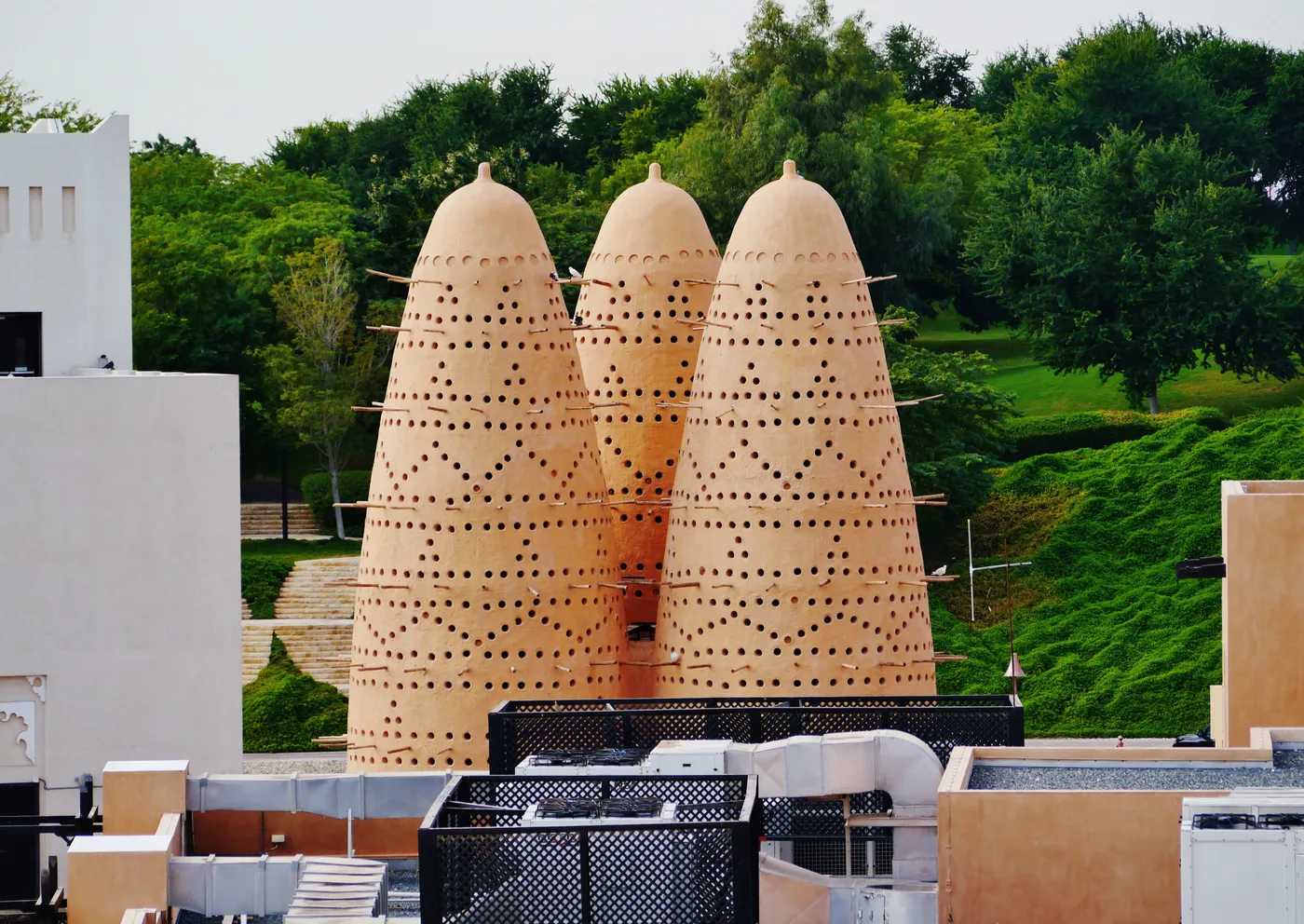
The open-air amphitheatre is the set piece, 3,275 square metres of it seating 5,000 with the sea behind the stage, and it is usually open to walk into when nothing is on. The Golden Mosque nearby is faced in Persian and Turkish tilework in blue and gold, and the clay pigeon towers, fifteen metres tall and pierced with hundreds of nesting holes, are the detail most people photograph. A beach runs a kilometre and a half along the front.
The metro runs from the centre out to the terminal for QAR 2
The Red Line covers Msheireb to the Hamad International Airport Terminal 1 station in about twenty minutes, five stops, with trains every three to five minutes. That is the ride itself; add roughly five more minutes at the far end, because the metro station sits beside the West short-term car park rather than inside the terminal building. A standard single is QAR 2, the daily cap is QAR 6 however many trips you make, and a reusable travel card costs QAR 10 before you put any credit on it. Gold Club, the front carriage, is QAR 10 a trip.
The timetable is the part to check rather than the journey. Trains run 5am to 1am from Saturday to Thursday, but Friday service does not begin until 9am, which strands an early Friday departure on taxis: a metered one from the centre runs around QAR 40 to 60 and the rank at the arrivals hall works 24 hours. Two hours between leaving Souq Waqif and an international departure covers everything without hurrying. If the long gap on this trip falls at the other end of the route instead, Dubai puts its metro inside Terminals 1 and 3 but not Terminal 2, which changes the same arithmetic.
Pick the bag up on the way through rather than doubling back for it. The terminal itself lists no left-luggage counter among its facilities, and the one storage desk out by the airport metro station charges QAR 100 for eight hours, takes no advance bookings and closes on Fridays, so the drop-off points around Souq Waqif and Msheireb are both cheaper and on the route this itinerary already follows.
Frequently asked questions
What should I do during a layover in Doha?
Three of the things most worth seeing stand on consecutive metro stations in the middle of the city: the Msheireb Museums in four restored courtyard houses, Souq Waqif's rebuilt market lanes, and the National Museum of Qatar under Jean Nouvel's interlocking discs. The Museum of Islamic Art is a fifteen-minute walk from the souq along the Corniche, on an island of its own. Four hours covers the souq, the Msheireb houses and one of the two museums comfortably; closer to six leaves room for both museums, or for Katara Cultural Village up the coast. The souq, the Msheireb houses and the Corniche are all free, so a short stop needs no ticket at all.
Can I leave the airport during a layover in Doha?
If you stay airside and never pass immigration, no permission is needed at all. To go into the city you need entry: citizens of more than 100 countries get a visa waiver stamped on arrival, valid for up to 30 days, and travellers holding a valid Schengen, UK, US, Canadian, Australian or New Zealand visa or residency can apply through Qatar's Hayya platform instead. Passengers connecting on Qatar Airways with at least six hours between flights, who are not covered by either route, can ask at the transit desk in the terminal.
Which Doha museums are closed on which days?
They close on three different days, so at least one of them is always open. The National Museum of Qatar shuts on Tuesdays, the Museum of Islamic Art shuts on Wednesdays, and the Msheireb Museums shut on Sundays. All three open late on Thursdays, until 9pm at the two big museums, and all three open only in the afternoon on Fridays: 1.30pm at the National Museum and the Museum of Islamic Art, 3pm at the Msheireb houses. Last entry is 45 minutes before closing at the two big museums and 30 minutes before at the Msheireb houses.
Is the metro or a taxi better from Hamad International Airport?
The metro, unless you are travelling on a Friday morning. The Red Line runs from the Hamad International Airport Terminal 1 station into the centre in about twenty minutes for QAR 2 in standard class, with trains every three to five minutes and a daily cap of QAR 6 however many trips you make. The catch is the timetable: trains run 5am to 1am from Saturday to Thursday, but Friday service does not start until 9am. A metered taxi from the Taxi Pavilion at the arrivals hall runs around the clock and costs roughly QAR 40 to 60 to Souq Waqif or Msheireb.
What can you see in Doha without paying for anything?
Most of a half day's worth. Souq Waqif costs nothing to walk through, including the falcon market between Al Asmakh and Al Ahmed streets. The Msheireb Museums, four restored houses a stop away, are free. The Corniche runs seven kilometres around the bay with no gate on it anywhere, and MIA Park at its southern end is open 24 hours. Katara Cultural Village up the coast is free to enter, and so are its mosques and its open-air amphitheatre. The metro itself caps out at QAR 6 a day, which makes a no-ticket itinerary here cost about the price of a coffee.