Miami Layover: Vizcaya and Coconut Grove
Part of the full Miami in One Day: Biscayne Boulevard
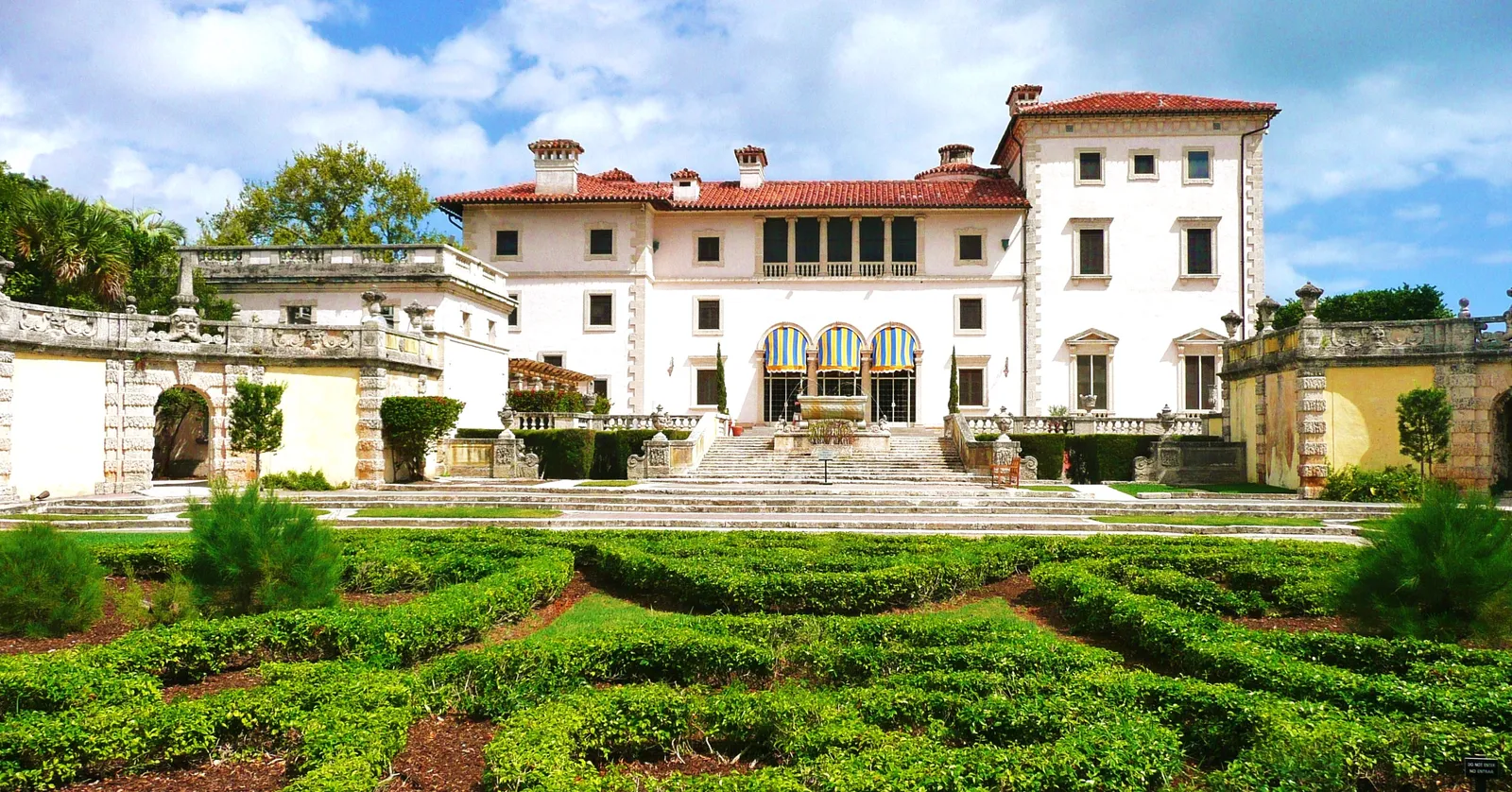
Miami’s Vizcaya, the industrialist James Deering’s 1916 villa on Biscayne Bay, has more than seventy furnished rooms and ten acres of formal gardens, and the same train line runs on to Coconut Grove, where the 1891 Barnacle house and the old Pan Am seaplane terminal stand near the water.
Vizcaya’s main house on Biscayne Bay
Vizcaya, at 3251 South Miami Avenue, was built between 1914 and 1922 as the winter home of James Deering, heir to the Deering harvesting-machinery fortune that became part of International Harvester; he moved in on Christmas Day 1916, arriving by yacht. The architect F. Burrall Hoffman and the designer Paul Chalfin designed it in an Italian Renaissance style, and the museum now shows more than seventy rooms of period interiors, ceilings and antiques. It became a National Historic Landmark in 1994. The house is about ten minutes’ walk from the train station named after it.
Vizcaya opens daily except Tuesdays, 9:30am to 4:30pm, and adult admission runs about $25. Admission tickets for Vizcaya Museum and Gardens can be booked ahead. Luggage and large bags aren’t allowed inside the main house, and security may check bags at the entrance.
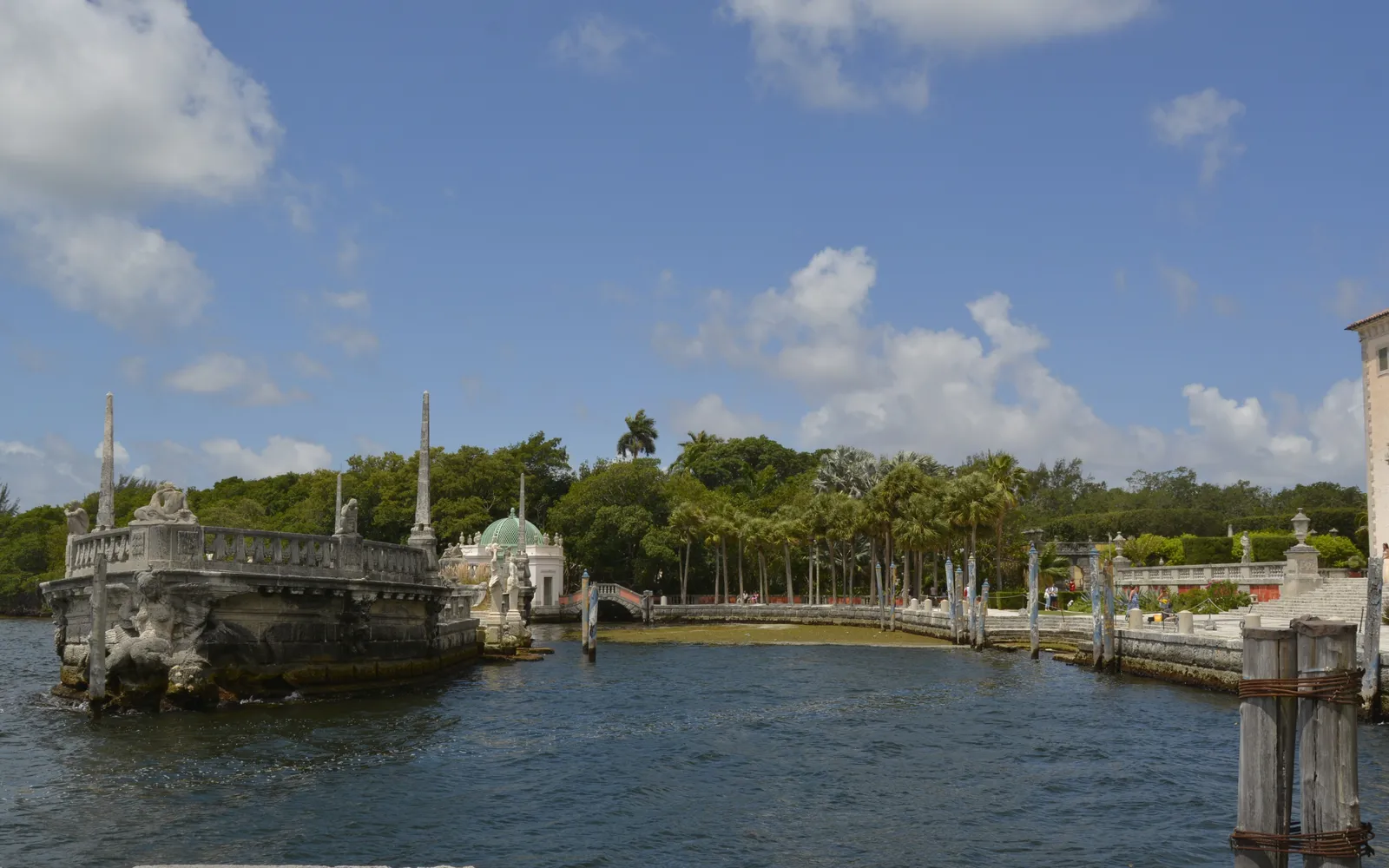
Vizcaya’s formal gardens and the stone barge
The landscape architect Diego Suarez laid out ten acres of formal gardens on the south side of the house: clipped hedges in patterns, fountains, pools, a maze garden, a theater garden and a secret garden. The paths are mostly dirt and gravel rather than paving, with steps throughout, and the native hammock forest and mangrove shore run along the estate’s edges.
Off the waterfront terrace, a carved stone barge sits in the bay as a breakwater, shaped like a ship and weathered grey by a century of salt water.
The Barnacle, Coconut Grove’s oldest house
The Barnacle stands at 3485 Main Highway in Coconut Grove, on five acres of lawn and woodland running down to Biscayne Bay. Ralph Munroe, a yacht designer who drew plans for 56 boats and founded the Biscayne Bay Yacht Club, built it in 1891, and in 1908 he had the whole house raised and a new floor built underneath to make room for his family. It’s the oldest house in Miami-Dade County still standing on its original site.
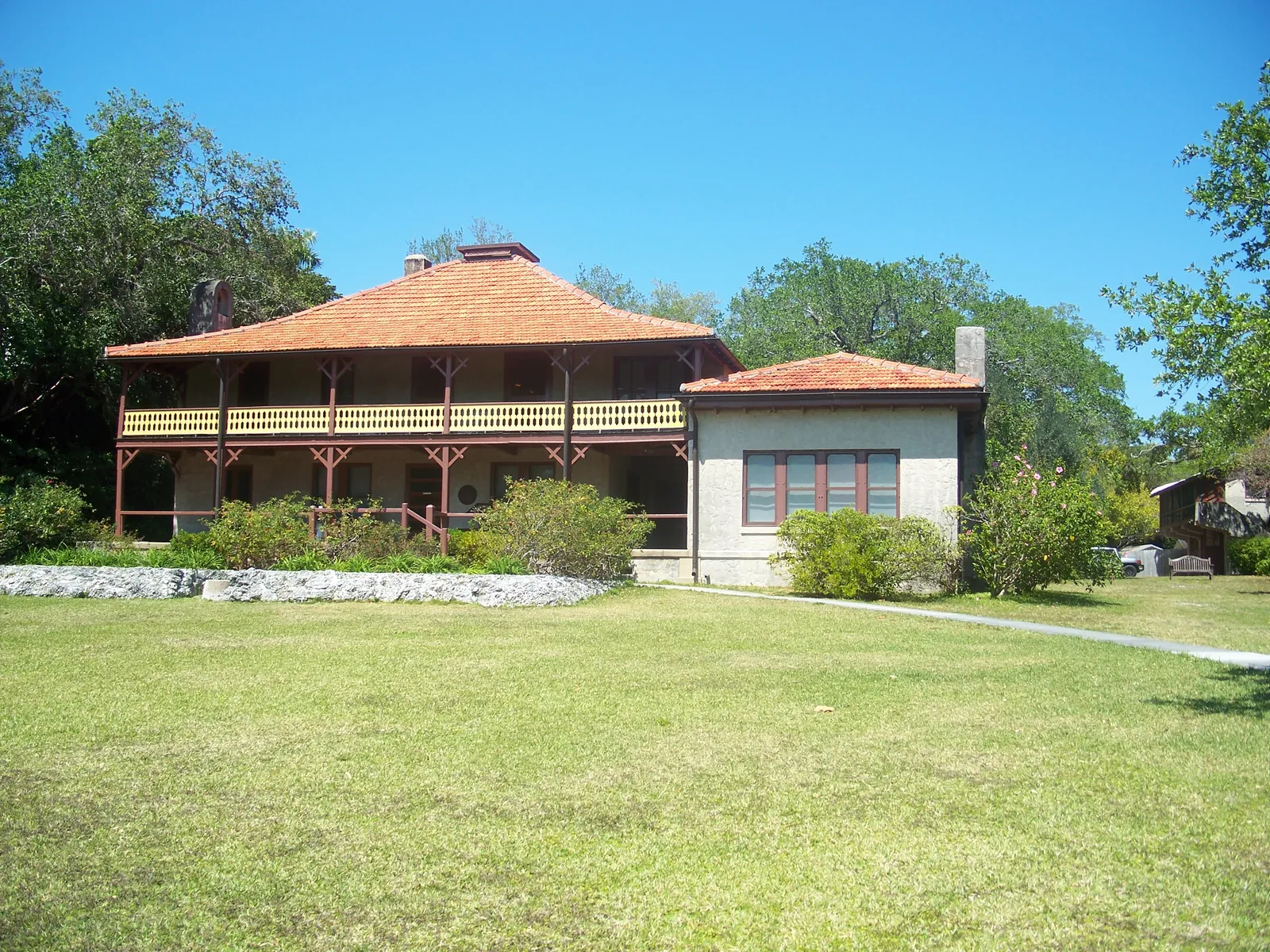
The grounds open Thursday to Monday, 9am to 5pm, for $2 on foot. The house itself is only shown on guided tours, at 10am, 11:30am, 1pm and 2:30pm, $3 each, bought at the ranger office in the carriage house. Volunteers build traditional wooden boats in the boathouse by the water.
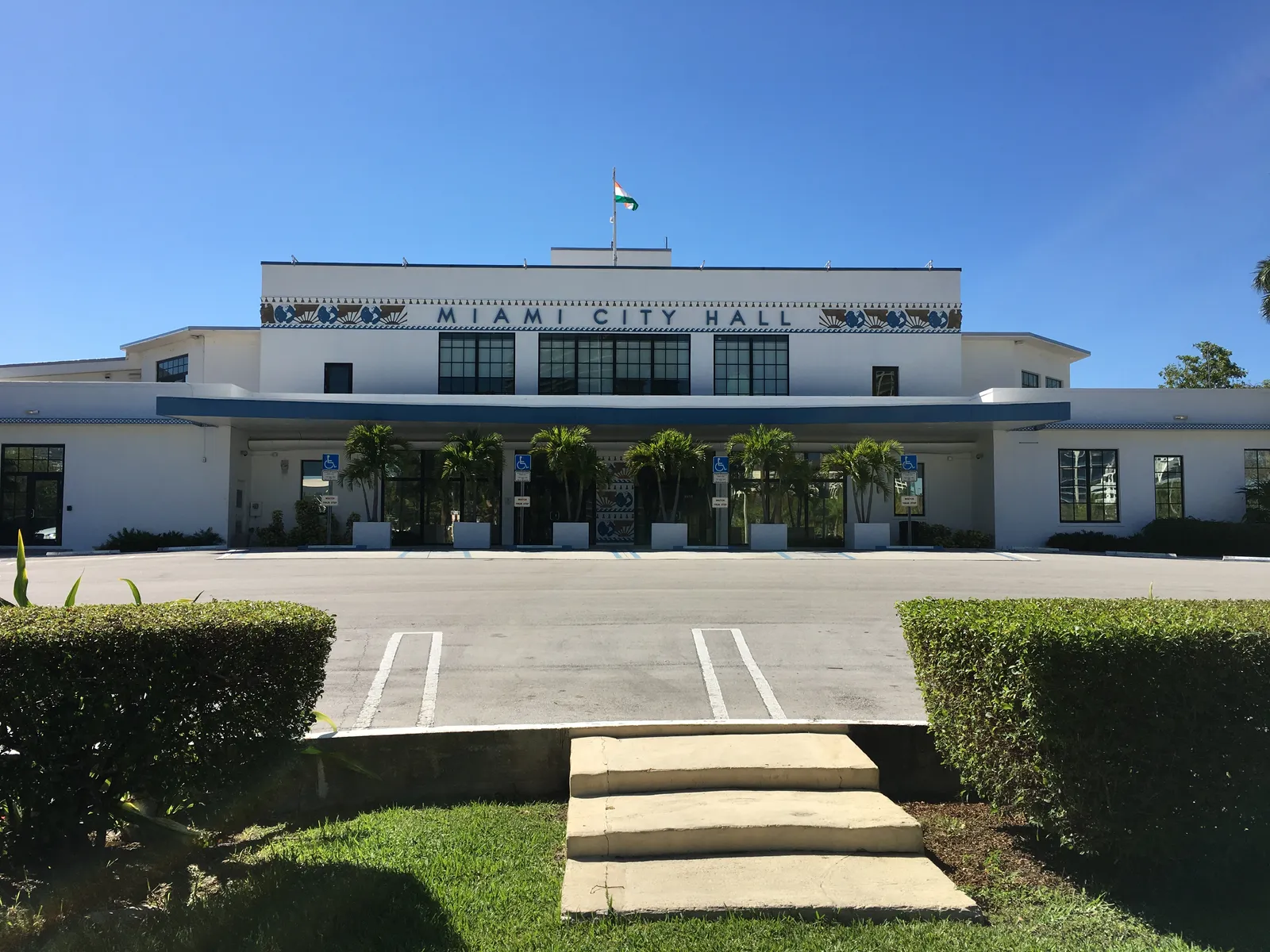
Miami City Hall, Pan Am’s 1934 flying-boat terminal
Miami City Hall, at 3500 Pan American Drive on Dinner Key, began as the passenger terminal for Pan American Airways’ flying boats. Pan Am started seaplane service to Latin America from Dinner Key in 1930, and the architects Delano & Aldrich finished this terminal in 1934; the last Pan Am flight left in August 1945, and the city moved its government into the building in 1954. It’s been on the National Register of Historic Places since 1975, and the marina full of sailboats beside it is where the seaplanes used to taxi in.
For boat trips on the bay and other half-day tours, a tours and activities platform lists options across Miami.
One train from Coconut Grove to the airport on weekdays
Coconut Grove station, at the corner of South Dixie Highway and SW 27th Avenue, is 20 to 30 minutes’ walk inland from the Barnacle and Dinner Key, or a short taxi ride. On weekdays the Metrorail Orange Line runs from there straight to the Miami International Airport (MIA) station in about 23 minutes, every 15 minutes, for a flat $2.25, passing through Vizcaya station and downtown on the way. At weekends and on public holidays there’s no through train: ride the Green Line to Earlington Heights and switch to the two-stop airport shuttle there. From the airport station, the free MIA Mover runs to every terminal.
Leaving the Grove three hours before an international departure covers the walk, the train, check-in and security. With less time to spare, the downtown Miami itinerary along Biscayne Boulevard is three stops closer to the airport on the same line. Either way, collecting the bag on the way to the station keeps it off Vizcaya’s gravel paths and the Barnacle’s lawn.
Frequently asked questions
What should I do during a layover near Vizcaya and Coconut Grove in Miami?
Spend the morning at Vizcaya, James Deering's 1916 villa on Biscayne Bay, with its furnished rooms, ten acres of formal gardens and a carved stone barge offshore. Then go on to Coconut Grove for the Barnacle, an 1891 wooden house that is the oldest in Miami-Dade County still on its original site, and Miami City Hall, which started life as Pan Am's 1934 flying-boat terminal at Dinner Key. Vizcaya is the stop to book ahead; the Barnacle's house tours run at set times, so it's the one to drop if the timing doesn't work.
Which days are Vizcaya and the Barnacle closed?
Both are closed on Tuesdays, and the Barnacle is also closed on Wednesdays. Vizcaya is otherwise open 9:30am to 4:30pm. The Barnacle's grounds open Thursday to Monday, 9am to 5pm, and its house can only be seen on a guided tour at 10am, 11:30am, 1pm or 2:30pm. Miami City Hall's exterior and the Dinner Key waterfront beside it can be seen on any day.
Are Vizcaya's gardens manageable for someone who can't do stairs?
Partly. Vizcaya's own guidance is that the garden paths are mostly dirt and gravel rather than paved, and that the main house, gardens and grounds have many steps and uneven floors. Several areas have limited or no access, including the Maze Garden, the Theater Garden, the Tea House and the Secret Garden. The terrace in front of the house and the main garden axis are the easier parts to reach, so it's worth checking with the museum on the day for the current accessible route.