Miami Layover: Coral Gables' Miracle Mile
Part of the full Miami in One Day: Biscayne Boulevard
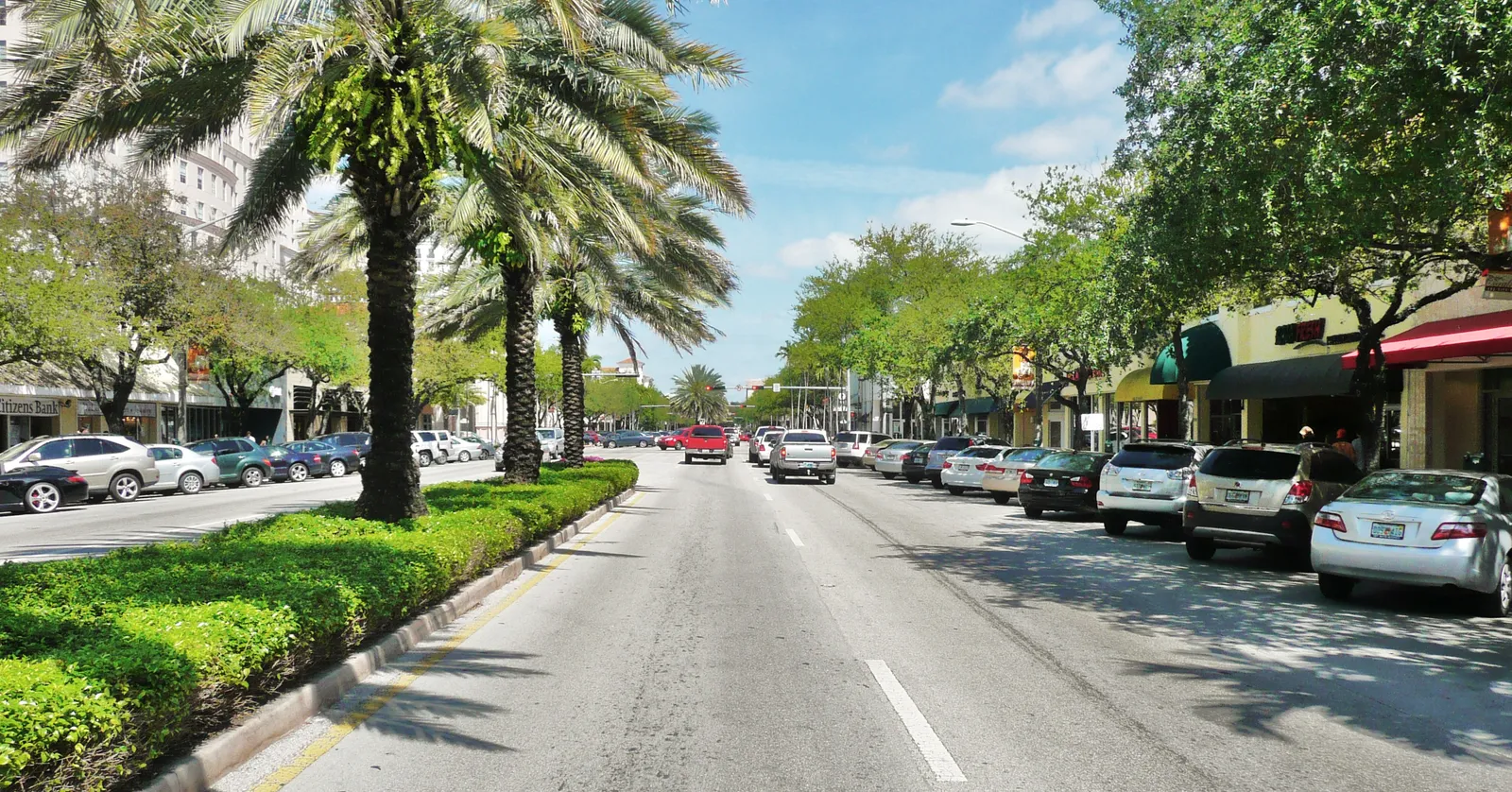
Coral Gables, the planned 1920s city on Miami’s southwest side, centers on Miracle Mile, four blocks of shops ending at a 1928 Mediterranean Revival city hall, with the coral-rock Venetian Pool and the 1926 Biltmore Hotel, whose lobby is free to walk into, a short walk south.
Miracle Mile’s four blocks of Coral Way
Miracle Mile is the half-mile stretch of Coral Way between Douglas Road and LeJeune Road, four blocks of shops, restaurants and a theater with parking along a planted median. The developer George Merrick laid out Coral Gables from 1925 as a single planned Spanish-Mediterranean city, with this strip as its business section, and in the 1950s its owners rebranded it as a shopping street under the name it has now.
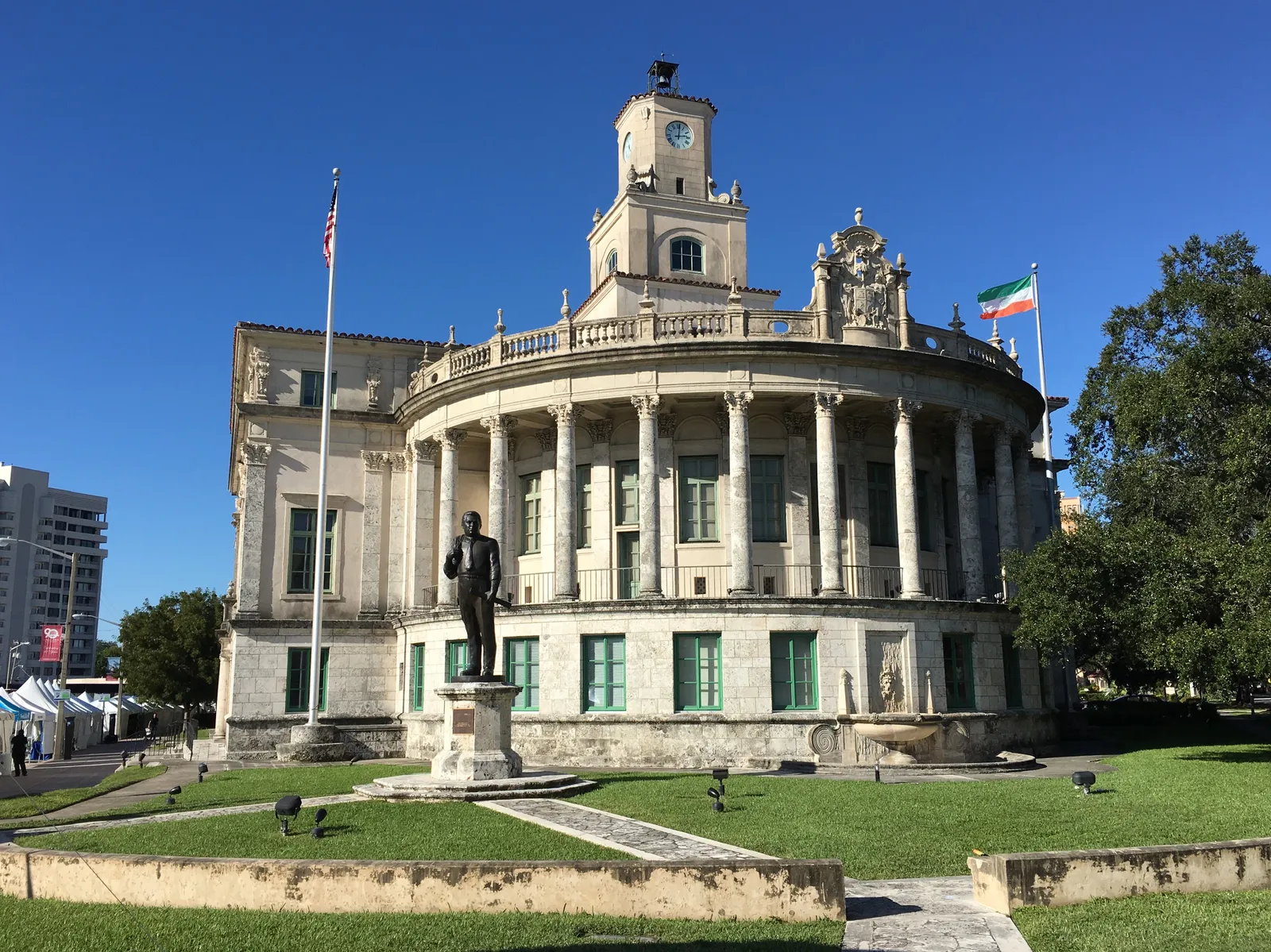
At the western end of Miracle Mile, Coral Gables City Hall stands at 405 Biltmore Way. Phineas Paist and Harold Steward designed it in 1928, with the artist Denman Fink as adviser, in local limestone with a curved Corinthian colonnade and a three-stage clock tower, and it’s still the working city hall.
For bay cruises and tours elsewhere in Miami, a tours and activities platform lists options that start across the city.
The Coral Gables Museum in the 1939 police and fire station
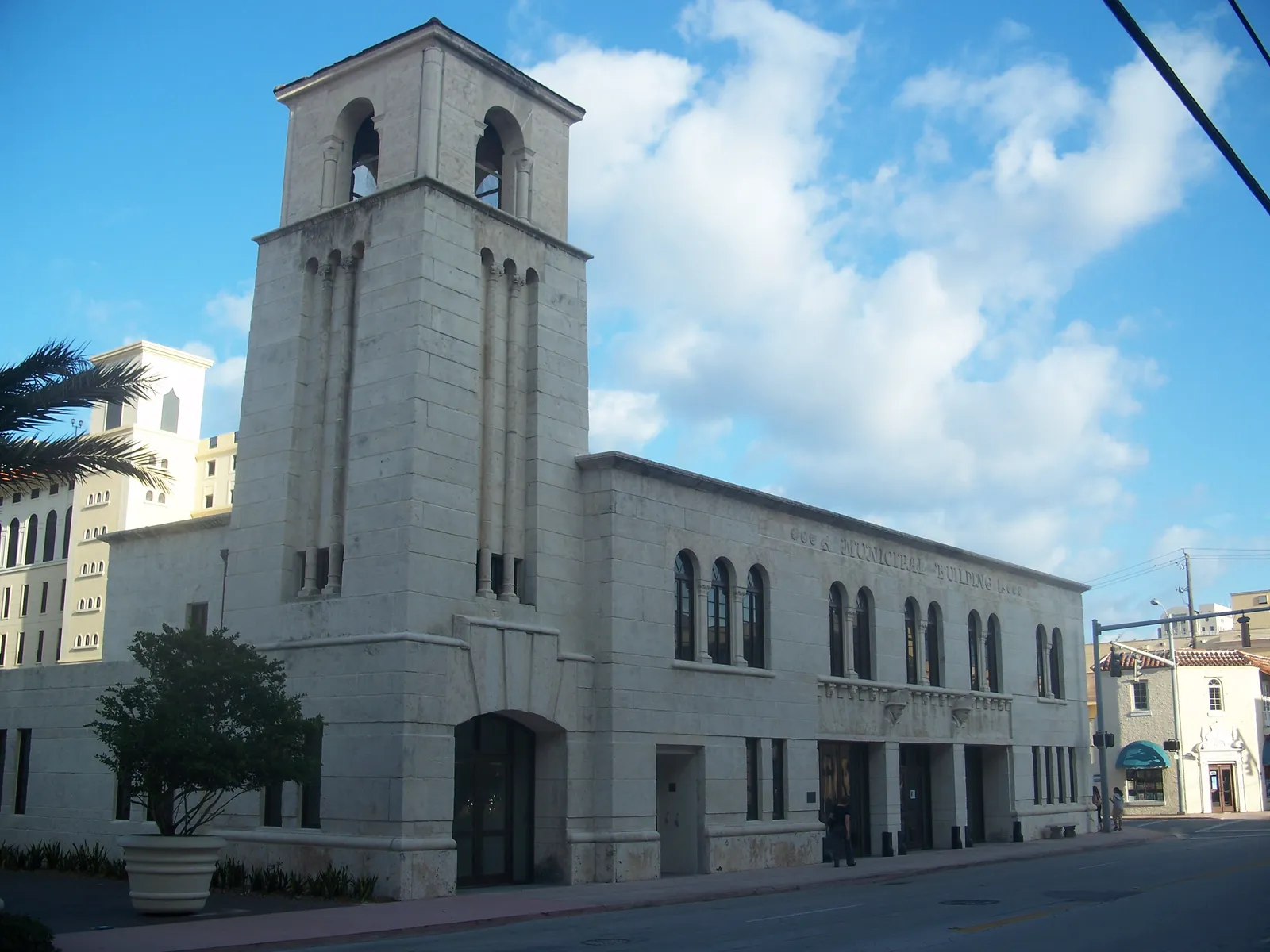
The Coral Gables Museum occupies the city’s old police and fire station at 2801 Salzedo Street, a block north of Miracle Mile. Phineas Paist designed it, and the Works Progress Administration built it in 1938 and 1939 out of native keystone, the local coral rock, with Depression-era sculpture worked into the exterior by Jon Keller. It reopened as a museum of the city’s architecture and history in October 2011.
It opens Tuesday to Friday and Sunday from 11am to 5pm and Saturday from 10am to 6pm, and is closed on Mondays.
Venetian Pool, a 1924 swimming pool in a former quarry
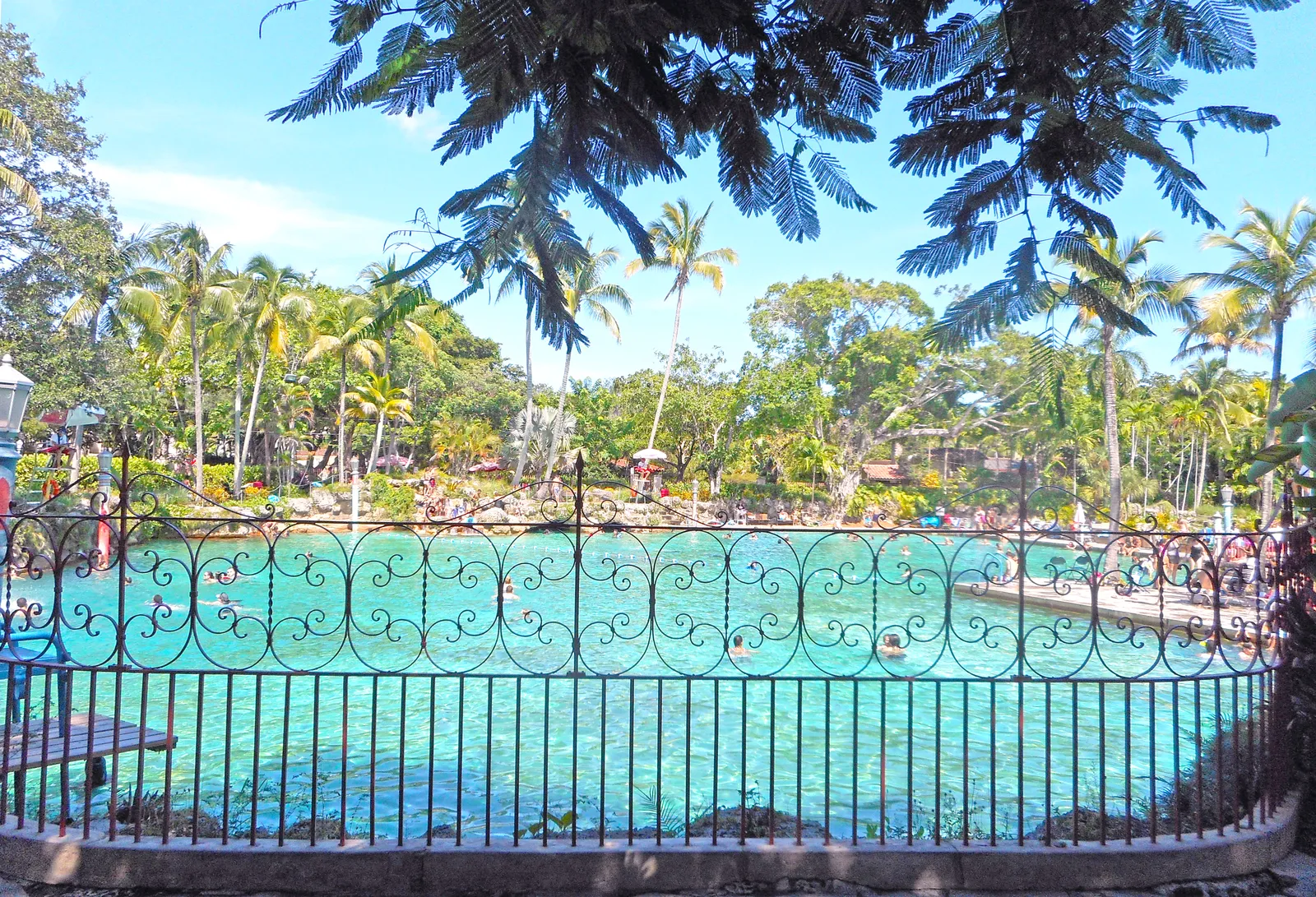
Venetian Pool, at 2701 De Soto Boulevard, was cut out of a four-acre limestone quarry that was abandoned in 1921 and turned into a public pool by Phineas Paist and Denman Fink, opening in 1924. It has waterfalls, a grotto of water-filled caves running back into the rock, a Venetian-style bridge to an island and loggias around the edge, and it’s filled with fresh spring water from an underground aquifer. It’s the only swimming pool on the National Register of Historic Places.
Non-residents pay $23 for adults and $18 for children aged 3 to 12. It opens Tuesday to Friday from 11am to 5:30pm and weekends from 10am to 4:30pm, is closed on Mondays, and stops selling tickets for the day once it’s full. Venetian Pool and the Biltmore both sit in the residential streets south and west of Miracle Mile, each a walk of roughly 15 to 20 minutes on ordinary sidewalks, and that’s distance covered faster without a suitcase.
The Biltmore Hotel and its Seville-style tower
The Biltmore Hotel opened in 1926 as the centerpiece of Merrick’s Coral Gables, built with the hotelier John McEntee Bowman, and its tower is modeled on the Giralda in Seville, the same bell tower the 1925 Freedom Tower in downtown Miami copies. Inside, the lobby has a hand-painted ceiling, Corinthian columns and chandeliers, opening onto a courtyard with a fountain. It became a National Historic Landmark in 1996.
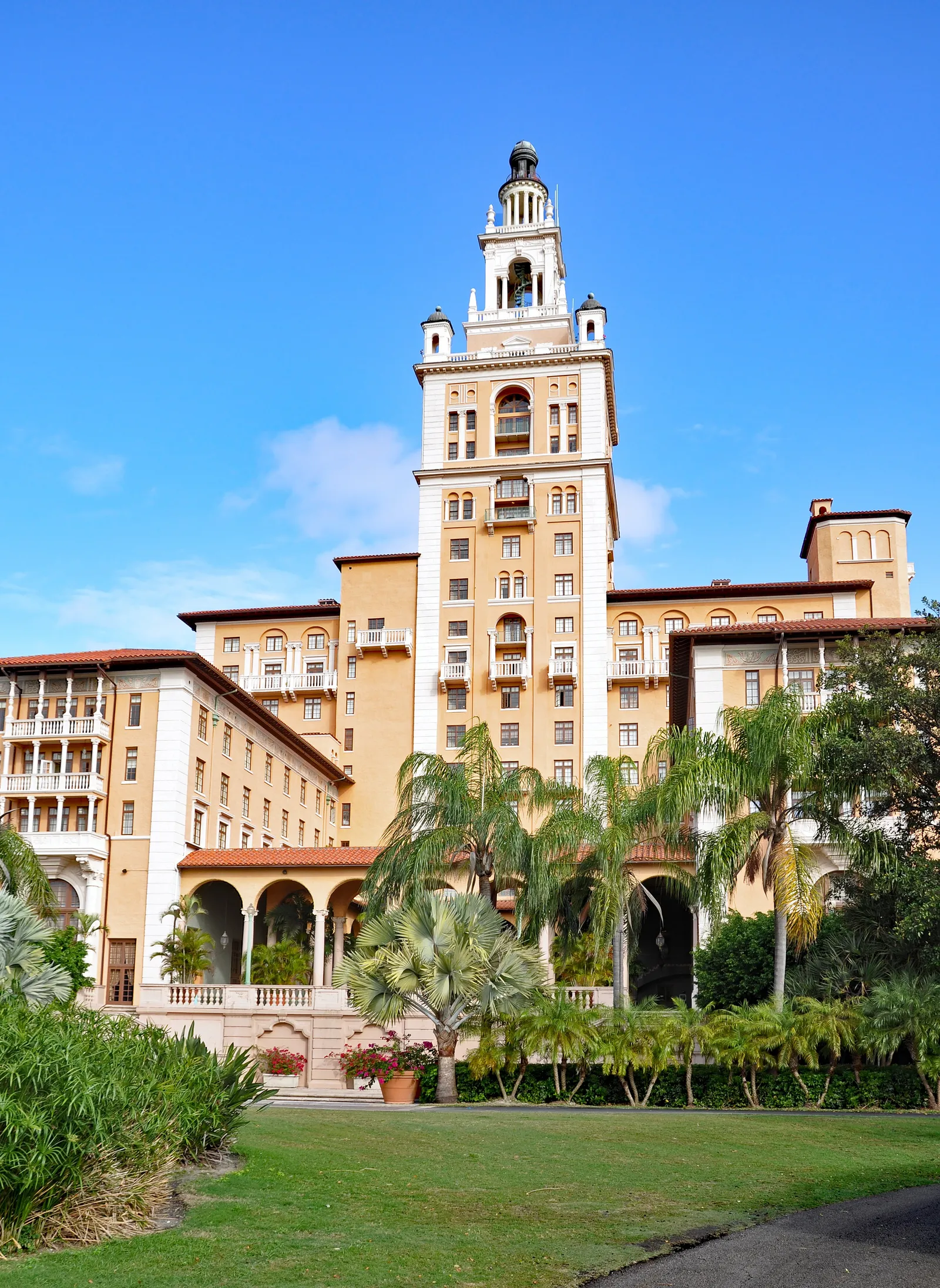
The lobby, courtyard and grounds are open to the public at no charge, and on Sundays the hotel runs free guided tours of about 45 minutes, usually at 1:30pm and 2:30pm.
Douglas Road station is under half an hour from the airport by train
The City of Coral Gables runs a free trolley along Ponce de Leon Boulevard, which crosses Miracle Mile, to Douglas Road Metrorail station, Monday to Saturday from 6:30am to 10pm; it doesn’t run on Sundays, when a taxi to the station takes a few minutes. On weekdays the Metrorail Orange Line runs from Douglas Road straight to the Miami International Airport (MIA) station in under half an hour, every 15 minutes, for a flat $2.25. Saturday, Sunday and holiday trips need one change, at Earlington Heights, where a shuttle train covers the final two stops to the airport. The people mover from the airport station to the check-in halls is free.
Leaving Miracle Mile three hours before an international departure covers the trolley, the train, check-in and security, and collecting the bag on the way to the trolley keeps it off the long walks out to the pool and the hotel.
Frequently asked questions
What should I do during a layover near Miracle Mile in Coral Gables, Miami?
Walk Miracle Mile's four blocks of Coral Way to Coral Gables City Hall, built in 1928, and look into the Coral Gables Museum in the 1939 police and fire station around the corner. Then go on to Venetian Pool, a 1924 swimming pool built in a coral-rock quarry, and the 1926 Biltmore Hotel, whose lobby and grounds are open to anyone. Venetian Pool is the one place that can turn people away once it's full, so it's worth going early; the museum is the easiest stop to skip.
Can you swim at Venetian Pool on a Miami layover?
Yes, if you bring a swimsuit and arrive before it fills. Non-residents pay $23 for adults and $18 for children aged 3 to 12, children must be at least 3 years old and 38 inches tall, and ticket sales stop for the day once the pool reaches capacity. It opens Tuesday to Friday from 11am to 5:30pm and Saturday and Sunday from 10am to 4:30pm, and is closed on Mondays. The water is fresh spring water from an underground aquifer, which makes it a cooler option than the beach on a hot afternoon.
Is the Biltmore Hotel open to people who aren't staying there?
Yes. The lobby, the courtyard and the grounds are open to the public with no charge, and non-guests can eat at the hotel's restaurants. On Sundays the hotel runs free guided tours of about 45 minutes, usually at 1:30pm and 2:30pm, covering the building's history and the developer George Merrick, who planned Coral Gables around it.