Miami Airport to the Cruise Port at PortMiami
Part of the full Miami in One Day: Biscayne Boulevard
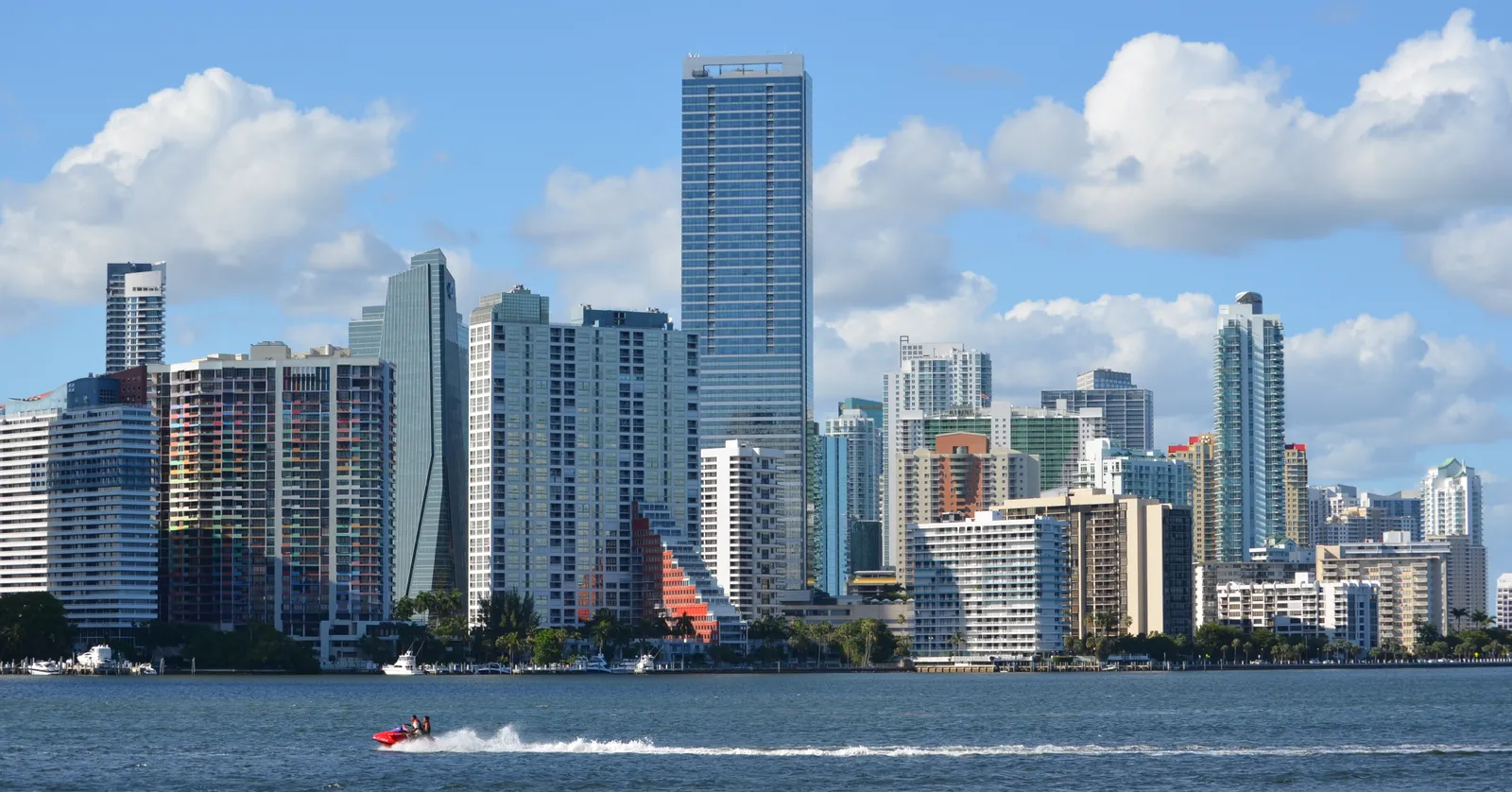
PortMiami, Miami’s cruise port on Dodge Island in Biscayne Bay, is 15 to 25 minutes by taxi from Miami International Airport, and a short ride from the ships, Brickell, the city’s financial district, holds the Miami Circle, a ring of holes cut into the bedrock about 2,000 years ago by the Tequesta, the people who lived on this coast, along with Brickell Key’s waterfront and the old-growth trees of Simpson Park, all free.
PortMiami has no luggage lockers
PortMiami’s cruise terminals sit on Dodge Island in Biscayne Bay, and ships usually tie up early in the morning, which leaves passengers with flights in the afternoon or evening a long day in the city. The port is about three miles by road from Brickell and about seven from the airport, and taxis wait outside the terminals at fares regulated by Miami-Dade County.
For covering more of Miami than a walk allows, the open-top hop-on hop-off sightseeing bus leaves from Bayside Marketplace, at 401 Biscayne Boulevard, the same waterfront where the downtown Miami itinerary along Biscayne Boulevard starts, and runs out to the beaches and back.
Cruise passengers come off the ship with a full trip’s worth of luggage, and the port doesn’t offer lockers or bag storage for security reasons.
The Miami Circle, a 2,000-year-old site at Brickell Point
The Miami Circle sits at Brickell Point, at the foot of Brickell Avenue where the Miami River runs into Biscayne Bay. Workers demolishing an apartment complex here in 1998 found a ring 38 feet across, made of 24 basins and about 600 postholes cut into the limestone bedrock, which archaeologists attribute to the Tequesta and date to roughly 1,700 to 2,700 years ago, probably the footprint of a ceremonial building. The state bought the 2.5-acre site for $26.7 million in 1999, and it became a National Historic Landmark in 2009.
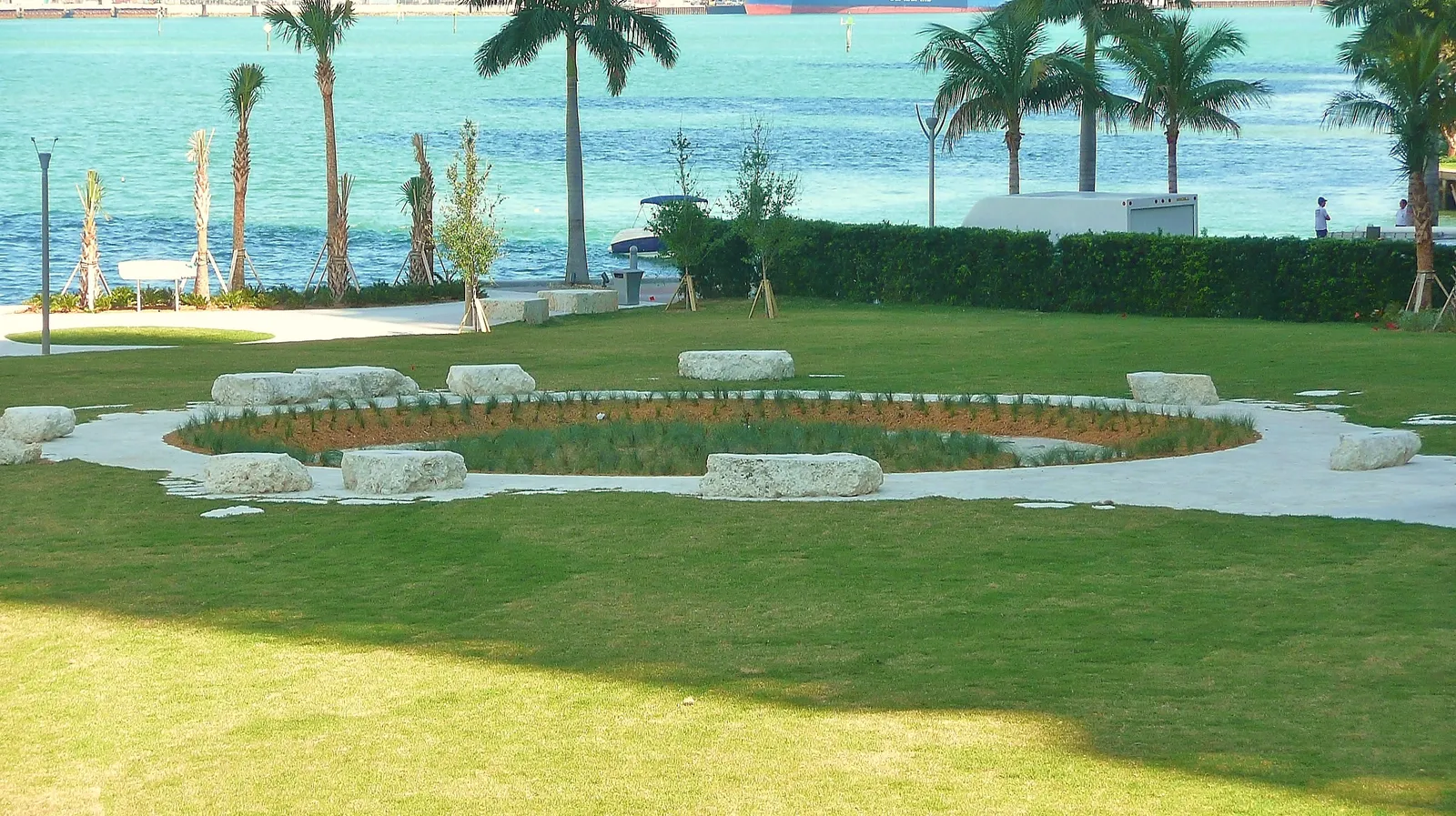
The circle itself was reburied under layers of limestone to protect it, so what you see is a waterfront park with the ring traced on the lawn and panels explaining it. It’s free and open around the clock.
Brickell Key, a man-made island off the Brickell waterfront
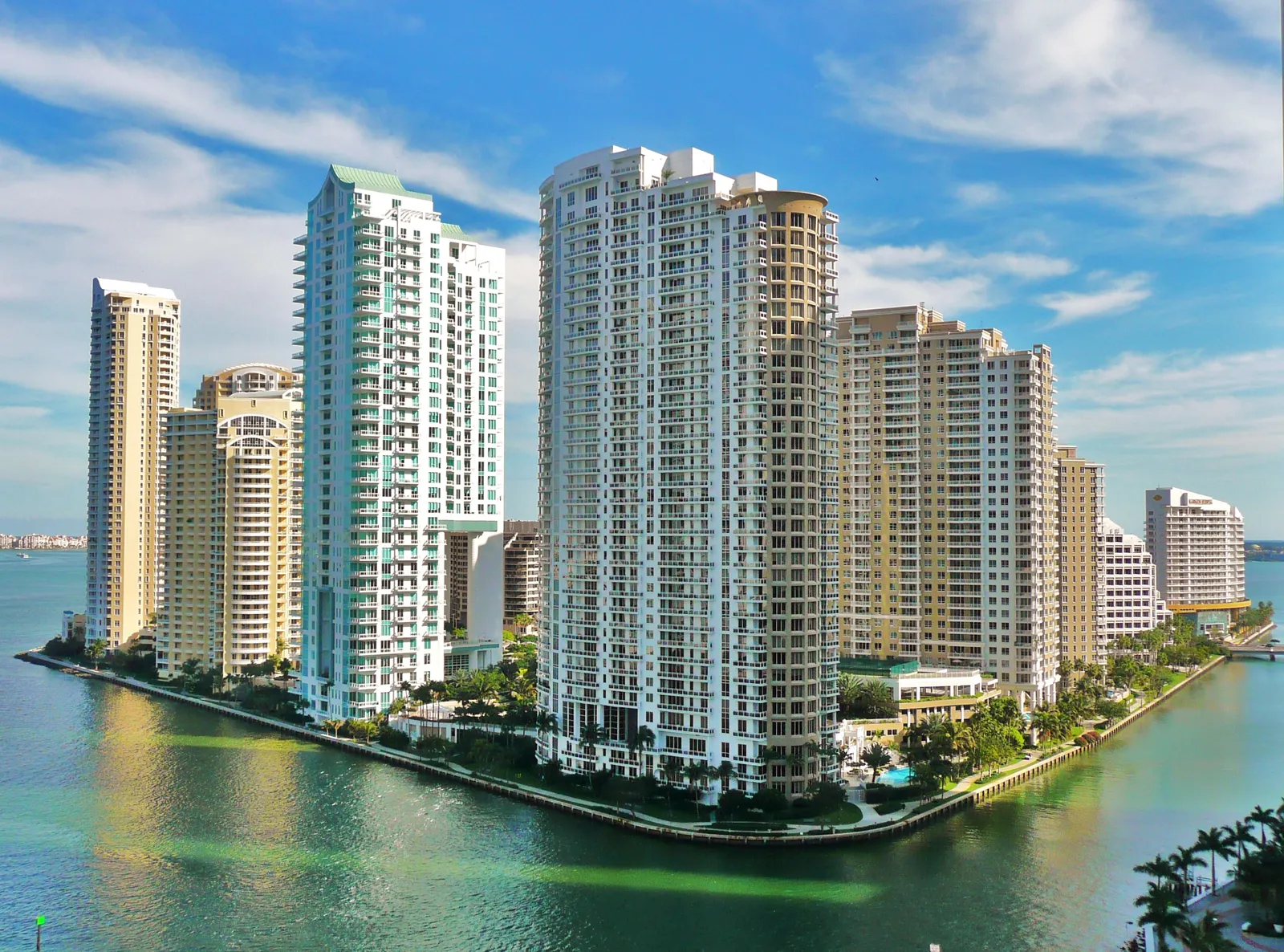
Brickell Key sits just offshore from the Miami Circle and the mouth of the Miami River, a 44-acre triangle of filled land that the developer Edward Claughton combined from smaller islands in 1943, which is why older maps call it Claughton Island. It’s reached by a short bridge from the mainland, and today it’s lined with residential towers, with the water on every side.
Simpson Park, a patch of Miami’s original tropical forest
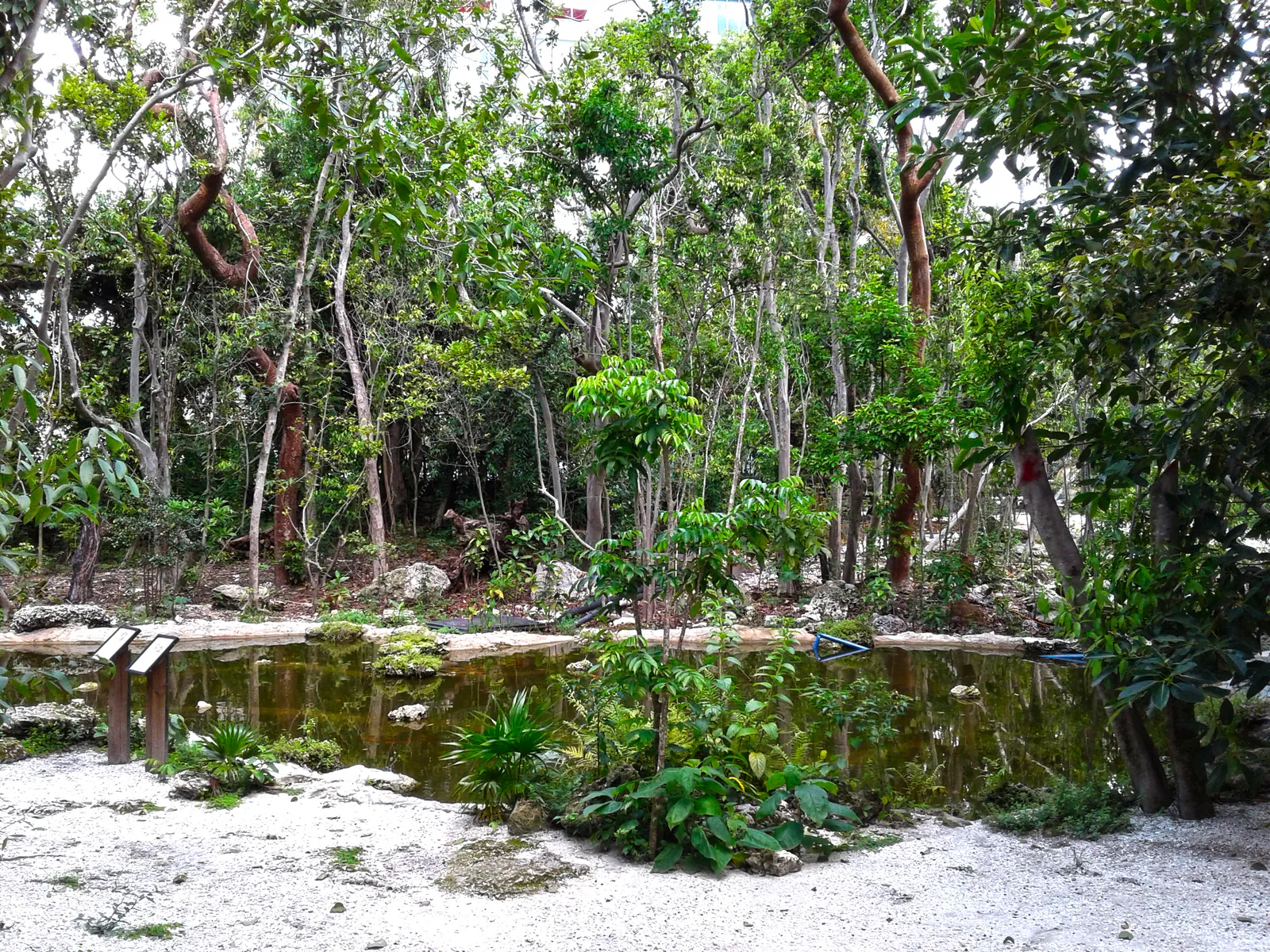
Simpson Park Hammock is 7.8 acres of native tropical hardwood forest in the middle of Brickell’s towers, one of the few surviving pieces of the Brickell Hammock that once ran along this stretch of coast. More than 160 plant species grow there, at least 96 of them native, including strangler fig, gumbo limbo, live oak and lignum vitae, along shaded paths. Entry is free, and the city has offered free guided nature walks at 10:30am on Saturdays and Sundays. It closes in the mid-afternoon, so it’s a morning stop rather than an evening one.
For a boat trip or a half-day tour before the flight, more options are listed on a tours and activities platform.
The airport train from Brickell costs a flat $2.25
Brickell Metrorail station, about 15 minutes’ walk inland from the Miami Circle, is on the Metrorail Orange Line, which reaches the Miami International Airport (MIA) station in about 20 minutes on weekdays, with trains every 15 minutes. The weekend version of the trip means changing at Earlington Heights onto a short airport shuttle train. A free people mover, the MIA Mover, links the airport station to the terminals. Brickell station is also where the free trolley to Little Havana’s Calle Ocho starts, if the day has room for a Cuban lunch.
With the bag collected on the way, leaving Brickell three hours before an international departure covers the train, check-in and security. For anyone with too much luggage for a train, a taxi from Brickell to the airport is a ride of around 20 minutes outside rush hour.
Frequently asked questions
What should I do during a layover near the PortMiami cruise terminals in Miami?
Take a taxi the three or so miles from the port to Brickell, Miami's financial district on the south bank of the Miami River. The Miami Circle at Brickell Point marks a ring of postholes the Tequesta cut into the bedrock around 2,000 years ago, Brickell Key is a 44-acre man-made island just offshore, and Simpson Park keeps one of the last pieces of the old Brickell Hammock forest. All three are free; the open-top sightseeing bus from Bayside Marketplace is the one thing worth booking, and the one to skip if the day is short.
Can you leave luggage at PortMiami after a cruise?
No. PortMiami's own guidance is that storage lockers aren't available on the port, for security reasons. The airport does have a paid baggage storage service, which only helps if you're willing to go to the airport first and come back into the city, so most people with a day to fill drop their bags somewhere in the city instead.
How do I get from Miami airport to the cruise port?
PortMiami is about 7 miles by road from Miami International Airport. A taxi is the quickest way, typically 15 to 25 minutes depending on traffic, on a meter regulated by Miami-Dade County, roughly $35 to $40; cruise lines and shared shuttles also run transfers. From Brickell, the Metrorail Orange Line reaches the Miami International Airport station in about 20 minutes on weekdays for a flat $2.25; on weekends and holidays it means a change at Earlington Heights onto the airport shuttle train.