Bologna's University Quarter on Via Zamboni
Part of the full Bologna Layover: Porticoes and Markets, BLQ
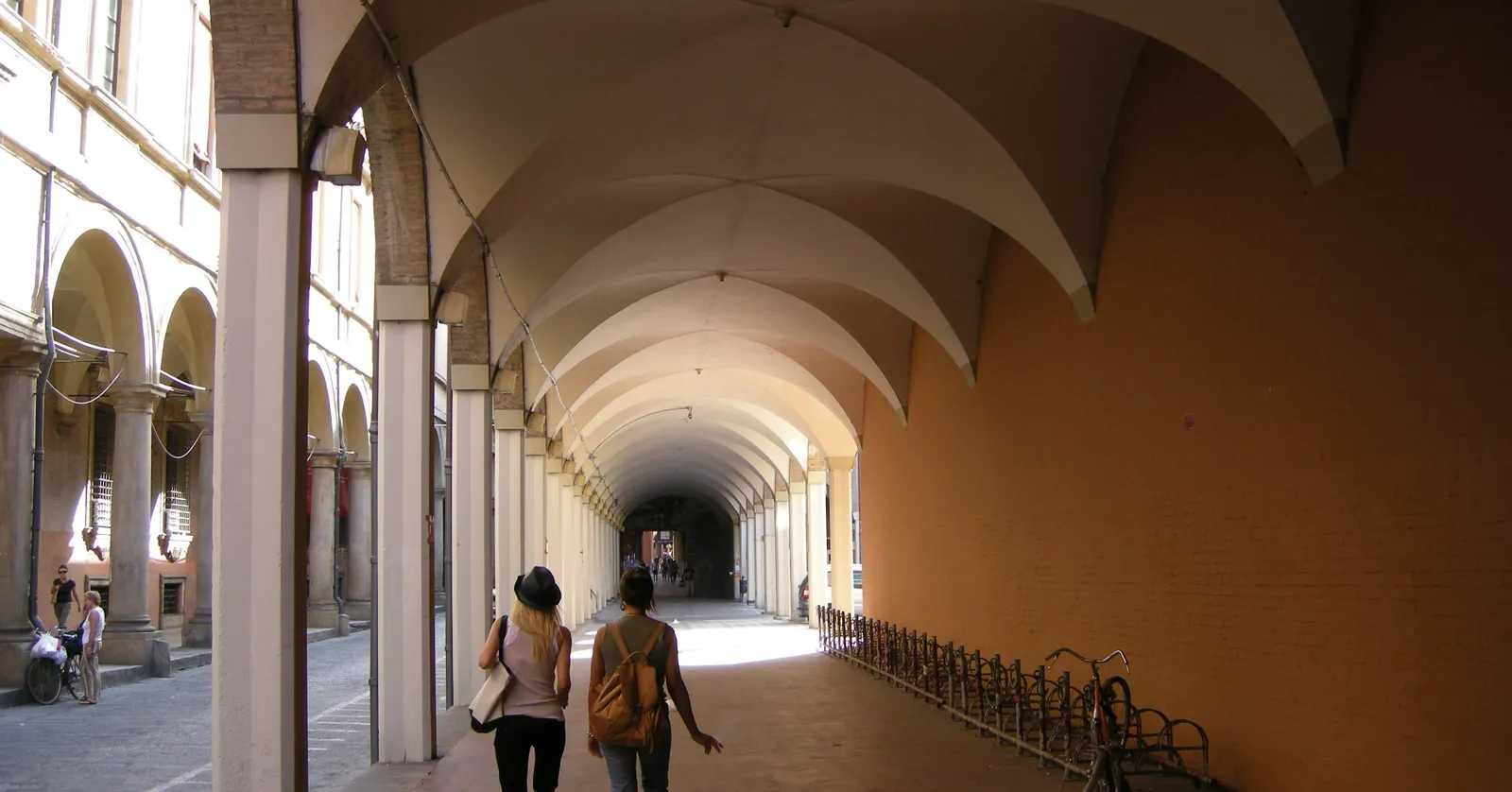
Bologna’s university quarter runs along Via Zamboni, an arcaded street heading north-east from the Two Towers, and holds Palazzo Poggi’s 18th-century anatomical waxes, Raphael’s Ecstasy of Saint Cecilia at the Pinacoteca Nazionale and a free, frescoed oratory, a museum-led alternative to the squares around Piazza Maggiore.
Palazzo Poggi, the university museum of anatomy and science
Palazzo Poggi, at Via Zamboni 33, has been the headquarters of the University of Bologna since 1803. The palace was built between 1549 and 1560 for the Poggi family, and in 1714 it became the home of the Institute of Sciences founded by Luigi Ferdinando Marsili, which filled it with teaching collections that are now the museum: maps and ship models, physics and optics instruments, and the rooms of anatomical and obstetric waxes that most people come to see. The rooms themselves keep their Renaissance frescoed ceilings, and Pellegrino Tibaldi’s frescoes here are considered his masterpiece.
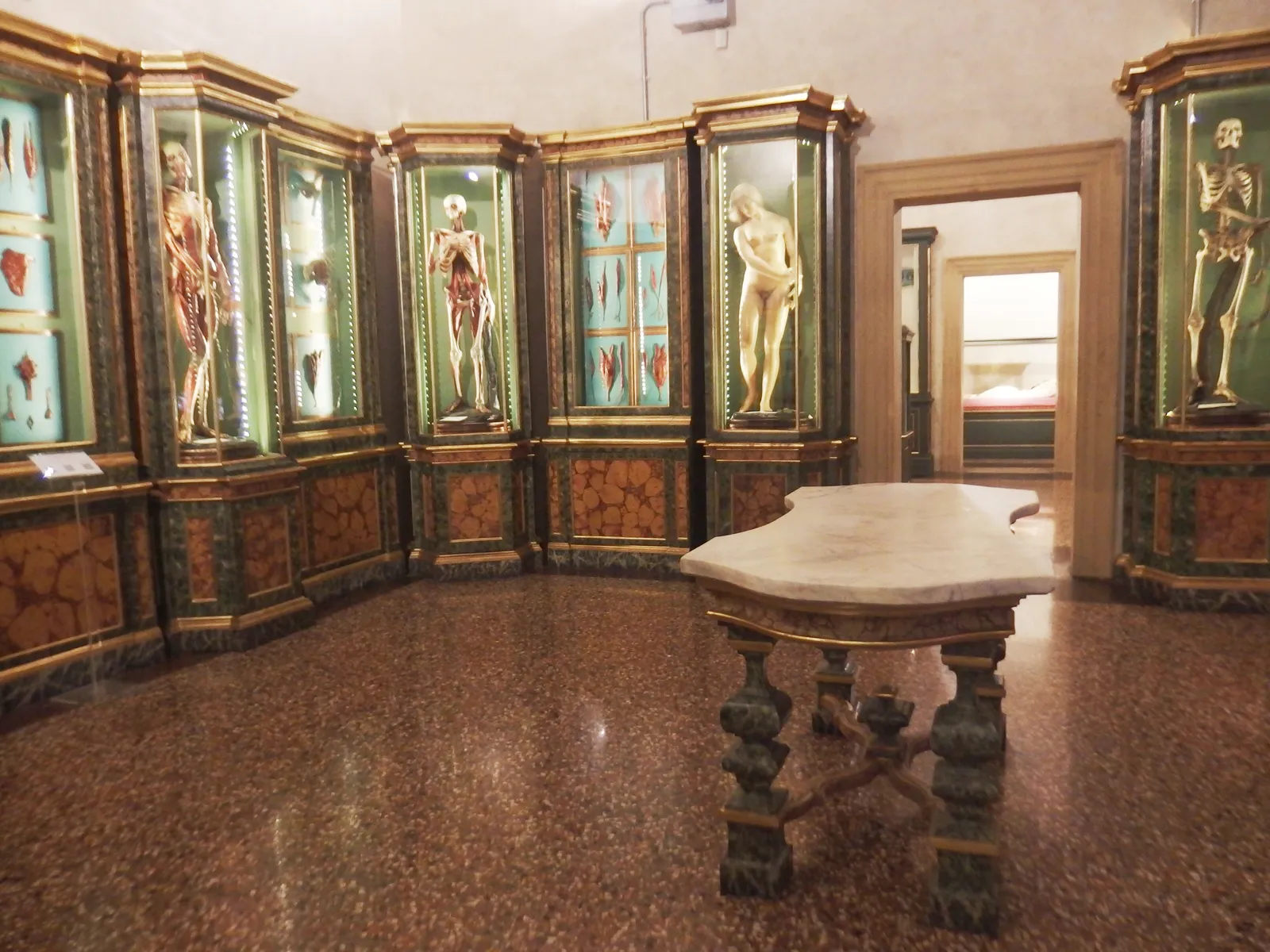
The waxes were made in the 18th century to teach anatomy without a corpse to hand, by Ercole Lelli, who also carved the skinned figures in the Archiginnasio’s anatomy theatre, and by the husband-and-wife modellers Giovanni Manzolini and Anna Morandi; after Manzolini’s death Morandi carried on the work under her own name. The museum opens Tuesday to Friday from 10:00 to 16:00 and at weekends until 18:00, and a full ticket is about €10. Since 31 January 2026 the route also continues into the monumental rooms of the University Library, including its Aula Magna. The university’s first home, the Archiginnasio beside San Petronio, is on the Piazza Maggiore side of the city covered by the main Bologna guide, and a guided walking tour of the centre takes that building in along with the city’s older university history.
Raphael’s Ecstasy of Saint Cecilia at the Pinacoteca Nazionale
The Pinacoteca Nazionale di Bologna occupies a former Jesuit novitiate at Via delle Belle Arti 56, a few minutes’ walk from Palazzo Poggi, and shares the building with the city’s Academy of Fine Arts. Its collection is mostly Emilian painting from the 13th to the 18th century, built up from church altarpieces gathered under Napoleon, with the Carracci, Guido Reni and Parmigianino all well represented.
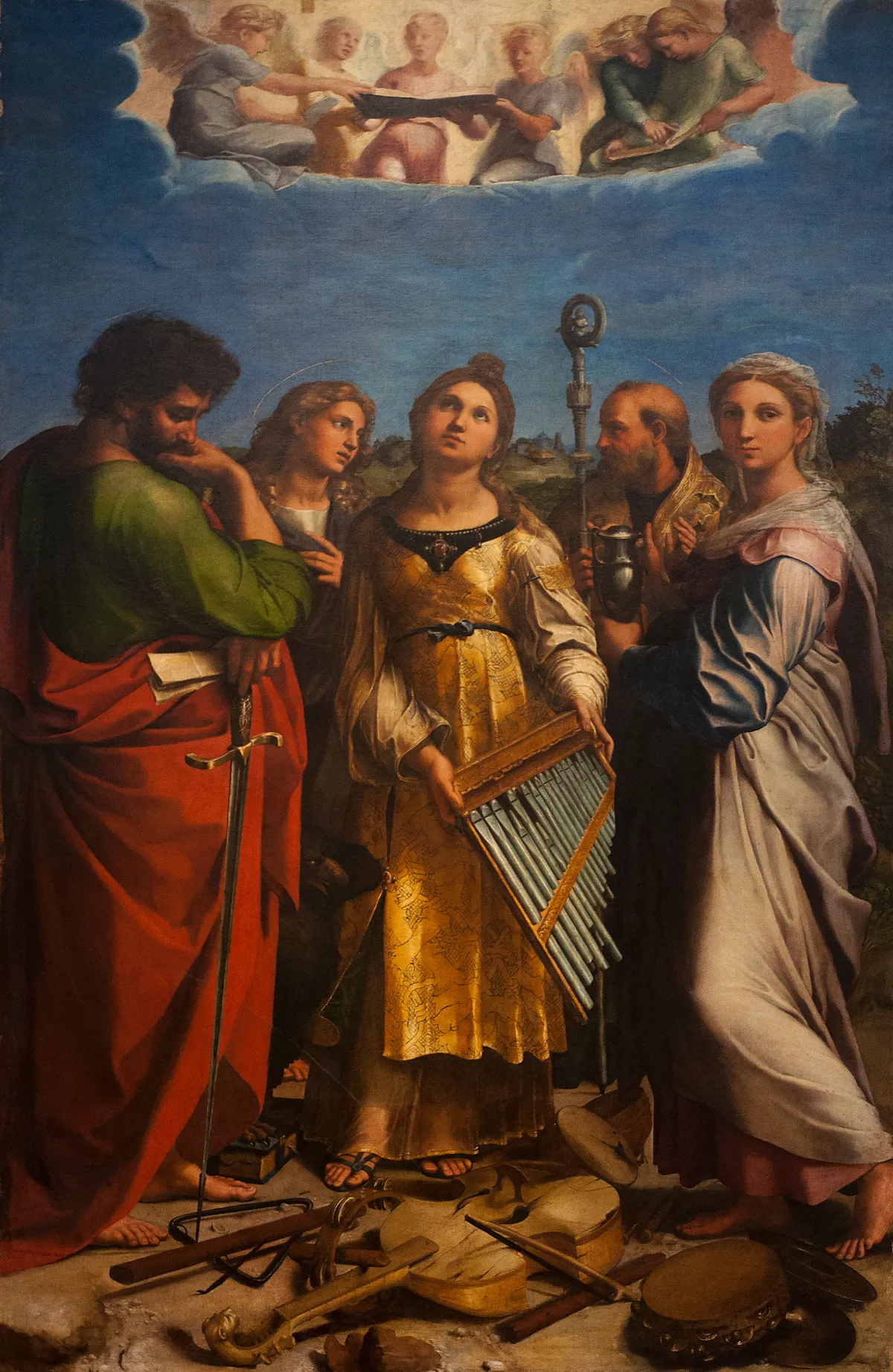
The painting most visitors come for is Raphael’s Ecstasy of Saint Cecilia, painted around 1516 to 1518 for a chapel in Bologna: the patron saint of musicians stands among Paul, John the Evangelist, Augustine and Mary Magdalene, listening to a choir of angels, with broken instruments at her feet. The gallery closes on Mondays, and like other Italian state museums it’s free to everyone on the first Sunday of the month.
The frescoed Oratory of Santa Cecilia on Via Zamboni
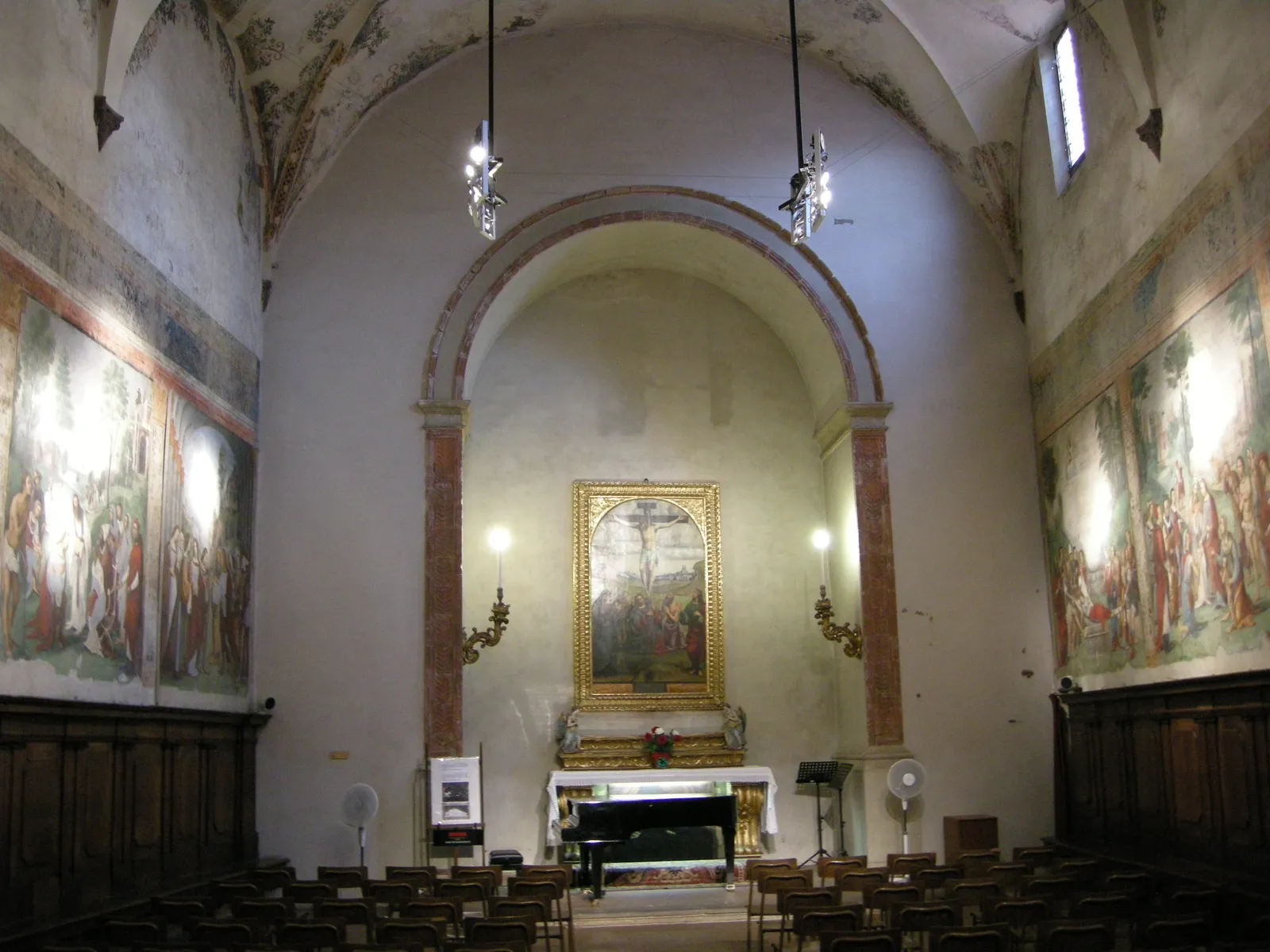
The Oratory of Santa Cecilia sits at Via Zamboni 15, under the portico of the church of San Giacomo Maggiore, and costs nothing to walk into. From 1505 the painters of the Bentivoglio court, the family that ruled Bologna at the time, covered its walls with ten scenes from the lives of Saint Cecilia and her husband Valerian; Francesco Francia, Lorenzo Costa and Amico Aspertini painted the main panels, and locals sometimes call it Bologna’s Sistine Chapel. It’s usually open daily from 10:00 to 13:00 and 14:00 to 18:00, though hours vary, and it doubles as a small concert hall.
Piazza Verdi opens off Via Zamboni a short way further on, the students’ square, with the Teatro Comunale, Bologna’s opera house of 1763, along one side. Via Zamboni itself runs about a kilometre from the Two Towers out to Porta San Donato, and with the Oratory at one end of the quarter and the Pinacoteca at the other, a wheeled suitcase adds its minutes to every leg of the walk in both directions.
Bologna Centrale, the station for the airport monorail
Bologna Centrale, the main railway station, is about 15 minutes’ walk north-west of the Pinacoteca. From its north side the Marconi Express monorail runs to Bologna Guglielmo Marconi Airport (BLQ) in about seven and a half minutes, every 15 minutes for most of the day and every seven and a half at peak times, from 5:40 to midnight, for €12.80 single. Leave the university quarter about two hours before your flight.
Frequently asked questions
What should I do during a layover near Via Zamboni and Palazzo Poggi in Bologna?
Pick the university quarter's two museums: Palazzo Poggi on Via Zamboni, where the University of Bologna shows its 18th-century anatomical waxes and scientific collections, and the Pinacoteca Nazionale on Via delle Belle Arti, where Raphael's Ecstasy of Saint Cecilia hangs. The Oratory of Santa Cecilia, also on Via Zamboni, is free and takes fifteen minutes. Three hours covers all three; both museums close on Mondays.
Are the museums in Bologna's university quarter open on Mondays?
No. Palazzo Poggi and the Pinacoteca Nazionale both close on Mondays, and Palazzo Poggi also shuts on a handful of holidays, including 1 January, 1 May, 15 August and 24 and 25 December. On a Monday the free Oratory of Santa Cecilia on Via Zamboni is usually still open, and the rest of the day is better spent on the Piazza Maggiore side of the city.
Is there a free day at the Pinacoteca Nazionale in Bologna?
Yes. Like other Italian state museums, the Pinacoteca Nazionale opens free to everyone on the first Sunday of each month, which makes it the cheapest way to see Raphael's Ecstasy of Saint Cecilia and the Carracci rooms; expect it to be busier than usual on those days. Palazzo Poggi, a university museum rather than a state one, isn't part of that scheme.
What is Piazza Verdi in Bologna?
The square at the heart of the university quarter, off Via Zamboni, and the students' main meeting point, busiest in the evenings. One side is taken up by the Teatro Comunale, Bologna's opera house, which opened on 14 May 1763 to a design by Antonio Galli Bibiena and gave the Italian premiere of Wagner's Parsifal on 1 January 1914.