Bologna Centrale: Montagnola and Via Piella
Part of the full Bologna Layover: Porticoes and Markets, BLQ
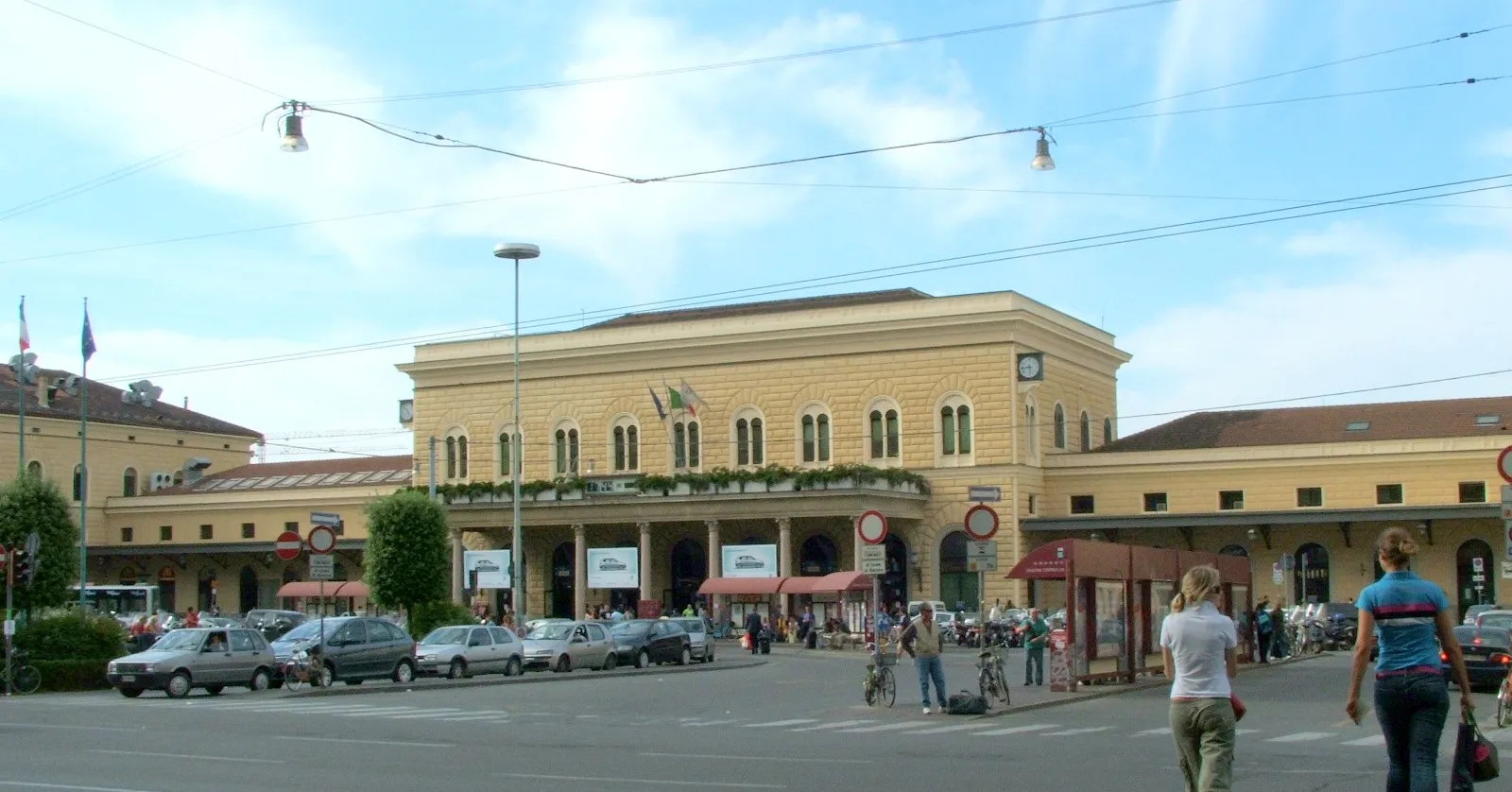
Bologna Centrale, the city’s main railway station on the northern edge of the old town, is five minutes’ walk from the Montagnola park and its 1896 staircase, and Via dell’Indipendenza carries on from there to Bologna’s cathedral and a small window onto a canal on Via Piella.
Bologna Centrale’s clock, stopped at 10:25
The clock on the front of Bologna Centrale railway station, on Piazza delle Medaglie d’Oro, reads 10:25 whatever the time of day. At that minute on 2 August 1980 a bomb of about 20 kilograms of explosive went off in the second-class waiting room, killing 85 people and injuring more than 200. The waiting room’s roof came down, most of the main building was destroyed, and a train standing at the first platform was hit. The station was rebuilt, and in 1996 the clock was fixed at the time of the explosion; inside, the waiting room keeps a deep crack in its wall behind a glass panel and a plaque listing the names of the dead, and anyone passing through can stop and see it.
The building itself dates from 1864, and it now handles about 58 million passengers a year, the fifth-busiest station in Italy.
The Pincio staircase into the Montagnola park
The Montagnola is a raised park at the top of Via dell’Indipendenza, five minutes on foot from the station, and the mound it sits on is the rubble of the Galliera castle, a papal fortress of the 14th century that was later destroyed. The way up from the street is the Scalinata del Pincio, a double flight of stone steps built between 1893 and 1896 by the architects Tito Azzolini and Attilio Muggia, with a fountain group at its centre and carved panels on the history of Bologna along its walls. It opened in June 1896 in front of King Umberto I and Queen Margherita.
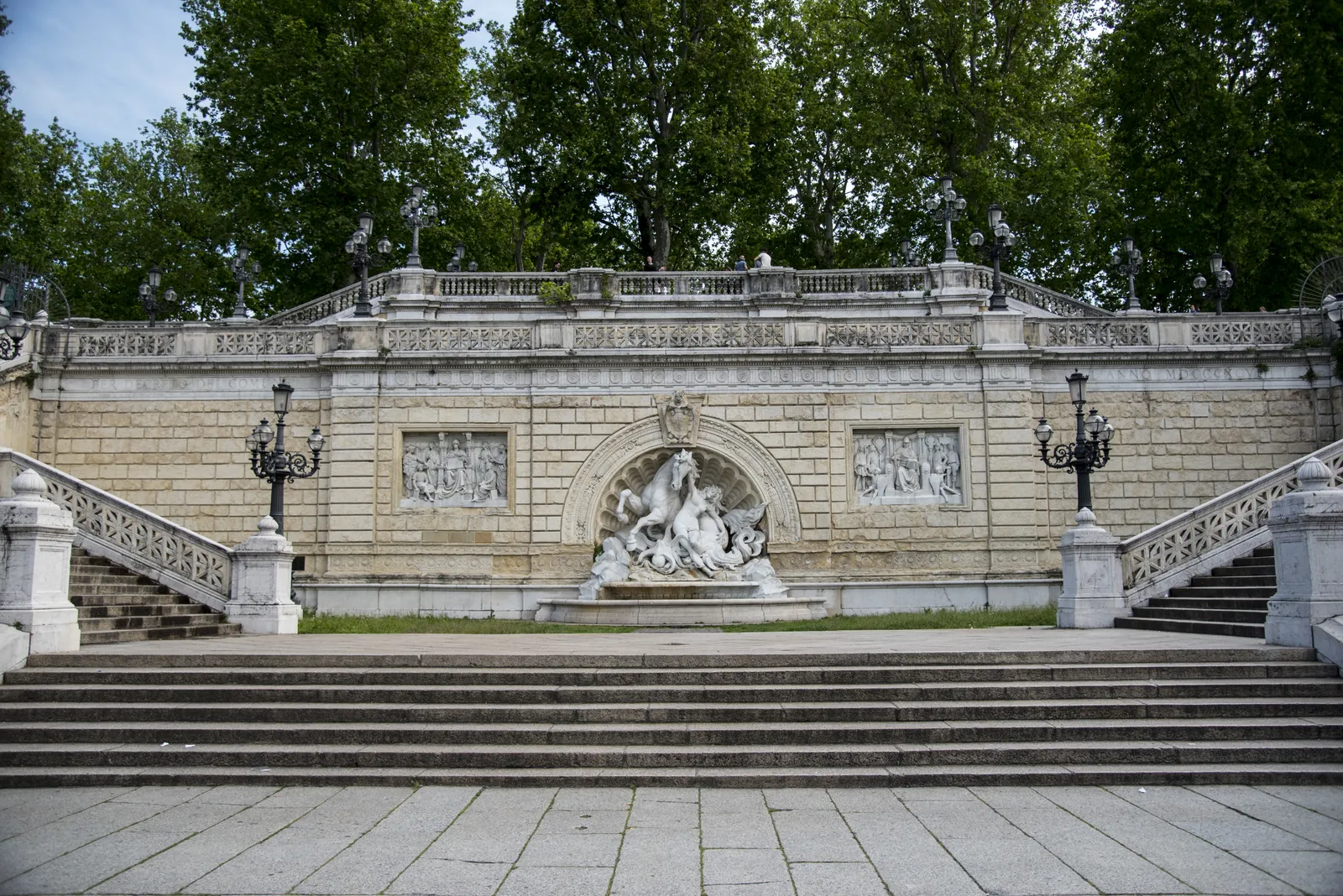
At the top, about six hectares of paths and trees circle a round pool built for the Emilian Exhibition of 1888, ringed with animal sculptures by Diego Sarti. Piazza VIII Agosto, on the park’s eastern edge, fills with the Piazzola market every Friday and Saturday, more than 400 stalls of clothes and household goods on a square that has held a market since 1251.
San Pietro, Bologna’s cathedral on Via dell’Indipendenza
Bologna’s cathedral stands halfway along Via dell’Indipendenza, the porticoed shopping street that runs from the Montagnola to the centre, about twelve minutes’ walk from the station. It’s easy to pass: the church was rebuilt from 1605 after its vaults fell in, and its Baroque front, finished in 1747, sits directly on the street line rather than on a square of its own. Entry is free.
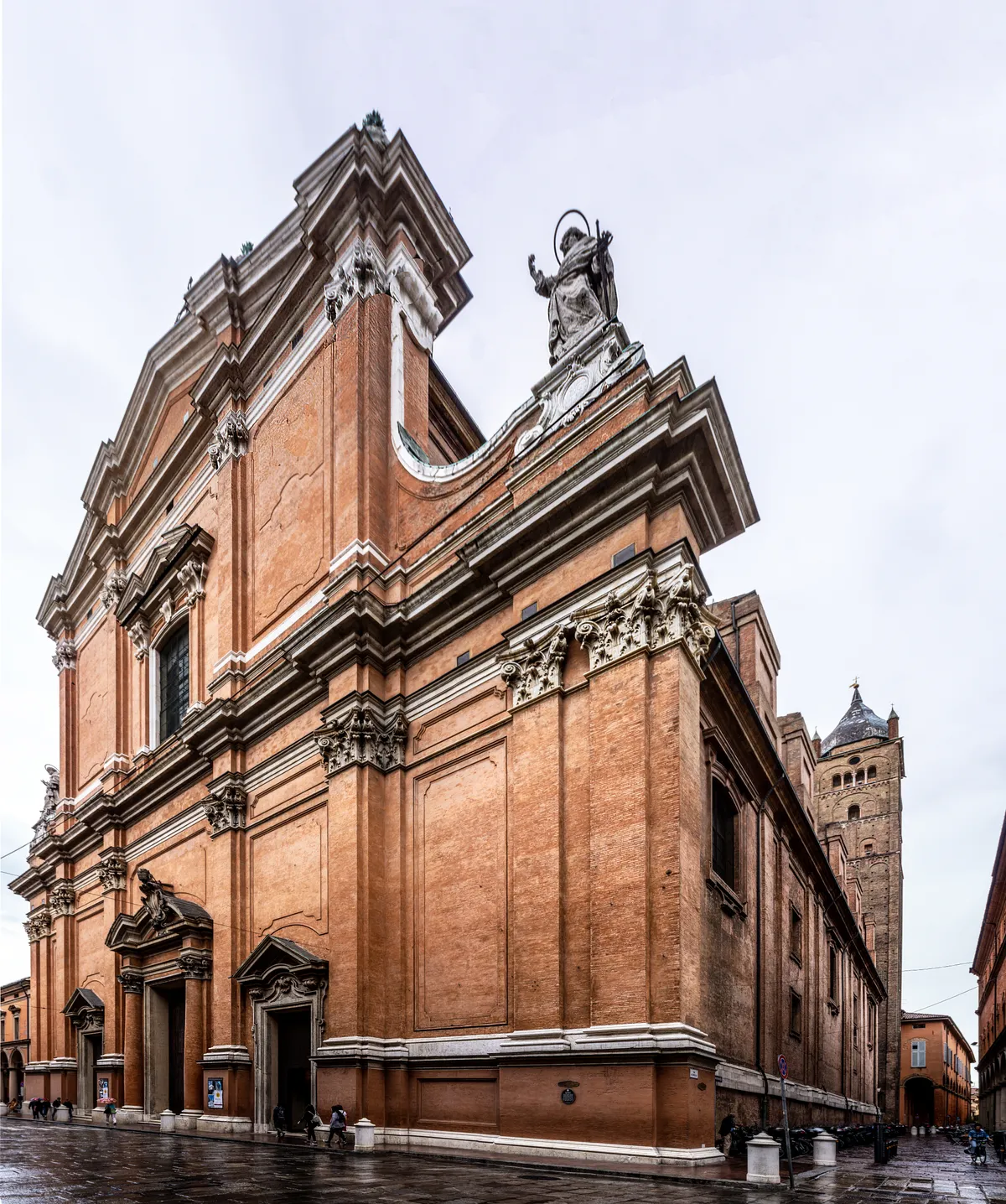
The brick bell tower behind it is 70 metres high, second in the city only to the Asinelli, and holds La Nonna, the grandmother, a bell of 3,300 kilograms and the largest rung the Bolognese way, swung up by hand until it stands mouth-up. The tower opens to visitors on Saturday and Sunday afternoons for a few euros.
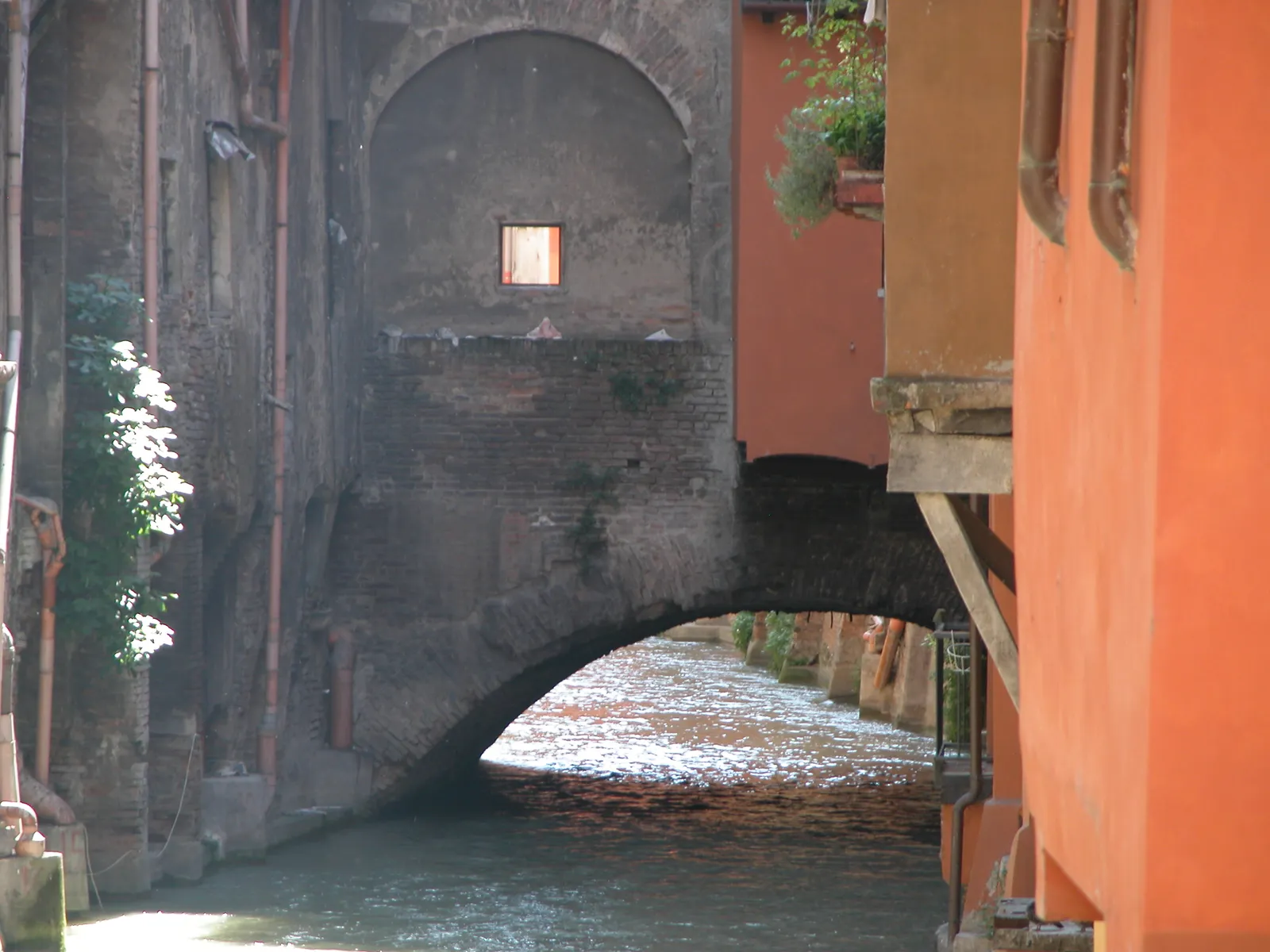
The canal window on Via Piella
Via Piella is a short side street off Via dell’Indipendenza, about ten minutes’ walk from the station, and under its portico a small wooden shutter in the wall opens onto the Canale delle Moline, a stretch of the old mill canal running between the backs of tall, coloured houses. Bologna’s mills and workshops once ran on a network of canals like this one, many of them since covered over, and this is the easiest place in the city to see one. It costs nothing and it’s open at any hour, but the shutter is small enough that people walk straight past it; look for it near the medieval gate tower that spans the same street.
Via dell’Indipendenza carries on south to Piazza Maggiore, about 20 minutes’ walk from the station, where the main Bologna guide picks up with the clock tower, the market lanes and San Petronio. For a longer stop built around food instead, a pasta and tiramisu cooking class can be booked ahead.
The airport monorail leaves from the station’s north side
The Marconi Express, the elevated monorail to Bologna Guglielmo Marconi Airport (BLQ), starts from its own station on the north side of Bologna Centrale, off Via dei Carracci, the opposite side from the main entrance on Piazza delle Medaglie d’Oro. It takes about seven and a half minutes to the airport, with one stop at Lazzaretto, runs daily from 5:40 to midnight, every 15 minutes or every seven and a half at peak times, and a single costs €12.80, paid by contactless card at the gates. From the main entrance, allow a few minutes to cross through the station to it, and leave the station at least an hour and a half before your flight.
High-speed trains don’t use the old platforms at all: they stop in an underground hall opened in 2013, with platforms 16 to 19 on its lowest level, 23 metres below the street, so getting between a fast train and the street means several escalator rides, longer with a suitcase in tow.
Frequently asked questions
What should I do during a layover near Bologna Centrale Station in Bologna?
Start at the station itself, where the clock on the front has been fixed at 10:25 since 1996 in memory of the 1980 bombing. The Pincio staircase up into the Montagnola park is five minutes' walk away, and Via dell'Indipendenza leads from there to Bologna's cathedral and, a short turn off it, the small window on Via Piella that looks onto a canal. Two hours covers it all; the cathedral's bell tower only opens on weekend afternoons, so leave it out on a weekday.
Why is the clock on Bologna Centrale station stopped at 10:25?
At 10:25 on 2 August 1980 a bomb went off in the station's second-class waiting room, killing 85 people and injuring more than 200, the worst atrocity in Italy since the Second World War. The clock was repaired afterwards, then fixed at 10:25 in 1996 as a memorial. Inside, the rebuilt waiting room keeps a crack in its wall under a glass panel and a plaque with the names of the dead.
When is the Piazzola market on near Bologna Centrale?
Every Friday and Saturday, from morning to late afternoon, in Piazza VIII Agosto beside the Montagnola park, about five minutes' walk from the station. It's a general market of more than 400 stalls, mostly clothes, shoes and household goods rather than food, on a square that has held a market since the 13th century. On other days the square is a car park.
Can I climb the bell tower of Bologna's cathedral?
Yes, but usually only on Saturday and Sunday afternoons, for a few euros that go to the tower's upkeep; check the times before planning around it. The tower is 70 metres high, the second tallest in Bologna after the Asinelli, and it holds La Nonna, a bell of 3,300 kilograms, the largest rung by the Bolognese method, in which the bell is swung up by hand until it stands mouth-up. The cathedral itself, on Via dell'Indipendenza, is free to enter every day.