Bologna's San Luca Portico and Sanctuary
Part of the full Bologna Layover: Porticoes and Markets, BLQ
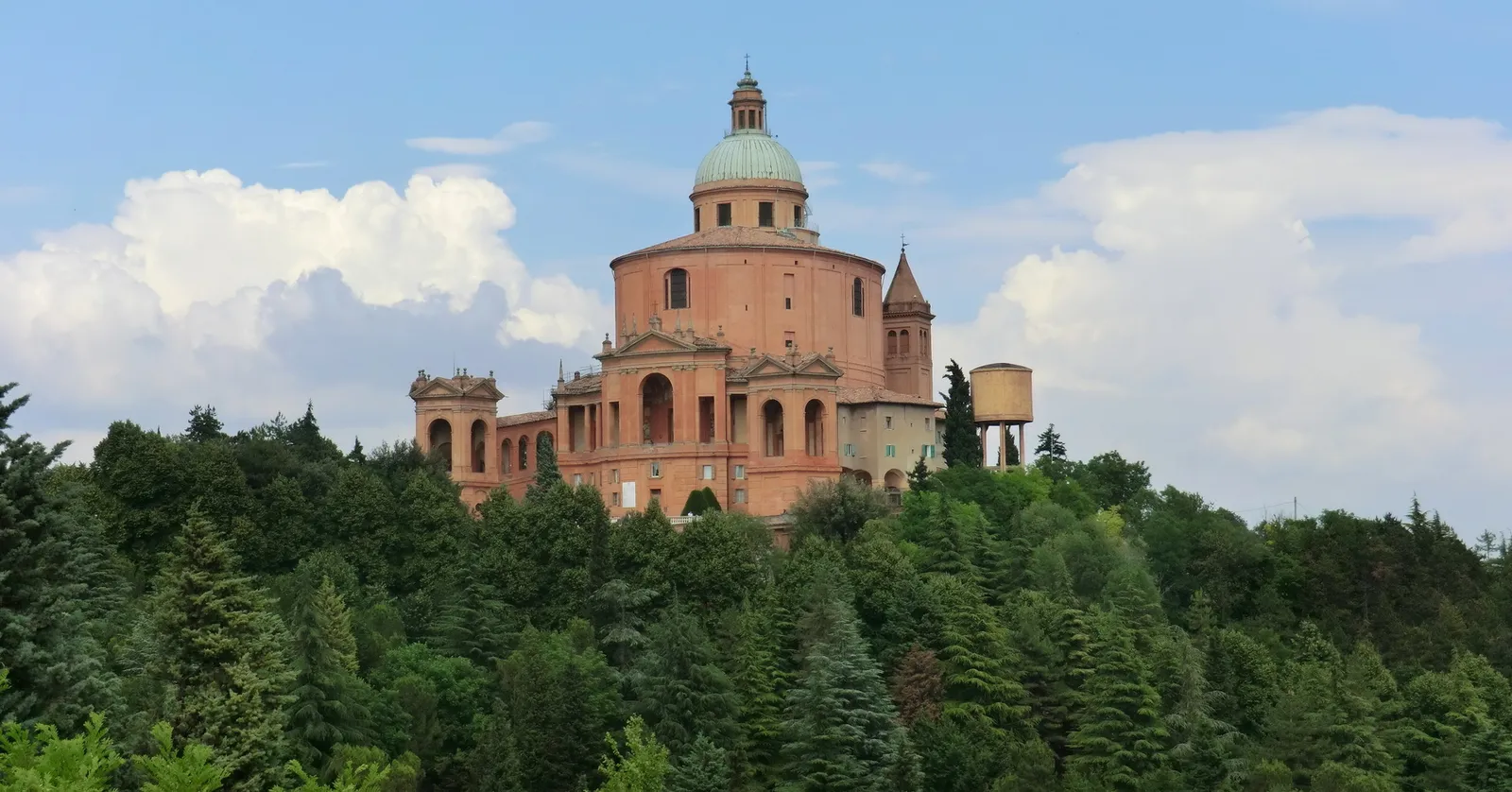
Bologna’s San Luca portico runs 3.8 kilometres under 666 arches from Porta Saragozza, a medieval gate on the edge of the old town, up the hill to the Sanctuary of the Madonna di San Luca, a single covered walk of about an hour each way with a free domed church and a view over the city at the top.
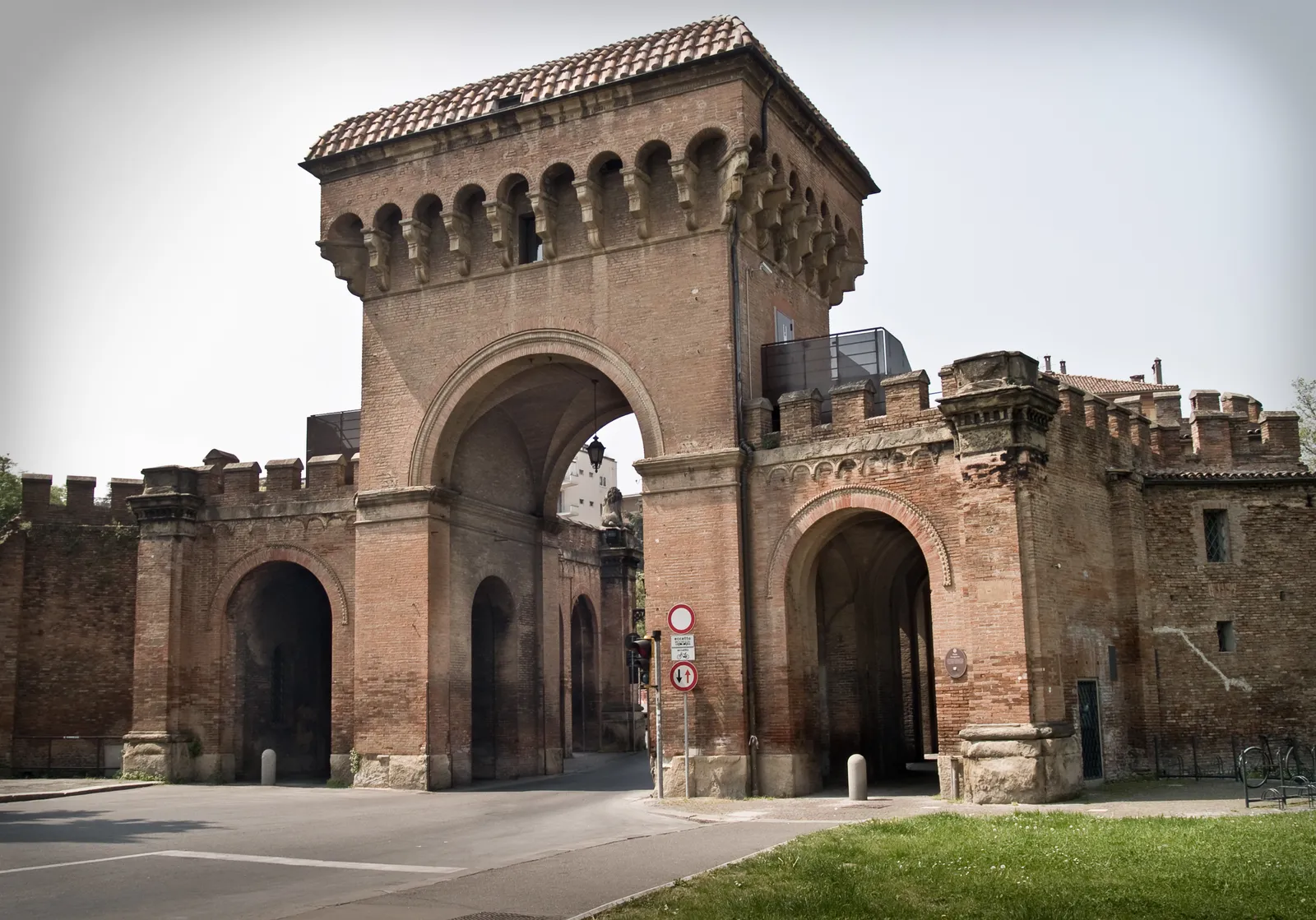
Porta Saragozza, where the portico begins
Porta Saragozza is one of the gates in Bologna’s outer ring of medieval walls, on the western edge of the old town about 15 to 20 minutes’ walk from Piazza Maggiore, where the main Bologna guide centres its clock tower, market lanes and churches. The gate went up in the 13th and 14th centuries; its castle-like look is newer, from an 1859 rebuild by Giuseppe Mengoli that added the crenellated arches linking it to the round towers either side. Once the San Luca portico started here in 1674, the gate became the Porta dei Pellegrini, the pilgrims’ gate, since the yearly procession to and from the sanctuary passes through it.
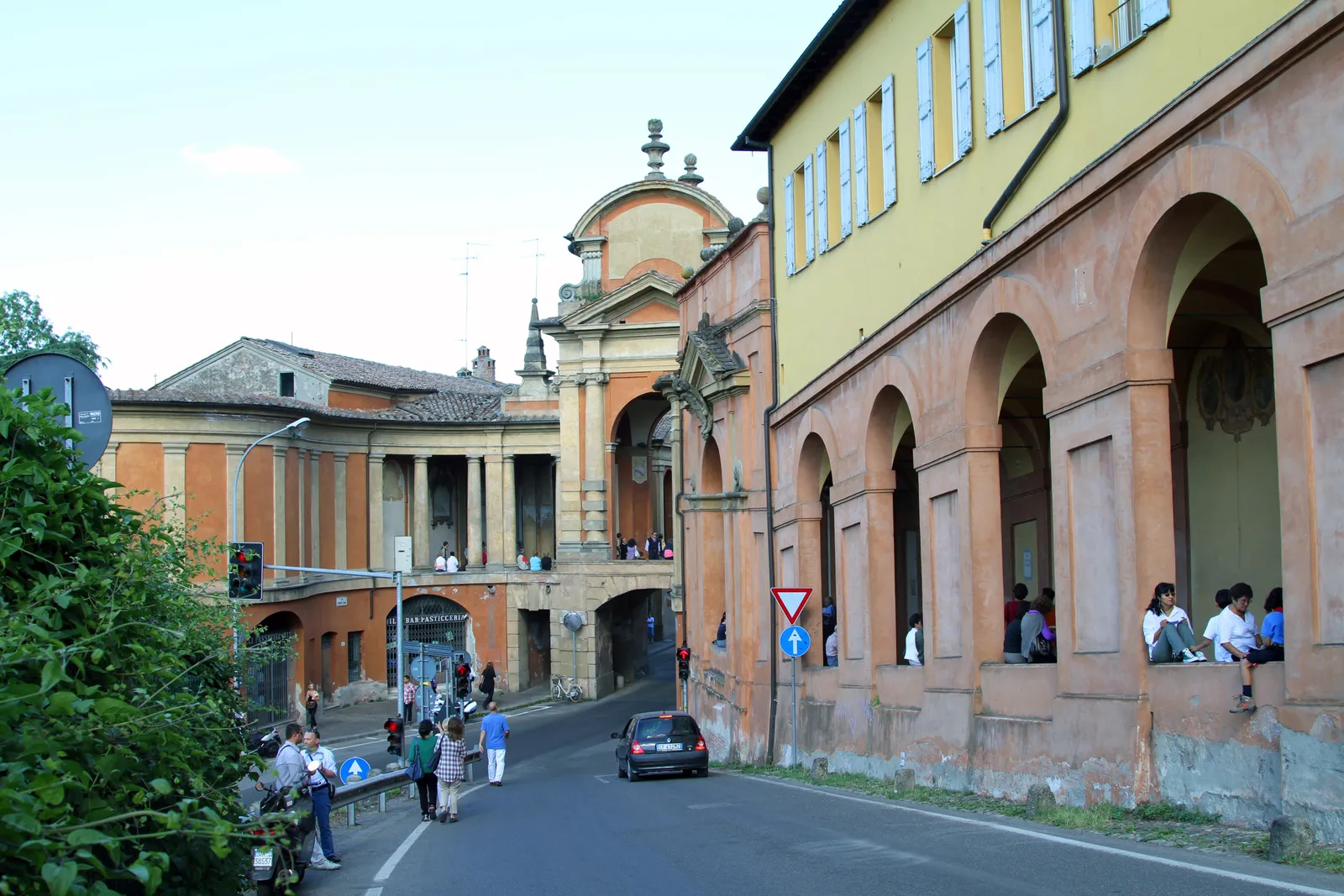
From the gate, the portico runs flat along Via Saragozza for about a kilometre and a half, 316 arches of it, past houses and cafes, and this part is ordinary city pavement under a roof. Families, craft guilds and religious confraternities paid for the arches one or a few at a time, and many still carry the sponsor’s name or coat of arms.
The Arco del Meloncello, where the climb starts
The Arco del Meloncello is a curved Baroque arch that lifts the portico over Via Saragozza, built in 1732 to a design by Carlo Francesco Dotti, the same architect as the sanctuary at the top. Two roads meet at right angles here, and the arch let pilgrims cross above the traffic without leaving the covered walk. In the early 20th century it was raised by a few metres so that a tram could pass underneath.
Past the Meloncello the portico turns uphill onto the Colle della Guardia, and the remaining 350 arches climb in a zigzag on ramps and flights of steps, with fifteen small chapels along the way marking the mysteries of the Rosary. A wheeled suitcase would have to be lifted up every one of those flights.
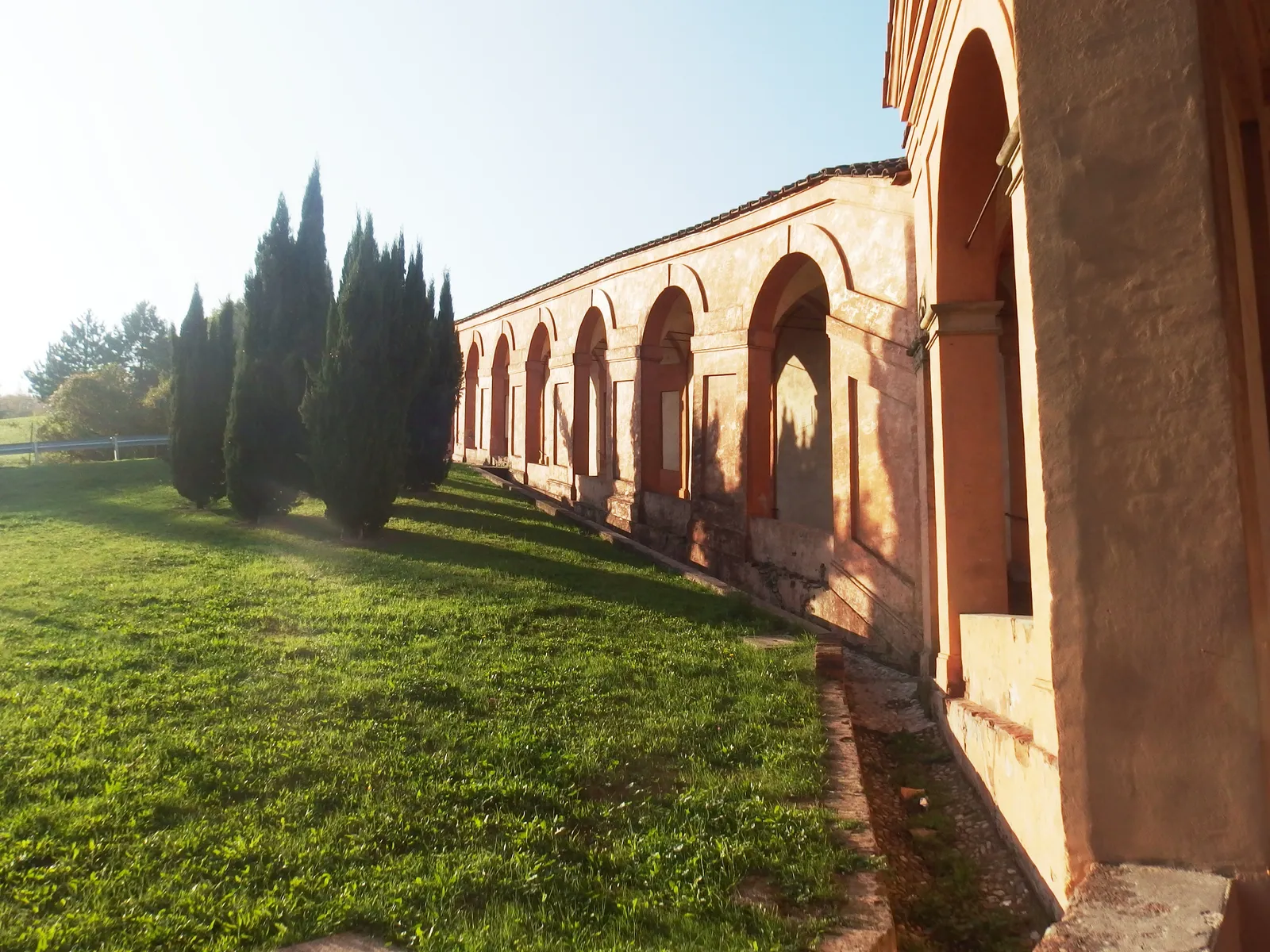
Higher up, the arcade leaves the houses behind and runs along open hillside, and the gaps between the arches start to frame views back over the rooftops of the city.
The Sanctuary of the Madonna di San Luca on the Colle della Guardia
The Sanctuary of the Madonna di San Luca stands at the top of the hill, a domed Baroque church in pink brick begun in 1723 to Dotti’s design and finished in 1765. It’s free to enter. Inside, above the high altar, is the icon of the Virgin the whole portico was built for, said to have been brought to Bologna from the East by a pilgrim in the 12th century, and the chapels hold paintings by Guido Reni and Guercino.
The one paid extra is a climb of around a hundred steps up old spiral stairs inside the dome to a small terrace, for about €5, which looks out over Bologna, the plain beyond it and the hills to the south. Visits to the terrace can be limited or suspended during services.
An infrequent city bus down from San Luca
Walking back down the portico to Porta Saragozza takes about 40 minutes, and from the gate the centre is 15 to 20 minutes further on foot. To save the walk, TPER bus 58 runs from the sanctuary down to Villa Spada on Via Saragozza, where bus 20 continues into the centre on the same ticket, though the 58 runs infrequently enough that it’s worth checking its timetable before relying on it.
The airport link is the Marconi Express, the elevated monorail from Bologna Centrale, the main railway station, to Bologna Guglielmo Marconi Airport (BLQ): about seven and a half minutes, every 15 minutes or every seven and a half at peak times, from 5:40 to midnight, €12.80 single. Porta Saragozza is on the far side of the old town from the station, about half an hour’s walk away, so leave the sanctuary at least two and a half hours before your flight.
Frequently asked questions
What should I do during a layover near Porta Saragozza and the San Luca Portico in Bologna?
Walk the San Luca portico: it starts at Porta Saragozza, a medieval city gate, runs flat along Via Saragozza to the Arco del Meloncello, then climbs the hill under arches to the Sanctuary of the Madonna di San Luca. Going up takes about 45 minutes to an hour from the gate, coming down about 40, and the whole walk and the church are free. The panoramic terrace inside the dome is the only paid extra, and it's worth skipping if the day is hazy.
Is there a way up to San Luca without walking?
Two. A small sightseeing train leaves from Piazza Galvani in the centre several times a day and runs up to the sanctuary with an audio commentary, for about €13 return. A city bus also climbs from Villa Spada, on Via Saragozza past the Meloncello, to the sanctuary in about 20 minutes, though it runs infrequently, so check the timetable first. Riding up and walking down is the easiest way to see the portico without the climb.
Is the San Luca walk manageable in summer heat?
Yes, because the portico is roofed for its full 3.8 kilometres, so you're in the shade from the city gate to the church door. The climb from the Meloncello is still steady work on ramps and steps, so carry water and allow the longer end of the hour it takes. The open square in front of the sanctuary and the dome terrace are the exposed parts; save them for late afternoon if you can.
When is the San Luca icon carried down into Bologna?
Every May, for about a week. The icon of the Virgin leaves the sanctuary on the Saturday eight days before Ascension Day, is received at Porta Saragozza in the early evening and carried through the centre to the Cathedral of San Pietro, and goes back up the hill in procession on the Sunday of the Ascension, stopping for blessings at Porta Saragozza and the Arco del Meloncello. In 2026 it came down on 9 May and returned on 17 May. The portico the procession follows was built between 1674 and 1793 to keep it out of the rain and sun, and it's busy with pilgrims on both days.