Marseille Layover at Vallon des Auffes
Part of the full Marseille Layover: Vieux-Port From MRS
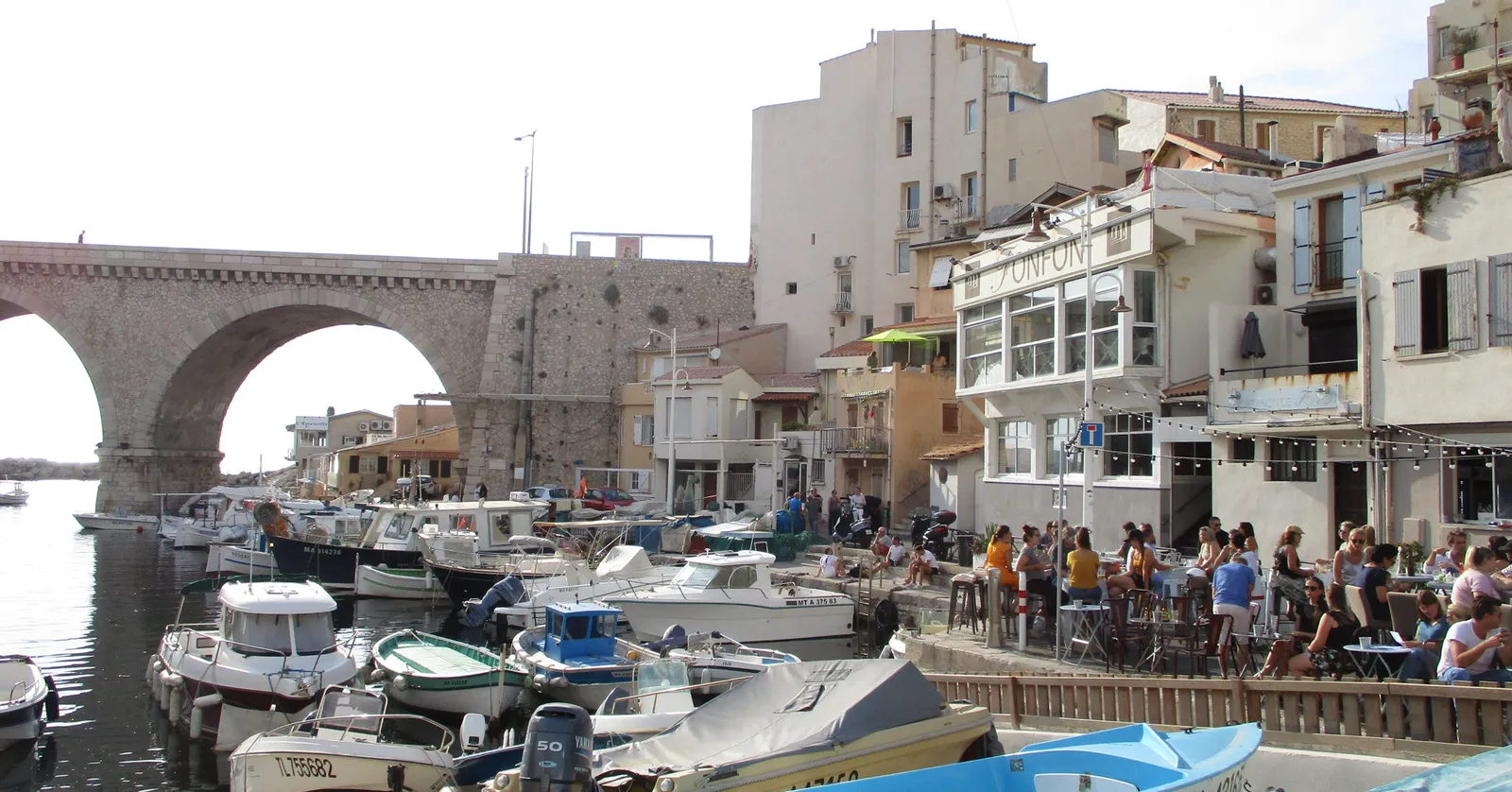
Marseille’s Vallon des Auffes is a working fishing cove wedged into the coast under a three-arch stone viaduct, ten minutes by bus from the old harbour, at one end of the concrete bench that runs three kilometres along the Corniche.
Vallon des Auffes is a fishing harbour the size of a car park
Italian fishermen moved here in the 18th century from the cove below the Pharo, the headland at the mouth of the old harbour, and built up the sides of the cleft; rope-makers followed in the 19th. The name comes from the auffe, the Provençal word for alfa grass, a tough Mediterranean fibre worked here from about 1750 into fishing nets, basketry and ships’ rope. What is left is a harbour a hundred metres deep, wooden pointus and small motorboats moored two deep along the quay, houses in ochre and cream stacked straight up the rock behind them, and restaurant terraces along one side that fill at lunchtime whatever the season.
Jean-François Mayor de Montricher, the engineer who brought Durance water into Marseille, put the bridge across the mouth of the cove in the 19th century when the coast road was cut: 60 metres on three arches, 17 metres above the water, and the reason every photograph of this place looks framed. There is nothing to buy a ticket for. You walk down the steps from the road, walk the quay, and that is the whole of it.
The Château d’If sits twenty minutes offshore
From the cove you can see the island the fortress covers almost entirely, a low square keep with round corner towers on bare white rock in the middle of the bay. It was built in the 1520s to guard the harbour, spent three centuries as a prison, and became the place Alexandre Dumas locked up Edmond Dantès in The Count of Monte Cristo, which is why most people on the boat are there.
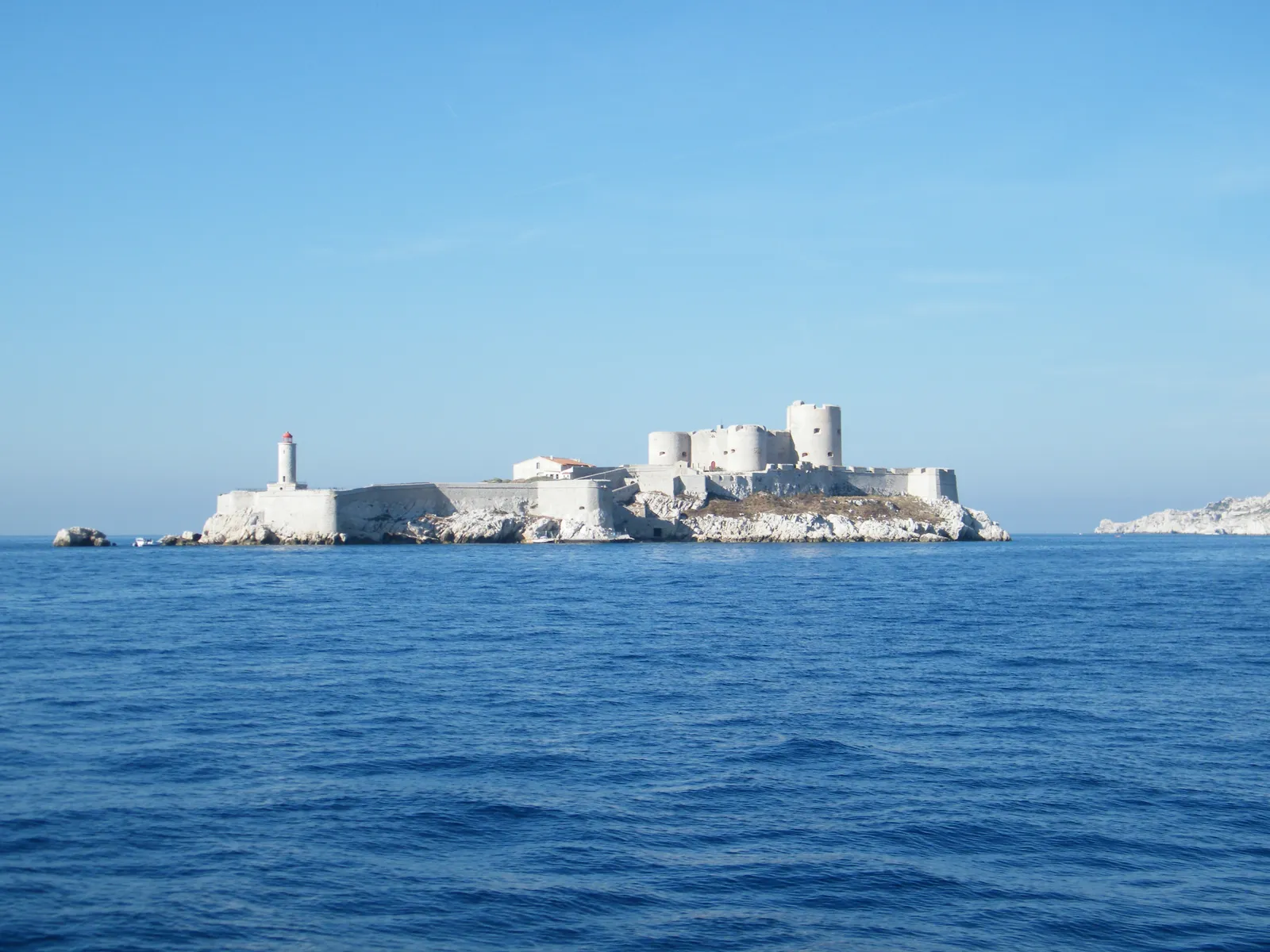
The boat goes from the old harbour rather than from here, and the crossing is 20 minutes each way. Admission is 5.50 euros for an adult, 4 for ages 18 to 25 and nothing under 18, with doors open 9.30am to 6.15pm from 15 May to 20 September and 9.30am to 5.30pm the rest of the year, closed on Mondays in the winter half. Because the boat and the entry are sold separately, holding the fortress ticket in advance through a tours and activities platform takes one queue out of a trip that is already three hours door to door.
Three kilometres of bench along the Corniche
The coast road runs about five kilometres from the Catalans beach round to the Prado, and along three of those kilometres, between the Fausse-Monnaie bridge and the Palm Beach hotel, runs a single prefabricated concrete bench that put the city into the record books in 1965 as the longest in the world. It faces west across open water, so late afternoon is when people actually sit on it.
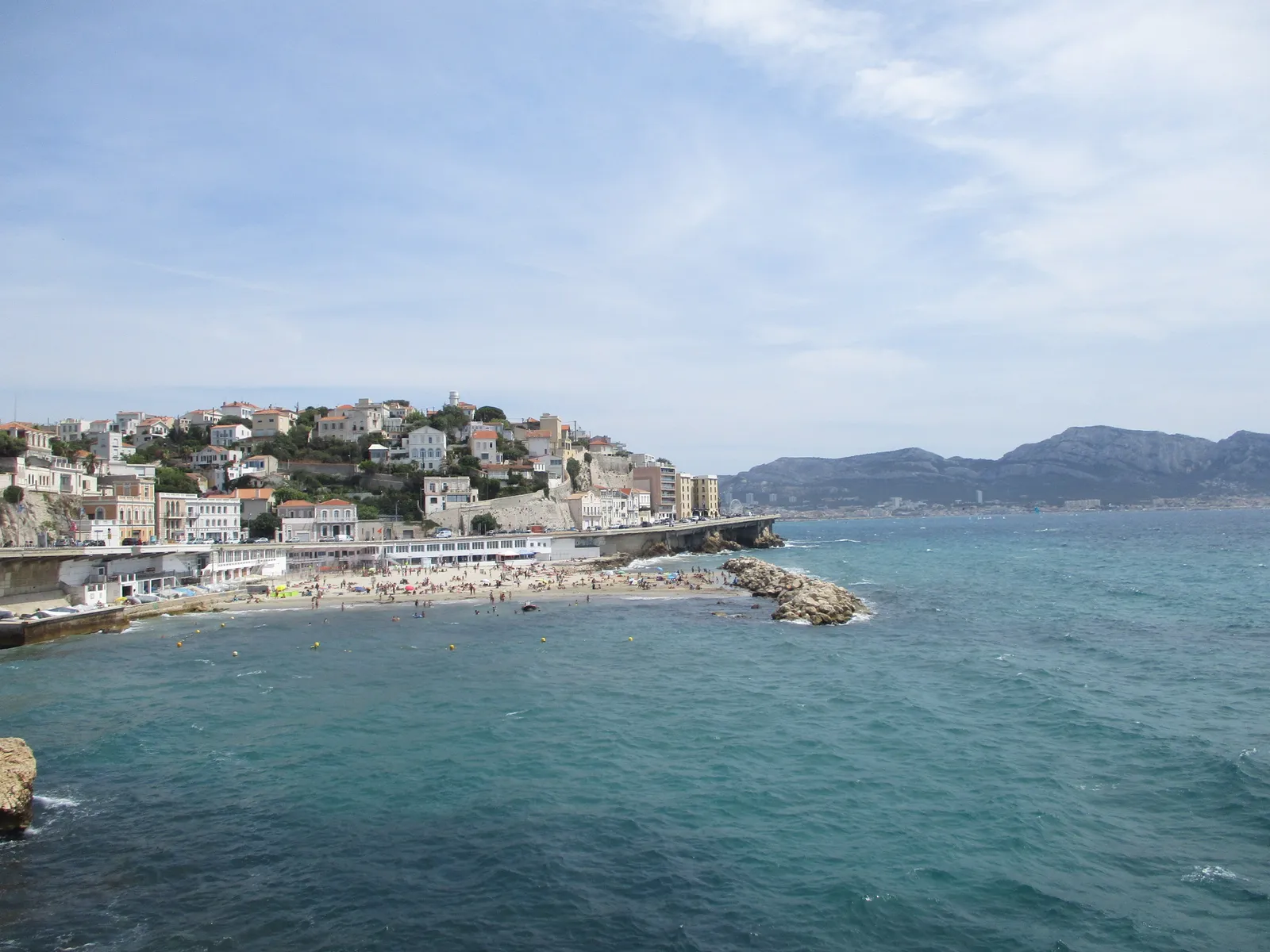
Nothing on the seaward side breaks the wind on that stretch, which matters more here than anywhere in the old town: when the mistral blows, most often between October and April, the Corniche is where you feel it, and a suitcase makes the walk worse rather than just slower. The open-top sightseeing loop stops on the Corniche at the cove itself, at 169 Corniche Président J.F. Kennedy, and a pass for it is the way to cover the same coastline sitting down on a day when walking it is unpleasant.
Two legs and about an hour and three quarters to the airport
The coast bus and a metro connection put you at Saint-Charles station in roughly half an hour from the cove. The 91 shuttle bus leaves from there nonstop to Marseille Provence Airport (MRS) in about 25 minutes, up to 50 in heavy traffic, every 10 minutes from 7am to 8pm and every 20 outside that, at 10 euros for an adult. Nothing on this side of the city runs to the airport without that change.
That two-stage return is the real cost of spending a layover out here rather than in the centre, and it is worth setting against what you get: the harbour mouth, Fort Saint-Jean and the old lanes of Le Panier are all inland of this coast, and the main Marseille layover route covers them at walking pace from the water. Out here the water is the point.
Frequently asked questions
What should I do during a layover at Vallon des Auffes in Marseille?
Walk down into the cove first: it is a working fishing harbour of maybe a hundred metres, boats pulled up on the quay, restaurant terraces along one side and a stone viaduct carrying the coast road overhead. Then walk the Corniche itself, which runs five kilometres along the water with a concrete bench along three of them. With four hours or more, the boat out to the Château d'If leaves from the old harbour and takes 20 minutes each way. Nothing in the cove or on the Corniche costs anything.
How do you get to Vallon des Auffes from central Marseille?
A bus along the coast road from the old harbour drops you at the top of the cove in about ten minutes, or it is a walk of roughly half an hour on the same route. The cove itself sits below road level: steps and a short ramp take you down to the quay from the viaduct. There is almost nowhere to park, which is part of why it has stayed the way it is.
Is Vallon des Auffes exposed to the mistral?
The cove itself is sheltered, tucked into a cleft in the coast with the viaduct across its mouth, but the Corniche above it is not. That stretch of road has no buildings on the seaward side to break the wind, and when the mistral blows, most often between October and April, walking it is genuinely hard work. The cove is where people wait it out, which is why the terraces fill on windy days.
Is the Château d'If worth the trip on a layover?
Only with four hours or more clear of your flight. The crossing from the old harbour runs 20 minutes each way, a return boat ticket is about 16.70 euros for an adult, and admission to the fortress is 5.50 euros, 4 for ages 18 to 25 and free under 18. Doors are 9.30am to 6.15pm from 15 May to 20 September and 9.30am to 5.30pm the rest of the year, when it also closes on Mondays. Allow three hours door to door and be honest about the wind: the crossing is the first service to stop when the sea gets up.
Can you swim at Vallon des Auffes?
There is no beach, but people swim here all summer. Under the arches of the viaduct is a sheltered basin locals call the piscine du Vallon: rock to sit on, a metal ladder down into the water, and a thin layer of sand over rock at the bottom. Nobody supervises it and there are no lifeguards, and it is busiest with families in the middle of the day, so early morning is the quiet slot. Bring a towel you can pack wet, since there is nowhere here to leave anything.