Montreal Layover at Saint Joseph's Oratory
Part of the full Montreal Layover Guide: Old Montreal From YUL
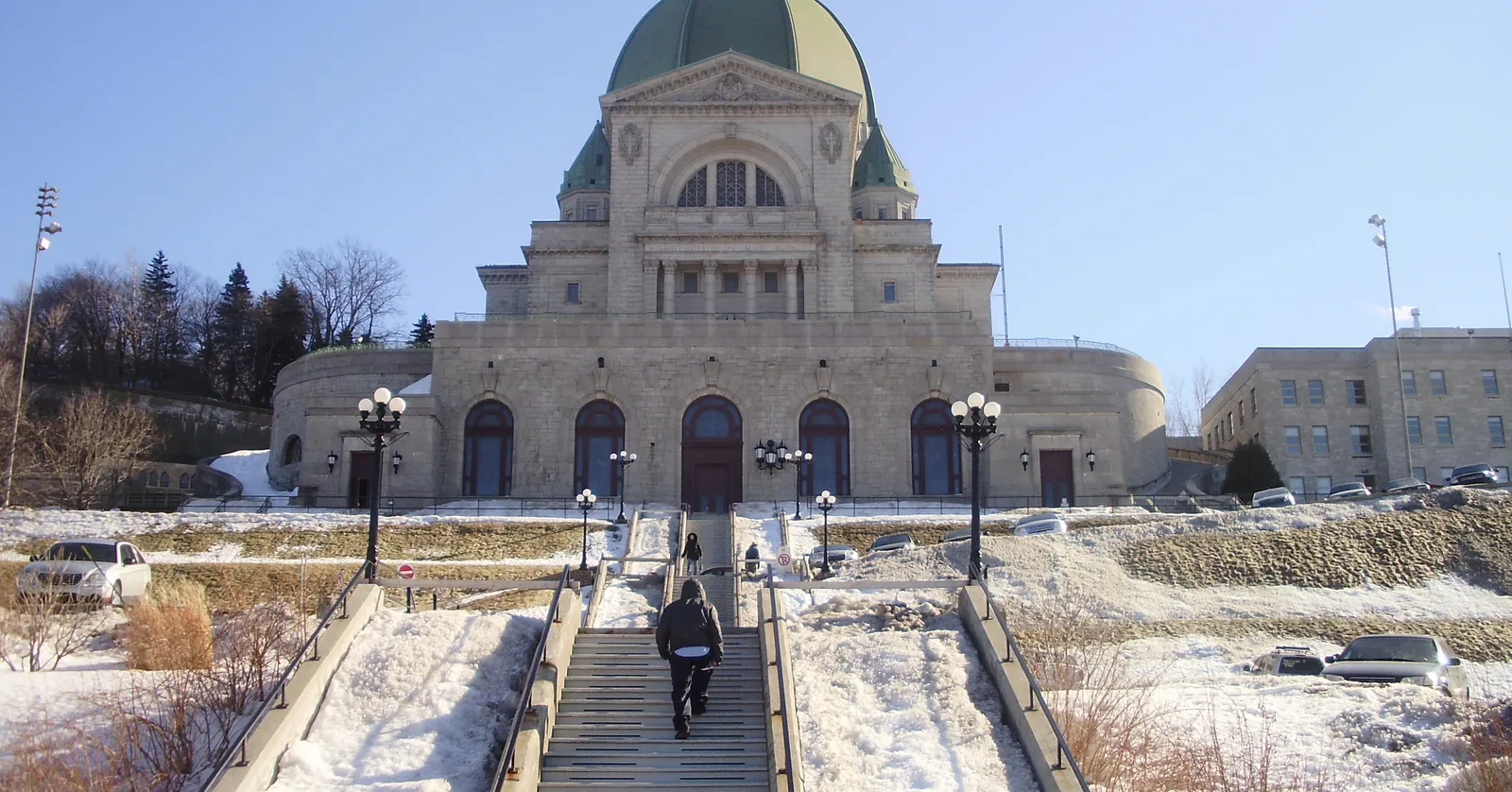
Saint Joseph’s Oratory, the domed shrine on the western slope of Mount Royal in Montreal, is free to walk into from six in the morning, keeps 99 wooden steps up the middle of its staircase for pilgrims climbing on their knees, and banks roughly 10,000 candles in a chapel cut into the rock beneath it.
The oratory’s dome is the largest on any church in Canada
Brother André Bessette, a porter at a college across the road, put up a small wooden chapel here in 1904 and spent the rest of his life raising money for something bigger. The something bigger took until 1967 and passed through four architects, Dalbé Viau, Alphonse Venne, Lucien Parent and Dom Paul Bellot, before it was finished. The dome they ended up with measures 39 metres across on the outside and its crown sits 97 metres above the nave floor.
Nothing is charged at the door. Doors open at 6am and shut at 9pm, and something near two million people come through in a year, which for a shrine rather than a museum is a striking number. It has been a National Historic Site since long before the current work on the roof: a renovation running since 2018 is converting the lantern at the very top into an exhibition space with a spiral walkway inside the dome, scheduled to be done by 2027. Until then the highest point open to visitors is the terrace outside the basilica doors, which still gives the long view north.
Ninety-nine wooden steps are kept for climbing on the knees
Two flights of 283 stone steps climb the hillside to the doors, and set between them is a narrower central flight of 99 wooden ones, roped off with a sign saying what it is for. People do still use it, on their knees, one step at a time, which is worth knowing before you assume the middle route is the quick way up.
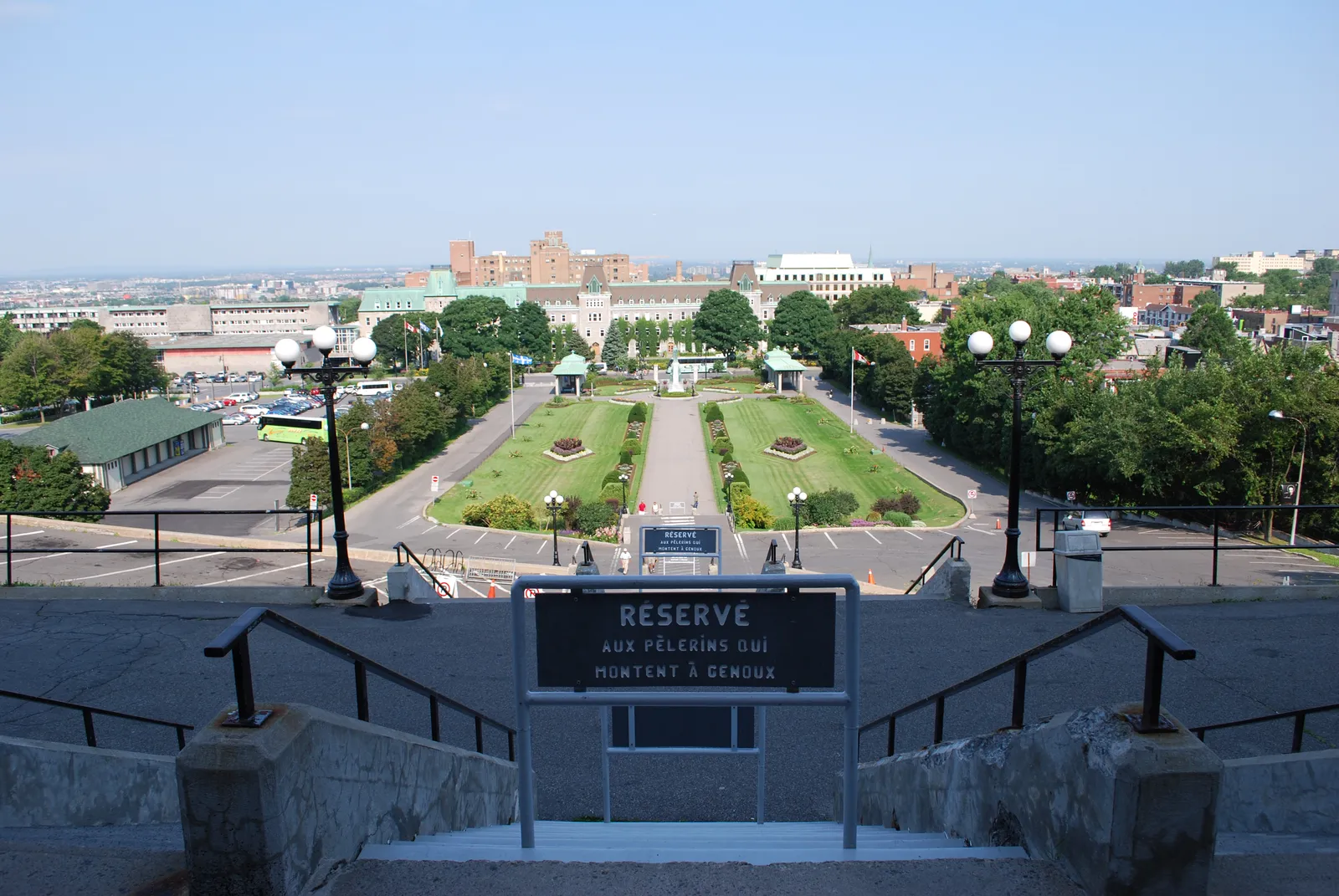
On the slope to one side, the Garden of the Way of the Cross was laid out by Frederick G. Todd, the landscape architect who also shaped Beaver Lake over the hill, and Louis Parent carved the fourteen stations along its terraces, plus a marble Resurrected Christ and a reflecting pool. It opens from the first of May to Canadian Thanksgiving and is shut the rest of the year, so half of what makes the approach worth walking simply is not there in March. Reaching the doors at all is a metro ride and a ten-minute climb, and the building runs across several levels once you are inside, so a bag costs minutes at every stage of it.
Roughly 10,000 candles burn in the votive chapel
Cut in between the crypt church and the bare rock of the mountain, the votive chapel is an Art Deco room banked floor to ceiling with candles, somewhere around ten thousand of them, throwing red and green light across the stone.
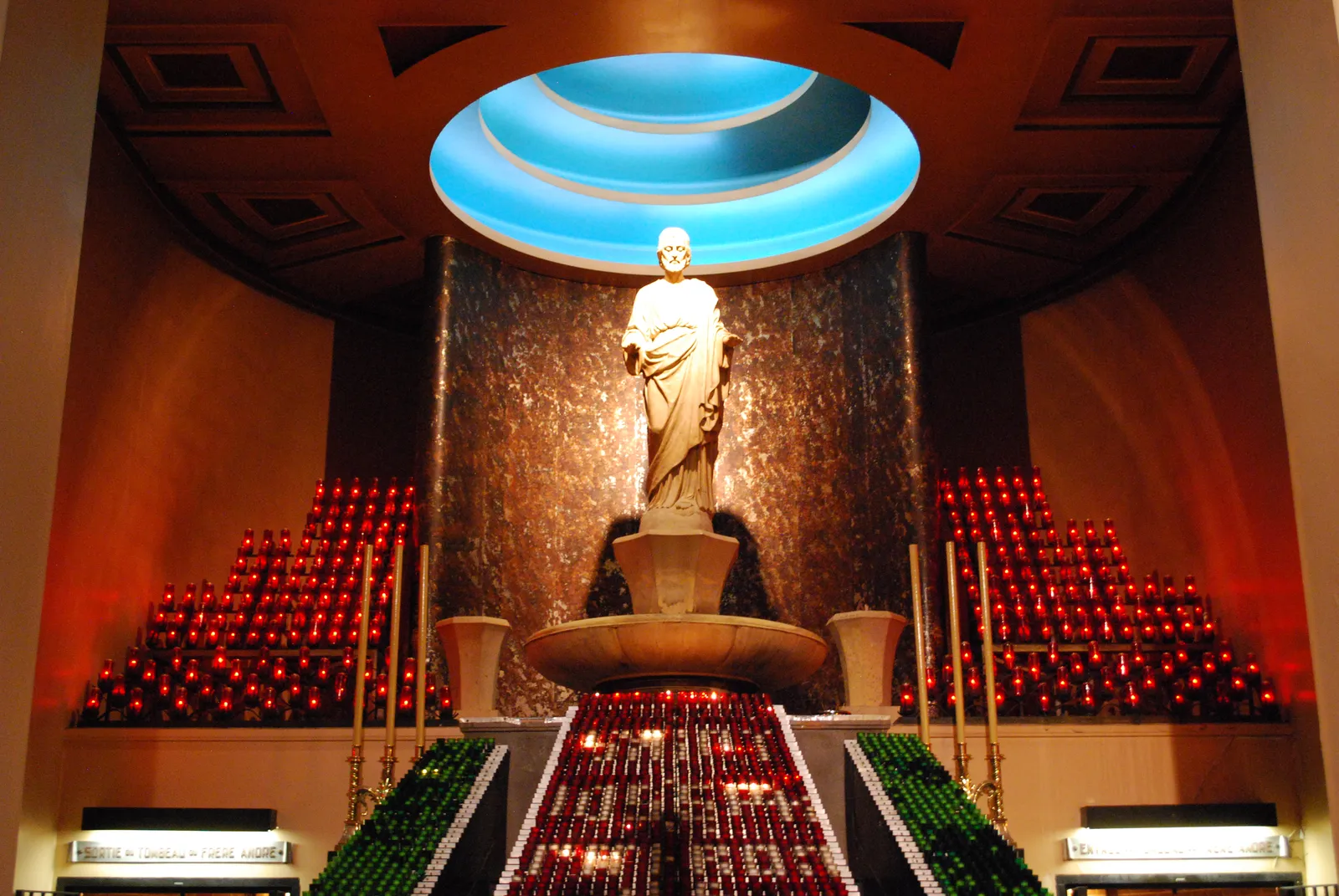
Along the walls hang close to a thousand crutches, canes and braces, left by people who believed Brother André’s prayers had cured them and who therefore had no further use for them. He is buried a short way off in the same part of the building, and was canonised in 2010. Above all of this the carillon rings; Émilien Allard played it here from 1955 to 1975 and recorded albums on it.
No metro station is closer than a ten-minute walk to the oratory
The nearest station sits downhill on chemin Queen Mary and the walk up from it takes about ten minutes, which is the shortest approach there is; there is no bus that puts you at the doors. From that station the metro runs across to where line 747 leaves for Montréal-Trudeau International Airport (YUL), 24 hours a day, every ten to twenty minutes, at CA$11.25, and that fare doubles as a 24-hour pass on the rest of the network.
The bus itself is about 30 to 35 minutes from Lionel-Groulx or 45 to 70 minutes on the full run from Berri-UQAM, riding time only, so budget an hour and a quarter from the oratory doors to the terminal and leave three and a half hours before an international flight. If that arithmetic does not work, the Montreal layover guide keeps everything inside a much tighter radius downtown, and the Mount Royal version of this trip covers the other side of the same hill.
Ernest Cormier’s 82-metre tower stands over the university campus
The Université de Montréal’s main building went up between 1928 and 1943 to Ernest Cormier’s design, and the stepped Art Deco tower at its centre runs 22 storeys to 82 metres, with wings of six to eight floors reaching out on either side.
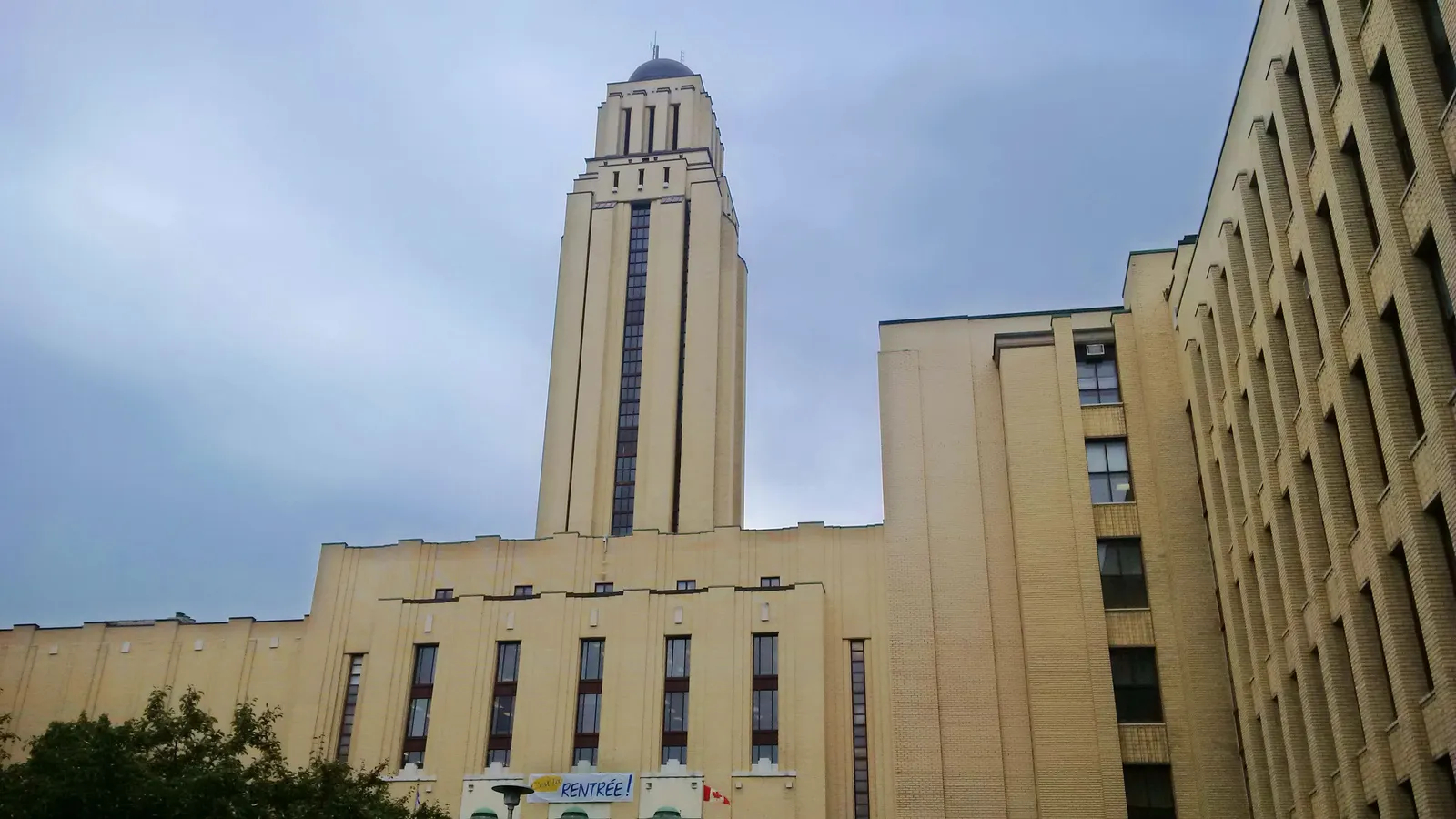
It was named a National Historic Site in 2017, and from most of Côte-des-Neiges it and the oratory dome are the two shapes on the skyline. The campus grounds are open to walk through, which makes this the obvious ten minutes if the shrine has not used up the afternoon. For anyone who would rather not piece the hill together by metro and foot, a half-day driven tour covering the shrine, the lookout on the far side and the cemetery between them can be booked in advance through a tours and activities platform.
Between the shrine and the campus there is nowhere on this hillside to put a bag down, which is the argument for arriving with nothing heavier than a coat.
Frequently asked questions
What should I do during a layover near Saint Joseph's Oratory in Montreal?
Give the building itself most of the time, since it is free and open from 6am to 9pm and there are several levels to work through. The votive chapel, with its banked candles and the crutches left against the wall, is the part people remember, and the terrace outside looks north over the city. From May to Canadian Thanksgiving the garden on the slope below adds a half hour of walking. Ernest Cormier's Art Deco university tower is ten minutes away on foot if the day has room for it.
Does Saint Joseph's Oratory charge admission?
No. Walking into the shrine costs nothing, and that covers the crypt church, the votive chapel, the basilica upstairs and the terrace. Guided tours and the museum about Brother André are the two things with a price on them, and both are modest. Doors are open from 6am to 9pm daily, which is a longer day than any other church of this size in the city keeps.
Can you go up inside the oratory's dome?
Not yet. A renovation costing around CA$80 million has been running on the dome and its lantern since 2018, with a spiral walkway and an exhibition space inside the dome scheduled to be finished by 2027; until that opens there is no way up. The terrace outside the basilica doors already gives the long view north over Côte-des-Neiges and the plain beyond, and costs nothing. The dome above you is 39 metres across on the outside and its crown sits 97 metres over the nave floor.
How long does the trip from the oratory to Trudeau airport take?
Around an hour and a quarter, not counting check-in. The nearest metro station is a ten-minute walk downhill, and from there the metro connects to where line 747 leaves for Montréal-Trudeau International Airport (YUL). That bus runs 24 hours a day, every ten to twenty minutes, for CA$11.25, taking about 30 to 35 minutes on the short run from Lionel-Groulx or 45 to 70 on the full run from Berri-UQAM. Leave the oratory three and a half hours before an international departure.