Montreal Layover in Mount Royal Park
Part of the full Montreal Layover Guide: Old Montreal From YUL
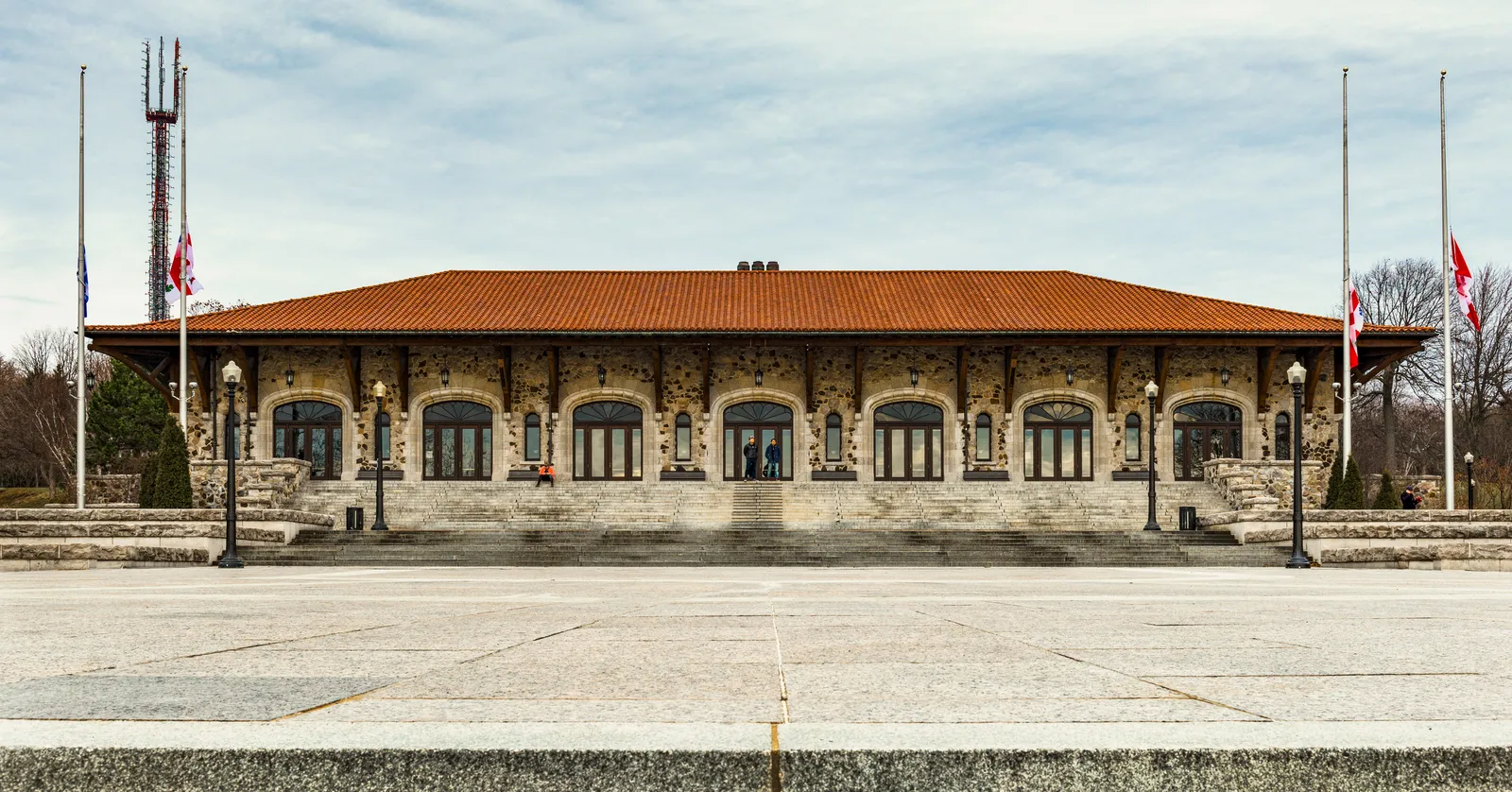
Mount Royal, the wooded hill in the middle of Montreal, carries a 1932 stone chalet with 32 carved squirrels in its roof beams, a clover-shaped artificial lake cut into a drained swamp, an 1858 farmhouse that is now the park’s visitor centre, and the largest cemetery in Canada down its northwest slope.
Thirty-two wooden squirrels sit in the Mount Royal Chalet’s rafters
Aristide Beaugrand-Champagne drew the chalet and it was put up in 1932 as relief work during the Depression, under a mayor, Camillien Houde, who had a road across the mountain named after him for his trouble. It is a single long Beaux-Arts hall in rough stone under a red tiled roof, with exposed beams, chandeliers and a fireplace at one end, and it costs nothing to walk into.
Look up before you look out. Thirty-two wooden squirrels are set into the roof beams, each one hunched with its paws together and a nut between them, generally attributed to the sculptor Elzéar Soucy, and almost everybody walks the length of the hall without noticing a single one. On the walls below, thirteen Canadian painters, Marc-Aurèle Fortin, Paul-Émile Borduas and Edwin Holgate among them, filled the room with scenes from Montreal’s first three centuries. There are toilets and a counter selling coffee, which on this mountain counts as infrastructure.
If working out buses is not how you want to spend the afternoon, a guided run that takes in the lookout, the cemetery and Saint Joseph’s Oratory, booked through a tours and activities platform, covers the mountain’s three separate ends in one go.
Beaver Lake was fitted into a drained swamp in 1938
Frederick Todd laid the basin out on ground that had been marsh, and the workmen digging it turned up an old beaver dam, which is where the name came from. What they left is a clover shape of roughly 200 by 150 metres, shallow, ringed by mown grass, with pedal boats on it through the summer.
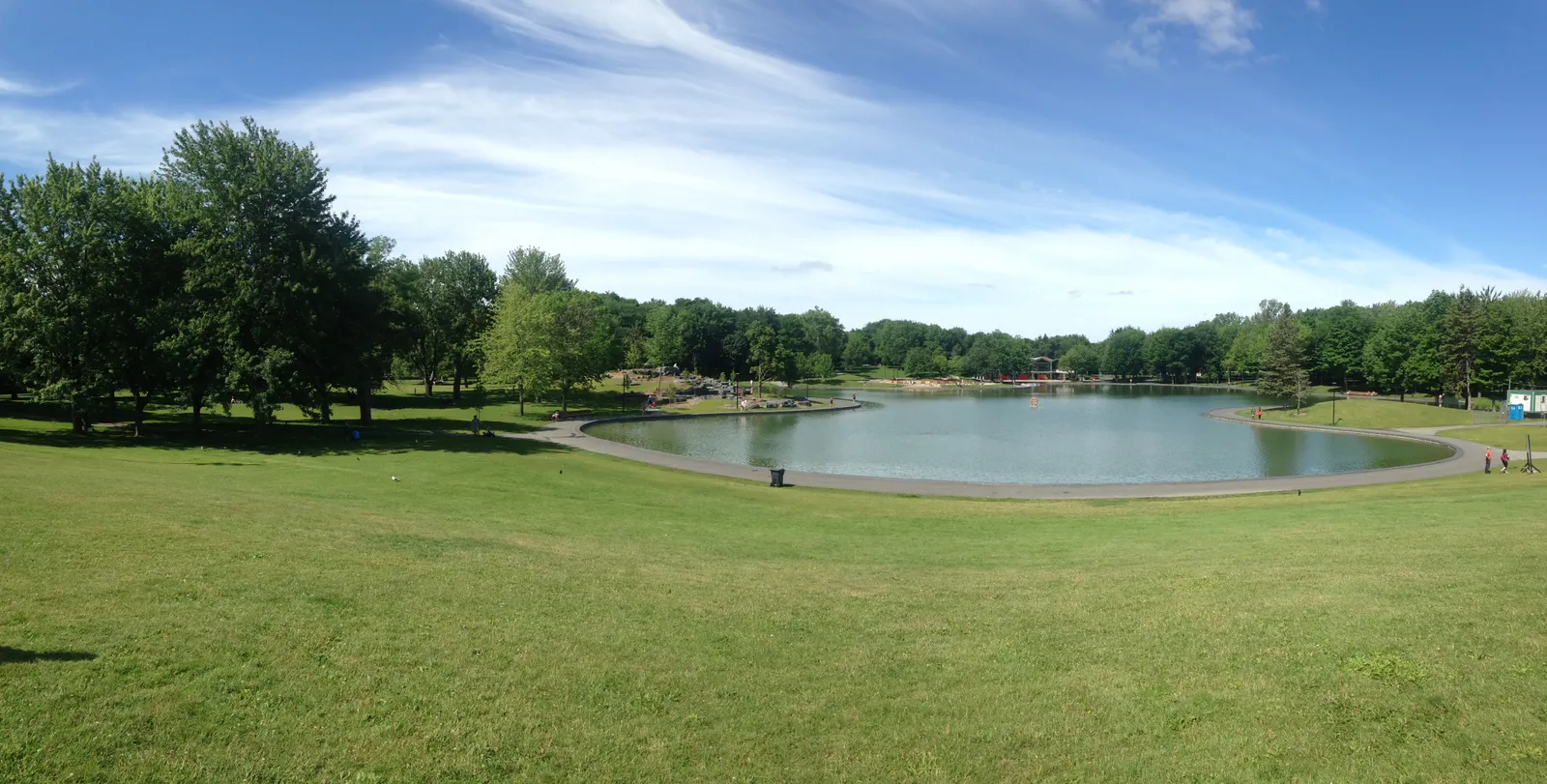
For decades the lake froze over and the city skated on it. That stopped in 2017, and a refrigerated rink beside it does the job now, which holds through a warm January in a way the basin never could. The pavilion on the west side is worth a look on its own: Hazen Sise and Guy Desbarats designed it, it went up between 1956 and 1958 and opened in 1961, and its corrugated roof and long windows were treated as a landmark of Montreal modernism at the time. It was overhauled again between 2005 and 2007.
Five minutes along the same road, Smith House is the oldest thing standing in the park. A merchant built it in 1858 to get clear of the smoke downtown, and it was one of sixteen private properties the city expropriated in 1869 to make the park at all.
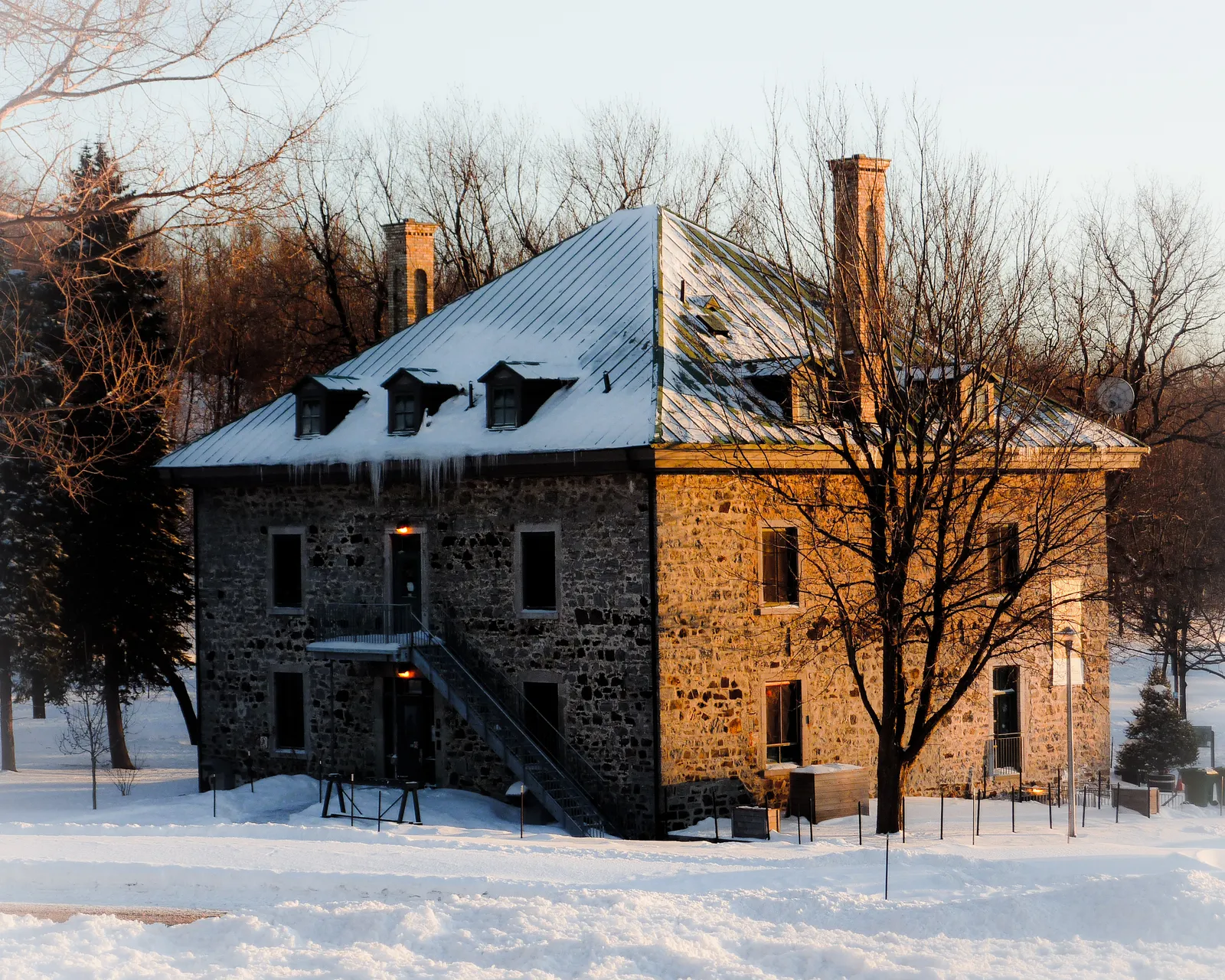
Since then it has been the park keeper’s house, an art centre and, for a while, a police station. It has been the home of Les amis de la montagne since 1999, and the permanent exhibition on the mountain inside it is free, as is the map you can pick up at the desk, which is more use than any phone signal up here.
Notre-Dame-des-Neiges holds more than a million burials
Founded in 1854 on the mountain’s northwest slope, it covers 341 acres and is a National Historic Site, with something over a million people buried under roughly 65,000 monuments, which makes it the largest cemetery in Canada by burials and the third largest in North America.
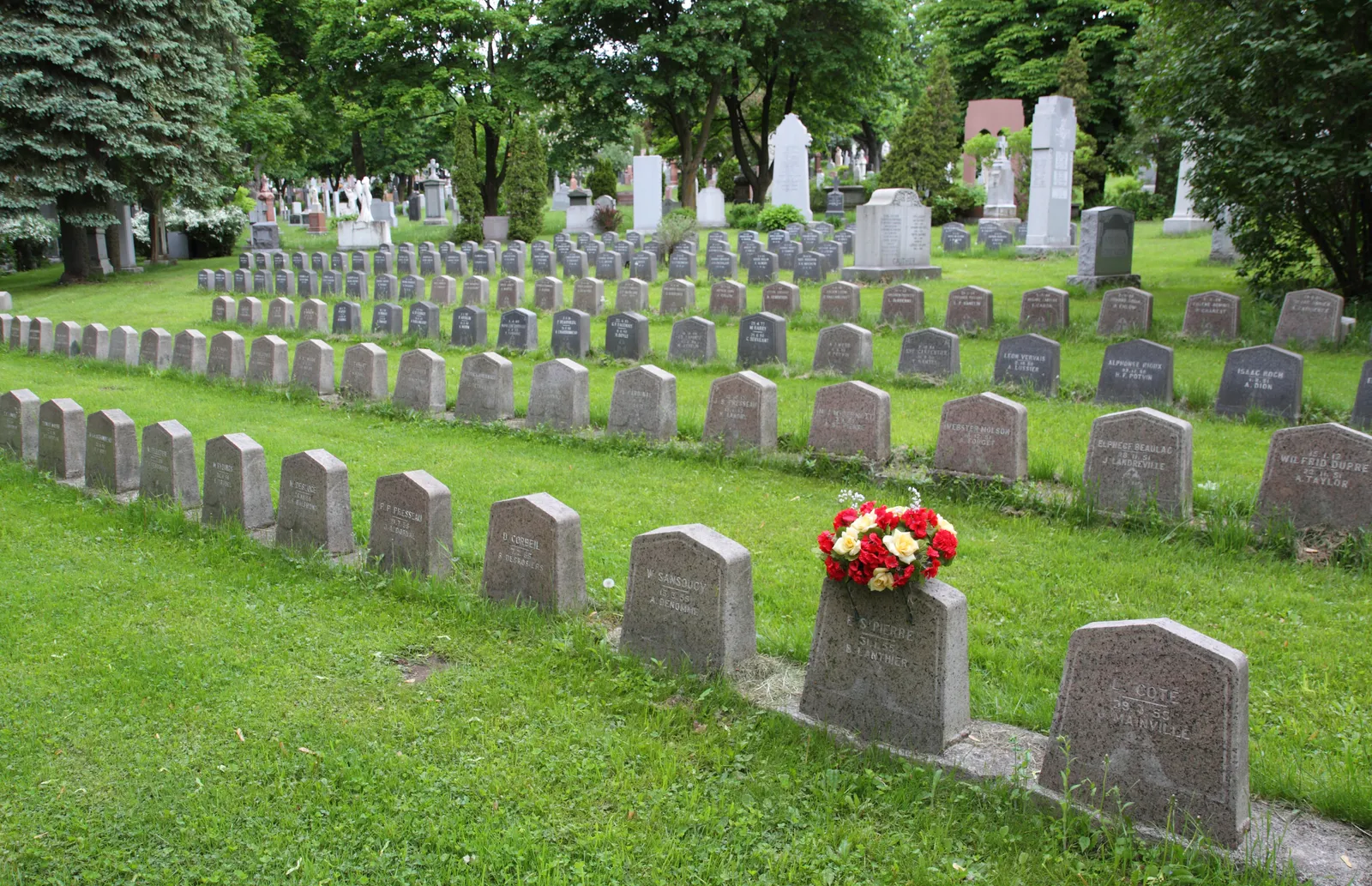
It reads as parkland more than a graveyard: mature trees, mown slopes, and roads wide enough to lose the traffic noise entirely. Sharing a boundary with it is the Protestant Mount Royal Cemetery, terraced into the north slope across 165 acres with around 200,000 burials, and the two together take up more of the mountain than the public park does. The whole of the northwest side is quieter than anywhere else within this distance of downtown, which is the real reason to walk it.
No metro station reaches the top of Mount Royal
Two ways up, and they are not equivalent. A city bus runs along Remembrance Road over the top of the mountain and leaves about a ten-minute walk to the chalet terrace on made paths; the staircase from the top of Peel Street climbs the whole way with no lift and no ramp anywhere on it, which is the one to avoid with anything on wheels, and there is nowhere in the park to leave a bag while you go up.
Getting back to the airport is a bus down to a metro station, the metro across town, then line 747 out to Montréal-Trudeau International Airport (YUL). That last leg runs 24 hours a day, every ten to twenty minutes, at CA$11.25, taking about 30 to 35 minutes from Lionel-Groulx or 45 to 70 minutes on the full run from Berri-UQAM, so allow an hour and a half from the summit to the terminal door before check-in. If the mountain turns out to be more walking than the day has room for, the Montreal layover guide keeps to the flat ground along the river instead.
Frequently asked questions
What should I do during a layover in Mount Royal Park in Montreal?
The chalet is the anchor and it costs nothing: murals of the city's early history by thirteen Canadian painters, and 32 carved squirrels sitting up in the roof beams that most people walk straight under. Beaver Lake and Smith House are the other two stops on the plateau, about fifteen minutes' walk from the chalet, one a clover-shaped basin with pedal boats, the other an 1858 farmhouse with a free exhibition inside it. Notre-Dame-des-Neiges is worth the extra half hour if you have it; on a tight stop it is the first thing to drop. Nothing up here needs a ticket.
Is there a step-free way up Mount Royal?
Yes, but not the obvious one. The staircase from the top of Peel Street climbs the whole way with no lift and no ramp alternative, so it rules itself out for anyone with a wheeled bag, a pushchair or dodgy knees. A city bus runs along Remembrance Road across the top of the mountain instead and stops about a ten-minute walk from the chalet terrace, on made-up paths with a gentle gradient. Smith House and Beaver Lake sit on the same road, which is the flattest part of the whole park.
Can you still skate on Beaver Lake?
Not on the lake itself. Skating on the water ended in 2017 after decades as the city's best-known outdoor rink, and a refrigerated rink beside it took over, which holds ice more reliably through a mild January than the basin ever did. In summer the lake takes pedal boats instead. The basin is artificial in any case: it was fitted into a drained swamp in 1938 to a design by Frederick Todd, and named for an old beaver dam the workers turned up while digging.
How long does it take to get from Mount Royal to Trudeau airport?
Budget an hour and a half, not counting check-in. Getting off the mountain is a bus down to a metro station, then the metro across to where the airport bus stops. Line 747 then runs to Montréal-Trudeau International Airport (YUL) around the clock, every ten to twenty minutes, at CA$11.25; the shorter service from Lionel-Groulx takes about 30 to 35 minutes, the full run from Berri-UQAM 45 to 70. Leave the summit three and a half hours before an international departure and the arithmetic works.