Vienna Layover: 15 Minutes From VIE by Rail
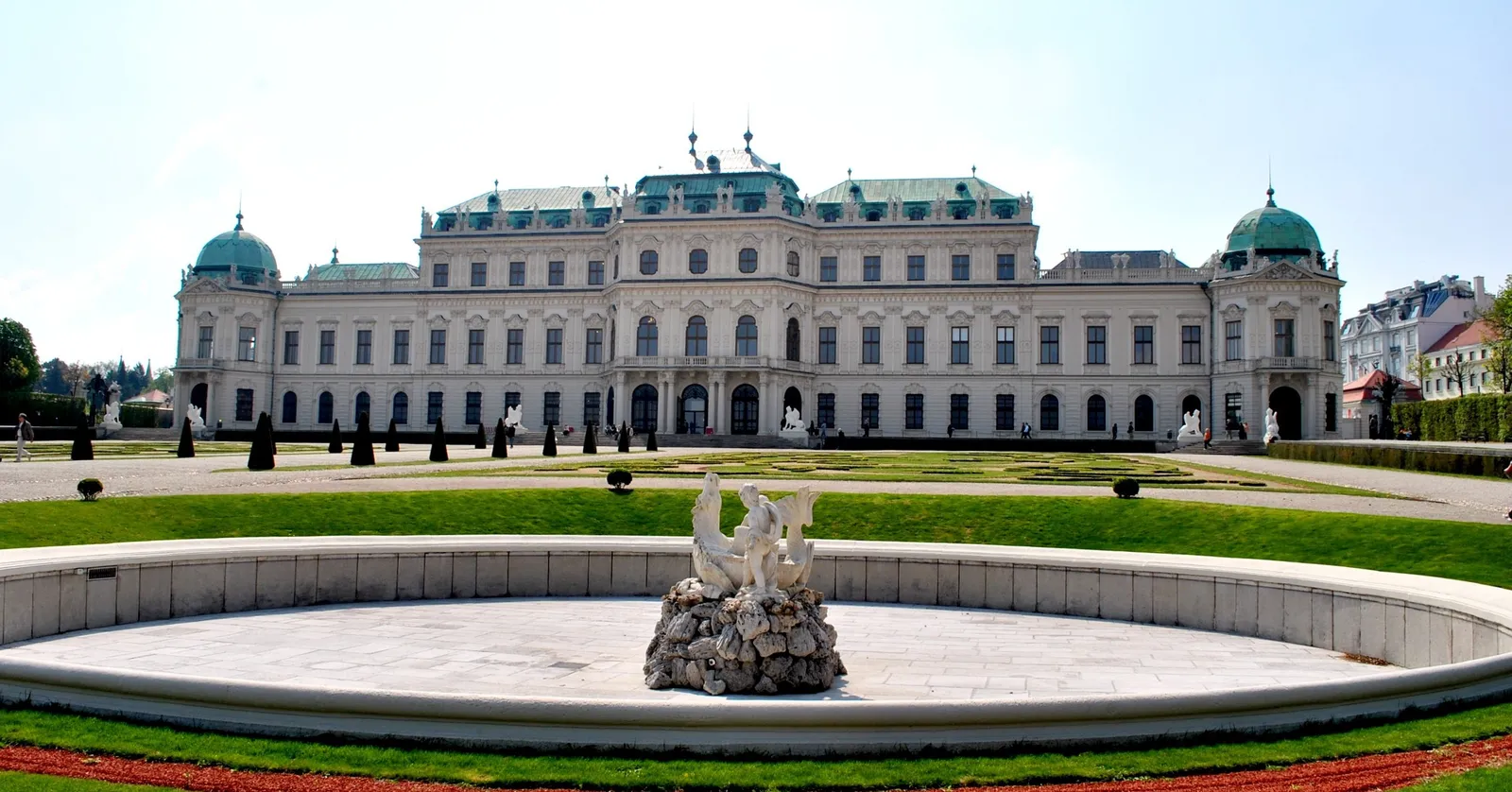
Wien Hauptbahnhof, Vienna’s main train station, is a 12-minute walk from the Belvedere, its baroque garden free to enter with a terrace view back over the city, and St. Stephen’s Cathedral, its tiled roof the thing worth seeing, sits three stops further by metro.
The Belvedere’s free baroque garden and its terrace view
Wien Hauptbahnhof’s Wiedner Gürtel exit puts the Belvedere a straight 12-minute walk away, roughly 750 metres on flat pavement the whole distance. The two palaces face each other across a formal garden that steps up the slope in terraces, with cascades and clipped parterres between them, and the garden costs nothing to enter, no ticket, no booking. It opens at 6.30am from 1 April to 31 October and 7am through the winter, and closes around dusk, so on a late-afternoon window you will still get in.
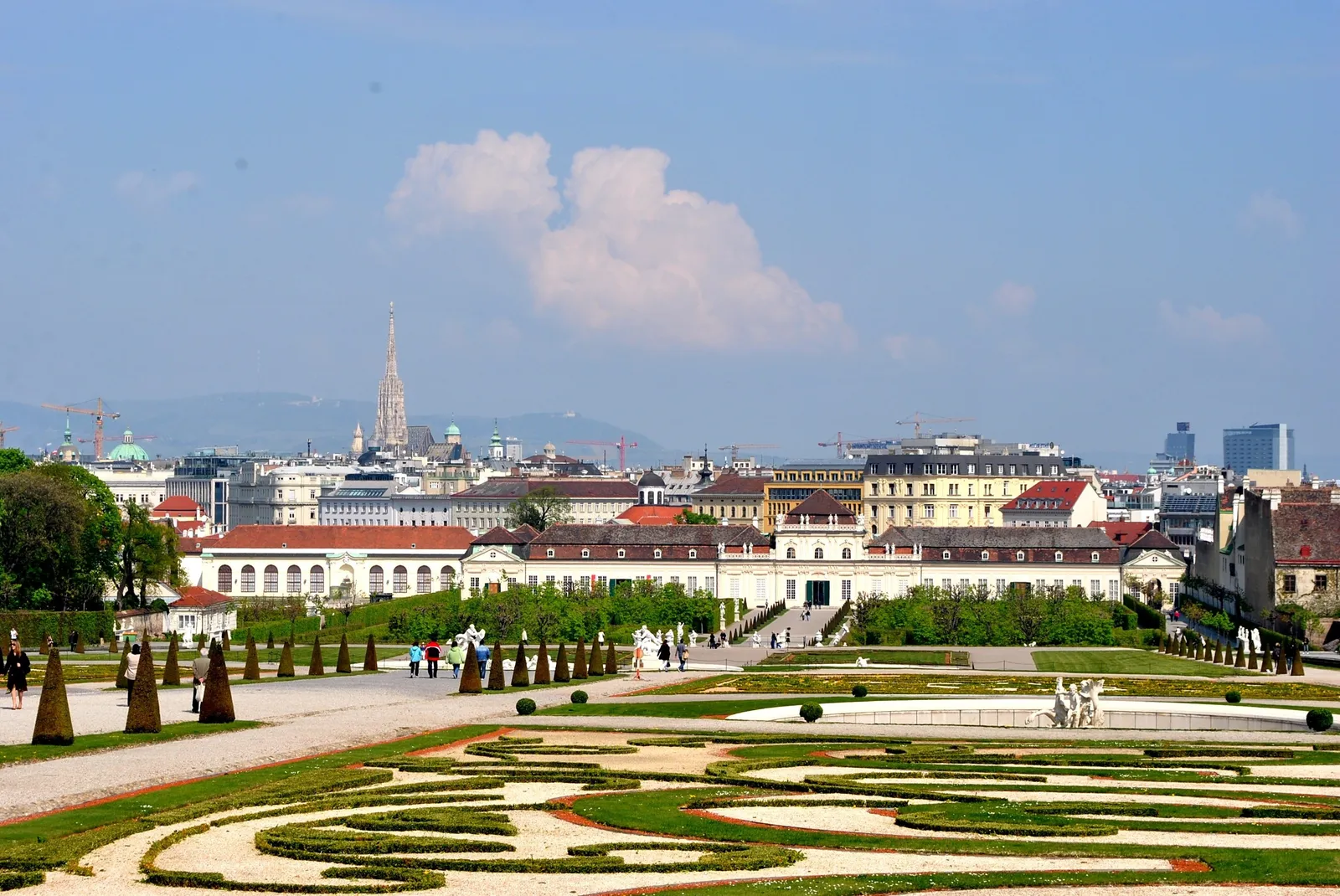
Walk up through it to the fountain in front of the Upper Belvedere and turn around: the ground has risen enough that you are looking over the whole city, with St. Stephen’s spire on the skyline.
Inside the Upper Belvedere is Klimt’s The Kiss, along with the largest collection of his work anywhere. Admission is 23 euros and under-19s go free; it opens daily at 9am and closes in the early evening, with the exact hour shifting through the year. It draws enough of a crowd that a timed slot booked ahead is worth having rather than queuing at the door, so booking entry in advance is the safer move on a tight window. Be honest with yourself about the time, though: doing it properly is an hour and a half or more, and on a four-hour window that is most of what you have. The garden costs nothing and takes half an hour.
Those garden paths are gravel and the route through runs uphill, which is the surface and gradient a small suitcase wheel handles worst, so leave the bag at the station rather than towing it up the terraces.
A quarter-million glazed tiles on St. Stephen’s Cathedral roof
Stephansplatz sits three metro stops from Wien Hauptbahnhof, under ten minutes including the walk down to the platform, and puts you directly beneath the cathedral.
St. Stephen’s is not a building you look at from a distance and tick off. The thing to see is the roof: a quarter of a million glazed tiles laid in zigzags of green, gold and black, steep enough to shed snow and, at 111 metres along, close to the length of the nave underneath it.
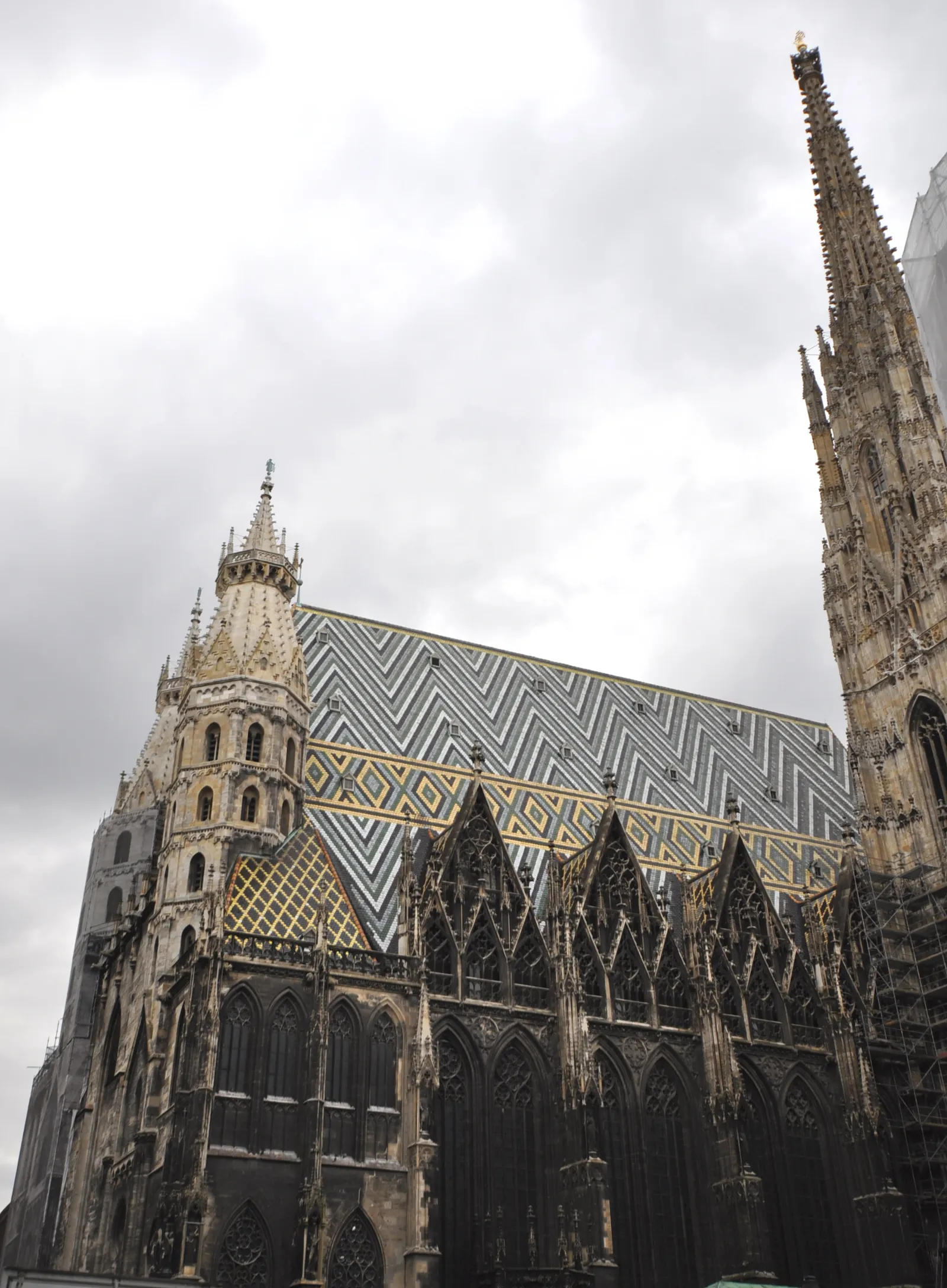
The nave is free to walk into and open 6am to 10pm Monday to Saturday, from 7am on Sunday, which makes it one of the few genuinely worthwhile stops still open on a late window. The paid parts are separate and each costs around 7 euros: the South Tower is a 343-step climb with no lift, the North Tower has a lift up to the Pummerin bell, and the catacombs are a guided half hour. The on-site ticket desk takes cash only, or a combined tower and catacombs ticket booked ahead covers both towers and the catacombs together with no cash needed on the day.
From the cathedral, the Graben runs northwest, a wide pedestrian street with the knotted marble plague column in the middle of it, and turns into Kohlmarkt, which ends at the domed Michaelertor gate of the Hofburg palace. That is about ten minutes of flat walking and it is free, and it is the stretch that most looks like the Vienna people picture.
The University’s botanical garden, quieter than the palace grounds
Running along the eastern edge of the Belvedere grounds is the University of Vienna’s botanical garden, eight hectares of it, with gates connecting straight through from the Belvedere garden so it costs no extra transit at all. Entry is free, it is open year round, and it holds around 11,000 plant species laid out in themed sections.
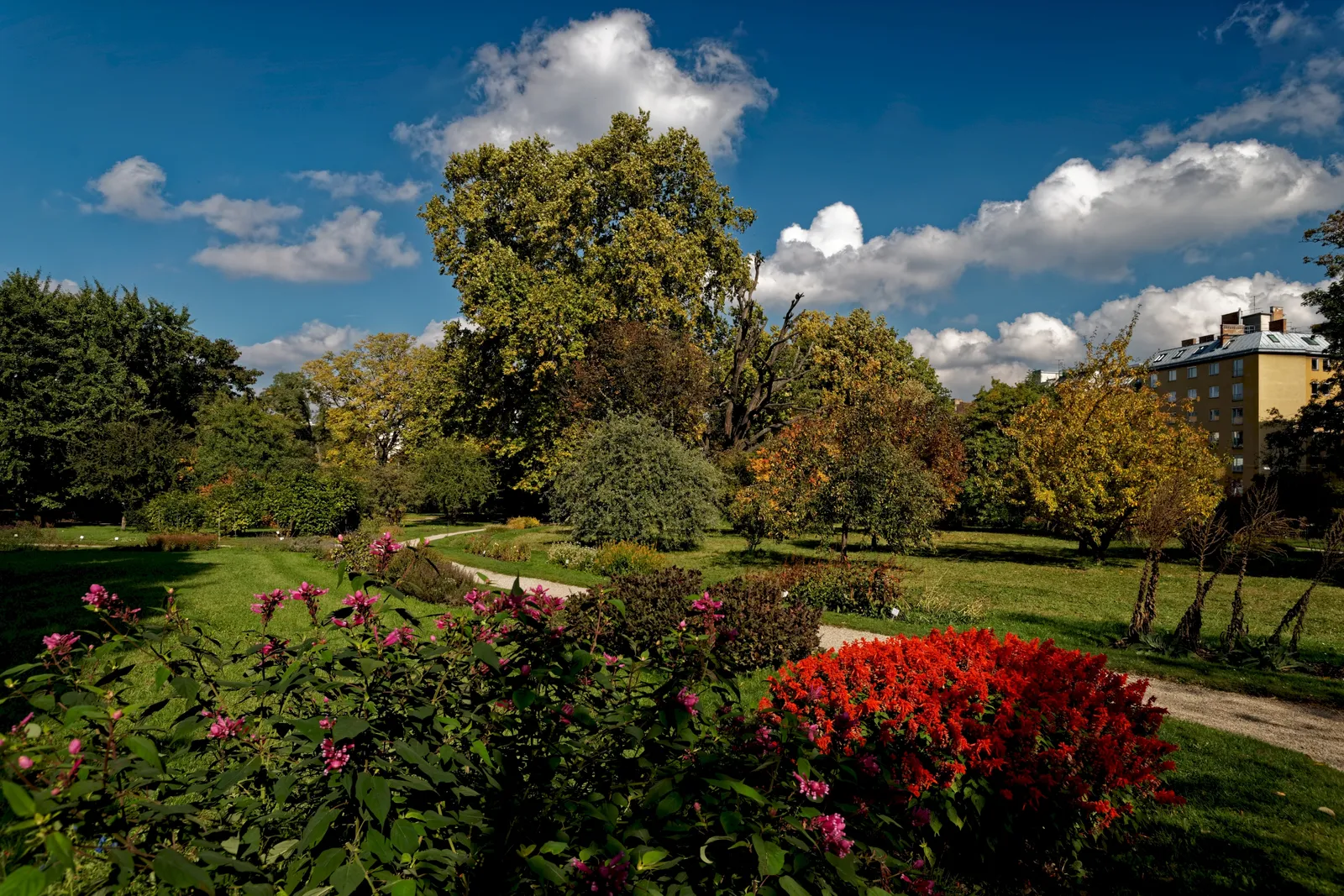
The point of it for a layover is that far fewer people find their way in than into the palace gardens next door, so it is the quiet half of the same walk. Hours shift with the season and it shuts in bad weather and over the turn of the year, so treat it as a bonus rather than the anchor of your plan.
If the window runs past five hours and a second landmark feels like too much, the Ringstrasse is the other option: the boulevard built on the line of the demolished city walls. Tram lines run along stretches of it, and from a seat you get the Staatsoper, the Kunsthistorisches Museum, the Rathaus and the Parliament in one continuous pass without walking any of it, for a normal tram fare.
No trains to Wien Mitte until the line reopens in 2027
The ÖBB railjet and Intercity trains are the ones to use between Flughafen Wien and the centre. They run non-stop to Wien Hauptbahnhof in 15 minutes, leave every half hour, and cost 5.50 euros for an adult single, 2.80 for children aged 6 to 14 and nothing under 6. The same trains call at Wien Meidling for a metro connection, about 30 minutes out from the airport. Departures from the airport run from 6.33am to 11.02pm, with one late service at 12.02am.
The reason to use Hauptbahnhof rather than the older Wien Mitte route is that they are on different track. From 7 September 2026 until the end of October 2027, the S-Bahn between Praterstern and Hauptbahnhof is closed while it is rebuilt. For that period the S7 no longer reaches the centre; it is cut back to St. Marx, where you change to a tram. The City Airport Train runs buses between Wien Mitte and the airport instead of trains, up to five an hour. After the line reopens at the end of October 2027 both go back to what they were, and Wien Mitte becomes a reasonable target again. Until then, the railjet to Hauptbahnhof is the only rail route into the middle of Vienna that has not been rearranged.
Plan the return leg off the same timetable, because the 15-minute ride is the easy part and the half-hourly interval is what actually costs you. Miss a departure at Wien Hauptbahnhof and you have added 29 minutes to a trip that was supposed to take 15. Trains toward the airport run from about 5.42am to roughly 10.42pm, so check the board before you leave the centre rather than after you have collected the bag. Working back from a flight, allow about two and a half hours from St. Stephen’s: the metro down to the station, picking up the bag, the wait, the ride, and check-in at VIE.
Wien Hauptbahnhof is worth knowing as a building in its own right if you are stringing rail legs together: the through-platforms upstairs are where the westbound railjets leave from, about four hours to Munich.
Everything worth doing on this route sits between the Belvedere and the Hofburg, and the station you arrive at is the station you leave from. Leaving the case there rather than towing it up the Belvedere terraces pays off twice, once on the gravel and again at the end, when the bag is already waiting at the platform you need.
Frequently asked questions
What should I do during a layover in Vienna?
With four to six hours, a direct train from the airport reaches Wien Hauptbahnhof in about 15 minutes, a 12-minute walk from the Belvedere's baroque garden, free and open from early morning with a terrace view back over the city. Three metro stops take you on to Stephansplatz, where St. Stephen's nave is free to walk into and its tiled roof is the thing to actually look at. From there the Graben and Kohlmarkt, two connected pedestrian streets, run flat to the gate of the Hofburg palace, about ten minutes. Going inside the Upper Belvedere for the Klimt collection is worthwhile but runs 90 minutes or more at 23 euros, which on a four-hour window is most of your time in the city.
Can I still take the S7 or the City Airport Train into the centre?
It depends when you are travelling. Until 6 September 2026 the S7 ran from the airport to Wien Mitte in about 20 minutes for 5.50 euros. From 7 September 2026 until the end of October 2027 the S-Bahn between Praterstern and Hauptbahnhof is shut for modernisation work: the S7 is short-routed and terminates at St. Marx, out beyond the centre, and the City Airport Train runs replacement buses between Wien Mitte and the airport rather than trains, up to five an hour. The ÖBB railjet and Intercity trains to Wien Hauptbahnhof do not use the closed section and run normally throughout, which is why this itinerary starts there rather than at Wien Mitte.
How much of this itinerary costs nothing?
Most of it. The baroque garden between the two Belvedere palaces is free, including the terrace at the top with the view back over the city. The University of Vienna's botanical garden next door is free. The nave of St. Stephen's is free to walk into. The paid parts are all optional: 23 euros for the Upper Belvedere's collection, and around 7 euros each for the cathedral's towers and catacombs. Your unavoidable costs are the two train fares at 5.50 euros each way and whatever you pay to leave the bag.
Is it worth going inside the Upper Belvedere on a layover?
Only if Klimt is the reason you got off the plane. Admission is 23 euros, under-19s go free, and it opens daily at 9am. The collection runs over several floors and an unhurried visit is 90 minutes or more, which on a four-hour window is most of your time in the city. It also draws enough of a crowd that a timed slot booked ahead is worth having rather than queuing on arrival; reserving entry in advance saves that wait. The garden and the terrace view cost nothing and take about 30 minutes, so if you want to see more of Vienna than one building, walk the grounds and keep moving.
How late can I leave the centre and still make the flight?
Trains from Wien Hauptbahnhof out to the airport run every half hour from about 5.42am until roughly 10.42pm. The ride is 15 minutes, but the half-hourly interval is the part that bites: a badly-timed arrival on the platform adds 29 minutes to the trip. Budget about two and a half hours from St. Stephen's to your gate, which covers the metro back, collecting the bag, the wait, the ride, and check-in.