Wien Hauptbahnhof: A 2-Hour Vienna Layover
Part of the full Vienna Layover: 15 Minutes From VIE by Rail
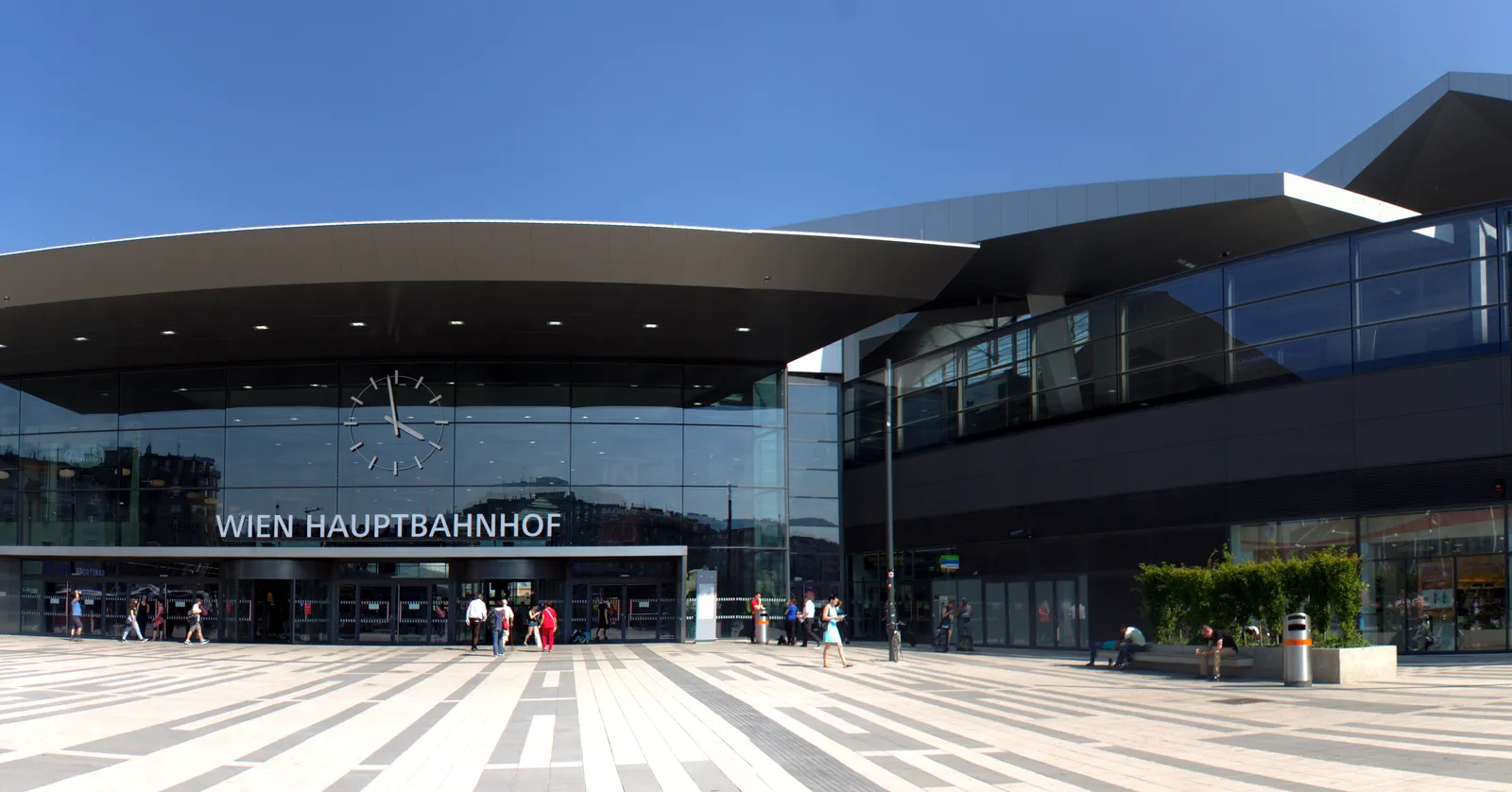
Wien Hauptbahnhof has a public park on its doorstep: cross Arsenalstraße into the Schweizergarten and the Belvedere 21 pavilion, and a two-hour gap between trains turns into a walk rather than a wait on a concourse.
The Schweizergarten, a public park on the station’s doorstep
The thing most people miss about this station is that it has green space attached to it. Come out of the eastern side, cross Arsenalstraße, and you are in the Schweizergarten, a public park with a pond, a fountain and enough tree cover to be worth sitting in. It costs nothing, it has no gate to queue at, and it is close enough that walking there does not meaningfully eat the time you were trying to spend.
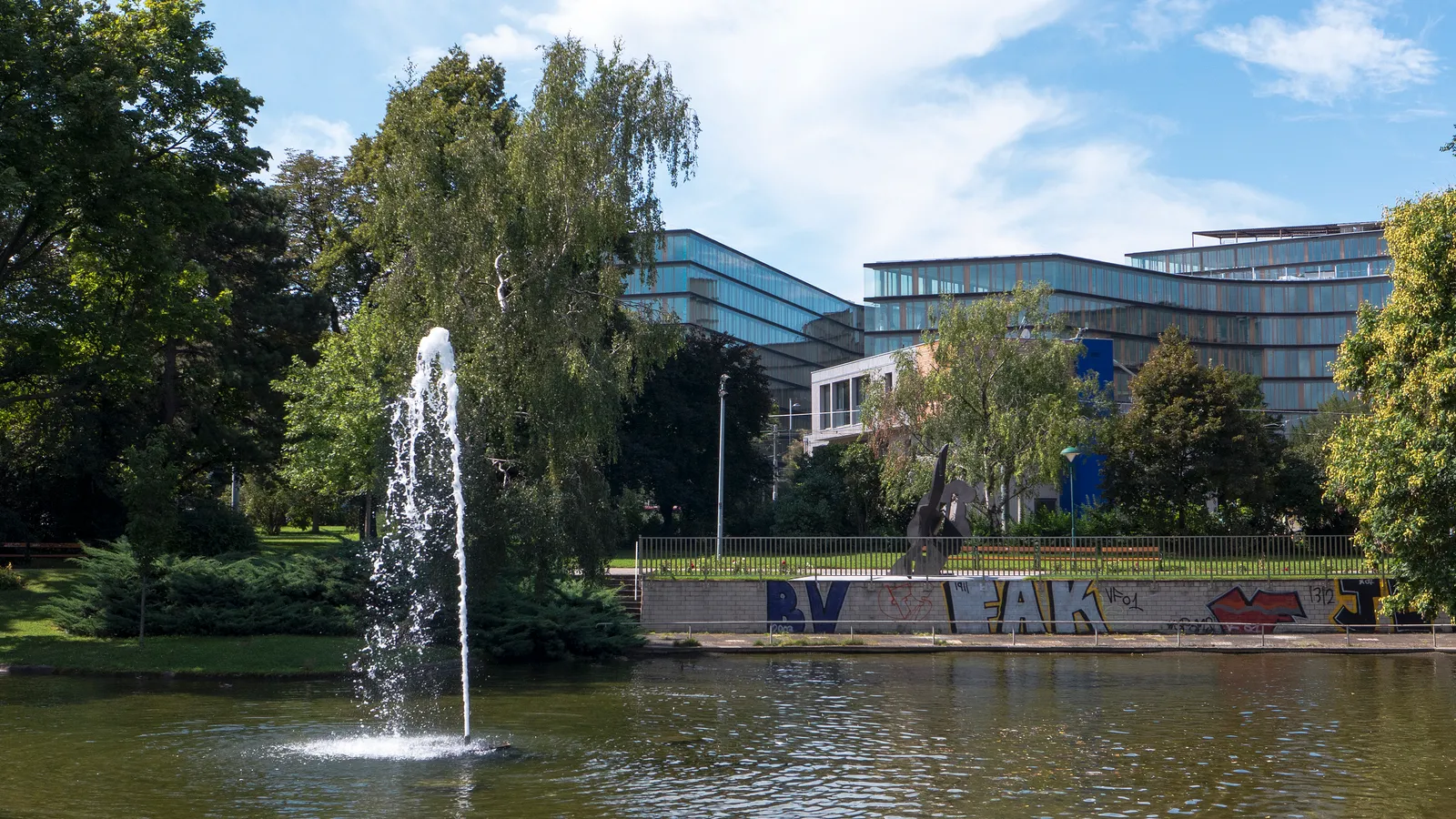
This is a different proposition from the Belvedere’s formal terraces fifteen minutes north. The Schweizergarten is a normal city park that people cut through on their way home, not a baroque set piece, and on a short window that is the point: nothing here needs planning around, and nothing charges admission.
Belvedere 21, for when the weather turns
Standing in the middle of the park is Belvedere 21, a low glass-and-steel pavilion built by Karl Schwanzer as Austria’s expo building for Brussels in 1958 and shipped back to Vienna afterwards. It now holds the Belvedere’s contemporary and post-1945 collection.
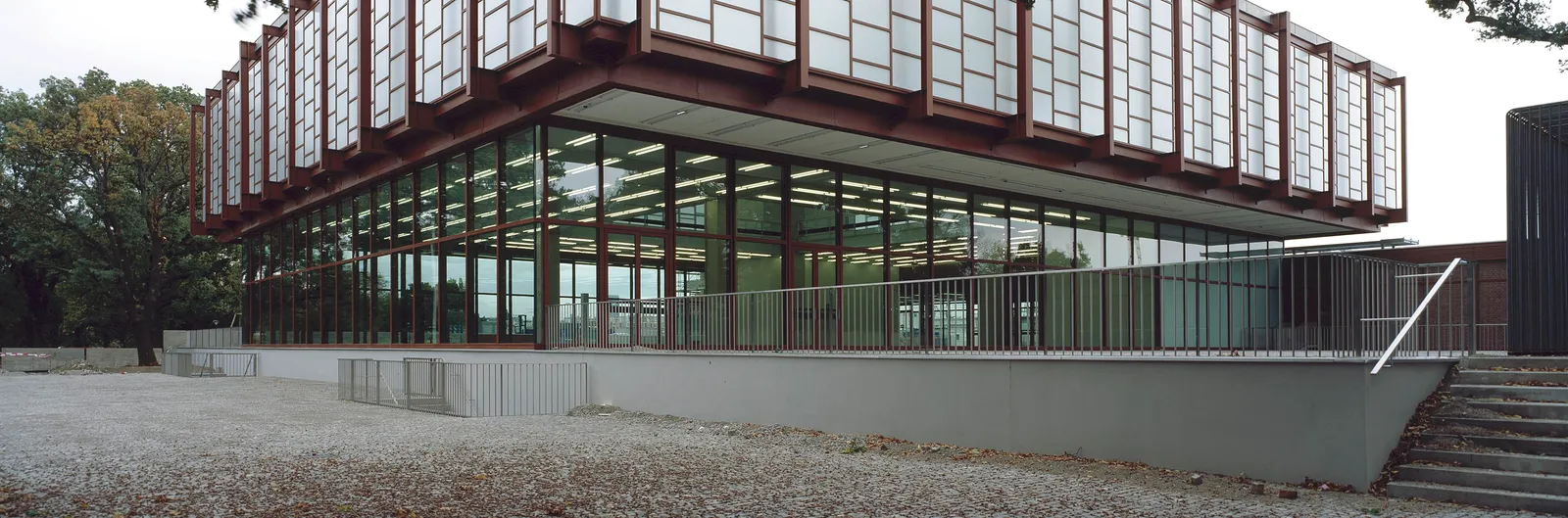
Admission is 9.30 euros booked online, 11 at the door, 3 for students and free for anyone under 19; a ticket booked ahead skips the door price. It opens Tuesday to Sunday from 11am to 6pm and runs late to 9pm on Thursdays. It is shut on Mondays, which is the detail worth checking before you build a plan around it, because there is no second indoor option in this park.
The station’s lockers are on the lower level, come in fixed sizes topping out at 90 by 50 by 85 centimetres, and hold a bag for a maximum of 24 hours, so an outsized case needs a different arrangement before you go anywhere.
The one thing the station itself is genuinely good for
Austrian shops close on Sundays. Not “most close early”, close: the supermarkets, the department stores, the shops on Mariahilfer Straße, all of it. Railway stations are exempt, though, counted as travel service zones under the trading rules, so the shopping level below the platforms here trades when the rest of the city does not. The Interspar Pronto inside the station runs roughly 6am to 11pm every day of the week.
That is worth knowing in both directions. On a Sunday it makes this station one of the few useful places in Vienna to buy anything. Late on any day it is the reason you can eat something reasonable at 10pm instead of paying airport prices for it two hours later.
If the window stretches past three hours, cross to the south side instead, where Helmut-Zilk-Park covers seven hectares of what used to be the Südbahnhof freight yard, laid out with paths that run straight back to the station. Longer than that and you should be doing the Belvedere and a metro ride into the centre, which is where the full Vienna layover route starts, from this same building.
Either way the station stays the fixed point. The bag is already where you need it, the airport train leaves from the platforms upstairs, and nothing in this itinerary is more than a few minutes’ walk from the board telling you when it goes.
Frequently asked questions
Is two hours really enough to leave the station?
For the Schweizergarten, yes: it is close enough that the walk barely registers against the time you have. For anything in the historic centre it is not, once you count the metro both ways and the queue at whatever you came to see. If your window is four hours or more, ignore this route and take the Belvedere and St. Stephen's itinerary instead, which uses the same station as its starting point.
Can I buy food near the station on a Sunday or late at night?
Yes, and this is one of the few places in Vienna where you can. Austrian shops are generally shut on Sundays, but railway stations are exempt from the closing rules as travel service zones, so the shops on the station's lower level trade when almost nothing else in the city does. The Interspar Pronto supermarket inside the station runs roughly 6am to 11pm daily. If you land on a Sunday and want to eat something that is not airport food, buy it here rather than assuming you will find a supermarket in town.
Is Belvedere 21 worth the detour, and when is it shut?
It is closed on Mondays, which is the thing that catches people out, and otherwise opens Tuesday to Sunday from 11am to 6pm, with a late Thursday until 9pm. Admission is 9.30 euros booked online or 11 euros at the door, 3 euros for students and free under 19. It is contemporary art in a 1958 pavilion rather than a big-name collection, so go if the weather has turned or that is your thing, and stay in the park if it hasn't.
I'm arriving by train rather than flying in. Is this the station I'll be at?
Probably. Wien Hauptbahnhof replaced the old Südbahnhof and Ostbahnhof, so it took over the southern and eastern routes along with most international services: trains from Budapest, Prague, Bratislava, Graz and Villach come in here, as do direct trains from Munich and Salzburg. Westbahnhof is the exception worth knowing about, since some services from the west still terminate there instead.